News you may have missed #767

Omar SuleimanBy IAN ALLEN | intelNews.org |
►►Aussie spy chief warns of ‘digital footprints’. For the first time in the 60-year history of the Australian Secret Intelligence Service (ASIS), Australia’s main external spy agency, its Director has spoken publicly. Nick Warner used this unprecedented opportunity to reflect on where ASIS has come in the last 60 years, and the challenges it faces into the future. Among them, he said, are “developments in the cyber-realm”, which “are a two-edged sword for an agency like ASIS; they offer new ways of collecting new information, but the digital fingerprints and footprints which we all now leave behind complicate the task of operating covertly”.
►►India arrests alleged Pakistani spy. Indian authorities have announced the arrest of Zubair Khan, 37, of Uttar Pradesh, who was allegedly caught with several Indian Army documents in his possession. He had been reportedly asked to gather information on Air India pilots, military bases in the country, journalists who frequently visit Pakistan, and relatives of officials working in the Indian High Commission in Pakistan. Maps of cantonment boards and details of many battalions have been recovered from him, according to Indian media reports. Investigators are also said to have identified one of Khan’s handlers, a man named “Talib”, who works at Pakistan’s High Commission in New Delhi.
►►Egypt spies try to repair image as ex-Director dies. Egypt’s top spy agency, the General Intelligence Service —known as the “Mukhabarat” in Arabic— is taking a small but unprecedented step out of the shadows, in an apparent attempt to win the public’s support in the new Egypt. In an unusual move, the agency released a 41-minute-long documentary boasting of its achievements, presenting itself as the defender of the nation and vowing to continue to protect the country. The effort comes as the Mukhabarat’s former Director, the notorious Omar Suleiman, has died in the United States.

Pakistani militant group ‘more dangerous than al-Qaeda’: ex-CIA official

Bruce RiedelBy JOSEPH FITSANAKIS | intelNews.org |
A former senior official of the United States Central Intelligence Agency has argued that al-Qaeda is no longer the most powerful group in the global Islamist insurgency. Writing in The Daily Beast earlier this month, Bruce Riedel, who served in the CIA for nearly 30 years prior to his retirement in 2006, warned that Lashkar e-Taiba is now “the most dangerous terror group in the world”. In his editorial, the former CIA analyst, who is now a professor at the Johns Hopkins School of Advanced International Studies, said that LeT operates freely inside Pakistan and continues to have strong operational connections with the Pakistani armed forces and the country’s intelligence establishment. Since its founding in 1990, LeT’s traditional political aspiration has been to end Indian rule over the predominantly Muslim state of Jammu and Kashmir, and then integrate the latter with Pakistan. But the group’s aims appeared to expand significantly in November of 2008, when it sent ten heavily armed operatives to Mumbai on speedboats. Once they landed in India’s most populous city, the LeT operatives proceeded to strike nearly a dozen tourist-related targets in well-calculated suicide missions. By the end of the four-day terrorist spree, 166 people —including six Americans and many other Western tourists— had been killed. Riedel views the 2008 Mumbai strike as “the most significant and innovative terrorist attack since 9/11”, and says that it marked LeT’s maturation “from a Punjabi-based Pakistani terror group targeting India exclusively” to an outfit with a global outlook, “targeting the enemies of al Qaeda: the Crusader West, Zionist Israel, and Hindu India”. Today, nearly four years after the Mumbai attacks, LeT maintains a global presence, with active cells throughout the Middle East and Asia, and funding operations in North America, Australia and Europe, claims Riedel. Additionally, LeT does not appear to feel threatened by Washington. Read more of this post
News you may have missed #753

James ClapperBy IAN ALLEN | intelNews.org |
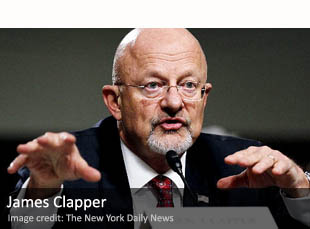
►►US spy agencies consider new polygraph questions. The US Director of National Intelligence, James Clapper, is considering a proposal to force intelligence agency employees to answer a direct question in their polygraph examinations about whether they have disclosed information to reporters. The Los Angeles Times quotes “officials familiar with the matter”, who say that Clapper is preparing “changes to the counterintelligence polygraph policy”, though “no final decisions have been made”.
►►Ex-“New Republic” editor speaks out against Pollard release. Few American journals can claim to have stood more staunchly by Israel than The New Republic. So we should be paying attention when Martin Peretz, who edited the magazine from 1974 until 2011, comes out against the proposed release of Jonathan Jay Pollard. Pollard is a former US Navy analyst, who is serving a life sentence for spying on the US for Israel. Peretz calls Pollard “a scoundrel spy” and reminds his readers that “before he decided to deliver reams of sensitive [US] intelligence and defense documents to Israel’s security apparatus, [Pollard] was negotiating with Pakistan […] to do similar chores for it”.
►►UK leader considered using special forces to seize Russian ship. British Prime Minister David Cameron considered ordering British special forces to board and impound a Russian ship suspected of carrying arms to Russian ally Syria, it has emerged. The ship, MV Alaed, was sailing in British waters when the US placed pressure on Britain to halt it. But the Russian ship suddenly changed course about 50 miles off the north coast of Scotland and it is showing that its next port of call is Murmansk, in Russia.

News you may have missed #744

Navi PillayBy IAN ALLEN | intelNews.org |
►►Source says Mikhailov ‘will not be exchanged’ with US. There are rumors going around that the US might consider exchanging Russian arms merchant Viktor Bout, who is serving a 25-year sentence in a New York prison, for one or more CIA spies currently being held in Russian prisons. Russian news agency RIA Novosti has cited a “high ranking official in the Russian security services”, who suggests that Bout “might be exchanged”, but not with Valery Mikhailov, a Russian former counterintelligence officer, who was sentenced this week to 18 years in prison for allegedly spying for the CIA.
►►CIA preparing to pull back from Iraq. The US Central Intelligence Agency is preparing to cut its presence in Iraq to less than half of wartime levels, according to The Wall Street Journal, which cites “US officials familiar with the planning”. Under the plans being considered, says the paper, the CIA’s presence in Iraq would be reduced to 40% of wartime levels, when Baghdad was the largest CIA station in the world with more than 700 agency personnel. Interestingly, the plan would also reduce the US intelligence presence in the region as neighboring Syria appears to be verging on civil war.
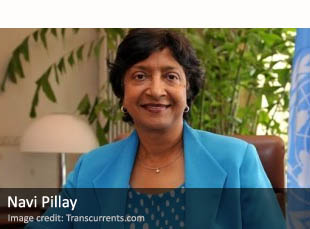
►►Senior UN official blasts US drone strikes. The United Nations High Commissioner for Human Rights, Navi Pillay, has said US drone attacks in Pakistan “raise serious questions about compliance with international law, in particular the principle of distinction and proportionality”. She also voiced concerns that the strikes were being conducted “beyond effective and transparent mechanisms of civilian or military control”. IntelNews provided this opinion on the matter, in 2009.

News you may have missed #742

'Spy rock' used in AfghanistanBy IAN ALLEN | intelNews.org |
►►Obama warns Congress of overspending on intelligence. The administration of US President Barack Obama is warning that it has “serious concerns” about a 2013 intelligence authorization bill that the House of Representatives passed on Thursday, because it authorizes spending on intelligence activities that go well beyond President Obama’s request. Despite this concern, the administration said that it “does not oppose” the Intelligence Authorization Act, HR 5743, instead supporting language that would repeal some reporting obligations that the government now has to Congress.
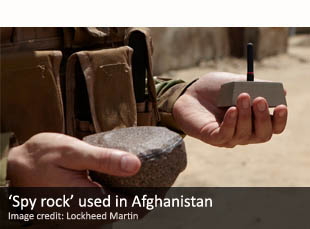
►►US forces use fake rocks to spy on Afghans. Palm-sized sensors, disguised as rocks, developed for the American military, will remain littered across the Afghan countryside –detecting anyone who moves nearby and reporting their locations back to a remote headquarters. Some of these surveillance tools could be buried in the ground, all-but-unnoticeable by passersby. These rocks contain wafer-sized, solar-rechargeable batteries that could enable the sensors’ operation for perhaps as long as two decades. Hmm…where have we seen this before?
►►Pakistan spy chief postpones US trip. Pakistan’s spymaster, Lieutenant-General Zahir ul-Islam, has postponed a trip to the United States in the latest sign of the dire state of relations between two supposed allies in the war against Islamist extremists. America has stepped up drone strikes on Pakistani territory in the week since the two countries failed to reach an agreement on NATO supply convoys at a summit in Chicago. Last week, officials in Washington also condemned Pakistan’s decision to jail a doctor who helped the CIA hunt Osama bin Laden.

News you may have missed #737

Shakil AfridiBy IAN ALLEN | intelNews.org |
►►Turkey suspects bird of being Israeli spy. News agencies are poking fun at Turkish authorities, who say they believe that they have found a bird used for espionage purposes by Israel. An investigation was reportedly launched in Ankara several days ago, after a farmer discovered a dead Merops Apiaster, commonly known as the European Bee-Eater, in his field. The bird had a ring reading “Israel” on one of its legs. The reports undoubtedly lend a certain degree of irony to the announcement that Israel Aerospace Industries (owned by the Israeli government) is in fact developing insect drones for indoor surveillance.
►►CIA discloses names of 15 killed officers. The CIA has disclosed the names of 15 of its operatives killed in the line of duty over the last 30 years, the result of a new effort to honor fallen officers. Fourteen of the dead already had a star inscribed in their memory on the CIA’s wall of honor in the lobby of the old headquarters building on the agency’s Langley, VA, campus. But their names had been withheld. In a closed agency ceremony Monday their names were added to the Book of Honor, which accompanies the stars. In addition, a new star was added this year for Jeffrey R. Patneau, who died at age 26 in Yemen in 2008 from injuries sustained in a car accident. He was the 103rd CIA officer recognized as having died in the line of duty.
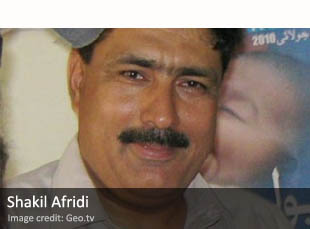
►►Pakistan convicts doctor who helped CIA find bin Laden. A Pakistani court imposed a 33-year sentence Wednesday on Shakil Afridi, a doctor who assisted the CIA hunt for Osama bin Laden. Afridi, a government surgeon in the semiautonomous Khyber Agency along the border with Afghanistan, was convicted of treason for using a vaccination drive to try to gather DNA samples at the compound where bin Laden was in hiding. His conviction prompted dismay among US officials, who said that the punishment will lead to cuts in aid. According to a Pakistani prison official, Afridi “has been kept away from other prisoners to avert any danger to his life”.

News you may have missed #735

Blast site in Deir Ezzor, SyriaBy IAN ALLEN | intelNews.org |
►►Pakistan imposes new restrictions on CIA operatives. The government of Pakistan has issued a set of new rules and regulations for officials, ambassadors and contractors of the United States Central Intelligence Agency (CIA). According to Pakistani news reports, Pakistan and the US finalized these new rules in the course of 13 meetings between representatives of both countries. Under the new rules, CIA officers deployed in Pakistan “must prove their identity” to Pakistani counterintelligence officials. Some officials, including former Pakistani ambassador to the United States Sherry Rehman, are already talking of a “new beginning for US-Pakistani relations”.
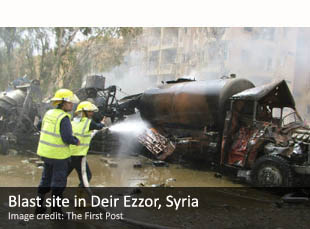
►►Car bomb strikes near Syrian intelligence agency. The Syrian Observatory for Human Rights confirmed reports on Saturday of an explosion in the Ghazi Ayyash neighborhood of the eastern Syrian city Deir al-Zour. The site of the blast, which killed at least seven people and injured 100 others, was close to the city branches of the Military Intelligence Directorate and Air Force Intelligence, the London-based activist group reported. There has been no immediate claim of responsibility for the attack.
►►China denies US cyberespionage claims. The Chinese government has hit back at a US Pentagon report that said it is carrying out aggressive cyber-spying as part of a military build-up. Chinese Foreign Ministry spokesman Hong Lei said “China’s justified and normal military development” had been unjustly criticized in the annual report, which was released on Friday. The development of China’s “limited” military force was only geared towards safeguarding its independence, sovereignty and territorial integrity, said the spokesman.

News you may have missed #734

Aviv KochaviBy IAN ALLEN | intelNews.org |
►►Australian spy agency in rent dispute. The Australian government insists there is no dispute over the lease of the new, state-of-the-art headquarters of the Australian Security Intelligence Organisation, which cost nearly A$589 to build. But according to a number of government sources, the property has become the subject of a standoff between the ASIO and Australia’s Department of Finance and Deregulation. The Canberra Times reports that the Finance Department has told ASIO it will have to hand over more money than anticipated because of a blowout to building costs and timing. But the ASIO is refusing to pay more than initially agreed.
►►US unveils spy model of bin Laden compound. The United States intelligence community has unveiled a scale model of the compound in Abbottabad, Pakistan, where Osama bin Laden spent the last few years of his life in hiding. The model was built by the National Geospatial-Intelligence Agency (NGIA) and used by military and intelligence leaders to plan the daring night raid on May 2, 2011, that killed the al Qaeda founder. Its scale is an exact 1:84; every tree, bush, wall, animal pen, trash can and physical structure in the model existed at one time at the original compound in Abbottabad.
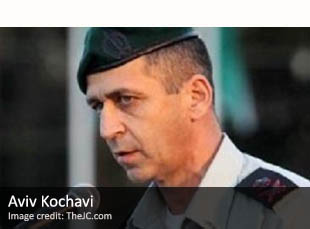
►►Israel military intelligence head in secret US visit. Israeli military intelligence chief Aviv Kochavi made a “secret visit” to Washington earlier this month to discuss the upcoming talks between world powers and Iran. An Israeli security official confirmed the visit, which was reported in Israel’s Haaretz newspaper, but could not provide further details. Meanwhile, three senior IDF intelligence officers resigned recently, following what they called “questionable” appointments to key positions. The three colonels held some of the most senior and classified positions in the Israeli military intelligence community.

News you may have missed #729 (intel blunder edition)

Alleged Venezuelan 'spy crossword'By IAN ALLEN | intelNews.org |
►►US drones ‘incidentally’ spy on Americans. A leaked US Air Force document stipulates that a drone that happens to capture surveillance images of Americans may store them for a period of 90 days. The paper appears to justify spying on citizens, as long as it is “incidental”. The document accepts that the Air Force may not record information non-consensually; however it does state: “collected imagery may incidentally include US persons or private property without consent”. The report, dated April 23 was discovered by Steven Aftergood of the Federation of American Scientists and has been put online.
►►Indian intel blunder sparks anger in Pakistan. India’s Research and Analysis Wing (RAW) intelligence agency sparked outrage in Pakistan and self-deprecatory jokes in India itself last week, after it listed ordinary Pakistani shopkeepers as terrorists on a mission to attack some of India’s landmark institutions. RAW, which is considered India’s premier intelligence agency, issued an advisory to state governments in which it said that five trained militants from Pakistan’s banned Lashkar-e-Taiba group had sneaked into India with fake identities to attack a nuclear facility, oil refinery, seaport and defense academy. Within hours after photographs of the five men were released, a Pakistani television channel reported that two of the three men on the list were shopkeepers and one was a guard, all living in Lahore, and that none of them had ever left Pakistan.
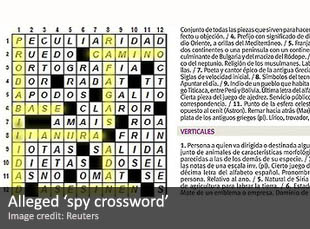
►►Venezuelan spies face criticism over ‘crossword puzzle’ plot. Venezuelan government critics, and even some supporters, are ridiculing a Venezuelan state TV host’s allegation that a newspaper crossword puzzle may have had a hidden call for a plot to kill President Hugo Chavez’s elder brother. Intelligence agents questioned Neptali Segovia, the author of the puzzle, after state TV presenter Miguel Perez Pirela pointed out that Wednesday’s crossword contained the word “ASESINEN”, or kill, intersecting with the name of Chavez’s brother, “ADAN”. He noted they were below the word “RAFAGAS”, meaning either gusts of wind or bursts of gunfire.

News you may have missed #724

Shakil AfridiBy IAN ALLEN | intelNews.org |
►►Aid group denies link to US intelligence in Pakistan. Aid group Save the Children denied accusations it has ties to US intelligence agencies in Pakistan. The organization’s denial came shortly after Dr. Shakil Afridi, a doctor the CIA recruited to help in the search for Osama bin Laden, told Pakistani interrogators that Save the Children played a role in his becoming involved with the CIA. Following Afridi’s interrogation, the Pakistani government banned some Save the Children members from leaving the country and aid supplies –including medical supplies– have been blocked by customs.
►►Is MI6 double spy’s case linked with Gareth Williams’ death? In 2010, British authorities jailed for a year MI6 employee Daniel Houghton, after he was caught trying to sell classified documents to MI5 spooks posing as foreign agents. According to newspaper The Daily Mirror, British police are now “probing a possible link between the Houghton’s case and the death of MI6 employee Gareth Williams, who was found dead in his London apartment in 2010. According to the paper, police detectives “want assurances from MI6 that Williams’ details [and] identity were not compromised” by Houghton.
►►Fears of spying hinder US license for China Mobile. China Mobile, the world’s largest mobile provider, applied in October for a license from the Federal Communications Commission to provide service between China and the United States and to build facilities on American soil. But officials from the FBI, the Department of Homeland Security and the Justice Department’s National Security Division are concerned that the move would give the company access to physical infrastructure and Internet traffic that might allow China to spy more easily on the US government and steal intellectual property from American companies. This is according to The Los Angeles Times, which cites “people familiar with the process who declined to be identified because the deliberations are secret”. US officials and lawmakers have expressed similar concerns about a Chinese telecommunications hardware manufacturer Huawei Technologies, which is alleged to have contacts with the Chinese People’s Liberation Army and the Ministry of State Security.

‘Treasure trove’ of al-Qaeda documents uncovered in Germany

Al-Qaeda propaganda videoBy JOSEPH FITSANAKIS | intelNews.org |
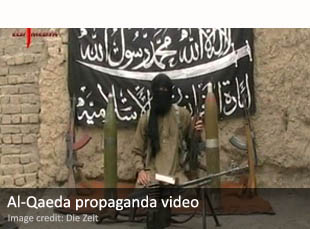
German police have uncovered what appears to be the most significant collection of al-Qaeda planning documents to be acquired by Western intelligence since last year’s assassination of Osama bin Laden. It has been reported that the United States Navy Seals, who raided the late bin Laden’s compound in Pakistan nearly a year ago, obtained thousands of al-Qaeda documents. But the latest acquisition, which reportedly consists of over 100 digital documents, is described by Western intelligence sources as “pure gold”. The documents were in possession of Maqsood Lodin, a 22-year-old Austrian, who was detained by German police last year as he was returning to Europe from a trip to Pakistan, via the Hungarian capital Budapest. During his detention, German authorities found hidden in his underwear a number of digital storage devices. One of them contained a pornographic video called “Kick Ass”, which, upon further investigation, was found to contain encrypted documents, in .pdf format, that had been disguised to look like video files. According to German newspaper Die Zeit, which first reported on the finding in March, many of the documents were training manuals written in several different languages, including Arabic, German, and English. But intelligence experts are mostly interested in a collection of documents entitled “Future Works”. These contain notes from what seem like al-Qaeda brainstorming sessions on plans for possible terrorist plots in Europe. Among them is a suggestion to “seize passenger ships and use them to put pressure on the public”, according to Die Zeit. A subsequent section in the document discusses the idea of ordering passengers in the hijacked ship or ships to dress in orange-color jumpsuits, similar to those used by the United States in the Guantánamo Bay prison in Cuba. That section is somewhat obscure, but Die Zeit interprets it as a plan to stage public executions of passengers as a way of pressuring Western governments to release al-Qaeda-affiliated detainees. Read more of this post

News you may have missed #713 (analysis edition)

RAW headquarters, New Delhi, IndiaBy IAN ALLEN | intelNews.org |
►►Israel wary of changes in the Arab world. For decades, Israel had been hoping for change in the Arab world. Yet now that the region is in upheaval, its not just Israeli citizens who are concerned. The government has shown a preference for walling itself in rather than exploring new opportunities. The Jewish state has tried to integrate itself into the Middle East for decades. Now it is trying to cut the cord between itself and the surrounding region, blocking out the changes in its neighborhood.
►►Melting Arctic may redraw global geopolitical map. If, as many scientists predict, currently inaccessible sea lanes across the top of the world become navigable in the coming decades, they could redraw global trading routes —and perhaps geopolitics— forever. This summer will see more human activity in the Arctic than ever before, with oil giant Shell engaged in major exploration and an expected further rise in fishing, tourism and regional shipping. But that, experts warn, brings with it a rising risk of environmental disaster not to mention criminal activity from illegal fishing to smuggling and terrorism.
►►Why Indian intelligence doesn’t work too well in Pakistan. Sources in the RAW, India’s external agency, say India lacks both political will and the capability to carry out a hit inside Pakistan. “We do not have the mandate to do what Mossad does. Our charter does not include the job of getting [or assassinating] people from other countries. If such political will is there, the agency would be able to do it”, says a senior RAW official. Another former officer, who has spent a considerable time studying these outfits, attributes it to the fundamental difference between India and Pakistan in dealing with espionage. “It takes a great deal of money and time to cultivate sources in foreign soil. We don’t have either in plenty, unlike countries in the West. Pakistan’s ISI is better off in this as the state sponsors terrorism”, he says.

News you may have missed #695

Nicolas Sarkozy and Muammar GaddafiBy IAN ALLEN| intelNews.org |
►►Spies meet over Syrian crisis. CIA chief David Petraeus met Turkey’s Prime Minister Recep Tayyip Erdogan on Tuesday for closed-door talks focusing on the crisis across the border in Syria. Meanwhile, General Murad Muwafi, who heads Egypt’s General Intelligence Directorate, left Cairo on Tuesday for a visit to Riyadh, Saudi Arabia. Also, US General Ronald Burgess, Defense Intelligence Agency Director, has arrived in Egypt and is expected to meet with several Egyptian officials to discuss the situation in Syria.
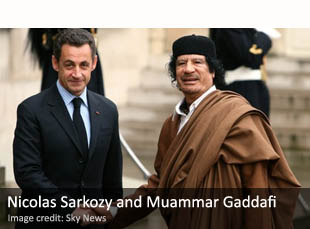
►►Gaddafi contributed €50m to Sarkozy election fund. Damaging new claims have emerged about the funding of Nicolas Sarkozy’s 2007 election campaign and his links with former Libyan leader Muammar Gaddafi. The French investigative website Mediapart claims to have seen a confidential note suggesting Gaddafi contributed up to €50 million to Sarkozy’s election fund five years ago.
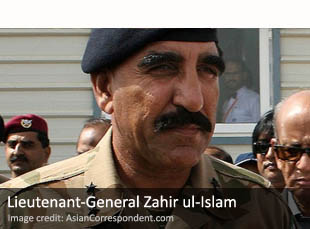
►►Analysis: US relations on the agenda for Pakistan’s new spy chief. Yusuf Raza Gilani has appointed Lieutenant General Zahir ul-Islam as the new chief of the Inter-Services Intelligence (ISI) agency, the main spy arm of the Pakistani military, ending weeks of speculation he would extend the term of Lieutenant Gen Ahmed Shuja Pasha, due to retire on March 18. The new spymaster faces a tough task fixing ever-worsening ties with the United States, but analysts say he is unlikely to reform an institution accused of helping militants in Afghanistan.

News you may have missed #692

Lieutenant-General Zahir ul-IslamBy IAN ALLEN| intelNews.org |
►►Mole theory over MI6 codebreaker’s death. It is one of Britain’s most baffling spy mysteries. In 2010, the body of expert code breaker Gareth Williams was found locked in a large sports bag in the bathtub of his London flat. There were no obvious signs of how he died or who was responsible —with many claiming a “wall of silence” surrounding his death points to a cover-up at the very heart of the British establishment. And now it has been revealed Gareth may have been betrayed by a British double agent.
►►Pakistan picks new director for spy agency. The prime minister of Pakistan appointed a new general to run the country’s most powerful intelligence agency on Friday, signaling an important change in the military leadership at a pivotal moment in relations with the United States. Lt. Gen. Zahir ul-Islam will take over as the director general of the Inter-Services Intelligence Directorate, or ISI, on March 18, replacing Lt. Gen. Ahmed Shuja Pasha, who has held the post since 2008.
►►Russian diplomat alleges 15,000 foreign fighters in Syria. Addressing a one-day humanitarian forum on Syria at the United Nations in Geneva, Russia’s deputy ambassador Mikhail Lebedev said rebels had recently committed large-scale attacks against Syrian infrastructure, including schools and hospitals. Asked by Reuters how many foreign fighters were believed to be in Syria, he said: “how many got in through illegal routes? The border there is not demarcated, not delimited, so nobody knows. But at least 15,000”.

News you may have missed #687

Hans BlixBy IAN ALLEN | intelNews.org |
►►Analysis: Is Obama abusing the US Espionage Act? Prosecutors may still attempt to indict WikiLeaks founder Julian Assange under the 1917 Espionage Act, though their case will likely depend on exactly how he received his information. But, WikiLeaks aside, the Obama administration has made increasing use of the act to clamp down on whistleblowers.
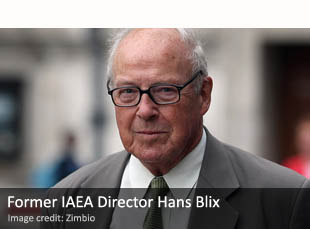
►►Ex-head admits IAEA does work with spies (shock, horror). The International Atomic Energy Agency, which acts as the nuclear watchdog of the United Nations has been closely cooperating with the world’s spy agencies, including on Iran and Syria, for years, according to its former director. Hans Blix told RT that the IAEA’s cooperation with the world’s intelligences started following the Iraqi crisis of the 1990s. “Of course, intelligence can always try to fool everybody”, he said. “Half of the information may be true, half of it may be disinformation, and therefore they have to examine it critically”.
►►Afghanistan arrests diplomat on spying charges. Afghanistan’s State Intelligence Agency (KHAD) on Monday said that a senior foreign ministry diplomat and three other government officials had been arrested over charges of spying for Iran and Pakistan. The men were detained “on charges of spying for neighboring regions” and “the arrests were made with concrete evidence”, KHAD’s spokesman, Lutfullah Mashal, said. An unnamed source in the same agency also claimed that the deputy head of KHAD’s Asia desk and two government employees had been arrested in a similar incident in the eastern Afghan province Nangarhar a month before.