News you may have missed #646

Syed Ghulam Nabi Fai

Syed Fai

►►Analysis: Reorganizing Colombia’s disgraced spy agency. One former director of Colombia’s Administrative Department of Security, or DAS, has been convicted of conspiring to kill union activists. A former high-ranking manager is accused of collaborating with death squads to assassinate a television humorist. Dozens of agents have been implicated in what prosecutors call a systematic effort to illegally spy on the Supreme Court and opposition politicians, which some former DAS agents said was done with US equipment and funding. The new man in charge, however, Ricardo Giraldo, is an affable bankruptcy lawyer and former university professor, and his role is decidedly different from his predecessors’: namely to dismantle the agency.
►►Russian site snubs FSB request to block opposition networking. Russia’s top social networking site on Thursday defiantly rejected a request by the Federal Security Service to block opposition groups from using it to organize street protests accusing the authorities of rigging this week’s election. Over 45,000 people in Moscow alone have pledged on Facebook and the Russian site, VKontakte, to join fresh protests on Saturday against the 12-year rule of Vladimir Putin and the victory of his United Russia party in last Sunday’s parliament vote.
►►American citizen admits he took Pakistan spy money. Ghulam Nabi Fai, who is accused of working in Washington for Pakistan’s Inter-Services Intelligence (ISI) directorate, to lobby for Kashmiri independence, has pleaded guilty to secretly receiving millions of dollars from Pakistan’s spy agency in violation of US federal laws.

News you may have missed #644 (Pakistan edition)

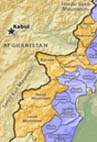
Afghan-Pakistani Border

AfPak border

►►US built its own secret Pakistani spy service. Deep within Pakistan’s Inter-Services Intelligence (ISI), America’s most reliable ally has been the spy service’s division known as the T Wing. It was created largely from scratch in 2006 and 2007, after the Americans mostly gave up trying to work with the ISI’s uncooperative leadership. US officials say their hope was that the T Wing might help to offset the pernicious influence of the ISI’s S Wing, the division in charge of managing the Pakistani government’s relationship with Islamic extremist groups such as the Kashmiri separatist Lashkar-e-Taiba and Afghanistan’s Taliban.
►►Pakistan ‘permanently’ shuts down resupply routes to Afghanistan. NATO recently literally shot itself in the foot, imperiling the resupply of International Assistance Forces (ISAF) in Afghanistan, by shooting up two Pakistani border posts in a “hot pursuit’ raid. Given that roughly 100 fuel tanker trucks along with 200 other trucks loaded with NATO supplies cross into Afghanistan each day from Pakistan, Pakistan’s closure of the border has ominous long-term consequences for the logistical resupply of ISAF forces, even as Pentagon officials downplay the issue and scramble for alternative resupply routes.
►►Analysis: The fiction of Pakistan as a US ally. Sixty percent of the supplies used by US forces in Afghanistan transit Pakistan. The logistical requirements of the American army in the Afghan theater are staggering. Leaving aside food, ammunition and a million other necessities, the US military in Afghanistan consumes 300,000 barrels of oil a day. Every drop of that oil has to be trucked in country. NATO so far keeps stressing that there is no immediate threat to continued operations, but that will be true for only so long. Wars consume mountains of supplies, and without fuel, food and bullets soldiers will not fight for long.
Did US agencies fail to heed warnings of 2008 Mumbai attacks?

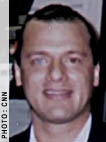
David Coleman Headley

David Headley

By JOSEPH FITSANAKIS | intelNews.org |
We have written before that the CIA alerted Indian authorities prior to the 2008 Mumbai attacks, which killed 166 people, including six American citizens. The incident, which was perpetrated by Pakistani-based militant group Lashkar-e-Taiba, is routinely described as the most sophisticated and spectacular terrorist strike since 9/11.  But there are numerous questions about the complex relationship between the United States, Lashkar-e-Taiba, and Pakistan’s Inter-Services Intelligence (ISI) directorate, which is widely believed to be protecting the terrorist group. Many of these questions center on David Coleman Headley, an American citizen, born in Washington, DC, who is currently in US custody, having confessed to helping plan the Mumbai attacks. According to Headley’s own court testimony, he worked for the ISI; moreover, despite early denials, the US government eventually admitted that Headley was a paid informant for the US Drug Enforcement Administration. There is, however, intense speculation in India and Pakistan that Headley, who is of Pakistani background, is in fact a CIA agent-gone-rogue, who used his CIA connections to pursue his militant plans undisturbed (something with the CIA flatly denies). Such rumors are reinforced by the US authorities’ puzzling refusal to allow Indian government investigators of the Mumbai attacks access to Headley. The curious relationship between US intelligence agencies and David Headley has been probed by several media outlets, including The New York Times, which in March of 2010 pointed out that Headley “moved effortlessly between the United States, Pakistan and India for nearly seven years, training at a militant camp in Pakistan on five occasions”. Now a new documentary by investigative group ProPublica, which aired on Tuesday as part of PBS’ Frontline television series, has unearthed new information that shows US government agencies failed to heed “repeated warnings over seven years”, which might have helped prevent the Mumbai attacks. Read more of this post

News you may have missed #634

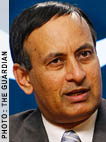
Husain Haqqani

Husain Haqqani

►►Korean ex-soldier investigated for spying. Police suspect that a former South Korean Army soldier, Kim, 34, whose full name was undisclosed to the media, crossed through Shenyang, northeastern China, into the North and handed over information gathered during and after his military service. This is the second case involving alleged North Korean spying on the South in as many days.
►►Pakistan ambassador to US resigns over spy memo row. Islamabad’s ambassador to Washington, Husain Haqqani, has resigned after a confrontation between Pakistan’s military and the civilian government of President Asif Ali Zardari. His resignation follows reports of an offer by the Pakistani government to the United States to rein in the army and its spy agency, Inter-Services Intelligence. Zardari’s government was accused of treachery over the proposal, which was made in a memo delivered to the US military chief, Admiral Mike Mullen.
►►US says ‘no proof’ of Libyan ex-spy chief’s capture. It emerged earlier this week that former Libyan intelligence chief Abdullah al-Senussi had been captured. But the United States now says there is no proof he is in custody. According to Susan Rice, the US envoy to the United Nations, Libyan authorities “were not able to confirm that Senussi was in anybody’s custody”.

News you may have missed #633

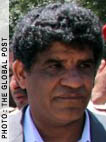
Abdullah al-Senussi

Al-Senussi

►►Is Britain secretly assisting the CIA’s drone campaign? In the latest casualties from America’s hidden war in Pakistan, two British nationals, Ibrahim Adam and Mohammed Azmir, have reportedly been killed by drone missiles. The death of two men already known to UK authorities raises serious questions about the role that the British intelligence services are playing in the CIA’s unmanned drone war.
►►Gaddafi’s intelligence chief captured. Libya’s interim authorities have captured the last totem of the Gaddafi regime, seizing former intelligence chief Abdullah al-Senussi in the country’s southern desert. The arrest means that all leading figures from the Gaddafi regime have now been killed, captured or driven into exile.
►►South Korea says it caught North spy. A North Korean spy has been arrested after arriving in South Korea posing as a refugee, according to South Korean authorities. The latter claim to have found during a routine background check that the man, surnamed Kim, was assigned to the North’s military intelligence command and had received espionage training.

News you may have missed #623

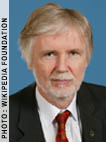
Erkki Tuomioja,

Erkki Tuomioja,

►►Finnish FM washes hands of CIA flights. Erkki Tuomioja, the Finnish foreign minister, said last week that Finnish officials had no means to investigate allegations that a number of CIA prisoner flights touched down in Finland during the so-called war on terrorism. Tuomioja urged human rights groups to take action instead.
►►Australian defense documents stolen by foreign intelligence. A report has revealed that secret documents of Major-General John Cantwell, Australia’s most senior commander in the Middle East, were stolen by a foreign intelligence service last year. The documents were apparently in an encrypted drive stored in an aide’s backpack –contrary to protocol– and was thought lost when a large amount of luggage went missing for several days from Islamabad airport.
►►US soldier arrested by FBI counterintelligence. William Colton Millay, of Owensboro, Ky., was arrested last week at Joint Base Elmendorf-Richardson in Anchorage in an investigation conducted by the US Army and FBI. For now, both agencies are withholding information about the spy case. But an Army spokesman said that Millay did not leak or send information using the Internet and did not harm US security.

News you may have missed #621

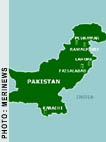
Pakistan

Pakistan

►►Pakistan denies spying on German forces in Afghanistan. Pakistani officials have rejected a German newspaper report that the country’s secret service spied on German security forces in Afghanistan. Without citing its sources, mass-selling weekly Bild am Sonntag reported on Sunday that Germany’s BND foreign intelligence agency warned its interior ministry that Pakistan had spied on 180 German police officers deployed in Afghanistan to train locals.
►►CIA expert says US government lacks security operating system. Industry is not providing the US government with the basic tools it needs to build a secure information infrastructure, according to Robert Bigman, chief of the CIA’s Information Assurance Group. “What we need is a secure operating system”, he said during a panel discussion at the Security Innovation Network showcase in Washington last month. “We gave up some time ago on the battle to build a secure operating system, and we don’t have one”.
►►US increased spy spending in 2011. The US Congress appropriated $54.6 billion for intelligence programs in the 2011 fiscal year, the Office of the Director of National Intelligence disclosed last week. The amount, which does not include what was spent on military intelligence, is a slight increase from the year before but could be the end of the upward trend, says CNN’s Security Clearance blog.

News you may have missed #610

Charles S. Faddis

Charles S. Faddis

►►Australian agency warns spy cells ‘lie in wait’. In its annual report, Australia’s intelligence service, the ASIO, warns that foreign powers may be recruiting sleeper agents in Australia to carry out sabotage in future conflicts. The report further notes that, despite the rise of cyberespionage, there has not been a marked reduction in the intensity of more traditional forms of espionage.
►►US frees convicted Cuban spy but debate rages on. Few topics illustrate the gulf in perception between the governments of Cuba and the United States like the case of the Cuban Five. The five Cuban agents were arrested in Florida in the 1990s and convicted on espionage charges. US federal prosecutors said the men were trying to spy on military installations. But Cuba’s government has long maintained the men were trying to monitor Miami-based exile groups that were planning attacks on the island nation.
►►Analysis: It’s time for the Pakistanis to pick a side. Former CIA operations officer Charles Faddis (pictured) argues that the US government needs to immediately designate Pakistan’s proxy army, the Haqqani network, as a terrorist organization. It has avoided taking that action for far too long and only because of crass political concerns, says Faddis, but the time has come to change course.

News you may have missed #607

Shakil Afridi

Shakil Afridi

►►Ex-worker sues US spy agency for anti-Islamic bias. Mahmoud Hegab, a former employee of the super-secretive US National Geospatial-Intelligence Agency, says he lost his security clearance because his wife attended an Islamic school and worked for a Muslim charity, Alexandria-based Islamic Relief USA.
►►Russia says China still spies the old-fashioned way. Russia’s Federal Security Service (FSB), issued a rare statement last week, claiming it had arrested Tong Shengyong, a Chinese citizen who, posing as a translator for official delegations, was working under the direction of the Chinese government in an attempt to buy state secrets from Russians about Russia’s S-300 missile system. It now says that the Tong case shows that China continues to employ an old standby in the tradecraft playbook: outright bribery.
►►Pakistan panel says doctor who aided CIA should face charges. Pakistani doctor Shakil Afridi, who ran a vaccination program for the CIA to help track down Osama bin Laden, should be put on trial for high treason, a Paksitani government commission said Thursday.

News you may have missed #604 (CIA edition)

Raymond Allen Davis

Raymond Davis

►►Aid agency leaves Pakistan following CIA vaccination scheme. Fears that a fake CIA vaccination scheme, created to hunt Osama bin Laden, has compromised the operations of aid agencies in Pakistan have intensified, after it emerged that Save the Children, a major NGO, was forced to evacuate its staff following warnings about their security.
►►CIA contractor arrested in car park brawl. A CIA contractor Raymond Davis, who was freed by Pakistani authorities after the families of two men he killed in a shootout agreed to accept more than $2.34 million in blood money, has been arrested after a brawl over a car parking space, according to police in the US state of Colorado.
►►Judge approves secret evidence for CIA leak trial. A federal judge has ruled that prosecutors pursuing a leak case against former CIA officer Jeffrey Sterling may use a controversial procedure known as the “silent witness rule” to present evidence to the jury that will not be seen by the public. Sterling is accused of leaking CIA secrets to New York Times journalist James Risen.

News you may have missed #603

Syed Ghulam Nabi Fai

Syed Fai

►►Turkey has names of Israeli soldiers who attacked Gaza Flotilla. According to Turkish media, government officials succeeded in amassing the list of 174 names of officers and soldiers involved in the 2010 MV Mavi Marmara attack, by planting intelligence agents inside Israel. Turkish government officials have denied the reports.
►►Ex-MI5 chief to hear deportation case of alleged spy. A British judge has ruled that Sir Stephen Lander, former director of MI5, Britain’s domestic intelligence service, can help to decide whether Katia Zatuliveter should be deported from the UK for allegedly spying for Russia. Zatuliveter, a Russian citizen who worked as an assistant to former British Member of Parliament Mike Hancock, may be deported on the basis of espionage evidence gathered by MI5.
►►Analysis: Pakistan’s spy plot to influence Washington. Syed Ghulam Nabi Fai came to the US on Saudi money with hopes of helping people in the disputed Indian territory of Kashmir. But he found himself spending millions on behalf of Pakistan’s notorious Inter-Services Intelligence and, now, under arrest. An excellent article by The Atlantic‘s Kim Barker, Habiba Nosheen, and Raheel Khursheed.

US openly accuses Pakistan of waging ‘proxy war’ in Afghanistan

Mike Mullen

Mike Mullen

By JOSEPH FITSANAKIS | intelNews.org |
For the first time a senior American official has openly accused the intelligence services of Pakistan of using Taliban-linked groups to wage a “proxy war” in neighboring Afghanistan. United States Admiral Mike Mullen, Chairman of the Joint Chiefs of Staff, has described the Haqqani Network, an insurgent group closely allied with the Taliban, as Pakistan’s proxy-army in Afghanistan. The Haqqani Network, which is considered by US military commanders as “the most resilient insurgent force in Afghanistan”, is widely seen as responsible for the massive attack on the US embassy and several other targets in Kabul, earlier this month. Some military observers have compared the attacks to the 1968 Tet Offensive by the Viet Cong. Speaking on Tuesday at an event hosted by the Carnegie Endowment for International Peace, Admiral Mullen said he had pressed the government and intelligence agencies of Pakistan to break their links with the Haqqani Network. He did so during a recent meeting with the chief of Pakistan’s armed forces, which reportedly lasted over four hours. By “intelligence services”, Mullen means the Inter-Services Intelligence directorate (ISI), Pakistan’s most powerful spy agency. According to Admiral Mullen, the meeting centered on “the need for the […] ISI to disconnect from [the] Haqqani [Network] and from this proxy war that they’re fighting” in Afghanistan. He also said that “the ISI has been […] supporting proxies for an extended period of time” and described the ISI-Haqqani collaboration as “a strategy in the country”, rather than simply a series of isolated incidents by shadowy groups operating within the Pakistani intelligence services. Read more of this post

News you may have missed #588

Thomas Hammarberg

Hammarberg

►►Thai court convicts three of spying. A Thai court on Tuesday jailed three men, a Cambodian, a Vietnamese and a local, for two years each for espionage. The trio were arrested in June in Kantharalak District, near the disputed border with Cambodia, amid a territorial row between Thailand and its neighbor. Police said that the three were carrying maps with military facilities marked on them.
►►Council of Europe wants truth on CIA black sites. Thomas Hammarberg, the human rights commissioner for the Council of Europe, urged countries that have hosted secret CIA prisons to come clean Monday, as the 10th anniversary of 9/11 approaches. Well, that would be…let’s see…pretty much all of them.
►►Doctor who helped CIA find bin Laden barred from leaving Pakistan. Before bin Laden’s death in May, Shakil Afridi helped the CIA set up a fake vaccination programm in Abbottabad, in the hope of obtaining DNA samples from the house where the al-Qaida chief was suspected of living. But now he has been detained by Pakistani security and cannot go abroad without permission.

News you may have missed #579 (CIA edition)

Robert Grenier

Robert Grenier

►►Interview with ex-CIA Islamabad station chief. Robert Grenier, who was the CIA’s Islamabad station chief from 1999 to 2001, tells Pakistan’s Express Tribune newspaper that the US unmanned drone program, which began as “a very surgically employed tool against international terrorists”, has now “become much more of a conventional weapon against militants”. He also rejects allegations that Pakistani government officials were aware of osama bin Laden’s whereabouts, saying that “no one has apparently found any compelling evidence”.
►►Who will guide Petraeus in his new CIA job? Siobhan Gorman, of The Wall Street Journal, opines that, when US General David Petraeus takes the helm at the Central Intelligence Agency next month, it will fall to the Agency’s deputy director Michael J. Morell, a little-known 31-year CIA veteran, to guide the new director.
►►CIA drone kills al-Qaeda deputy. An anonymous US official has told The New York Times that a CIA drone killed al-Qaeda’s second-ranking operative in Pakistan’s northwest province of Waziristan. Atiyah Abd al-Rahman, a Libyan who in the past year had taken over as al-Qaeda’s top operational planner, was killed on August 22, according to the official. Al-Qaeda is still officially led by Ayman al-Zawahiri, who is also believed to be in Pakistan.

News you may have missed #577

Waihopai base

Waihopai base

►►Interview with Michael Hayden. The former director of the CIA and the NSA gave a lengthy interview in preparation for his keynote speech at the Raleigh Spy Conference. Among other things, he says that he does “not immediately conclude that senior levels of the Pakistani government knew about” Osama bin Laden’s whereabouts.
►►CIA denies helping police spy on NY Muslims. The Central Intelligence Agency is denying a news report that it helped the New York Police Department conduct covert surveillance on Muslims. The agency said suggestions that it engaged in domestic spying were “simply wrong” and that the report “mischaracterized the nature and scope” of the CIA’s support for the New York police.
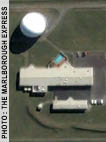
►►Spy base reservoir not a pool after all... A journalist at New Zealand’s Marlborough Express newspaper noticed what looked suspiciously like a swimming pool on a satellite photo (pictured) of the super-secret Waihopai listening base near Blenheim. Do spies go swimming on the base, he asked? It turns out they don’t. According to Government Communications Security Bureau Waihopai station chief Chris Farrow, the landmark is in fact a water reservoir, to be used in case of fire.