Murder suspect to give evidence on death of ex-KGB spy in London
June 16, 2015 Leave a comment
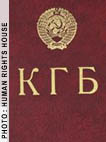
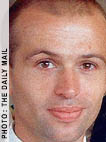
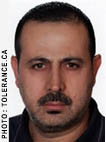
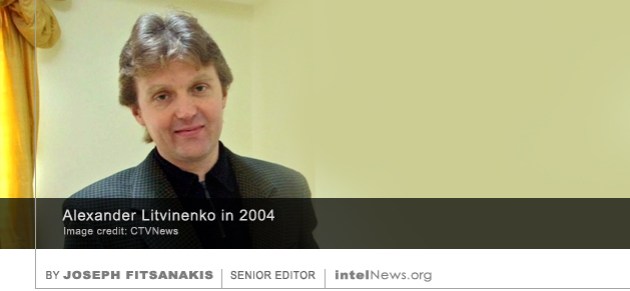 A Russian former intelligence officer, who is accused by the British government of having killed a former KGB spy in London, has agreed to testify at a public inquiry to be held in the British capital next month. British government prosecutors believe Russian businessman Dmitri Kovtun, who worked for the KGB during the Cold War, poisoned his former colleague in the KGB, Alexander Litvinenko, in 2006. Litvinenko was an officer in the Soviet KGB and one of its successor organizations, the FSB, until 2000, when he defected with his family to the United Kingdom. He soon became known as a vocal critic of the administration of Russian President Vladimir Putin. In 2006, Litvinenko came down with radioactive poisoning soon after meeting Kovtun and another former KGB officer, Andrey Lugovoy, at a London restaurant. He was dead less than two weeks later.
In July of 2007, after establishing the cause of Litvinenko’s death, which is attributed to the highly radioactive substance Polonium-210, the British government officially charged 1 Kovtun and Lugovoy with murder and issued international arrest warrants for their arrest. Soon afterwards, Whitehall announced the expulsion of four Russian diplomats from London. The episode, which was the first public expulsion of Russian envoys from Britain since end of the Cold War, is often cited as marking the beginning of the worsening of relations between the West and post-Soviet Russia.
Since 2007, when they were officially charged with murder, Kovtun and Lugovoy deny the British government’s accusations, and claim that Litvinenko poisoned himself by accident while trading in illegal nuclear substances. The administration of Russian President Vladimir Putin refuses to extradite the two former KGB officers to London, and has denounced the British public inquiry into Litvinenko’s death as “a sham”. However, last March Kovtun unexpectedly wrote to the presiding judge at the inquiry, Sir Robert Owen, offering to testify via a live video link from Moscow. On Monday, Sir Robert issued a statement 2 saying an agreement had been struck between Kovtun and the inquiry, and that the Russian businessman would testify from Moscow, “most likely towards the end of next month”. Kovtun is expected to confirm that he met Litvinenko in London on the day the former KGB spy fell ill, but to insist that he had no role in poisoning him.
► Author: Joseph Fitsanakis | Date: 16 June 2015 | Permalink: https://intelnews.org/2015/06/16/01-1715/
- J. FITSANAKIS “Coroner’s report sees Russian state behind ex-KGB spy’s death” intelNews [23jan2014] ↩
- ANON. “Litvinenko inquiry: Key suspect Kovtun to give evidence” BBC [15jun2015] ↩
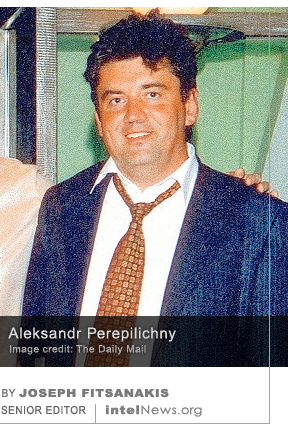 A Russian businessman, who died in London while assisting a Swiss probe into a massive money-laundering scheme, may have been poisoned with a substance derived from a highly toxic plant, an inquest has heard. Aleksandr Perepilichny was an influential Moscow investment banker until he fled Russia in 2009, saying that his life had been threatened after a disagreement with his business partners. A few months later, having moved to an exclusive district in Surrey, south of London, Perepilichny began cooperating with Swiss authorities who were investigating a multi-million dollar money-laundering scheme involving senior Russian government officials. The scheme, uncovered by a hedge fund firm called Hermitage Capital Management (CMP), and described by some as the biggest tax fraud in Russian history, defrauded the Russian Treasury of at least $240 million. The case made international









 intelNews.org
French prosecutors urge end to Yasser Arafat poisoning inquiry
July 22, 2015 by Joseph Fitsanakis 2 Comments
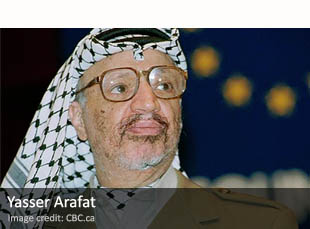
However, a year-long investigation by a team of forensic pathologists at the Vaudois University Hospital Centre in Lausanne, Switzerland, suggested in 2013 that the late Palestinian leader was likely poisoned with radioactive polonium. According to the results of the study, which included tests on Arafat’s bones and on soil samples from around his corpse, there was “unexpected high activity” of polonium-210. Traces of the same substance were discovered on the personal artifacts that Arafat used during his final days in Paris. The Swiss lab followed its probe with a second set of tests, which confirmed the initial results and were eventually published in the British peer-reviewed medical journal The Lancet.
The Swiss investigation prompted Arafat’s widow, Suha Arafat, to file a civil suit at a court in Nanterre, which launched a murder inquiry in August 2012. Further tests were carried out on Arafat’s belongings and his body was exhumed from its burial place in Ramallah. Tests were also carried out by the Russian Federal Medical and Biological Agency, which concluded that the late Palestinian statesman had died “not from the effects of radiation, but of natural causes”. The French inquiry was concluded in April of this year, and the results communicated to the French government prosecutor in Nanterre, Catherine Denis.
On Tuesday, Denis said she had studied the results of the medical investigation and had concluded that the polonium-210 isotopes found in Arafat’s remains and at his gravesite, were without question “of an environmental nature”. Consequently, the case should be dismissed, she said, adding that her view represented the opinion of the prosecution in the case of Arafat’s alleged poisoning. The court must now determine whether to accept the prosecutor’s advice or continue with the case, as is the wish of Arafat’s family.
► Author: Joseph Fitsanakis | Date: 22 July 2015 | Permalink: https://intelnews.org/2015/07/22/01-1740/
Filed under Expert news and commentary on intelligence, espionage, spies and spying Tagged with Catherine Denis, France, lawsuits, News, poisoning, polonium-210, suspicious deaths, Yasser Arafat