EU Council president grilled in closed-door probe of Polish-Russian spy deal

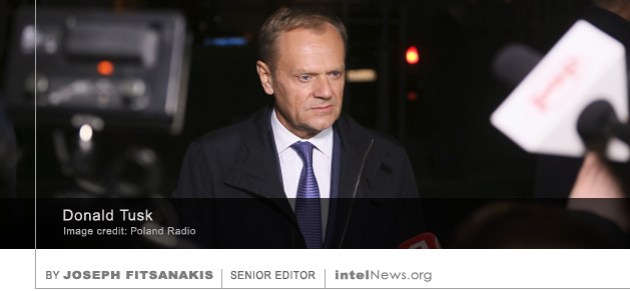
Donald TuskSenior European Union official Donald Tusk was grilled for several hours on Wednesday, in the context of a Polish government probe into an intelligence agreement between Warsaw and Moscow. But Tusk, who is the current president of the European Council, and served as Poland’s prime minister from 2007 to 2014, dismissed the probe as politicized and said it was deliberately designed to harm his political career. The investigation was launched by the government of Poland earlier this year. Its stated goal is to investigate an agreement that was struck in late 2013 between Poland’s Military Counterintelligence Service (MCS) and the Federal Security Service (FSB) of the Russian Federation. The agreement allegedly took place in secret, but was never implemented. The government of Poland canceled it in 2014, after accusing Moscow of illegally annexing the Ukrainian region of Crimea.

On Wednesday, Tusk spent nearly three hours at the office of the prosecutor in Warsaw, in a question-and-answer session that was held entirely behind closed doors. As he was leaving the building, the former Polish prime minister said he could not comment on the content of his testimony. But he used strong words to dismiss the entire investigation as “extremely political”, while accusing those behind it as holding a vendetta against him. Tusk and his supporters believe that the probe was primarily initiated by Jarosław Kaczyński, leader of the conservative Law and Justice party. They also claim that Kaczyński, who is Tusk’s political arch-foe in Poland, is spearheading a campaign of personal vindictiveness against him.

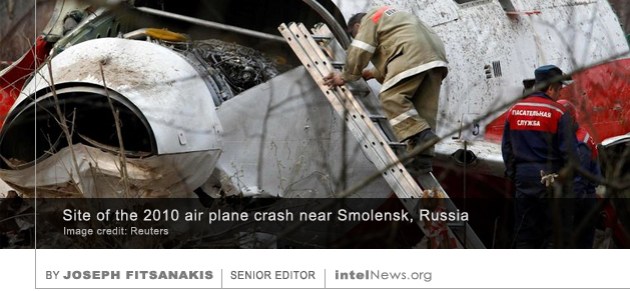
The rivalry between the two men began in 2010, when an airplane carrying a Polish government delegation to a World War II commemoration event in Russia crashed near the Russian city of Smolensk, killing everyone onboard. Among the dead was Polish President Lech Kaczyński, Jarosław Kaczyński’s brother. Since the air disaster, the leader of the Law and Justice party has maintained that the Russian government deliberately brought down the plane. He also accuses Tusk, who was Poland’s prime minister at the time, of colluding with Moscow to eliminate his brother. These allegations remain unsubstantiated, but they have contributed to the emergence of a venomous political climate in Poland that has dominated national politics for years.

On Wednesday, during Tusk’s three-hour testimony, several thousands of his supporters demonstrated outside the office of the prosecutor, urging Tusk to run for president in a few years. It is a common expectation in Poland that Tusk will soon turn his attention to domestic Polish politics and run for the highest office in the land in 2020.

Author: Joseph Fitsanakis | Date: 21 April 2017 | Permalink
Poland exhumes late leader’s body in probe of 2010 plane crash in Russia

Lech KaczyńskiAuthorities in Poland have exhumed the body of the country’s late prime minister and his wife as part of an investigation into the 2010 airplane disaster that killed them and nearly 100 others in Russia. The move has reignited persistent rumors that the crash that killed everyone onboard the plane, including Polish President Lech Kaczyński and his wife Maria, was not an accident. At the time of their death, the couple were leading a delegation of Polish officials and journalists traveling to Russia to participate in commemorations marking 70 years from the so-called ‘Katyn massacre’. The term refers to the extermination of approximately 22,000 Polish soldiers and civilians that was carried out by the Soviet military and secret services in 1940, following the Soviet invasion of Poland.
Investigations of the air disaster have been carried out by Russia and by the previous Polish administration, headed by the centrist Civic Platform party, which governed the country from 2010 until 2015. Both concluded that the crash was an accident. But the governing Law and Justice Party (PiS), headed by Jarosław Kaczyński, twin brother of the late president, insists that previous investigations were incomplete and has initiated its own probe into the matter. Almost as soon as it formed a national government last year, the rightwing PiS reopened the investigation into the 2010 air crash. The exhumation of the victims’ bodies, which began on Monday, is the first step of the new probe.

Many supporters of the new investigation claim that bombs hidden onboard the plane caused it to crash. Others suggest that the Polish government at the time is to blame for the crash, because it neglected to properly service the plane. Some have even suggested that Donald Tusk, Poland’s prime minister at the time of the crash, who now heads the European Council, should be put on trial for the murder of President Kaczyński. Critics note that no credible evidence has been put forward to support the assassination theory or the deliberate neglect theory, barring some circumstantial discrepancies in the Russian-language documents. The current probe is expected to last several months.

Author: Joseph Fitsanakis | Date: 15 November 2016 | Permalink

Poland’s intelligence watchdog chief says 52 journalists were spied on

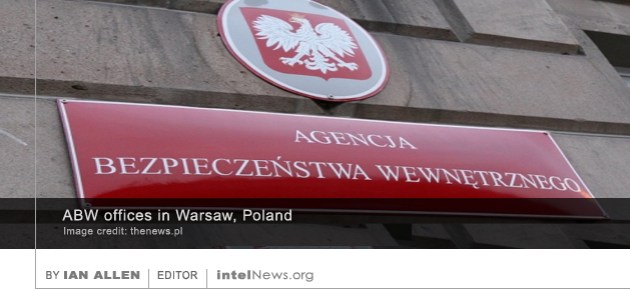
ABW PolandOver 50 journalists and their contacts were systematically spied on by the Polish intelligence services between 2007 and 2015, according to the former director of an anti-corruption watchdog. Until 2009, Mariusz Kamiński led the Central Anti-Corruption Bureau, which was set up by the office of the Polish Prime Minister in 2006 to address corruption in the country. The body is also responsible for monitoring the operations of Poland’s intelligence services, including the Internal Security Agency (ABW).
Kamiński made the spying allegation on Wednesday at the Sejm, the lower house of the Polish Parliament, during a parliamentary hearing held to assess the performance of the previous government. He said that dozens of journalists of all political persuasions had been illegally spied on by the ABW between 2007 and 2015, on direct orders by the previous government. He was referring to the administrations of Donald Tusk and Ewa Kopacz, who held successive prime ministerial posts until last year. The two politicians represented a center-left alliance between the Civic Platform (PO) and the Polish People’s Party (PSL), which ruled Poland from 2007 to 2015. But Kamiński, who is currently a member of the Sejm elected with the governing Law and Justice party (PiS), claimed that, under Tusk and Kopacz’s watch, the ABW spied on prominent journalists, their families and their contacts, secretly photographing them and tapping their telephones in order to see who they communicated with. He also claimed that the ABW spied on him and his colleagues at the Central Anti-Corruption Bureau in an attempt to intimidate them.

The center-right Law and Justice Party (PiS), which Kamiński represents at the Sejm, rose to power in October of last year after gaining a majority in both houses of the Polish Parliament. It had remained in opposition from 2007 to 2015, while the PO-PSL alliance governed the country. In his presentation, Kamiński claimed that the current center-right administration is “not placing anyone under surveillance due to their political views”, as these types of illegal activities would “directly violate freedom of speech and democracy” in Poland. At the end of his talk, Kamiński presented a list of journalists’ names who were allegedly targeted by the ABW. But opposition politicians dismissed Kamiński’s charges as being politically motivated and said they aimed to discredit the previous administration.

Author: Ian Allen | Date: 12 May 2016 | Permalink

Polish ex-leader Walesa denies he was communist spy, calls for debate

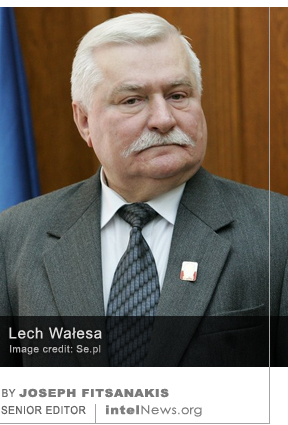
Lech WalesaPoland’s first post-communist president, Lech Wałęsa, has denied allegations that he was secretly a communist spy and has called for a public debate so he can respond to his critics. In 1980, when Poland was still under communist rule, Wałęsa was among the founders of Solidarność (Solidarity), the communist bloc’s first independent trade union. After winning the Nobel Peace Prize in 1983, Wałęsa intensified his criticism of Poland’s communist government. In 1990, following the end of communist rule, Wałęsa, was elected Poland’s president by receiving nearly 75% of the vote in a nationwide election. After stepping down from the presidency, in 1995, Wałęsa officially retired from politics and is today considered a major Polish and Eastern European statesman.
But in 2008, two Polish historians, Sławomir Cenckiewicz and Piotr Gontarczyk, published a book claiming that, before founding Solidarność, Wałęsa was a paid collaborator of the SB, Poland’s communist-era Security Service. In the book, titled Secret services and Lech Walesa: A Contribution to the Biography, the two historians claim there is “compelling evidence” and “positive proof” that Wałęsa worked as a paid informant for the SB between 1970 and 1976, under the cover name “Bolek”. Wałęsa claimed that the documents unearthed by the two historians had been forged by Poland’s communist government in order to discredit him in the eyes of his fellow-workers during his Solidarność campaign. But the critics insisted, and in 2009 a new book, written by Polish historian Paweł Zyzak, echoed Cenckiewicz and Gontarczyk’s allegations. Citing sources “that prefer to remain anonymous”, the book, titled Lech Walesa: Idea and History, claimed that Wałęsa fathered an illegitimate child and collaborated with the SB in the 1970s. Like Cenckiewicz and Gontarczyk, Zyzak worked at the time for the Warsaw-based Polish Institute of National Remembrance (IPN), which also published his book. The IPN is a government-affiliated organization whose main mission is to investigate, expose and indict participants in criminal actions during the Nazi occupation of Poland, as well as during the country’s communist period. It also aims to expose SB clandestine agents and collaborators.

This past Monday, Poland’s former president published an open letter on his personal blog, in which he asked for a “substantive public debate on the Bolek imbroglio”. He said he wanted to end this controversy once and for all, by facing his critics before the public. Wałęsa added he had “had enough” of the “constant stalking” he faced by “both traditional media and Internet publications”. He went on to say that he had already asked the IPN to host a public meeting with authors and historians, including his critics, in which he would participate. Later on Monday, the IPN confirmed it had received a letter from Wałęsa, in which the former president asked for the opportunity to participate in a public meeting about the “Bolek affair”. Cenckiewicz, who co-authored the 2008 book on Wałęsa with Gontarczyk, reportedly wrote on Facebook that he would agree to participate in such a debate. The IPN said it would plan to host the debate in March of this year.

Author: Joseph Fitsanakis | Date: 12 January 2016 | Permalink

News you may have missed #890

Kim Kuk-giBy IAN ALLEN | intelNews.org
►►US DEA agents given prostitutes and gifts by drug cartels. US Drug Enforcement Administration agents allegedly had “sex parties” with prostitutes hired by Colombian drug cartels overseas over a period of several years, according to a report released Thursday by the Justice Department. Former police officers in Colombia also alleged that three DEA supervisory special agents were provided money, expensive gifts and weapons from drug cartel members. Seven of the 10 DEA agents alleged to have participated in gatherings with prostitutes and received suspensions of two to 10 days.
►►Polish lieutenant accused of spying for Russia. A Polish Air Force pilot allegedly copied several thousand flight plans for F-16 fighters and handed them to Russian intelligence. According to Polish media, the airman was arrested by authorities last November, but the information has only recently emerged. The pilot was allegedly suspended from his duties, his passport was confiscated, and he was banned from leaving the country. Some reports suggest that soon after the arrest of the lieutenant, a Russian diplomat was expelled from the country for spying.
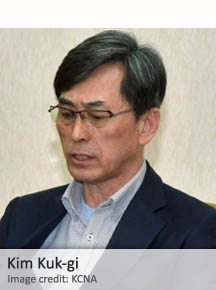
►►North Korea claims arrest of South Korean spies. North Korea said it had arrested two South Koreans engaged in espionage. The two arrested men, identified as Kim Kuk-gi (see photo) and Choe Chun-gil, were presented at a press conference in Pyongyang attended by journalists and foreign diplomats. A North Korean media report said Kim and Choe had gathered information about North Korea’s “party, state and military secrets”. It was not immediately clear where or when the two men were arrested. In Seoul, the country’s intelligence agency said the charge that the two men were working for the agency was “absolutely groundless”.

Russia expels Polish, German diplomats in ongoing spy row

Polish embassy in MoscowBy JOSEPH FITSANAKIS | intelNews.org
The Russian government has formally expelled several Polish and German diplomats in what appears to be a tit-for-tat move, following the removal of Russian envoys from Warsaw and Berlin on charges of espionage. The Polish government expelled a number of Russian diplomats last week, after it announced the arrest of two Polish citizens in Warsaw, on charges of spying for a foreign intelligence agency. Polish media reported that a colonel in the Polish Army had been arrested by security personnel for operating as an unregistered agent of an unnamed foreign country. Subsequent media reports said a second man, a lawyer with dual Polish-Russian citizenship, had also been arrested. According to unconfirmed Polish media reports, the two men had been recruited by the GRU, Russia’s military intelligence agency. Last Friday, Polish media reports said that four Polish diplomats stationed in Moscow had been given 48 hours to leave the country. One report suggested that the diplomats included an employee of the political section of the Polish embassy in the Russian capital, as well as three military attachés. The four had reportedly left the country by Sunday night. Authorities in Moscow said they had been forced to take the step of expelling the Polish diplomats following Warsaw’s “unfriendly and unfounded step” of ordering a number of Russian envoys to leave Poland. The four Poles were officially declared “unwanted persons” in Russia for “activities incompatible with their [diplomatic] status”, which is considered code-language for espionage. Also on Monday, the Russian Ministry of Foreign Affairs ordered the expulsion from Moscow of a German diplomat, just hours after a Russian diplomat was asked to leave the German city of Bonn by German authorities. Diplomatic sources said the German diplomat, a female employee at the German embassy in Moscow, was expelled in direct response to the earlier removal of the Russian diplomat, who was exposed as a spy following an extensive surveillance operation that lasted several months. German authorities refused to comment on the case. In Poland, Minister of Foreign Affairs Grzegorz Schetyna said simply that Warsaw “now considered the matter closed”.

News you may have missed #885

Shin BetBy IAN ALLEN | intelNews.org
►►Americans’ cellphones targeted in secret US spy program. The US Justice Department is scooping up data from thousands of mobile phones through devices deployed on airplanes that mimic cellphone towers, a high-tech hunt for criminal suspects that is snagging a large number of innocent Americans, according to people familiar with the operations. The US Marshals Service program, which became fully functional around 2007, operates Cessna aircraft from at least five metropolitan-area airports, with a flying range covering most of the U.S. population, according to people familiar with the program.
►►Israel’s usually secretive spy agencies get into public spat. Israel’s domestic intelligence agency, known as the Shin Bet, has been trading barbs with the military over whether faulty army intelligence left Israel unprepared for war with the militant group Hamas in the Gaza Strip. The spat went high-profile this week when Israel’s Channel 2 aired a report featuring Shin Bet officials –-rendered in pixilated, shadowed form-– claiming the military had brushed aside the agency’s assessment, months before fighting erupted in July, that an armed conflict with Hamas was in the making.
►►Poland mulls military intelligence brigade close to Belarus border. Polish Armed Forces will make emphasis on the unfolding of reconnaissance troops and will set up a separate brigade and military command in the north-east of the country, National Defense Minister Tomasz Siemoniak said on Thursday. The region he visited is located along the border with Belarus and close to the border with Russia’s westernmost Kaliningrad region, an exclave on the south-east shore of the Baltic Sea.

More information emerges on Poles who ‘spied for Russia’

Zbigniew J.By JOSEPH FITSANAKIS | intelNews.org
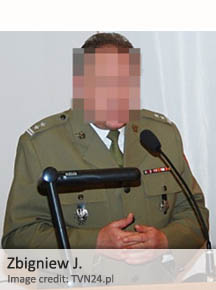
More information has emerged on two Polish citizens who were arrested earlier this month in Warsaw on charges of spying for a foreign intelligence agency. Polish media reported last week that a colonel in the Polish Army had been arrested by security personnel for operating as an unregistered agent of a foreign country. Subsequent media reports said a second man, a lawyer with dual Polish-Russian citizenship, had also been arrested. According to Polish media reports, the two men had been recruited by the GRU, Russia’s military intelligence agency. The organization is believed to have over a dozen officers stationed at the Russian embassy in the Polish capital, posing as diplomats, as well as an unknown number of non-official-cover operatives, who are not officially connected to the Russian diplomatic mission. One of the two arrestees has been identified simply as Zbigniew J., and is said to be a lieutenant colonel serving in Poland’s Ministry of National Defense. Polish newsmagazine Wprost said last weekend that Z.J. worked in the Ministry’s “enlightenment and morale” department, a post that required him to visit military units around the country as part of a team of experts. He would then impart the information gained from his travels to his GRU handler, an officer serving under diplomatic cover in Russia’s Warsaw embassy, during biweekly meetings. Wprost said Z.J. would receive small amounts for cash in exchange for his services, which are believed to have amounted to approximately $30,000 over the course of several years. The newsmagazine suggested that Z.J.’s motivations were primarily financial and were related to unspecified “personal troubles”. The second alleged spy arrested last week has been named as Stanisław Szypowski. He is a lawyer-turned-political-lobbyist who worked for Stopczyk & Mikulski, a prestigious law firm involved in a government-funded project to build facilities able to import liquefied natural gas into Poland. Read more of this post

Poles who ‘spied for Russia’ worked on strategic natural gas project

Polish Ministry of National DefenseBy JOSEPH FITSANAKIS | intelNews.org
At least one of the two men arrested in Poland last week for spying for a “foreign entity” was working on a project of strategic significance, aimed at reducing Poland’s dependency on Russian natural gas. Polish media reported last Wednesday that a colonel in the Polish Army had been arrested by security personnel for acting as an unregistered agent of a foreign country. Subsequent media reports said a second man, a lawyer with dual Polish-Russian citizenship, had also been arrested. Later in the day, an official statement from the office of the Senior Military Prosecutor said simply that Poland’s Ministry of National Defense had “detained a Polish Army officer on suspicion of being a member of a foreign intelligence service”. But there was no mention of the country for which the detained men allegedly spied for. This past Saturday, Reuters revealed that the two men were suspected of spying for Russia. The news agency cited Marek Biernacki, a Polish parliamentarian, who is also a member of the Polish Parliament’s Committee on Intelligence and had allegedly been briefed by Polish intelligence officials about last week’s arrests. Biernacki told journalists that the actions relating to the two detainees had been “taken in respect of two agents of the Russian state”. In accordance with Polish law, the public prosecutor named the civilian detainee as Stanislaw Sz., using only his first name and the first two letters of his last name. Reuters said the man had been employed at the well-connected law firm of Stopczyk & Mikulski, whose website listed him until recently as an employee. Stanislaw Sz. was allegedly involved in a project to construct a coastal terminal in Swinoujscie, located on Poland’s Baltic Sea coast, for importing liquefied natural gas. The import terminal, which is scheduled to become operational in 2015, will allow Poland to import gas from the Persian Gulf. That will in turn reduce the country’s heavy dependence on imported Russian natural gas at a time when Warsaw’s relations with Moscow continue to deteriorate. Reuters said that the precise nature and timing of Stanislaw Sz.’s involvement with the Swinoujscie terminal is unclear, but it characterized the project as being of strategic importance for both Poland and Russia. Read more of this post

Senior Polish defense official detained for ‘spying for Russia’

Polish Ministry of National DefenseBy JOSEPH FITSANAKIS | intelNews.org
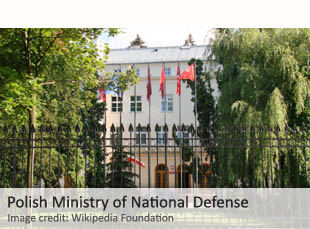
A high-ranking official in Poland’s Ministry of National Defense has reportedly been arrested on suspicion of spying for Russia. Poland’s Dziennik Gazeta Prawna said early on Wednesday that a man had been detained by Polish security personnel because it was thought he had been acting as an unregistered agent of a foreign country. Another source, Poland’s commercial news Radio Zet, reported that two men had been arrested, a colonel in the Polish Army and a lawyer with dual Polish-Russian citizenship. Later in the day, an official statement from the office of the Senior Military Prosecutor said simply that Poland’s “Ministry of National Defense detained a Polish Army officer on suspicion of being a member of a foreign intelligence service”. But it made no mention of the country for which the detained officer allegedly spied for. A spokesman for the Defense Ministry, Lieut. Col. Janusz Wojcik, said he could not disclose any details at the moment, adding only that the arrests were based on evidence complied by the counterintelligence service of the Polish Army. Another Polish official, Lieut. Col. Paul Durka, said the arrests had been coordinated by Poland’s Military Police and the Polish Army’s Internal Security Agency (ABW). But Polish media alleged that the defense official was apprehended for spying for Russia and suggested that his arrest was carried out in dramatic fashion by ABW forces inside the headquarters of the Ministry of National Defense, centrally located on Polish capital Warsaw’s Independence Avenue. This claim, which was later confirmed by ABW spokesman Lieut. Col. Maciej Karczyński, likely signifies that the spy suspect was captured in the act of espionage, following an extensive surveillance operation. Relations between Poland and Russia have been tense since the end of the Cold War, with several intelligence-related incidents making news headlines. In early 2010, the Polish government announced the arrest of a Russian resident of Warsaw, who was accused of working as a non-official-cover operative for Russia’s Main Intelligence Directory (GRU). Later that year, Polish media claimed that Stefan Zielonka, a senior SIGINT officer with Poland’s Military Intelligence Services (SWW), who disappeared without trace in early May of 2009, had defected to Russia. Read more of this post

Analysis: Did Russian spy services secretly bug Polish officials?

Radosław SikorskiBy JOSEPH FITSANAKIS* | intelNews.org
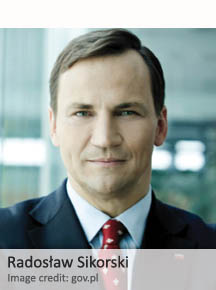
Poland’s relations with the United States were strained this week after Poland’s foreign minister allegedly described Warsaw’s alliance with Washington as “worthless” and “complete bullshit” in a private conversation. Radosław Sikorski has not denied the authenticity of a bugged conversation, in which he appears to argue that Poland is wrong to anger Germany and Russia by always siding with America on foreign policy issues. Using highly undiplomatic language, Sikorski denounced Poland’s foreign policy planners as “complete losers” and accused them of having a “slave mentality” in their dealings with American diplomats. He also described British Prime Minister David Cameron as an “incompetent” politician who “believes in his stupid propaganda” about the European Union. Transcripts of the conversation, which allegedly took place between Sikorski and Poland’s former Finance Minister Jacek Rostowski, were published last week in several increments by Polish newsmagazine Wprost.

How did the bugging occur? It appears that Sikorski was among a number of Polish politicians surreptitiously recorded for over a year while dining with colleagues at elite restaurants in Polish capital Warsaw. Polish authorities reportedly believe that managers and waiters at the restaurants placed concealed recording devices near the guests’ tables. Some believe the culprits’ goal was to blackmail the politicians in return for cash payments; others believe that powerful business interests or opposition politicians were behind the recordings. A few observers have even suggested that Rostowski, who is heard talking with Sikorski in the bugged conversation, may have been the source of the leak to Wprost. The magazine’s editors said they received an encrypted email from a business executive, going by the name “Patriot”, with links to four recorded conversations between senior Polish government officials. But it insisted that it was not aware of the identity of the leaker. Read more of this post

News you may have missed #795

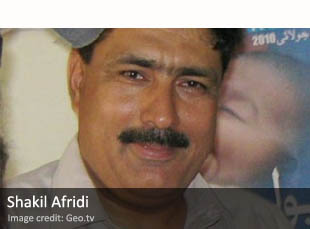
Shakil AfridiBy IAN ALLEN | intelNews.org |
►►US ‘cannot verify authenticity’ of Afridi interview. The US says it cannot verify an alleged interview by Shakeel Afridi, a Pakistani medical doctor who helped the CIA find Osama bin Laden. In May, a Pakistani court sentenced Afridi to 33 years in jail after he was arrested following the killing by US troops of bin Laden in May 2011 at his compound in the town of Abbottabad. US television channel Fox News said Tuesday it had obtained an exclusive phone interview with Afridi from behind bars, in which he detailed months of torture by Pakistan’s shadowy Inter-Services Intelligence.
►►Evidence suggests US covered up Soviet massacre in Poland. New evidence appears to back the idea that the US administration of President F.D. Roosevelt helped cover up Soviet guilt for the 1940 Katyn massacre, in which more than 22,000 Poles were killed by the Soviets on Stalin’s orders. Historians said documents, released by the US National Archives, supported the suspicion that the US did not want to anger its wartime ally, Joseph Stalin. The documents show that American prisoners of war sent coded messages to Washington in 1943 saying that the killings must have been carried out by the Soviets, rather than the Nazis. Information about the massacre was suppressed at the highest levels in Washington, say historians.
►►Yemen President sacks intel agency heads. Yemeni President Abd-Rabbu Mansour Hadi has sacked the heads of the National Security Agency and  Military Intelligence, just a few hours after two suicide car bombs targeted the country’s Defense Minister in the capital Sana’a killing at least 12 people. The National Security Agency’s Ali Mohammed al-Anisi has been replaced with Ali Hassan al-Ahmadi, while the head of Military Intelligence, Mujahid Ali Ghuthaim, has been replaced with Ahmed Muhsin al-Yafiee. Hadi took office in February this year after year-long street protests forced former President Ali Abdullah Saleh to step down as part of an UN-backed power transfer deal in return for immunity from prosecution.

News you may have missed #781

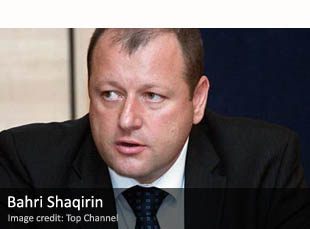
Bahri ShaqirinBy IAN ALLEN | intelNews.org |
►►Syria denies Vice-President has defected. Syria denied reports over weekend that President Bashar al-Assad’s deputy had defected. Vice-President Farouq al-Shara “never thought for a moment about leaving the country”, said a statement from his office, broadcast on state television and issued in response to reports that the veteran Ba’ath Party loyalist had tried to defect to Jordan. Al-Sharaa’s office said the vice-president “supports get[ting] united support from the [United Nations] Security Council to carry out his mission without obstacles”.
►►What is inside the CIA’s Polish prison? A major political scandal erupted in Poland this year, over an alleged secret CIA ‘black site’ used to house high-ranking terrorism suspects. But exactly was in this prison? In this interview, aired yesterday on Washington DC-based National Public Radio’s Weekend Edition program, host Linda Wertheimer speaks to journalist and author Roy Gutman about his recent trip to Poland, to cover an investigation into the CIA interrogation facilities.
►►US ‘surprised’ after Albania replaces spy chief. Little more than a month after taking office, Albanian President Bujar Nishani has discharged the Director of the country’s State Security Agency, SHISH, Bahri Shaqirin. The move follows a request by Albanian Prime Minister Sali Berisha, who first proposed that Shaqirin should be removed. His replacement is Visho Ajazi Lika, currently Deputy Minister for Technology and Information. Some analysts note that Shaqirin enjoyed the support of the US Embassy in Tirana. One of its spokespersons said that “the US had not been informed about Shaqiri’s discharge and [Washington was] surprised by this fast and unexpected decision”.

News you may have missed #752

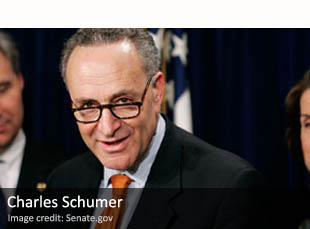
Charles SchumerBy IAN ALLEN | intelNews.org |
►►US companies ‘use military-style planes’ to make maps. Companies such as Apple and Google could push the limits of citizens’ privacy thanks to the use of “military-grade spy planes” when creating their next-generation mapping technologies, according to Senator Charles Schumer (D-NY). Schumer expressed his concerns in a letter to the two companies, arguing that hyper-detailed images of people’s backyards and other objects could pose a threat to both privacy and national security. The Senator also pointed out the potential for criminals and, yes, even terrorists to view detailed maps of “sensitive utilities”.
►►CIA wanted ‘torture cage’ for secret prison. Polish Senator Jozef Pinior claims prosecutors in Krakow have a document that shows a local contractor was asked to build a cage at Stare Kiekuty, a Polish army base used as a CIA prison for al-Qaeda suspects in 2002 and 2003. “In a state with rights”, Pinior told the Polish paper Gazeta Wyborcza, “people in prison are not kept in cages”. He said a cage was “non-standard equipment” for a prison, but standard “if torture was used there”. After Poland launched its official investigation of the Stare Kiekuty site, President Bronislaw Komorowski said the probe was needed because “the reputation of Poland is at stake”.
►►US Air Force spy planes facing postwar cut. The US Air Force plans to cut back on the number of Hawker Beechcraft’s MC-12 spy planes it wants to operate after the draw-down from Afghanistan and Iraq, official data indicates. With declining operations, the aircraft began to lose its priority role and recent comments indicated at least some of the aircraft would either be grounded or given to the National Guard or other services. Since the MC-12 was first deployed in Iraq, U. forces have acquired access to more sophisticated surveillance aircraft as well as drones that can perform roles previously assigned to manned aircraft.

Founder of Polish special forces unit found shot dead in Warsaw

Slawomir PetelickiBy JOSEPH FITSANAKIS | intelNews.org |
Polish authorities have launched an official investigation into the death of a senior retired military intelligence officer who founded Poland’s best-known special forces unit. The body of Brigadier General Slawomir Petelicki, who held senior intelligence positions in both communist and post-communist Poland, was discovered by his wife on Saturday. It was reportedly lying on a pool of blood on the floor of the garage located under his apartment in the Mokotow district of Polish capital Warsaw. Polish media said on Monday that Petelicki’s body carried a single gunshot wound to the head and that a gun was found at the site. Petelicki, 66, had joined Poland’s Ministry of Internal Affairs in 1969 and was soon afterwards posted as a “Military Attaché” at the Polish consulate in New York. He later served in a similar capacity at the Polish embassy in Stockholm, Sweden, as well as in China and North Vietnam, among other countries. He managed to survive the post-communist purges in Poland’s intelligence community, and in 1990 he was assigned to a brand new special forces unit codenamed JW 2305. Through his leadership, the obscure unit was eventually transformed into the GROM (meaning ‘thunder’ in Polish) Special Forces regiment, which he led from 1990 until 1995. Initially, the existence of GROM was kept secret and was not openly acknowledged by the Polish government until 1994. Polish authorities said on Monday that they were treating Petelicki’s death as a case of suspected suicide. But many of the late intelligence officer’s colleagues and friends have voiced skepticism about the alleged suicide, claiming that the Brigadier General had not seemed depressed, and that he was not the kind of person who would contemplate taking his own life. Read more of this post