News you may have missed #901
May 31, 2020 Leave a comment
 • US Army already looking to future pandemics. While still in the midst of the COVID-19 crisis, the US Army is already thinking ahead about the impacts of future pandemics and how they will affect the service, according to the head of Army Futures Command. General John Murray, Futures Command’s commanding general, said on May 27 that “The chances of this happening again are not zero for sure”. “It’s demographics, it’s urbanization, it’s economies, it’s pandemics,” he said during a teleconference with reporters hosted by George Washington University’s Project for Media and National Security.
• The sex worker who spied for Israel’s pre-state militia. Once a disregarded sex worker, today Michal Garbovitz is hailed for aiding the Haganah, a Jewish paramilitary organization in British-Mandate Palestine between 1920 and 1948. Described in contemporary accounts as a “good-looking and handsome” woman, Garbovitz was estranged by her Jewish family for fraternizing with Arabs. However, during the Arab Revolt of 1936-39 against the Mandatory forces, she “exploited her contacts with Arabs and British police officers to extract vital information and transfer it to the Haganah”.
• Should COVID-19 status be a protected classification? People who have recovered from COVID-19 already face significant disadvantages, even if they have fully recuperated from the virus. For instance, the military announced several weeks ago that recovering from COVID-19 would be a permanently disqualifying condition for entrance into the armed services. Although the military later clarified that such a disqualification would only apply to individuals hospitalized because of COVID-19, many people who have recovered from the virus will face obstacles to joining the military due to these restrictions.
 Germany’s Federal Court of Justice has ruled that the country’s intelligence agencies are not entitled to spy en masse on the telecommunications exchanges of foreign citizens. The ruling comes in response to a lawsuit filed by several journalist groups, including the German chapter of Reporters Without Borders. The groups partnered with the German-based Society for Civil Rights and argued in their lawsuit that existing law did not prevent German spy agencies from spying at will on the communications of journalists. This could potentially allow the intelligence agencies to identify trusted sources that journalists use in their work, and even share that information with intelligence agencies of other countries, they argued.
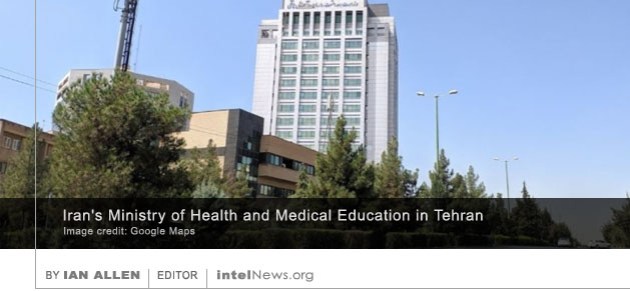 An Android application developed by the Iranian government to assist in coordinating the country’s response to the COVID-19 epidemic has been removed by Google amidst accusations that it may be used to track Iranian dissidents. The application, named AC19, was released several days ago by Iran’s Ministry of Health and Medical Education. Its release was announced through a text message sent by the Iranian government to every mobile telephone subscriber in the country. The text message urged citizens to download the application through a dedicated website or third-party app stores, including the Google Play Store. Millions have since done so.
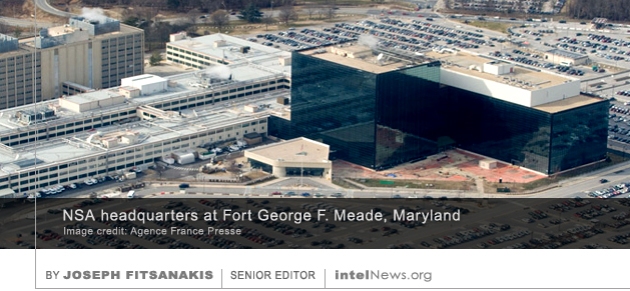 Representatives from the United States National Security Agency (NSA) withdrew a proposal to introduce new global industry standards for data encryption, after encountering prolonged skepticism by experts representing other Western countries. Some observers have interpreted this development as indicative of the damaged relationship between the NSA and its Western counterparts following revelations by American defector Edward Snowden.
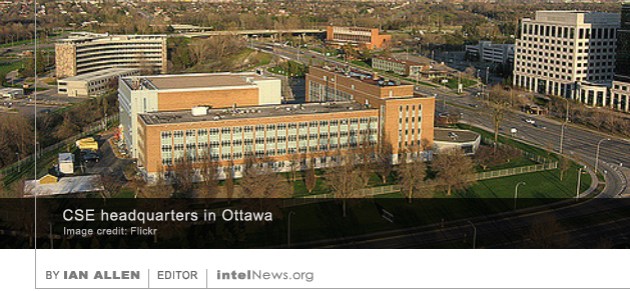 The volume of domestic communications that were intercepted by Canada’s spy agency increased 26 times between 2014 and 2015, according to a recently released report by a government watchdog. The same report states that intercepted information about Canadian citizens, which is given to Canada’s spy agency by the intelligence organizations of other Western countries, has increased so much that it now requires an elaborate mechanism to analyze it. When asked to explain the reasons for these increases, Canadian government officials said they could not do so without divulging secrets of national importance.
 Canada says it will stop sharing certain types of intelligence with some of its closest international allies until it ensures that Canadian citizens’ information is not included in the data given to foreign spy agencies. The announcement follows an official admission, made earlier this week, that a Canadian intelligence agency failed to remove Canadian citizens’ data from information it shared with member-agencies of the so-called Five Eyes Agreement. The pact, which is sometimes referred to as the UK-USA Security Agreement, has been in existence since World War II. It provides a multilateral framework for cooperation in signals intelligence (SIGINT) between the United Kingdom, the United States, Canada, Australia, and New Zealand.











 intelNews.org
Danish military spy chief ‘relieved of duty’ following whistleblower revelations
August 26, 2020 by Joseph Fitsanakis Leave a comment
The news was revealed on Monday by the Danish Oversight Board, known as TET, which is responsible for supervising the work of Denmark’s intelligence agencies. The TET said that “whistleblower complaints” had revealed information that pointed to improper intelligence collection practices by the Danish Defense Intelligence Service (FE, or DDIS in English). Moreover, when confronted by the TET, the DDIS “withheld key information” about its collection practices and even gave “incorrect information relating to the collection and disclosure of information”, according to the watchdog.
The press release by the TET said that the DDIS had carried out “operational activities” that violated Danish law and violated the privacy of Danish citizens. It also said that the illegal “operational activities” had taken place “for as many as six years”. However, the watchdog added that, given the “classified content” of the intelligence service’s mission and activities, it could “not provide further information to the public”. It is believed, however, that the controversy involves a system of mass surveillance of telecommunications, which somehow collected information exchanged domestically between Danish citizens, or between them and foreign nationals. The DDIS is forbidden by law to spy on the domestic activities of Danes.
The Danish Ministry of Defense announced on Monday that DDIS Director Lars Findsen, had been “relieved of duty for the time being”, while officials investigated a multi-volume report produced by TET investigators about the alleged improprieties by the spy agency. The ministry added that two more senior DDIS officials had been placed on leave, but said they could not be named for reasons of national security.
► Author: Joseph Fitsanakis | Date: 26 August 2020 | Permalink
Filed under Expert news and commentary on intelligence, espionage, spies and spying Tagged with Danish Oversight Board, DDIS (Denmark), Denmark, FE (Denmark), intelligence oversight, Lars Findsen, military intelligence, News, privacy