Iran warns of repercussions as US intensifies campaign against Tehran

IRGC IranIranian military officials have warned of extracting “revenge from foreign intelligence services”, as Reuters reported that an aggressive campaign against Tehran has been launched by Washington. On Sunday, the Reuters news agency said that senior officials in the administration of US President Donald Trump had launched a concerted offensive “meant to foment unrest” in the Islamic Republic. Citing information from “more than half a dozen current and former officials”, Reuters said that the US offensive is directly supported by President Trump’s Secretary of State Mike Pompeo and his National Security Adviser John Bolton. Both officials are known for their aggressive stance against the Iranian government.

The campaign, said Reuters, is meant to “work in concert” with President Trump’s push to “economically throttle Iran”. The US leader announced a series of economic sanctions on the Islamic Republic and has intensified his critical statements against Tehran after May of this year, when Washington pulled out of the Iran nuclear agreement. Known as the Joint Comprehensive Plan of Action (JCPOA), the international agreement was reached in 2015 between Iran and a group of nations known as the P5+1, namely the five permanent members of the United Nations Security Council plus Germany. As part of the deal, Iran agreed to halt its nuclear weapons program in exchange for an end to economic sanctions by the West. But President Trump abandoned the agreement, saying it was a form of appeasing Tehran.

According to Reuters, Washington’s campaign involves the spreading of information that “paints Iranian leaders in a harsh light” and in some cases makes claims about Tehran that are “exaggerated”. For example, said Reuters, some social media posts by the US Department of State’s Farsi-language news service claim that Iran is close to al-Qaeda, despite the fact that Shiite Islam, which is Iran’s state religion, is viewed as a heresy by Sunni members of al-Qaeda. Other –perhaps more believable– accusations include claims that the leaders of Iran are wasting funds released by the JCPOA instead of using it for their people’s welfare, and that Tehran funds the Taliban in Afghanistan.

Meanwhile, a spokesman for the Islamic Revolutionary Guard Corps (IRGC), arguably the most powerful branch of the Iranian Armed Forces, issued a warning on Sunday against “foreign intelligence services”. The spokesman, Brigadier General Ramezan Sharif, said Iran would take revenge on foreign spy services “who try to disrupt the security of Iran’s borders”. He was referring to an armed attack that took place on Saturday in Iran’s northwestern Marivan region, near the Iran-Iraq border. The attack concentrated on an Iranian military compound in the village of Dari and culminated with the bombing of an IRGC arms depot. According to Iranian media reports, the explosion killed 11 Iranian border guards. Reuters said it contacted the White House and the Department of State about the alleged campaign against Iran, but that both declined to comment.

Author: Joseph Fitsanakis | Date: 23 July 2018 | Permalink

Latvia warns of ‘hybrid war’ as central bank corruption probe widens

Ilmars RimsevicsLatvian defense officials have hinted that Russia is trying to destabilize Latvia’s economy, as a Western-backed anti-corruption probe at the highest levels of the Baltic country’s banking sector deepens. Developments have progressed at a high speed since Monday of last week, when Latvia’s Corruption Prevention and Combating Bureau arrested Ilmars Rimsevics, the longtime Governor of the Bank of Latvia —the country’s central bank. Bureau investigators said Rimsevics’ arrest related to charges that he received bribes in order to facilitate money laundering from Russia.

Rimsevics became deputy governor of the Bank of Latvia in 1992, just months after the country seceded from the Soviet Union. In 2001 he was promoted to governor, a post that he has held onto ever since. When the small Baltic country joined the European Union, in January 2014, Rimsevics automatically became a member of the Governing Council of the European Central Bank (ECB), which directs the Eurozone’s monetary policy and monitors the performance of the euro. But last week the Latvian government rescinded Rimsevics’ security clearance and a scheduled meeting of the ECB in Frankfurt took place without him.

This dramatic development underscores the troubled state of Latvia’s banking sector, which is a notorious reputation as one of Europe’s most lucrative money-laundering hubs. Soon after it gained its independence, the small country of 2 million became an attractive conduit for Russia’s nouveau riche seeking to funnel their money westward. The country’s sizeable Russian-speaking minority allowed the local banking sector to offer highly sought-after services in the Russian language, which further-facilitated its contacts with wealthy Russian clients. This was further-enhanced by Latvia’s integration into the economic structure of the European Union in 2014. But Western countries began voicing concerns about close links between Latvia’s banking sector and Russian oligarchs in 1996. By 2011, the United States Department of the Treasury had identified numerous Latvian banks as serious violators of laws designed to prevent money laundering. In 2014, and again in 2017, the Organized Crime and Corruption Reporting Project identified Latvia as part of an extensive international money-laundering scheme dubbed “the Russian Laundromat”.

Notably, Rimsevics was arrested less than a week after Washington vowed to impose penalties on ABLV, Latvia’s third largest bank, for “institutionalizing money laundering” and violating a host of financial sanctions imposed by the United Nations, including sanctions against North Korea’s nuclear program. There is no question, therefore, that Rimsevics’ dramatic arrest was designed to combat what The Financial Times recently called “a banking scandal on the Baltic”. In the past few hours, reports from Riga indicate that ABLV may be on the brink of collapse, being unable to withstand the financial effects of the public scandal that emerged in recent days.

But things are never simple in the Baltic region. Soon after Rimsevics’ release on bail, reports in the Latvian media pointed to alleged efforts by Russia to defame him, in an effort to further-tarnish the already damaged reputation of Latvia’s banking sector. On Tuesday of last week, the Latvian Ministry of Defense said it had evidence that Rimsevics was targeted in a “disinformation operation” directed from abroad. It added that there was a “high probability that [a] massive information operation” had been launched for “foreign centers” aimed at destabilizing Latvia’s banks. No evidence or further information about the allegation was revealed. But the Defense Ministry’s allegations seemed to be supported by an analysis of the relevant news reporting by the Atlantic Council’s Digital Forensics Research Lab in Washington.

On February 23, Latvia’s Prime Minister, Maris Kucinskis, and President, Raimonds Vejonis, seemed to endorse the Defense Ministry’s allegations. Despite the fact that both politicians have urged Rimsevics to resign “for the sake of the financial system”, they also warned that Latvia was under attack in an information war. The two men did not make specific allegations, but said that the information attacks experienced by Latvia were “identical” to those seen in recent years in France, Germany, and the United States. Meanwhile, shortly after his release, Rimsevics held a press conference in Riga, where he denied all charges against him. He accused Latvia’s private banks of conspiring against him and said he was the victim of “death threats” to destabilize the country. On the same day Moscow, Kremlin spokesman Dmitry Peskov said that Russia had no comment on the situation in Latvia. “This is an internal political matter for our Latvian comrades [and] we wouldn’t want to get involved”, he said.

Author: Joseph Fitsanakis | Date: 26 February 2018 | Permalink
Britain to set up intelligence unit to combat ‘fake news’ by foreign states

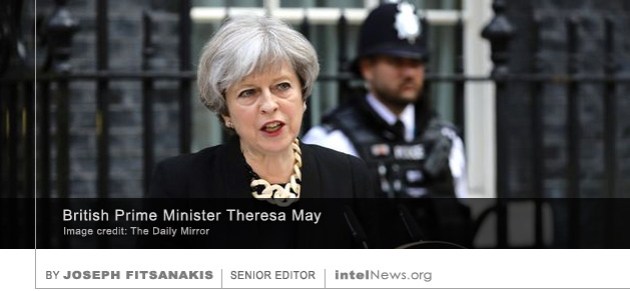
Theresa MayThe British government has announced that it will form a new intelligence unit tasked with preventing the spread of so-called “fake news” by foreign states, including Russia. The decision was revealed earlier this week in London by a government spokesman, who said that the new unit will be named “National Security Communications Unit”. The spokesman added that the unit will be responsible for “combating disinformation by state actors and others”. When asked by reporters whether the effort was meant as a response to the phenomenon often described as “fake news”, the spokesman said that it was.

According to The Times newspaper, the proposal for a National Security Communications Unit was presented during a scheduled meeting of the country’s National Security Council earlier this week. It was put forward by its strongest proponent, Sir Mark Sedwill, Britain’s former ambassador to Afghanistan and current national security adviser to the government. The unit will be directly accountable to the Cabinet Office, the government department that is responsible for providing support to the Prime Minister and her Cabinet. It will be staffed with professionals from Britain’s intelligence and security agencies, but will also rely on contributions from external experts in cybersecurity, communications and public relations. The unit will also include a “rapid response unit” that will be tasked with countering “fake news” in real time, according to The Times.

The move follows a similar development in the United States. In December of 2016, the then President Barack Obama signed a new law that designated $160 million to set up a government center for “countering foreign propaganda and disinformation”. The law, entitled “Countering Foreign Propaganda and Disinformation Act”, authorized the departments of State and Defense to work with other federal agencies in establishing the new body. According to a statement by the White House, the goal of the Center would be to collect and analyze “foreign government information warfare efforts” and to “expose and counter foreign information operations” directed against “US national security interests”.

On Wednesday it was announced in London that the British Secretary of Defense, Gavin Williamson, will be providing further details about the National Security Communications Unit in a speech to the House of Commons “within the next few days”.

Author: Joseph Fitsanakis | Date: 25 January 2018 | Permalink

Intelligence chief warns of foreign interference in German coalition talks

A senior German intelligence official has warned that foreign powers, including Russia, could try to shape the outcome of talks by German parties to form a governing coalition, following last week’s national elections. The elections resulted in a major shakeup of Germany’s political landscape, as Chancellor Angela Merkel’s Christian Democratic Union lost nearly 10 percentage points compared to its 2013 election result. It is now forced to seek the participation of other conservative or centrist political parties in a broad governing alliance. Meanwhile, the far-right Alternative for Germany (AfD) won 12.6 percent, propelling it to third place and giving it 91 seats in the Bundestag. The AfD result marks the first time since 1945 that a German far-right party has managed to secure parliamentary representation.
On Thursday, senior intelligence official Burkhard Even said that, unlike France and the United States, Germany was spared major foreign interference during its recent election period. Speaking at a security conference in Berlin, Even, who is director of counterintelligence at the Federal Office for the Protection of the Constitution, said interference attempts were limited in both volume and impact. He described them as “low-level propaganda” operations conducted mainly by Russian media, which “did not have a significant impact on voters” and did not affect “the election outcome as a whole”. However, the official added that such attempts were possible in the post-election period. For instance, there could be efforts by foreign intelligence agencies to discredit certain government officials or political figures, said Even. Alternatively, methods of propaganda could be employed by a foreign power “to affect the forging of a new government”, he added, referring to the ongoing talks between German political parties to enter into a governing coalition. “The risks are enormous”, said Even, and “they are not diminishing”.

The far-right AfD campaigned in favor of ending Muslim immigration to Germany and expelling most non-Western immigrants from the country. The party has also called for a tighter relationship between Berlin and Moscow and opposes Germany’s decision to impose economic sanctions on Russia in response to its alleged intervention in Crimea. Some have suggested that the Russian intelligence services launched a secret campaign to gather voter support for the AfD in the run-up to last week’s elections.


Author: Joseph Fitsanakis | Date: 29 September 2017 | Permalink

South Korean former spy chief sent to prison for meddling in elections

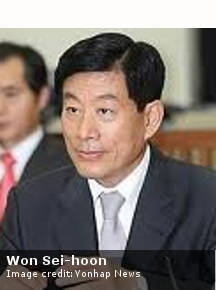
Won Sei-hoonThe former director of South Korea’s main intelligence agency has been sent to prison for organizing a large-scale illegal campaign to influence the result of the country’s 2012 presidential election. Won Sei-hoon headed the NIS from 2008 to 2013, during the administration of conservative President Lee Myung-bak. During the 2012 presidential election, Won ordered a group of NIS officers to “flood the Internet” with messages accusing liberal political candidates of being “North Korean sympathizers”. One of those candidates, Moon Jae-in, of the left-of-center Democratic Party of Korea, is now the country’s president. Mr. Moon succeeded his main right-wing rival, Park Geun-hye, who resigned in March of this year following a series of financial scandals. She is now facing charges of bribery, abuse of power, leaking government secrets, and corruption.
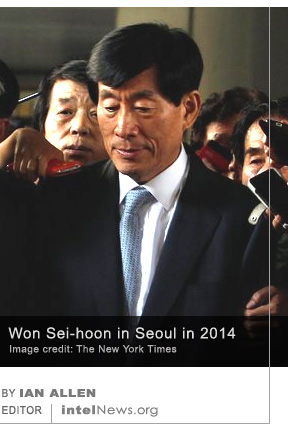
In February 2015, the Seoul High Court upheld an earlier sentence of 2.5 years in prison, which had been imposed on Won by a lower court. But his conviction was overturned on appeal. Earlier this August, an internal inquiry conducted by the NIS found that many its officers were tasked by Won to manipulate the outcome of the 2012 presidential election with 30 dedicated teams of officers —some of whom were hired specifically for that purpose. A number of teams were in charge of creating fake social media accounts and using them to post negative views of Mr. Moon and positive views of his conservative rival, Mrs. Park. Other teams were tasked with creating the false impression that South Korea’s rival, North Korea, was supportive of Mr. Moon’s candidacy. The probe also found that the NIS launched similar —though on smaller scale— efforts to influence the outcome of parliamentary elections in 2011 and 2012.

On Wednesday, based on new evidence provided by the government, including the results of the NIS’ internal investigation, the Seoul High Court sentenced Won to four years in prison for political meddling. Two other former senior officials in the NIS were sentenced to 30 months in prison each. In delivering his sentence, the judge said Won assembled a team of NIS operatives “with the specific intention to sway public opinion”. Throughout the operation, said the judge, Won was “regularly briefed” and exercised precise control over it. Won was transferred directly from the court to prison, where he will serve his sentence.

Author: Ian Allen | Date: 30 August 2017 | Permalink

Mismanagement plagues US online program against ISIS, say sources

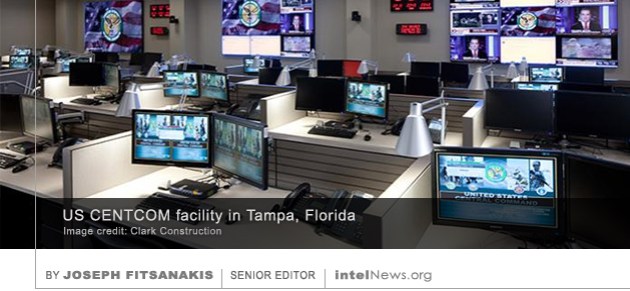
CENTCOM military computersWhistleblowers say mismanagement, amateurism and cronyism are plaguing a multimillion-dollar American psychological operation aimed at countering online propaganda by the Islamic State. The program, known as WebOps, was established by the United States Department of Defense during the administration of US President Barack Obama. Its stated goal is to counter efforts by the Islamic State (also known as the Islamic State of Iraq and Syria —ISIS) to spread propaganda and recruit followers using online social media. Since its creation, it has been administered by the US Central Command’s Information Operations Division. But its implementation has been contracted to Colsa Corporation, a private company based in the US state of Alabama. The company specializes in providing services for US government agencies, some of which include the use of specialized software that utilizes information found on social media.

According to the Associated Press news agency, WebOps staff consists of civilian analysts who speak Arabic. Every day, using fabricated online profiles, they browse social media platforms like Facebook and Twitter looking for pro-ISIS activity to counter. But the news agency said on Tuesday that it spoke to several people with knowledge of the program, who claim that it is plagued by incompetence, mismanagement and cronyism. They allege that analysts involved in WebOps have limited experience in counter-propaganda, incomplete understanding of Islam, and little more than a basic command of Arabic. Consequently, they have been known to make crucial errors when posting messages online. The latter end up amusing their readers instead of countering ISIS propaganda. In one case, a WebOps analyst confused the Arabic word for “authority” (as in Palestinian Authority) with the similarly sounding word “salad”, thus ending up with “Palestinian salad” instead of “Palestinian Authority”. Rather than managing to counter ISIS propaganda, the message was ridiculed on social media.

The report also cited “four current or former workers” who claimed that they personally witnessed “data being manipulated” to make the WebOps program seem more successful than it has been. They also claim that the program’s administrators have purposely resisted efforts by the Department of Defense to exercise independent oversight of the program’s performance. The Associated Press said it contacted US Central Command, the Pentagon outfit that is responsible for WebOps, on January 10. But it said that no response has been received from anyone there.

Author: Joseph Fitsanakis | Date: 01 February 2017 | Permalink

US government to set up ‘anti-propaganda center’ after Obama signs new law

Barack ObamaUnited States President Barack Obama has signed a new law that designates $160 million to set up a government center for “countering foreign propaganda and disinformation”. The law authorizes the US departments of State and Defense to work with other federal agencies in establishing the new body. Its precise tasks are not yet known, nor is the role in it —if any— of intelligence agencies, though the Director of National Intelligence is mentioned in the body of the legislation.
The legislation is entitled “Countering Foreign Propaganda and Disinformation Act”, and it was introduced in both chambers of the US Congress last spring by Republican and Democrat legislators. It was initially entitled “Countering Information Warfare Act”, but was subsequently revised and included in the National Defense Authorization Act for fiscal year 2017. It was approved by the House of Representatives on December 2, and by the Senate on December 8. President Obama signed it into law on December 23. Under the new law, the Department of Justice has to take initiative within 180 days, and collaborate with the Department of Defense, before reaching out to “other relevant departments and agencies”. Resulting from this process will be the establishment of a “Center for Information Analysis and Response”. The goal of the Center will be to collect and analyze “foreign government information warfare efforts”, and to “expose and counter foreign information operations” directed against “US national security interests”. The plan will be funded in the amount of $160 million over two years.

Rob Portman, a Republican US Senator from Ohio, who co-sponsored the bill, hailed it as “a critical step towards confronting the extensive, and destabilizing, foreign propaganda and disinformation operations being waged against us by our enemies overseas”. But the Russian government-owned broadcaster RT called the new law “ominous” and “controversial”, and said the US government was “itself pushing propaganda on its own domestic population”. In an article published on Tuesday, the Hong Kong-based newspaper South China Morning Post said the new legislation was aimed at China, as well as at Russia. The newspaper cited Chinese experts who warned that Washington and Beijing “could head down the slippery slope toward ideological confrontation” as a result of the new law.

Author: Joseph Fitsanakis | Date: 28 December 2016 | Permalink

FBI warns against alleged Russian campaign to destabilize US elections

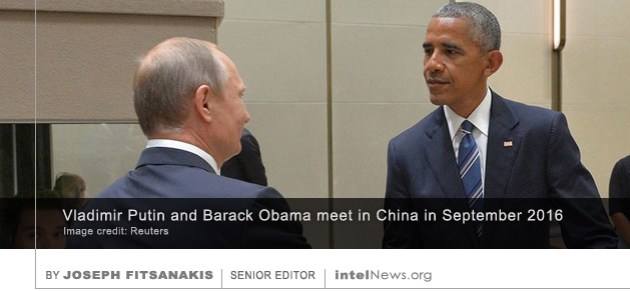
Putin and ObamaThe Federal Bureau of Investigation is among several intelligence agencies in the United States that have expressed concerns about an alleged Russian campaign to destabilize November’s presidential elections. The Washington Post, which revealed the FBI’s concerns on Monday, claimed that Moscow recently launched an “active measures” operation aimed at covertly sabotaging the integrity of the US election process. Russia’s goal, said the paper, was to “counter US leadership and influence in international affairs”, thus subverting America’s image, especially in countries of the former Eastern Bloc or former Soviet republics.
According to The Post, the FBI and other US intelligence agencies have “no definitive proof” that Moscow is attempting to promote public distrust in American political institutions. But there are strong indications that have made this topic “a priority” for intelligence officials from the FBI, the Department of Homeland Security, the National Security Agency and the Central Intelligence Agency, said the paper. These indications include the hack of the computer systems at the Democratic National Committee, the official governing body of the US Democratic Party, which was revealed in June. The hack resulted in the disclosure of over 20,000 internal emails and led to the resignation of Debbie Wasserman-Schultz, the DNC’s Chairwoman. According to The Post, the hack is “not yet officially ascribed by the US government to Russia”, but US intelligence officials are convinced that Moscow was behind it.

The DNC hack prompted the FBI to send a so-called “flash alert” to US election officials in July, urging them to remain vigilant against “attempts to penetrate election systems”, which have been detected in several states, according to the report. The unprecedented FBI alert did not expressly name Russia as a national-security threat, nor did it give details of electoral sabotage. But it urged state election officials to “be on the lookout for intrusions into their election systems”. Citing unnamed intelligence officials, The Post said that the investigation into alleged Russian operations against the US Presidential election is being coordinated by James Clapper, the US Director of National Intelligence.

Author: Joseph Fitsanakis | Date: 07 August 2016 | Permalink

Czech spy service accuses Russia of waging ‘information war’

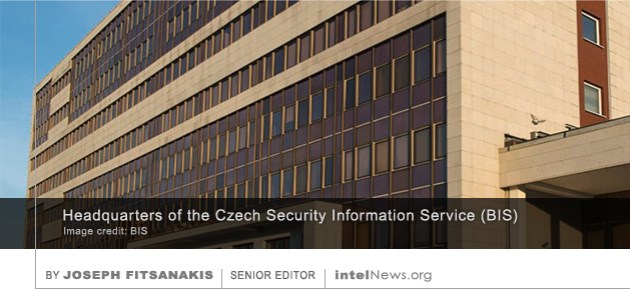
Czech Security Information ServiceThe intelligence agency of the Czech Republic has accused Russian spy services of waging a “war of information” aimed at destabilizing the eastern European country. The agency has also warned that Russia continues to maintain a large intelligence presence in the Czech Republic, 25 years after the country, which was formerly known as Czechoslovakia, exited the Soviet sphere of influence and joined the European Union (EU) and the North Atlantic Treaty Organization (NATO).

These claims are included in the annual report of the Security Information Service of the Czech Republic, known as BIS. The report, which was published on Thursday, singles out Russia and China for allegedly operating the two most active intelligence apparatuses in the Czech Republic today. It also claims that Russia’s embassy in Prague, which exceeds in size that of any other country in the Czech capital, serves as a base for dozens of spies. The latter are among the 140 diplomatic personnel stationed at the Russian embassy, operating under diplomatic cover, according to BIS.

In addition to collecting intelligence and recruiting spies, Russia’s undercover efforts in the Czech Republic focus on “creating or promoting inter-societal and inter-political tensions” in the country, said the report. That is allegedly one in many ways, including covert support for domestic extremist and populist organizations –both rightwing and leftwing, according to BIS. There are also organizations in the country, described by the Czech intelligence agency as parts of a network of “puppet” groups, which tend to hold consistently pro-Russian stances on domestic and international issues. They are also highly critical of NATO and the EU, and promote the view that, like Britain, the Czech Republic should seek to exit the EU.

The report suggests that the main focus of the current phase of the alleged “information war” is to advertise the Russian viewpoint on the civil wars in Ukraine and Syria. However, “the infrastructure created for achieving these goals will not disappear with the end of the two conflicts” and “can be used to destabilize or manipulate Czech society […] at any time, if Russia wishes to do so”, the report states.

Author: Joseph Fitsanakis | Date: 02 September 2016 | Permalink

Washington to investigate Chinese-owned radio stations in the US

CRI ChinaAuthorities in Washington are preparing to launch an investigation into a dozen radio stations operating in major cities in the United States, which are allegedly owned by a subsidiary of the Chinese government. The investigation appears to have been sparked by a report published by the Reuters news agency on Monday, which claims that the Chinese government is operating a “covert radio network” inside the US, aimed at broadcasting news reports that reflect Chinese views. According to Reuters, the radio stations broadcast in at least a dozen large American cities, including Houston, San Francisco, Boston and Philadelphia.

All stations in question are managed by broadcasting firm G&E Studioa, based in West Covina, California, which is owned by James Su, a Shanghai-born American broadcasting entrepreneur. According to the news agency, G&E Studio controls the vast majority of these stations’ air time, which it fills with entertainment and public-affairs programming produced in its studios in California. However, the Reuters report claimed that G&E Studio is 60% owned by China Radio International (CRI), which is a Chinese state-controlled broadcaster. Founded as Radio Peking in 1941, then renamed to Radio Beijing during the Cold War, CRI is the Chinese equivalent of the Voice of America or the BBC World Service: it is officially affiliated with the Chinese government and reflects its point of view. What is more, said Reuters, some of the programming aired on G&E Studio-managed stations is produced by CRI in Beijing. Consequently, news programming on these stations tends to reflect the Chinese government’s point of view, on subjects such as Taiwan, naval rights in the South China Sea, trade policies and other major topics of the day.

The investigation has been launched by the US Federal Communications Commission (FCC) because American law prohibits representatives of foreign governments, or foreign governments themselves, from owning or managing US broadcast stations. Moreover, individuals or companies seeking to influence American politics or public opinion on behalf of a foreign agency, group or government, must register with the US Department of State. It doesn’t appear that G&E-owned radio stations have done that, said Reuters on Monday. The news agency quoted FCC spokesman Neil Grace, who said that an investigation had been launched into “the foreign ownership issues raised in the stories, including whether the Commission’s statutory foreign ownership rules have been violated”. The Department of State, however, refused to confirm or deny that an investigation into G&E Studios was underway.

Author: Joseph Fitsanakis | Date: 3 November 2015 | Permalink

UK spied on Argentina to prevent second Falklands war, papers show

Port Stanley, FalklandsBy JOSEPH FITSANAKIS | intelNews.org
The British government carried out an extensive program of intelligence collection and psychological operations in Argentina until 2011, because it was concerned about the security of the Falkland Islands, according to newly leaked documents. In 1982, the two countries went to war over the islands, which are ruled by Britain but are claimed by Argentina. The 74-day conflict, which killed nearly 1,000 soldiers and civilians on both sides, ended in defeat for the Argentinian forces and solidified British authority in the South Atlantic territory. But Argentina continues to dispute Britain’s rule over the Falklands, which it calls Malvinas, and has repeatedly threatened to take them over.

Documents released last week by Argentine online news portal TN.com, reveal that a consortium of British intelligence units implemented a broad program of spying and propaganda operations against Argentina. The program, codenamed Operation QUITO, lasted from 2006 to 2011, and was aimed at hampering perceived efforts by the Argentine government to subvert British rule in the Falklands. The news portal said it received the documents from Edward Snowden, an American former intelligence contractor who currently lives in Russia under political asylum. According to TN.com, the secret program was implemented by the Joint Threat Research Intelligence Group (JTRIG, as reported by intelNews in February 2014). It is believed that JTRIG is an office operating under the command of the Government Communications Headquarters (GCHQ), Britain’s signals intelligence agency. Its focuses on psychological operations —known in Britain as “effects operations”— which are aimed at discrediting their targets through sabotage and misinformation campaigns.

According to the newly released documents, JTRIG launched Operation QUITO as a “long-term, far reaching” program that included the interception of communications of Argentine politicians, the planting of computer viruses on Argentine networks and the spreading of misinformation or pro-British propaganda online. As of Sunday night there had been no official response to the news report from either the Argentine or the British governments.

South Korea’s ex-spy chief jailed for interfering in elections

Won Sei-hoonBy IAN ALLEN | intelNews.org
The former director of South Korea’s intelligence agency has been jailed for directing intelligence officers to post online criticisms of liberal politicians during a recent presidential election campaign. Won Sei-hoon headed South Korea’s National Intelligence Service (NIS) from 2008 to 2013, during the administration of conservative President Lee Myung-bak. Since his replacement in the leadership of NIS, Won has faced charges of having ordered a group of NIS officers to “flood the Internet” with messages accusing liberal political candidates of being “North Korean sympathizers”.

Prosecutors alleged that Won initiated the Internet-based psychological operation because he was convinced that “leftist adherents of North Korea” were on their way to “regaining power” in the South. The illegal operation took place during the 2012 presidential election campaign, which was principally fought by Moon Jae-in, of the liberal-left Democratic Party, and Park Geun-hye, of the conservative Saenuri party. Park eventually won the election and is currently serving South Korea’s eleventh President. The court heard that a secret team of NIS officers had posted nearly 1.5 million messages on social networking sites, such as Twitter and Facebook, in an effort to garner support for the Saenuri party candidate in the election.

Last September, a court in Seoul had sentenced Won to two and a half years in prison, which was much shorter than the maximum five-year penalty he was facing if found guilty. But the judge had suspended the sentence, arguing that there was no direct proof that Won directly sought to alter the outcome of the presidential election. On Monday, however, the Seoul High Court overruled the earlier decision, saying that Won had directly breached election laws and that the violation was sufficient for a prison sentence. In reading out its decision, the judge said that “direct interference [by the NIS] with the free expression of ideas by the people with the aim of creating a certain public opinion cannot be tolerated under any pretext”. Won was transferred directly from the court to prison, where he will serve his sentence.

South Korean court convicts ex-spy director of interfering in elections

Won Sei-hoonBy IAN ALLEN | intelNews.org
A former director of South Korea’s intelligence agency has been convicted in court of directing intelligence officers to post online criticisms of liberal politicians during a presidential election campaign. Won Sei-hoon headed South Korea’s National Intelligence Service (NIS) from 2008 to 2013, during the administration of conservative President Lee Myung-bak. Since his replacement in the leadership of NIS, Won has faced charges of having ordered a group of NIS officers to “flood the Internet” with messages accusing liberal political candidates of being “North Korean sympathizers”. Prosecutors alleged that Won initiated the Internet-based psychological operation because he was convinced that “leftist adherents of North Korea” were on their way to “regaining power” in the South. The illegal operation took place during the 2012 presidential election campaign, which was principally fought by Moon Jae-in, of the liberal-left Democratic Party, and Park Geun-hye, of the conservative Saenuri party. Park eventually won the election and is currently serving South Korea’s eleventh President. The court heard that a secret team of NIS officers had posted nearly 1.5 million messages on social networking sites, such as Twitter and Facebook, in an effort to garner support for the Saenuri party candidate in the election. On Thursday, a court in Seoul sentenced Won to two and a half years in prison, which was much shorter than the maximum five-year penalty he was facing if found guilty. In reading out its decision, the court said on Thursday that “direct interference [by the NIS] with the free expression of ideas by the people with the aim of creating a certain public opinion cannot be tolerated under any pretext”. The new jail conviction comes right after the defendant completed a 14-month sentence stemming from charges of accepting bribes in return for helping a private company acquire government contracts. Read more of this post

South Korean ex-spy chief jailed for accepting bribes

Won Sei-hoonBy IAN ALLEN | intelNews.org
One of the most powerful figures in South Korea’s intelligence establishment has been sentenced to prison for accepting bribes in return for helping a private company acquire government contracts. Won Sei-hoon headed South Korea’s National Intelligence Service (NIS) from 2008 to 2013, during the administration of President Lee Myung-bak. The once supremely powerful organization, founded in 1961 as the Korean Central Intelligence Agency, was intimately involved in the murky South Korean politics of the Cold War era, during which the country’s political life was dominated by bloody military coups and political repression. In the late 1980s, a process of democratization began in the NIS, and in recent years many intelligence observers believed that the agency had managed to shed its controversial reputation. On Wednesday, however, a court in South Korean capital Seoul sentenced Won to two years in prison for receiving kickbacks from the private sector while heading the NIS. Won was accused of having taken over $150,000 from Hwang Bo-yeon, former director of Hwangbo Construction, in exchange for lobbying the government to award construction contracts to the company. Regular readers of this blog will recall that Won is also standing accused of having meddled in the 2012 Presidential Election. According to the official indictment in the case, Won is said to have ordered a group of NIS officers to “flood the Internet” with messages accusing liberal political candidates of being “North Korean sympathizers”. Prosecutors allege that Won initiated the Internet-based psychological operation because he was convinced that “leftist adherents of North Korea” were on their way to “regaining power” in the South. Read more of this post

S. Korea parliament probes spy agency’s elections meddling

Won Sei-hoonBy JOSEPH FITSANAKIS | intelNews.org |
A parliamentary probe began last week into whether South Korea’s main intelligence agency tried to steer voters away from the liberal candidate during the 2012 presidential election. The country’s National Intelligence Service (NIS) is accused of having deliberately leaked a classified document in order to embarrass the late South Korean President Roh Moo-hyun, who was also a member of the liberal Uri Party (now Democratic Party) of South Korea. IntelNews readers will recall that Won Sei-hoon, who headed NIS from 2008 to 2013, was recently indicted for meddling in the 2012 Presidential Election. According to the indictment, Won ordered a group of NIS officers to “flood the Internet” with messages accusing DP candidates of being “North Korean sympathizers”. Prosecutors allege that Won initiated the Internet-based psychological operation because he was convinced that “leftist adherents of North Korea” were on their way to “regaining power” in the South. The NIS affair has gripped South Korea’s media headlines for months, but fuel was added to the fire in June, when the NIS “mistakenly” declassified an internal document describing a series of secret North-South Korean negotiations. The document, from 2007, shows that the then-President of Korea, Roh Moo-hyun, from the Uri Party, had proposed to North Korean officials the establishment of a “maritime peace zone” along the disputed border between the two nations. Liberal politicians allege that, according to South Korean declassification laws, the document should have remained secret for many decades, and accuse the NIS of deliberately leaking it in order to promote the image of South Korean liberals as “North Korean sympathizers”. Meanwhile, another senior South Korean security official, former Seoul metropolitan police chief Kim Yong-pan, has also been indicted for allegedly hampering a police investigation into Won’s internet campaign. This series of apparently interlinked events is now at center stage in the parliamentary probe, as rival parties prepare to clash over the allegations. Read more of this post