Former deep-cover spy leads Kremlin’s efforts to woo Indian high-tech sector

Andrei Bezrukov A FORMER DEEP COVER Russian intelligence officer, whose cover was blown in 2010 when he was arrested in the United States, is spearheading efforts by the Kremlin to secure investments by India’s technology sector. The spy, Andrei Bezrukov, was recruited by the Soviet Committee for State Security (KGB) in the late 1970s or early 1980s—most likely alongside his wife, Elena Vavilova. For several years, the married couple lived in several countries, including Canada and France, before arriving in the United States in 1999 using fraudulently obtained Canadian passports.

Posing as Donald Heathfield and Tracey Foley, Bezrukov and Vavilova were among 10 Russian non-official-cover intelligence officers arrested by the Federal Bureau of Investigation (FBI) in June 2010. They were eventually swapped with Moscow for several Western spies held in Russian prisons. After returning to Russia, Bezrukov and Vavilova received the Order “For Merit to the Fatherland” 4th Class, which is Russia’s second-highest state decoration. They also entered state-sponsored employment, with Bezrukov advising the Rosneft Oil Company—Russia’s second-largest corporation—and teaching at the Moscow State Institute of International Relations.

In June 2025, Bezrukov apparently represented the Russian state at the 28th Saint Petersburg International Economic Forum (SPIEF)—often referred to as “Putin’s Davos”. According to the Washington Post, Bezrukov’s apparent role at SPIEF was to network with Forum representatives from India’s advanced technology sector, allegedly on direct orders by the administration of Russian President Vladimir Putin.

The event, which went under the tagline “Shared Values as a Foundation for Growth in a Multipolar World”, gathered nearly 20,000 delegates from 140 countries. The Kremlin touted it as evidence of the West’s failure to isolate Russia following its invasion of Ukraine. It also served as part of a set of broader efforts by the Kremlin to prevent the Russian economy from sliding into a recession by seeking to develop alternative energy markets and strengthening economic and political ties to the Global South.

India is by far the largest of a group of countries seen as “friendly” by Russia, which could potentially help revitalize the Russian economy, largely through the International North–South Transport Corridor (INSTC). The 14-year-old agreement aims to interconnect a transnational transportation network connecting Russia and India with import-export routes in Central Asia the Middle East, and Europe. Experts claim that the INSTC is the logistical backbone of Russia’s efforts to salvage its economy from the growing pressures of the war in Ukraine.

The Post reported that Bezrukov denied that he is still an employee of Russian intelligence agencies when approached and asked about his past by Western journalists.

Author: Joseph Fitsanakis | Date: 08 December 2025 | Permalink

France arrests members of humanitarian charity accused of being a Russian front

SOS DonbassFRENCH AUTHORITIES HAVE ARRESTED three individuals and placed a fourth person under supervision after scrutinizing the operations of a humanitarian organization suspected of being a front for Russian intelligence. The arrests were announced on Tuesday by the General Directorate for Internal Security (DGSI), France’s domestic security agency.

The organization in question was registered at the Pyrénées-Atlantiques prefecture of southwestern France in 2022 under the name “Sud Ouest Solidarité Donbass” (“Solidarity for South-West Donbass). This was abbreviated in the organization’s marketing material as “SOS Donbass”. Its expressed mission is to raise funds in support of civilians in Ukraine’s war-torn region of Donbass, most of which is currently under Russian military control.

The DGSI said it began monitoring the activities of SOS Donbass in early 2025. It claims that members of the organization used the cover of humanitarian work in order to spread Russian propaganda in France on the orders of Moscow. It also claims that they attempted to collect “economic information” from executives of French firms. At least one member of the group participated in a concerted campaign of putting up posters in downtown Paris, bearing the slogan “Russia is not my enemy” (pictured), according to the DGSI.

The director of SOS Donbass, identified in French media reports as “Anna N.”, 40, who was born in Russia but lives in France, was arrested by DGSI on November 17. Another Russian-born member of SOS Donbass, “Vyacheslav B.”, also 40, was arrested on the same day. A third individual, “Vensan B.”, 63, who is French-born and lives in Paris’ northern Seine-Saint-Denis suburb, was arrested the following day. A fourth individual, identified as “Bernard F.”, 58, has been placed under strict supervision and is required to report to the police weekly.

According to France’s Le Parisien newspaper, Anna N. and Vyacheslav B. have been formally charged with “colluding with a foreign power”, “conducting activities to gather information on the interests of the nation for a foreign power” and “actions likely to harm the fundamental interests of the nation”, which carry sentences of up to 10 years.

Author: Ian Allen | Date: 26 November 2025 | Permalink

Austrian prosecutors charge ex-intelligence officer accused of spying for Russia

Landesgericht für Strafsachen Wien Vienna Regional Court for Criminal MattersPROSECUTORS IN VIENNA HAVE charged a former intelligence officer with spying for Russia in a high-profile case that has had broad political ramifications in Austria and abroad. The criminal case centers on Egisto Ott, a former employee of Austria’s Federal Office for the Protection of the Constitution and Counterterrorism (BVT). The BVT operated as Austria’s primary domestic intelligence agency from 2002 until its dissolution in 2021.

Ott was first arrested in March 2021, but was soon released after Vienna’s state court ruled that the accused no longer had access to classified information, and was thus not a persistent threat to the state. Ott was arrested again in March 2024 on suspicion of having maintained contact with Russian intelligence officers even following his 2021 arrest and release, and of trying to sell classified information after his release. As intelNews reported a year ago, Ott was released again from pre-trial detention in June 2024, in a decision that raised eyebrows.

Now Ott is facing charges of colluding with an unidentified police officer to “support an intelligence agency” of a foreign country “to the detriment of Austria”, according to the public prosecutor. Ott is also accused of having engaged in bribery, misuse of his office, and of having broken Austria’s Official Secrets Act. Among several instances of engaging in espionage, Ott is accused of having given Russian intelligence an encrypted SINA-workstation laptop of the type used by government employees to access classified information remotely.

Ott and his lawyers have denied he was involved in espionage and have vowed to confront all charges against him in court.

Author: Joseph Fitsanakis | Date: 02 September 2025 | Permalink

Russian hacker group using Internet service providers to spy on foreign embassies

Hacking cyber - JFA HACKER GROUP LINKED to Russia’s Federal Security Service (FSB) has compromised Russia’s domestic internet infrastructure and is using it to target foreign diplomats stationed in Russia. According to a report, published last week by Microsoft Threat Intelligence, the hacker group behind this operation is Turla, also known as Snake, Venomous Bear, Group 88, Waterbug, and Secret Blizzard. Analysts have linked the group with “some of the most innovative hacking feats in the history of cyberespionage”.

Turla began its attempt to compromise a host of Russian internet service providers in February, according to Microsoft’s report. The group’s apparent goal has been to gain access to the software that enables Russian security agencies to legally intercept internet traffic, following the issuance of warrants by judges. This software is governed by Russia’s System for Operative Investigative Activities (SORM), which became law in 1995, under the presidency of Boris Yeltsin. All local, state, and federal government agencies in Russia use the SORM system to facilitate court-authorized telecommunications surveillance.

According to Microsoft, targeted Internet users receive an error message prompting them to update their browser’s cryptographic certificate. Consent by the user results in the targeted computer downloading and installing a malware. Termed ApolloShadow by Microsoft, the malware is disguised as a security update from Kaspersky, Russia’s most widely known antivirus software provider. Once installed the malware gives the hackers access to the content of the targeted user’s secure communications.

The Microsoft report states that, although Turla has been involved in prior attacks against diplomatic targets in Russia and abroad, this is the first time that the hacker group has been confirmed to have the capability to attack its targets at the Internet Service Provider (ISP) level. In doing so, Turla has been able to incorporate Russia’s domestic telecommunications infrastructure into its attack tool-kit, the report states. The report does not name the diplomatic facilities or the countries whose diplomats have been targeted by Turla hackers. But it warns that all “diplomatic personnel using local [internet service providers] or telecommunications services in Russia are highly likely targets” of the group.

Author: Joseph Fitsanakis | Date: 02 August 2025 | Permalink

Researchers uncover secretive Russian spy unit by studying its commemorative badges

FSB RussiaA GROUP OF RESEARCHERS in Finland have managed to outline the structure and geographic footprint of a highly secretive Russian signals intelligence (SIGINT) unit by studying commemorative badges issued by the Russian government. The research group, known as CheckFirst, specializes in open-source (OSINT) investigative reporting and works to combat online disinformation.

Earlier this month, CheckFirst published its latest report titled “OSINT & Phaleristics: Unveiling FSB’s 16th  Center SIGINT Capabilities”. The 36-page report focuses on the study of Russian government-issued commemorative badges—also known as challenge coins—relating to Center 16 (16-й Центр). Also known as  Military Unit 71330, Center 16 is a secretive SIGINT unit that houses most of the cyber espionage capabilities of Russia’s Federal Security Service (FSB).

Challenge coins are custom-made medallions given by military, intelligence, and government agencies to recognize service, commemorate achievements, or build morale. Originating in the United States military during World War I, and popularized during the Vietnam War, challenge coins are routinely exchanged in ceremonies or offered to personnel as tokens of camaraderie and loyalty within a specific unit or mission.

Often regarded as collectors’ items, challenge coins from various agencies are often resold on websites such as eBay, or displayed online on websites maintained by private collectors. CheckFirst researchers tracked down several versions of Center 16 challenge coins found on a variety of publicly available websites, as well as on the websites of Russian challenge coin manufacturers, such as GosZnak, SpetsZnak, or Breget.

Based on this OSINT methodology, CheckFirst researchers were able to identify 10 distinct directorates within Center 16, which specialize on various aspects of defensive and offensive cyber espionage. Previously only a single Center 16 directorate had been identified in the unclassified domain. Moreover, by examining geographic indicators found on several of challenge coins, such as maps or coordinates, CheckFirst researchers were able to partly map out the geographic structure of Center 16, locating nearly a dozen interception facilities throughout Russia.

Author: Joseph Fitsanakis | Date: 21 July 2025 | Permalink

Leaked counterintelligence document reveals Russian concerns about Chinese spying

FSB RussiaA LEAKED REPORT AUTHORED by Russia’s primary counterintelligence agency reveals deep concern in national security circles about the intensity of Chinese spying against Russian interests, according to The New York Times. The paper said last week that the leaked report, which was produced by Russia’s Federal Security Service (FSB) between 2023 and 2024, offers “the most detailed behind-the-scenes view” of Russia’s counterintelligence concerns about China.

Following the death of Soviet Premier Joseph Stalin, the two communist countries became sworn enemies and nearly went to all-out war against each other. But in recent years Moscow and Beijing put aside their differences, prompted by their mutual desire to challenge the geopolitical supremacy of the United States and bring about a multipolar world. Since 2022, when Moscow resumed its military invasion of Ukraine, Beijing has stood firmly by the Kremlin. China has become the largest importer of Russian energy and has provided the Russian military with much-needed advanced technology. The relationship between the two neighboring nations appears to be deeper than ever before.

But according to a recently leaked report, Russia’s national security establishment is deeply concerned about Chinese efforts to dominate its ally by spying against it. The eight-page report outlines “ENTENTE-4”, a counterintelligence program run by the 7th Service of the FSB’s Department for Counterintelligence Operations. The department is known by its Russian acronym, DKRO. The DKRO’s 7th Service is tasked with counterintelligence planning and operations against Asian countries, with China being its primary target.

According to The Times, the DKRO produced the report sometime between 2023 and 2024. The document appears to have been intended for distribution to the FSB’s field offices across Russia. It was acquired by ARES Leaks, a cyber criminal syndicate, which posted images of the document on the Telegram messenger application. The paper said it shared the leaked document with “six Western intelligence agencies”, all of which assessed it to be genuine. Read more of this post

Russian spies operated in Portugal using forged Brazilian papers, report claims

Porto PortugalTWO RUSSIAN SPIES USED forged documents acquired in Brazil in order to live in Portugal for years and use it as a base from where to conduct espionage, according to an investigation by Portuguese counterintelligence. The spies were husband-and-wife team Vladimir Aleksandrovich Danilov and Yekaterina Leonidovna Danilova, both in their 30s. According to The New York Times, they appeared in Portugal in 2018 using the names Manuel Francisco Steinbruck Pereira and Adriana Carolina Costa Silva Pereira.

Portuguese weekly newspaper Sol said on Saturday that Danilov used a Brazilian passport and supplied authorities with documentation showing his father was a Portuguese national. This allowed Danilov to eventually obtain Portuguese citizenship. Although Danilova did not apply for Portuguese citizenship, she was granted permanent residency by the European Union country. These credentials enabled the spies to move freely in the European Union’s 27 member-states without restriction.

In 2022 the Brazilian Federal Police, with the assistance of United States intelligence agencies, launched a lengthy investigation into the activities of several Russian spies who operated in Brazil in recent years. The spies appear to have used concocted Brazilian identities in order to operate around the world undetected. The investigation eventually incorporated counterintelligence services from as many as eight countries, including Portugal, according to Sol.

So far the Portuguese investigation has revealed that the Danilovs conducted a variety of espionage operations in the coastal city of Porto, which is Portugal’s second-largest urban center following the capital Lisbon. Using Porto as an operational base, the couple traveled extensively around the world using their Brazilian and Portuguese passports. Each time they were able to return to their home in Porto “without encountering any issues”, Sol reports. The two spies have vanished and their current whereabouts are unknown.

Author: Joseph Fitsanakis | Date: 26 May 2025 | Permalink

Son of senior CIA official dies ‘fighting for Russia’ in Ukraine

CIA Directorate of Digital InnovationA 21-YEAR-OLD American citizen, whose mother is a senior Central Intelligence Agency (CIA) official, died while fighting with the Russian military in Ukraine in 2024, according to a news report. Late last week, the CIA confirmed the accuracy of the story while requesting that the media afford the bereaved family “privacy at this difficult time”.

On April 25, the independent Russian media website Important Stories (known as iStories) claimed that Michael Gloss, 21, the son of CIA Deputy Director for Digital Innovation Gallina Gloss, had “died within the borders of Ukraine” while fighting for the Armed Forces of the Russian Federation. Although his death had occurred in April 2024, the information about his American citizenship and his connection to the CIA had been kept from the media until the iStories report disclosed it to the public.

Later on the same day, a spokesperson for the CIA told NBC News that the spy agency was aware of the incident, which had been treated “as a private family matter for the Gloss family, not a national security issue”. The CIA spokesperson added that Michael Gloss had “struggled with mental health issues” and relayed the Gloss family’s wish for “privacy at this difficult time”.

According to iStories, Michael Gloss voiced strong support for Ukraine early in the Russo-Ukrainian war. He eventually traveled to Europe on his own, joining the Rainbow Family, a modern-day hippie movement with roots in late-1960s counterculture. Gloss eventually traveled across Turkey, where he reportedly began posting increasingly pro-Russian messages and strong criticism of the United States on his social media accounts.

In the summer of 2023, Gloss began posting stories and images from Russia. In one instance, he stated in a social media post that he had decided to “defeat mortality and the military-industrial complex”. Shortly afterwards he enlisted in the Russian army and began posting photos and videos from his military training alongside other international volunteers. He also began participating on Russian social media platforms, such as VKontakte, where he expressed strong support for the Russian war effort and blasted what he referred to as “Western propaganda” about Ukraine and its government.

According to iStories, Michael Gloss “died within the borders of Ukraine”, though it is not known whether he participated in any fighting. An obituary published by his family in the United States makes no mention of his enlistment in the Russian military, stating only that he was “tragically killed in Eastern Europe on April 4, 2024”, while “forging his own hero’s journey”.

Author: Joseph Fitsanakis | Date: 28 April 2025 | Permalink

Reuters publishes details about alleged Russian airline sabotage plot

DHL AviationTHE REUTERS NEWS AGENCY has disclosed more information about an alleged plot by Russian intelligence to detonate bombs on cargo flights from Europe to North America. Initial details of the plot emerged in October 2024, when it was reported that explosions had occurred earlier that year at shipping warehouses in England and Germany. It later emerged that a similar explosion had occurred at a third shipping warehouse, located in Poland.

It is now understood that the explosions occurred on July 19, 20 and 21, 2024, and that at least two of them took place in facilities belonging to DHL, a German logistics firm headquartered in Bonn. Affected facilities are reportedly located in Leipzig, Warsaw, and Birmingham. All three explosions were caused by rudimentary incendiary devices hidden inside commercial shipments. European officials said at the time that the explosions were part of a broader wider campaign by Russian intelligence to sabotage Western European transportation and shipping networks.

Now the Reuters news agency claims that the explosions were meant to test security systems in preparation for a major sabotage operation. The operation aimed to detonate explosive mechanisms in mid-air on cargo flights from Europe to the United States and Canada. Moreover, a fourth incendiary device, which was found at a Warsaw shipping facility, failed to explode and has been forensically examined by bomb experts, Reuters said. Citing “interviews with more than a dozen European security officials”, including a person familiar with the case in Poland, the news agency said it was able to provide “the most granular account yet of the alleged plot”.

The report claims the incendiary devices were concealed inside pillows, bottles of cosmetics, and sex toys. They were ignited with the use of remote timers taken from cheap Chinese electronic goods. Once detonated, the timers sparked explosions with the help of gelled flammable cocktails that included compounds such as nitromethane—a highly flammable liquid chemical used in industrial applications. All ingredients used in the incendiary devices, including nitromethane, are easily accessible to consumers at a relatively low cost.

According to Reuters, the procedures followed in the DHL attacks fit the profile of similar operations that have been carried out in recent years by the Main Intelligence Directorate of the Russian Forces’ General Staff, known as GRU. Such procedures include hiring disposable agents, most of which are not Russian citizens, for one-off operations. In the case of the DHL attacks, the agents were allegedly hired on the encrypted messaging platform Telegram and paid with the use of cryptocurrencies, or in cash.

Among the alleged suspects in the case is a Ukrainian man identified by Reuters as Vladyslav Dekravets, who was recruited in southern Poland and is now facing extradition to Poland from Bosnia. Another suspect, identified in the Reuters report as Alexander Bezrukavyi, allegedly packaged parcels containing sneaker shoes for shipment to the United States and Canada. The shipments were intended to help the GRU “gather information about parcel-processing methods and timing”. During the operation, the two men came in contact with individuals who appeared to be GRU officers, using the cryptonyms WARRIOR and MARY.

The DHL cases remain at a pre-trial stage in several European countries, Reuters said. They involve the pending extradition of suspects from elsewhere in Europe. The trials are going to feature evidence gathered from criminal investigators and intelligence agencies, according to the report.

Author: Joseph Fitsanakis | Date: 07 April 2025 | Permalink

Russia expels two UK diplomats, accuses London of sabotaging Trump peace plan

FSB RussiaTHE RUSSIAN FEDERATION HAS revoked the accreditation of two British diplomats over espionage allegations, while also accusing the United Kingdom of sabotaging the United States’ “peace plan” for Ukraine. The Russian Federal Security Service (FSB) said on Monday that the diplomatic expulsions involved two British men, a diplomat stationed at British embassy in Moscow, as well as a spouse of another British diplomat.

According to the FSB, the two men “intentionally provided false information” to Russian authorities when they were granted official permission to enter the country, which made them ineligible for continued accreditation. Additionally, the FSB claims it has in its possession evidence that the two men have been “carrying out intelligence and subversive work” on Russian soil, which “threatens the security of the Russian Federation”.

In February of this year, the United Kingdom expelled a Russian diplomat in an apparent response to earlier expulsions of British diplomats by Russia, which occurred in November 2024. The rounds of diplomatic expulsions between London and Moscow go back to at least 2022, after Russia invaded eastern Ukraine for the second time. This week’s expulsions raise the number of British diplomats that have been expelled from Russia to seven.

Meanwhile Russia’s Foreign Intelligence Service (SVR), which carries out intelligence operations abroad, has accused Britain of being “the world’s biggest warmonger”. In a statement shared with reporters on Monday, the SVR claimed that London was actively sabotaging American efforts to “secure peace” in Ukraine by “undermining the peacekeeping efforts” of United States President Donald Trump.

In a statement issued on Monday, the British Foreign and Commonwealth Office said it was not the first time that Russia had leveled “malicious and baseless accusations” against its diplomats.

Author: Joseph Fitsanakis | Date: 10 March 2025 | Permalink

Pentagon orders its cyber arm to stop operations against Russia [updated]

PentagonTHE UNITED STATES DEPARTMENT of Defense has reportedly ordered its Cyber Command to “stand down from all planning” of cyber operations aimed at Russia. According to technology news source The Record, the order was issued by President Donald Trump’s newly appointed Secretary of Defense, Pete Hegseth. Citing three anonymous sources familiar with the matter, the Record said US Cyber Command’s outgoing Director of Operations, Marine Corps Major General Ryan Heritage, communicated the order last week to all component commands.

Established in 2009, the US Cyber Command is among the 11 unified combatant commands of the US Armed Forces. It coordinates and directs cyber operations in the Department of Defense, having achieved a degree of autonomy from the National Security Agency (NSA), which has historically led the US military’s defensive and offensive cyber operations.

According to the Record, Secretary Hegseth’s order appears to encompass all offensive cyber operations aimed at Russia. These are carried out by US Cyber Command’s National Mission Teams, as well as all component commands, which reside under the US Armed Forces branches —namely the Army, Marine Corps, Air Force, and Navy. The order also appears to apply to all cyber operations carried out by the US European Command. However, the order does not apply to the NSA, according to the report.

The precise scope of Secretary Hegseth’s order remains unclear. The exact duration of the order is also not known at this time. But, according to the Record, Hegseth’s order provides “more evidence of the White House’s efforts to normalize ties with Moscow,” as the Trump administration continues to push for a negotiated end to the Russo-Ukrainian war.

In a separate development, Secretary Hegseth reportedly told Mexican government officials on Friday that the US military was “prepared to take unilateral action” to combat drug cartels in the country. According to the Wall Street Journal, which first reported this development, the Trump administration has begun transporting nearly 2,000 troops to the US-Mexican border, to assist in “machine operation, medical evacuation and administrative support.

UPDATE: The New York Times is also reporting this as of March 2, stating that move is “apparently part of a broader effort to draw President Vladimir V. Putin of Russia into talks on Ukraine and a new relationship with the United States.”

Author: Ian Allen | Date: 01 March 2025 | Permalink

Germany charges three dual German-Russian nationals with espionage

Grafenwoehr Training Area GermanyTHE OFFICE OF THE Federal Prosecutor in Germany has charged three dual German-Russian citizens with acts of espionage on behalf of Russia, with the intent of harming the national security of the German state. In compliance with German privacy laws, the three espionage suspects have been publicly identified only by their first names and last name initials. They are: Dieter S.,  Alex D., and Alexander J.
Dieter S. appears to be the central suspect in this case. Following his arrest by the German Federal Criminal Police Office, he was found to have participated in military operations of the secessionist Donetsk People’s Republic in Ukraine. By that time, German authorities had already charged him with being in contact with an individual known to be a member of Russian intelligence, who operated as his handler.

According to the indictment, throughout his interactions with his Russian handler, Dieter S. repeatedly made it known that he was willing and able to carry out acts of sabotage against security-related installations in Germany, on behalf of the Russian Federation. He also offered to carry out arson attacks and use explosives against transportation facilities and infrastructure, such as railway lines, which were used by the German state to transport military supplies to Ukraine.

Subsequently, Dieter S. was instructed by his Russian handler to collect intelligence about potential targets in southeastern Germany. He thus engaged in systematic surveillance activities targeting the Grafenwoehr Training Area, a United States Army military training base located near Grafenwöhr, in eastern Bavaria. Grafenwöhr is the largest training facility maintained by the United States in Europe. Since 2022, it has been used to instruct Ukrainian troops on how to operate American-built tanks.

Dieter S. is also believed to have conducted surveillance at several loading stations used by the German and American militaries, as well as the facilities of private-sector contractors to the German military. In his surveillance operations, Dieter S. was assisted by Alex D. and Alexander J. All three men took photographs and videos of the targeted facilities. The collected material was eventually passed on to Dieter S.’s Russian handler.

Official charges against the three suspects were filed before the State Security Senate of the Munich Higher Regional Court on December 9. They were publicized by the office of the Federal Public Prosecutor General on December 30. A trial date is now pending.

Author: Joseph Fitsanakis | Date: 06 January 2025 | Permalink

Analysis: The fate of Russia’s military bases in Syria seems highly uncertain

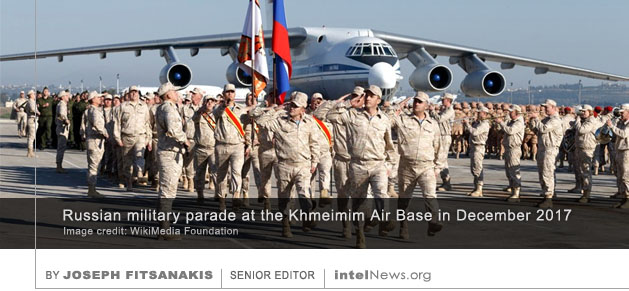
Khmeimim Air Base SyriaTHERE ARE CONFLICTING REPORTS about the fate of Russia’s military bases in Syria, following the complete collapse of the 54-year-long Assad dynasty. Late on Sunday it was announced on Russian state media that the Kremlin had extended Bashar al-Assad and his family political asylum “on humanitarian grounds”. Attention quickly turned to the fate of the Russian embassy in the capital Damascus and the Russian military facilities in Tartous and Khmeimim.
It is difficult to overstate the strategic significance of the Russian military facilities in Syria, some of which date as far back as 1971, when Hafez al-Assad, Bashar al-Assad’s father, assumed power in the country. The Russian naval base in Tartous is currently the only Russian military facility outside of the former Soviet Union. Furthermore, it constitutes the sole warm-port fueling and repair facility that is exclusively available to the Russian Navy. It is home to the Russian naval group in Syria, which consists of a submarine and five warships.


Likewise, the Khmeimim Air Base in Syria’s Latakia province is home to dozens of Russian fighter jets, which have been stationed there since 2015, ostensibly in order to protect the Syrian government from the Islamic State. However, Russia regularly uses the Khmeimim Air Base to transport troops and war materiel to Africa, and to project air power in the Mediterranean, through the presence of several bomber aircraft. The latter can be found, not only in the Khmeimim Air Base, but also in the Syrian military airports of Homs and Palmyra.

But these two military airports are now in the hands of the Hayʼat Tahrir al-Sham (HTS) forces that have captured much of Syria in the past two weeks. It is doubtful that the Russian Aerospace Forces will be able to use them from now on. Moreover, there are reports that Moscow will be forced to engage in a strategic withdrawal of the entirety of its military forces from Syria within hours, if not days.

On Sunday, the Russian Ministry of Foreign Affairs issued a dismissive statement claiming that, although Russian troops in Syria had been placed on high alert, “no serious threat to their security” had been detected. According to the Reuters news agency, the Russian government had been in communication with the leadership of the HTS leadership for several days. As a result of this communication, an agreement had allegedly been struck, which guaranteed “the safety of Russian military bases and diplomatic institutions in Syria”. Read more of this post

Russia using nontraditional means to gather intelligence, Finland warns

SUPO FinlandRUSSIA’S NEED TO GATHER intelligence from Scandinavian targets has increased considerably since Finland and Sweden joined the North Atlantic Treaty Organization (NATO), prompting Moscow to seek nontraditional means of collecting intelligence, according to Finland’s spy agency. A new report by the Finnish Broadcasting Company (Yle) relays a warning by the Finnish Security and Intelligence Service (SUPO) that Russian spies are increasingly operating in Scandinavia without relying on diplomatic protection.

Human intelligence (HUMINT) operations are typically carried out of diplomatic facilities by intelligence officers who enjoy various degrees of diplomatic immunity. Such protections are seen as crucial for the safety of intelligence personnel, who tend to engage in illegal activities while stationed abroad. However, the number of Russian intelligence officers who are based in diplomatic facilities in Finland and elsewhere in Scandinavia has “significantly decreased” in recent years, according to the Yle report.

The reason for the decline in numbers rests with the numerous expulsions of Russian diplomatic personnel —which include intelligence officers— that took place throughout Europe in the months following Russia’s February 2022 invasion of Ukraine. Since then, Finland is one of dozens of European countries that have repeatedly denied Russia’s requests for the issuance of diplomatic visas. As a result, Russian embassies and consulates in Finland remain understaffed and mostly devoid of intelligence personnel.

In response to this new reality, the Kremlin has been experimenting with using nontraditional HUMINT collectors. The latter are not based in diplomatic facilities and are not protected by diplomatic immunity. Such nontraditional intelligence collectors operate as “journalists or researchers”, according to SUPO. At the same time, Russian intelligence agencies increasingly target for recruitment Finns who life in Russia, or try to recruit them while they are traveling elsewhere in Europe.

Lastly, Russian intelligence agencies are systematically hiring criminals to carry out specific tasks on behalf of the Kremlin, in return for money. Such criminals include computer hackers, who are attracted by the Russian state. Indeed, the Russian government is systematically “providing favorable conditions” for computer hackers to operate out of Russian territory. They receive money and protection in return for letting the Russian state use them as a cover for cyber espionage, sabotage, and influence operations.

Author: Joseph Fitsanakis | Date: 18 November 2024 | Permalink

Possible Russian role probed in incendiary devices found in Britain and Germany

DHLAUTHORITIES IN BRITAIN AND Germany are reportedly investigating the possibility that the Russian intelligence services may be behind two fires that occurred in shipping warehouses last summer. The fires occurred in late July in facilities belonging to DHL, a German logistics firm headquartered in Bonn.

On September 1, the German government issued a warning about unknown suspects allegedly shipping “unconventional incendiary devices” throughout Europe. The warning referenced a fire that occurred at a DHL logistics center in the east German city of Leipzig. Germany’s Federal Office for the Protection of the Constitution (BfV) warned at the time that “further incendiary incidents” were anticipated, but provided no further details.

Late last week, British newspaper The Guardian reported that an incident like the one that occurred in Leipzig had taken place in a DHL warehouse in Minworth, a suburb of the city of Birmingham, located in the British Midlands region. In subsequent reporting, the paper alleged that British and German authorities have been investigating a link between the two incidents. Moreover, authorities are reportedly probing the possibility that the incidents may be part of a wider campaign by Russian military intelligence to sabotage Western European transportation and shipping networks.

Meanwhile, Lithuanian media revealed on Friday that a suspect had been arrested in Lithuania in connection with the two fires in Britain and Germany. The reports suggested that the two incendiary devices had been shipped from Lithuania by the same individual. However, there have been no updates about who may be behind the apparent sabotage campaign.

Author: Joseph Fitsanakis | Date: 21 October 2024 | Permalink