Russian spies operated in Portugal using forged Brazilian papers, report claims
May 26, 2025 2 Comments
 TWO RUSSIAN SPIES USED forged documents acquired in Brazil in order to live in Portugal for years and use it as a base from where to conduct espionage, according to an investigation by Portuguese counterintelligence. The spies were husband-and-wife team Vladimir Aleksandrovich Danilov and Yekaterina Leonidovna Danilova, both in their 30s. According to The New York Times, they appeared in Portugal in 2018 using the names Manuel Francisco Steinbruck Pereira and Adriana Carolina Costa Silva Pereira.
Portuguese weekly newspaper Sol said on Saturday that Danilov used a Brazilian passport and supplied authorities with documentation showing his father was a Portuguese national. This allowed Danilov to eventually obtain Portuguese citizenship. Although Danilova did not apply for Portuguese citizenship, she was granted permanent residency by the European Union country. These credentials enabled the spies to move freely in the European Union’s 27 member-states without restriction.
In 2022 the Brazilian Federal Police, with the assistance of United States intelligence agencies, launched a lengthy investigation into the activities of several Russian spies who operated in Brazil in recent years. The spies appear to have used concocted Brazilian identities in order to operate around the world undetected. The investigation eventually incorporated counterintelligence services from as many as eight countries, including Portugal, according to Sol.
So far the Portuguese investigation has revealed that the Danilovs conducted a variety of espionage operations in the coastal city of Porto, which is Portugal’s second-largest urban center following the capital Lisbon. Using Porto as an operational base, the couple traveled extensively around the world using their Brazilian and Portuguese passports. Each time they were able to return to their home in Porto “without encountering any issues”, Sol reports. The two spies have vanished and their current whereabouts are unknown.
► Author: Joseph Fitsanakis | Date: 26 May 2025 | Permalink
 A 21-YEAR-OLD American citizen, whose mother is a senior Central Intelligence Agency (CIA) official, died while fighting with the Russian military in Ukraine in 2024, according to a news report. Late last week, the CIA confirmed the accuracy of the story while requesting that the media afford the bereaved family “privacy at this difficult time”.
 THE REUTERS NEWS AGENCY has disclosed more information about an alleged plot by Russian intelligence to detonate bombs on cargo flights from Europe to North America. Initial details of the plot emerged in October 2024, when it was
  THE RUSSIAN FEDERATION HAS revoked the accreditation of two British diplomats over espionage allegations, while also accusing the United Kingdom of sabotaging the United States’ “peace plan” for Ukraine. The Russian Federal Security Service (FSB) said on Monday that the diplomatic expulsions involved two British men, a diplomat stationed at British embassy in Moscow, as well as a spouse of another British diplomat.
 THE UNITED STATES DEPARTMENT of Defense has reportedly ordered its Cyber Command to “stand down from all planning” of cyber operations aimed at Russia.
  THE OFFICE OF THE Federal Prosecutor in Germany has charged three dual German-Russian citizens with acts of espionage on behalf of Russia, with the intent of harming the national security of the German state. In compliance with German privacy laws, the three espionage suspects have been publicly identified only by their first names and last name initials. They are: Dieter S., Alex D., and Alexander J.
 THERE ARE CONFLICTING REPORTS about the fate of Russia’s military bases in Syria, following the complete collapse of the 54-year-long Assad dynasty. Late on Sunday it was
  facility outside of the former Soviet Union. Furthermore, it constitutes the sole warm-port fueling and repair facility that is exclusively available to the Russian Navy. It is home to the Russian naval group in Syria, which consists of a submarine and five warships.
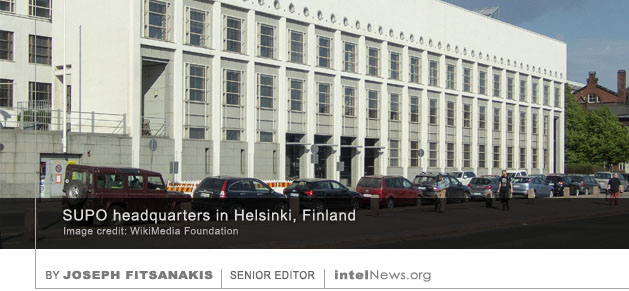 RUSSIA’S NEED TO GATHER intelligence from Scandinavian targets has increased considerably since Finland and Sweden joined the North Atlantic Treaty Organization (NATO), prompting Moscow to seek nontraditional means of collecting intelligence, according to Finland’s spy agency. A new
  AUTHORITIES IN BRITAIN AND Germany are reportedly investigating the possibility that the Russian intelligence services may be behind two fires that occurred in shipping warehouses last summer. The fires occurred in late July in facilities belonging to DHL, a German logistics firm headquartered in Bonn.
 LEAKED INFORMATION PUBLISHED BY leading German media outlets has revealed Russia’s plans for an influence campaign targeting Israel. The information was leaked earlier this month by the German newspaper Süddeutsche Zeitung and German television stations Norddeutscher Rundfunk (NDR) and Westdeutscher Rundfunk (WDR), as well as by
  parliament— would support a possible transfer of military aid to Ukraine.
 AT LEAST FOUR OF the eight Russians
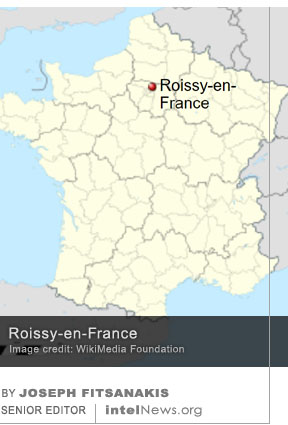 AN INVESTIGATION HAS BEEN launched in France after a Ukrainian-born Russian national reportedly detonated explosives in a hotel room near Paris, suffering severe burns in the process.
  FRENCH POLICE ARRESTED THREE foreign nationals on Monday, accusing them of having deposited five coffins draped in French flags at the foot of the Eiffel Tower. The flags bore the inscription “French Soldiers of Ukraine”, while the coffins were found to contain sacks of plaster, according to








Leaked counterintelligence document reveals Russian concerns about Chinese spying
June 9, 2025 by Joseph Fitsanakis 6 Comments
Following the death of Soviet Premier Joseph Stalin, the two communist countries became sworn enemies and nearly went to all-out war against each other. But in recent years Moscow and Beijing put aside their differences, prompted by their mutual desire to challenge the geopolitical supremacy of the United States and bring about a multipolar world. Since 2022, when Moscow resumed its military invasion of Ukraine, Beijing has stood firmly by the Kremlin. China has become the largest importer of Russian energy and has provided the Russian military with much-needed advanced technology. The relationship between the two neighboring nations appears to be deeper than ever before.
But according to a recently leaked report, Russia’s national security establishment is deeply concerned about Chinese efforts to dominate its ally by spying against it. The eight-page report outlines “ENTENTE-4”, a counterintelligence program run by the 7th Service of the FSB’s Department for Counterintelligence Operations. The department is known by its Russian acronym, DKRO. The DKRO’s 7th Service is tasked with counterintelligence planning and operations against Asian countries, with China being its primary target.
According to The Times, the DKRO produced the report sometime between 2023 and 2024. The document appears to have been intended for distribution to the FSB’s field offices across Russia. It was acquired by ARES Leaks, a cyber criminal syndicate, which posted images of the document on the Telegram messenger application. The paper said it shared the leaked document with “six Western intelligence agencies”, all of which assessed it to be genuine. Read more of this post
Filed under Expert news and commentary on intelligence, espionage, spies and spying Tagged with China, counterintelligence, DKRO (Russia), DKRO-7 (Russia), FSB, FSB Department for Counterintelligence Operations, News, Russia