Opinion: Fumbling Russian spies fail to stop ISIS-K attack, despite warnings from U.S.
March 25, 2024 7 Comments
 NO COUNTRY HAS BETTER intelligence on the Islamic State-Khorasan Province (known as ISIS-K) than the United States. American forces have faced ISIS-K almost from the moment the group was founded in 2015 in Pakistan, just a few miles from the Afghan border. It was there that a group of disaffected members of the Tehreek-e-Taliban-e-Pakistan (TTP, commonly referred to as the Pakistani Taliban) began turning their backs on al-Qaeda, which they saw as a failing brand, and joined the Islamic State of Iraq and Syria (ISIS).
By 2017, ISIS-K had begun to draw to its ranks hundreds of fighters from central and south Asia, who were inspired by the group’s goal of establishing an Islamic caliphate in the lands of the greater Khorasan. The term refers to a historical region that extends from eastern Iran and Turkmenistan, to the mountains of Kyrgyzstan, containing all of present-day Afghanistan, most of Uzbekistan, and even some parts of the Russian Caucasus. Like the Islamic State of Iraq and Syria (ISIS) during its heyday, ISIS-K aspires to establish control over a territorially unified entity and then use perpetual war to expand its influence in central Asia and beyond.
Until 2021, the biggest obstacle to ISIS-K’s plan for regional domination was the U.S. By some accounts, American forces and Western-trained Afghan commando units had managed to eliminate more than half of ISIS-K’s 4,000-strong base in northeastern Afghanistan. Since the hurried U.S. withdrawal from the country in 2021 (which was marred by an ISIS-K suicide bombing that killed nearly 200 people, including 13 U.S. troops), ISIS-K has expanded its reach beyond all prior measure. The group has since claimed responsibility for attacks in Afghanistan, Pakistan, Iran, and now Russia, that have killed over 600 people and injured thousands.
A primary reason for the proliferation of ISIS-K’s terrorist activity is that the U.S., which has more intelligence than anyone on the group, issues warnings that are  not being taken into consideration by the group’s primary targets, namely Afghanistan, Iran, and Russia. Indeed, despite the Washington’s best efforts, its warnings about pending ISIS-K attacks have been ignored by the group’s primary targets. A few days after an ISIS-K attack killed nearly 100 people in Kerman, Iran, The Wall Street Journal claimed the U.S. government had provided Tehran with “a private warning” of an imminent terrorist threat from ISIS-K. If that is true, then the Iranians clearly did not heed Washington’s warning.
It now appears that, once again, Washington had considerable intelligence insight into ISIS-K’s plans to strike inside Russia. On March 7, the U.S. embassy in Russia warned on its website that “extremists have imminent plans to target large gatherings in Moscow, to include concerts”. The warning provided no specifics. However, seeing how U.S. authorities issued private warnings to Iran, a country with which the U.S. has no diplomatic relations, then it is highly likely they provided similar information to Russia, which at least hosts American diplomats and intelligence officers on its soil. Yet, not only did the Russians ignore these warnings, but they openly dismissed them. Read more of this post
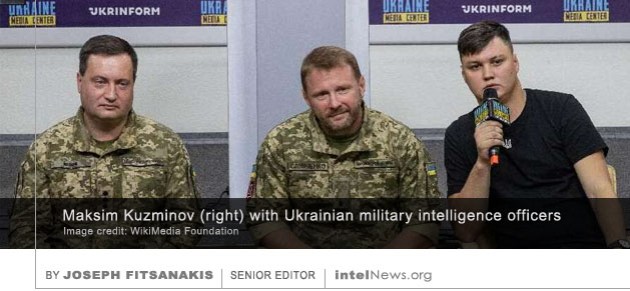 THE RUSSIAN INTELLIGENCE SERVICES have been “bolstering the[ir] architecture” aimed at stopping potential defectors and “liquidating” those who have already defected and are living in exile, according to a new report. In a
 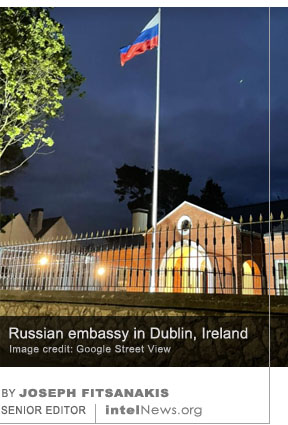 AUTHORITIES IN IRELAND ARE systematically “freezing” applications for Russian diplomatic visas from Moscow over concerns that the Kremlin is using its embassy in Dublin as a base for espionage activities. In 2018, the Irish government introduced emergency legislation that canceled a previously approved expansion of the Russian diplomatic compound in the Irish capital, allegedly due to concerns about espionage activities by Russian diplomats. Three years later,
  AN AFGHAN-BORN MAN, who became a naturalized British citizen and worked for British intelligence for over a decade, is attempting to regain his British citizenship, which was revoked after he was accused of being a Russian spy. The man, who is identified in court documents only as “C2”, was born in Afghanistan and grew up under the Soviet occupation in the 1980s. When the Soviets withdrew from Afghanistan he left the country alongside the Russian forces and resettled in Russia, where he attended university and married a Russian woman.
 AUTHORITIES IN INDIA HAVE arrested a security employee at the Indian High Commission in Russia, accusing him of spying for Pakistani intelligence. The embassy of India in Moscow is one of its largest in the world and is viewed as critical to New Delhi’s strategic relations with Russia. Employees that staff the Moscow embassy are highly vetted and typically represent the cream of the crop of India’s Ministry of External Affairs. It follows that news of the arrest of a Moscow embassy security employee on espionage charges must have raised eyebrows in India.
 AUTHORITIES IN ITALY ARE investigating a series of suspicious cash withdrawals that were made from accounts belonging to the Russian embassy in Rome, according to reports in the Italian press. On November 14, the Rome-based daily La Repubblica
  THE FRENCH GOVERNMENT HAS accused Russia of carrying out a disinformation campaign using stenciled images of Stars of David that mysteriously appeared in the streets of Paris late last month. The stars, between 60 and 80 in number, were found in the 14th arrondissement of the French capital, as well as in several Parisian suburbs in the early hours of October 31. The stars (see accompanying picture) are all blue and all have the same size. They appear to have been hurriedly stenciled and have no accompanying text.
 A FORMER SOVIET KGB officer, who now lives in the United Kingdom under witness protection, can sue the British state for revealing his identity to Latvian authorities, which may have put his life in danger, a judge has ruled.
 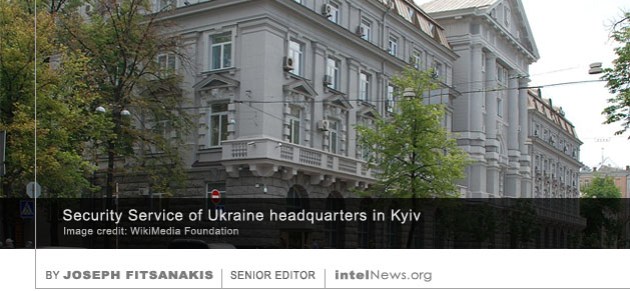 THE GROWING LIST OF assassinations of prominent Russians and Ukrainian separatists shows that the Ukrainian intelligence services are using “liquidations” as a weapon of war, according to The Washington Post. Citing “current and former Ukrainian and United States officials”, the paper
  Crimea, the local head of the domestic security agency, the Ukrainian Security Service (SBU) defected to Russia.
 GERMANY HAS CHARGED TWO men, among them a German intelligence officer, with spying for Russia, in a case that has shocked German public opinion and
 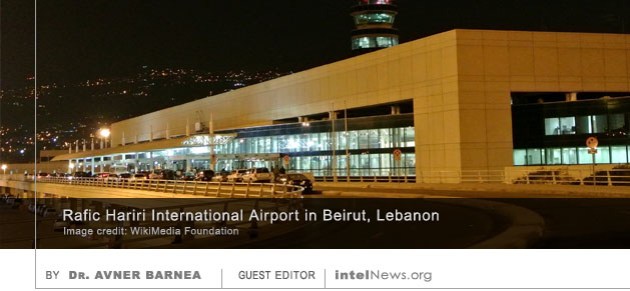 LAST WEEK, LEBANON’S GENERAL Security Directorate
 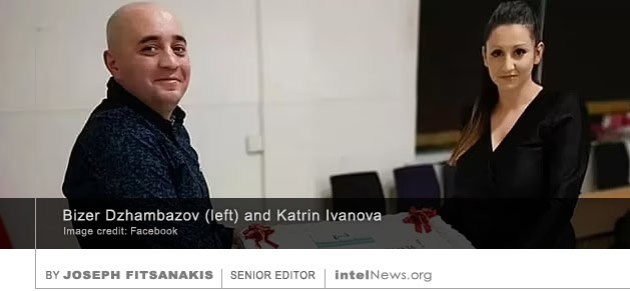 AUTHORITIES IN BRITAIN HAVE charged three Bulgarian nationals with spying for Russia, as part of “a major national security investigation” that led to at least five arrests as early as last February. Two of the Bulgarians appear to be legally married. They have been identified as Bizer Dzhambazov, 41, and Katrin Ivanova, 31, who live in Harrow, a northwestern borrow of Greater London. The third Bulgarian, Orlin Roussev, 45, was arrested in Great Yarmouth, a seaside town in the east coast identity dof England. None of the suspect appears to have a formal diplomatic connection to either Bulgaria or Russia.
 THE BRAZILIAN GOVERNMENT IS blocking requests from the United States and Russia to extradite an alleged Russian deep-cover spy, whose forged Brazilian identity papers were discovered by Dutch counterintelligence. Sergey Cherkasov was
  AN INVESTIGATIVE REPORT BY the Wall Street Journal discusses a little-known Russian counterintelligence unit that targets foreign diplomats in ways that often “blur the lines between spycraft and harassment”. Among other activities, this secretive unit is likely behind a string of operations targeting American citizens, which have led to the arrest of at least three of them since 2018. These include the Wall Street Journal correspondent Evan Gershkovich, who earlier this year became the first American reporter to be held in Russia on espionage charges since the Cold War.








Poland and Germany charge Russian operatives with assassination, sabotage plots
April 22, 2024 by Joseph Fitsanakis 4 Comments
Polish and Ukrainian authorities announced last week the arrest of Paweł K., a Polish citizen, who is believed to have been engaged in collecting information about the security of the Rzeszów-Jasionka Airport. Located in southeastern Poland, Rzeszów-Jasionka is a relatively small provincial airport. Its proximity to the Ukrainian border has made it central to efforts by Kyiv’s allies to supply it with war materiel following the expansion of Russia’s occupation of Ukraine in February 2022. Military supplies are transported to Rzeszów-Jasionka from across the world and then transferred across the Ukrainian border with trucks. Additionally, many high-level meetings between Ukrainian and Western officials take place at the airport. The United States military is currently providing security at the Rzeszów-Jasionka Airport.
Polish authorities said last week that Paweł K. was part of a Russian intelligence collection operation that was “intended to assist in the planning of a potential assassination of a foreign state leader”, namely President Zelenskyy. The Security Service of Ukraine (SBU) said it informed its Polish counterpart agency about the assassination plot, which had been foiled “as a result of the close co-operation” between Ukrainian and Polish intelligence. Paweł K. is not a diplomat and thus has no immunity from prosecution in Poland. If convicted, therefore, he could face up to eight years in prison.
In a seemingly unconnected development, police in the southeastern German state of Bavaria arrested two dual German-Russian nationals, who have been charged with planning to sabotage military and industrial facilities on German soil. The plot appears to be part of broader Russian efforts to disrupt the production and delivery of military aid to Ukraine. At least one of the locations that the suspects are accused of targeting is a local military base under the command of the United States. The two suspects have been identified as Dieter S., 39, and Alexander J., 37. Both were arrested in the small city of Bayreuth.
Germany’s Federal Foreign Office, led by Minister Annalena Baerbock, summoned Sergei Nechayev, Russian Ambassador to Berlin, shortly after the arrest of Dieter S. and Alexander J. Some media reports noted the “unusually hasty” way Nechayev was summoned, which may indicate that German authorities have acquired “unequivocal proof of the link between the plot and the Kremlin”. An announcement made by the Russian embassy in Berlin confirmed that Nechayev had been summoned in connection to the arrests, but added that the ambassador had been presented with “no proof” that the two suspects were connected with Russian intelligence or that they had planned acts of sabotage.
► Author: Joseph Fitsanakis | Date: 22 April 2024 | Permalink
Filed under Expert news and commentary on intelligence, espionage, spies and spying Tagged with 2022 Russian invasion of Ukraine, assassinations, Germany, GRU, GRU Unit 29155, News, Poland, Russia, Rzeszów-Jasionka Airport, sabotage, SBU (Ukraine), Ukraine