Brazil launches investigation into illegal activities of Russian deep-cover spies
July 3, 2023 1 Comment
 AUTHORITIES IN BRAZIL HAVE launched a nationwide probe into the abuse of the country’s citizenship documentation system by Russian spies, who are allegedly using it to build forged identities. According to The Wall Street Journal, Brazil was placed “in an uncomfortable international profile” in the past year, after at least three alleged Russian deep-cover spies were outed by intelligence services in the Netherlands, Norway and Greece.
In June of 2022, authorities in the Netherlands expelled Sergey Cherkasov after he attempted to enter the country using a Brazilian-issued passport under the name of Victor Muller Ferreira. As intelNews explained at the time, Dutch and American counterintelligence outed Cherkasov as an intelligence officer of the Main Directorate of the Russian Armed Forces’ General Staff, which is commonly known as GRU. Cherkasov is alleged to have built his forged identity over several years, while operating in Brazil and the United States. Cherkasov is currently serving a 15-year prison sentence in Brazil for using forged identity documents. He is wanted in the United States for espionage. The alleged spy has reportedly admitted to the use of forged documents, but is denying he worked as a Russian intelligence officer.
In October of last year, the Norwegian police arrested another Brazilian citizen, José Assis Giammaria (pictured), accusing him of operating under deep cover on behalf o the GRU. According to the Office of the Norwegian state prosecutor, the suspect’s actual name is Mikhail Mikushin. He is believed to have been operating as a deep-cover spy in Brazil, Canada and Norway since 2006. Mikushin is now facing charges of “aggravated intelligence-gathering activity targeting state secrets”, which carry a maximum prison term of 10 years.
In early 2023, Gerhard Daniel Campos Wittich, a resident of Rio de Janeiro, disappeared while traveling abroad. A few months later, he was connected to Irena Shmyrev, a Russian deep-cover spy who was living in Greece under an assumed Greek identity, until she disappeared without trace, reportedly leaving the country in a hurry. According to Greek counterintelligence investigations, Wittich was Irena A.S.’s Russian husband who, like her, worked as a deep-cover intelligence operative out of Brazil.
According to The Wall Street Journal, an official investigation is currently underway in Brazil into how many Russian deep-cover intelligence operatives may be using forged Brazilian citizenship documents to “lurk undetected within the country or around the world”. The paper says that Brazilian investigators have shared “few public details about their probe”. However, it cites “people familiar with the matter” in claiming that the probe centers on “security gaps within Brazil’s documentation system”, which appear to be exploited by undercover spies. Such security gaps allegedly include the ability to obtain a Brazilian identity card and a passport with the use of a single document, namely a birth record.
► Author: Joseph Fitsanakis | Date: 03 July 2023 | Permalink
 INTENSIFYING COMPETITION BETWEEN THE superpowers has turned Switzerland into an espionage battlefield, with more foreign spies being active there than in most other European countries, according to a new report. The
 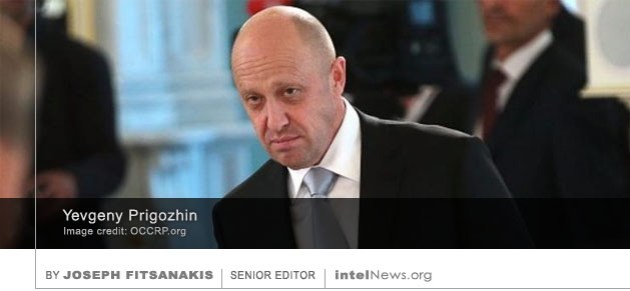 IN THE EARLY HOURS of June 23, PMC Wagner leader Yevgeny Prigozhin declared the launch of an armed campaign against the Ministry of Defense of the Russian Federation. Within hours, several thousand soldiers belonging to Wagner, one of the world’s largest private military companies, had abandoned their positions in eastern Ukraine and were en route to Moscow. Their mission, according to Prigozhin, was to arrest Minister of Defense Sergei Shoigu and Chief of the General Staff Valery Gerasimov, and try them for mismanagement and corruption.
 Wagner leader has repeatedly expressed his dismay at being viewed as an outsider by the Ministry of Defense, which it views as an elitist and incompetent bureaucracy. His experience in Ukraine, where Wagner’s forces faced stiff resistance from the local population and the Ukrainian military alike, added fuel to his rage against a host of Russian defense officials. Prigozhin has been voicing his denunciations of the way these officials have managed the war since March of 2022, just two weeks into the invasion of Ukraine.
 THE RUSSIAN INTELLIGENCE SERVICES planned to assassinate a Russian former intelligence officer, who had defected to the United States and was living in an apartment complex in Florida, according to a new report. The alleged assassination plan is discussed in the forthcoming book Spies: The Epic Intelligence War Between East and West (Simon and Schuster), authored by Harvard University academic Calder Walton.
 A SERIES OF COORDINATED drone strikes that struck Moscow last week were not random, but may in fact have targeted the homes of senior Russian intelligence officials, according to a new report by an American television network, which cited knowledgeable sources and data by an open-source research firm.
 THE UKRAINIAN INTELLIGENCE SERVICES are training and arming cells of saboteurs inside Russia, who are responsible for several acts of sabotage on Russian soil, including a recent attack on the Kremlin, according to CNN. In an
  RUSSIAN OFFICIALS SAID THEY uncovered a sophisticated espionage effort by the United States government, which targeted the smartphones of thousands of Apple users living in Russia, including foreign diplomats. According to the Russians, the operation was carried out by the National Security Agency (NSA), an American intelligence agency that specializes in gathering foreign signals intelligence and securing the United States government’s information and communication systems.
 A COURT IN ALBANIA
  The United States Department of Justice has
  RIVAL ONLINE CAMPAIGNS BY American and Russian intelligence agencies are encouraging each other’s citizens to contact them, share information and possibly even defect. At least three ads have been on social media, with the Federal Bureau of Investigation (FBI) issuing the earliest one in February of this year. The Central Intelligence Agency (CIA) and its Russian counterpart, the Foreign Intelligence Service (SVR), are now believed to have published similar ads.
 AN ESPIONAGE TOOL DESCRIBED by Western officials as the most advanced in the Russian cyber-arsenal has been neutralized after a 20-year operation by intelligence agencies in the United States, Australia, Canada, the United Kingdom and New Zealand. The operation targeted
  A UKRAINIAN PARAMILITARY GROUP has claimed to be behind a targeted attack against an influential figure in Russian literature and social media on Saturday, which killed his fellow passenger and prompted strong denouncements by the Kremlin. The attack appeared to target Yevgeny Nikolayevich Prilepin, 47, known in Russia as Zakhar Prilepin. One of the best-known novelists in Russia, Prilepin spent much of his late teens and early twenties serving in the Russian National Guard. He saw action during two tours in Chechnya.
 OFFICIALS IN UKRAINE HAVE
  Russia’s border with Belarus, two trains were
 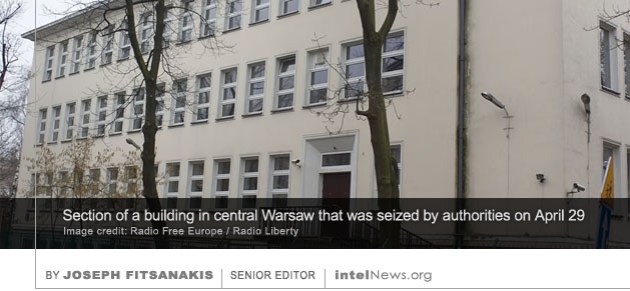 AUTHORITIES IN POLAND HAVE seized an abandoned school building in the Polish capital Warsaw, allegedly because it was being used as a base for espionage activities by the Russian government. Following the seizure of the building complex, Russian officials issued stern but vague warnings, saying that action will be taken in response to what they termed as an “act of provocation” by the Polish government.








German spy services had foreknowledge of Wagner mutiny, report claims
July 11, 2023 by Joseph Fitsanakis 1 Comment
In the days following the June 23 mutiny by soldiers of the Russian private military firm Wagner Group, German intelligence agencies were publicly criticized for allegedly failing to warn Berlin about the unprecedented incident. Specifically, it was claimed that Germany’s primary foreign intelligence agency, the Federal Intelligence Service (BND), did not issue an actual warning about the mutiny until Saturday —a full 12 hours after the first clashes had erupted between Wagner mercenaries and forces loyal to the Russian Ministry of Defense.
Much of the criticism came from the ranks of the center-left German Social Democratic Party (SPD), which is the primary political party behind the government of German Chancellor Olaf Scholz. However, criticism also came from the Green Party, which supports Scholz’s administration, and the liberal center-right Free Democratic Party (FDP), which also supports Scholz’s government. The criticism intensified after June 28, when, during a live television interview, Chancellor Scholz appeared to confirm speculation that the BND had left his administration in the dark about the Wagner mutiny until it was too late.
Late last week, however, a joint investigation by two of Germany’s most respected public television broadcasters, the Hamburg-based NDR and the Cologne-based WDR, concluded that the BND had been far more informed about the Wagner mutiny than its critics have claimed. The investigation concluded that, not only did the BND have foreknowledge of the mutiny nearly a week before it materialized, but that it was able to listen-in to the frantic telephone conversations between Prigozhin and Belarussian President Lukashenko, as the latter tried to dissuade the Wagner leader from storming the Russian capital with his heavily armed band of mercenaries.
According to the NDR-WDR report, the BND had been able to hack into Wagner’s internal communications system up for over a year. However, its operation was betrayed by “Carsten L.”, a German intelligence officer who was arrested late last year for spying for Russia. However, the German spy service was able to continue to monitor the internal affairs of Wagner through other sources and had access to channels of information within Wagner in the months leading up to the mutiny. Thus, according to the report, the BND had “vague indications of an imminent uprising by Wagner” about a week prior to June 23.
However, the agency was unsuccessful in verifying these indications through other sources, including its foreign counterpart agencies. For this reason, it chose not to notify the German Chancellery in concrete terms.
Nevertheless, the BND did issue a warning on Friday evening, a few hours before the Wagner mutiny began. The warning was issued a full day prior to the takeover of Wagner’s armed takeover of the Russian armed forces’ operational headquarters in Rostov, which occurred on Saturday. The two state broadcasters reportedly reached out to the BND for confirmation of the report’s findings. However, a BND spokesperson declined to comment on the matter, saying simply that the BND “generally does not comment publicly on matters relating to intelligence findings or operations”.
► Author: Joseph Fitsanakis | Date: 11 July 2023 | Permalink
Filed under Expert news and commentary on intelligence, espionage, spies and spying Tagged with 2022 Russian invasion of Ukraine, BND, forecasting, Germany, News, PMC Wagner, Russia