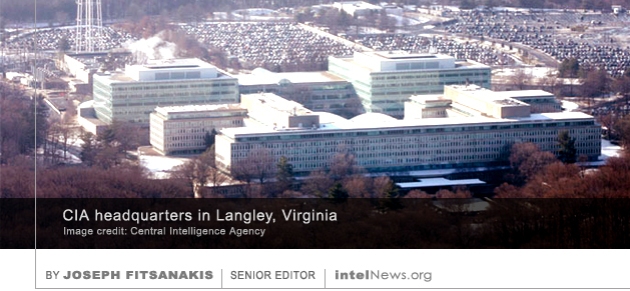
US sees Russian weapon behind US diplomats’ mystery ailments, say officials

Kirtland Air Force BaseA Russian-made device caused the mystery ailments that affected more than two dozen American diplomats in Cuba and China, according to United States government officials who have been briefed on the matter. Since September of last year, Washington has recalled the majority of its personnel from its embassy in Havana and at least two more diplomats from its consulate in the Chinese city of Guangzhou. The evacuees reported experiencing “unusual acute auditory or sensory phenomena” and “unusual sounds or piercing noises”. Subsequent tests showed that they suffered from sudden and unexplained loss of hearing as well as from various forms of brain injuries. In April of this year the Canadian embassy evacuated all family members of its personnel stationed in the Cuban capital over similar health concerns. More recently, the US issued a travel warning advising its citizens to stay away from the island and accused Cuba of neglecting to ensure the safety of US diplomatic personnel stationed there.
In early September, Douglas H. Smith, who heads the team of scientists tasked by the US government to examine the matter, said that microwave radiation was almost certainly responsible for the diplomats’ ailments. He added that microwaves were considered “a main suspect” and that his team of scientists was now “increasingly sure” that the diplomats had suffered brain injuries caused by microwave radiation. Now the US news network NBC reports that Russia is viewed as the primary culprit behind the mystery ailments that plagued US diplomats. Reporting on Tuesday the news network cited three unnamed officials in the administration of US President Donald Trump, as well as “congressional aides and others briefed on the investigation”. Specifically, NBC reported that the Russian connection was supported by “evidence from communications intercepts” (signals intelligence or SIGINT), though it did not elaborate on their precise nature. It also said that the ongoing investigation into the purported weapon involves the Federal Bureau of Investigation, the Central Intelligence Agency among other US intelligence and security agencies. Another leading actor in the investigation is the US Air Force, said NBC, stating that experts in its directed energy research program at the Kirtland Air Force Base near Albuquerque, New Mexico, are trying to reverse-engineer the alleged weapons based on the symptoms that they cause.

But NBC noted that the evidence remains relatively inconclusive and is not yet sufficient to allow Washington to openly accuse Moscow of having masterminded the alleged microwave attacks on the US diplomats. The news network said it reached out to the Office of the Director of National Intelligence but received no response. A spokeswoman from the US Department of State said that the investigation into the diplomats’ ailments was ongoing and that the Department had made “no determination of who or what is responsible for the health attacks” on its personnel.

► Author: Joseph Fitsanakis | Date: 13 September 2018 | Permalink

Poisoned Russian spy advised Spanish intelligence, say officials

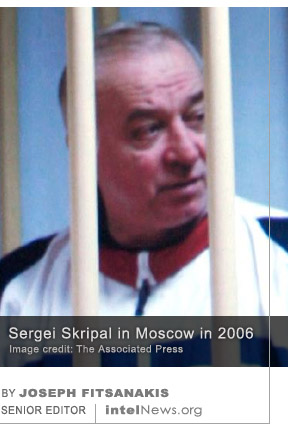
Sergei SkripalSergei Skripal, the Russian double agent who was poisoned with a military-grade nerve agent in England earlier this year, worked with Spanish intelligence after his defection to the United Kingdom, according to sources. Skripal, a former military intelligence officer who spied for Britain in the early 2000s, had kept a low profile while living in the English town of Salisbury. He was resettled there in 2010 by the British Secret Intelligence Service (MI6), after he was released from a Russian prison. But he and his daughter Yulia made international headlines in March, after they were poisoned by a powerful nerve agent that nearly killed them. The attack has been widely blamed on the Russian government, but the Kremlin denies that it had a role in it.
The attempt to kill Skripal surprised some intelligence observers due to the fact that the Russian government had officially pardoned the double agent prior to exchanging him with Russian spies who had been caught in the West. As intelNews wrote in May, “typically a spy who has been pardoned as part of an authorized spy-swap will not need to worry about being targeted by the agency that he betrayed. If it indeed tried to kill Skripal, the Russian government may therefore have broken the unwritten rules of the espionage game”. Eventually, however, it was revealed that, instead of retiring after his defection to the UK, Skripal traveled extensively in Eastern Europe, where he advised local intelligence agencies on how to defend against Russian espionage. The double agent participated in MI6-sponsored events in which he briefed intelligence practitioners in at least two countries, Estonia and the Czech Republic. These activities may have convinced the Kremlin that Skripal had broken the unwritten conditions of his release, namely that he would not participate in any intelligence-related activities against Russia.

Now The New York Times has claimed that, in addition to consulting for Czech and Estonian spies, Skripal also visited Spain, where he met with officers from the country’s National Intelligence Center (CNI). Citing an unnamed Spanish former police chief and Fernando Rueda, a Spanish intelligence expert, The Times said that Skripal advised the CNI about the activities of Russian organized crime in Spain and the alleged connections between Russian mobsters and the Kremlin. When he traveled to Spain under MI6 protection, said the paper, Skripal was effectively returning to the place where he had been initially recruited to spy for the British. Skripal spent several years in Spain, said The Times, serving as a military attaché at the Russian embassy in Madrid. It was there that he began to work secretly for MI6. However, the precise timing of Skripal’s return trips to Spain after 2010, as well as the content of his discussions with Spanish intelligence officials, remain unknown, according to The Times.

► Author: Joseph Fitsanakis | Date: 07 September 2018 | Permalink

Russia, US, deny conducting mystery airstrikes in Tajikistan

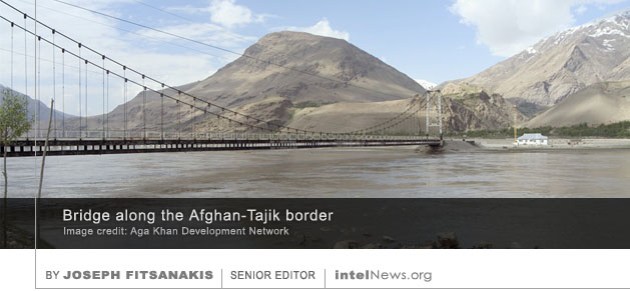
Afghanistan TajikistanRussia, the United States and Tajikistan have all denied that they were behind a series of mystery airstrikes that took place along the Tajik-Afghan border on Sunday, while the identity of the targets also remains unknown. The 800-mile border between Afghanistan and Tajikistan consists of mountainous terrain. Unlike the Afghan-Pakistani border, which is rife with skirmishes and firefights, the Afghan-Tajik border is usually peaceful and sparsely guarded. But on Sunday, August 26, local officials from both sides of the Afghan-Tajik border reported that fighter jets conducted a series of airstrikes. News media in Tajikistan’s capital Dushanbe said that Tajik border guards exchanged fire with Taliban fighters, killing as many as eight, but losing two officers in the process. However, on Monday a Tajik border police official denied media reports and said that the border incident involved Tajik lumberjacks who were attacked by unknown assailants from Afghanistan.
Adding to the mystery, Afghan officials said on Sunday that fighter jets bombed Afghan territory adjacent to the Tajik border. They added that they did not know if the fighter jets were Russian or Tajik. However, Tajikistan has a nominal air force consisting of no more than four Czech-made light-attack aircraft, which have not been used in over a decade. That leaves Russia, which maintains an air base in the suburbs of Dushanbe, 100 miles from the Afghan border. But on Monday, Moscow denied any involvement in the incident, as did Tajikistan. Russian officials placed the blame on the US, saying that the American-led North Atlantic Treaty Organization (NATO) force in Afghanistan is known to regularly launch airstrikes throughout Afghanistan. But US Pentagon officials said that they were not involved. When asked by reporters in Kabul, Afghan government representatives said that Afghanistan lacked the ability to monitor its airspace due to a lack of radar equipment. They called on the US-led NATO force to investigate Sunday’s incident.

Meanwhile, the identity of the persons targeted in the alleged airstrikes is also in doubt. On Monday, the Taliban denied that they had engaged with either Afghan or Tajik government forces along Afghanistan’s northern borderlands, saying that they had not authorized their fighters to operate in the area. Additionally, the Taliban have not been known to engage Tajik government troops in the past. Some observers have opined that the border skirmish may have been caused by drug smugglers who regularly transport drugs from Afghanistan to Russia or the Caspian Sea region through Tajikistan and Uzbekistan. However, there are no prior reported incidents of Russian, American or Tajik fighter jets having been deployed along the Afghan-Tajik border to combat drug traffickers.

► Author: Joseph Fitsanakis | Date: 28 August 2018 | Permalink

CIA informants inside Russia are going silent, say US sources

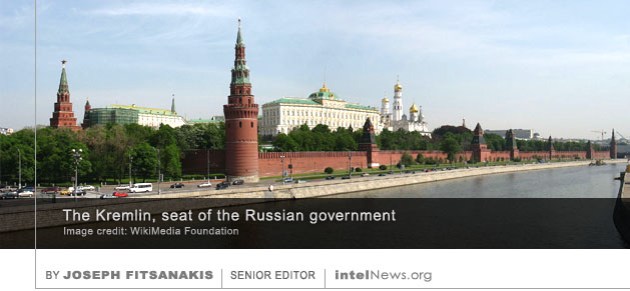
Kremlin, RussiaSecret informants inside the Russian government, which the United States has relied on in recent years for tips about Moscow’s strategy and tactics, have gone silent in recent months, according to sources. Over many years, US intelligence agencies have built networks of Russian informants. These consist of officials placed in senior positions inside the Kremlin and other Russian government institutions, who can help shed light on Russia’s political maneuvers. These informants were crucial in enabling the US Intelligence Community to issue warnings of possible Russian meddling in the American presidential elections of November 2016. Since then, US spy agencies have largely relied on these informants to produce detailed assessments of Russian intelligence activities targeting the US, and propose measures against those involved.

But on Friday, The New York Times said in an article that these vital sources of information in Moscow have been going silent in recent months. Citing “current and former officials”, the paper said that US officials did not believe that the informants have been captured or killed. Instead, they have voluntarily “gone underground” because of “more aggressive counterintelligence” practiced by Russian security agencies. Moscow has stepped up attempts to detect spies operating inside Russia since the Sergei Skripal incident, when relations between it and most Western countries sank to their lowest point since the Cold War. In turn, Western informants operating in Russia have “decided it is too dangerous to pass information” and have gone “silent for their own protection”, said The Times.

This situation, however, has left the Central Intelligence Agency and other US spy agencies “in the dark” about the intentions of Russian President Vladimir Putin, just as America is nearing its mid-term elections. The lack of information has been exacerbated by the expulsion of dozens of American diplomats from Russia in March of this year. Moscow announced the expulsions in response to Washington’s decision to expel 60 Russian diplomats in protest against the attempt —allegedly by Russia— to kill Sergei Skripal in England. Many of the diplomats who were expelled from Russia were in fact intelligence officers operating under diplomatic cover. Few of those are now left on Russian soil and, according to The Times, “are under incredible surveillance” by Russian counterintelligence agencies. Washington is still collecting information from Russia through other channels, including communication intercepts, which, according to The Times, “remain strong”. But the paper cited anonymous American officials who “acknowledged the degradation in the [overall flow of] information collected from Russia.

► Author: Joseph Fitsanakis | Date: 27 August 2018 | Permalink

Russia is looking for nuclear missile that went missing, US sources claim

Russian nuclear-powered missileRussia is preparing to carry out an extensive search for a nuclear-powered missile that went missing during a test several months ago, according to American intelligence sources. The missing missile appears to be part of a new Russian-made weapon system that President Vladimir Putin boasted about earlier this year. During his annual state-of-the-union speech in Moscow on March 1, Putin said that Russia had developed a new type of nuclear-powered missile with a virtually unlimited range. This new type of weapon, said the Russian president, could fly indefinitely and thus deliver nuclear warheads to any target around the world. Additionally, the new system was designed in such a way that it could evade every known missile defense system and was thus “invulnerable to interception”, he claimed.
According to observers, the recently announced Russian weapon has been in development for more than 15 years. It is based on gasoline-powered engines that are used during the missile’s takeoff. But soon afterwards, they give way to a nuclear-powered engine that guides the missile to its eventual destination. However, despite Putin’s claims, the weapon has never been successfully tested according to American intelligence sources. The Americans claim that the Russian military tested these missiles at least four times between November of 2017 and February of this year, and that all four missiles crashed long before they reached their intended destination. The idea of indefinite flight, therefore, which Putin boasted about earlier this year, remains unrealized, according to American sources. Moscow, however, denies that the missiles crashed during the testing stage.

Now the American news network CNBC has said that Russia is preparing to launch a large-scale search operation for one of the nuclear-powered missiles that went missing in the Arctic Ocean in November of 2017. It is believed that the missile crashed in the Barents Sea, a vast expanse of water located off the northern coasts of Russia and Norway. Citing anonymous individuals “with direct knowledge of a US intelligence report” on the subject, CNBC said on Tuesday that the Russian search mission will consist of three vessels, at least one of which will be specially equipped to handle radioactive material from the missing missile’s nuclear core. The American news network said that the Russian search mission has no definite timeline. The Russian government has not commented on CNBC’s allegations.

► Author: Joseph Fitsanakis | Date: 24 August 2018 | Research credit: A.G.B. | Permalink

German ex-spy chief tells West to stop sharing intelligence with Austria

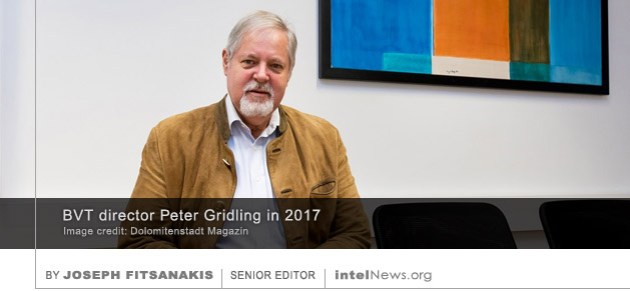
Peter GridlingA former director of Germany’s foreign intelligence service has warned Western officials to stop sharing intelligence with the government of Austria, because of its alleged proximity to the Kremlin. August Hanning served as chief of Germany’s Federal Intelligence Service, known as BND, from 1998 to 2005. He went on to serve as the most senior civil servant in the Ministry of the Interior until his retirement in 2009. In an interview published on Wednesday in Germany’s Bild newspaper, Hanning argued that “caution is necessary with [an intelligence] service [like that of Austria,] which cannot protect its own secrets or the sources and sensitive information of its partners”. He went on to add that “there is […] now extreme caution when sharing information] with the Austrian intelligence services.

Hanning’s statement came less than a week after The Washington Post claimed in a major article that most Western intelligence services had stopped sharing sensitive information with the Austrian government. The newspaper alleged that the disruption in intelligence cooperation between Austria and other Western countries was sparked by an unprecedented police raid on the headquarters of Austria’s spy agency in February of this year. On February 28, Austrian police raided the central offices of the Office for the Protection of the Constitution and Counterterrorism (BVT), which operates as Austria’s domestic intelligence agency. By that evening, thousands of classified documents had been removed from the BVT’s headquarters and stored in police facilities in Vienna. Austrian officials claimed that the raid was sparked by allegations made by South Korean intelligence that blank Austrian passports had been acquired by the North Korean government.

However, according to The Post, the raid was politically motivated by Austria’s far-right Freedom Party, which is part of the country’s ruling coalition. The purpose of the raid, said the article, was to neutralize the BVT, whose mission includes defending the Austrian constitution from domestic threats from the far left and the far right. Many Western services were alarmed by the February 28 raid on the BVT and immediately stopped sending sensitive information to the agency’s Vienna headquarters, according to The Post. It also said that Western European powers are concerned by the seemingly close relations between some members of Austria’s government and the Kremlin. Last week, Russian Premier Vladimir Putin traveled to Austria to attend the wedding of Karin Kneissl, Austria’s Minster of Foreign Affairs, who is politically close to the Freedom Party. The Russian leader said that he attended Kneissl’s wedding on a “purely private” capacity. But that did little to appease European Union leaders.

On Monday, the BVT rejected the claims made by The Post. In a statement issued to the media, BVT director Peter Gridling (pictured) said that “cooperation [between the BVT and] partner intelligence services continues to work well in key areas such as the fight against terrorism”.

► Author: Joseph Fitsanakis | Date: 23 August 2018 | Permalink

Canada seeks to take away passports from children of Russian spies

Vavilov FoleyTwo Canadian brothers, whose Russian-born parents fraudulently acquired Canadian citizenship before being arrested for spying on the United States for Moscow, are not entitled to Canadian citizenship, according to the government of Canada. Tim and Alex Vavilov are the sons of Donald Heathfield and Tracey Foley, a married couple arrested in 2010 under Operation GHOST STORIES, a counterintelligence program run by the US Federal Bureau of Investigation (FBI). Following the couple’s arrest, their sons, who allegedly grew up thinking their parents were Canadian, were told that their parents were in fact Russian citizens and that their real names were Andrei Bezrukov and Elena Vavilova. Their English-sounding names and Canadian passports had been forged in the late 1980s by the KGB, the Soviet Union’s primary external intelligence agency.
But the two brothers, who had never been to Russia prior to their parents’ arrest in 2010, are currently involved in a prolonged legal battle to keep their Canadian citizenship, after the government of Canada refused to recognize their Canadian passports. The latter were annulled when it became clear that the Canadian passports of the brothers’ parents were fraudulent. According to the Canadian Citizenship Act, children born in Canada to “employees of a foreign government” are not entitled to Canadian nationality. But the brothers argue that they were 20 and 16 when their parents were arrested and were unaware of their double identities. It follows, they say, that they cannot be punished for their parents’ crimes, and insist that Canada is the only home they know.

Last year, Canada’s Federal Court of Appeals overturned the decision of a lower court and ordered the government to reinstate Alex Vavilov’s Canadian citizenship. According to the Appeals Court, the Vavilov could not be considered as having been born to employees of a foreign government, since his parents were not accredited diplomats, nor did they enjoy diplomatic privileges while living in Canada. Since that time, the two brothers have had their Canadian passports renewed and say they hope to be able to settle and work in Canada. But the Canadian government was given until September 20 of this year to decide whether to appeal the Federal Court of Appeal’s decision, and take the case to the Supreme Court.

Now the Canadian government has filed a new court submission, effectively challenging the Federal Court of Appeals’ decision. It its submission, the government claims that the Vavilov brothers should be denied Canadian citizenship because their parents were, effectively, secret employees of a foreign government. The two Russian spies may not have been accredited by the Canadian state as foreign employees, it says, but they were in reality “dedicated to serving their home country, except in their case, the employment was carried out clandestinely”. Canada’s Supreme Court has said that it plans to hear the case before the end of the year.

► Author: Joseph Fitsanakis | Date: 14 August 2018 | Permalink

Montenegro seeks arrest of ex-CIA officer accused of role in pro-Russian coup

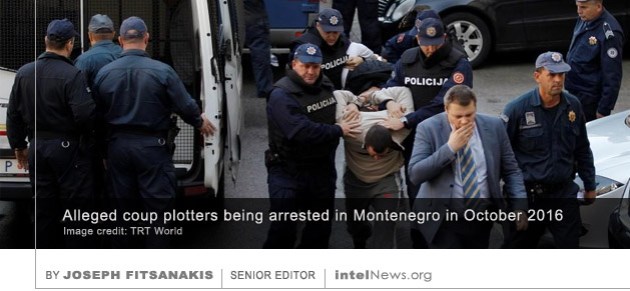
Montenegro coupGovernment prosecutors in Montenegro, the youngest member of the North Atlantic Treaty Organization, claim that a former officer of the United States Central Intelligence Agency helped pro-Russian plotters organize a coup in 2016. In October of that year, authorities in Montenegro accused “nationalists from Russia and Serbia” of staging a failed plot. Their goal was allegedly to kill the country’s then-Prime Minister Milo Dukanović, spark a pro-Russian coup in the country, and prevent its entry into NATO. The allegations surfaced after 20 Serbians and Montenegrins were arrested in Montenegro for allegedly planning an armed coup. The arrests took place on election day, October 16, 2016, as Montenegrins were voting across the Balkan country of 650,000 people. The plotters had even hired a “long-distance sharpshooter” who was “a professional killer” for the task of killing Đukanović, according to Montenegrin police. After killing the prime minister, the plotters allegedly planned to storm the parliament and prompt a pro-Russian coup.
Russia has vehemently denied the allegations. But in March of last year, the then British foreign secretary Boris Johnson appeared to validate the Montenegrin government’s allegations. Since then, a sensational trial has been taking place in the Montenegrin capital Podgorica of the 20 men who were arrested in October 2016, in addition to two Russians who are being tried in absentia. During the trial, prosecutors fingered Joseph Assad, a former CIA officer, as a co-conspirator in the coup plot. The Egyptian-born Assad served as a counter-terrorism expert in the CIA after arriving in the US in 1990, but eventually left the agency to launch his own security firm. It is believed that at the time of the alleged coup plot, Assad’s firm was employed by Aron Shaviv, a political strategist connected with the Democratic Front, a vocal pro-Russian opposition party in Montenegro. Shaviv, who has joint British and Israeli citizenship, said he hired Assad’s firm to provide counter-surveillance against Montenegro’s security services. According to Shaviv, the Montenegrin authorities spied on him and harassed him because of his connections to a domestic political party that is seen as pro-Russian.

But prosecutors in the trial of the alleged coup plotters claim that Assad’s role was to organize and provide escape routes and methods for the coup plotters. In light of these allegations, a warrant has been issued for Assad, accusing him of “operating a criminal enterprise”, according to Britain’s Guardian newspaper. Assad has rejected the charges as a “deception campaign”. In a statement issued on Saturday, he said he was “a loyal American who had no role in any crimes or coup in Montenegro”. Meanwhile, the Democratic Front and a number of other opposition parties in Montenegro denounced the government’s claims of a failed coup as “publicity stunts” aimed at distracting the country’s citizens from the state of the economy and other domestic concerns.

► Author: Joseph Fitsanakis | Date: 13 August 2018 | Permalink

US fired Moscow embassy employee who may have spied for Russia

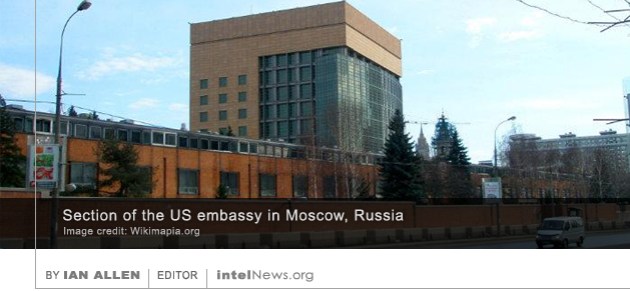
US embassy in RussiaA female Russian national who worked for the United States Secret Service in Moscow was quietly dismissed in 2017, amidst concerns that she was spying for Russia. British newspaper The Guardian, which broke the story last week, did not name the Russian woman. But it said that she had worked at the US Embassy in Moscow “for more than a decade”, most recently for the Secret Service –a federal law enforcement agency that operates within the Department of Homeland Security. The Secret Service has several missions, the most important of which is to ensure the physical safety of America’s senior political leadership.
Throughout her Secret Service career, the Russian woman is thought to have had access to the agency’s email system and intranet network, said The Guardian, citing “an intelligence source”. She could also potentially have had access to “highly confidential material”, said the paper, including the daily schedules of America’s past and current presidents and vice presidents, as well as their family members’ schedules.

The unnamed Russian national first came under suspicion in 2016, said The Guardian, during a routine security review conducted by two counterintelligence staff members at one of the Department of State’s Regional Security Offices (RSO). These reviews usually take place every five years and scan the background and activities of employees at American embassies abroad. The review showed that the unnamed Russian national was holding regular meetings with officers of the Federal Security Service (FSB), Russia’s domestic intelligence service. In January of 2017, the Department of State reportedly shared its findings with the Secret Service. But the latter waited until several months later to fire the Russian woman, having decided to do so quietly, said The Guardian.

According to the paper, instead of launching a major investigation into the State Department’s findings, the Secret Service simply dismissed the woman by revoking her security clearance. The paper said that the Russian national’s dismissal took place shortly before the US embassy in Moscow was forced to remove or fire over 750 employees as part of Russia’s retaliation against economic sanctions imposed on it by Washington. That coincidence helped the Secret Service “contain any potential embarrassment” arising from claims of espionage, said The Guardian. The paper contacted the Secret Service and was told that “all Foreign Service nationals” working for the agency “are managed accordingly to ensure that […US] government interests are protected at all times”. Their duties, therefore, are “limited to translation, interpretation, cultural guidance, liaison and administrative support. This is of particular emphasis in Russia”, said a Secret Service spokesman, who refused to discuss specific cases.

► Author: Joseph Fitsanakis | Date: 07 August 2018 | Research credit: S.F. | Permalink

US intelligence officials called to resign despite Trump’s Russia retraction

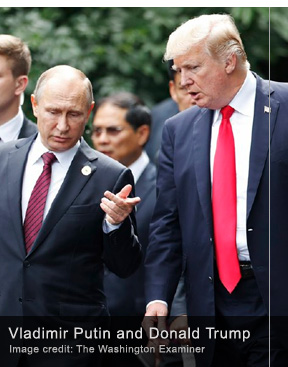
Putin and TrumpSeveral American former intelligence officials have called on their active colleagues to resign despite President Donald Trump’s retraction of his remarks about Russia’s alleged meddling in the 2016 presidential elections. On Tuesday, the US president issued an unusual retraction and correction of his public statement on Monday in Helsinki, Finland, in which he appeared to side with the Kremlin over his own Intelligence Community’s views. The Office of the Director of National Intelligence (ODNI), which is the coordinating body of the US Intelligence Community, has said that Russia tried to systematically interfere in the 2016 US presidential elections. According to the ODNI, the Kremlin’s goal was to augment the already heightened discord in American political life and deepen the mistrust between the electorate and state institutions, including Congress and the White House.
But President Trump dismissed those conclusions on Monday, while speaking alongside Russian President Vladimir Putin following the US-Russia summit in the Finish capital. During the joint press conference of the two leaders, the US president was asked to publicly adopt the US Intelligence Community’s conclusion that Russia interfered in the 2016 elections. But instead of doing so, Trump said his Russian counterpart had strongly denied the American accusations. “My people came to me”, said Trump, referring by name to his Director of National Intelligence (DNI) Dan Coats, and “said they think it’s Russia”. However, Trump continued, “President Putin […] just said it’s not Russia. I will say this, I don’t see any reason why it would be”. Following strong criticism of that comment, much of it from his own supporters, the US president retracted it on Tuesday in Washington, saying he misspoke in Helsinki. According to Trump, he said “would” when he meant to say “wouldn’t”.

The US president’s odd retraction came just hours after DNI Coats –a Trump appointee– issued a rare public statement rejecting Trump’s comments in Helsinki. “We have been clear in our assessments of Russian meddling in the 2016 election and their ongoing, pervasive efforts to undermine our democracy”, said Coats, adding that his office’s conclusion had been based on “unvarnished and objective intelligence”. Coats’ predecessor, former ODNI James Clapper, said during an interview with CNN on Tuesday that, if he still led the ODNI and had been “publicly thrown under the bus” by the president in that manner, he “would have stepped down in a heartbeat”. Read more of this post

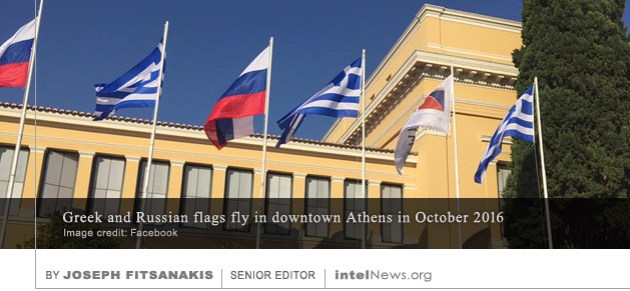
Greece expels Russian diplomats who ‘tried to bribe Greek officials’

Greece RussiaIn a rare moment of downturn in relations between Athens and Moscow, Greece has expelled two Russian diplomats and refused to accredit two more, reportedly for “undermining Greek national security”. Greece was not among nearly 30 countries that expelled or refused to accredit over 150 Russian diplomats in March, in an act of solidarity with the United Kingdom. The expulsions came in response to the attempted assassination of Sergei Skripal, a Russian former intelligence officer who had been living in England since 2010. Britain accused the Kremlin of having sponsored the attack on Skripal. But the Greek government, which has enjoyed warm relations with Moscow for decades, warned against unduly aggressive measures against the Kremlin.
Things changed swiftly on Wednesday, however, when Athens announced the surprise expulsion of two Russian diplomats from the Greek capital. One of the two diplomats has been named as Victor Yakovlev, third secretary of the Russian embassy in Athens, who some say is in fact an intelligence officer. Two more Russian diplomats, who have not been publicly named, were barred from entering Greece —a move that effectively amounts to a refusal by the Greek government to accredit them. According to an official statement from the Greek Ministry of Foreign Affairs, the expulsions were meant to prevent the “undermining of [Greek] national security”. However, a report in the Greek daily Kathimerini said that the move was taken in response to attempts by Russian spies to bribe Greek state officials. Other reports claim that the Russians were caught trying to blackmail Greek lawmakers over the possible expansion of the North Atlantic Treaty Organization (NATO), of which Greece is a member.

Some of the allegations in the Greek press refer to the country’s three-decade long dispute with the Former Yugoslav Republic of Macedonia, which Athens accuses of harboring territorial ambitions against its neighbors. Greece —the wealthiest and most powerful state in the Balkans— has barred the entry of its northern neighbor into the European Union and NATO until it complies with a list of Greek demands. Chief among those is the drawing of a clear distinction between Greek Macedonia —once an ancient Greek kingdom ruled by Alexander the Great— and the Former Yugoslav Republic of Macedonia, which encompasses a small portion of Alexander’s former empire. Last month, the decades-long dispute between the two neighboring countries appeared to draw to a close with the proposed adoption of “Northern Macedonia” as the official name of the former Yugoslav republic. The agreement would open the way for the tiny landlocked country to enter into negotiations for eventual entry into NATO. However, nationalists in both countries have staged public rallies to protest against the proposed agreement.

It appears that Russian diplomats may have tried to convince Greek lawmakers —through extortion, bribing or both— to vote against the proposed agreement. There are also reports that Russian diplomats assisted in the organization of nationwide rallies against the proposed agreement in Greece, possibly by funding them or by spreading information about them on social media. The Russian government said on Wednesday that it would protest the expulsion of its diplomats from Athens. It also said that it reserved the right to respond to Greece’s move in kind, possibly by expelling an equal number of Greek diplomats from Moscow.

► Author: Joseph Fitsanakis | Date: 12 July 2018 | Research credit: SF | Permalink

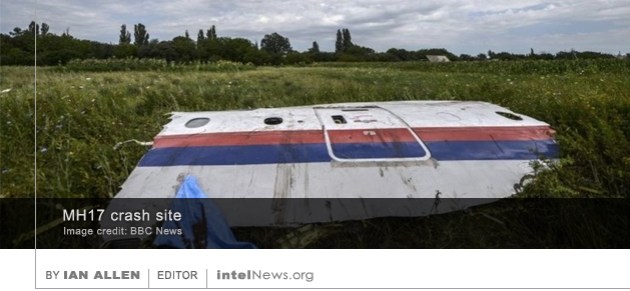
Ukraine, Russia, spied on Dutch investigators of MH17 plane disaster, TV report claims

MH17 crashDozens of Dutch security officers, legal experts, diplomats and other civil servants were systematically spied on by Ukrainian and Russian intelligence services while probing the aftermath of the MH17 disaster, according to a report on Dutch television. Malaysia Airlines Flight 17, a scheduled passenger flight from Amsterdam to Kuala Lumpur, was shot down over eastern Ukraine on July 17, 2014. All 283 passengers and 15 crew on board, 196 of them Dutch citizens, were killed. In the aftermath of the disaster, the Dutch Safety Board spearheaded the establishment of the multinational Joint Investigation Team (JIT), which is still engaged in a criminal probe aimed at identifying, arresting and convicting the culprits behind the unprovoked attack on Flight MH17. As part of the JIT, dozens of Dutch officials traveled to Ukraine to initiate the investigation into the plane crash and repatriate victims’ bodies and belongings. Their activities were conducted with the support of the Ukrainian government, which is party to the JIT.
But on Tuesday, Holland’s RTL Niews broadcaster said that members of the Dutch JIT delegation were subjected to systematic and persistent spying by both Ukrainian and Russian government operatives. According to RTL, Dutch investigators found sophisticated eavesdropping devices in their hotel rooms in Ukraine, and believed that their electronic devices had been compromised. Citing “inside sources” from the Dutch government, the broadcaster said that, during their stay in Ukraine, members of the Dutch JIT delegation noticed that the microphones and cameras on their wireless electronic devices would turn on without being prompted. They also noticed that the devices would constantly try to connect to public WiFi networks without being prompted. Upon their return to Holland, Dutch officials had their wireless devices examined by Dutch government security experts. They were told that numerous malware were discovered on the devices.

RTL Niews said that the question of whether valuable information relating to the MH17 investigation was stolen by foreign spies remains unanswered. But it noted that the members of the Dutch JIT delegation were warned about possible espionage by foreign powers prior to traveling to Ukraine. During their stay there, they were not allowed to send messages in unencrypted format and were only permitted to hold sensitive conversations in especially designated rooms inside the Dutch embassy in Kiev. The Dutch government did not respond to questions submitted to it by RTL Niews. But it issued a statement saying that its security experts had briefed and trained the Dutch JIT delegation prior to its trip to Ukraine. Members of the delegation were told that foreign parties would seek to collect intelligence, because the MH17 investigation was taking place in a “conflict area with significant geopolitical interest” for many parties. They were therefore advised to “assume that they were being spied on [and] adjust [their] behavior accordingly” while in Ukraine, the Dutch government’s statement said.

► Author: Ian Allen | Date: 28 June 2018 | Permalink

German intelligence chief says Russia tried to hack energy grid

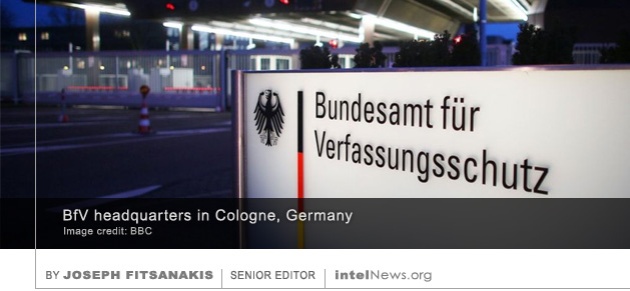
BfV GermanyThe head of Germany’s domestic security agency has publicly blamed the Russian government for a large-scale cyberattack that has targeted German energy providers. The comments follow a June 13 announcement on the subject by Germany’s Federal Office for Information Security (BSI), which is charged with securing the German government’s electronic communications. According to the BSI, a widespread and systematic attack against Germany’s energy networks has been taking place for at least a year now. The attack, which the BSI codenamed BERSERK BEAR, consists of various efforts by hackers to compromise computer networks used by German companies that provide electricity and natural gas to consumers around the country.


The attacks have been mostly unsuccessful, said BSI, having managed to breach just a few office computer networks. Energy grids have remained largely unaffected by BERSERK BEAR, said BSI. But the agency has refused to disclose information about the extent of the alleged cyberattacks and the companies that were targeted. It claims, however, that the situation is now “under control”. On Wednesday, Hans-Georg Maassen, director of Germany’s Federal Office for the Protection of the Constitution (BfV) said in an interview that the Russian government was most likely behind the attacks. There were “numerous clues pointing to Russia”, said Maassen, including the method with which the attack was carried out. The “modus operandi” of the attackers “is a major indicator that points to Russian control of the offensive campaign”, said Maassen.

Earlier this month, the United States imposed for the first time economic sanctions on Russian companies that allegedly helped the Kremlin tap undersea communications cables used by Western countries. One of the companies was identified by the US Department of the Treasury as Digital Security, which Washington said has helped Russian intelligence agencies develop their offensive cyber capabilities. Two of Digital Security’s subsidiaries, Embedi and ERPScan, were also placed on the US Treasury Department’s sanctions list. But the Kremlin fervently denies these accusations. On Wednesday, a spokesman for the office of the Russian presidency said that Moscow had “no idea what [Maassen] was talking about”. A Russian Foreign Ministry spokesman told reporters in the Russian capital that Germany and other countries “should provide facts” to justify their accusations against Moscow.

► Author: Joseph Fitsanakis | Date: 21 June 2018 | Permalink

US imposes sanctions on companies for helping Russian spy agencies

YantarThe United States has for the first time imposed economic sanctions on a number of Russian companies, which it says helped the Kremlin spy on targets in North America and Western Europe. On Monday, the US Department of the Treasury said it would apply severe economic restrictions on a number of Russian firms that work closely with the Kremlin. One of the companies was identified as Digital Security, which Washington says has been helping Russian intelligence agencies develop their offensive cyber capabilities. Two of Digital Security’s subsidiaries, Embedi and ERPScan, were also placed on the US Treasury Department’s sanctions list. Monday’s statement by the Treasury Department named another Russian firm, the Kvant Scientific Research Institute, which it described as a front company operated by the Russian Federal Security Service (FSB).

But the Russian firm that features most prominently in Monday’s announcement is Divetechnoservices, an underwater equipment manufacturer. The US alleges that the FSB paid the company $15 million in 2011 to design equipment for use in tapping underwater communications cables. According to Washington, equipment designed by Divetechnoservices is today used by a fleet of Russian ships that sail on the world’s oceans searching for underwater communications cables to tap. One such ship, according to reports, is the Yantar (pictured), ostensibly an oceanic research vessel, which Washington says is used to detect and tap into underwater communications cables.

In addition to Divetechnoservices, the US Treasury has named three individuals who will face economic sanctions due to what Washington says is their personal involvement with the underwater hardware manufacturer. They are: Vladimir Yakovlevich Kaganskiy, the company’s owner and former director; Aleksandr Lvovich Tribun, who serves as Divetechnoservices’ general director; and Oleg Sergeyevich Chirikov, identified as the manager of Divetechnoservices’ underwater surveillance program. These men —all Russian citizens— will not be able to enter into business relationships with American companies or citizens. On Tuesday, Russia’s Ministry of Foreign Affairs dismissed the latest round of US sanctions as an act of desperation. The White House would fail in its effort to “force the Russian Federation to change its independent course of action in the international arena”, said the Russian Ministry of Foreign Affairs.

► Author: Ian Allen | Date: 13 June 2018 | Permalink

Opinion: Bizarre fake murder plot points to Ukrainian state’s recklessness, unreliability

Arkady Babchenko

Arkady Babchenko

Western audiences were treated to a small taste of the bizarreness of Eastern European politics this week, when a Russian journalist who had reportedly been assassinated by the Kremlin, made an appearance at a live press conference held in Kiev. On Tuesday, Ukrainian media reported that Arkady Babchenko, a Russian war correspondent based in Ukraine, had been shot dead outside his apartment in the Ukrainian capital. A day later, after Babchenko’s murder had prompted global headlines pointing to Russia as the most likely culprit, Babchenko suddenly
appeared alive and well during a press conference held by the Security Service of Ukraine (SBU). The SBU then said that Babchenko’s killing had been staged in an attempt to derail a Russian-sponsored plan to kill him. The bizarre incident concluded with Babchenko meeting on live television with Ukrainian President Petro Poroshenko, who praised him as a hero. Later that night, the Russian journalist wrote on his Facebook page that he planned to die after “dancing on [Russian President Vladimir] Putin’s grave”.

Welcome to Ukraine, a strange, corrupt and ultra-paranoid state that is on the front lines of what some describe as a new Cold War between the West and Russia. Like the Cold War of the last century, the present confrontation is fought largely through information. The Russian government, which appears to be far more skillful than its Western adversaries in utilizing information for political purposes, immediately sought to capitalize on the Babchenko case. In fact, this baffling and inexplicable fiasco may be said to constitute one of the greatest propaganda victories for the Kremlin in years.

Ever since accusations began to surface in the Western media about Moscow’s alleged involvement in the 2016 presidential elections in the United States, Russia has dismissed these claims as “fake news” and anti-Russian disinformation. When Sergei and Yulia Skripal were poisoned in England in March, the Kremlin called it a false-flag operation. This is a technical term that describes a military or intelligence activity that seeks to conceal the role of the sponsoring party, while at the same time placing blame on another, unsuspecting, party. Most Western observes reject Russia’s dismissals, and see the Kremlin as the most likely culprit behind the attempt to kill the Skripals.

As one would expect, Russia stuck to its guns on Tuesday, when the world’s media announced the death of Arkady Babchenko in the Ukraine. Moscow claimed once again that we were dealing here with a false flag operation that was orchestrated by anti-Kremlin circles to make Russia look bad at home and abroad. It turns out that Moscow was right. Babchenko’s “murder” was indeed a false flag operation —admittedly a sloppy, shoddy and incredibly clumsy false flag operation, but a false flag operation nonetheless. Moreover, Babchenko’s staged killing could not possibly have come at a worse time for Ukraine and its Western allies. In the current environment, global public opinion is extremely sensitive to the phenomenon of ‘fake news’ and disinformation. Within this broader context, the Ukrainian state and its intelligence institutions have placed themselves at the center of an global disinformation maelstrom that will take a long time to subside. In doing so, the government of Ukraine has irreparably harmed its reputation among the general public and in the eyes of its Western allies. The Kremlin could not possibly have asked for a better gift from its Ukrainian adversaries.

The amateurishness and recklessness of some Eastern European countries that the West sees as allies in its confrontation with Russia, such as Ukraine, Poland, Hungary, and others, would be humorous if it were not so dangerous. The manifest idiocy of the Babchenko fake plot also poses serious questions about the West’s policy vis-à-vis  Russia. It is one thing for the West to be critical of the Kremlin and its policies —both domestic and foreign. It is quite another for it to place its trust on governments and intelligence services as those of Ukraine, which are clearly unreliable, unprofessional, and appear to lack basic understanding of the role of information in international affairs.

► Author: Joseph Fitsanakis | Date: 01 June 2018 | Permalink