March 8, 2018
by Joseph Fitsanakis
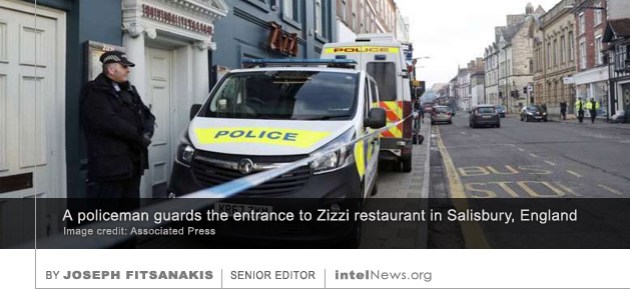 Most state-sponsored assassinations tend to be covert operations, which means that the sponsoring party cannot be conclusively identified, even if it is suspected. Because of their covert nature, assassinations tend to be extremely complex intelligence-led operations, which are designed to provide plausible deniability to their sponsors. Consequently, the planning and implementation of these operations usually involves a large number of people, each with a narrow set of unique skills. But —and herein lies an interesting contradiction— their execution is invariably simple, both in style and method. The attempted assassination of Sergei Skripal last Sunday in England fits the profile of a state-sponsored covert operation in almost every way.
Some have expressed surprise that Skripal, a Russian intelligence officer who was jailed in 2004 for selling Moscow’s secrets to British spies, would have been targeted by the Russian state. Before being allowed to resettle in the British countryside in 2010, Skripal was officially pardoned by the Kremlin. He was then released from prison along with four other Russian double agents, in exchange for 10 Russian deep-cover spies who had been caught in the United States earlier that year. According to this argument, “a swap has been a guarantee of peaceful retirement” in the past. Thus killing a pardoned spy who has been swapped with some of your own violates the tacit rules of espionage, which exist even between bitter rivals like Russia and the United States.
This assumption, however, is baseless. There are no rules in espionage, and swapped spies are no safer than defectors, especially if they are judged to have caused significant damage to their employers. It is also generally assumed that pardoned spies who are allowed to resettle abroad will fade into retirement, not continue to work for their foreign handlers, as was the case with  Skripal, who continued to provide his services to British intelligence as a consultant while living in the idyllic surroundings of Wiltshire. Like the late Russian defector Alexander Litvinenko, who died in London of radioactive poisoning in 2006, Skripal entrusted his personal safety to the British state. But in a country that today hosts nearly half a million Russians of all backgrounds and political persuasions, such a decision is exceedingly risky.
On Wednesday, the Metropolitan Police Service announced that Skripal, 66, and his daughter Yulia, 33, had been “targeted specifically” by a nerve agent. The official announcement stopped short of specifying the nerve agent used, but experts point to sarin gas or VX. Both substances are highly toxic and compatible with the clinical symptoms reportedly displayed by the Skripals when they were found in a catatonic state by an ambulance crew and police officers last Sunday. At least one responder, reportedly a police officer, appears to have also been affected by the nerve agent. All three patients are reported to be in a coma. They are lucky to have survived at all, given that nerve agents inhaled through the respiratory system work by debilitating the body’s respiratory muscles, effectively causing the infected organism to die from suffocation.
In the past 24 hours, at least one British newspaper stated that the two Russians were “poisoned by a very rare nerve agent, which only a few laboratories in the world could have produced”. That is not quite true. It would be more accurate to say that few laboratories in the world would dare to produce sarin or VX, which is classified as a weapon of mass destruction. But no advanced mastering of chemistry or highly specialist laboratories are needed to manufacture these agents. Indeed, those with knowledge of military history will know that they were produced in massive quantities prior to and during World War II. Additionally —unlike polonium, which was used to kill Litvinenko in 2006— nerve gas could be produced in situ and would not need to be imported  from abroad. It is, in other words, a simple weapon that can be dispensed using a simple method, with little risk to the assailant(s). It fits the profile of a state-sponsored covert killing: carefully planned and designed, yet simply executed, thus ensuring a high probability of success.
By Wednesday, the British security services were reportedly using “hundreds of detectives, forensic specialists, analysts and intelligence officers working around the clock” to find “a network of highly-trained assassins” who are “either present or past state-sponsored actors”. Such actors were almost certainly behind the targeted attack on the Skripals. They must have dispensed the lethal agent in liquid, aerosol or a gas form, either by coming into direct physical contact with their victims, or by using a timed device. Regardless, the method used would have been designed to give the assailants the necessary time to escape unharmed. Still, there are per capita more CCTV cameras in Britain than in any other country in the world, which gives police investigators hope that they may be able to detect the movements of the attackers. It is highly unlikely that the latter remain on British soil. But if they are, and are identified or caught, it is almost certain that they will be found to have direct links with a foreign government.
► Author: Joseph Fitsanakis | Date: 08 March 2018 | Permalink
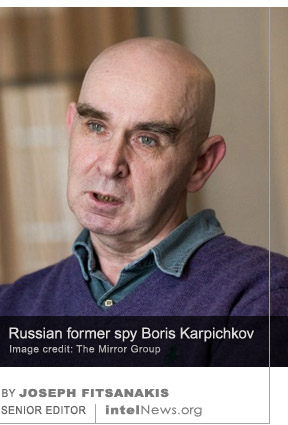 A former officer in the Soviet KGB, who now lives in the United Kingdom, is to be questioned by British police after alleging that there is a link between the recent poisoning of Sergei Skripal and the mysterious death of a British intelligence officer in 2010. There has been extensive media coverage in the past month of the poisoning of Sergei Skripal, a Russian former military intelligence officer who spied for Britain in the early 2000s and has been living in England since 2010. Nearly every European country, as well as Canada, Australia and the United States, expelled Russian diplomats in response to the attack on the Russian former spy, which has been widely blamed on the Kremlin.
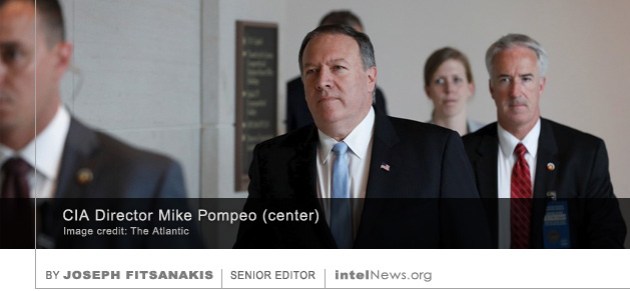 The outgoing director of the Central Intelligence Agency, Mike Pompeo, appeared on Thursday to confirm reports from last February that United States troops killed more than 200 Russian soldiers in Syria.
 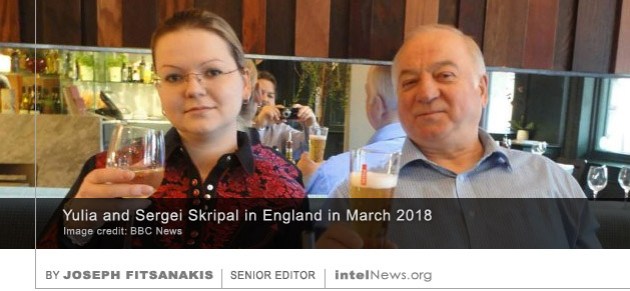 The British government may relocate Sergei Skripal, the Russian double spy who appears to have survived an assassination attempt in England, to the United States, in an effort to protect him from further attacks. The BBC
 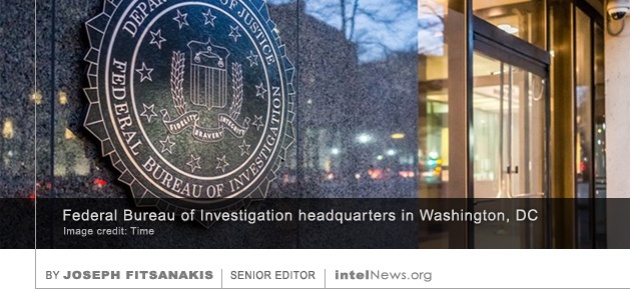 A surge in the activity of Russian intelligence personnel on United States soil has caused American spy agencies to rehire retired Russia specialists,
 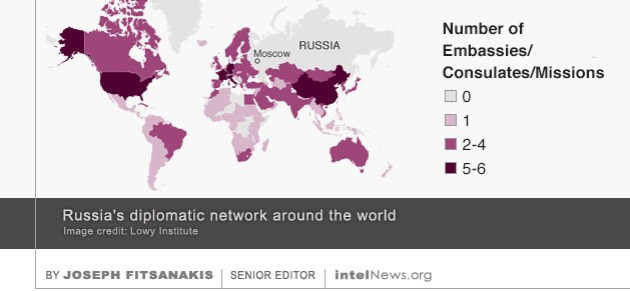 Though unprecedented in size, the recent expulsions of over 150 diplomats by nearly 30 countries and organizations around the world have hardly made a dent on Russia’s huge diplomatic footprint. The
  Britain secured the largest expulsion of Russian diplomats in history by sharing “unprecedented degrees of intelligence” with dozens of foreign countries about the attempted killing of former spy Sergei Skripal. Nearly 30 countries and international organizations, including the European Union and the North Atlantic Treaty Organization, have expelled or refused to accredit over
 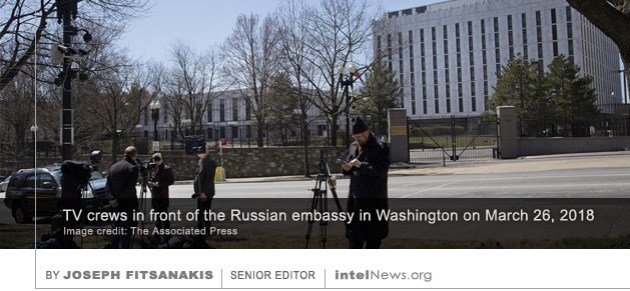 Relations between Russia and much of the West reached a new low on Monday, with the expulsion of over 100 Russian diplomats from two dozen countries around the world. The unprecedented expulsions were publicized on Monday with a series of coordinated announcements issued from nearly every European capital, as well as from Washington, Ottawa and Canberra. By the early hours of Tuesday, the number of Russian diplomatic expulsions had reached 118 —not counting the 23 Russian so-called “undeclared intelligence officers” that were expelled from Britain last week. Further expulsions of Russian diplomats are expected in the coming days.
 predecessor, Barack Obama, and his Secretary of State Hillary Clinton, who is known for her hardline anti-Russian stance. In Europe, the move to expel dozens of Russian envoys from 23 different countries —most of them European Union members— was a rare act of unity that surprised European observers as much as it did the Russians.
 Sergei Skripal, the Russian double agent who was poisoned with a military-grade nerve agent in England earlier this month, wrote to the Kremlin asking to return to Russia, according to one of his old school friends. Skripal, 66, and his daughter Yulia, 33, remain in critical condition in hospital, three weeks after being
 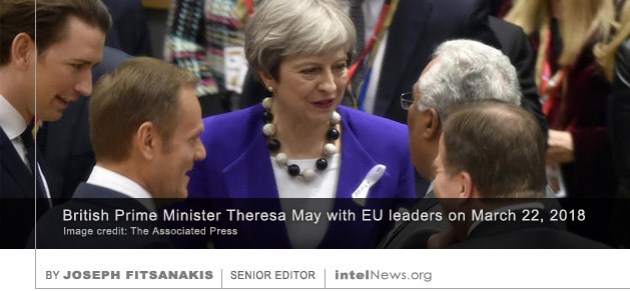 The European Union has recalled its ambassador to Moscow in an apparent response to the poisoning of Sergei Skripal, a Russian double agent, who was attacked with a nerve agent in England earlier this month. Skripal, 66, and his daughter Yulia, 33, remain in critical condition in hospital, nearly three weeks after being poisoned with a nerve agent that British scientists say belongs to Russia’s Cold-War-era chemical stockpiles. Moscow has angrily rejected claims that Skripal, who spied for Britain in the early 2000s, was on a Kremlin-approved hit-list of defectors. But British Prime Minister Theresa May traveled to Brussels on Thursday to brief European Union heads of state about the attack on Skripal.
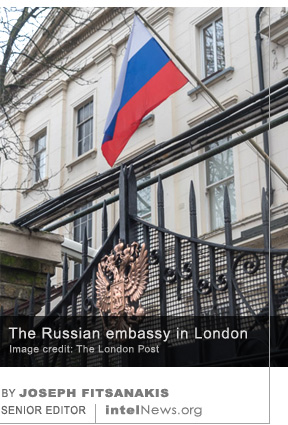 As expected, Moscow snubbed the British government’s demand for information into how a Russian-produced military-grade nerve agent ended up being used in the streets of Salisbury, England. As British Prime Minister Theresa May addressed the House of Commons on Wednesday afternoon, Sergei Skripal continued to fight for his life in a hospital in southern England. His daughter, Yulia, was also comatose, having been poisoned with the same Cold-War-era nerve agent as her father. This blog has
  the latest expulsions are dwarfed by the dramatic expulsion in 1971 of no fewer than 105 Soviet diplomats from Britain, following yet another defection of a Soviet intelligence officer, who remained anonymous.
 The nerve agent that poisoned a Russian double spy in England last week may have been smeared on his car’s door handle, according to sources. Sergei Skripal, 66, and his daughter Yulia, 33, are in critical condition after being
  The British prime minister said on Monday that it was “highly likely” the nerve agent used to attack a Russian defector in England last week was developed by Russia. But sources in London told the BBC that the British government would not invoke Article 5 of the North Atlantic Treaty Organization (NATO), which states that an attack on one member of the alliance is an attack on all. Theresa May was referring to an
 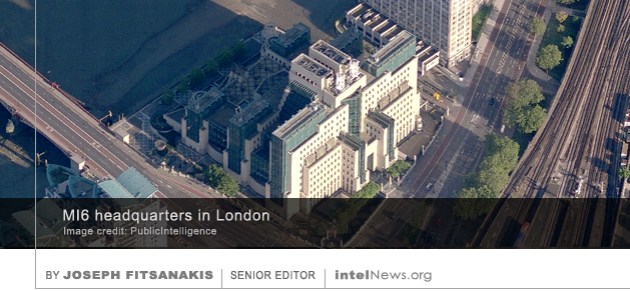 The British secret services have begun tightening the physical security of dozens of Russian defectors living in Britain, a week after the attempted murder of former KGB Colonel Sergei Skripal in southern England. The 66-year-old double spy and his daughter, Yulia, were found in a catatonic state in the town of Salisbury on March 4. It was later determined that they had been attacked with a nerve agent. Russian officials have vehemently denied that the Kremlin had any involvement with the brazen attempt to kill Skripal. But,








Norwegian retiree jailed in Russia says he was ‘misused’ by Norway spy agency
April 25, 2018 by Joseph Fitsanakis Leave a comment
On Tuesday, however, The Washington Post said it spoke to Berg’s lawyer, Brynjulf Risnes. On a telephone line from Oslo, Risnes told the paper that his client had come to believe that he had been “misused” by the NIS, and that he said so during a court session in Moscow earlier this year. “We are quite convinced”, said Risnes, “that this is a real Norwegian spy story”. The lawyer told The Post’s Anton Troianovski that his client had met a man named “Jorgen”, who worked for the NIS. He asked Berg to carry some envelopes during his frequent trips to Russia. Berg eventually came to realize that the envelopes contained operational instructions for Norwegian intelligence assets inside Russia, and sometimes money —up to €3,000 at times. He did as he was told “between two and five times”, said Risnes, in full knowledge that he was operating as a courier for the NIS.
However, when Berg began to have second thoughts about his activities, fearing arrest, “Jorgen” pressured him to continue, according to Risnes. At one point, the NIS representative asked Berg: “Don’t you want to be a good Norwegian?”. In doing so, the NIS effectively pressured Berg to continue acting as a courier by dismissing his hesitations as groundless and failed to inform him about the real risks involved in acting as an intelligence courier inside Russia. Risnes told The Post that no charges have yet been filed against Berg by Moscow, and that the 62-year-old retiree’s supporters back in Kirkenes hope that he could be exchanged for Russian spies held in Norway. But such persons are not known to exist at the moment and, according to Torbjorn Brox Webber, a Kirkenes resident and supporter of Berg, a spy swap is unlikely to “happen for a lot of time — for many years”.
► Author: Joseph Fitsanakis | Date: 25 April 2018 | Permalink
Filed under Expert news and commentary on intelligence, espionage, spies and spying Tagged with Brynjulf Risnes, counterintelligence, espionage, Frode Berg, News, Norway, Russia