Analysis: All evidence points to professionals behind Skripal poisoning
March 8, 2018 4 Comments
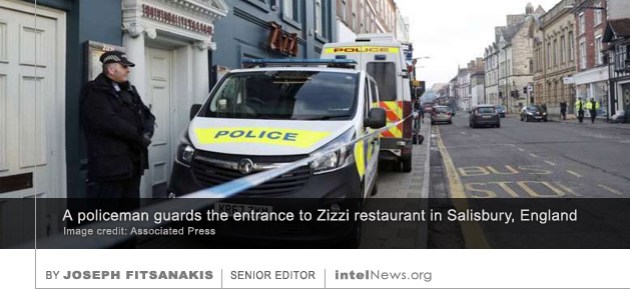 Most state-sponsored assassinations tend to be covert operations, which means that the sponsoring party cannot be conclusively identified, even if it is suspected. Because of their covert nature, assassinations tend to be extremely complex intelligence-led operations, which are designed to provide plausible deniability to their sponsors. Consequently, the planning and implementation of these operations usually involves a large number of people, each with a narrow set of unique skills. But —and herein lies an interesting contradiction— their execution is invariably simple, both in style and method. The attempted assassination of Sergei Skripal last Sunday in England fits the profile of a state-sponsored covert operation in almost every way.
Some have expressed surprise that Skripal, a Russian intelligence officer who was jailed in 2004 for selling Moscow’s secrets to British spies, would have been targeted by the Russian state. Before being allowed to resettle in the British countryside in 2010, Skripal was officially pardoned by the Kremlin. He was then released from prison along with four other Russian double agents, in exchange for 10 Russian deep-cover spies who had been caught in the United States earlier that year. According to this argument, “a swap has been a guarantee of peaceful retirement” in the past. Thus killing a pardoned spy who has been swapped with some of your own violates the tacit rules of espionage, which exist even between bitter rivals like Russia and the United States.
This assumption, however, is baseless. There are no rules in espionage, and swapped spies are no safer than defectors, especially if they are judged to have caused significant damage to their employers. It is also generally assumed that pardoned spies who are allowed to resettle abroad will fade into retirement, not continue to work for their foreign handlers, as was the case with  Skripal, who continued to provide his services to British intelligence as a consultant while living in the idyllic surroundings of Wiltshire. Like the late Russian defector Alexander Litvinenko, who died in London of radioactive poisoning in 2006, Skripal entrusted his personal safety to the British state. But in a country that today hosts nearly half a million Russians of all backgrounds and political persuasions, such a decision is exceedingly risky.
On Wednesday, the Metropolitan Police Service announced that Skripal, 66, and his daughter Yulia, 33, had been “targeted specifically” by a nerve agent. The official announcement stopped short of specifying the nerve agent used, but experts point to sarin gas or VX. Both substances are highly toxic and compatible with the clinical symptoms reportedly displayed by the Skripals when they were found in a catatonic state by an ambulance crew and police officers last Sunday. At least one responder, reportedly a police officer, appears to have also been affected by the nerve agent. All three patients are reported to be in a coma. They are lucky to have survived at all, given that nerve agents inhaled through the respiratory system work by debilitating the body’s respiratory muscles, effectively causing the infected organism to die from suffocation.
In the past 24 hours, at least one British newspaper stated that the two Russians were “poisoned by a very rare nerve agent, which only a few laboratories in the world could have produced”. That is not quite true. It would be more accurate to say that few laboratories in the world would dare to produce sarin or VX, which is classified as a weapon of mass destruction. But no advanced mastering of chemistry or highly specialist laboratories are needed to manufacture these agents. Indeed, those with knowledge of military history will know that they were produced in massive quantities prior to and during World War II. Additionally —unlike polonium, which was used to kill Litvinenko in 2006— nerve gas could be produced in situ and would not need to be imported  from abroad. It is, in other words, a simple weapon that can be dispensed using a simple method, with little risk to the assailant(s). It fits the profile of a state-sponsored covert killing: carefully planned and designed, yet simply executed, thus ensuring a high probability of success.
By Wednesday, the British security services were reportedly using “hundreds of detectives, forensic specialists, analysts and intelligence officers working around the clock” to find “a network of highly-trained assassins” who are “either present or past state-sponsored actors”. Such actors were almost certainly behind the targeted attack on the Skripals. They must have dispensed the lethal agent in liquid, aerosol or a gas form, either by coming into direct physical contact with their victims, or by using a timed device. Regardless, the method used would have been designed to give the assailants the necessary time to escape unharmed. Still, there are per capita more CCTV cameras in Britain than in any other country in the world, which gives police investigators hope that they may be able to detect the movements of the attackers. It is highly unlikely that the latter remain on British soil. But if they are, and are identified or caught, it is almost certain that they will be found to have direct links with a foreign government.
► Author: Joseph Fitsanakis | Date: 08 March 2018 | Permalink
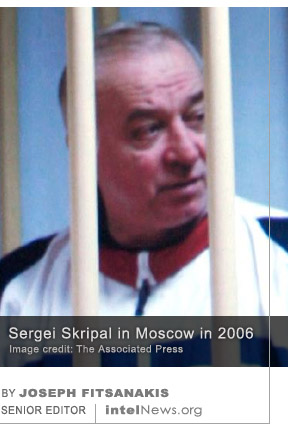 Britain’s counterintelligence service is nearing the conclusion that a foreign government, most likely Russia, tried to kill a Russian double spy and his daughter, who are now fighting for their lives in a British hospital. Sergei Skripal, 66, and his daughter Yulia Skripal, 33, are said to remain in critical condition, after falling violently ill on Sunday afternoon while walking in downtown Salisbury, a picturesque cathedral city in south-central England. Skripal arrived in England in 2010 as part of a large-scale
 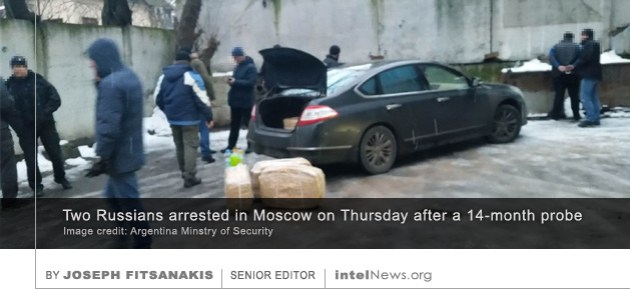 A Russian former diplomatic employee and an Argentine police officer are among six people arrested following the discovery of nearly 1000 pounds of cocaine inside the Russian diplomatic compound in Buenos Aires. The arrests took place last Thursday and were announced in Argentina by the country’s Security Minister Patricia Bullrich. She told reporters that the arrests came after a 14-month investigation in Argentina, Russia and Germany. She added that the investigation unveiled “one of the most complex and extravagant drug-dealing operations” in Argentina’s history.
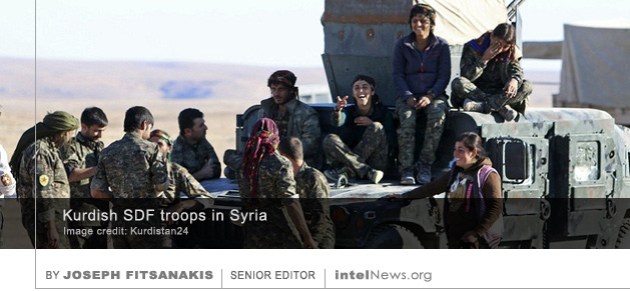 There are conflicting reports of Russian and Ukrainian fighters having been killed by American forces in northeastern Syria, with some sources claiming that up to 200 Russians and Ukrainians, most of them private contractors working for the Syrian government, were left dead in clashes last week. If such reports are accurate, they could point to the most lethal American-Russian confrontation since the end of World War II.
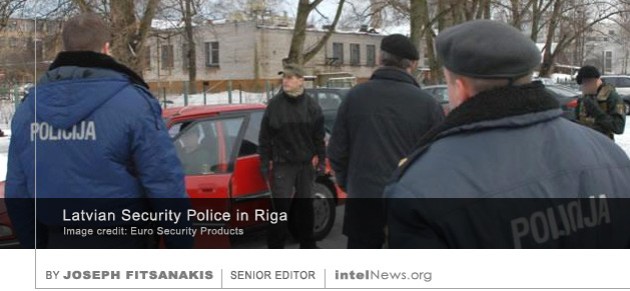 The Latvian Security Police have announced the arrest of a man who is suspected of spying for a foreign country, with some reports claiming it is Russia. The Latvian state-owned news agency, LETA,
  Dutch spies identified a notorious Russian hacker group that compromised computer servers belonging to the Democratic Party of the United States and notified American authorities of the attack, according to reports. In 2016, US intelligence agencies determined that a Russian hacker group known as Cozy Bear, or APT29, led a concerted effort to interfere in the US presidential election. The effort, which according to US intelligence agencies was sponsored by the Russian government, involved cyber-attacks against computer systems in the White House and the Department of State, among other targets. It also involved the theft of thousands of emails from computer servers belonging to the Democratic National Committee, which is the governing body of the Democratic Party. The stolen emails were eventually leaked to WikiLeaks, DCLeaks, and other online outlets. Prior descriptions of the Russian hacking in the media have hinted that US intelligence agencies were notified of the Russian cyber-attacks by foreign spy agencies. But there was no mention of where the initial clues came from.
 A group of hardline Bosnian Serbs, some of whom have been trained in military tactics by Russian instructors, are secretly creating a paramilitary group to undermine the territorial integrity of Bosnia, according to reports. Information about the alleged paramilitary group was published on the Friday edition of Žurnal, a nonpartisan investigative newsmagazine. The allegations exposed by Žurnal were later repeated by Dragan Mektić, Bosnia and Herzegovina’s Minister for Security, who is himself a Bosnian Serb. Žurnal’s
  The Russian hacker group that targeted the United States presidential election in 2016 also attacked hundreds of reporters around the world, most of them Americans, an Associated Press investigation shows. The group is often referred to in cyber security circles as Fancy Bear, but is also known as Pawn Storm, Sednit, APT28, Sofacy, and STRONTIUM. It has been linked to a long-lasting series or coordinated attacks against at least 150 senior figures in the US Democratic Party. The attacks occurred in the run-up to last year’s presidential elections in the US, which resulted in a victory for Donald Trump. The hacker group’s targets included Democratic Party presidential candidate Hillary Clinton and her campaign chairman John Podesta. But its hackers also went after senior US diplomatic and intelligence officials, as well as foreign officials in countries like Canada and the Ukraine.
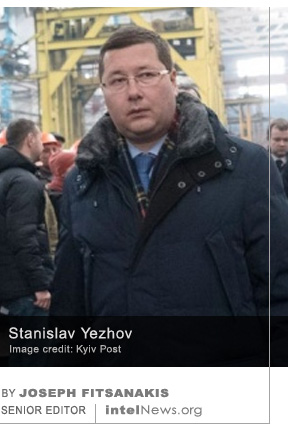 Ukraine’s counterintelligence agency has arrested the principal translator of the country’s prime minister, accusing him of spying for Russia. The translator has been identified as Stanislav Yezhov, who has served as a translator for two consecutive Ukrainian prime ministers. As part of his job, Yezhov has been present at nearly all high-level meetings between Ukraine’s Prime Minister, Volodymyr Groysman, and foreign leaders since 2016, when Groysman assumed his executive post. In the last year alone, Yezhov accompanied the Ukrainian prime minister during official trips to Washington, London and Berlin. Before translating for Groysman, Yezhov is thought to have served as an interpreter for Viktor Yanukovych, Ukraine’s former President. Yanukovych, a pro-Russian politician, occupied that office from 2010 until his ousting from power in 2014, as a result of the 2014 Ukrainian revolution.
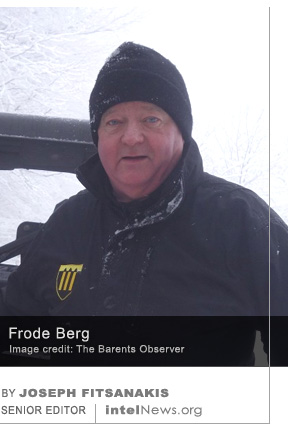 Authorities in Russia have announced the arrest of a Norwegian citizen, whom they accuse of receiving classified information relating to Russia’s Armed Forces. The detainee has been named as Frode Berg, 62, from Kirkenes, a small town in Norway’s far north, located 100 miles from the Russian city of Murmansk. According to articles in the Russian press, Berg is a 24-year veteran of the Office of the Norwegian Border Commissioner, an obscure government agency that operates under Norway’s Ministry of Justice and Public Security. Among other tasks, the Office of the Norwegian Border Commissioner is responsible for enforcing and monitoring bilateral compliance with the Soviet (now Russian)-Norwegian Border Agreement of 1949. Berg, who worked closely with Norway’s National Police Directorate as part of his job, retired from the Office in 2014.
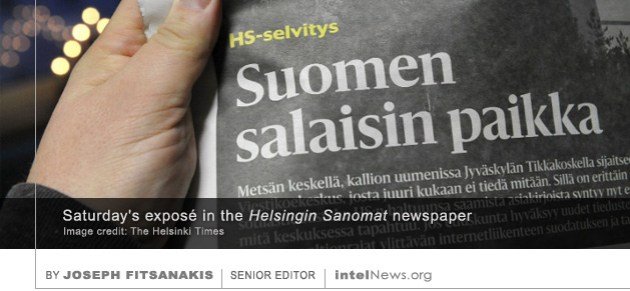 An investigative journalist in Finland, who recently co-authored an exposé of a Finnish intelligence program targeting Russia, destroyed her computer with a hammer, prompting police to enter her house on Sunday. The journalist, Laura Halminen, co-wrote the exposé with her colleague, Tuomo Pietiläinen. Titled “The Secret Behind the Cliff”, the article
  Authorities in Poland have charged three high-level military intelligence officials with acting in the interests of Russia. The three include two former directors of Polish military intelligence and are facing sentences of up to 10 years in prison. The news broke on December 6, when Polish authorities announced the arrest of Piotr Pytel, who was director of Poland’s Military Counterintelligence Service (SKW) from 2014 to 2015. It soon emerged that two more arrests had taken place, that of Pytel’s predecessor, Janusz Nosek, and Krzysztof Dusza, Pytel’s chief of staff during his tenure as SKW director.
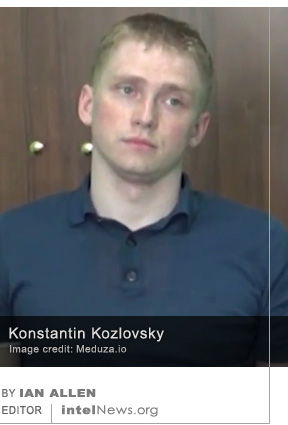 A member of a prolific Russian hacker group reportedly stated in court that he was hired by the Russian government to break into the computer systems of the Democratic Party in the United States. The hacker, Konstantin Kozlovsky, operated online as a member of Lurk, a notorious hacker group whose members are believed to have stolen in excess of $45 million from hundreds of companies since 2011. Most of the group’s members were apprehended in a
  A Russian court has sentenced an Estonian aircraft business executive to 12 years at a maximum security prison, allegedly for having spied on Russia a decade ago. Little is known about the case of Raivo Susi, who co-owns two companies that are involved in the sale and maintenance of non-commercial aircraft. The Estonian businessman’s activities include the partial ownership of Aerohooldus OU, which provides training jet aircraft for use by the Air Force of Estonia –a member state of the North Atlantic Treaty Organization (NATO).








British intelligence to tighten security protection for Russian defectors
March 12, 2018 by Joseph Fitsanakis 3 Comments
Citing an unnamed source from Whitehall, the administrative headquarters of the British government, The Times said that initial assessments of Skripal’s poisoning were damning for Britain’s intelligence community. They raised questions, said the source, about the ability of Britain’s two primary spy agencies, the Security Service (MI5) and the Secret Intelligence Service (MI6), to provide security to their assets. The source told The Times that it was “impossible to reduce […] to zero” the risk of serious physical harm against individuals like Skripal, and before him Alexander Litvinenko, a former KGB officer who was poisoned to death in London in 2006. But the attack on Skripal is being viewed as an intelligence failure, said the source, and part of the response to it involves a comprehensive review of risk to British-based Russian double spies and defectors from “unconventional threats”. The latter include attacks with chemical and radiological weapons, said The Times.
The report came as another British-based Russian defector, Boris Karpichkov, told The Daily Mirror newspaper that the Kremlin has tried to poison him three times since 2006. Karpichkov, 59, joined the KGB in 1984, but became a defector-in-place for Latvian intelligence in 1991, when the Soviet Union disintegrated. He claims to have also spied on Russia for French and American intelligence. In 1998, carrying two suitcases filled with top-secret Russian government documents, and using forged passports, he arrived in Britain with his family. In 2006, while living in the UK, Karpichkov says he was warned by MI5 to leave the country because his life may be in danger. He temporarily relocated to New Zealand, where he says he was attacked with an unidentified nerve agent. He told The Mirror that he lost nearly half his weight during the following weeks, but survived due to good medical care. However, he was attacked again, he said, four months later, while still living in New Zealand.
Karpichkov told The Mirror he had been warned that his name was on a shortlist of eight individuals that the Kremlin wanted to kill. He also claimed that he was told by a source to watch out for people carrying electronic cigarettes, because Russian intelligence had developed nerve-agent weapons that were disguised as e-cigarette devices.
► Author: Joseph Fitsanakis | Date: 12 March 2018 | Permalink
Filed under Expert news and commentary on intelligence, espionage, spies and spying Tagged with assassinations, Boris Karpichkov, covert action, defectors, MI5, MI6, News, Russia, Sergei Skripal, UK