Ukraine arrests prime minister’s interpreter, accuses him of spying for Russia
December 22, 2017 2 Comments
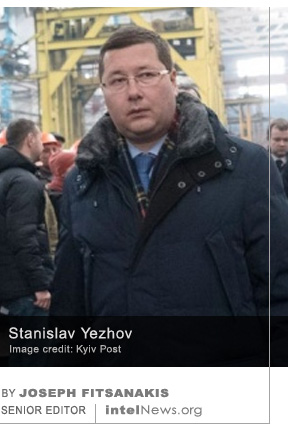 Ukraine’s counterintelligence agency has arrested the principal translator of the country’s prime minister, accusing him of spying for Russia. The translator has been identified as Stanislav Yezhov, who has served as a translator for two consecutive Ukrainian prime ministers. As part of his job, Yezhov has been present at nearly all high-level meetings between Ukraine’s Prime Minister, Volodymyr Groysman, and foreign leaders since 2016, when Groysman assumed his executive post. In the last year alone, Yezhov accompanied the Ukrainian prime minister during official trips to Washington, London and Berlin. Before translating for Groysman, Yezhov is thought to have served as an interpreter for Viktor Yanukovych, Ukraine’s former President. Yanukovych, a pro-Russian politician, occupied that office from 2010 until his ousting from power in 2014, as a result of the 2014 Ukrainian revolution.
On Wednesday, the Security Service of Ukraine (SBU), the country’s main counterintelligence agency, released a statement announcing that “an official” in the Ukrainian state had been arrested in the capital Kiev on Saturday, December 16. The SBU statement said that the official had “access to sensitive government information” and that he had operated in the service “of an adversary state for a long period”. The statement then identified the “adversary state” as Russia. Yezhov’s name and profession were not included in the SBU statement. But Ukrainian government officials later revealed it. According to subsequent local media reports, Yezhov was recruited by Russian intelligence in 2014, when he was posted at the Ukrainian embassy in Washington, DC. Prior to that post, Yezhov is believed to have served at the Ukrainian embassy in Slovenia.
The Russians allegedly trained him and provided him with specially designed collection technology, which he then used to gather intelligence and communicate it to his Russian handlers. Speaking on Ukrainian television, Anton Gerashchenko, advisor to Arsen Avakov, the country’s Minister of Internal Affairs, said that Yezhov had worked for Russian intelligence “for at least two years, possibly longer”. Yezhov is now reportedly facing charges of treason. The government of Russia has not issued any statements about Yezhov’s arrest.
► Author: Joseph Fitsanakis | Date: 22 December 2017 | Permalink
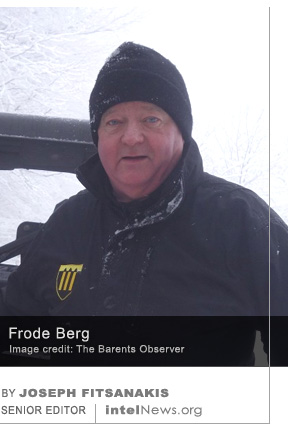 Authorities in Russia have announced the arrest of a Norwegian citizen, whom they accuse of receiving classified information relating to Russia’s Armed Forces. The detainee has been named as Frode Berg, 62, from Kirkenes, a small town in Norway’s far north, located 100 miles from the Russian city of Murmansk. According to articles in the Russian press, Berg is a 24-year veteran of the Office of the Norwegian Border Commissioner, an obscure government agency that operates under Norway’s Ministry of Justice and Public Security. Among other tasks, the Office of the Norwegian Border Commissioner is responsible for enforcing and monitoring bilateral compliance with the Soviet (now Russian)-Norwegian Border Agreement of 1949. Berg, who worked closely with Norway’s National Police Directorate as part of his job, retired from the Office in 2014.
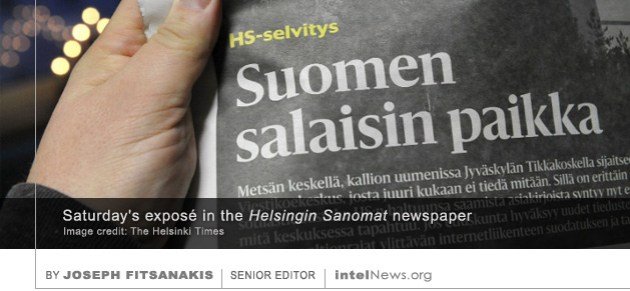 An investigative journalist in Finland, who recently co-authored an exposé of a Finnish intelligence program targeting Russia, destroyed her computer with a hammer, prompting police to enter her house on Sunday. The journalist, Laura Halminen, co-wrote the exposé with her colleague, Tuomo Pietiläinen. Titled “The Secret Behind the Cliff”, the article
  Authorities in Poland have charged three high-level military intelligence officials with acting in the interests of Russia. The three include two former directors of Polish military intelligence and are facing sentences of up to 10 years in prison. The news broke on December 6, when Polish authorities announced the arrest of Piotr Pytel, who was director of Poland’s Military Counterintelligence Service (SKW) from 2014 to 2015. It soon emerged that two more arrests had taken place, that of Pytel’s predecessor, Janusz Nosek, and Krzysztof Dusza, Pytel’s chief of staff during his tenure as SKW director.
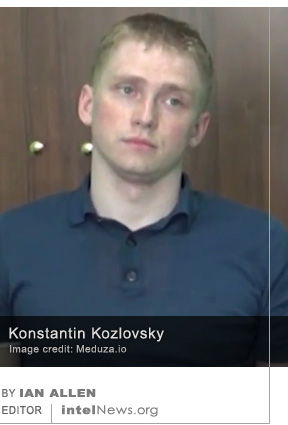 A member of a prolific Russian hacker group reportedly stated in court that he was hired by the Russian government to break into the computer systems of the Democratic Party in the United States. The hacker, Konstantin Kozlovsky, operated online as a member of Lurk, a notorious hacker group whose members are believed to have stolen in excess of $45 million from hundreds of companies since 2011. Most of the group’s members were apprehended in a
  A Russian court has sentenced an Estonian aircraft business executive to 12 years at a maximum security prison, allegedly for having spied on Russia a decade ago. Little is known about the case of Raivo Susi, who co-owns two companies that are involved in the sale and maintenance of non-commercial aircraft. The Estonian businessman’s activities include the partial ownership of Aerohooldus OU, which provides training jet aircraft for use by the Air Force of Estonia –a member state of the North Atlantic Treaty Organization (NATO).
 The former director of Poland’s military counterintelligence agency has been questioned by the country’s military police, over allegedly illegal cooperation with Russian intelligence. From 2006 to 2012, General Piotr Pytel was head of Poland’s Military Counterintelligence Service (MCS), which is responsible for domestic security and for ensuring the war-readiness of Poland’s armed forces. According to government prosecutors, General Pytel struck an illegal agreement with the Russian Federal Security Service, the FSB, in 2010. The alleged agreement concerned the return to Poland of troops who had been sent to serve in Afghanistan with the International Security Assistance Force (ISAF). Several hundred Polish troops participated in ISAF, a NATO-led security mission in Afghanistan, established by the United Nations Security Council in 2001.
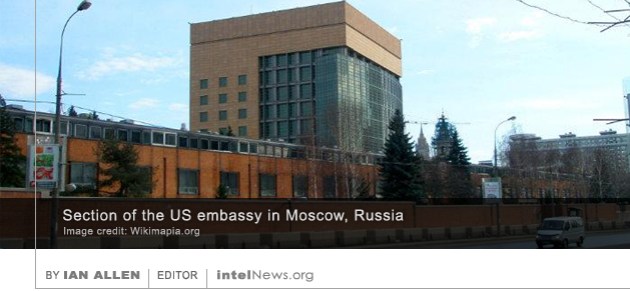 Several American diplomatic facilities in Russia, including the United States embassy in Moscow, as well as consulates in other major Russian cities, will be guarded by a firm with ties to a former senior KGB official. The New York Times
  A massive fire that broke out at a top-secret spy facility in Moscow on Wednesday brought to the foreground prior reports about the unprecedented growth of the headquarters of Russia’s foreign spy service. The fire was reported at a government compound in Yasenevo, a leafy district on the southern outskirts of the Russian capital. The compound serves as the headquarters of the Russian Foreign Intelligence Service, known by its initials, SVR. The SVR is one of the successor agencies to the Soviet-era KGB. During Soviet times, the present-day SVR was known as the First Chief Directorate or First Main Directorate of the KGB. Despite its name change, however, its mission remains the same, namely to collect secrets from targets outside the Russian Federation —often through the use of espionage— and to disseminate intelligence to the president.
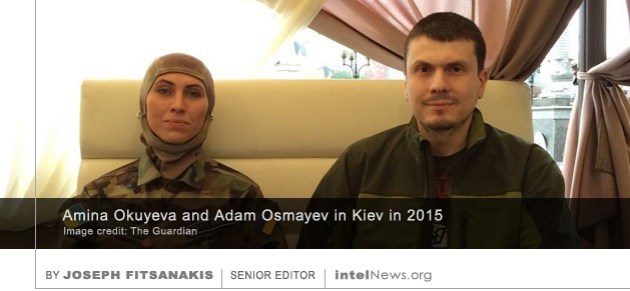 An armed attack in the outskirts of Kiev has killed the wife of a Chechen commander of a Ukrainian paramilitary unit, who is wanted in Russia for an alleged plan to kill President Vladimir Putin. Adam Osmayev is believed to have survived the attack, but his wife, Amina Okuyeva, was reportedly shot in the head and died on the spot. Osmayev, a Russian Chechen, became widely known in Ukraine in February of 2012, when he was arrested by police in Odessa, a major port city located on the northwestern shore of the Black Sea in the country’s south. He was found to be carrying forged identity documents. When police searched his apartment, they found large quantities of illegal explosives. Authorities in Moscow told the Ukrainian government that Osmayev was involved in a conspiracy to kill Russian President Vladimir Putin. A Chechen associate of Osmayev, Ilya Pyanzin, was handed over to Russia by the Ukrainians and was given a 10-year prison sentence by a Moscow court.
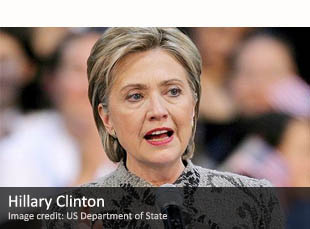 A major reason behind the Federal Bureau of Investigation’s decision to arrest ten Russian spies across the United States in 2010 was their increasing proximity to the then-Secretary of State Hillary Clinton, it has been claimed. The spies had been specifically instructed by their handlers in Moscow to target Clinton, who was seen as the most likely successor to US President Barack Obama, according to recently released FBI files. Ten Russian deep-cover spies, who had no official cover and thus no diplomatic immunity, were
  Israeli spy services were reportedly behind the United States government’s recent decision to purge Kaspersky Lab antivirus software from its computers, citing possible collusion with Russian intelligence. Last month, the US Department of Homeland Security issued a directive ordering that all government computers should be free of software products designed by Kaspersky Lab. Formed in the late 1990s by Russian cybersecurity expert Eugene Kaspersky, the multinational antivirus software provider operates out of Moscow but is technically based in the United Kingdom. Its antivirus and cybersecurity products are installed on tens of millions of computers around the world, including computers belonging to government agencies in the US and elsewhere. But last month’s memorandum by the US government’s domestic security arm alarmed the cybersecurity community by alleging direct operational links between the antivirus company and the Kremlin.
 A senior German intelligence official has warned that foreign powers, including Russia, could try to shape the outcome of talks by German parties to form a governing coalition, following last week’s national elections. The elections resulted in a major shakeup of Germany’s political landscape, as Chancellor Angela Merkel’s Christian Democratic Union lost nearly 10 percentage points compared to its 2013 election result. It is now forced to seek the participation of other conservative or centrist political parties in a broad governing alliance. Meanwhile, the far-right Alternative for Germany (AfD) won 12.6 percent, propelling it to third place and giving it 91 seats in the Bundestag. The AfD result marks the first time since 1945 that a German far-right party has managed to secure parliamentary representation.
 The sons of a Russian couple, who fraudulently acquired Canadian citizenship before being arrested for espionage in the United States, are seeking to reinstate their Canadian citizenship, which was annulled when their parents were found to be Russian spies. Tim and Alex Vavilov are the sons of Donald Heathfield and Tracey Foley, a married couple arrested in 2010 under Operation GHOST STORIES —a counterintelligence program run by the US Federal Bureau of Investigation (FBI). Following their arrest, their sons, who allegedly grew up thinking their parents were Canadian, were told that their parents were in fact Russian citizens and that their real names were Andrei Bezrukov and Elena Vavilova. Their English-sounding names and Canadian passports had been forged in the late 1980s by the KGB, the Soviet Union’s primary external intelligence agency.






 intelNews.org
Russian hackers behind US election attacks also targeted hundreds of journalists
December 26, 2017 by Ian Allen Leave a comment
Now a new investigation by the Associated Press news agency, based on data collected over a period of two years by the cyber security firm Secureworks, appears to show that Fancy Bear also attacked journalists. In a leading article published last week, the Associated Press said that journalists appeared to be the third largest professional group targeted by Fancy Bear, after politicians and diplomats. The investigation shows that nearly half of all journalists that were systematically targeted by the hacker group worked for a single newspaper, The New York Times. At least fifty Times reporters feature on the hacker group’s target list. The latter includes another 50 reporters working for Russian outlets that known to be critical of the Kremlin, and dozens of Eastern European reporters based in the Baltics, Moldova, Armenia, Georgia and Ukraine.
The Associated Press said that prominent names on the Fancy Bear target list include The Washington Post’s Josh Rogin, The Daily Beast’s intelligence correspondent Shane Harris, CNN’s security correspondent Michael Weiss, and Ellen Barry, the former Moscow bureau chief for The New York Times. The report also said that some American journalists were not only targeted online, but also physically. One of them, The New Yorker’s Masha Gessen, claims that she was routinely followed by Russian-speaking men in the period leading up to the 2016 presidential election. In April of this year, a study by the Tokyo-based cybersecurity firm Trend Micro showed that Fancy Bear was behind systematic efforts to subvert recent national elections in France and Germany. And a few weeks ago, Russian media reported that Konstantin Kozlovsky, a member of the prolific Russian hacker group Lurk, alleged that he had been hired by the Kremlin to help target the US Democratic Party.
► Author: Ian Allen | Date: 26 December 2017 | Permalink
Filed under Expert news and commentary on intelligence, espionage, spies and spying Tagged with APT28, computer hacking, cybersecurity, Fancy Bear, News, Russia, Sednit, Sofacy, STRONTIUM