Israel special forces conducting cross-border operations in Syria

Regional map of SyriaBy JOSEPH FITSANAKIS | intelNews.org |
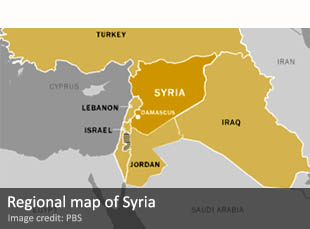
Teams of Israeli special forces are currently operating inside Syria in an effort to detect and sabotage the Syrian military’s chemical and biological arsenal. Citing an unnamed “Israeli source”, the London-based Sunday Times newspaper said yesterday that the operation is part of a wider “secret war” to track Damascus’ non-conventional weapons stockpiles and “sabotage their development”. The Israeli government refused comment on the paper’s allegation. However, Israel’s covert activities against the Syrian government’s chemical and biological arsenal go back almost 30 years. Reputedly, some of the more recent such activities may have involved the targeting of Russian scientists. Although Russia routinely denies it, it is believed that Syria’s non-conventional arsenal was significantly augmented in the late 1980s and early 1990s with the help of Russian retired general Anatoliy Kuntsevich. Kuntsevich, one of the Soviet Red Army’s top scientists, is said to have helped Damascus build its XV nerve agent stockpiles, which are still believed to be in existence today. Interestingly, Kuntsevich died suddenly in 2003 onboard a flight from the Syrian capital to Moscow. It was widely speculated at the time that the Mossad, Israel’s covert-action agency, may have played a role in the Russian general’s sudden death. In 2010, another retired Russian general, Yuri Ivanov, who had served as Deputy Director of the GRU, Russia’s military intelligence agency, died in unclear circumstances. The body of 52-year-old Ivanov was found in Turkey on August 16, 2010, several days after he had disappeared close to a Russian naval facility in Syria. Russian media did not report Ivanov’s death until several days later, when he was quietly buried in Moscow. According to reports in the Israeli press, the former GRU official was on his way to a meeting with Syrian intelligence officers when he went missing. Read more of this post

Freed Russian scientist convicted for spying maintains innocence

Valentin DanilovBy JOSEPH FITSANAKIS | intelNews.org |
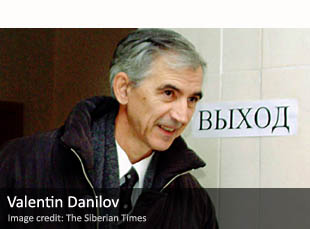
A Russian scientist who was pardoned last week, after spending nearly a decade behind bars for allegedly spying for China, has dismissed the charges against him as “pure fantasy”. Physicist Valentin Danilov was arrested by the FSB, the Russian Federal Security Service, in February of 2001 and charged with conducting espionage in the service of the Chinese space program. At the time of his arrest, Danilov headed the Thermo-Physics Center at Russia’s Krasnoyarsk State Technical University (KSTU), located in Siberia’s third largest city. For several years leading up to his arrest, he conducted research on the impact of solar activity on the condition and performance of space satellites. During his lengthy trial, Danilov admitted selling to the Chinese information on satellite technology belonging to the Russian government. But his defense team argued that the information in question had already been declassified and available in public sources since the early 1990s. Eventually, in November of 2004, a Russian Federal court found Danilov guilty of treason and sentenced him to 14 years in prison. He was supposed to be released in 2017. Earlier this month, however, a court in Krasnoyarsk found that, since Danilov had served most of his prison sentence in good behavior, and since his health was weak, he would be released early. In his first public interview since his release, Danilov, 66, has said he intends to take his case against the Russian government to the European Court of Human Rights. Speaking to reporters as soon as he emerged from prison, the Russian scientist said: “I would truly appreciate it if someone finally told me what state secret I sold”. He went on to comment directly on Russian President Vladimir Putin: “Everybody would be the same as him in his place, because it is the court that makes the czar”, he said, employing a traditional Russian proverb. Read more of this post

Russian court paroles scientist convicted of spying for China

Valentin DanilovBy JOSEPH FITSANAKIS | intelNews.org |
A court in Siberia has issued a rare verdict to parole a Russian academic who was convicted in 2004 of conducting espionage on behalf of China. Russian physicist Valentin Danilov headed the Thermo-Physics Center at Russia’s Krasnoyarsk State Technical University (KSTU), which is located in Siberia’s third largest city. For several years prior to his arrest, he conducted research on the impact of solar activity on the condition and performance of space satellites. In 1999, Danilov was among the signatories of a lucrative contract between KSTU and the state-owned China Aerospace Science and Technology Corporation, which is the main contractor for the Chinese government’s space program. The contract stipulated that KSTU was to help China Aerospace evaluate the performance of artificial satellites in real-life space conditions. Less than two years later, in February of 2001, Danilov was arrested by the FSB, the Russian Federal Security Service, and charged with conducting espionage in the service of the Chinese space program. In his trial, which took place in 2003, Danilov admitted selling to the Chinese information on satellite technology belonging to the Russian government. But his defense team argued that the information in question had already been declassified and available in public sources since the early 1990s. Largely due to this argument, the jury acquitted Danilov of all charges at the end of 2003. However, by the middle of June of next year, the physicist had been arrested again, after the Russian Supreme Court overturned his earlier acquittal. In November of 2004, another court found Danilov guilty of treason and sentenced him to 14 years in prison. Read more of this post

MI5 arrests Royal Navy petty officer for trying to spy for Russia

Edward DevenneyBy JOSEPH FITSANAKIS | intelNews.org |
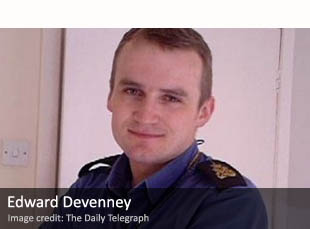
An member of the British Royal Navy has been arrested in a counterintelligence sting operation, after trying to sell top-secret government documents to people he believed were Russian operatives. Petty Officer Edward Devenney, who has been in the Royal Navy for over a decade, was arrested earlier this week while meeting with two MI5 officers posing as Russian spies. Originally from Northern Ireland, Devenney, 29, appears to have been motivated by disgruntlement against the Navy, after his planned promotion to commissioned officer was halted due to financial austerity measures imposed on the military by the British government. According to the court indictment, Devenney contacted an unnamed “embassy of a foreign country” in London, offering to provide classified information in exchange for money. It is unknown at this point how exactly MI5, the British government’s foremost counterintelligence organization, became privy to the content of Devenney’s communication with officials at the unidentified embassy. What is known is that, after several messages were exchanged between the parties, Devenney arranged to meet two people he believed were Russian government employees. In reality, the two individuals were MI5 officers, who were able to film the clandestine meeting. Devenney was apparently arrested on the spot, having first announced that he wished to “hurt the Navy” because his promotion to a commissioned officer had been “binned” by the British government. Read more of this post

News you may have missed #812

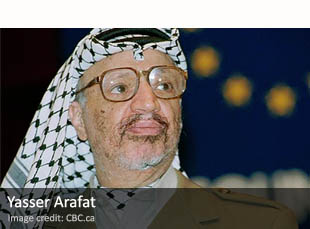
Yasser ArafatBy IAN ALLEN | intelNews.org |
►►Russia to help probe Yasser Arafat’s death. Russia will join an international investigation to determine whether the first Palestinian president, Yasser Arafat, was murdered, the current Palestinian leader, Mahmoud Abbas, has said. French and Swiss experts are due to exhume Arafat’s body in Ramallah later this month in an attempt to discover how he died after an al-Jazeera documentary in July suggested he was killed by a rare radioactive poison. Abbas asked Russian foreign minister Sergei Lavrov for Moscow’s help during talks in Jordan, Palestinian sources said.
►►Revisiting the foiled 1984 Nigerian kidnap plot. In London in 1984, a team of Nigerians and Israelis attempted to kidnap and repatriate the exiled former Nigerian minister Umaru Dikko. Mr. Dikko, who had fled Nigeria after a military coup, was accused of stealing $1bn (£625m) of government money. The plot was foiled by a young British customs officer and, as a result, diplomatic relations between the UK and Nigeria broke down and were only fully restored two years later. The Nigerian and Israeli governments have always denied involvement in the kidnapping.
►►Putin congratulates KGB double spy on his birthday. Russian President Vladimir Putin has congratulated famous double agent George Blake on his 90th birthday, the Kremlin press office has said. Blake betrayed British intelligence starting in the 1950s; he was found out in 1961 and sentenced to 42 years in prison. But he escaped five years later using a ladder of rope and knitting needles, made his way to the Soviet Union and has been living out his last years serenely in a cottage outside Moscow. After his escape from the Wormwood Scrubs prison in London, he was smuggled to Berlin in a wooden box in the back of a van. In the interview published last week, he said he then presented himself to border guards in East Berlin, asked to speak to a Soviet officer, and when told to wait, immediately fell into a deep sleep.

News you may have missed #807

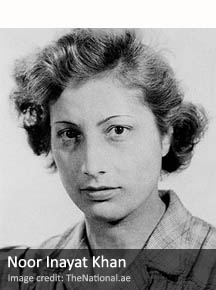
Noor Inayat KhanBy IAN ALLEN | intelNews.org |
►►Britain to unveil statue of female SOE spy of Indian origin. Born in Moscow to an Indian father and an American mother, Noor Inayat Khan was in Paris when it fell to Nazi occupation. She immediately returned to London to volunteer for the war effort, joined the Women’s Auxiliary Air Force and was recruited by the Special Operations Executive (SOE). She was sent into France on a secret mission in June 1943, but was betrayed and captured a few months later. She was shot by the Nazis in Dachau in September 1944, aged 30, and was posthumously awarded the George Cross as well as the Croix de Guerre by France. She was one of only three women in the SOE to be awarded the George Cross.
►►US intelligence spending falls or second year in a row. The US government’s total spending on intelligence activities fell in 2012, the second year in a row of declining numbers after years of soaring security spending since the September 11 attacks in 2001. The Office of Director of National Intelligence, the top US intelligence authority, announced on Tuesday that total funding appropriated for the National Intelligence Program, covering activities of the CIA and high-tech spy agencies such as the National Reconnaissance Office, was $53.9 billion in Fiscal Year 2012, which ended on September 30. That was down from the $54.6 billion appropriated during Fiscal Year 2011, according to government officials and figures published by the private Federation of American Scientists.
►►Russia wants to park spy planes on French base. France has been asked by Moscow to allow two Russian spy planes to be deployed at a French base in Djibouti to help track down pirates. Russian Defense Minister Anatoly Serdyukov said last week that the Ilyushin Il-38 naval reconnaissance planes would improve Russia’s ability to spot pirates plaguing waters off the coast of Somalia. Djibouti is at the juncture of the Red Sea and the Gulf of Aden. The French base is home to several thousand French service members and a number of military aircraft.

News you may have missed #804

Jeffrey Paul DelisleBy IAN ALLEN | intelNews.org |
►►CIA officer reportedly among dead in Afghanistan bombing. The attack, which was carried out in a remote area of Kandahar Province, occurred when a guard working for the Afghan intelligence service detonated a suicide vest as a delegation of American coalition members and Afghan intelligence officials arrived at the intelligence office in the Maruf District. The blast killed Ghulam Rasool, the deputy intelligence director for Kandahar Province, two of his bodyguards, another Afghan intelligence official, and some Americans, including the CIA officer. A spokeswoman for the CIA declined to comment.
►►Canadian intel officer was ‘on Russian payroll for years’. Former navy intelligence officer Jeffrey Paul Delisle, who pleaded guilty this month to spying, was leaking secrets to Russia, sending classified data about Canada as well as the United States, according to David Jacobson, the US ambassador in Ottawa. So far, the Canadian government has refrained from revealing the identity of “the foreign entity” to whom Delisle passed the classified information. Ambassador Jacobson refused to specify the nature of the information, saying only that “there was a lot of highly classified material”.
►►Panama wants to adopt euro as legal tender. Panama, one of the fastest growing economies in Latin America, wants to adopt the euro as legal tender to run alongside the country’s US dollar economy. Panama’s President Ricardo Martinelli made the request to German Chancellor Angela Merkel during a visit to Europe. The president indicated he had every faith that the crisis in the eurozone would soon be at an end, adding that Panama “would be possibly the only country in the world to have two currencies, the euro and the dollar”.

Canadian diplomats spied for the CIA in Cuba, claims new book

Embassy of Canada in Havana, CubaBy JOSEPH FITSANAKIS | intelNews.org |
Several accredited Canadian diplomats were recruited by the United States Central Intelligence Agency to spy on Cuba in the aftermath of the 1962 missile crisis, according to a new book. Authored by Canadian retired diplomat John Graham, the book, entitled Whose Man in Havana? Adventures from the Far Side of Diplomacy, is to be published this week by Penumbra Press. In it, Graham claims that he was among a number of Canadian diplomats stationed in Cuba, who were secretly recruited by the CIA. The US agency had been essentially forced out of the island after Washington and Havana terminated diplomatic relations in 1961, soon after the government of Fidel Castro declared itself a proponent of Marxism. The closure of the US embassy meant that the CIA had no base from which to operate in the Caribbean island. Two years later, in May 1963, US President John F. Kennedy personally asked Canadian Prime Minister Lester Pearson for assistance in intelligence-gathering efforts in Cuba. The Canadian leader consented and, according to Graham, Canadian diplomatic officials actively assisted the CIA until at least 1970. The author states in his book that he himself operated in Cuba for two years, from 1962 until 1964, under the official cover of Political Officer at the Canadian embassy in Havana. Prior to that, he says, he was provided with rudimentary training by the CIA, which consisted of spending “just a few days” at the Agency’s headquarters in Langley, VA. He was then tasked with conducting physical surveillance of Soviet military bases on Cuba and, if possible, identifying weapons and electronic security measures, and noting troop movements. Read more of this post

News you may have missed #802 (Jeffrey Paul Delisle edition)

Jeffrey Paul DelisleBy IAN ALLEN | intelNews.org |
►►New information released on Canadian spy case. Newly released information from Canadian naval officer Jeffrey Paul Delisle‘s bail hearing in January reveals that, facing chronic financial difficulties, Delisle began a four-year espionage career by walking into the Russian Embassy in Ottawa in 2007. Wearing civilian clothes, Delisle displayed his Canadian military identification badge and asked to meet someone from GRU, the Russian military intelligence service. Canadian prosecutors said Delisle regularly downloaded a ”vast amount” of classified information to share with his Russian handlers.
►►Canada spy had escape plan. Canadian naval officer Jeffrey Paul Delisle told a Canadian court that he had an escape plan in place —one he never got a chance to use. If he needed to seek refuge or re-establish contact with the Russians, for whom he spied for over four years, he was told he could walk into a Russian embassy —preferably not the one in Ottawa— and inform them he was “Alex Campbell”. The Russians would then ask him “did I meet you at a junk show in Austria?”, and he was supposed to reply “no, it was in Ottawa”.
►►Canada spy accessed Australia intelligence. This is not exactly news for intelNews readers, since we have covered it before, but it appears that Jeffrey Paul Delisle has openly admitted selling highly classified intelligence gathered by the United States, Britain, Canada, New Zealand and Australia to Russian agents. He said he had access to signals intelligence produced by the US National Security Agency, Britain’s Government Communications Headquarters, Canada’s Communications Security Establishment, Australia’s Defence Signals and New Zealand’s Government Communications Security Bureau.

News you may have missed #800

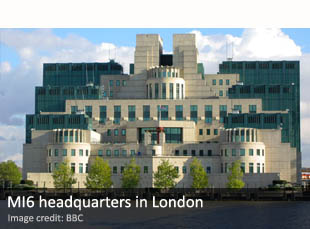
MI6 headquartersBy IAN ALLEN | intelNews.org |
►►British MI6 spy agency feeling shaken not stirred. Analysis on Salon.com about the current state of MI6, Britain’s external intelligence agency, featuring comments by intelNews‘ own Joseph Fitsanakis. The article, written by former CNN and BBC correspondent Barry Neild, argues that MI6 is feeling the heat caused by a series of recent allegations which threaten to disrupt its clandestine operations. The agency, he suggests, is thus undergoing one of the most troubling periods of its hundred-year existence.
►►Germany charges couple with spying for Russia. German government prosecutors say the couple, who called themselves Andreas and Heidrun Anschlag, worked in Germany for Russia’s foreign intelligence service for more than 20 years, gathering information on European Union and NATO strategy. The pair entered Germany in 1988 and 1990, claiming to be Austrian citizens of South American origin. They were arrested in October 2011. German media said it is the first such case in Germany since the end of the Cold War.
►►US allegedly widens covert operations in North Africa. The Associated Press quotes “three US counterterror[ism] officials and a former intelligence official” as saying that the United States is in the process of building “a new military task force” in the North African region. But by the time the US consulate in the east Libyan city of Benghazi was attacked last month, the new task force consisted only of “liaison officers who were assigned to establish relationships with local governments and US officials in the region”.

Belgium suspends senior diplomat on suspicion of spying for Russia

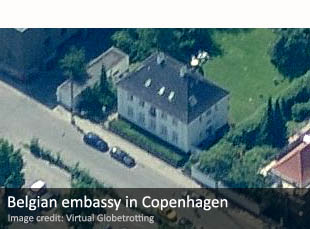
Belgian embassy in CopenhagenBy JOSEPH FITSANAKIS | intelNews.org |
The Belgian government has admitted suspending one of its senior diplomats following allegations in the press that he had spied for the Soviet Union and Russia for over two decades. According to Flemish-language Belgian magazine MO, the diplomat, identified only as “O.G.”, has been “suspended in the interest of the [Belgian diplomatic] service” and is currently under investigation by the Office of the Federal Prosecutor. Citing “sources in the Belgian State Security Service”, the SV/SE, the article said the subject was stationed at the Belgian embassy in Danish capital Copenhagen when he was recalled to Brussels late last year. The man is said to have spent nearly three decades as an employee of the Belgian Ministry of Foreign Affairs, having served in several Belgian embassies and consulates in Japan, India, Algeria, Nigeria, Portugal, and the United States, prior to arriving in Denmark. However, according to the MO article, he was accosted by the Soviet KGB in the late 1980s, shortly after he arrived at the Belgian embassy in Tokyo, Japan, for his first-ever diplomatic posting. Since that time, said the magazine, “O.G.” has spied for the KGB and its successor, the SVR, having stayed in contact with “several different Russian handlers”. Prior to 2011, when he ceased contact with Russian intelligence, the Belgian diplomat was allegedly tasked with providing the FSB with information that could be used to concoct false identities belonging to deceased Belgian citizens. The Russians would then use these identities to supply their intelligence operatives with high-quality Belgian identity papers and travel documentation. Late last week, another Belgian publication, The EU Observer, contacted the Belgian Foreign Ministry to inquire about “O.G.”. A Ministry spokesperson told the paper: “we can confirm that an official from our ministry was suspended from his functions a bit over one year ago, following indications of a security breach”. Read more of this post

Moscow denies knowledge of alleged Russian spy ring busted in Texas

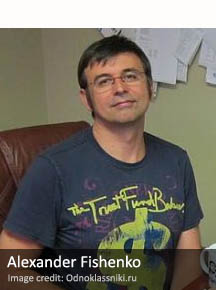
Alexander FishenkoBy JOSEPH FITSANAKIS | intelNews.org |
Government officials in Moscow have denied knowledge of an alleged Russian spy ring, which is accused by United States authorities of procuring sensitive microelectronics technology on behalf of the Russian military. Early on Wednesday morning, the Federal Bureau of Investigation conducted pre-dawn raids at several locations in Houston, Texas, and arrested eight members of the alleged spy ring. Four of the arrestees are allegedly Russian citizens, while the remaining five are from Kazakhstan, Azerbaijan and Ukraine. Four are naturalized American citizens. They include Alexander Fishenko, chief executive officer of Apex System LLC, which is accused by the FBI of having exported over $50 million in dual-use microelectronic devices to Russia since 2008. US federal prosecutors allege that three more spy-ring members are currently in Moscow; they include Yuri Savin, Director of Marketing at a company called Artrilor, which is said to have been at the receiving end of Apex System’s export operations. According to the indictment, Arc Electronics told its US suppliers that the microelectronics technologies were intended for use in various types of streetlights. But in reality, said the FBI, the company gave the hi-tech supplies to the Russian Ministry of Defense for use in airborne surveillance systems, as well as in remote weapons guidance systems, among other military applications. The FBI says it has in its possession extensive audio intercepts of the suspects communicating with Russian intelligence, as well as conferring among them about how to hide incriminating documents from US federal authorities. But Sergei Ryabkov, Russia’s Deputy Minister of Foreign Affairs, told Russian reporters on Thursday that the charges against the 11 individuals were “of a criminal nature” and had “nothing to do with intelligence activity”. Read more of this post

FBI raids alleged Russian front-company, indicts 11 on spy charges

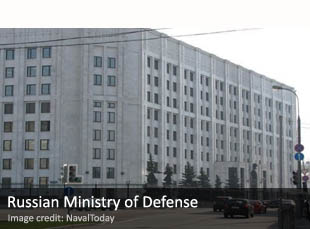
Russian Ministry of DefenseBy JOSEPH FITSANAKIS | intelNews.org |
The United States has indicted employees of an alleged Russian front-company in Texas, accused of procuring sensitive microelectronics technology for use by Russian military and intelligence agencies. Public prosecutors in New York said yesterday that the Federal Bureau of Investigation conducted raids in locations around Houston, Texas, which included the headquarters of Arc Electronics, Inc. The export firm is accused of having shipped over $50 million-worth of military-grade microelectronics since 2008. The supplies were received in Moscow, Russia, by a mysterious procurement company called Apex System LLC. Counterintelligence investigators in the US claim both firms are part of an elaborate scheme set up by Russian military intelligence, aimed at stealing dual-use electronics hardware created by American firms. According to the indictment, Arc Electronics told its US suppliers that the microelectronics technologies were intended for use in various types of streetlights. But in reality, said the FBI, the company gave the hi-tech supplies to the Russian Ministry of Defense for use in airborne surveillance systems, as well as in remote weapons guidance systems, among other military applications. Federal prosecutors said that, for over four years, Arc Electronics engaged in a prolonged “surreptitious and systematic” scheme to circumvent US government export controls, thus seriously damaging US national security. Following the early-morning raids, the FBI unsealed indictments against 11 Arc Electronics employees, most of whom were charged with “acting as unregistered agents of the Russian Federation in the United States” —legal jargon for espionage. Read more of this post

Russian court upholds 15-year prison sentence for alleged CIA spy

Igor SutyaginBy JOSEPH FITSANAKIS | intelNews.org |
Russia’s highest court has upheld a lengthy prison sentence given to a Russian arms control and nuclear weapons expert, who Moscow alleges was a spy for the United States. The Russian government accuses Igor Sutyagin of collaborating with Alternative Futures, a British-registered consulting company alleged by Moscow to be a front for the United States Central Intelligence Agency. Before his 1999 arrest, Sutyagin was Division Chairman on the Russian Academy of Sciences’ USA and Canada Institute. His indictment, prepared by the Russian Federal Security Service, said that he shared with the CIA “classified technical information” about nuclear submarine technology. Sutyagin maintained his innocence throughout his trial, and Human Rights Watch as well as Amnesty International classified him as a political prisoner. The two groups brought the accused spy’s case before the European Court of Human Rights, which ruled that Russian government prosecutors had violated Sutyagin’s right to a fair trial. Moreover, the Court ruled that Sutyagin’s pre-trial detention, which lasted five years, was illegal. Eventually, Moscow complied with the Court’s ruling and a retrial was ordered, to the delight of Sutyagin’s family. In the retrial, which ended last week, Russia’s Supreme Court agreed with the European Court of Human Rights that Sutyagin’s pre-trial detention had been unlawful; but the court upheld Sutyagin’s 15-yeard sentenced as “entirely legitimate”. Sutyagin was tried in absentia, however, because in the summer of 2010 he was released and fled to the West, as part of the largest postwar spy-exchange between Russia and United States. Sutyagin was one of four men behind bars in Russia, who were swapped for 10 Russian non-official-cover intelligence operatives that had been arrested in a sting operation by the Federal Bureau of Investigation. Read more of this post

News you may have missed #798

Alexander LitvinenkoBy IAN ALLEN | intelNews.org |
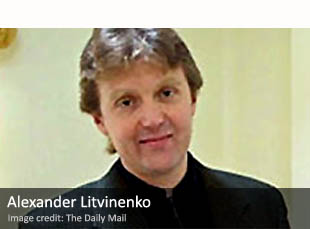
►►Britain to hold inquest over death of ex-KGB officer. Britain and Russia appear to be on a collision course over the death of Alexander Litvinenko, a former Russian intelligence officer who died in 2006 after ingesting polonium-210, a rare radioactive isotope. Britain’s Crown Prosecution Service has accused Andrei Lugovoi and Dmitry Kovtun, both former KGB agents, for the death of Litvinenko. Russia has refused British requests to extradite the two, leading to a row with Moscow and the tit-for-tat expulsion of Russian and British diplomats. Until now, the British Foreign Office had attempted to limit the scope of an inquest into the death of Litvinenko, fearing further diplomatic fallout. But coroner Sir Robert Owen said last week that he endorsed a previous ruling by his predecessor in the case, Andrew Reid, that there should be an “open and fearless” investigation into the matter.
►►Ex-CIA operative who illegally sold arms to Libya dies. Edwin P. Wilson, a former CIA officer who was convicted in 1983 for illegally shipping 20 tons of C4 plastc explosives to Libya, has died aged 84. In his trial he claimed he had shipped the weapons to Libya at the request of the CIA, because, as he said, the agency was trying to establish good relations with the Libyan government. But the court did not buy his story, so he spent over 20 years in prison, mostly in solitary confinement, until his release in 2004. He maintained his innocence to the very end.
►►Analysis: Libya an opportunity for CIA if it sticks around. The attack in Benghazi, Libya, that killed four Americans, including a US ambassador and two former Navy SEALs, has led Americans to vacate Benghazi for their safety, even though various militant groups continue their operations. It is a disaster for US intelligence efforts in the region, especially since the attack has made brutally clear how real the jihadi threat in eastern Libya remains. But there may be the smallest of silver linings to this black cloud, if American operatives are able to capitalize on it. The aftermath of the attack shows widespread displeasure with Benghazi’s jihadist groups, with thousands marching in protest. That is an opportunity the CIA could use to rebuild its intelligence gathering.