News you may have missed #789

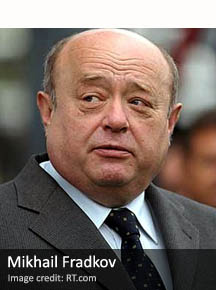
Mikhail FradkovBy IAN ALLEN | intelNews.org |
►►Putin adds spy chief to energy commission. Russian President Vladimir Putin has reinforced a presidential commission seen as Kremlin’s vehicle for vying for control over the country’s crucial oil and gas sector, by adding the country’s top police officer and senior spy to its ranks. They are Interior Minister Vladimir Kolokoltsev and Mikhail Fradkov, director of the Foreign Intelligence Service, formerly a department of the KGB. The commission is driven by Igor Sechin, a former KGB officer and close ally of President Putin.
►►US spy sat agency plans major expansion. The National Reconnaissance Office (NRO), America’s secretive spy satellite agency, operates a vast constellation of spy satellites in orbit. But these surveillance spacecraft have traditionally only been able to gaze down on a few small areas of the planet at a time, like flashlights probing the dark. And this, only with careful advance planning by human operators on the ground. Now the NRO wants to expand the current flashlight-like satellite deployment to a horizon-spanning, overhead spotlight that can illuminate vast swaths of the planet all at once. The agency also wants new spacecraft that can crunch the resulting data using sophisticated computer algorithms, freeing the satellites somewhat from their current reliance on human analysts.
►►GCHQ warns of ‘unprecedented’ cyberattack threat. The British government’s electronic eavesdropping and security agency, GCHQ, has warned the chief executives of Britain’s biggest companies about an allegedly “unprecedented threat” from cyber-attacks. “GCHQ now sees real and credible threats to cybersecurity of an unprecedented scale, diversity, and complexity”, said Ian Lobban, the agency’s director. The magnitude and tempo of the attacks pose a real threat to Britain’s economic security’, Lobban adds, but notes that about 80% of known attacks would be defeated by embedding basic information security practices.

News you may have missed #786

Richard Masato AokiBy IAN ALLEN | intelNews.org |
►►US Pentagon wants to share intel with Egypt. The US Department of Defense is offering Egypt a package of classified intelligence-sharing capabilities designed to help it identify military threats along its border with Israel. According to an unnamed senior US official, the Pentagon leadership is concerned about “rising militancy” along the Egyptian-Israeli border. The purported intelligence package includes satellite imagery, data collected through unmanned drones, as well as intercepts of cell phone and other communications among militants suspected of planning attacks. The Egyptian intelligence chief was summarily fired earlier this month, after more than a dozen Egyptian soldiers were killed near Israel’s border when gunmen attacked a post and tried to enter Israel.
►►Researcher disputes Aoki was FBI informant. Last week author Seth Rosenfeld alleged that prominent 1960s Black Panther Party member Richard Masato Aoki, who gave the Black Panthers some of their first firearms and weapons training, was an undercover FBI informer. But the claim, which is detailed in Rosenfeld’s new book, Subversives, is disputed by another researcher, Diane C. Fujino. A professor and chair of Asian American studies at UC Santa Barbara, and author of the recently published Samurai Among Panthers, Fujino argues that Rosenfeld has not met the burden of proof on Aoki, and that he “made definitive conclusions based on inconclusive evidence”.
►►Russian intelligence to monitor blogosphere. Russia’s Foreign Intelligence Service, the FSB, says it plans to fund a program that monitors the Internet’s “blogosphere”, with an aim to “shape public views through social networking”. Citing unnamed sources from inside the FSB, Russian newspaper Kommersant said that the project’s research stage will cost around $1 million. The article implies that the online surveillance and opinion-shaping program will target both Russian- and foreign-language online users. This is not the first time that the FSB has displayed interest in online social networking in recent years.

News you may have missed #784

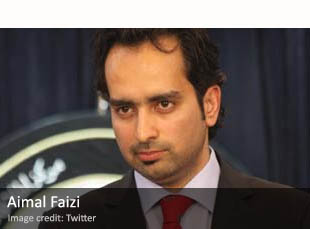
Aimal FaiziBy IAN ALLEN | intelNews.org |
►►US agencies still not sharing intelligence. Nearly half of US federal agencies are not sharing documented incidents of potential terrorist activity with US intelligence centers, according to officials in the Office of the Director of National Intelligence. Federal and police officials are supposed to deposit reports of suspicious behavior through a system known as the Nationwide Suspicious Activity Reporting Initiative (NSARI). It is a virtualized inventory of tips that can be reached by federal, state or local government authorities. But progress in connecting local agencies to fusion centers through the NSARI appears to be slow-going. Almost exactly a year ago, a similar report by the US Congressional Research Service found that US intelligence agencies were still struggling to strengthen their information-sharing networks.
►►Russian spies ‘top priority’ for Czech intelligence. A new report by the Czech Security Information Service (BIS) says that Russian intelligence services are the most active foreign espionage organizations in the Czech Republic. The report, published last Wednesday, states that Russian spies work under different covers, mainly at Russian diplomatic missions, and in numbers that are utterly unjustified, given the current status of Czech-Russian relations. “Russian intelligence officers were spotted at different public and corporate events, where they tried to resume old contacts and meet new people”, the report said. It is worth noting that the BIS report devoted nine paragraphs to Russian espionage and only one to Chinese. Chinese intelligence officers “do not pose an immediate risk to Czech citizens”, the report said.
►►Afghanistan blames ‘foreign spies’ for insider attacks. Some of Afghan President Hamid Karzai’s top advisers said this week that the recent rise in insider attacks on NATO troops is the product of foreign spy agencies infiltrating Afghanistan’s security forces. They said that Afghanistan’s National Security Council has concluded that both Pakistani and Iranian intelligence organizations are recruiting young Afghans to enlist in the army and police with the intention of targeting Western service members. The officials suggested that the ultimate aim of the alleged efforts by foreign agencies is to destabilize Afghanistan’s forces. One of the Afghan government’s spokesmen, Aymal Faizi (pictured), said that the allegations from Kabul rested on classified evidence from “documents, telephone calls, pictures and audio that show direct contact between these individuals and foreign spy agencies”.

News you may have missed #780

Syrian rebel video of downed dronesBy IAN ALLEN | intelNews.org |
►►Israeli Prime Minister rebukes President’s Iran comments. Aides to Israeli Prime Minister Benjamin Netanyahu launched a stinging rebuke to the country’s president, Shimon Peres, after he said that Israel should not act alone in launching military action against Iran’s nuclear program. In an interview on Israeli television, Peres said: “It is clear to us we cannot do it on our own. We can only delay [Iran’s progress]. Thus it’s clear to us that we need to go together with America”. Officials from Netanyahu’s office were quoted in the Israeli media as saying: “Shimon Peres forgets what the role of the president of Israel is”. The row is a stark example of the sharp differences at the heart of Israel’s political, military and intelligence establishment over the merits and dangers of an early unilateral military strike on Iran.
►►Russian embassy in UK alleges attack by Syrian activists. Russia’s embassy in London accused British police on Friday of taking no action to prevent an attack on its building by a group of activists protesting Moscow’s support for Syrian President Bashar al-Assad. It made the accusation as about 40 protesters clad in balaclavas demonstrated outside the embassy, located in an upscale part of London, against the verdict in a trial of the Russian feminist punk band Pussy Riot in Moscow. An embassy spokesman said a group of protesters chanting anti-Assad slogans attacked the building overnight, throwing stones and smashing windows.
►►Syrian rebels put captured Iranian drones on YouTube. The opposition to Bashar al-Assad says it’s captured spy drones made by Assad’s patron, Iran. And it’s put the evidence on YouTube. In the video, Syrian rebels show off three smallish, unarmed surveillance drones they say they downed. The two larger drones appear to be variants of Iran’s homemade Ababil, or Swallow, surveillance aircraft. All three show signs of damage, with the tiny drone’s nose cone looking to have taken the worst, and alongside the drones are pamphlets displaying the face of the dead Iranian ayatollah Ruhollah Khomeini. It’s yet more evidence that Iran considers Syria’s civil war to be a proxy contest with much at stake for their influence in the region.

News you may have missed #776

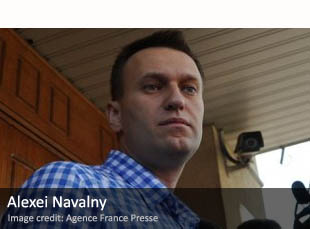
Alexei NavalnyBy I. ALLEN and T.W. COLEMAN | intelNews.org |
►►US Army critiques its own intel collection system. An intelligence gathering system, known as the Distributed Common Ground System (DCGS), widely used by the US Army in Afghanistan to detect roadside bombs and predict insurgent activity, has severe limitations and is “not suitable”. This is according to a memo sent on August 1 by the Army’s senior equipment tester, General Genaro J. Dellarocco, to the Army’s chief of staff, General Raymond Odierno. The memo hammers the DCGS system for its “poor reliability” and “significant limitations” during operational testing and evaluation earlier this year.
►►Russian lawyer exposes wiretap find on Tweeter. Russian lawyer and political activist Alexei Navalny, who discovered a wiretapping device at his workplace, allegedly installed by the Russian government, has used YouTube and Tweeter to publicize his discovery. The wiretap was allegedly found attached to a set of wires hidden inside the wall molding of Navalny’s office at the Moscow-based organization Anti-Corruption Fund. It was reportedly discovered with the help of a bug detector. The same wires seem to also be attached to a hidden camera.
►►Volkswagen victim of Chinese industrial espionage? A recent article by Agence France Presse claims that German-based Volkswagen has become a victim of industrial espionage. While operating under a joint partnership agreement with the Chinese automobile company First Automobile Works, to build and manufacture cars for China’s burgeoning domestic market, designs and technical specifications for Volkswagen engines were apparently stolen. An unnamed Volkswagen manager stated that the loss was “quite simply a catastrophe”. It’s worth noting, however, that a similar accusation leveled against China in 2011 by French automaker Renault, turned out to be a criminal hoax.

News you may have missed #772

Israeli team at the 1972 Munich OlympicsBy TIMOTHY W. COLEMAN | intelNews.org |

►►India restricts agency-to-agency contacts with CIA. According to The Deccan Herald, Indian intelligence officials are growing increasingly wary of the frequent interactions between their own intelligence personnel and the CIA. Cooperation between the US intelligence organizations and Indian government agencies has been increasing under the guise of counter-terrorism efforts. Calcutta News reports that a book published by author Prem Mahadevan, called The Politics of Counterterrorism in India, identifies at least two CIA penetrations of Indian intelligence officials since 2001.
►►Canadian spy revealed classified information in “massive leak”. As was previously reported on this blog, former Sub-Lieutenant Jeffrey Paul Delisle, a navy intelligence officer, is accused of spying for Russia. According to The New Zealand Herald, the accused Canadian spy provided the Russian government with classified information on the US, Britain, Canada, New Zealand and Australia in what is being termed a “massive leak”.
►►Germany had advance warning of 1972 Olympics massacre. Israel-based English-language newspaper The Jerusalem Post is reporting that an article in the German newsmagazine Der Spiegel, stated Germany had advance warning about a potential terrorist attack on Israeli athletes at the 1972 Olympic games. Previously classified documents accessed by Der Spiegel show that not only were there indications of a terror plot, but that there were explicit warnings and details. Perhaps more damaging are the lengths and extremes that German intelligence officials went to in order to cover up blatant mistakes in the case.

US-based Russian illegals ‘groomed children to be spies’

Yelena Vavilova and Andrey BezrukovBy JOSEPH FITSANAKIS | intelNews.org |
A group of Russian non-official-cover operatives, who were arrested in the United States by the Federal Bureau of Investigation in 2010, were grooming some of their children to become spies, according to insider accounts. Nearly a dozen covert members of the Russian Foreign Intelligence Service (SVR), one of the successor agencies of the Cold-War-era KGB, were detained on June 26, 2010, in a series of coordinated raids by the FBI, which marked the culmination of a lengthy counterintelligence operation against the deep-cover operatives. None of those arrested were associated with the diplomatic representation of the Russian Federation in the US; eight were married couples and all were using fake identities. But media coverage of the case, which centered overwhelmingly on the glamorous looks of one of the arrestees, Anna Chapman, paid little attention to the seven children belonging to the captured Russian operatives, whose ages ranged from 1 to 20 years at the time of their parents’ arrests. In an article published late last week, The Wall Street Journal reported that some of the SVR operatives were actively grooming their children to follow in their footsteps as unregistered agents of the Russian government in the US. The paper based its claims on discussions “with current and former US officials”, who allegedly had access to surveillance data from the FBI’s investigation against the Russians. According to the unnamed officials, the SVR operatives had secured the cooperation of at least one of the children, Tim Foley, whose parents operated in the US for over a decade under the assumed names of Donald Heathfield and Tracey Foley. The couple (real names: Andrey Bezrukov, Elena or Yelena Vavilova) had allegedly revealed their secret mission to their son “well before their arrest” in 2010, and had indicated that “they wanted him to follow in their footsteps”. According to the FBI surveillance records, says The Journal, Tim had agreed and offered to travel to Russia “to begin formal espionage training”. He eventually traveled to the land of his birth at least once following the alleged arrangement with his parents. Read more of this post

News you may have missed #770

Horn of Africa mapBy TIMOTHY W. COLEMAN | intelNews.org |
►►Kaspersky Lab is ‘thwarting US cyber spies’. According to an article in Wired magazine, Eugene Kaspersky, the CEO of Russia-based Kaspersky Labs has been working to support Russian allies in the Kremlin and the FSB. Kasperksy’s firm first discovered the cyber attack weapon known as Stuxnet. As the profile piece notes, “Kaspersky’s rise is particularly notable —and to some, downright troubling— given his KGB-sponsored training, his tenure as a Soviet intelligence officer, his alliance with Vladimir Putin’s regime, and his deep and ongoing relationship with Russia’s Federal Security Service, or FSB”.
►►Al-Shabaab executes alleged CIA and MI6 assets. Somalia’s largest and most deadly armed Islamist group, al-Shabaab, announced that it had captured and executed at least three informants who were allegedly passing intelligence to the CIA and to MI6. The Associated Press stated that Al-Shabaab’s official Twitter feed stated that the individuals, who were summarily interrogated and then executed by firing squad, “were part of a wide network of spies deployed by the British and American intelligence agencies”.
►►Australian intelligence briefed on Canadian spy. The espionage case against accused Canadian spy, former Sub-Lieutenant Jeffrey Paul Delisle, continues to garner intrigue. As was previously reported on this blog, Delisle, a former navy intelligence officer is accused of spying for Russia. But a report in The National Post states that representatives of Canada’s intelligence service briefed members of Australia’s intelligence services on the Delisle’s case and that information exchanges appear ongoing. The particulars of Australia’s involvement in the case are explained here.

Canadian spy compromised Australian, British intelligence

Jeffrey Paul DelisleBy JOSEPH FITSANAKIS | intelNews.org |
Most regular readers of this blog are undoubtedly familiar with the case of Jeffrey Paul Delisle, a Sub-Lieutenant in the Royal Canadian Navy, who until recently was employed at Canada’s ultra-secure TRINITY communications center in Halifax. Delisle was arrested in January on suspicion of passing information gathered from radio and radar signal interceptions to a foreign power, most likely Russia. Back in May, when it was disclosed that the United States helped Canadian counterintelligence investigators build their case against Delisle, we warned that “a far more important subject concerns the degree in which [Delisle’s] penetration has affected Canada’s intelligence-sharing relationship with its […] partners”. Now a new report in The Sydney Morning Herald reveals that Delisle’s espionage activities compromised Australian secrets that had been shared with Canada under longstanding intelligence cooperation arrangements. Citing “Australian security sources”, the paper said that the Delisle case “has sent shock waves through Western security agencies” due to the volume of compromised information. The Herald claims that the stolen intelligence is “on a scale comparable to the alleged handover to WikiLeaks of US military and diplomatic reports by US Army private Bradley Manning”. An unnamed “Australian security source” told the paper that Delisle’s access to classified information was “apparently very wide” and that Australian intercepts were “inevitably compromised”. Read more of this post

News you may have missed #763

RedHack posterBy IAN ALLEN | intelNews.org |
►►Taiwan ex-colonel nabbed for spying for China. Cheng Lin-feng, a retired Lieutenant Colonel in the Taiwanese army, and civilian Tsai Teng-han, were taken in by Taiwanese police last week on suspicion of spying for China. Cheng was allegedly recruited by Chinese intelligence when he travelled to the mainland to do business, Taiwan’s Ministry of National Defense said in a statement, adding that he had been investigated ever since a tip-off in 2009. A court spokesman said that details of case will be held until the investigation is completed.
►Russian law brands foreign-funded NGOs ‘foreign agents’. Russia’s Lower House of Parliament has approved a bill that brands non-governmental organizations receiving funding from abroad as “foreign agents”, a law that activists fear the Kremlin will use to target critics. The bill is almost certain to be approved by the Upper House before being signed into law by President Vladimir Putin, who last year accused the US State Department of funding protests against him. The bill is seen by many analysts as setting up a legal infrastructure for a crackdown on the opposition. Meanwhile, official statistics show that wiretapping in the Russian Federation has nearly doubled over the past five years. The main driver of the rise, analysts say, involves the myriad of Russia’s rival security services spying on each other.
►►Turkish hackers release names of police informants. Members of Turkey’s Marxist cyberactivist group RedHack have dumped online a 75-megabyte text file with thousands of emails from Turkish police informants. The group said it released the information in retaliation against ultra-nationalist hackers who have been threatening opposition academics and journalists. RedHack, which has been using ‘defacement hacking’ to promote a Marxist political agenda since its founding, in 1997, is included on the Turkish government’s list of terrorist organizations. In March of this year, RedHack stole data from the Turkish police’s network, forcing the police to shut down all its servers.

News you may have missed #760

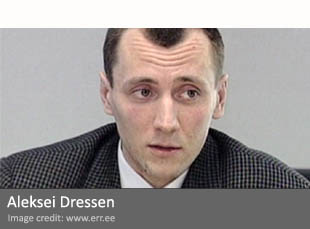
Aleksei DressenBy TIMOTHY W. COLEMAN | intelNews.org |
►►Turkey breaks up major military espionage ring. Turkish newspaper Hurriyet Daily News reported on July 9 that 51 active-duty soldiers from over twelve cities have been implicated in a major espionage ring involving Turkey’s military. Following a series of raids on July 7, at least 40 people were detained and four others were taken into custody. The raids were in response to an investigation launched in 2009, regarding warcraft radar locations in Turkey, illegal surveillance, as well as wiretapping of military officers.
►►Taiwan navy misplaces classified naval charts. During the decommissioning last June of Taiwan’s Hai Ou missile boats, classified naval charts were discovered to have gone missing during a final inventory check. The Taipei Times reports that the individual officer tasked with the responsibility of safeguarding the charts in question claimed to have burned one by accident, but was unable to account for the second chart. The classified charts contained information on Taiwanese naval activity including deployments in the Taiwan Strait.
►►Estonia security official and wife jailed for treason. Aleksei Dressen, a former security official at Estonia’s Interior Ministry, and his wife, Viktoria, were both convicted of treason, receiving 16 years and 6 years respectively. During a closed trial the proceedings did not provide direct evidence as to whom Dressen and his wife were working for. However, reports indicate that Dressen’s handlers were most likely representatives of Russia’s FSB.  The prosecution alleged that Dressen brought classified state secrets from the Estonian Interior Ministry to the airport in an envelope and then passed them along to his wife, who acted as a courier to Russian handlers. Heili Sepp, the Estonian prosecutor, indicated that the sentencing of the Dressens was part of a plea bargain effort, noting: “To our knowledge, this is the harshest punishment meted out in plea bargain proceedings in Estonia”.

News you may have missed #755

Jeffrey Paul DelisleBy TIMOTHY W. COLEMAN | intelNews.org |

►►MI5 chief says al-Qaeda threatens UK from Arab Spring nations. Brittan’s domestic intelligence agency chief, Jonathan Evans, has stated that al-Qaeda is continuing to gather a foothold in nations that experienced the Arab Spring. In his speech, Evans, who directs the UK’s MI5, warned that al-Qaeda is attempting to reestablish itself in countries that had revolted, and that “a small number of British would-be jihadis [sic] are also making their way to Arab countries to seek training and opportunities for militant activity, as they do in Somalia and Yemen. Some will return to the UK and pose a threat here”. With a suspected 100-200 British born Islamist militants operating in the Middle East and Africa, the MI5 Director General warned that the coming summer Olympics in London made for an attractive target.
►►Russia to conduct airborne surveillance of Canada’s infrastructure. Canada’s National Post newspaper reports that Russian surveillance aircraft will conduct a flyover of Canada’s military and industrial infrastructure in what appears to be an annual Russian air reconnaissance mission. For the past ten years and under the Open Skies treaty, Russia is allowed to conduct flyovers of key Canadian sites. This will be the first flyover since the arrest last January of Jeffrey Paul Delisle (pictured), a Royal Canadian Navy officer, for allegedly spying on Canada on behalf of the Russians.
►►Japanese official who leaked DRPK missile info found dead. A Japanese Foreign Ministry official, who was largely thought to the source of leaked information regarding a Chinese missile technology transfer to North Korea in April, has been found dead. The official, previously under investigation for publicly disclosing national security information, was found hanged in his Chiba prefecture home on June 20. Additional details, including the individual’s name, were not made available, but Japanese government officials did indicate that the death did not appear to be suspicious.

News you may have missed #753

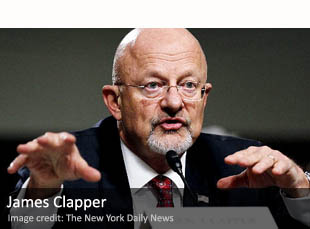
James ClapperBy IAN ALLEN | intelNews.org |
►►US spy agencies consider new polygraph questions. The US Director of National Intelligence, James Clapper, is considering a proposal to force intelligence agency employees to answer a direct question in their polygraph examinations about whether they have disclosed information to reporters. The Los Angeles Times quotes “officials familiar with the matter”, who say that Clapper is preparing “changes to the counterintelligence polygraph policy”, though “no final decisions have been made”.
►►Ex-“New Republic” editor speaks out against Pollard release. Few American journals can claim to have stood more staunchly by Israel than The New Republic. So we should be paying attention when Martin Peretz, who edited the magazine from 1974 until 2011, comes out against the proposed release of Jonathan Jay Pollard. Pollard is a former US Navy analyst, who is serving a life sentence for spying on the US for Israel. Peretz calls Pollard “a scoundrel spy” and reminds his readers that “before he decided to deliver reams of sensitive [US] intelligence and defense documents to Israel’s security apparatus, [Pollard] was negotiating with Pakistan […] to do similar chores for it”.
►►UK leader considered using special forces to seize Russian ship. British Prime Minister David Cameron considered ordering British special forces to board and impound a Russian ship suspected of carrying arms to Russian ally Syria, it has emerged. The ship, MV Alaed, was sailing in British waters when the US placed pressure on Britain to halt it. But the Russian ship suddenly changed course about 50 miles off the north coast of Scotland and it is showing that its next port of call is Murmansk, in Russia.

News you may have missed #751

Leonid ShebarshinBy IAN ALLEN | intelNews.org |
►►Ex-CIA officer remembers his KGB rival. In April, Leonid Shebarshin, a retired General of the KGB, who was often referred to as “the last Soviet spy”, was found dead in his downtown Moscow apartment. Apparently, he had committed suicide. Now Milt Bearden, who was the CIA’s Chief of the Soviet/East European Division during the final years of the USSR, has written a piece in which he remembers Shebarshin. He says that, even though Shebarshin was “the closest thing [he] had to a main adversary” in the USSR, the two became friends in the late 1990s, despite the fact that Shebarshin remained a true believer in the USSR until the very end of his life.
►►NSA won’t reveal how many Americans it spied on. Last month, US Senators Ron Wyden and Mark Udall –both members of the US Senate’s Select Committee on Intelligence– asked the NSA how many persons inside the US it had spied upon since 2008. But Charles McCullough, the Inspector General of the Office of the Director of National Intelligence, has told the two Senators that giving such a figure of how many Americans were spied on was “beyond the capacity” of NSA’s oversight mechanisms, and that –ironically– looking into this matter would violate the privacy of American citizens.
►►Russian scientist who ‘spied for China’ freed. Igor Reshetin, the former director of Russian rocket technology firm TsNIIMASH-Export, who was jailed in 2007 for selling state secrets to China, has been released on parole. Reshetin had been initially sentenced to nearly 12 years, for illegally selling state-controlled technology secrets to a Chinese firm, and with stealing 30 million rubles (US$925,000) through a scheme involving bogus companies. His initial sentence was later reduced on appeal.

Russian professors jailed for passing military secrets to China

The R-30 BulavaBy IAN ALLEN | intelNews.org |
Two Russian professors were convicted yesterday of handing over to Chinese government agents highly classified technical details about one of Russia’s most secretive military projects. Svyatoslav Bobyshev and Yevgeny Afanasyev, both employees of the military-affiliated Baltic State Technological University in St. Petersburg, had been arrested in March 2010 on suspicion of spying for a foreign government. The two have now been sentenced by the St. Petersburg City Court to 12 and 12 ½ years in prison respectively, after having been found guilty of treason. According to the court documents, Bobyshev and Afanasyev traveled to China in 2009, where they passed on to Chinese military intelligence officers highly secret technical details about Russia’s R-30 Bulava ballistic missile. Specifically, the two professors are accused of sharing information relating to Bulava’s underwater launch specifications. Additionally, the Russian government prosecutor said that the two were preparing to provide the Chinese with information about two of Russia’s land-based missile systems, the Topol-M and Iskander. The R-30 Bulava (the Russian word for “mace”) is the name for Moscow’s latest-generation submarine-based ballistic missile technology. It is widely considered to be one of the future cornerstones of Russia’s nuclear weapons capability, and is thought to be the most expensive weapons project currently being developed in the country. The missile was approved for production last year, and is expected to come to service this coming October, when it will begin to replace Russia’s Soviet-era stock of submarine-launched nuclear missiles. Read more of this post