News you may have missed #727

Jeffrey Paul DelisleBy IAN ALLEN | intelNews.org |
►►US government-authorized wiretaps increased in 2011. The US Justice Department sought 1,745 secret wiretapping warrants in 2011, an increase of 239 over 2010, according to correspondence sent to Congressional leaders and oversight committees. The secret warrants are governed under the Foreign Intelligence Surveillance Act (FISA) and are used in terrorist and espionage investigations by the FBI. The letter, dated April 30, 2012, also notes that the FBI issued 16,511 National Security Letters (NSLs) to obtain certain records and information in investigations. It further asserts that the requests were for investigations relating to 7,201 different US persons. The number of NSLs declined dramatically from 2010 when the FBI had sought 24,287.
►►Australia axes spy agency funding. Large budget cuts by the Australian Labour government, which is trying to engineer a federal budget surplus, are expected to affect funding for the country’s intelligence agencies. The six agencies of the Australian intelligence community have been given a collective budget of $81 million over four years, a figure that is $20.4 million lower than previous budgets. The government said that savings will be “redirected to support other national intelligence priorities”.
►►Canada spy case adjourned until June. The case of Jeffrey Delisle, a Halifax naval intelligence officer accused of espionage, has been adjourned until next month because his lawyer has not yet received all of the files in the case. Delisle is charged with communicating information to a foreign entity —probably Russia— that could harm national interests. Until 2010, Delisle worked for both Canada’s Chief of Defence Intelligence and at the Strategic Joint Staff, which oversees virtually every major aspect of the military’s domestic and international plans and operations.
News you may have missed #721

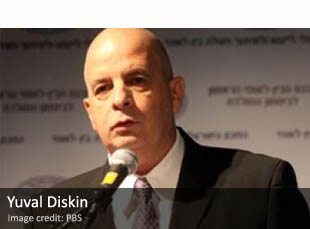
Yuval DiskinBy IAN ALLEN | intelNews.org |
►►US spies clash with military over outsourcing spy satellites. Members of the US intelligence community and the military are finding themselves on opposite sides regarding the future of American spy satellites. Since the US first began using satellites to collect intelligence data, the government largely relied on its own technology. But in recent years, as private companies have developed sophisticated satellites of their own, Washington has been increasingly relying on commercial sources for spy missions. Now senior intelligence officials have urged the Obama administration to move away from relying on commercial satellite imagery.
►►Israeli ex-spy criticizes plans for war with Iran. Many Israeli retired officials have criticized Prime Minister Benjamin Netanyahu’s government, but the censure from Yuval Diskin, who stepped down as head of the Shin Bet domestic intelligence service last year, was especially harsh. “I have no faith in the prime minister, nor in the defense minister”, Diskin said in the remarks broadcast by Israeli media on Saturday. “I really don’t have faith in a leadership that makes decisions out of messianic feelings”. Speaking in New York, former Mossad Director Meir Dagan said simply that Diskin “spoke his own truth”.
►►Litvinenko’s widow still waiting for answers. In 2000, after Vladimir Putin became President of the Russian Federation, KGB/FSB officer Alexander Litvinenko fled with his family to the UK, where they claimed political asylum and, later, British citizenship. During his time in London, Litvinenko consulted for MI5 and MI6, worked at a corporate security agency, and wrote two books, including Blowing Up Russia, which alleged that the Russian apartment bombings of 1999 were organized by the FSB, to justify war with Chechnya and sweep Putin into power. He died in 2006 of radioactive poisoning. Six years on, Litvinenko’s widow, Marina, says she is still waiting for answers.

Denmark university professor faces charges of spying for Russia

Timo KivimäkiBy JOSEPH FITSANAKIS | intelNews.org |
Authorities in Denmark have charged a university professor with assisting “foreign intelligence operatives”, believed to be Russian. Professor Timo Kivimäki, a conflict resolution expert, who teaches international politics at the University of Copenhagen, is accused of “providing or attempting to provide” information to four Russian government officials on several documented instances between 2005 and 2010. The indictment claims Kivimäki, who was born in Finland, intended to give the Russians “information relating to individuals and subjects connected with intelligence activities”. The charges were filed after a lengthy investigation, launched in 2009 by the Danish Security and Intelligence Service (PET) in cooperation with Finland’s Security Intelligence Service (SUPO). The university professor spoke to leading Finnish newspaper Helsingin Sanomat and admitted that he carried out contractual “consulting work” for the Ministry of Foreign Affairs of the Russian Federation, for six years. He said he was paid approximately €16,000 (US$20,000) for his services, but denied that he knowingly contacted Russian intelligence operatives in the course of his consulting duties. According to Kivimäki, the Russian officials he interacted with appeared to be “diplomats, not spies”. He also pointed to the fact that none of the Russian officials he worked with as a consultant were apprehended or expelled by Danish counterintelligence, as is customary in such cases. Despite its relatively small size, Denmark had its share of international intelligence activity during the Cold War. During that period, PET amassed detailed files on approximately 300,000 Danish citizens considered to be “leftist sympathizers”. More recently, in November of 2010, media reports from Denmark suggested that the US embassy in Copenhagen maintained a network of local former police and intelligence officers, who were conducting “illegal systematic surveillance of Danish citizens”. Read more of this post

Number of Russian spies in Britain ‘back at Cold War levels’

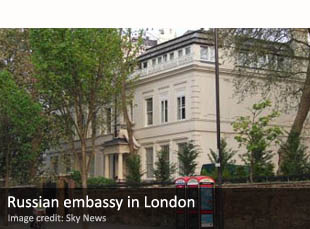
Russian embassy in LondonBy JOSEPH FITSANAKIS | intelNews.org |
The Russian Federation has as many intelligence officers operating in the United Kingdom today as it did during the last decade of the Cold War, according to a British newspaper. The London-based Daily Telegraph cites “senior sources” in alleging that Moscow maintains “around 40 [spies] at any one time” in the UK. Many of them are reportedly based in London, where approximately half the staff at the Russian embassy are believed to be routinely involved in intelligence gathering, says the paper. The Telegraph shared the information with Dr Jonathan Eyal, Director of International Security Studies at the London-based Royal United Services Institute, who told the paper that the numbers of Russian spies in the UK are “similar to if not higher than those just before the end of the Cold War”. Undoubtedly, writes The Telegraph, some of the Russian intelligence officers stationed in Britain are involved in traditional intelligence collection directed at UK government institutions and personnel. But increasing numbers of them are focusing on the growing Russian expatriate community in the UK, including the many oligarchs whose relations with the Kremlin are strained at best. A smaller but significant number of Russian intelligence operatives are believed to conduct commercial and industrial spying aimed at benefiting Russian firms competing against their British counterparts for international contracts, claims the paper. Dr Eyal adds that Russian intelligence agencies have traditionally viewed Britain —a staunch American ally— as a “back door to US intelligence”, thus Washington constitutes yet another target of Russian intelligence activity in the UK. Read more of this post

News you may have missed #709

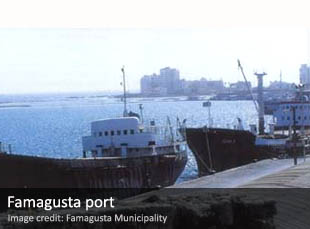
Famagusta portBy IAN ALLEN | intelNews.org |
►►North Korea defector sentenced for assassination plot. The man, only identified by the Seoul Central District Court by his surname, Ahn, was sentenced on Thursday after being found guilty of plotting to kill Park Sang-hak, a leading anti-North Korea activist, last September. When apprehended, Ahn —a former member of the North’s special forces— was carrying a black torch that was actually a gun capable of firing a projectile around 30 feet and a bullet coated with a poisonous chemical. Another weapon that he was carrying was disguised as a fountain pen that could fire a bladed projectile, while a second ballpoint pen concealed a poison-tipped needle.
►►Russian arrested in Cyprus for alleged espionage. Media in the Turkish-controlled part of Cyprus are reporting an alleged “espionage incident” at the port of Famagusta. The incident concerns a crewmember of the Russian cargo ship Natali 1, which is docked there. Police authorities say they arrested the Russian national, identified as Nanec Hikov, after he was caught taking photos of Turkish warships. Photographing or filming in the port area is strictly forbidden by Turkish occupation authorities. The Russian Embassy has been informed and the sailor remains in custody.
►►Mystery deepens over death of UK intel expert in China. Last week, the British Foreign Office confirmed that it had asked China to open a fresh ivestigation into the November 14 death of British businessman and intelligence specialist Neil Heywood . The Foreign Office said other businessmen in Beijing had suggested there may have been foul play. Diplomatic sources suggested that the Foreign Office had acted on information given by Wang Lijun, the former police chief of Chongqing, where Heywood died, to the United States consulate in Chengdu, in February.

News you may have missed #707

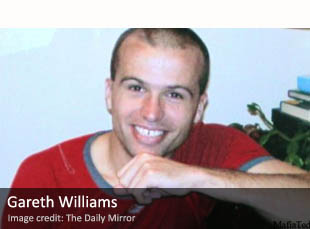
Gareth WilliamsBy IAN ALLEN | intelNews.org |
►►Russian colonel charged with spying for the US. Russia charged a reserve colonel with espionage on Tuesday, for selling what officials said were classified topographical maps to the United States Department of Defense. The officer, Vladimir Lazar, purchased a disk with over 7,000 topographical images of Russian territory from a collector he met on the Internet in 2008, smuggled it into neighboring Belarus and gave it to a Russian citizen working for the United States, the prosecutor general’s office said in a statement. An investigation found that the materials could be used for planning military operations, including missile strikes. Officials did not disclose when Lazar was arrested or give his current whereabouts.
►►FBI denies Russian spy tried to sexually entice US cabinet official. On April 1, British newspaper The Independent quoted C. Frank Figliuzzi, the assistant FBI director for counterintelligence, saying that the recently discovered Russian illegals spy ring, which included Anna Chapman, was “getting close enough to a sitting US cabinet member that we thought we could no longer allow this to continue”. Now the FBI says that Figliuzzi “was misquoted”, and that “there is no allegation or suggestion in the complaint that Anna Chapman or anyone else associated with this investigation attempted to seduce a US Cabinet official”.
►►London police admits ‘errors’ in MI6 officer’s death investigation. A coroner was given a wrong name for a witness in the case of an MI6 officer Gareth Williams, whose body was found in a bag in a London flat in August of 2010. The Metropolitan Police said “administrative errors” led to the coroner being given three different names for Elizabeth Guthrie. She is expected to be questioned about her contact with the MI6 officer in the months before his death. At a pre-inquest hearing last week coroner Dr Fiona Wilcox said “there has been some confusion” over the identity of the witness.

News you may have missed #706

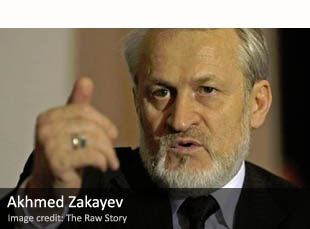
Akhmed ZakayevBy IAN ALLEN | intelNews.org |
►►UK government accuses Chechen of assassination plot. The British government and intelligence services have accused an alleged henchman of Chechen President Ramzan Kadyrov of seeking to assassinate Akhmed Zakayev, a prominent exiled Chechen politician in London, who was granted asylum there in 2003. According to court documents, British government lawyers asking to deport a 45-year-old, Chechen-born, former elite soldier, referred to only as E1. They told judges that E1 was a threat to national security and had been implicated in a 2009 assassination on behalf of Mr Kadyrov in Vienna. Mr Zakayev, a former actor and self-described separatist leader, said in a recent interview that he believed “there are more Russian spies in Britain today than there were during the Cold War”.
►►Israeli ex-soldiers arrested in Colombia on drugs charges. Eight Israelis have been arrested in Colombia on suspicion of drug trafficking, money laundering and exploitation of minors, the country’s chief prosecutor has told local media outlets. The suspects, who were described in the reports as “former military men”, include former Israeli army Lt. Col. Yair Klein, who was convicted by a Colombian court and sentenced in absentia to nearly 11 years in prison for training drug traffickers’ assassins in the late 1980s. US and British investigations determined two decades ago that Klein was also involved in smuggling 400 Galil assault rifles and 100 Uzi sub-machine guns bought from Israeli into Colombia in 1989 when his plans to create a mercenary-ran training camp on the Caribbean island of Antigua unraveled.
►►Lawyer alleges MI6 agent was killed by ‘secret services’. A coroner has been told that Gareth Williams, an MI6 spy found dead inside a locked duffle bag in his London apartment could have been killed by someone who specialized in “the dark arts of the secret services”. The allegation was made by Anthony O’Toole, who represented the Williams family at an interim hearing ahead of the full inquest into Gareth Williams’ death. O’Toole said that there was “a high probability that there was a third party present in the flat” at the time. He added that “the unknown third party was a member of some agency specializing in the dark arts of the secret services, and perhaps evidence was removed from the scene post mortem by an expert in those dark arts”.

News you may have missed #704: Caught-red-handed edition

Zbigniew SiemiątkowskiBy IAN ALLEN | intelNews.org |
►►Would be CIA spy uses Tweeter to attack CIA. Lynnae Williams was on track to become a CIA agent. Today, the 35-year-old aspiring journalist and would-be CIA spy uses Twitter to expose what she feels are corrupt and unethical practices by the mysterious organization. In 2009, Williams spent more than three months training to become a CIA spy. She says she was sent to the CIA’s “psychological prison”, a public mental-health hospital in Virginia. There, she says, doctors pushed drugs for schizophrenia and manic depression in a white-walled environment with inedible food. Eventually, the CIA stopped paying her and suspended her security clearance. She’s now looking to sue the agency for wrongful termination. And in the meantime, she’s using BlogSpot and her @wlynnae account to post tweets.
►►US ambassador says Russia is spying on him. US Ambassador to Russia Michael McFaul suggested yesterday that the Russian government is spying on him. “Everywhere I go [Russian television station] NTV is there”, he tweeted. “Wonder who gives them my calendar? They wouldn’t tell me. Wonder what the laws are here for such things? I respect [the] press’ right to go anywhere and ask any question. But do they have a right to read my email and listen to my phone?”. McFaul also posted on his Twitter feed yesterday: “When I asked these ‘reporters’ how they knew my schedule, I got no answer”.
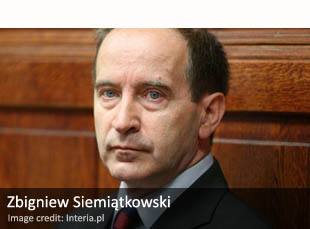
►►Poland ex-spy boss charged over CIA prison. Zbigniew Siemiątkowski, the former head of Poland’s foreign intelligence service faces charges of illegal detention and use of corporal punishment at an alleged secret CIA ‘black site’ used to house high-ranking terrorism suspects. Investigators allege the spy boss exceeded his powers and breached international law through the use of “unlawful deprivation of liberty” and “corporal punishment” against prisoners of war.

News you may have missed #698

Cecilia LooströmBy IAN ALLEN | intelNews.org |
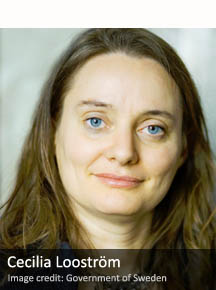
►►Swedish official sent top-secret intel briefing via Hotmail. A high-ranking official at Sweden’s Ministry of Defense sent notes on highly confidential arms trade negotiations with a Saudi Arabian official through a Hotmail email address. The four-page-long email, which details a secret conversation with a Saudi General, was sent in 2008 from assistant Under-Secretary for Defense Cecilia Looström, according to a Swedish newspaper.
►►Russian diplomat won’t deny espionage activity in Canada. Russia’s ambassador to Canada, Georgiy Mamedov, has refused to deny that his country carries out spy activity in Canada. He told a Canadian television reporter that “I am neither denying nor confirming [Russian espionage in Canada]. I would be a fool […] if I would confirm that we are doing as much”. He said Russia conducts intelligence activities in other countries —although he didn’t specify which— but refused to give any details on what activities, if any, are conducted within Canada.
►►New Taiwan spy case raises concerns. A Taiwanese air force captain surnamed Chiang is believed to have passed intelligence to China. Reportedly, Chiang’s uncle, who operates a business in China, helped pass on the information allegedly obtained by Chiang, which is said to have included classified material on Taiwan’s early-warning radar system as well as E-2T/E-2K Hawkeye surveillance aircraft. The case has rocked the Taiwanese military, as it comes a little more than a year after a high-profile spy for China was caught and is now serving a life sentence.

Breaking News: Russian troops land in Syria

Russian naval base in Tartus, SyriaBy JOSEPH FITSANAKIS| intelNews.org |

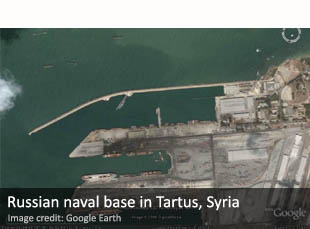
The Russian service of the BBC has confirmed that a contingent of Russian “antiterrorist special forces” have landed in Syria. The news first appeared on Monday on the websites of several Russian news agencies, including Interfax and RIA Novosti. The latter claimed that the Russian troops, who were said to be Marines, arrived in the Syrian port of Tartus onboard the tanker Iman, which is part of Russia’s Black Sea fleet. According to the report, the tanker is strictly tasked with performing “logistical tasks [including] the replenishment of fuel and food [and] providing maritime anti-piracy security in the Gulf of Aden”. According to a statement from the Russian Black Sea Command, the special forces had landed in Syria in order to “demonstrate the Russian presence in the turbulent region and possibly evacuate Russian citizens”. Shortly after the initial reports of the troops’ landing in Tartus, ABC News spoke to an anonymous source at the United Nations Security Council, who described the news as “a bomb” that was “certain to have serious repercussions” on the situation in Syria. Soon afterwards, however, an unnamed source in the Syrian Ministry of National Defense told the SANA news agency in Damascus that the reports of Russian troops landing in Syria were “completely devoid of truth” and said the presence of the Russian tanker was connected with an anti-piracy mission. The Russian Ministry of Defense also told reporters that the Iman is not a warship and that its crew is composed entirely of civilian personnel. But a separate report on the Russian-language service of the BBC claims that, although the vessel is indeed hydrographic —designed to collect undersea topographic data— it contains sophisticated dual-use hardware that can easily be used for intelligence collection. The BBC report repeats earlier claims by the Interfax news agency that the Russian ship arrived in Tartus with a large contingent of marine brigade and airborne assault battalion members. It also quotes sources from the Syrian opposition, which allege that Russian troops were indeed seen disembarking in Taurus. Read more of this post

State prosecutors probe alleged plot to kill Greek prime minister

Kostas KaramanlisBy JOSEPH FITSANAKIS| intelNews.org |
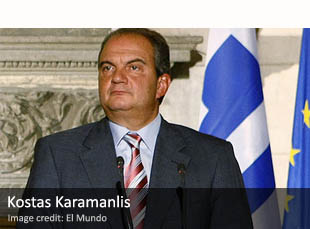
Government prosecutors in Athens have opened a criminal investigation into an alleged plot to kill the Prime Minister of Greece in 2008, which was reportedly uncovered by Russian intelligence. In June of last year, Greek media claimed that the country’s National Intelligence Service (EYP) had been briefed by the Russian Federal Security Service (FSB) about the assassination plot. According to the Russian briefing, the plot, codenamed PYTHIA, was hatched by the intelligence agency of “a country allied to Greece”, and was targeted at conservative Prime Minister Kostas Karamanlis, who governed Greece from 2004 to 2009. The Russians claimed that Operation PYTHIA was purportedly aimed at preventing Athens from signing on to a series of energy deals with Moscow, including the ambitious South Stream pipeline project, which aims to connect Russian gas fields to the European energy market. On Wednesday, court official Nikos Ornerakis told a press conference in Athens that, based on preliminary investigations, Greek prosecutors considered the case credible and had filed a felony count of conspiracy “against persons unknown”. The Associated Press, which reported on the story, spoke to former Ambassador Ioannis Corantis, who headed Greece’s EYP intelligence service during the discovery of the alleged assassination plot. Ambassador Corantis confirmed that the EYP had indeed been briefed on Operation PYTHIA “by an official of the [Russian] FSB”, and that the briefing concerned a suspected assassination plot against Prime Minister Karamanlis. Read more of this post

News you may have missed #692

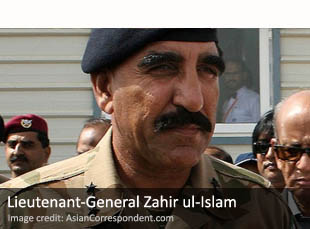
Lieutenant-General Zahir ul-IslamBy IAN ALLEN| intelNews.org |
►►Mole theory over MI6 codebreaker’s death. It is one of Britain’s most baffling spy mysteries. In 2010, the body of expert code breaker Gareth Williams was found locked in a large sports bag in the bathtub of his London flat. There were no obvious signs of how he died or who was responsible —with many claiming a “wall of silence” surrounding his death points to a cover-up at the very heart of the British establishment. And now it has been revealed Gareth may have been betrayed by a British double agent.
►►Pakistan picks new director for spy agency. The prime minister of Pakistan appointed a new general to run the country’s most powerful intelligence agency on Friday, signaling an important change in the military leadership at a pivotal moment in relations with the United States. Lt. Gen. Zahir ul-Islam will take over as the director general of the Inter-Services Intelligence Directorate, or ISI, on March 18, replacing Lt. Gen. Ahmed Shuja Pasha, who has held the post since 2008.
►►Russian diplomat alleges 15,000 foreign fighters in Syria. Addressing a one-day humanitarian forum on Syria at the United Nations in Geneva, Russia’s deputy ambassador Mikhail Lebedev said rebels had recently committed large-scale attacks against Syrian infrastructure, including schools and hospitals. Asked by Reuters how many foreign fighters were believed to be in Syria, he said: “how many got in through illegal routes? The border there is not demarcated, not delimited, so nobody knows. But at least 15,000”.

News you may have missed #690

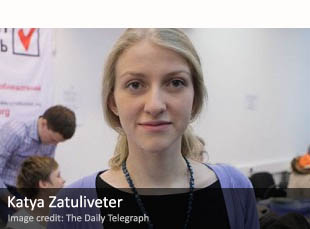
Katya ZatuliveterBy IAN ALLEN| intelNews.org |
►►Interview with Katia Zatuliveter. Just over three months ago Katia Zatuliveter was fighting to clear her name over claims she was a Russian spy who had passed British military secrets to Moscow. Now, in her first newspaper interview since winning her appeal against deportation from the UK, Katia Zatuliveter has told The Daily Telegraph why she does not support Vladimir Putin.
►►US Special Forces in Afghanistan to transfer to CIA. Top US Pentagon officials are considering putting elite special operations troops under CIA control in Afghanistan after 2014. If the plan were adopted, the US and Afghanistan could say there are no more U.S. troops on the ground in the war-torn country because once the SEALs, Rangers and other elite units are assigned to CIA control, even temporarily, they are not considered soldiers.
►►Indian army accused of spying on government officials. The Indian army is accused of using two surveillance vehicles to snoop near the offices and houses of senior Indian Defense Ministry officials. The vehicles with “off the air interceptors” were alleged to be parked in various localities in the New Delhi. Similar equipment is said to be used by the National Technical Research Organisation to listen to conversations without bugging the premises. The Defense Ministry has reportedly ordered a probe by the country’s Intelligence Bureau.

News you may have missed #685

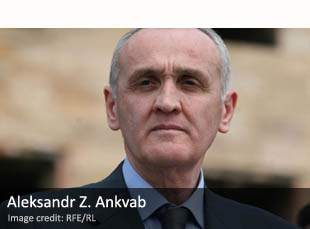
Aleksandr Z. AnkvabBy IAN ALLEN| intelNews.org |
►►Abkhazia President survives assassination attempt. Unidentified assassins tried on Wednesday to kill Aleksandr Z. Ankvab, the president of Abkhazia, a Russian-backed rebel enclave of Georgia. The assailants used automatic rifles, grenade launchers and a powerful roadside bomb in an attack that raised fresh questions about Moscow’s ability to preserve order there.
►►Groups object to CIA declassification charges. Open government advocates are protesting a recently adopted CIA policy that allows the agency to charge up to $72 an hour to review requests to declassify secret records. The effect “will be to price the public out of submitting” requests for “mandatory declassification review,” the American Library Association, Sunlight Foundation and more than 30 other organizations said in a letter Thursday to CIA Director David Petraeus.
►►Analysis: Fallout from Syrian colonel’s abduction in Turkey. The smokescreen surrounding the abduction of Syrian Col. Hussein Harmush, who defected to Turkey in June 2011 before being handed over to the Syrian secret service in September 2011, has begun to clear in recent weeks following a judicial probe. Claims that Turkey’s spy agency, the National Intelligence Organization (MİT), was involved in handing Harmush over to Syria were finally confirmed on February 2 when the Adana Chief Public Prosecutor’s Office issued a written statement saying one MİT agent had been arrested for questioning and further MİT officials had been called to testify as “suspects” in the scandalous repatriation case.

News you may have missed #684

Boris KarpichkovBy IAN ALLEN | intelNews.org |
►►Pakistan sacks health workers who helped CIA locate bin Laden. Seventeen local health workers have been fired in Abbottabad for their part in a CIA scheme to try to confirm the presence of Osama bin Laden in the northern Pakistani town. The low-ranking health department employees were punished for helping Dr Shakil Afridi, who was assigned by the CIA to set up a fake vaccination scheme in Abbottabad, ahead of the US military operation that found and killed the al-Qaida leader there.
►►Estonia arrests couple for spying for Russia. Estonian prosecutors said Aleksei Dressen, who works for Estonia’s security police, and his wife, Viktoria Dressen, were arrested at Tallinn airport as she was boarding a flight to Moscow on February 22. Aleksei Dressen allegedly went to the airport to give his wife a folder that contained classified information. Meanwhile, in neighboring Lithuania, the government has released the names of 238 citizens who were reservists for the KGB during the Cold War.
►►KGB defector talks to British newspaper. Since fleeing to Britain in the late 1990s Boris Karpichkov has preferred to keep a low profile —unlike another, better-known Moscow agent who fled to London, one Alexander Litvinenko. He says he ran audacious disinformation operations against the CIA and broke into and planted bugs in the British embassy in Riga. But in 1995 he grew unhappy with the increasingly corrupt FSB (the KGB’s successor), which, he says, failed to pay him. He spent several months in a Moscow prison before slipping into Britain on one of the false passports he was given as a KGB officer. He hasn’t been back to Russia since.