Austria expels four more Russian diplomats for espionage, sources say

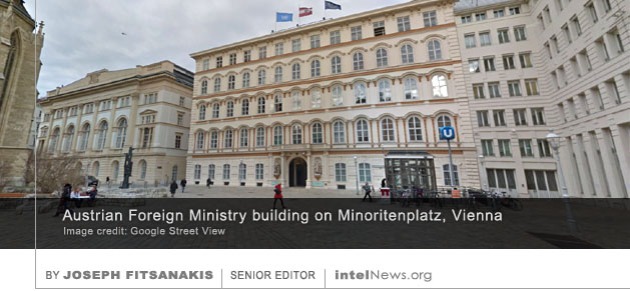
Austria Foreign Affairs MinistryTHE MINISTRY OF FOREIGN Affairs of Austria announced Thursday that it has ordered the expulsions of four Russian diplomats from its territory. It is highly unusual for Austria, which is traditionally reluctant to take sides in international political disputes, to expel Russian diplomats.
According to the ministry, two of the diplomats are stationed at the Embassy of Russia in the Austrian capital, Vienna. The other two diplomats are members of the Permanent Mission of Russia to the United Nations office in the same city. All four have been declared personae non gratae (unwelcome persons) in accordance with Article 9 of the Vienna Convention on Diplomatic Relations. They are being expelled for allegedly “committing actions incompatible with their diplomatic status”.

Although Austrian authorities have refused to provide details about the expulsions, the phrase “actions incompatible with [one’s] diplomatic status” is often used in diplomatic lingo to refer to activities relating to espionage or other clandestine operations. The Reuters news agency cited “officials speaking on condition of anonymity” in claiming the four Russian diplomats were indeed involved in espionage. However, the Russian embassy in Vienna declined media requests for comment.

The Russian diplomats have been ordered to leave Austria by the end of Wednesday, February 8. The last time Austria expelled Russian diplomats was 2020, prompting Russia to expel an Austrian diplomat in response. Since that time, and including this week’s expulsions, Austria has expelled a total of nine Russian spies from its territory. According to media reports, over 140 diplomats are currently based at the Embassy of Russia in Vienna.

Author: Joseph Fitsanakis | Date: 03 February 2023 | Permalink

Germany arrests alleged collaborator of intelligence officer who spied for Russia

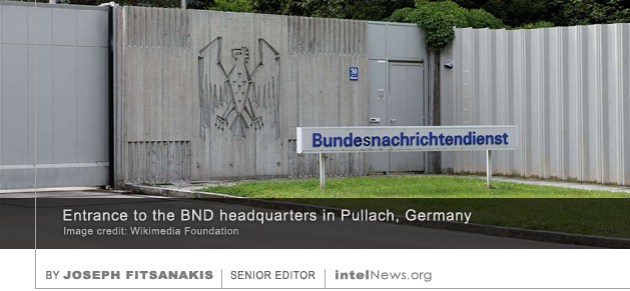
BND GermanyTHE GERMAN GOVERNMENT ANNOUNCED last week the arrest of a man believed to have acted as a courier between Russian intelligence and another German spy, who was arrested in December and is awaiting trial. The new arrest is bound to attract even more international attention to this unfolding case of espionage, whose urgency has reportedly alarmed Western intelligence services.
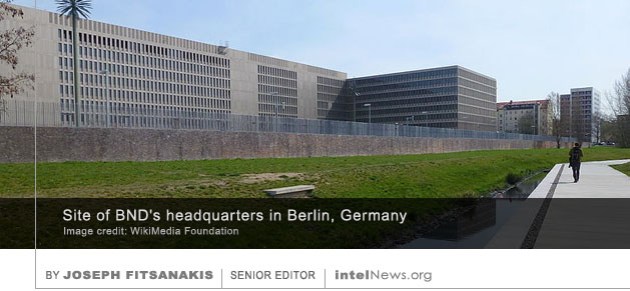
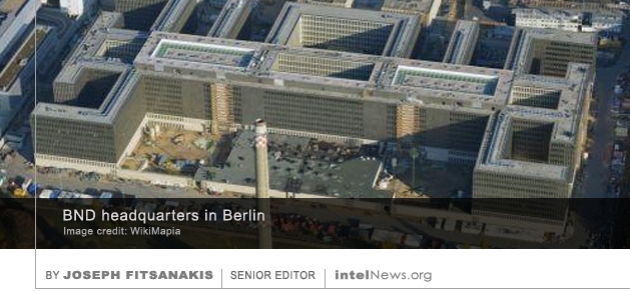
On December 22, German authorities arrested a senior German intelligence official, who has been charged with treason and remains in custody. The official, named only as “Carsten L.”, in compliance with Germany’s strict privacy laws, worked in the signals intelligence (SIGINT) wing of the Federal Intelligence Service (BND). As Germany’s foreign intelligence agency, the BND is tasked with collecting intelligence on foreign targets, a mission that makes it broadly equivalent to the United States Central Intelligence Agency (CIA).

As intelNews reported earlier this month, Carsten L.’s seniority within the BND allowed him to access several compartmentalized areas of information, including secrets shared with the BND by other Western intelligence agencies. For this reason, it was reported that some Western intelligence officials were “most incensed” with this case. One source reported that British intelligence leaders were “considering whether they will continue to provide the BND with their most sensitive information”.

Now a second arrest has come to arguably add to the gravity of this case. On January 22, the German Federal Criminal Police Office announced the arrest of “Arthur E.”, who was captured at the Munich International Airport. Apparently, Arthur E. is a German citizen who has German-Russian background. According to the press release issued by the German government, Arthur E. was arrested through a collaborative effort between the BND and the United States Federal Bureau of Investigation (FBI). Apparently, the FBI became suspicious when Arthur E. attempted to frantically leave the United States after Carsten L.’s arrest. Read more of this post

Separate investigations focus on ex-FBI special agent’s Russian and Albanian ties

FBIAUTHORITIES IN THE UNITED States have launched at least two separate investigations into the business dealings of Charles McGonigal, the highest-ranking former employee of the Federal Bureau of Investigation (FBI) to face criminal charges in recent times. Much has been written about McGonigal’s alleged connection with Kremlin-linked Russian billionaire Oleg Deripaska. On the contrary, relatively little is known about his purported dealings with Albanian and other Balkan officials and middlemen, some of whom appear to have intelligence links. There is also the question of whether the criminal charges against McGonigal and his alleged co-conspirator, former Soviet and Russian diplomat Sergey Shestakov, are strictly financial in nature, or may eventually expand to include an espionage angle.
McGonigal, 54, retired in 2018 after a 22-year career at the FBI, during which he served as head of counterintelligence in New York, home of one of the Bureau’s largest field offices. He was arrested on Saturday in New York, upon returning to the United States from a trip to Sri Lanka. He faces charges of conspiring with Shestakov, a naturalized US citizen, to provide under-the-table services to Deripaska. The latter is among a long list of Kremlin-linked oligarchs, who have been subject to strict US sanctions since 2018. In working for Deripaska, McGonigal is accused in the state of New York of violating US government sanctions and engaging in money laundering, among five other charges.

However, the former FBI special agent is facing nine more charges in Washington, which involve illicit activities that he allegedly engaged in while still serving in the FBI. This is in contrast with his business relationship with Deripaska, which he is believed to have entered after his retirement from the Bureau. According to the indictment, McGonigal received in excess of $225,000 from an Albanian-born American businessman, who is also a former employee of Albanian intelligence. In return, McGonigal allegedly helped promote the businessman’s interests in the US and abroad. Throughout that time, McGonigal reportedly failed to disclose his alleged financial links with the businessman, as is required of all FBI employees. Read more of this post

Russian diplomat offered to fund British Conservative Party, complaint alleges

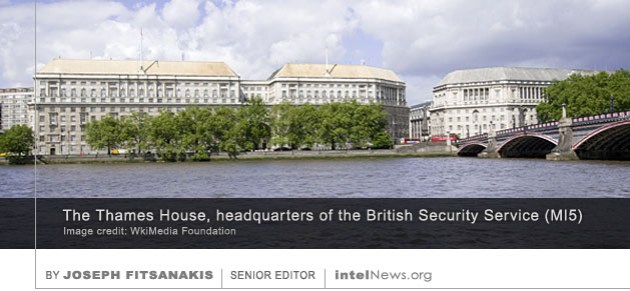
MI5 Security ServiceA DIPLOMAT STATIONED AT the embassy of the Russian Federation in London proposed to channel Russian funds to the British Conservative Party, according to a formal complaint made by a Conservative Party activist. The information was reportedly disregarded by Britain’s counterintelligence agency, the Security Service (MI5), and has now been filed as a complaint with the Investigatory Powers Tribunal (IPT). Established in 2000, the IPT is an independent judicial body that handles public complaints about the British intelligence services.
The source of the complaint is Sergei Cristo, a former reporter with the World Service of the British Broadcasting Corporation (BBC) and longtime Conservative Party organizer. Cristo’s allegations center on the Conservative Friends of Russia (CFoR), a high-profile lobby group founded by prominent Conservative Party parliamentarians, including Nigel Evans, Andrew Rosindell, John Whittingdale and Robert Buckland. The CFoR’s first honorary president was Sir Malcolm Rifkind, who served as Foreign Secretary under Conservative Prime Minister John Major.

The founding of CFoR in 2012 was celebrated at a lavish outdoor reception hosted by the Russian Ambassador to London, Alexander Yakovenko. It was followed by an all-expenses-paid trip to Russia, organized by the Russian embassy, for a group of select CFR members. Among them were prominent Euroskeptics, who later became leading figures in the campaign that resulted in Britain’s exit from the European Union. A few years later, the group was renamed the Westminster Russia Forum (WRF). In 2022, following the Russian invasion of Ukraine, the WRF disbanded altogether.

During the CFoR’s early days, In December 2010, nearly two years before CFoR was founded, Cristo says he was approached by Sergey Nalobin, first secretary of the Russian embassy’s political section. According to Cristo, Nalobin was interested in Cristo’s role as a volunteer in the finance department of the Conservative Campaign Headquarters (CCHQ). Known also as the Conservative Central Office, the CCHQ operates as the head office of the British Conservative Party. Cristo claims that Nalobin told him of his intention to introduce CCHQ officials to “Russian companies who would donate money to the Conservative party” —a proposition that was illegal under British law. Read more of this post

Colombian intelligence spied on Russian and Cuban diplomats, reports claim

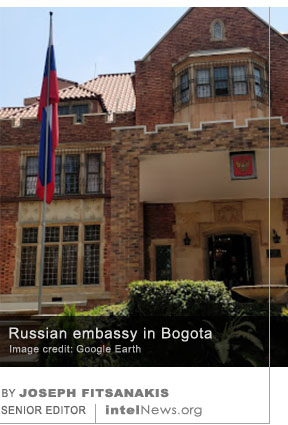
Russian embassy in Bogota, ColombiaCOLOMBIAN INTELLIGENCE CARRIED OUT surveillance operations against Russian and Cuban diplomats stationed in Colombia between 2016 and 2019, according to media reports that surfaced earlier this week. The reports claim that Colombia’s National Intelligence Directorate (DNI) was behind the operations, which involved physical, as well as electronic, surveillance.
One of the operations was reportedly codenamed CATEDRA, and targeted three senior staff members of the Russian embassy in the Colombian capital Bogota. In addition to the diplomats themselves, DNI agents allegedly spied on the diplomats’ spouses and their children. In some cases, DNI agents disguised themselves as “street vendors” in order to spy on the homes of the diplomats. The agency also planted electronic devices in hotels around Colombia —notably in the resort town of Melgar in central Colombia, where over a dozen staff members of the Russian embassy holidayed in 2017.

Allegedly, Operation CATEDRA also involved the interception of communications of at least two Russian diplomats. These were identified as Denis Viktorovich Khromov, who served as the second secretary at the Russian embassy in Bogota, as well as Aleksandr Nikolayevich Belousov, who in late 2020 was declared persona non grata and expelled by the Colombian government on charges of espionage. Colombian media said at the time that Belousov had been outed as an intelligence officer, following a two-year DNI operation codenamed ENIGMA.

The DNI also spied on at least 10 Cuban diplomats and other members of the embassy of Cuba in Bogota, according to the same reports. The operation, codenamed MATIAS, investigated alleged “Cuban interference” in Colombia, and took place while the Cuban government was hosting peace talks between the Colombian government of then-president Juan Manuel Santos and leaders of the country’s largest militant groups, the Revolutionary Armed Forces of Colombia (FARC) and the National Liberation Army (ELN).

According to the reports, the DNI recruited a Cuban embassy worker, instructing her to “install [surveillance] devices and extract information from the building where control targets [were] located”. This eventually enabled the DNI to gain “access to security cameras and rooms throughout the building” of the Cuban embassy, the reports claim. Operations MATIAS and CATEDRA were reportedly concluded in 2019.

Author: Joseph Fitsanakis | Date: 18 January 2023 | Permalink

CIA helped Ukraine foil two Russian plots on Zelenskyy’s life, new book claims

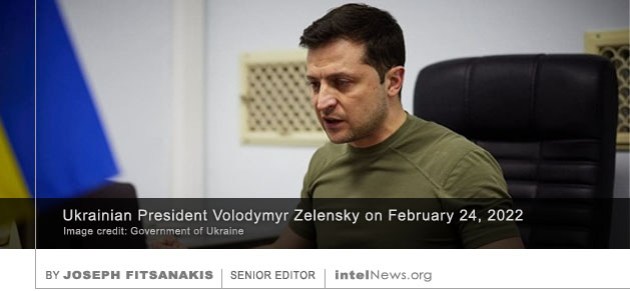
Volodymyr ZelenskyINFORMATION PROVIDED BY THE United States Central Intelligence Agency helped Kyiv foil two Russian plots against the life of Ukraine’s President, Volodymyr Zelenskyy, in the crucial early stages of the Russo-Ukrainian war, according to a new book. The claim is made in The Fight of His Life – Inside Joe Biden’s White House (Scribner) by Chris Whipple, the longtime investigative writer behind several books on American intelligence —most recently The Spymasters How the CIA Directors Shape History and the Future (2021, also by Scribner). Whipple’s latest book is scheduled for release today.
Throughout late 2021 and early 2022, the government of President Zelenskyy repeatedly dismissed American warnings, which came as early as November 2021, that Moscow was preparing to launch an unprovoked military invasion of Ukraine. Zelenskyy himself urged Washington to temper its public warnings about a possible war, because they were creating an atmosphere of panic in Ukrainian business circles. In his public statements, the Ukrainian leader insisted that Kyiv had a long history of facing —and staying calm in the face of— Russian threats against his country.

All that changed in January of 2022, just weeks before Russia launched its invasion of Ukraine. According to Whipple, Zelenskyy received a secret visit by CIA director William Burns. The two men met in Zelenskyy’s office in Kyiv, where Burns told the Ukrainian leader that he had been authorized by United States President Joe Biden to share with him “precise details of […] Russian pots”. According to Whipple, these plots were not only against Ukraine, but were aimed at Zelenskyy himself. This information, Whipple claims, “immediately got Zelenskyy’s attention; he was taken aback, sobered by this news”. Whipple suggests that the information Burns shared with Zelenskyy was specific enough to surprise and alarm the Ukrainian president. According to Whipple, the CIA’s information about the Kremlin’s assassination plots was “so detailed, that it would help Zelenskyy’s security forces thwart two separate […] attempts on his life” by Russian Special Forces.

The author further claims that the CIA also shared with Ukraine a precise “blueprint of [Russian President Vladimir] Putin’s invasion plan”. The intelligence given to Ukraine by the CIA included the Kremlin’s plans to attack the Antonov International Airport (also known as Hostomel Airport) northwest of Kyiv. The intelligence contributed substantially to Ukraine’s victory in the Battle of Antonov Airport, which took place on February 24 and 25. Ukrainian forces were successful in repelling a Russian air assault on the airport, thus keeping the airstrip under Ukrainian control during the crucial opening stages of the war. That success is often credited with preventing Russian forces from using the Antonov Airport as a strategically important staging location from which to entering and sack Kyiv in February of 2022.

Author: Joseph Fitsanakis | Date: 17 January 2023 | Permalink

Western intelligence agencies alarmed by arrest of Russian spy in Germany

BND GermanyWESTERN INTELLIGENCE AGENCIES HAVE been alarmed by the arrest of a senior German intelligence official, who has been charged with spying for Russia, according to an expert in German intelligence. On December 22, the German government announced the arrest of a senior officer in the signals intelligence (SIGINT) wing of the Federal Intelligence Service (BND). As Germany’s foreign intelligence agency, the BND is tasked with collecting intelligence on foreign targets, a mission that makes it broadly equivalent to the United States Central Intelligence Agency.
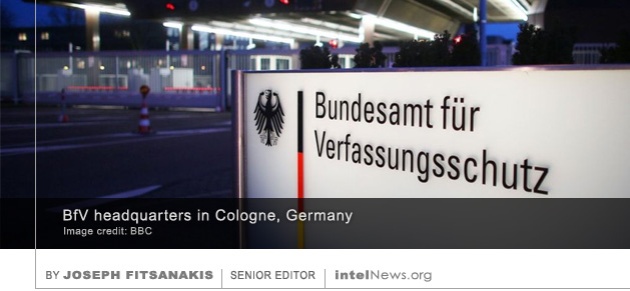
The official, named only as “Carsten L.”, in compliance with Germany’s strict privacy laws, has been charged with “high treason” and is currently awaiting trial. When announcing his arrest, German officials said they were tipped by a foreign intelligence agency that detected a document from the BND’s internal files in the possession of a Russian spy agency. The identity of the intelligence agency that provided the tip is among several important details about the case that remain unknown for the time being. Among them are the duration of Carsten L.’s alleged espionage for Moscow, as well as his motives.

Some reports suggest that Carsten L. may have been blackmailed by the Russians as a result of a kompromat. It has also been reported that the alleged spy was found to be in possession of material relating to the Alternative for Germany (AfD), a far-right party known for its friendly stance toward the Kremlin. But such reports are largely speculative. No information about Carsten L.’s motives has been released by the office of the German prosecutor. It is clear, however, that at least some of the information that Carsten L. gave the Russian government relates to the ongoing war in Ukraine.

Additionally, the suspect’s seniority within the BND allowed him to access several compartmentalized areas of information, including secrets shared with the BND by other Western intelligence agencies. These almost certainly include the United States Central Intelligence Agency and National Security Agency, as well as a host of British intelligence agencies. On Monday, British newspaper The Telegraph quoted German intelligence expert, Erich Schmidt-Eenboom, who said that British intelligence officials were “most incensed” with the case. He added that British intelligence leaders were “considering whether they will continue to provide the BND with their most sensitive information”. The German expert concluded that the Carsten L. case may have “deep implications for future cooperation between the BND and other Western spy agencies”.

Author: Joseph Fitsanakis | Date: 10 January 2023 | Permalink

Germany is prepared for projected increase in Russian spy activity, says BfV director

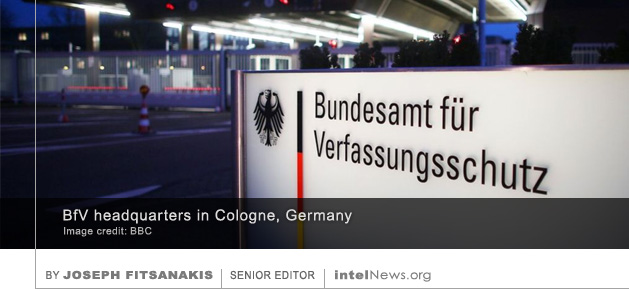
BfV GermanyRUSSIAN FOREIGN INTELLIGENCE ACTIVITIES in Germany have increased exponentially since the start of the war in Ukraine, and are projected to further-increase in 2023, according to the head of German counterintelligence. In an interview on Monday with the German Press Agency (DPA), Thomas Haldenwang, director of the Federal Office for the Protection of the Constitution (BfV), also warned that China, Iran and Turkey are intensifying their intelligence activities inside Germany.
In April of last year, the German government expelled 40 members of the diplomatic staff from Russia’s embassy in Berlin. It is believed that the majority of those expelled were intelligence officers operating under official cover. According to Haldenwang, the Kremlin has taken steps to compensate for the loss of its intelligence presence in Germany. This is largely being done in two ways: first, with “traveling operatives”, i.e. intelligence officers who are stationed in third countries and travel to Germany to carry out specific operations; second, with non-official-cover officers, i.e. intelligence operatives who have no overt relations with the Russian government. Moreover, Russia has been mounting its cyber-attacks and foreign-influence operations against Germany, according to Haldenwang.

In response to the Kremlin’s actions, German counterintelligence is making “great efforts to prevent […] people who may be connected to Russian intelligence from entering Germany” with valid visas, Haldenwang said. The BfV has hired more personnel and has “organizationally redesigned” its defensive and offensive counterintelligence capabilities, as well as cyber-defense expertise. As a result, the BfV “feels sufficiently prepared for the current challenges”, Haldenwang said. He also disputed allegations in Western media that the BfV had been relatively passive in countering Russian intelligence operations prior to the war in Ukraine.

Finally, Haldenwang cautioned that Iran and Turkey maintained a significant intelligence presence in Germany, and that the stormy domestic politics in those countries would “have an impact in Germany”, as “internal political conflicts [in those countries] are fought here”. This also applies to China, whose intelligence collection targets are no longer primarily economic, but are moving into the political domain. According to Haldenwang, a “pan-European solution is needed to reverse this trend, at least for the European [Union] states”.

Author: Joseph Fitsanakis | Date: 03 January 2023 | Permalink

Mystery surrounds arrest of alleged Russian spy couple in Sweden

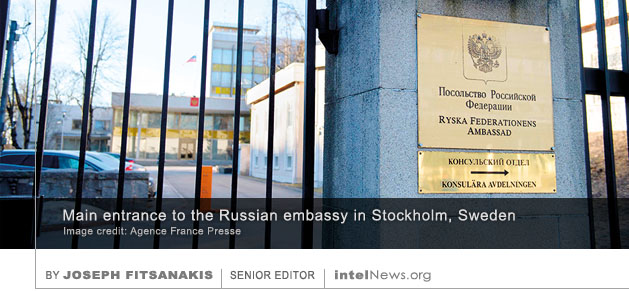
Russian Embassy SwedenNUMEROUS UNANSWERED QUESTIONS SURROUND the arrest of a Russian married couple in Sweden, on charges of espionage. The arrest took place in dramatic fashion in the early hours of Tuesday, November 22. According to the Swedish media, members of the security forces descended via tactical ropes from two Blackhawk helicopters, as startled residents in the typically quiet Stockholm suburb of Nacka looked on.
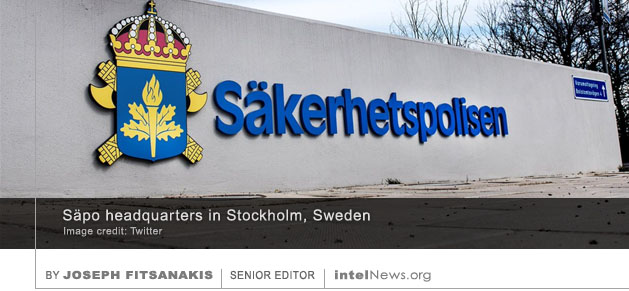
The raid was apparently conducted based on information received by Sweden’s counterintelligence agency, the Swedish Security Service (SAPO), coupled with tips from the United States Federal Bureau of Investigation (FBI). The targets of the operation were Sergei Nikolaevich Skvortsov and Elena Mikhailovna Kulkova, a Russian-born married couple, who moved to Sweden from Russia in 1999. According to their identity documents, Skvortsov was born in Perm on July 28, 1963, and Kulkova in Moscow on May 22, 1964.

Both Skvortsov and Kulkova are university-educated, with a background in science, mathematics and cybernetics. Upon settling in Sweden, they worked in the import-export technology sector. By 2013 they had become Swedish citizens and had a son. Kulkova also had a daughter from a previous marriage. The Russian investigative source The Insider reports that Kulkova’s daughter’s boyfriend worked for Swedish military intelligence.

Swedish authorities allege that the two suspects migrated to Stockholm on orders of the Main Directorate of the Russian Armed Forces General Staff, known as GRU. The GRU allegedly did not activate them until after they had acquired Swedish citizenship. According to the court indictment, Skvortsov and Kulkova began to actively spy against the United States in 2013 and against Sweden in 2014.

Some sources claim that the case of the Russian couple may be connected to the recent arrests of Payam and Peyman Kia, two Iranian-born Swedish brothers, who were arrested in 2021 and are now facing charges of engaging in espionage on behalf of the GRU. Payam Kia worked for SAPO and had access to classified information from a host of Swedish government agencies. SAPO reportedly launched the probe in 2017, following suspicions that it harbored a spy in its personnel ranks.

Author: Joseph Fitsanakis | Date: 05 December 2022 | Research credit: A.G. | Permalink

Sweden charges two brothers with spying for Russian military intelligence

Säpo swedenAUTHORITIES IN SWEDEN HAVE charged two brothers, one of whom worked in a highly secretive Swedish intelligence unit, with spying for Russian military intelligence for a decade, according to news reports. The charges resulted from a six-year investigation led by the Swedish Security Service (SAPO), which is the country’s counterintelligence agency. SAPO reportedly launched the probe in 2017, based on suspicions that it harbored a spy in its personnel ranks.
The two brothers have been named by Swedish media as Payam Kia, 35, and Peyman Kia, 42. They were reportedly born in Iran and became Swedish citizens in 1994. It is also reported that Payam Kia worked for SAPO and had access to classified information from a host of Swedish government agencies. SAPO accuses the two men of having worked “jointly” to pass information to the Main Directorate of the Russian Armed Forces’ General Staff, known broadly as GRU.

According to Swedish authorities, the two men began spying for Russia in September of 2011 and continued until the fall of 2021. Peyman Kia allegedly acted as a courier, passing information and payments between his brother and his Russian handlers. Per Lindqvist, chief prosecutor for Sweden’s National Security Unit, told the Associated Press news agency that the Kia brothers case involved “extremely sensitive topics”, but did not elaborate. Some reports claim that Payam Kia had access to the files of Swedish spies operating abroad.

The younger of the two brothers was reportedly arrested in September of 2021. His older brother was arrested in November of the same year. They face up to life imprisonment. They both deny the charges against them.

Author: Joseph Fitsanakis | Date: 14 November 2022 | Permalink

Germany ‘erroneously’ granted entry visa to known Russian intelligence officer

BfV GermanyLAST SUMMER, GERMAN EMBASSY staff in Russia issued an entry visa to a Russian national, despite warnings by at least two European security agencies that he was a known intelligence officer, according to a report. The incident has fueled persistent allegations that Berlin’s counterintelligence posture against Russia is ineffective.
According to the German newsmagazine Der Spiegel, it was in July of this year when the German Embassy in Moscow received an application for an entry visa to Germany by a Russian national. The application included an official invitation issued to the visa applicant by the Russian Consulate General in the eastern German city of Leipzig. However, the application prompted a strong counterintelligence warning by the Federal Office for the Protection of the Constitution (BfV), Germany’s domestic security agency. According to Spiegel, at least one more European intelligence agency warned against allowing the Russian national to travel to Western Europe. The reason for the warnings was that the visa applicant was known to operate internationally under diplomatic cover, on behalf of a Russian intelligence agency.

The counterintelligence warnings were examined and caused the visa application to be rejected. However, a month later the applicant submitted a second application for an entry visa to Germany. Remarkably, the German embassy approved the second application, after “no longer recogni[zing] any suspicion of espionage” in association with this case. One possible reason, according to Spiegel, was that Russian officials had applied pressure on the German government, asking for a review of the application. When the issue was raised in Berlin, an internal review was launched. It reportedly found that the espionage warnings had been “overlooked due to an [administrative] error”. The visa was thus promptly canceled. Der Spiegel claims it is “possible that the accidental visa issue was related to [Berlin] wanting to show good will to the Russian side”.

What does that mean? Back in April, Germany expelled 40 suspected Russian intelligence officers, in response to Russian war crimes in Ukraine. As expected, Russia promptly expelled an equal number of German diplomats in a tit-for-tat move. The Russian Foreign Ministry made sure to point out that it would respond in a similar fashion, should Berlin choose to expel more Russian diplomats in the future. Such an eventuality, according to Spiegel, would run the risk of decimating Germany’s diplomatic presence in Russia, given that its size is considerably smaller than that of Russia’s in Germany. Germany, in other words, is not prepared to risk a complete breakdown in its diplomatic relations with Russia.

Some claim, however, that the current arrangement between the two countries is being exploited by the Kremlin. Der Spiegel notes that, according to intelligence experts, no European country hosts more Russian intelligence officers under diplomatic cover than Germany. It is estimated that at least 100 bogus diplomats are currently stationed in Russia’s diplomatic facilities throughout Germany.

Author: Joseph Fitsanakis | Date: 10 October 2022 | Permalink

New paper sheds light on Russian and Chinese influence in Italy

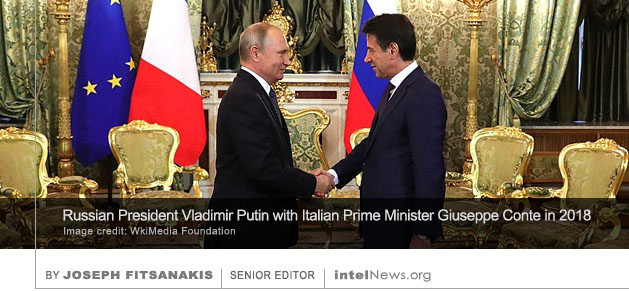
Russia Italy Putin ConteA NEW PAPER, PUBLISHED by the United Kingdom’s Royal United Services Institute (RUSI) for Defence and Security Studies, sheds light the complex relationship between Italy and the West’s two principal adversaries, Russia and China. Italy is a major global economic power. It is a prominent member of the Group of Seven (G7), which collectively account for more than 50 percent of global net wealth. It is also a member of the North Atlantic Treaty Organization (NATO) and the European Union (EU).
Despite —or perhaps because of— its central place in the Western alliance, Italy has long been a leading advocate for cooperation and dialogue between the West and Russia. In 2019, it became the first G7 member and the first major European Union power to sign a Memorandum of Understanding with China on Beijing’s Belt and Road Initiative. Additionally, the Italian private sector has been far more hesitant than those of other Western countries to abandon Russia following its invasion of Ukraine, with only a single Italian company having completely exited the Russian market since February of this year.

According to two Italian researchers, RUSI Senior Associate Fellow Raffaello Pantucci, and Eleonora Tafuro Ambrosetti, of the Italian Institute for International Political Studies (ISPI), Italy’s cooperative attitude toward China and Russia has led some to accuse Rome of being a “Trojan horse in Europe”. But in their research paper published by RUSI earlier this week, Pantucci and Ambrosetti argue that the reality is far more complex, especially in the case of Italian-Russian relations. They point out that Italy has, in fact, been a leading voice in favor of the imposition of harsh sanctions on Moscow in response to its invasion of Ukraine. Currently the Italian state is actively seeking to disengage its energy-import sector from Russia.

Strategy of Engagement

The research paper, entitled “Russian and Chinese Influence in Italy”, argues that Italy’s tendency to “hedge between its close transatlantic ties and its longstanding connections with Moscow and Beijing” is not new. In fact it reflects a longstanding Italian strategy, which tends to remain relatively constant and “does not change according to the political color of the government in charge” in Rome. As a result, Italy’s relations with Russia and China “show a roughly consistent pattern” in the post-Cold War era, as Rome is largely oriented “toward engagement” with both Moscow and Beijing. Read more of this post

Hawaii couple alleged to be Russian spies using fake names held without bail

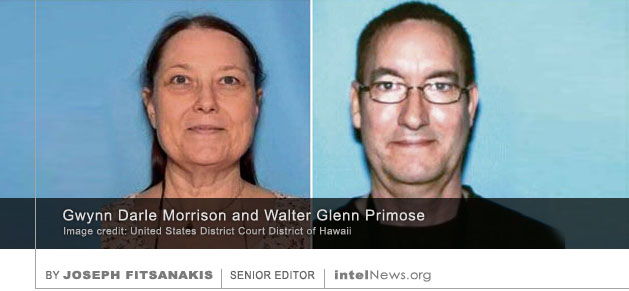
Walter Glenn Primose, Gwynn Darle MorrisonA FEDERAL JUDGE IN HAWAII has denied bail to a married American couple, who are believed to have assumed the identities of dead children in order to lead double lives for over 20 years, according to prosecutors. Local media reports allege that Bobby Edward Fort and Julie Lyn Montague, who were arrested by the Federal Bureau of Investigation on July 22 on the island of Oahu, are Russian spies, and that their names are parts of their assumed identities.

According to the reports, the real names of the couple are Walter Glenn Primose, 66, and Gwynn Darle Morrison, 54. Government prosecutors allege that, in the late 1980s, the couple hurriedly left their home in the state of Texas, telling family members that they were entering the US Federal Witness Protection Program. They are also said to have given some family members permission to take whatever they wanted from their home, before it was foreclosed.

The government claims that the couple then assumed the identities of two infants, Bobby Edward Fort and Julie Lyn Montague, who had died in Texas in 1967 and 1968 respectively. They then used these infants’ birth certificates to obtain social security cards, drivers’ licenses, and even US passports. In 1994, while living in Hawaii under his assumed name, Primrose enlisted in the US Coast Guard, which is the maritime security and law enforcement service branch of the US military. He served there for over 20 years as an avionic electrical technician with a secret level clearance. Following his retirement in 2016, Primrose is said to have worked as a private contractor for the US Department of Defense until his arrest on July 22 of this year. Read more of this post

Analysis: The West should not trust Ukrainian spy agencies. Neither should Ukrainians

Volodymyr ZelenskyON SUNDAY, JULY 17, the Ukrainian administration of President Volodymyr Zelenskiy announced the most extensive shake-up of the nation’s security leadership since the Russian military invasion. Two key members of Zelenskiy’s inner circle, Ukraine’s Prosecutor General Iryna Venediktova and domestic security chief Ivan Bakanov, were summarily fired. Venediktova was the public face of Kyiv’s war crimes campaign, which was launched in March in response to the Russian invasion. Bakanov, a childhood friend of Zelenskiy, had headed the Ukrainian Security Service (SBU) since 2019.

In a subsequent video statement, Zelenskiy said he fired the two officials after he was informed that at least 60 employees of the SBU and the Prosecutor General’s office had defected to the Russians in eastern Ukraine. Last week, in an article for SpyTalk, Kremlin watcher Olga Lautman said Bakanov’s dismissal had been expected for a few days. Regardless, the move has shaken Western observers, and has given rise to legitimate questions about the susceptibility of Ukraine’s security and intelligence services to Russian meddling. Should the Western alliance, and Western intelligence agencies in particular, trust their Ukrainian counterparts? The answer is, invariably, no. In fact, even the Ukrainians themselves are not in a position to trust their own intelligence services.

From the KGB to the SBU

On September 20, 1991, just one week after Ukraine secured its independence from the Soviet Union, the SBU was founded in place of the Soviet KGB. Initially, the new agency handled both internal security and external intelligence functions. But in 2005, the SBU’s Department of Intelligence became a stand-alone agency under the title Foreign Intelligence Service (SZR). Since then, the SZR has functioned as the institutional equivalent of the United States’ Central Intelligence Agency (CIA), while the SBU has performed domestic security functions that resemble those of the Federal Bureau of Investigation (FBI).

As is the case with the entirety of Ukraine’s state sector, the two agencies are endemically bloated. Intelligence observers report that the SBU’s 30,000 employees make it far larger in size than its British counterpart, the Security Service (MI5). Meanwhile, according to the latest information, the SZR has “double the number of personnel than the Canadian Security Intelligence Service (CSIS) and is larger than Britain’s [Secret Intelligence Service, or] MI6”. By all accounts, even today, more than 30 years after the dissolution of the USSR, the two agencies continue to resemble Soviet-style bureaucracies in terms of size, sluggishness, and corruption. Read more of this post

Newspaper discloses names of Russian alleged spies expelled from Belgium

Russian embassy in BelgiumA BRUSSELS-BASED NEWSPAPER has publicized the names and backgrounds of nearly two dozen Russian diplomats, who were recently expelled by the Belgian government on suspicion of espionage. A total of 21 Russian diplomats were expelled from Belgium in April, in co-ordination with dozens of European governments. The move was part of a broader European wave of diplomatic expulsions of Russian diplomatic personnel, in response to the Russian invasion of Ukraine.

Like other governments in Europe, the Belgians carried out the expulsions of Russian diplomats in secret, and employed a “no comment” policy in response to media requests. Such an approach is customary when it comes to diplomatic expulsions. It allows the government ordering the expulsions to expect a similar level of discretion if and when its own diplomats are expelled in a possible tit-for-tat move by an adversary. It is therefore highly unusual for information concerning expelled diplomatic personnel to be made public. And yet that is precisely what happened earlier this week, when the EUObserver, an English language newspaper based in Brussels, published information about the names and backgrounds [PDF] of the 21 expelled Russian diplomats. The paper said the information was leaked by a source, but did not elaborate.

According to the newspaper, all 21 expelled diplomats were men. It further alleged that 10 of them were intelligence personnel of the Main Directorate of the Russian Armed Forces’ General Staff. A further nine diplomats worked for the Foreign Intelligence Service (SVR, Russia’s equivalent to the United States Central Intelligence Agency), while two were employees of the external service of the Russian Federal Security Service (FSB). Most were in their 40s, though at least one was in his early 60s and one was in his late 20s. The EUObserver said that some of the information about the alleged spies was unearthed by The Dossier Center, a British-based open-source information outlet, which is similar to Bellingcat. The Dossier Center is funded by the oligarch Mikhail Khodorkovsky, who is a critic of the Russian President Vladimir Putin. Read more of this post