Newspaper discloses names of Russian alleged spies expelled from Belgium
July 14, 2022 1 Comment
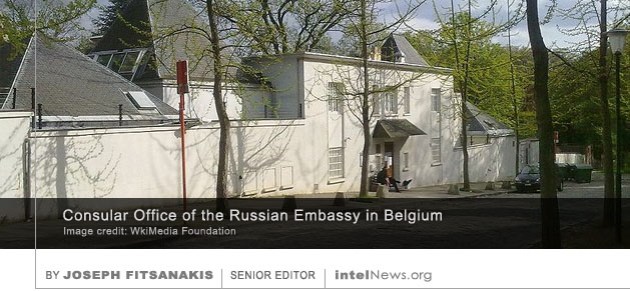 A BRUSSELS-BASED NEWSPAPER has publicized the names and backgrounds of nearly two dozen Russian diplomats, who were recently expelled by the Belgian government on suspicion of espionage. A total of 21 Russian diplomats were expelled from Belgium in April, in co-ordination with dozens of European governments. The move was part of a broader European wave of diplomatic expulsions of Russian diplomatic personnel, in response to the Russian invasion of Ukraine.
Like other governments in Europe, the Belgians carried out the expulsions of Russian diplomats in secret, and employed a “no comment” policy in response to media requests. Such an approach is customary when it comes to diplomatic expulsions. It allows the government ordering the expulsions to expect a similar level of discretion if and when its own  diplomats are expelled in a possible tit-for-tat move by an adversary. It is therefore highly unusual for information concerning expelled diplomatic personnel to be made public. And yet that is precisely what happened earlier this week, when the EUObserver, an English language newspaper based in Brussels, published information about the names and backgrounds [PDF] of the 21 expelled Russian diplomats. The paper said the information was leaked by a source, but did not elaborate.
According to the newspaper, all 21 expelled diplomats were men. It further alleged that 10 of them were intelligence personnel of the Main Directorate of the Russian Armed Forces’ General Staff. A further nine diplomats worked for the Foreign Intelligence Service (SVR, Russia’s equivalent to the United States Central Intelligence Agency), while two were employees of the external service of the Russian Federal Security Service (FSB). Most were in their 40s, though at least one was in his early 60s and one was in his late 20s. The  EUObserver said that some of the information about the alleged spies was unearthed by The Dossier Center, a British-based open-source information outlet, which is similar to Bellingcat. The Dossier Center is funded by the oligarch Mikhail Khodorkovsky, who is a critic of the Russian President Vladimir Putin. Read more of this post
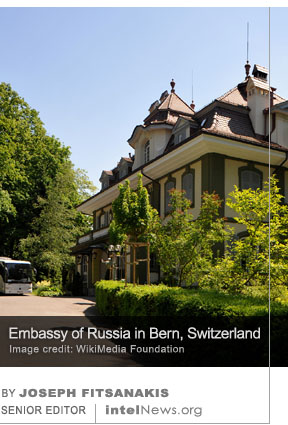 SINCE LATE FEBRUARY, WHEN Russian troops invaded Ukraine, over 500 Russian diplomats have been expelled from Western countries. Even former Russian allies have contributed to the growing list of expulsions —most recently Bulgaria, which
  IN THE OPENING STAGES of the Russian invasion of Ukraine, there was a widespread
  related legislation” with Western standards, as well as aligning them with NATO standards, so that Ukrainian cyber-warfare units can make use of advanced technologies and systems. Could it be, therefore, that Ukraine has improved its cyber-security posture enough to be able to defend itself against relentless Russian cyber-attacks?
 RUSSIANS ARE AWARE OF the phrase “there is no such thing as a former chekist”. The term “chekist” dates from the Bolshevik-era All-Russian Extraordinary Commission (VChK, pronounced “cheka”), which was formed in 1917 as the first Soviet-era state security agency. By the 1940s, intelligence posts had come to be seen as life-long relationships between chekists and the Soviet government, which continued even after one’s retirement. In
  with reference to three Russian intelligence agencies, all of which trace their origins to the Soviet-era Cheka —namely the Foreign Intelligence Service (SVR), the Federal Security Service (FSB), and the Federal Protective Service (FSO).
 RUSSIAN STATE COMPANIES, BUSINESSES and individuals are being targeted in an unprecedented wave of attacks by digital assailants, according to observers, who say they are surprised by its ferocity. Since February of this year, hackers have accessed the personal financial data of pro-Kremlin oligarchs, stolen millions of internal emails stored on Russian government severs, and defaced high-profile websites across the nation. The Washington Post, which
  THE RUSSIAN FEDERATION HAS reportedly ordered 175,000 new diplomatic passports to be printed, prompting speculation about their possible use at a time when Western sanctions are affecting Russia’s governing elite. Diplomatic passports are travel documents that are issued to accredited diplomats and government officials, such as foreign ministry envoys and others. Pursuant to the Vienna Convention of Diplomatic Relations, holders of diplomatic passports enjoy diplomatic immunity and are typically subjected to very limited inspections by security personnel when crossing international borders.
 RUSSIAN DEEP-COVER SPY Mikhail Vasenkov, who was caught by authorities in the United States in 2010, and was later part of a multi-person spy-swap between Washington and Moscow, has reportedly died. Vasenkov was an officer for the Soviet-era Committee for State Security (KGB), under which he constructed his non-official cover identity. In 1976, he
 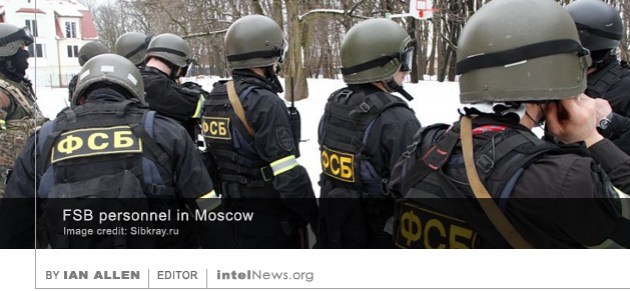 More than 150 officers have been purged form the ranks of Russia’s Federal Security Service (FSB), as President Vladimir Putin is placing blame on his intelligence agencies for the setbacks experienced during the invasion of Ukraine. This assessment was communicated to the London-based Times newspaper by British intelligence sources, who added that many of those purged have been dismissed from the service, while others remain under house arrest. A few —among them senior FSB officials— are in prison. The FSB is tasked with domestic security and counterintelligence operations, which were carried out by the KGB during the Cold War.
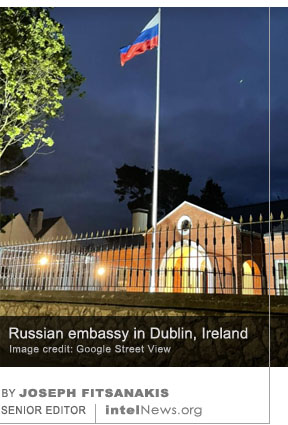 FOUR RUSSIAN DIPLOMATS, WHO Ireland claims are undercover intelligence officers, met with Irish paramilitaries as part of a wider plan to “stoke political unrest” in Britain and Ireland, according to a new report. In a press conference held in Dublin last week, Irish Taoiseach (Prime Minister) Micheál Martin
 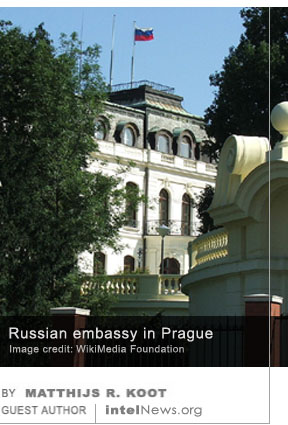 A WEEK AFTER POLAND
 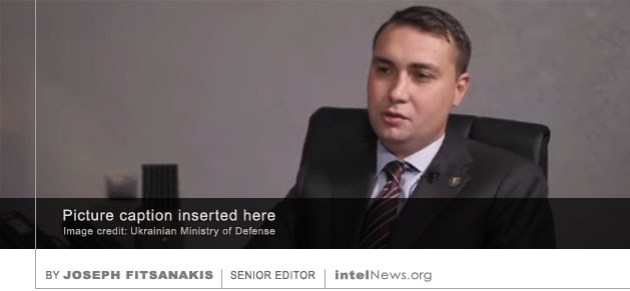 UKRAINE’S MILITARY INTELLIGENCE AGENCY has published a list that contains the names, addresses and passport numbers of 600 Russians, who it alleges are employees of the Russian Federal Security Service (FSB). The FSB is Russia’s domestic security and counterintelligence agency, but its personnel also operate in former Soviet republics, including Ukraine. It has been
 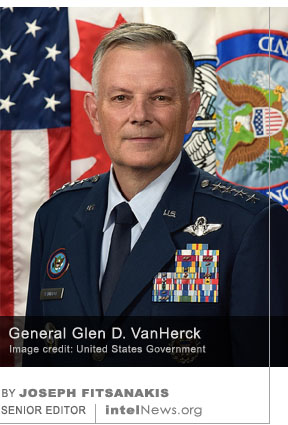 THE PRESIDENT OF MEXICO has stated that his country is “sovereign” in response to comments, made by a senior United States military official, that Mexico hosts more Russian intelligence personnel than any other country in the world. These
 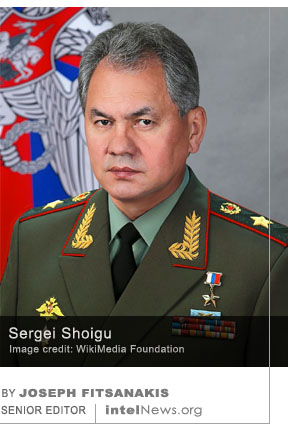 RUSSIA’S MINISTER OF DEFENSE, Sergei Shoigu, who has been one of President Vladimir Putin’s closest confidantes for nearly two decades, has not been seen in public for nearly two weeks, prompting speculation that he may be under arrest. Shoigu, 66, was appointed Minister of Defense in 2012. Since then, he has been arguably the most media-friendly member of the Putin administration, and has formed a close alliance between the Russian military and pro-government media outlets.






 intelNews.org
Analysis: The West should not trust Ukrainian spy agencies. Neither should Ukrainians
July 28, 2022 by Joseph Fitsanakis 2 Comments
In a subsequent video statement, Zelenskiy said he fired the two officials after he was informed that at least 60 employees of the SBU and the Prosecutor General’s office had defected to the Russians in eastern Ukraine. Last week, in an article for SpyTalk, Kremlin watcher Olga Lautman said Bakanov’s dismissal had been expected for a few days. Regardless, the move has shaken Western observers, and has given rise to legitimate questions about the susceptibility of Ukraine’s security and intelligence services to Russian meddling. Should the Western alliance, and Western intelligence agencies in particular, trust their Ukrainian counterparts? The answer is, invariably, no. In fact, even the Ukrainians themselves are not in a position to trust their own intelligence services.
From the KGB to the SBU
On September 20, 1991, just one week after Ukraine secured its independence from the Soviet Union, the SBU was founded in place of the Soviet KGB. Initially, the new agency handled both internal security and external intelligence functions. But in 2005, the SBU’s Department of Intelligence became a stand-alone agency under the title Foreign Intelligence Service (SZR). Since then, the SZR has functioned as the institutional equivalent of the United States’ Central Intelligence Agency (CIA), while the SBU has performed domestic security functions that resemble those of the Federal Bureau of Investigation (FBI).
As is the case with the entirety of Ukraine’s state sector, the two agencies are endemically bloated. Intelligence observers report that the SBU’s 30,000 employees make it far larger in size than its British counterpart, the Security Service (MI5). Meanwhile, according to the latest information, the SZR has “double the number of personnel than the Canadian Security Intelligence Service (CSIS) and is larger than Britain’s [Secret Intelligence Service, or] MI6”. By all accounts, even today, more than 30 years after the dissolution of the USSR, the two agencies continue to resemble Soviet-style bureaucracies in terms of size, sluggishness, and corruption. Read more of this post
Filed under Expert news and commentary on intelligence, espionage, spies and spying Tagged with 2022 Russian invasion of Ukraine, Analysis, counterintelligence, Foreign Intelligence Service (Ukraine), Joseph Fitsanakis, Newstex, Russia, Ukraine, Ukrainian Security Service