News you may have missed #627

Omar Suleiman

Omar Suleiman

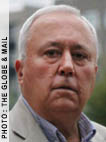
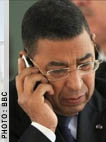
►►Egyptian ex-spy chief appointed security adviser to Saudi Crown Prince. Saudi Arabia’s Crown Prince Nayef bin Abdul Aziz has appointed Egypt’s former Director of General Intelligence, Omar Suleiman, as his security advisor. From 1986 until his forced resignation in spring this year, Suleiman had been the main conduit between Washington, Tel Aviv and the government of Hosni Mubarak.
►►Russia’s spy chief in rare interview. It is very rare that the men that run Russia’s powerful intelligence services give detailed interviews. But that’s just what Alexander Shlyakhturov, the head of military intelligence service, known as the GRU, did earlier this month with the Russian newspaper Rossiyskaya Gazeta.
►►US intel agencies brace for budget cuts. After seeing spending double over a decade, US intelligence agencies are bracing for about $25 billion in budget cuts over the next 10 years. “We’re going to have less capability in 10 years than we have today”, said Director of National Intelligence James Clapper, who sits atop the 16 departments, agencies and offices that comprise the US intelligence community and spend a combined $80 billion a year.

News you may have missed #612 (analysis edition)

Cevat Ones

Cevat Ones

►►What is a senior CIA clandestine officer doing at NYPD? Three months ago, one of the CIA’s most experienced clandestine operatives started work inside the New York Police Department. His title is special assistant to the deputy commissioner of intelligence. On that much, everyone agrees. Exactly what he’s doing there, however, is much less clear.
►►Iranian plot shows even super spies have bad days. The alleged Iranian plot to assassinate the Saudi ambassador to the United States may have revealed the biggest secret of all –intelligence agencies mess up and do not always live up to the James Bond ideal.
►►Former spy makes plea for peace in Turkey. Cevat Ones, former deputy chief of MİT, Turkey’s leading spy agency, speaks candidly to Canada’s Globe & Mail newspaper about the state of Turkey’s internal security and foreign policy.

News you may have missed #590

Baroness Manningham-Buller

Manningham-Buller

►►Saudi ex-spy chief on US war on terrorism. The longtime head of Saudi Arabia’s foreign intelligence service, Prince Turki al-Faisal, who resigned shortly before the Sept. 11, 2001, hijackings, says that the US should be using Osama bin Laden’s demise as a pretext for declaring victory in the war in Afghanistan and withdrawing US troops. Not by the end of 2014, which is the current timetable, but immediately.
►►Ex-MI5 chief says ‘9/11 made us stronger’. Britain’s foremost domestic intelligence agency, MI5, felt almost swamped after 9/11, inundated with leads to plots and fragmentary intelligence, according to Lady Eliza Manningham-Buller, former head of Britain’s Security Service. But in the decade since the attacks, its budget doubled and its headcount has almost tripled, while intelligence operations have increased fivefold, she said.
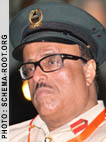
►►Captured Libyan spy chief defiant. Defiant and angry, captured Libyan spy chief Bouzaid Dorda, who directed the country’s External Security Organization (ESO), denied any wrongdoing when he was presented to reporters on Sunday by former insurgents who tracked him down in the capital Tripoli. He is believed to have taken on his job in 2009 when his predecessor Moussa Koussa, who defected earlier this year, became foreign minister.

Saudis paid Pakistan to shelter bin Laden, claims security expert

R.J. Hillhouse

R.J. Hillhouse

By JOSEPH FITSANAKIS | intelNews.org |
An American academic and security expert with deep links in the intelligence community claims that, at the time of his killing by US Special Forces, Osama bin Laden was living under house arrest, following a secret arrangement between Pakistan and Saudi Arabia. Former professor and Fulbright Fellow R.J. Hillhouse has cited “sources in the intelligence community” in alleging that the CIA discovered bin Laden’s whereabouts through a Pakistani intelligence officer. The officer, who was privy to the alleged deal between the Saudis and the Pakistanis, appeared as ‘a walk-in’, a term meaning someone who voluntarily contacts an intelligence outpost, usually by simply walking into an embassy or consulate and asking to speak to the intelligence officer on duty. According to Hillhouse, the ‘walk-in’ provided CIA officers with detailed information as to the al-Qaeda leader’s whereabouts, in exchange for US citizenship for him and his family and the $25 million reward offered by the US Department of State for bin Laden’s head. According to Hillhouse’s story, which was picked up yesterday by The Daily Telegraph and The Sydney Morning Herald, the Pakistani informant also told the Americans that elements in the government of Saudi Arabia had entered into a complex monetary agreement with senior members of Pakistan’s main spy agency, the Inter-Services Intelligence directorate (ISI). Under the arrangement, the ISI was paid to keep bin Laden under house arrest in Abbottabad —a military community in Pakistan, selected precisely in order to keep bin Laden under constant and close supervision. Read more of this post

News you may have missed #510 (bin Laden edition)

  • Europe says US slow in sharing bin Laden intel. European security officials have lots of questions about the intelligence being analyzed from Osama bin Laden’s compound in Pakistan, but so far they have seen very little of it, they say.
  • Did Pakistani official lead US to bin Laden? There are rumors in Pakistan that the CIA was tipped off about the location of bin Laden’s hideout from a walk-in informant at the US Embassy in Islamabad.
  • CIA interrogates bin Laden’s wives. US intelligence officials have interrogated the three wives of Osama Bin Laden who were left behind in his compound after Navy Seals shot dead the al-Qaeda leader. The women, Amal Ahmed Abdel-Fatah al-Sada, of Yemen, and Khairiah Sabar and Siham Sabar, both of Saudi Arabia, were apparently “hostile” and uncooperative during the interrogations

Analysis: Myths and Questions on bin Laden’s Assassination

Osama bin Laden

Osama bin Laden

By J. FITSANAKIS and I. ALLEN | intelNews.org |
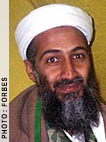
The assassination of al-Qaeda leader, Osama bin Laden, has helped dispel several myths about him and the organization he founded in 1988 in Soviet-occupied Afghanistan. Among them is the idea that the Saudi-born militant was leading a primitive existence in some remote hillside in Waziristan, sheltered by mountainous tribes that were supposedly loyal to him. Nothing could be further from the truth. Despite his reputation as a hardened mujahedeen, bin Laden had chosen to spend his days in the unmatched comfort of a sprawling luxury compound located only an hour’s drive from Pakistan’s capital, Islamabad. The compound is located in a relatively wealthy suburb of the city of Abbottabad, which is also home to the Kakul Military Academy, Pakistan’s elite army training school. More importantly, the descriptions of bin Laden’s luxurious hideout fly in the face of the predominant view of al-Qaeda as an organization that knows how to blend in with its surroundings. Not only did the compound stand out, but, according to one American official, it was “eight times larger than the other homes in the town”. It featured 3,000 feet of living space, to house bin Laden, his four wives, and several advisors and guards. It appears to have been custom-built to bin Laden’s specifications in 2005, which would explain the existence of numerous built-in security features, including at least two heavily fortified security gates, seven-foot-high perimeter walls, and even solid blast-proof enclosures on all balconies. Continue reading →

News you may have missed #479 (Iran edition)

  • Iran arrests alleged CIA agent. Iran’s intelligence minister, Heidar Moslehi, has told the country’s state TV that authorities arrested an Iranian that he says was working for the CIA, and allegedly set up a network of aides to gather information during anti-government protests last week.
  • Yemen charges family with spying for Iran. Yemeni prosecutors allege that Muhammad al-Hatmi was a paid Iranian agent from 1998 to 2010, and passed money to rebels so they could expand their activities into Saudi Arabia. Al-Hatmi’s wife and son have been charged with aiding him by conveying money and communications.
  • Leaked intelligence report claims Iran intensifies uranium hunt. The Associated Press has published the findings of a leaked intelligence report, from an undisclosed IAEA member-country, which claims that Iranian Foreign Minister Ali Akbar Salehi met secretly last month with senior Zimbabwean mining officials “to resume negotiations […] for the benefit of Iran’s uranium procurement plan”.

Tunisian security officials arrested, killed, amid counter-coup fears

Ali Seriati

Ali Seriati

By JOSEPH FITSANAKIS | intelNews.org |
Several key figures in Tunisia’s crumbling security apparatus have being either apprehended or killed, amid fears that they were planning a countercoup against the country’s new unity government. Most notable among the arrestees is General Ali Seriati, longtime director of deposed Tunisian dictator Zine al-Abidine Ben Ali’s Presidential Security Force. Seriati was arrested on Sunday, reportedly “by citizens as he tried to cross into Libya”. Reports from Tunis suggest that Ben Ali’s Interior Minister, Rafik Belham Kacem, who commanded the country’s’ domestic intelligence apparatus, has also been detained. Meanwhile, the BBC reports that Imed Trabelsi, a politically powerful nephew of the former dictator’s wife, was lynched to death late on Saturday. Seriati and Kacem’s arrests are seen as attempts by the new government to prevent a widely feared coup plot, organized by the remnants of Ben Ali’s security apparatus, aimed at returning him to power. Initial stages of the coup materialized on Saturday, when several gunmen riding in unmarked cars launched a wave of armed attacks against opposition targets in capital Tunis and elsewhere. Political observers in the country appeared to immediately connect the attacks with General Seriati’s Presidential Security Force, said to include some of the former president’s staunchest supporters. Read more of this post

News you may have missed #469

  • Vulture not a Zionist spy after all, declare Saudis. After more than a week of febrile rumor and speculation, the King of Saudi Arabia has declared that a vulture found on the country’s territory, carrying a GPS tracker labeled “Tel Aviv University”, is not part of an Israeli reconnaissance plot.
  • Germany jails two Libyans for spying. Two Libyans have been sentenced in a Berlin court for spying on members of the Libyan opposition living in Europe. ‘Adel Ab.’, an officer for the Libyan intelligence service, was sentenced to two and a half years in prison while his accomplice, ‘Adel Al.’ was sentenced to one year and 10 months.
  • Russian aide accused of spying to remain in UK until October. Britain’s MI5 accuses Katia Zatuliveter, former assistant to Liberal Democrat MP Mike Hancock, of spying for Russia. But she will remain in the UK until next October, when she will be able to challenge her pending deportation at an immigration hearing.

Even more underreported WikiLeaks revelations

WikiLeaks

WikiLeaks

By JOSEPH FITSANAKIS | intelNews.org |
It appears increasingly likely that Sweden will extradite Julian Assange to the United States, where the WikiLeaks founder will face espionage charges. But the WikiLeaks revelations keep coming, although not all of them receive the worldwide media attention that they deserve. Take for instance the disclosure that at least three senior Australian Labour Party (ALP) politicians have operated as “protected sources” (diplomatic parlance for secret informants), providing regular updates on internal ALP politics to US embassy operatives in Canberra. According to internal US diplomatic cables released on Thursday, ALP politicians Bob McMullan, Michael Danby and Mark Arbib, who currently serves as the Australian federal government’s Minister for Sport, regularly held secret meetings with US embassy officials after 2004.  All three deny accusations that they acted as spies for the US. Another underreported WikiLeaks revelation concerns a 2008 proposal by the Saudi government to create an US- and NATO-backed Arab military force to invade Lebanon, seeking to obliterate Shiite paramilitary group Hezbollah, which controls large sections of the country. Read more of this post

Emirates police says US, Israel, use BlackBerry to spy

Dahi Tamim

Dahi Tamim

By IAN ALLEN | intelNews.org |
The alleged use of encrypted BlackBerry communications by adversary intelligence services operating in the United Arab Emirates (UAE) is prompting local authorities to consider a nationwide ban on the popular phone. This was revealed late last week by Dubai Police chief, Lt. General Dahi Khalfan bin Tamim, who repeated a warning by UAE authorities that BlackBerry services in the country will be curtailed on October 11, unless the government is given access to BlackBerry’s encryption code by the manufacturer. Several other countries in the Middle East and beyond have made similar moves, including Lebanon, Syria, Saudi Arabia, India and Indonesia, all of which have cited security reasons for the ban. But Lt. General Tamim’s comments provide the first known connection between a threat to ban BlackBerry and its alleged use by rival intelligence agencies. Read more of this post

News you may have missed #415

  • GCHQ tech arm adopts new personnel evaluation tests. The Communications Electronics Security Group is the information assurance arm of the General Communications Headquarters –Britain’s equivalent of the National Security Agency. CESG has now adopted a new testing method of verifying the competency of its IT security professionals, because apparently there are “not enough security professionals in the public and private sectors to go around”.
  • Swapped Russian insists he was no CIA spy. Of the four jailed Russians the US received from Moscow in exchange for the 11 Russian illegals in July, only one is talking. But Igor Sutyagin, a nuclear proliferation expert, who was convicted of links with a CIA front-company, insists he was no CIA spy. However, if that is so, why was he on Washington’s swap list in the first place?
  • Militants target Yemen spy officials. Two officers in Yemen’s Political Security Organization, Colonel Ali Abdul Kareem al-Ban, and Juman Safian, have been shot dead in recent days. Al-Qaeda militants, who assumed responsibility for the attacks, warned they will be stepping up operations inside neighboring Saudi Arabia.

Bookmark and Share

News you may have missed #392

  • Soviet spy stood ready to poison DC’s water, says Ex-KGB general. A Soviet deep-cover agent, who was in the United States from around 1963 to 1965, had orders to poison Washington DC’s water and to sabotage its power supply if war with the United States became imminent, according to Oleg Kalugin, former chief of KGB operations in North America.
  • Two interesting interviews. George Kenney, of Electric Politics, has aired two interesting interviews, one with Dr. Thomas Fingar, former US Deputy Director of National Intelligence, touching on a variety of issues, and one with Philip Alston, the United Nations Special Rapporteur on extrajudicial killings, who comments on the CIA drone attacks in Afghanistan and Pakistan.
  • Lawyers who won NSA spy case want $2.63 million. Eight lawyers, who managed to prove that Saudi charity al-Haramain was illegally wiretapped by the US National Security Agency (see here for previous intelNews coverage), are demanding millions of dollars in damages from the US government.

Bookmark and Share

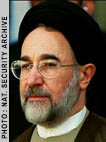
Documents reveal Bill Clinton’s secret contact with Iran

Mohammad Khatami

M. Khatami

By IAN ALLEN | intelNews.org |
Two newly declassified high-level documents reveal a short-lived overture between Washington and Tehran, initiated in 1999 by the Bill Clinton administration. The US President resorted to the secret communication with Iran in an attempt to preempt several hawkish policy planners in his administration. The latter pressed for strong American military retaliation against Iran, in response to the latter’s alleged involvement in the 1996 Khobar Towers bombing. The bombing, which targeted a US Air Force base in the suburbs of Dhahran, Saudi Arabia, killed 19 and wounded 400 American servicemen and women. By 1999, US intelligence agencies were convinced that the bombing had been financed and orchestrated by members of the Islamic Revolutionary Guards Corps (IRGC), an independent administrative and paramilitary institution tasked with –among other things– exporting the Iranian Revolution abroad. But the Clinton Administration decided to contact the then newly elected reformist Iranian President Mohammad Khatami, and sternly inform him of the evidence against the IRGC. Read more of this post

News you may have missed #361

  • FBI linguist jailed in leak probe. The Obama administration’s crackdown on government whistleblowers continued on Tuesday with the jailing of Shamai Leibowitz, a former FBI contract linguist who disclosed classified information to the media.
  • Yemen sentences alleged Iranian spies to death. Two members of an alleged Iranian spy cell operating in Yemen were sentenced to death on Tuesday. The Yemeni government accuses Iran of arming the Shiite so-called Sa’adah insurgency along the Yemeni-Saudi border.
  • New Turkish intel chief has big plans. Among the changes that Hakan Fidan, new chief of Turkey’s National Intelligence Organization (MİT), intends to spearhead is “starting a separate electronic intelligence organization like the American NSA or the British GCHQ”.

Bookmark and Share