No evidence Islamic State had foreknowledge of Sri Lanka bombings, says official
June 24, 2019 Leave a comment
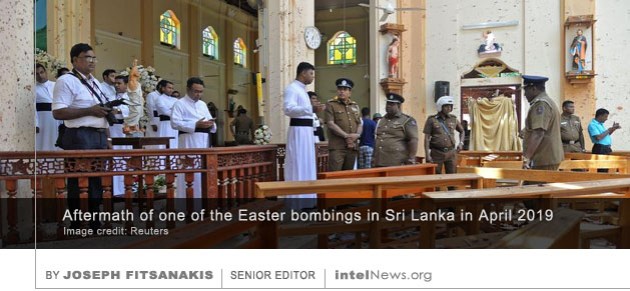 It is not at all clear that the Islamic State and its leader, Abu Bakr al-Baghdadi, who claimed responsibility of the Sri Lanka bombings in April, had foreknowledge of the attacks, according to a top official. The militant Sunni group claimed it was behind the nine suicide blasts that targeted Catholic churches and five-star hotels in Sri Lanka’s western and eastern coastal regions on April 21. The near-simultaneous bombings killed 258 people and injured over 500. They are believed to constitute the bloodiest terrorist attack in the country’s history. Interestingly, many questioned the authenticity of the Islamic State’s claim of responsibility, which came a full two days following the deadly blasts. The group typically issues statements immediately following attacks by its followers around the world. The 48-hour delay in the case of the Sri Lanka bombings, therefore, was deemed “uncharacteristic” by some experts.
Now The Hindu, India’s most-circulated English-language daily, has claimed that the Islamic State probably became aware of the Sri Lanka attacks after they happened. The Islamic State’s news agency, Amaq, issued a statement of responsibility, accompanied by a video showing the suicide bombers pledging allegiance to al-Baghdadi. But The Hindu has quoted “a senior official […] familiar with the probe” into the attacks, who claims that the militant group was contacted by its followers in Sri Lanka only after the attacks made international news headlines. A local Salafi jihadist communicated with the Islamic State on behalf of the National Thowheeth Jama’ath (NTJ), the local group that carried out the bombings. The Islamic State then secured the video of the suicide bombers “through a third party”, said the senior official. Sri Lankan Salafi jihadists eventually convinced the militant group to issue a statement endorsing the attacks in order to “honor those who sacrificed their lives” for the Islamic State’s cause, said the source. It follows, said the official, that the local suicide bombers “were all sympathizers of the Islamic State. But it remains unclear how they maintained links with the Islamic State, if in fact they did”, he added.
The deadly attacks continue to dominate the headlines in Sri Lanka, despite the passage of more than two months since they occurred. Three separate investigations have been launched by the government —one by former Supreme Court judges appointed by the president; one by the Sri Lankan parliament; and one by the country’s police and security services. None of these probes have uncovered evidence that the NTJ militants were in contact with the Islamic State before they launched their wave of suicide attacks on April 21, said The Hindu.
► Author: Joseph Fitsanakis | Date: 24 June 2019 | Permalink
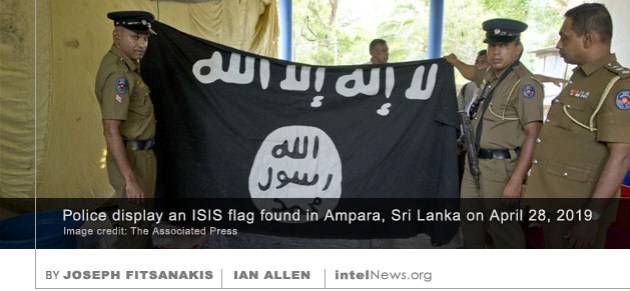 The April 21 suicide attacks in Sri Lanka, which were claimed by the Islamic State, may indicate that the militant group is moving east in search of fertile recruiting ground, according to some observers. In
 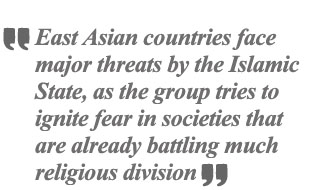 ranks. It follows that Sri Lanka is one of several East Asian countries that face major threats by the group, as the latter tries “to ignite creating fear in societies already battling so much division”, says Ash Gallagher, an American war correspondent based in East Asia. Writing for the British newspaper The Independent, Gallagher notes that not only is the Islamic State already established in Afghanistan (where it has “swallowed whole units of Taliban fighters”,
 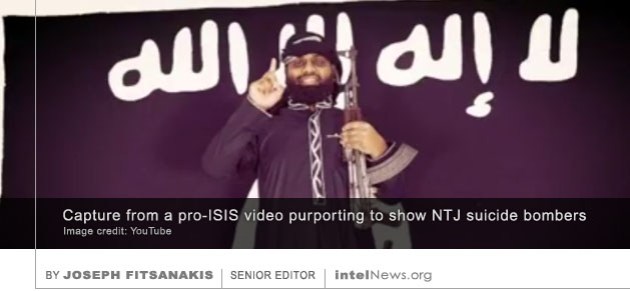 A video posted online by supporters of the Sunni militant group Islamic State appears to show the suicide bombers who carried out Sunday’s bloody attacks in Sri Lanka posing alongside Islamic State flags. Three Catholic churches and three five-star hotels were targeted on Easter Sunday by a total of nine separate blasts, which killed nearly 260 people and injured over 500. The near-simultaneous attacks struck locations in Sri Lanka’s western and eastern coasts and are believed to constitute the bloodiest terrorist attack in the country’s history.








 intelNews.org
Switzerland claims embassy worker was abducted by Sri Lankan security officers
December 4, 2019 by Joseph Fitsanakis Leave a comment
The men eventually forced the Swiss embassy employee, who is a Sri Lankan national, to unlock her personal cell phone. According to Swiss government officials, they appeared to be looking for information about a senior Sri Lankan police detective who recently fled to Switzerland with his family and was granted political asylum. Some Sri Lankan media identified the man as Nishantha Silva, a police detective who until recently headed the Sri Lankan Criminal Intelligence Division’s Organized Crime Investigation Unit.
Silva is one of hundreds of members of Sri Lanka’s public sector who have fled abroad following the election of President Gotabaya Rajapaksa last month. The Rajapaksa family is one of the most powerful in the country, and has a long history of influencing Sri Lankan politics. Hours after assuming power, the ultra-nationalist Rajapaksa pledged to “hunt down” the leadership of the police and security services who investigated his family after 2015, when the Rajapaksas were ousted from the government. Hundreds of police and security officers have since been arrested or summarily fired.
On Tuesday, a Swiss Foreign Ministry spokesman told The New York Times that the Swiss government had verified the details of the abduction of its embassy worker. The spokesman added that the employee was forced to disclose “embassy-related information” after she was “threatened at length” by the men. The latter released her after warning her that she would be killed if she spoke to anyone about her ordeal.
On Monday, a spokesman for President Rajapaksa told reporters in Colombo that the Sri Lankan government questioned the accuracy of the Swiss embassy worker’s account of her abduction. Later, however, the Sri Lankan government announced that it had launched an investigation into the allegations. It now appears that the Sri Lankan government is preventing the embassy worker from leaving the country while the investigation into her claims is underway.
► Author: Joseph Fitsanakis | Date: 04 December 2019 | Permalink
Filed under Expert news and commentary on intelligence, espionage, spies and spying Tagged with abductions, diplomatic security, Gotabaya Rajapaksa, News, Sri Lanka, Swiss embassy in Sri Lanka, Switzerland