Indian government tells telecoms to avoid buying Chinese hardware

Huawei logo

Huawei logo

By IAN ALLEN | intelNews.org |
The Indian government has asked the country’s telecommunications companies to “refrain from buying Chinese telecommunications equipment”, because they may be used by Beijing to spy on India. The request was reportedly delivered to Indian telecommunications industry representatives by officials from India’s Department of Telecommunications, in a closed-door meeting earlier this week. Indian media report that the Department’s request has no legal backing, but is simply a call for Indian telecommunications providers to “self-regulate”. But the government is said to be working on official guidelines to restrict the domestic use of telecommunications hardware and software originating from countries considered “unfriendly” to India, including Pakistan, China and Egypt. Some industry observers have expressed fears that the pending restrictions will severely hinder the growth of India’s rapidly rising telecommunications sector. Read more of this post

Was woman convicted of hi-tech exports to Iraq victim of CIA plot?

Dawn Hanna

Dawn Hanna

By IAN ALLEN | intelNews.org |
The case of a Detroit woman convicted of exporting mobile communications equipment to the Saddam Hussein regime took an unexpected turn this week, after the man who mediated in the equipment transfer said he was acting on behalf of the CIA. A Detroit jury convicted Dawn Hanna last March for exporting the hi-tech equipment to Iraq, in violation of a US and UN-imposed embargo against the Saddam Hussein regime. The jury was apparently not convinced by Hanna’s claim that the purchaser of the equipment, who mediated in the transfer, had told her that the intended user of the hardware was the government of Turkey. But the case turned more complex this week, after Emad al-Yawer, a Jordanian businessman who mediated in the transfer, gave an interview to a Detroit TV station, in which he claimed he was working for the CIA when he facilitated the mobile equipment transfer. He told the station that the CIA intended to use the hi-tech equipment to track Saddam Hussein’s movements, in order to “send a smart bomb and blow him into smithereens”. Hanna’s parents point to this new, unexpected turn of events, and are requesting that the case be reopened. But the judge has so far refused to grant a new trial.


Bookmark and Share

News you may have missed #0116

  • Australia blocks Chinese mining investment on security grounds. The Australian government has for the second time this year vetoed a multi-billion dollar mining project involving a Chinese company, on national security grounds (did someone say Rio Tinto?). The veto follows news earlier this month that the Australian Security Intelligence Organisation (ASIO) investigated the Australian subsidiary of Chinese telecommunications company Huawei Technologies because of its rumored links with China’s intelligence establishment.
  • Declassified files reveal massive FBI data-mining project. An immense FBI data-mining system billed as a tool for hunting terrorists is being used in hacker and domestic criminal investigations, and now contains tens of thousands of records from private corporate databases, including car-rental companies, large hotel chains and at least one national department store, according to declassified documents.
  • Book by Danish special forces soldier reveals dirty tricks. A Danish court has turned down an appeal by the country’s military to ban the publication of a book by Thomas Rathsack, former member of Jaegerkorps, an elite army unit. Among other things, the book reveals systematic breach of Geneva Convention directives by members of the unit deployed in Iraq and Afghanistan.

Bookmark and Share

Australians investigate Chinese telecom over suspected spy links

Huawei HQ

Huawei HQ

By IAN ALLEN | intelNews.org |
The Australian Security Intelligence Organisation (ASIO), has admitted it is investigating an Australian-based subsidiary of a Chinese telecommunications firm because of its rumored links to China’s intelligence establishment. Several intelligence insiders see Huawei Technologies, based in Shenzen, China, as a covert arm of Chinese military intelligence. The company, which has business concerns in several countries around the world, has attracted the attention of American, Indian and British counterintelligence agencies, among others. As intelNews reported last December, in 2005 the government of India cancelled an initial investment of $60 million on its telecommunications superhighway by the Chinese company. Read more of this post

Has Skype’s VOIP encryption been broken?

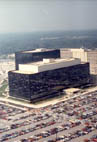
NSA HQ

NSA HQ

By IAN ALLEN | intelNews.org |
I have explained before that the US National Security Agency (NSA) and other intelligence agencies have found it impossible to intercept Skype’s instant messaging and voice traffic. Like other voice-over-Internet protocol (VOIP) communications providers, Skype uses technology that converts audio signals to data, and transports them through most of the Internet infrastructure in binary, rather than audio, format. Furthermore, Skype uses very complex algorithms to encrypt its customers’ communications. Skype has repeatedly pointed to the technical complexities of VOIP communications, arguing that it is often technically impossible to facilitate communications interception requests by government authorities. There are rumors among communications interception specialists that the NSA is offering billions to anyone who can come up with a reliable eavesdropping model for Skype. Remarkably, on August 25, a Swiss software developer released what he claims is the source code of a program for tapping into encrypted Skype communications. I don’t know whether the source code (essentially a trojan) is effective. He claims it is. If this is confirmed, then several people in Fort George F. Meade, Maryland, will be really close paying attention.

Bookmark and Share

Wiretap whistleblower shunned by US Congress, media

Mark Klein

Mark Klein

By IAN ALLEN | intelNews.org |
Those of you who have been following the ongoing revelations about STELLAR WIND, the National Security Agency (NSA) warrantless wiretapping scheme authorized by the Bush Administration in the wake of 9/11, will know about Thomas M. Tamm. Tamm was the Justice Department official who in 2005 first notified The New York Times about the existence of the project. But Tamm was not the only whistleblower in the case. He was joined soon afterwards by another insider, Mark Klein. Klein had just retired from AT&T as a communications technician when he read The New York Times revelations about STELLAR WIND. As soon as he read the paper’s vague description of the NSA project, Klein realized he had in his possession AT&T documents describing exactly how the company shared its customers’ telephone communications with the NSA, through a secret room at the AT&T Folsom Street facility in San Francisco. To this day, Klein remains the only AT&T employee to have come forward with information on STELLAR WIND. But, apparently, nobody cares. Read more of this post

Private companies to help NSA monitor US government networks

NSA HQ

NSA HQ

By IAN ALLEN | intelNews.org |
We have already mentioned on this blog that US President Barack Obama has decided to proceed with a Bush administration plan to use National Security Agency (NSA) assistance in screening government computer traffic on private-sector networks. NSA is America’s largest intelligence agency, which is tasked with worldwide communications surveillance, as well as communications security. Critics of the program suspect it may include EINSTEIN 3, a rumored joint project between the NSA and US telecommunication service providers, which requires the latter to route government data carried through their networks to the NSA, via secret rooms installed in exchange sites. Read more of this post

Analysis: Al-Qaeda dumps phones, making interception impossible

Secret Sentry

Secret Sentry

By JOSEPH FITSANAKIS | intelNews.org |
In his brief but perceptive review of Matthew M. Aid’s new book, The Secret Sentry: The Untold Story of the National Security Agency, Craig Seligman, critic for Bloomberg News, refers to an argument made in the book, which in my opinion deserves attention. Namely, in discussing the NSA’s activities in the so-called “war on terrorism”, Aid points out that, not only are Iran and North Korea increasingly converting their analog communications networks into fiber-optic cables, thus making their internal communications virtually impossible to intercept, but al-Qaeda and other militant groups are now “practically cut[ing] out the use of telephones and radios”. All of this is gradually turning the NSA, an agency that receives over $9 billion a year in US taxpayers’ money, into a gargantuan organization whose daily tasks are becoming “maddeningly difficult” –indeed, almost irrelevant. Read more of this post

Fears raised of Iranian-style surveillance in the US

NSN Logo

NSN Logo

By JOSEPH FITSANAKIS | intelNews.org |
Nokia Siemens Networks has denied allegations, published in The Wall Street Journal and reported by intelNews, that it helped the Iranian government acquire what experts describe as “one of the world’s most sophisticated mechanisms” for spying on Iranian telecommunications users. But critics remain unconvinced and are raising concerns about the use of similar intrusive capabilities by Internet service providers (ISPs) in the US. The Open Internet Coalition, a consortium of online business and consumer groups, has sent letters [.pdf] to US Congress members urging them to consider regulating the use of deep packet inspection technology. In addition to blocking or monitoring target communications, deep packet inspection enables ISPs and monitoring agencies to trace and alter the content of messages exchanged between users. Read more of this post

Western companies help Tehran spy on protestors

NSN Logo

NSN Logo

By JOSEPH FITSANAKIS | intelNews.org |
Numerous celebratory articles have appeared recently in several blogs that praise Western Internet firms for “help[ing] out the pro-democracy movement inside [Iran]”. These articles overlook Tehran’s extremely powerful Internet and telephone spying capabilities, which experts describe as “one of the world’s most sophisticated mechanisms”. Moreover, as intelNews reported last April, the Iranian government acquired these mechanisms with the help of some of Europe’s leading telecommunications hardware and software manufacturers, who were all too happy to supply Tehran with advanced means to spy on its own people. Read more of this post

Phone hacking ring helped groups evade eavesdroppers

By JOSEPH FITSANAKIS | intelNews.org |
Even though computer hacking tends to monopolize information security headlines, phone hacking, or phreaking, as it is technically known, remains a major source of headache for communications security professionals. Last Friday, law enforcement agencies in several countries announced the arrest of more than half a dozen individuals in the US, Italy and the Philippines, who were operating a major international phreaking network. The group had apparently broken into thousands of corporate telephone networks in Australia, Canada, the US, and Europe, and was channeling near-free telecommunications services to several criminal and militant organizations around the world. According to law enforcement insiders, “the hacked networks might have been used by terrorist organizations to thwart eavesdropping and tracking by intelligence agencies”. Read more of this post

Analysis: The changing landscape of communications intelligence

By JOSEPH FITSANAKIS and IAN ALLEN | intelNews.org |
Joseph Fitsanakis and Ian Allen have authored a new scholarly paper on communications intelligence, focusing specifically on the use of telephony intelligence in the 2008-2009 Israel-Gaza conflict. The paper, entitled Cell Wars: The Changing Landscape of Communications Intelligence, is available (.pdf) on the website of the Research Institute on European and American Studies. We argue that the 2008-2009 Israel-Gaza conflict featured a series of innovative approaches to communications intelligence, which included utilizing civilian telephone networks to achieve tactical and psychological objectives. The “cell war” between the IDF and Hamas is indicative of an ongoing global struggle between asymmetrical insurgents and state actors to control large-scale telecommunications structures. “Cell wars” have been taking place for quite some time in Iraq, Somalia, Afghanistan, Lebanon, Syria, and several other nations, including the United States. Read more of this post

Western companies sold phone spy equipment to Iran

By JOSEPH FITSANAKIS | intelNews.org |
For about a year now, political dissidents in Iran have suspected that the Iranian government’s ability to spy on private communications has intensified, covering for the first time cell phone and instant messaging exchanges. Last Monday it emerged that two European telecommunications hardware manufacturers are actually behind the Iranian government’s increased surveillance capabilities. The Wall Street Journal reports that Nokia Siemens Networks (NSN) sold Iran Telecom –Iran’s government-owned telecommunications provider– a sophisticated surveillance system, in the summer of 2008. NSN is an engineering partnership between Finland’s Nokia Corporation and German hardware manufacturer Siemens AG, Europe’s largest engineering firm. Read more of this post

Comment: EU wants to intercept encrypted VOIP communications

By IAN ALLEN| intelNews.org |
Italian authorities are taking the initiative in a European Union (EU)-wide effort to terminate the tacit immunity of voice-over-Internet-protocol (VOIP) communications from authorized interception. Italy’s delegation to Eurojust, an EU coordination body tasked with combating transnational organized crime, issued a statement last weekend, promising to spearhead a project to “overcome the technical and judicial obstacles to the interception of internet telephony systems”. The statement contains several references to Skype, a Luxembourg-based VOIP provider that has so far reportedly refused to share its communications encryption system with government authorities. Because of this, the latter have accused Skype of providing organized crime syndicates with the ability to communicate without fear of their messages being intercepted.

Read more of this post

Speculation about NSA vetting of Obama’s wireless gadgets

Obama calling

Obama calling

By IAN ALLEN | intelNews.org |
Longtime technology correspondent Declan McCullagh has published a lengthy article speculating about the wireless communications options for incoming US President Barack Obama. He suggests that Obama’s heavy use of Blackberry distinctly raises “the possibility of eavesdropping [on wireless Presidential communications] by hackers and other digital snoops” and reminds that the President-Elect’s cell phone records with Verizon “were improperly accessed last year” by unauthorized company technicians. McCullagh speculates that the incoming President will be separated from his Blackberry and will be given instead a National Security Agency (NSA)-approved PDA phone designed under the US Pentagon’s SME-PED project, which stands for Secure Mobile Environment Portable Electronic Device. SME-PED communications are said to be user-friendly Blackberry replacements for high-level US government officials. McCullagh contacted the NSA for his article. The Agency, of course, declined to comment.