News you may have missed #827

Brigadier General Mohammed KhaloufBy IAN ALLEN | intelNews.org |
►►Analysis: The spies who fooled the world about Iraq. On the tenth anniversary of the Iraq War, the BBC flagship investigative program Panorama has aired a documentary arguing that, even before the fighting in Iraq started, intelligence from highly placed sources was available in the UK, suggesting that the administration of Iraqi President Saddam Hussein had no weapons of mass destruction.
►►Syrian officer to auction spy files as general defects. Kuwaiti daily Al-Seyassah reported this past weekend that an intelligence officer that defected is offering to auction the intelligence archives of Syrian President Bashar al-Assad’s brother-in-law, Assef Shawkat. Meanwhile, Syrian Brigadier General Mohammed Khalouf and about 20 soldiers defected from the Syrian army in two separate incidents on Saturday, according to rebel-controlled media.
►►Half a million wiretapped in Turkey in last decade. Some 470,000 people in Turkey have been subject to eavesdropping over the past 11 years, said officials from the Gendarmerie Command’s intelligence unit. In 2012 alone, over 33,000 people were eavesdropped on by the Gendarmerie, according to information given to the Turkish Parliament’s Eavesdropping Examination Commission. Notably Gendarmerie authorities said that they found no information or documents regarding the case of the wire-tapping of the Turkish Prime Minister in their examination of their own records.

German authorities had monitored Turkish bomber of US embassy

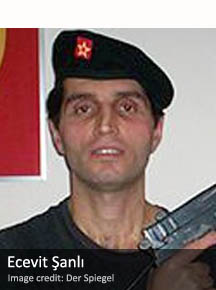
Ecevit ŞanlıBy JOSEPH FITSANAKIS | intelNews.org |
Some observers were surprised by news last week that the suicide attack at the US embassy in Turkish capital Ankara was perpetrated by secular Marxists, instead of religious extremists. But students of terrorism know that modern suicide bombings have historically been employed by secular separatist groups. These include the Liberation Tigers of Tamil Eelam (LTTE) in Sri Lanka, as well as the Kurdistan Workers Party (PKK) in Turkey. The Revolutionary People’s Liberation Party/Front (DHKP/C), which assumed responsibility for last Friday’s attack in Ankara, is a Marxist-Leninist splinter group, which has carried out suicide operations against its ideological enemies since at least 2001. Last week’s attack, which killed two and injured over a dozen people, was perpetrated by Ecevit Şanlı, a 40-year-old Turk from the city of Gölköy in northeastern Turkey. A member of DHKP/C for at least 20 years, in 2000 Şanlı became a cause célèbre among far-leftists in Turkey. During that year, he played a leading role in a hunger strike organized by self-described political prisoners in Turkey, in protest over prison conditions. The protest was brutally suppressed by Turkish security forces, and Şanlı barely survived it. He was eventually released on probation after serving a lengthy prison sentence. According to German sources, upon his release from prison, Şanlı moved to Germany, home to the world’s largest Turkish expatriate community. While there, he joined local leftist causes and appears to have been active in DHKP/C’s network of supporters among the Turkish community there. In 2009, German authorities briefly detained Şanlı after he was found in possession of propaganda literature belonging to DHKP/C, which is a designated foreign terrorist organization by the German government. Read more of this post
Turkey refused to extradite bin Laden’s son-in-law to US

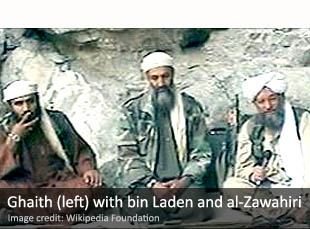
Ghaith (left) with bin Laden and al-ZawahiriBy JOSEPH FITSANAKIS | intelNews.org |
Turkish authorities have reportedly rejected a formal extradition request by the United States for a son-in-law of Osama bin Laden, who was arrested in Ankara on Friday following a tip-off by the Central Intelligence Agency. Suleiman Abu Ghaith was born in Kuwait but had his citizenship revoked after publicly opposing the rule of the Kuwaiti monarchy and demanding the institution of shari’a law in the oil emirate. In 2000, he traveled to Afghanistan where he met Osama bin Laden and joined al-Qaeda. He eventually married Fatima bin Laden, one of bin Laden’s numerous daughters, who is currently living in Saudi Arabia. He gradually rose within the ranks of the organization, eventually becoming one of its public spokesmen. Soon after the US invasion of Afghanistan, in 2001, Ghaith is believed to have escaped from Afghanistan by entering Iran on foot. He was eventually captured by Iranian government forces and placed in a detention camp along with other suspected al-Qaeda and Taliban members. It is not known how he managed to leave Iran and enter Turkey (though some say he was released the by Iranian authorities), or how the CIA knew of his presence there. However, according to Turkey’s leading daily Milliyet, the Agency contacted members of the Turkish National Intelligence Organization (known as MİT) and told them that Ghaith had entered the country on a forged passport. He was arrested soon afterwards at a hotel in Ankara’s affluent Çankaya district. The hotel where Ghaith was captured is reportedly located near the official residence of the Turkish President and a stone’s throw from numerous foreign embassies —including the embassy of the US, which was attacked by a suicide bomber on February 1. Read more of this post

Turkey peace talks halted as Kurdish activists are assassinated in Paris

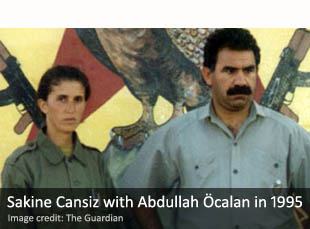
Sakine Cansiz with Abdullah Öcalan in 1995By JOSEPH FITSANAKIS | intelNews.org |
The future of peace talks between the Turkish government and the country’s Kurdish minority appeared uncertain yesterday, after three female Kurdish activists were found murdered execution-style in downtown Paris, France. The murders marked the first-ever killings in Europe of senior members of the Kurdistan Workers’ Party (PKK), which operates as the primary political and paramilitary agent of Turkey’s Kurdish population. According to reports from France, a gun fitted with a silencer was used to kill two of the women in the back of the neck and the third one in the stomach.

One of the dead, Leyla Sönmez, was a Kurdish activist responsible for Kurdish diplomatic relations in France. Another, Fidan Doğan, who was also a French citizen, was the Paris representative of the Kurdistan National Congress (KNK), which operates as Kurdistan’s government-in-exile based in Brussels, Belgium. But the most prominent victim of the triple murder is Sakine Cansiz, co-founder of the PKK, who is described as a “legend” among party activists. Cansiz who was present at PKK’s founding in 1978, was imprisoned by the Turkish government in the 1980s and given political asylum in France in 1998. Read more of this post

Who wiretapped Turkish Prime Minister’s office, home?

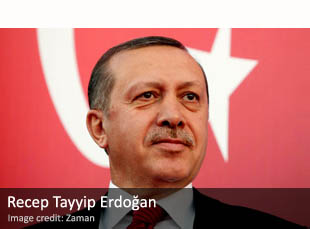
Recep Tayyip ErdoğanBy JOSEPH FITSANAKIS | intelNews.org |
During a televised interview on December 21, Turkish Prime Minister Recep Tayyip Erdoğan revealed that four unauthorized wiretapping devices had been detected in his parliamentary office and government car. A subsequent report from the Office of the Prime Minister on December 25 said that one more device had been found in Mr. Erdoğan’s home-office at this residence in Turkish capital Ankara. Who is behind the operation? In his December 21 interview, the Prime Minister told a nationwide audience that the bugs had been planted by “elements of a deeper state” within Turkey. “A deeper state exists in nearly every country”, he said, adding: “we try a lot but unfortunately it is impossible to [completely] eradicate the deeper state”. The term ‘deep’ or ‘deeper state’, which is used frequently in Turkey, is meant to signify a covert collaboration of convenience between organized crime and members of the country’s intelligence services.

One example of the Turkish ‘deep state’ that comes to mind is Ergenekon, a clandestine ultra-nationalist organization with secularist and anti-Western objectives. Its membership, which is reportedly drawn primarily from Turkey’s military and security establishments, is involved in both criminal and political activities aiming to preserve the political power of Turkey’s armed forces, while subverting the rise of Islamism and keeping Turkey out of the European Union. The existence of this mysterious organization was revealed in 2001 by Tuncay Güney, an operative of Turkey’s National Intelligence Organization (MİT), who was arrested for petty fraud. In 2009, an investigation into Ergenekon uncovered a clandestine network of safe houses in Ankara, as well as in the Turkish-occupied northern Cyprus, for the sole purpose of wiretapping the communications of targeted individuals and organizations. The safe houses were reportedly equipped with wiretapping systems purchased in Israel, some of which were portable and were thus moved to various cities and towns in Turkey, in accordance with Ergenekon’s mission directives. But are Ergenekon’s tentacles powerful enough to reach into the Turkish Prime Minister’s residence? Read more of this post

News you may have missed #797

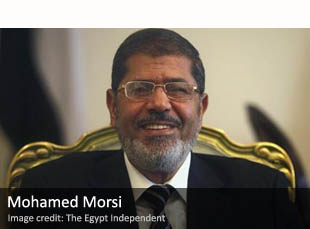
Mohamed MorsiBy IAN ALLEN | intelNews.org |
►►Egypt names new intelligence chief. Egyptian President Mohamed Morsi last week issued a decree naming Mohammed Raafat Shehata the country’s new head of intelligence, after the former spy chief was forced into retirement. Shehata had been acting director of the Egyptian General Intelligence Services Directorate since August 8, when his predecessor Murad Muwafi was sacked, after after gunmen killed 16 Egyptian border guards in Sinai.
►►Ex-Blackwater firm to teach US spies survival skills. The Defense Intelligence Agency announced on Thursday evening it would award six private security companies a share of a $20 million contract to provide “individual protective measures training courses” for its operatives. Among them is Academi, the 3.0 version of Blackwater, now under new ownership and management. The US military’s intelligence service is hiring the firm, along with five others, to train its operatives to defend themselves as they collect information in dangerous places.
►►Turkey court convicts 326 of coup plotting. A Turkish court on Friday convicted 326 military officers, including the former air force and navy chiefs, of plotting to overthrow the nation’s Islamic-based government in 2003, in a case that has helped curtail the military’s hold on politics. A panel of three judges at the court on Istanbul’s outskirts initially sentenced former air force chief Ibrahim Firtina, former navy chief Ozden Ornek, and former army commander Cetin Dogan, to life imprisonment but later reduced the sentence to a 20-year jail term because the plot had been unsuccessful. The trial of the high-ranking officers —inconceivable in Turkey a decade ago— has helped significantly to tip the balance of power in the country in favor of civilian authorities.

News you may have missed #796

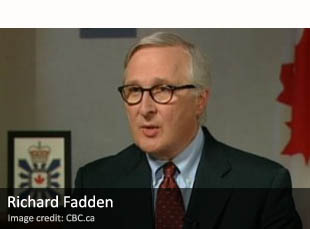
Richard FaddenBy IAN ALLEN | intelNews.org |
►►Iranian spy scandal sparks outrage in Turkey. After a nearly yearlong investigation into an alleged Iranian spy ring in Turkey, seven people were charged in early September with “providing information related to state security and establishing an [illegal] organization”. The charges against five Turkish citizens and two Iranian nationals followed a raid on the suspects’ residences and workplaces on August 29, in which videos and pictures of border security, documents, correspondence with Iranian intelligence and weapons were found, according to the investigation materials. Tehran denied any connections to those arrested, while officials in Ankara revealed more alleged evidence showing that Iran is providing support to the PKK.
►►British SIGINT agency ‘helps US drone attacks’. Britain’s former Director of Public Prosecutions, Lord Macdonald, has said there is “pretty compelling” evidence that the British government’s signals intelligence agency, GCHQ, is passing information to the United States to help it locate targets for controversial drone attacks in Pakistan. Earlier this year David Anderson, the British state’s independent reviewer of terrorism-related legislation, warned that the British government faced “a raft of civil cases” over possible complicity in the CIA drone attacks.
►►Canada’s top spy dismisses call for human rights scrutiny. In a newly declassified memo, CSIS director Richard Fadden appears to dismiss the Canadian Human Rights Commission’s recommendation that national security agencies do more to ensure they are not taking part in racial profiling or other objectionable practices. “I am confident in the service’s existing human rights policies and procedures, as well as our accountability and review structures”, Fadden says in the January 2012 memo, which is addressed to Canada’s Public Safety Minister Vic Toews. The memo —initially classified secret— was discovered by Mike Larsen, a criminology instructor in British Columbia, who obtained it under the Access to Information Act.

CIA Director reportedly in Turkey for secret talks

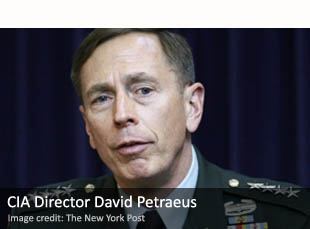
David PetraeusBy JOSEPH FITSANAKIS | intelNews.org |
Turkish and American authorities have refused comment on persistent reports that the Director of the Central Intelligence Agency is currently on a secret visit to Turkey. News of the alleged trip was first reported on Monday by Turkish tabloid daily Akşam. The newspaper said David Petraeus, who heads the United States’ foremost civilian intelligence agency, had arrived earlier that day in Istanbul’s Atatürk International Airport, on his private plane. According to the article, the CIA chief decided to embark on the unannounced trip in order to discuss “counterterrorism and the situation in Syria” with senior Turkish officials. Several hours later, French news agency Agence France Presse reported that, according to “a US official”, the CIA Director was indeed in Turkey, holding secret “meetings on regional issues”. However, the unnamed US source would not provide specific information about Petreaeus’ meeting arrangements while in Turkey, nor would (s)he divulge the names of the Turkish officials that were scheduled to meet with him. Another Turkish daily, Hürriyet, said the CIA Director would probably meet with his Turkish counterpart, MİT chief Hakan Fidan, as well as with Turkey’s Prime Minister Recep Tayyip Erdoğan . But repeated efforts by the paper to confirm this were rebuffed by representatives of the US embassy in Ankara, as well as Turkish officials. Read more of this post

Obama authorizes CIA to conduct ‘non-lethal covert action’ in Syria

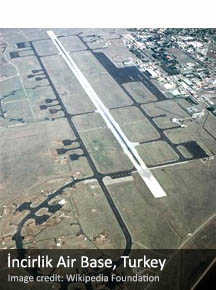
İncirlik Air Base, TurkeyBy JOSEPH FITSANAKIS | intelNews.org |
United States President Barack Obama has officially authorized the Central Intelligence Agency to assist anti-government rebels in Syria, according to a new report by the Reuters news agency. That the US Intelligence Community is operating on the side of the Syrian rebels has been known for quite some time. British media reported in as early as June of this year that American and other Western spy agencies were sharing intelligence with the Syrian Free Army. Later in the same month, The New York Times revealed that “a growing team” of CIA operatives was participating in a multinational effort to smuggle Turkish- and Saudi-supplied weapons into Syria for use by anti-government militias. And in July we explained that, according to American media reports, the CIA’s chronic shortage of reliable agents inside Syria had led the Agency to lend its weight to several existing operations led by Turkish, Jordanian, Israeli, and other intelligence organizations in Syria. Now a new report by Reuters claims that the CIA’s activities in support of the Syrian Free Army are part of an executive order handed to the Agency by the US President earlier this year. The order, formalized through what is commonly known as a ‘Presidential Finding’, effectively authorized the CIA —America’s only government agency allowed to engage in covert action— to prioritize and concentrate its resources on the ongoing Syrian uprising. Several other US government agencies are openly backing the Syrian rebels, mostly through financial support in the form of “humanitarian assistance”. But Obama’s Presidential Finding is the first indication that the US government is engaged in covert action in Syria. The Reuters report confirms earlier indications that the ‘nerve center’ of the CIA’s operations in and around Syria is located in the southern Turkish city of Adana, home of the US-run İncirlik NATO Air Base. Read more of this post

US spy agencies turn to Israel, Turkey, for help in Syria war

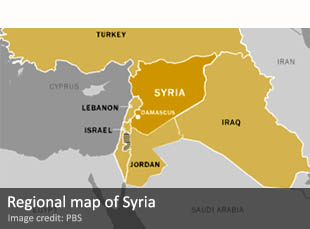
Regional map of SyriaBy JOSEPH FITSANAKIS | intelNews.org |

Just days after a senior United States defense official admitted Pentagon intelligence analysts missed early signs of the Arab Spring, a new report claims that Washington is still “struggling to understand” the Syrian situation, sixteen months into the uprising. Citing “interviews with US and foreign intelligence officials”, The Washington Post says that the US Intelligence Community has yet to develop a clear understanding of the intentions of the regime of Syrian President Bashar al-Assad. Nor have American analysts been able to draw a lucid picture of the fragmented opposition forces in the country. The paper says that, even though US spy agencies have intensified their intelligence-gathering efforts targeting all sides of the civil war, they have been unable to establish a physical presence inside Syria. This, according to The Post, is partly due to Washington’s decision, back in February of this year, to shut down the US embassy in Damascus, which has traditionally served as staging ground for Central Intelligence Agency operations inside Syria. This latest article confirms previous reports in The New York Times and elsewhere, of a small CIA team operating along the Syrian-Turkish border, with the task of overseeing a multinational effort to secretly deliver weapons, communications equipment and medical supplies to Syrian opposition forces. But this is about as close as the CIA has managed to get to Syria; for the most part, like its partner agencies in the US Intelligence Community, the Agency is “still largely confined to monitoring intercepted communications and observing the conflict from a distance”, says The Washington Post. As a result, US intelligence agencies are becoming increasingly dependent on their counterparts in Turkey, Jordan, and —most of all— Israel for reliable ground intelligence from inside Syria. Read more of this post

News you may have missed #763

RedHack posterBy IAN ALLEN | intelNews.org |
►►Taiwan ex-colonel nabbed for spying for China. Cheng Lin-feng, a retired Lieutenant Colonel in the Taiwanese army, and civilian Tsai Teng-han, were taken in by Taiwanese police last week on suspicion of spying for China. Cheng was allegedly recruited by Chinese intelligence when he travelled to the mainland to do business, Taiwan’s Ministry of National Defense said in a statement, adding that he had been investigated ever since a tip-off in 2009. A court spokesman said that details of case will be held until the investigation is completed.
Russian law brands foreign-funded NGOs ‘foreign agents’. Russia’s Lower House of Parliament has approved a bill that brands non-governmental organizations receiving funding from abroad as “foreign agents”, a law that activists fear the Kremlin will use to target critics. The bill is almost certain to be approved by the Upper House before being signed into law by President Vladimir Putin, who last year accused the US State Department of funding protests against him. The bill is seen by many analysts as setting up a legal infrastructure for a crackdown on the opposition. Meanwhile, official statistics show that wiretapping in the Russian Federation has nearly doubled over the past five years. The main driver of the rise, analysts say, involves the myriad of Russia’s rival security services spying on each other.
►►Turkish hackers release names of police informants. Members of Turkey’s Marxist cyberactivist group RedHack have dumped online a 75-megabyte text file with thousands of emails from Turkish police informants. The group said it released the information in retaliation against ultra-nationalist hackers who have been threatening opposition academics and journalists. RedHack, which has been using ‘defacement hacking’ to promote a Marxist political agenda since its founding, in 1997, is included on the Turkish government’s list of terrorist organizations. In March of this year, RedHack stole data from the Turkish police’s network, forcing the police to shut down all its servers.

News you may have missed #760

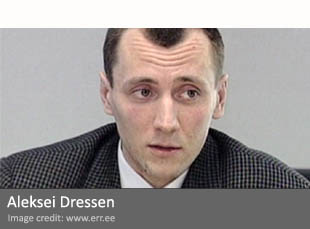
Aleksei DressenBy TIMOTHY W. COLEMAN | intelNews.org |
►►Turkey breaks up major military espionage ring. Turkish newspaper Hurriyet Daily News reported on July 9 that 51 active-duty soldiers from over twelve cities have been implicated in a major espionage ring involving Turkey’s military. Following a series of raids on July 7, at least 40 people were detained and four others were taken into custody. The raids were in response to an investigation launched in 2009, regarding warcraft radar locations in Turkey, illegal surveillance, as well as wiretapping of military officers.
►►Taiwan navy misplaces classified naval charts. During the decommissioning last June of Taiwan’s Hai Ou missile boats, classified naval charts were discovered to have gone missing during a final inventory check. The Taipei Times reports that the individual officer tasked with the responsibility of safeguarding the charts in question claimed to have burned one by accident, but was unable to account for the second chart. The classified charts contained information on Taiwanese naval activity including deployments in the Taiwan Strait.
►►Estonia security official and wife jailed for treason. Aleksei Dressen, a former security official at Estonia’s Interior Ministry, and his wife, Viktoria, were both convicted of treason, receiving 16 years and 6 years respectively. During a closed trial the proceedings did not provide direct evidence as to whom Dressen and his wife were working for. However, reports indicate that Dressen’s handlers were most likely representatives of Russia’s FSB.  The prosecution alleged that Dressen brought classified state secrets from the Estonian Interior Ministry to the airport in an envelope and then passed them along to his wife, who acted as a courier to Russian handlers. Heili Sepp, the Estonian prosecutor, indicated that the sentencing of the Dressens was part of a plea bargain effort, noting: “To our knowledge, this is the harshest punishment meted out in plea bargain proceedings in Estonia”.

CIA helping Turkey, Saudi Arabia, smuggle weapons into Syria: sources

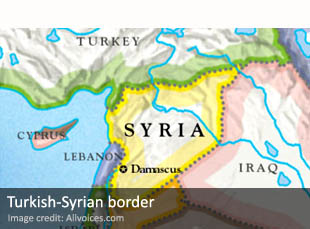
Turkish-Syrian borderBy JOSEPH FITSANAKIS | intelNews.org |
A growing team of United States Central Intelligence Agency personnel is currently in Turkey overseeing a multinational effort to secretly deliver weapons to Syrian anti-government rebels, according to The New York Times. Quoting “American officials and Arab intelligence officers”, the paper said last week that the weapons are being smuggled into Syria primarily through the Turkish border. The financial cost of smuggling into Syria such weapons as antitank explosives, rocket-propelled grenades, and automatic rifles, has so far been covered by the governments of Turkey, Qatar and Saudi Arabia, according to the article. The funds are partly required to bribe members of what The Times describes as “a shadowy network of intermediaries”, which reportedly includes forces loyal to the Syrian Muslim Brotherhood. The latter is a Sunni group that is widely viewed as the most dominant of the anti-government factions that make up the rebel side in the ongoing Syrian uprising. The paper quotes an “Arab intelligence official”, who says the CIA contingent in Turkey “is trying to make new sources and recruit people” along the porous Turkish-Syrian border. But its presence in the volatile region, which has been constant for “several weeks”, according to The Times, is also aimed at keeping the smuggled weapons out of the reach of Syrian anti-government forces that are allied with militant Islamist groups, including al-Qaeda. The article notes that American support for the Syrian rebels has been minimal, when compared with that in Libya in 2011, mostly because of staunch Russian support for the government forces of Syrian president Bashar al-Assad. Read more of this post

News you may have missed #738

Gareth WilliamsBy IAN ALLEN | intelNews.org |
►►Pathologist says MI6 spy may have died alone. Leading British pathologist Richard Shepherd has told the BBC there is “credible evidence” that MI6 officer Gareth Williams died alone. Williams, a mathematician in the employment of Britain’s signals intelligence agency, GCHQ, was found dead in a padlocked sports bag at his home in Pimlico, London, in 2010. According to Dr. Shepherd, bags identical to the one Williams was found in, can be locked by someone inside the bag.
►►Turkey may indict Israeli officers Over Gaza flotilla raid. A prosecutor in Turkey has prepared indictments and recommended life sentences for four senior Israeli officers over the killing of nine activists aboard a Gaza-bound aid flotilla forcibly intercepted in international waters by Israeli commandos two years ago. The indictments, which have not been formally approved by the Turkish judiciary, could further strain relations between Turkey and Israel, which were once close but which deteriorated badly after the flotilla raid on May 31, 2010.
►►Czech secret services alarmed by drastic drop in funding. The BIS, Czech Republic’s counterintelligence service, is used to operating on Kč 1.149 billion (around US$60 million). According to the Finance Ministry’s plan, the agency’s budget will be reduced to Kč 911 million (US$45 million) in 2013. The news has prompted former interior minister and current member of parliament František Bublan to accuse the government of effectively leading to the spy service’s “liquidation”. But Finance Minister Miroslav Kalousek argues that all state institutions must cut back in order to help achieve a balanced budget by 2016.

News you may have missed #737

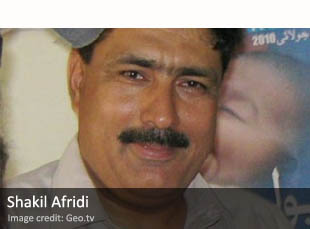
Shakil AfridiBy IAN ALLEN | intelNews.org |
►►Turkey suspects bird of being Israeli spy. News agencies are poking fun at Turkish authorities, who say they believe that they have found a bird used for espionage purposes by Israel. An investigation was reportedly launched in Ankara several days ago, after a farmer discovered a dead Merops Apiaster, commonly known as the European Bee-Eater, in his field. The bird had a ring reading “Israel” on one of its legs. The reports undoubtedly lend a certain degree of irony to the announcement that Israel Aerospace Industries (owned by the Israeli government) is in fact developing insect drones for indoor surveillance.
►►CIA discloses names of 15 killed officers. The CIA has disclosed the names of 15 of its operatives killed in the line of duty over the last 30 years, the result of a new effort to honor fallen officers. Fourteen of the dead already had a star inscribed in their memory on the CIA’s wall of honor in the lobby of the old headquarters building on the agency’s Langley, VA, campus. But their names had been withheld. In a closed agency ceremony Monday their names were added to the Book of Honor, which accompanies the stars. In addition, a new star was added this year for Jeffrey R. Patneau, who died at age 26 in Yemen in 2008 from injuries sustained in a car accident. He was the 103rd CIA officer recognized as having died in the line of duty.
►►Pakistan convicts doctor who helped CIA find bin Laden. A Pakistani court imposed a 33-year sentence Wednesday on Shakil Afridi, a doctor who assisted the CIA hunt for Osama bin Laden. Afridi, a government surgeon in the semiautonomous Khyber Agency along the border with Afghanistan, was convicted of treason for using a vaccination drive to try to gather DNA samples at the compound where bin Laden was in hiding. His conviction prompted dismay among US officials, who said that the punishment will lead to cuts in aid. According to a Pakistani prison official, Afridi “has been kept away from other prisoners to avert any danger to his life”.