News you may have missed #777

KH-9 HexagonBy IAN ALLEN | intelNews.org |
►►Egypt sacks spy chief after border attacks.  Egypt’s President Mohamed Morsi sacked the Director of the General Intelligence Directorate, Murad Muwafi, two generals and the governor of north Sinai region on Wednesday, after gunmen killed 16 border guards there on Sunday before last. Mowafi was the most high-profile official who lost his job, forced into early retirement as Egypt’s intelligence agencies were criticized for missing or ignoring warnings about the attack.
►►Photos reveal CIA deep-sea rescue of a spy satellite. On July 10, 1971, America’s newest photo reconnaissance satellite, the KH-9 Hexagon, dropped a capsule loaded with film toward the Earth. Due to a technical error, the capsule sunk in the Pacific Ocean. Last week, the CIA declassified documents and photographs showing how it went 16,000 feet into the sea to recover the Hexagon capsule.
►►Pre-inquest review into death of ex-KGB officer Litvinenko. A British High Court judge will soon hold a pre-inquest review into the death of Russian spy Alexander Litvinenko, officials have said. Litvinenko, who was working for MI6 following his defection from Russia, is believed to have been poisoned with radioactive polonium-210 in London, in November 2006. British prosecutors accuse former KGB operatives Andrei Lugovoy and Dmitry Kovtun for the murder. However, earlier this year Lugovoy reportedly passed a lie detector test on the subject of Litvinenko’s death, which was administered in Moscow by the British Polygraph Association.

Canadian spy compromised Australian, British intelligence

Jeffrey Paul DelisleBy JOSEPH FITSANAKIS | intelNews.org |
Most regular readers of this blog are undoubtedly familiar with the case of Jeffrey Paul Delisle, a Sub-Lieutenant in the Royal Canadian Navy, who until recently was employed at Canada’s ultra-secure TRINITY communications center in Halifax. Delisle was arrested in January on suspicion of passing information gathered from radio and radar signal interceptions to a foreign power, most likely Russia. Back in May, when it was disclosed that the United States helped Canadian counterintelligence investigators build their case against Delisle, we warned that “a far more important subject concerns the degree in which [Delisle’s] penetration has affected Canada’s intelligence-sharing relationship with its […] partners”. Now a new report in The Sydney Morning Herald reveals that Delisle’s espionage activities compromised Australian secrets that had been shared with Canada under longstanding intelligence cooperation arrangements. Citing “Australian security sources”, the paper said that the Delisle case “has sent shock waves through Western security agencies” due to the volume of compromised information. The Herald claims that the stolen intelligence is “on a scale comparable to the alleged handover to WikiLeaks of US military and diplomatic reports by US Army private Bradley Manning”. An unnamed “Australian security source” told the paper that Delisle’s access to classified information was “apparently very wide” and that Australian intercepts were “inevitably compromised”. Read more of this post
News you may have missed #765

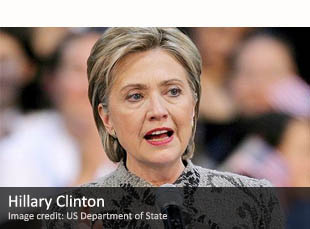
Hillary ClintonBy TIMOTHY W. COLEMAN | intelNews.org |
►►MI6 chief says Iran will get nukes in 2 years. Sir John Sawers, the head of Britain’s Secret Intelligence Service, has been quoted as publicly forecasting that Iranian nuclear weapons efforts will likely come to fruition by 2014. Sawers is quoted in The Daily Telegraph as saying: “The Iranians are determinedly going down a path to master all aspects of nuclear weapons; all the technologies they need”, adding “it’s equally clear that Israel and the United States would face huge dangers if Iran were to become a nuclear weapon state”. He went on to assert that Iran would have achieved nuclear statehood in 2008 had it not been for clandestine efforts to thwart such ends. He did not elaborate on what he meant by his comments, for which he was criticized in Parliament earlier this week.
►►MI6 chief claims US interrogators were ‘obsessed’. In the same Telegraph interview, Sir John claimed that British interrogators, following the attacks of September 11, 2001, came “close to the line” of illegality. He went on to say that US interrogators straddled the line between legal and illegal, insinuating that US personnel may have crossed the line during interrogations. Sir John is quoted as explaining: “They [US interrogators] got so obsessed with getting a right answer that they drifted into an area that kind of amounted to torture”. He went on to claim that British personnel involved in interrogations never crossed the line, observing: “We’ve never been there, we’ve never been involved in that, and I think our accountability, our disciplines, have helped us keep on the right side of these lines”.
►►Clinton says Israeli spy Pollard unlikely to be freed. US Secretary of State Hillary Clinton has reaffirmed Washington’s position that Jonathan Pollard was unlikely to receive clemency or see freedom anytime soon. During a press conference in Jerusalem on July 16, Secretary Clinton stated unequivocally: “He [Jonathan Pollard] was sentenced to life in prison, he is serving that sentence, and I do not have any expectations that that is going to change”. Pollard, a former US naval intelligence analyst, was suspected of trying to provide classified information to South Africa, Pakistan, and Australia. He was arrested and convicted of espionage for providing classified information to the State of Israel. He is serving a life sentence for his crimes.

News you may have missed #764

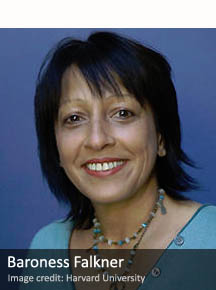
Baroness FalknerBy IAN ALLEN | intelNews.org |
►►US government agency spied on whistleblower scientists. The US Food and Drug Administration has been found operating a massive surveillance campaign targeting its own scientists for writing letters to journalists, members of Congress and President Barack Obama. The scientists were expressing their concern over the FDA’s approval of medical imaging devices for colonoscopies and mammograms that could endanger patients with high levels of radiation. The covert spying operation, which is most likely illegal, led the agency to monitor the scientists’ computers at work and at home, copying emails and thumb drives and even monitoring individual messages line by line as they were being composed in real time.
►►UK lawmaker tells MI6 chief to ‘stop bragging’. The head of Britain’s Secret Intelligence Service (MI6), Sir John Sawers, has been accused by Liberal Democrat parliamentarian Baroness Falkner of Margravine of demonstrating a “lack of judgment” for “bragging” about MI6’s role in slowing Iran’s nuclear program. Earlier this month, Sir John said in an interview that covert operations by British spies had prevented Iran from developing nuclear weapons as early as 2008. But Lady Falkner said in a speech at the House of Lords that “Sir John’s comments could almost be construed as bragging. In my view”, she continued, “it would be best for the veneer of silence to descend on the Secret Intelligence Service once again. There is such a thing as too much information”.
►►German domestic intel agency gets new director. The German government has appointed terrorism expert Hans-Georg Maassen to head the country’s domestic intelligence body, known as the “Verfassungschutz. Maassen’s appointment comes after several turbulent weeks for the agency that have resulted in three of its top officials stepping down amid a scandal connected to a series of murders by a Neo-Nazi group calling itself the National Socialist Underground.

News you may have missed #762

Danni YatomBy IAN ALLEN | intelNews.org |
►►Italy postpones court decision on wanted CIA operatives. The Washington Post has published a useful update on Sabrina De Sousa, one of nearly two-dozen CIA operatives who were convicted in Italy in 2007 for the kidnapping four years earlier of Egyptian cleric Hassan Mustafa Osama Nasr. The Americans kidnapped Nasr, known as Abu Omar, from the streets of Milan without the consent of Italian authorities. The Italians, who were themselves carefully monitoring Nasr, responded by convicting all members of the CIA team in absentia, and notifying INTERPOL. But last Friday, the Supreme Court of Cassation in Rome postponed its verdict after a two-day hearing aimed at deciding whether to uphold or overturn the Americans’ convictions.
►►Ex-Mossad chief urges Israel to prepare for military action in Syria. In an interview with British news network Sky News, former Mossad Chief Danni Yatom said last week that Israel must be prepared for the possibility of military attacks on Syria, which may deteriorate into war.  He said his warning stems from the fear that Syria’s hundreds of tons of chemical weapons will fall into the hands of terrorists. “We would have to pre-empt in order to prevent it. We need to be prepared to launch even military attacks […] and military attacks mean maybe a deterioration to war”, said the former Mossad Director.
►►British spy agencies failed to predict Arab Spring. The Intelligence and Security Committee of the British Houses of Parliament has said in its annual report that British spy agencies had been surprised by the spread of unrest during the Arab Spring and failed to predict the dramatic uprisings that swept the region. The report also noted that the Arab Spring had exposed Britain’s decision to scale back intelligence assets in much of the Arab world, in favor of monitoring Iran and al-Qaeda. We at intelNews wrote about this in 2011.

News you may have missed #761

Robert de La RochefoucauldBy TIMOTHY W. COLEMAN | intelNews.org |
►►US aircraft company owner charged with supplying Venezuelan military. Kirk Drellich, owner and president of SkyHigh Accessories in Florida, has pleaded not guilty to charges that he illegally supplied Venezuelan military contacts with pressure switches and cooling turbines, as well as other airplane parts. Court documents indicate that the aircraft parts were to be used for Venezuelan F-16 jets, attack helicopters and other military crafts. Prosecutors in Florida have filed charges (.pdf), stemming from violations of the Arms Export Control Act, on three other individuals who are supposedly involved in the conspiracy to export arms to Venezuela. Other defendants in the case include Alberto Pichardo and Freddy Arguelles, both former members of Venezuela’s Air Force, as well as Victor Brown, a local businessman.
►►Trial delayed again in Delisle espionage case. As previously reported on this blog, the espionage case against Sub-Lt. Jeffrey Paul Delisle, the Canadian navy intelligence officer accused of spying for Russia, has again been delayed. The attorney for Delisle requested an adjournment based on the governments disclosure of new documents and evidence in the case. The adjournment is expected to last until July 17.
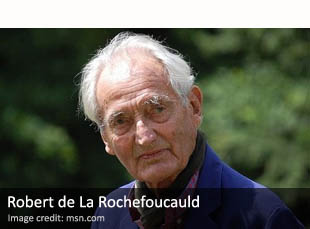
►►Legendary WWII spy de La Rochefoucauld dies. Robert de La Rochefoucauld, a French national who became a legendary British spy, helping direct and organize the Free French forces in England and underground movements in France during World War II, has died of natural causes at the age of 88. De La Rochefoucauld’s exploits as a spy have all the makings of a movie. As a little boy, he met Adolf Hitler, and as a spy he twice escaped execution by the Nazi’s. He was a knight in the French Legion of Honor, received the Medal of Resistance from France, was widely herald for his exceptional service by the British and he is believed to have been the last remaining French member of Winston Churchill’s Special Operations Executive.

Revealed: British government minister spied for Czechoslovakia

Raymond MawbyBy JOSEPH FITSANAKIS | intelNews.org |
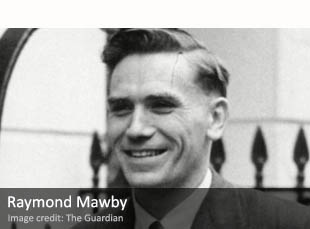
The BBC has uncovered evidence that a Conservative Party minister was a longtime paid informant for Czechoslovakia’s Cold-War-era secret intelligence service. The discovery was made earlier this month by the BBC’s security correspondent, Gordon Corera, while visiting the declassified archives of the Czechoslovakian ŠtB to investigate an alleged attempt to blackmail British Conservative politician Edward Heath in the 1970s.  Corera’s discovery shows that Raymond Mawby, who was a Tory Member of Parliament from 1955 until 1983, spied for the ŠtB in return for money for nearly a decade, starting in 1961.  The BBC describes Mawby, who served as assistant Postmaster General from 1963 to 1964, and rose to the rank of junior minister in 1963, as “an unusual Tory”, since he was “a working class trade unionist” from Devon. Indeed, his extensive ŠtB file, uncovered by the BBC, shows that he was not as loyal to conservative values as one might think. Mawby was first approached by Czechoslovakian intelligence in November 1960, while attending a cocktail reception at the Czechoslovakian embassy in London. His contacts with his ŠtB handlers became more frequent during the following year when, operating under the codename Laval, he began providing them with political information from the British Houses of Commons, in exchange for regular payments of £100. By 1964, he was on a £400 monthly retainer by the ŠtB, in return for supplying the Czechoslovaks with documents from Parliament, details about the personal lives of his colleagues, and lists of Parliamentary committee members. In one instance, Mawby even supplied his foreign handlers with a hand-drawn floor plan of the office of the Prime Minister at 10 Downing Street. Read more of this post

News you may have missed #754

Jonathan EvansBy IAN ALLEN | intelNews.org |
►►New German spy HQ to open a year late. The BND, Germany’s foreign intelligence service, was due to move from its base in Pullach, near Munich, to an enormous newly built center in Berlin, at the end of 2014. But that has now been officially put back by a year. The Berliner Morgenpost newspaper quoted BND president Gerhard Schindler saying he was “regularly losing young new staff”, due to the delay. The uncertainty has meant “they leave our authority and find themselves another employer”, he said.
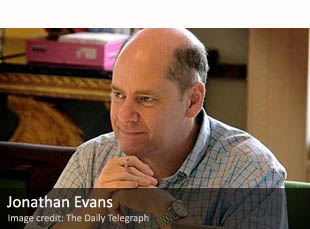
►►UK spy chief warns of ‘astonishing’ levels of cyberespionage. In a rare public speech, Jonathan Evans, director general of MI5, Britain’s domestic spy service, has said that the West now faces an “astonishing” cyberespionage threat on an “industrial scale” from specific nation states. He said that cyberespionage is now conducted “with industrial-scale processes involving many thousands of people lying behind both state-sponsored cyber espionage and organized cyber crime”. Surely, however, Evans does not mean to imply that the West’s role in cyberespionage is purely defensive?
►►Aussie spy agency lacks resources to vet asylum seekers. An official audit into the Australian Security Intelligence Organisation’s ability to vet asylum seekers for potential security threats, has found that it is struggling with the “sharp increase” in boat arrivals, rudimentary computer systems and 30 per cent fewer staff than needed. The audit report examined 411 cases as a sample of the almost 180,000 security assessments ASIO completes each year.

News you may have missed #753

James ClapperBy IAN ALLEN | intelNews.org |
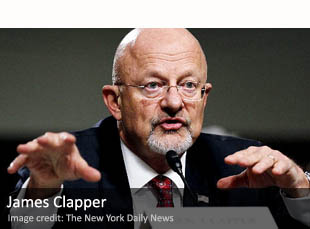
►►US spy agencies consider new polygraph questions. The US Director of National Intelligence, James Clapper, is considering a proposal to force intelligence agency employees to answer a direct question in their polygraph examinations about whether they have disclosed information to reporters. The Los Angeles Times quotes “officials familiar with the matter”, who say that Clapper is preparing “changes to the counterintelligence polygraph policy”, though “no final decisions have been made”.
►►Ex-“New Republic” editor speaks out against Pollard release. Few American journals can claim to have stood more staunchly by Israel than The New Republic. So we should be paying attention when Martin Peretz, who edited the magazine from 1974 until 2011, comes out against the proposed release of Jonathan Jay Pollard. Pollard is a former US Navy analyst, who is serving a life sentence for spying on the US for Israel. Peretz calls Pollard “a scoundrel spy” and reminds his readers that “before he decided to deliver reams of sensitive [US] intelligence and defense documents to Israel’s security apparatus, [Pollard] was negotiating with Pakistan […] to do similar chores for it”.
►►UK leader considered using special forces to seize Russian ship. British Prime Minister David Cameron considered ordering British special forces to board and impound a Russian ship suspected of carrying arms to Russian ally Syria, it has emerged. The ship, MV Alaed, was sailing in British waters when the US placed pressure on Britain to halt it. But the Russian ship suddenly changed course about 50 miles off the north coast of Scotland and it is showing that its next port of call is Murmansk, in Russia.

Did Czechoslovakian spies plan to blackmail British leader?

Ted HeathBy JOSEPH FITSANAKIS | intelNews.org |
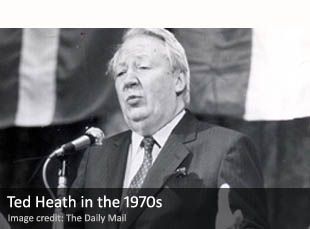
In 1975, Czechoslovakian intelligence officer Josef Frolík, who had defected to the United States, published a book titled The Frolik Defection: The Memoirs of an Intelligence Agent. Among several revelations in the book was an alleged plot by the ŠtB, Czechoslovakia’s Cold-War-era secret intelligence service, to sexually blackmail British Conservative politician Edward “Ted” Heath. According to Frolík, the ŠtB had concluded that Heath, a lifelong bachelor and Britain’s Prime Minister from 1970 to 1974, was gay. Based on this —highly questionable— belief, Jan Mrázek, an ŠtB officer working out of the Czechoslovakian embassy in London, had allegedly devised a plan in the mid-1960s, which aimed to expose Heath to homosexual blackmail. Frolík claims in his book that Mrázek developed the plot around Heath’s well-known preoccupation with classical music. Specifically, he planned to recruit Czechoslovakian classical organist Jiří Reinberger, who would be instructed to meet the British conservative politician in London and invite him to Prague for a concert. While there, the ŠtB hoped that a romantic affair would ensue, under the watchful eye of Czechoslovakian spies, who would make sure to capture the more intimate moments of the two men on camera. The audiovisual evidence would, the ŠtB believed, convince Heath to spy for Czechoslovakian intelligence. According Frolík, the plan was put to action but was eventually scrapped after MI5, Britain’s counterintelligence agency, warned Heath that a trip to Czechoslovakia would expose him to blackmail by that country’s intelligence service. When Frolík’s book came out, Heath, who had stepped down from his post as Britain’s Prime Minister and leader of the Conservative Party, dismissed the story as a fabrication, and threatened to sue the author. But was Frolík telling the truth? Read more of this post

Western spy agencies ‘sharing intelligence’ with Syrian rebels

Robert MoodBy JOSEPH FITSANAKIS | intelNews.org |
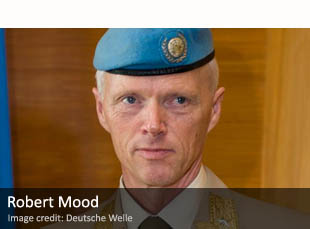
A British newspaper has cited defense sources claiming that British and American intelligence agencies are passing vital information to Syrian rebels fighting to overthrow the country’s government. British tabloid The Daily Star quoted “a British defense source” who said that most of the raw intelligence on Syria is picked up by sophisticated British and American satellites monitoring Syrian communications. Once gathered and assessed by intelligence analysts in Washington and London, the information is passed on to operatives of the United States Central Intelligence Agency and Britain’s MI6, who are allegedly operating on the ground in Syria. They in turn communicate actionable intelligence to rebel leaders in Syria, who are fighting the government of Syrian President Bashar al-Assad. According to the British tabloid, information passed on to rebel leaders includes detailed satellite imagery of Syrian pro-government troop movements around the country, as well as the contents of intercepted communications between senior Syrian military commanders and their subordinates in the field. The Star quotes one unnamed British government source who claims that the satellites are so sophisticated that they allow British and American eavesdroppers to identify the individuals whose voices are heard in the intercepted communications, with the aid of advanced voice recognition systems. The intelligence has reportedly enabled rebel commanders to evacuate locations targeted by government forces, and may also have allowed the rebels to organize successful counterstrikes in response to offensives conducted by troops loyal to Damascus. Washington-based publication The Hill contacted the CIA and the White House but their spokespersons refused to comment on what they called “an ongoing intelligence operation” in Syria. A spokesman from the British Foreign and Commonwealth Office would only tell The Star that “all actions remain on the table”.   Read more of this post

News you may have missed #741

Glenn CarleBy IAN ALLEN | intelNews.org |
►►MI6 role in rendition could be concealed in new bill. Libyan government officials Sami al-Saadi and Abdel Hakim Belhaj, who allege that they were taken by rendition by Britain to Libya eight years ago, are expected to begin legal proceedings against the British government and Jack Straw, Britain’s former foreign secretary, next month. However, after pressure from the security services, MI5 and MI6, the British government is preparing to publish a Justice and Security Bill that could allow these cases to be held in their entirety behind closed doors.
►►Aussie spy agency defends new headquarters. The Australian Security Intelligence Organisation says its new headquarters in Canberra is not at risk of being spied upon, despite the use of a lot of glass. ASIO director general David Irvine told a senate committee on Thursday it would be impossible for someone with a high resolution camera on the other side of Lake Burley Griffin to spy on the nation’s spies. Australian Greens senator Scott Ludlam had asked whether the design of the “glass palace” could threaten the secrecy of its work.
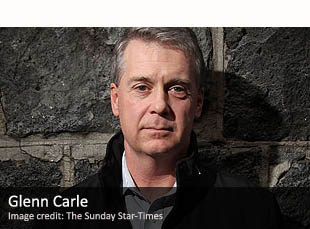
►►Good interview with ex-CIA officer Glenn Carle. In this interview, Carle, a retired CIA case officer who wrote The Interrogator: An Education, says his former employers have called his publisher asking them to pulp his book; they rang every major network to prevent him going on air. They are, he says several times, “vicious” and have perpetrated a stain on America’s national character.

News you may have missed #738

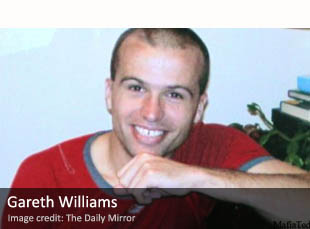
Gareth WilliamsBy IAN ALLEN | intelNews.org |
►►Pathologist says MI6 spy may have died alone. Leading British pathologist Richard Shepherd has told the BBC there is “credible evidence” that MI6 officer Gareth Williams died alone. Williams, a mathematician in the employment of Britain’s signals intelligence agency, GCHQ, was found dead in a padlocked sports bag at his home in Pimlico, London, in 2010. According to Dr. Shepherd, bags identical to the one Williams was found in, can be locked by someone inside the bag.
►►Turkey may indict Israeli officers Over Gaza flotilla raid. A prosecutor in Turkey has prepared indictments and recommended life sentences for four senior Israeli officers over the killing of nine activists aboard a Gaza-bound aid flotilla forcibly intercepted in international waters by Israeli commandos two years ago. The indictments, which have not been formally approved by the Turkish judiciary, could further strain relations between Turkey and Israel, which were once close but which deteriorated badly after the flotilla raid on May 31, 2010.
►►Czech secret services alarmed by drastic drop in funding. The BIS, Czech Republic’s counterintelligence service, is used to operating on Kč 1.149 billion (around US$60 million). According to the Finance Ministry’s plan, the agency’s budget will be reduced to Kč 911 million (US$45 million) in 2013. The news has prompted former interior minister and current member of parliament František Bublan to accuse the government of effectively leading to the spy service’s “liquidation”. But Finance Minister Miroslav Kalousek argues that all state institutions must cut back in order to help achieve a balanced budget by 2016.

News you may have missed #736

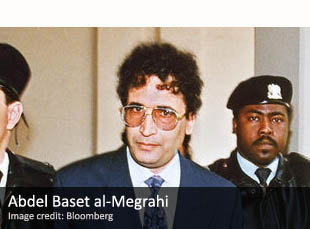
Abdel Baset al-MegrahiBy IAN ALLEN | intelNews.org |
►►Convicted Lockerbie bomber dies. Abdelbaset al-Megrahi, a former Libyan intelligence officer who was the only person ever convicted in the 1988 Lockerbie bombing, died at home in Tripoli Sunday, nearly three years after he was released from a Scottish prison to the outrage of the relatives of the attack’s 270 victims. He was 60. Scotland released Mr. al-Megrahi on Aug. 20, 2009, on compassionate grounds to let him return home to die after he was diagnosed with prostate cancer. Anger over the release was further stoked by subsequent allegations that London had sought his release to preserve business interests in the oil-rich North African nation, strongly denied by the British and Scottish governments.
►►Federal appeals panel to hear CIA leak case. A federal appeals panel in the United States will hear the case of ex-CIA officer Jeffrey Sterling, who has been charged with leaking classified information about Iran’s nuclear program to New York Times reporter James Risen. Prosecutors say Sterling was a key source in Risen’s 2006 book, State of War. They are also challenging the court’s decision to strike two government witnesses and allow disclosure of the identities of covert CIA operatives to Sterling’s lawyers.
►►New study of British Empire’s spies published. British newspaper The Guardian has published a review of William Beaver’s newly published book, Under Every Leaf: How Britain Played The Greater Game From Afghanistan to Africa. Much of the book concerns the creation in the mid-1850s of the British War Office Intelligence Department. According to the review, the book does much to restore the “missing dimension” to Britain’s military-imperial history between 1855 and the creation of her modern intelligence agencies in the early 1900s.

News you may have missed #733

Stella RimingtonBy IAN ALLEN | intelNews.org |
►►Women in US intelligence seek balance in life. Nada Bakos (photo) was one of many women serving as CIA analysts before 9/11, who then moved to the operations side after the terrorist attacks. She didn’t yet have a family when she accepted her assignment as a targeting officer in Iraq. After a couple of years, as Bakos was deep into her career on the operations side, she decided she wanted to start a family. That was a problem. At least 160 other women feel her pain. Women from the CIA, the National Security Agency, Naval Office of Intelligence and dozens of other agencies met last week at the Women in National Security conference in McLean, Virginia, to try and find a better way.
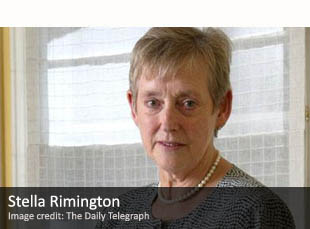
►►Interview with ex-MI5 Director Stella Rimington. Australian Radio hosts an interesting audio interview with Dame Stella Rimington, who headed MI5, Britain’s domestic intelligence agency, from 1992 to 1995. She speaks about the experience of being the first director of MI5 to be publicly identified and the sometimes sinister invasions to her privacy as a result. Moreover, she says the only thing that surprised her about the Leveson inquiry into phone hacking and the conduct of the British media is that nobody recognized it was going on before.
►►US government think-tank warns against strikes on Iran. The RAND Corporation, a think tank which advises the United States Department of Defense, warned last week Tuesday against an Israeli or American attack on Iran’s nuclear reactors, and recommended that the administration of Barack Obama try to “quietly influence the internal Israeli discussion over the use of  military force”. In 2009, before Stuxnet, a RAND report had argued that the US may be better off focusing on cyber-defense instead of resorting to cyberattacks.