British Nazi was in fact MI5 double spy, new book reveals

Arthur OwensBy JOSEPH FITSANAKIS | intelNews.org |
A Welsh nationalist, whose aversion to British rule led him to spy for Nazi Germany during World War II, was in fact a double spy for Britain, and was instrumental in helping he Allies win the war, a new book reveals. The book, Snow: The Double Life of a World War II Spy, by Madoc Roberts and Nigel West (At Her Majesty’s Secret Service, A Matter of Trust, etc), centers on the life of Arthur Owens, who was recruited by the Abwehr, Germany’s military intelligence, in 1935, during a business trip to the Continent. Given the operational codename JOHNNY O’BRIEN by the Germans, he quickly began providing Berlin with inside information on Britain’s military buildup in the run-up to the War. But, according to Roberts and West, who base their account on declassified government documents, British counterintelligence agency MI5 became aware of Owens’ espionage activities and eventually recruited him as a double agent for the Crown. According to the book, Owens, who was given the codename SNOW by his British masters, became one of the human intelligence cornerstones of MI5’s XX (Double-Cross) System. Consisting of a close-knit group of deception specialists, XX is known for a series of outrageous —and often highly successful— covert operations during World War II, including Operation FORTITUDE, a plan to deceive the Germans about the location of the invasion of Europe by the Western Allies. The authors claim that agent SNOW’s activities successfully lured a large number of Nazi agents into the arms of MI5, thus eventually paving the way for some of MI5’s greatest wartime counterintelligence successes. In fact, it is believed that Owens’ pro-Nazi activities were so convincing, and his operational cover so deeply buried within the XX System, that in 1941 his MI5 handlers recommended that he be interned in a British prison. But the book alleges that, while in prison in Dartmoor, England, SNOW continued his intelligence collection for the Crown and kept feeding his handlers with information extracted from the prison’s German inmates. Read more of this post

News you may have missed #654

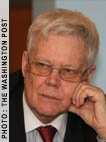
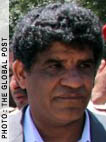
Abdel Hakim Belhaj►►Libyan military commander sues British intelligence. Just as he said he would, Abdel Hakim Belhaj, who commands the new Libyan military forces in Tripoli, has sued Britain for its role in his rendition into imprisonment and torture at the hands of Muammar Gaddafi’s regime. He said he resorted to legal action after waiting in vain for the British government to offer an apology for his seven years spent in the jails of the secret police.
►►Argentine Admiral fired over espionage scandal. The head of the Argentine Navy, Admiral Jorge Godoy, has stepped down after being accused of illegal espionage. He has been indicted for alleged practices of “domestic intelligence” –which are prohibited by Argentina’s laws– against political leaders and of human rights activists, in the years between 2003 and 2006.
►►US intelligence warned of strive after US Iraq pullout. This is what Reuters news agency reports, citing anonymous sources inside the US government. Then again, US intelligence agencies warned in 2002 of increasing strife in case of a US invasion in Iraq, and nobody in government listened to them. So why would anyone listen to them now?
Half of all IRA leaders were government spies, report claims

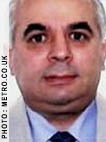
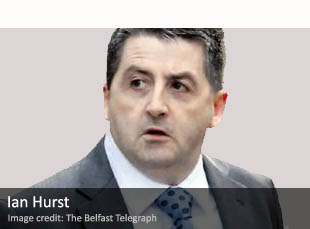
Ian HurstBy JOSEPH FITSANAKIS | intelNews.org |
A report to be presented before an Irish government inquiry states that nearly half of the leadership of the Provisional Irish Republican Army (PIRA) during the ‘Troubles’ of the 1960s and 1970s consisted of informants working for British or Irish intelligence services. The 24-page report is part of a larger dossier of evidence that is soon to be presented before the Smithwick Tribunal, a judicial inquiry into the 1989 killing by the Provisional IRA of two police officers of the Royal Ulster Constabulary (see previous intelNews coverage here). The evidence dossier has reportedly been prepared by Ian Hurst, former member of the Force Research Unit (FRU), a secretive body within the British Army’s Intelligence Corps, tasked with running agents inside militant groups. Hurst, who worked in the Intelligence Corps from 1981 to 1990, was responsible for handling informants and agents inside Irish paramilitary groups, including the Provisional IRA. He is believed to be the first-ever member of the FRU to have spoken publicly about his experience. In the report, which was leaked to The Belfast Telegraph, Hurst suggests that approximately one in every four volunteers of the Provisional IRA was an agent of an intelligence organization, and that among leading members this number increased to one in two. Among them was allegedly the British agent codenamed STAKEKNIFE, identified by some as Freddie Scappaticci, a senior member of the Provisional IRA Northern Command’s Internal Security Unit (ISU), tasked with counterintelligence operations (Scappaticci denies these claims). Read more of this post

News you may have missed #649

María del Pilar Hurtado

María Hurtado

►►US-Russian tensions over stranded Kosovo aid convoy. A stranded aid convoy of more than 20 Russian trucks was stopped Tuesday by US soldiers at a Kosovo border with Serbia, increasing tensions in the volatile region. American forces say they believe the convoy’s cargo consisting of canned food, blankets, tents and power generators appears, is intended for minority Serbs, who reject Kosovo’s statehood, and have been blocking roads in the Serb-run north of the country to prevent Kosovar authorities from taking control.
►►IRA spy in Irish police was ‘open secret’. Former British army agent Kevin Fulton, also known as Peter Keeley, who infiltrated the IRA in the 1980s, has said it was an open secret in the IRA that it had a “friend” among the gardaí (Irish police) in Dundalk. Speaking to the Smithwick Tribunal, he named the “friend” as retired detective sergeant Owen Corrigan. See here for previous intelNews coverage of this issue.
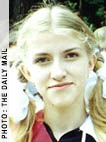
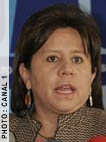
►►Colombia asks Panama to extradite ex-spy chief (again). Panama’s Foreign Ministry says Colombia has asked it to extradite former Colombian intelligence director Maria del Pilar Hurtado (pictured) to face conspiracy, wiretapping and abuse of authority charges. Hurtado headed Colombia’s now-defunct DAS domestic intelligence agency in 2007 and 2008.

New book on British double spy Kim Philby published in Russia

Kim Philby

Kim Philby

By JOSEPH FITSANAKIS | intelNews.org |
An important new biography of H.A.R. “Kim” Philby, the British MI6 officer who defected to Russia during the Cold War, has been published in Moscow. It is based on candid interviews with his surviving fourth wife, Rufina Pukhova-Philby, as well as on an array of declassified documents from Russian state archives. The book, titled just Kim Philby, is authored by Nikolai Dolgopolov, editor of Moscow-based daily Rossiiskaya Gazeta, which acts as the official organ of the Russian state. Aside from Pukhova-Philby, the book, whose publication is set to coincide with the 100th anniversary of Kim Philby’s birth, on January 1, enjoyes the official blessing of Russia’s Foreign Intelligence Service (SVR), the successor organization to the KGB’s external intelligence directorate. The SVR allowed Dolgopolov access to previously secret documents on Philby, including a newly declassified Russian translation of the British double spy’s personal account of the events that led to his 1963 defection, as well as a description of his escape to Russia through Lebanon. Dolgopolov’s books describes Philby as “one of the greatest Soviet spies”, thus siding with the mainstream view in intelligence research literature, which recognizes Philby as one of the most successful double spies in history. While working as a senior member of British intelligence, Philby spied on behalf of the Soviet NKVD and its successor, the KGB, from the early 1930s until his 1963 defection. Two years later, he was awarded the Order of the Red Banner. The Soviet authorities buried him with honors when he died in 1988. Read more of this post

News you may have missed #648

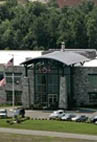
Academi HQ

►►IntelNews editor interviewed on RT. IntelNews senior editor, Dr Joseph Fitsanakis, was interviewed yesterday on the main news program of the popular international news channel RT. The interview, concerning the rebranding of private security company Xe Services (formerly Blackwater) to Academi, can be watched here (watch video at the bottom of the page).
►►Contractors making a killing working in UK cyberdefense. Britain has spent more than £100 million ($160 million) in the past year on consultants to combat cyber espionage and the growing use of the internet by terrorists. Now, members of Parliament are investigating the soaring costs of employing private contractors, some paid the equivalent of £150,000 a year, three times the average wage at GCHQ, the UK’s signals intelligence agency.
►►Japan launches second spy satellite. Japan’s space agency, JAXA, has launched an intelligence-gathering satellite, its second this year. Japan launched its first pair of spy satellites in 2003, prompted by concerns over North Korea’s missile program. It currently has four optical information-gathering satellites in orbit. Officials refused to provide details of the capabilities of the most recently launched satellite.

News you may have missed #647

Ilir Nazmi Kumbaro

Ilir Kumbaro

►►Albanian ex-spy chief on the run in Britain. Albania’s former intelligence chief, Ilir Nazmi Kumbaro, who is wanted in his homeland for torture and kidnapping, failed to attend an extradition hearing on Thursday at Westminster magistrates’ court in London. He has reportedly left his home in Fulham, west London, and police believe he is being harbored by friends.
►►Secret CIA black site discovered in Romania. The hitherto secret location, code-named “Bright Light”, is said to have been one of the CIA’s notorious interrogation prisons in Eastern Europe. It has been traced to the basement of Romania’s National Registry Office for Classified Information, which lies in a busy residential district of the Romanian capital, Bucharest.
►►CIA leaves drone base in Pakistan. The US Central Intelligence Agency has vacated an air base in western Pakistan that it had been using for drone strikes against militants in the country’s tribal areas. Pakistan had ordered the CIA to leave the Shamsi air base in protest over NATO airstrikes that killed at least 25 Pakistani soldiers near the border with Afghanistan on November 26.

Newspaper reveals name of Russian ‘spy’ expelled from Britain

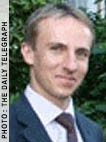
Mikhail Repin

Mikhail Repin

By JOSEPH FITSANAKIS | intelNews.org |
In December of 2010, the British government quietly ordered the expulsion of a diplomat from the Russian embassy in London, whom it accused of “activities incompatible with his diplomatic status” —technical terminology implying espionage. Moscow quickly responded with an expulsion of a British diplomat stationed in the Russian capital. The tit-for-tat incident saw no publicity, and neither man was named, as is customary in such cases. But, in its Saturday edition, British newspaper The Daily Telegraph identified the expelled Russian diplomat as Mikhail Viktorovich Repin, Third Secretary in the Political Section at the Russian embassy in London. The paper said that Repin, a fluent English speaker, was a junior officer of the political directorate of the SVR, Russia’s Foreign Intelligence Service, operating under standard diplomatic cover. Repin arrived in London in late 2007, shortly after the British government expelled four Russian diplomats in connection with the fatal poisoning of former KGB officer Alexander Litvinenko, who had defected to Britain. A “tall, suave, urbane young man”, “Michael”, as he identified himself, quickly became a permanent fixture on the embassy reception circuit and the various events hosted by London-based organizations and think tanks. He specifically joined —and regularly attended meetings of— the Royal United Services Institute, the International Institute of Strategic Studies, and Chatham House —formerly known as the Royal Institute of International Affairs. Most people that met him in those gatherings took him for “a fast-track civil servant, defense industry high flier or political adviser”, says The Telegraph. Read more of this post

News you may have missed #640

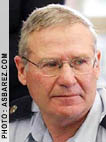
Amos Yadlin

Amos Yadlin

►►Chinese defector says Canada right to worry about spying. Li Fengzhi, a former intelligence officer for China’s Ministry of State Security, who defected to Canada in 2003, has told a conference that Canada should be concerned about relationships between senior politicians and journalists from China, saying Beijing is targeting lawmakers everywhere. He was referring to the case of senior Conservative MP Bob Dechert, who was enveloped by controversy in September over amorous e-mails he sent to Shi Rong, a Chinese government journalist based in Toronto. After the Dechert controversy broke, the journalist recalled to Beijing to meet with her superiors and has not returned to her Canadian posting.
►►More intel officials warn against airstrikes on Iran. Meir Dagan, the former head of Israeli spy agency Mossad, is not alone in warning against the possibility of Israeli attacks against Iran’s nuclear program. He has now been joined by Major General Amos Yadlin, who until recently headed Israel’s Military Intelligence directorate. Speaking at Israel’s Institute for National Security Studies, Yadlin doubted that airstrikes could threaten Iran’s numerous, distant and well-defended nuclear facilities. Another intelligence official, Saudi Arabia’s Prince Turki al-Faisal, also cautioned last week against any attacks on Iran, saying that “there are other non- military policy alternatives, as yet unexplored, that could have the desired result without the unwanted consequences”.
►►GCHQ challenges code breakers via social networks. Britain’s signals intelligence agency, the General Communications Headquarters, has launched a code cracking competition to help attract new talent. The organization has invited potential applicants to solve a visual code posted at an unbranded standalone website. The challenge will also be ‘seeded’ to social media sites, blogs and forums. A spokesman said the campaign aimed to raise the profile of GCHQ to an audience that would otherwise be difficult to reach.

News you may have missed #639 (Katia Zatuliveter edition)

Katia Zatuliveter

Katia Zatuliveter

►►Russian woman accused of spying wins right to stay in UK. Katia Zatuliveter, 26, who was accused by British counterintelligence service MI5 of being a spy for Russia, has won a court appeal against her planned deportation. A panel of the UK’s Special Immigration Appeals Commission, which included the former MI5 director general Sir Stephen Lander, ruled that MI5’s suspicions about Zatuliveter had been reasonably held, but were wrong.
►►Zatuliveter espionage case reveals MI5 fears. MI5, the security service, will be hugely disappointed that the Special Immigration Appeals Commission has overturned the government’s attempt to deport Katia Zatuliveter on allegations that she spied for Russia. But senior figures at the domestic intelligence service will have no regrets about undertaking their yearlong attempt to secure the expulsion of an individual who has given them ample grounds for suspicion.
►►How big is the threat from Russian spies? There may well be Russian spies operating in Britain today, but Katia Zatuliveter –who has won an appeal against deportation– is not one of them, and the failure of the case against her is an embarrassing blow to a security service for whom the Russians were once the top target.

News you may have missed #639

GCHQ

GCHQ

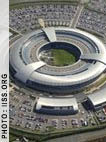
►►GCHQ will sell cyberdefense tech to private firms. The GCHQ, Britain’s signals intelligence agency, is to market some of its security technologies to companies in the private sector, in an attempt to bolster defenses against the foreboding threat of cyberwarfare. The UK government’s “cyber security strategy”, which was unveiled this month, has earmarked £650 million in public funding to set up a four-year National Cyber Security Program, a percentage of which will be used to collaborate with private companies. Click here for an excellent analysis on the public-private cybersecurity collaboration in Britain.
►►Was there a coup attempt in Trinidad? Many in Trinidad and Tobago were expressing skepticism yesterday about an alleged assassination plot, which Prime Minister Kamla Persad-Bissessar said had been uncovered against her and several of her ministers. Police said nearly a dozen people had been arrested, including members of the army and police, but authorities have not given more details, citing the need to maintain security in operations to dismantle the plot.
►►US Senators resist $7 Billion in spending cuts for spy satellites. The Obama Administration wants to stop incessant spending by Defense Department contractors, especially those who have wasted billions of US taxpayers’ money in failed spy satellite projects. But the contractors’ friends in Congress, including lawmakers on the US Senate Intelligence Committee, are trying to stop the White House from cutting a $7 billion commercial satellite program being developed by GeoEye Inc. and DigitalGlobe Inc. What else is new?

News you may have missed #638 (analysis edition)

Dominique Strauss-Kahn

Strauss-Kahn

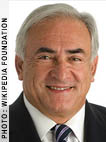
►►What really happened to Strauss-Kahn? Earlier this year, Dominique Strauss-Kahn lost his political career and his job as head of the International Monetary Fund after he was indicted in New York on sexual assault charges, which were later dropped. But investigative journalist Edward J. Epstein alleges that the French politician may have been the target of a deliberate attempt to destroy him as a political force. His allegations relate to a missing BlackBerry phone which is said to have been hacked by Strauss-Kahn’s political rivals.
►►Spy game revs up with Arab Spring. A broad –perhaps too broad– primer on espionage and intelligence operations in the Middle East, with quotes by several academics and former intelligence operatives. Parts of it are probably too basic for intelNews regulars, but worth a look nonetheless.
►►Why is UK police not investigating Climategate? The UK police force tasked with investigating the hacking of emails and documents from the Climatic Research Unit at the University of East Anglia (the debunked “Climategate“), seems to have quietly de-prioritized its investigation. According to documents released under the UK Freedom of Information Act, the amount spent on attempts to identify the hacker in the last year was just £5,649.09 (less than $8,000), suggesting police work on the investigation has ground to a halt.

News you may have missed #636

Lebanon

Lebanon

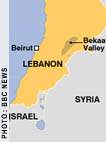
►►Careless codeword may have cost CIA its Lebanon network. Hezbollah have reportedly just rolled up the CIA’s network of spies in Lebanon. If so, it’s because of one of the stupidest, least secure code words in history. According to ABC News, Hezbollah operatives figured out that CIA informants, who had infiltrated the Iranian proxy group, were meeting with their agency handlers at a Beirut Pizza Hut. How could Hezbollah deduce that location? “The CIA used the codeword ‘PIZZA’ when discussing where to meet with the agents,” ABC reports.
►►UK spy chiefs to be publicly questioned for first time. The heads of British intelligence agencies are set to be questioned for the first time in public, under plans to make spies more accountable. The directors of MI5, MI6 and GCHQ will face Parliamentarians on the Intelligence and Security Committee. Although, they have recently begun to make rare public appearances, and deliver speeches, it will be the first time the intelligence agency heads will face public cross-examination over their activities.
►►Documents reveal largest domestic spy operation in Canadian history. Police organizations across Canada co-operated to spy on community organizations and activists in what the Royal Canadian Mounted Police called one of the largest domestic intelligence operations in Canadian history, documents reveal. Information about the extensive police surveillance in advance of last year’s G8 and G20 meetings in southern Ontario comes from evidence presented in the case of 17 people accused of orchestrating street turmoil during the summits.

News you may have missed #635

Vitaly Shlykov

Vitaly Shlykov

►►UK to support Colombia’s new intelligence agency. The UK has announced that it will provide help and advice on the implementation of Colombia’s new national intelligence agency. Colombian President, Juan Manuel Santos, along with National Security Adviser, Sergio Jaramillo, met with the director of Britain’s secret service MI6 to exchange experiences in intelligence to implement the new National Intelligence Agency of Colombia (ANIC). ANIC is supposed to replace the DAS, Colombia’s disgraced intelligence agency, which has been stigmatized by colluding with paramilitary groups and spying on union leaders, journalists and opposition politicians.
►►US intelligence to train analysts with videogames. The US intelligence community’s research group, the Intelligence Advanced Research Projects Agency (IARPA), has handed over $10.5 million to Raytheon BBN Technologies to start work on the Sirius program. The initiative aims to create a series of so-called “serious games” that would help intelligence analysts improve their objectivity and reasoned judgment when confronted with complex or culturally foreign scenarios.
►►Soviet spy who spent years in Swiss prison dies at 77. Vitaly Shlykov served for 30 years in the Main Intelligence Directorate of the Russian General Staff, known as GRU. During his career, he made frequent trips to the West on a false American passport. One of his duties was to maintain contacts with Dieter Felix Gerhardt, a senior officer of the South African Navy who was working as a Soviet spy. In 1983, Shlykov was arrested in Zurich while carrying about $100,000 in cash to hand over to Gerhardt’s wife. Soviet intelligence was unaware that Gerhardt and his wife had been arrested a few weeks earlier and had told interrogators about the meeting in Switzerland.

News you may have missed #633

Abdullah al-Senussi

Al-Senussi

►►Is Britain secretly assisting the CIA’s drone campaign? In the latest casualties from America’s hidden war in Pakistan, two British nationals, Ibrahim Adam and Mohammed Azmir, have reportedly been killed by drone missiles. The death of two men already known to UK authorities raises serious questions about the role that the British intelligence services are playing in the CIA’s unmanned drone war.
►►Gaddafi’s intelligence chief captured. Libya’s interim authorities have captured the last totem of the Gaddafi regime, seizing former intelligence chief Abdullah al-Senussi in the country’s southern desert. The arrest means that all leading figures from the Gaddafi regime have now been killed, captured or driven into exile.
►►South Korea says it caught North spy. A North Korean spy has been arrested after arriving in South Korea posing as a refugee, according to South Korean authorities. The latter claim to have found during a routine background check that the man, surnamed Kim, was assigned to the North’s military intelligence command and had received espionage training.