News you may have missed #585 [updated]

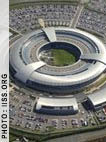
GCHQ

GCHQ

►►GCHQ recovers £300m worth of stolen information. Details stolen from more than a million credit cards across Europe, worth an estimated £300 million, have been recovered by Britain’s GCHQ signals intelligence spy agency, according to The Daily Telegraph.
►►Kuwait arrests alleged Iraqi spy. Kuwait security forces have arrested a man of Iraqi origin for alleged intelligence links with Iraq, a Kuwaiti daily said on Sunday. The man, who was arrested on Friday, and is referred to by the media as “Abu Ahmad”, was staying illegally in the country and allegedly provided Iraq with sensitive information about vital facilities in Kuwait. This is the third time in recent months that the government of Kuwait has pressed espionage charges against a spy suspect. [Update: Kuwait denies reports of spy’s arrest]
►►Hackers steal CIA and Mossad SSL certificates. The tally of digital certificates stolen from a Dutch company in July has exploded to more than 500, including ones for intelligence services like the CIA, the UK’s MI6, and Israel’s Mossad, a Mozilla developer said Sunday. According to some sources, the hackers were Iranian.

CIA Helped Gaddafi Torture Libyan Dissidents, Documents Show

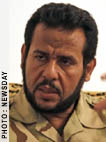
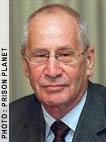
Abdel Hakim Belhaj

Abdel Belhaj

By JOSEPH FITSANAKIS | intelNews.org |
Back in February, when Libyan leader Muammar al-Gaddafi blamed the popular revolt against him on al-Qaeda, he was ridiculed in the international media. But documents discovered at an abandoned Libyan government office complex show that the Libyan rebels’ supreme military commander was abducted in 2004 by the CIA, which suspected him of links to al-Qaeda. Abdel Hakim Belhaj, also known as Abdullah al-Sadiq, was snatched by a CIA team in Malaysia, and secretly transported to Thailand, where he says he was “directly tortured by CIA agents”. The CIA then renditioned him to Libya, where he says he was tortured routinely until his release from prison, in 2010. In the 1980s, Belhaj was a member of the foreign Mujahedeen summoned by Osama bin Laden’s al-Qaeda to fight the Russians in Afghanistan. Upon returning to Libya in the early 1990s, he led the Libyan Islamic Fighting Group, an al-Qaeda-inspired armed organization that unsuccessfully sought to assassinate Colonel Gaddafi. Ironically, Belhaj is now the Tripoli-based military commander of the Libyan National Transitional Council, and says that he wants a full apology from the United States and Britain “for the way he was transported to prison in Libya in 2004”. But the former Mujahedeen is one of several terrorism suspects delivered to Libya by Western intelligence agencies in the years after 9/11, according to Libyan government documents discovered by Human Rights Watch (HRW) workers at the office of Libyan former intelligence chief and foreign minister Moussa Koussa. The documents show that Libya’s External Security Organization maintained extremely close relations with German, Canadian, British, and American intelligence services. Read more of this post


News you may have missed #580

Baroness Manningham-Buller

Manningham-Buller

►►Ex-MI5 director says Iraq posed not threat to UK. Iraq posed no threat to the UK when then Prime Minister Tony Blair took Britain to war there, according to Baroness Manningham-Buller, former Director of MI5, Britain’s domestic intelligence agency. In an interview, she described the Iraq war as an unnecessary action that increased the domestic threat to the UK, and “a distraction from the pursuit of al-Qaeda”. No kidding.
►►Interview about DAS wiretaps with Colombia Attorney General. This blog has covered extensively the wiretapping program against opposition politicians, journalists and civil rights activists, by Colombia’s disgraced DAS domestic intelligence agency. This Washington Post interview with Colombia’s new attorney general, Vivian Morales, displays the toothless nature of the government’s ‘investigation’ into the scandal. Morales says that her investigation has “nothing to do” with allegations that the Colombian government used funds provided by Washington to implement the wiretapping. She also says that she cannot “legally investigate” the question of whether former President Alvaro Uribe knew about the wiretaps.
►►Taiwan losing spy game with China. The deputy news editor of The Taipei Times argues that the United States is scaling back its sales of defense equipment to Taiwan because of “the penetration of almost every sector of Taiwanese society by Chinese intelligence”. Accordingly, “any arms sale to Taiwan carries the risk that sensitive military technology will end up in Beijing”, he says.

Documents reveal MI5 role in Guyana coup

Cheddi and Janet Jagan

The Jagans

By JOSEPH FITSANAKIS | intelNews.org |
Secret intelligence documents declassified last week reveal that Britain’s Security Service, known as MI5, played a significant role in the lead-up to the 1953 coup that toppled the democratically elected government of British Guiana. The Latin American territory, which borders Suriname, Venezuela and Brazil, was once one of the British Empire’s most lucrative sugar-producing colonies. In 1963, after gaining its independence from Britain, it was officially renamed the Co-Operative Republic of Guyana. Instrumental in the fight for independence was Cheddi Jagan —an ethnic Indian former dentist who is today considered the father of the nation— and his American-born wife Janet (née Rosenberg). In 1950, the couple founded the People’s Progressive Party (PPP), which became the primary pro-independence political vehicle in the British colony. But dozens of folders of classified documents that were released last Friday by Britain’s National Archives show that MI5 was suspicious of the Jagans, and believed that Janet had been a member of the Communist Party of the United States in the 1940s. Several MI5 reports from the 1950s express concern that the PPP intended to establish close proximity between a newly independent Guyana and the Soviet Union. The declassified MI5 archives contain countless transcribed telephone conversations between the Jagans and their political allies, as well as copies of intercepted correspondence and reports of physical surveillance by MI5 informants. They reveal that British intelligence closely monitored the Jagans for at least a decade. Even though MI5 concluded that the PPP had no close contacts with Soviet agents or agencies, and that the party was “not receiving any financial support from any Communist organization outside the country”, it continued to describe Janet Jagan as “a committed communist” and remained apprehensive of the couple’s “disruptive antics”. The British government of Winston Churchill decided to take aggressive action in 1953, after a landslide election victory for the PPP in British Guiana elections. Read more of this post

News you may have missed #576 (Libya edition)

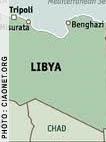
Libya

Libya

►►Rebels seize Libyan intelligence service HQ. Rebel forces of the National Transitional Council have occupied the Tripoli headquarters of Libya’s intelligence service. Al Jazeera, which was given access to the building by the rebels, says that it is “full of confidential documents that could provide a valuable insight into what was one of the world’s most secretive regimes. But”, adds the report, “it will take weeks to sift through”.
►►Gadhafi’s loose weapons could number a ‘thousand times’ Saddam’s. This is the alarming assessment of Peter Bouckaert, emergencies director at Human Rights Watch, who spent time on the ground in Libya during the uprising. He told Wired magazine’s Danger Room blog that “weapon proliferation out of Libya is potentially one of the largest we have ever documented —2003 Iraq pales in comparison— and so the risks are equally much more significant”.
►►The bewildering dance between Gaddafi and MI6. A well-researched article in The Independent newspaper, written by one of Britain’s most esteemed diplomatic correspondents, Gordon Corera. He argues that Britain and the Gaddafi regime “were not always the enemies they are now”.

News you may have missed #576 (Europe edition)

GCHQ

GCHQ

►►Inside Britain’s signals intelligence agency. This account of the work of Britain’s General Communications Headquarters is a bit basic, but it’s not every day that the GCHQ grants access to a journalist to its Cheltenham base.
►►Czech telecoms to share data with intel services. The Czech Interior Ministry has placed a clause in the planned amendment to the electronic communications law, under which operators of communication networks will have to provide data on cell phones and the Internet to the civilian and military counterintelligence.
►►Dutch F-16 pilot suspected of espionage. A Dutch former F-16 pilot suspected of espionage, identified only as Chris V., had more state secrets in his possession than he previously admitted to, according to public prosecutors in The Hague. The pilot was arrested last April and stands accused of leaking state secrets to a colonel from Belarus.

News you may have missed #575

IARPA logo

IARPA logo

►►Inquest into death of MI6 spy to go ahead. The inquest into the bizarre death of MI6 and GCHQ officer Gareth Williams will go ahead before Christmas without a jury, according to London-based newspaper The Express. The paper says that “12 spy chiefs will attend [the inquest] to explain the background to the case”.
►►Colombia’s ex-president denies role in spy scandal. Alvaro Uribe has denied, during a 3½-hour appearance before a Colombian congressional committee, that he ordered the country’s domestic intelligence agency to spy on judges, journalists and political foes. More than 20 agents of the DAS intelligence agency have been imprisoned for alleged roles in the spying. Two more have pleaded guilty in exchange for reduced sentences.
►►US spy research firm eyes stock market. IARPA, the US intelligence community’s research arm, plans to introduce a new program to develop tools to help analysts “quickly and accurately assess petabytes of complex anonymized financial data”. According to a conference presentation, the program would help spies “analyze massive amounts of data to spot indicators of market behavior, find relationships between seemingly unrelated transactions across hundreds of global markets, and provide insight into specific events and general financial trends”.

Western spies, security contractors, won Libyan war for rebels

Libya

Libya

By JOSEPH FITSANAKIS | intelNews.org |
As I write these lines, celebratory gunfire is being heard all across Tripoli and the rebel National Transitional Council is appointing civilians to replace the crumbling administration of longtime Libyan leader Muammar al-Gaddafi. But a handful of news outlets discreetly remind us that the rebels’ claim to victory rests on vital covert assistance provided by several Western intelligence services. British daily The Independent notes that the victorious rebels were assisted on all levels by “an army of [British] diplomats, spooks, military advisers and former members of the special forces”, all of whom allowed “London to influence events in Libya beyond the activities of warplanes and naval vessels”. Early indications of Britain’s substantial covert involvement in the Libyan civil war emerged in March, when a secret operation involving a team of 20 Special Air Service (SAS) personnel was disrupted by a group of Libyan rebels, who thought the foreigners were employed by the Libyan government. Eight captured SAS members were soon released by the red-faced rebels, but not before the botched operation had made headlines all over the world. That experience prompted British intelligence planners to rethink their methodology. Eventually, notes The Independent, the British government decided to prompt the rebel National Transitional Council to use British funds to hire teams of former special forces operatives working for private security firms. This, according to the paper, accounts for the “small groups of […] Caucasian males, many with British accents [and] equipped with sunglasses, 4×4 vehicles and locally acquired weaponry, who [were] seen regularly by reporters in the vanguard of the rebels’ haphazard journey […] towards Tripoli”. Read more of this post

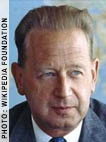
Was plane carrying UN Secretary General shot down in 1961?

Dag Hammarskjöld

Hammarskjöld

By JOSEPH FITSANAKIS | intelNews.org |
On September 17, 1961, a Douglas DC-6 transport aircraft carrying United Nations Secretary General Dag Hammarskjöld crashed in the British-administered territory of Northern Rhodesia (now Zambia). The crash killed everyone onboard, except one passenger, who died hours later. Three successive investigations into the crash, conducted by the Rhodesian Board of Investigation, the Rhodesian Commission of Inquiry, and the United Nations Commission of Investigation, viewed “pilot error” as the most likely cause of the tragedy. Göran Björkdahl, a Swedish aid worker with Sweden’s International Development Cooperation Agency, who is stationed in Burkina Faso, has spent three years researching Hammarskjöld’s death. He has produced a report with his findings, in which he cites interviews with several witnesses of the crash, who are still living. He says that, according to the evidence he has amassed, he has “no doubt” Dag Hammarskjöld’s plane was “shot down by an unidentified second plane”. In an article published in British quality broadsheet The Guardian, Björkdahl also claims that the only survivor of the downed DC-6, American sergeant Harold Julian, who was a member of the UN Secretary General’s security detail, was abandoned to die of his injuries at a makeshift hospital in Ndola, Northern Rhodesia. Björkdahl’s claim is based on his interview with colonial medical practitioner Mark Lowenthal, who tried to treat Julian in the hours following the airplane’s crash. Moreover, Björkdahl alleges that British colonial authorities in Northern Rhodesia were eager to cover up the details of the incident, and went out of their way to intimidate local villagers who witnessed the crash, and to downplay witness testimony suggesting that the Douglas DC-6 may have been shot down. Read more of this post

News you may have missed #571 [updated]

Markus Wolf

Markus Wolf

►►East German spymaster’s widow loses pension battle. Andrea Wolf, The widow of Markus Wolf, the shadowy spymaster of communist East Germany, lost a court battle on Monday to reclaim his honorary pension. Dubbed “The Man Without a Face” because Western intelligence services long lacked even a photograph of him, Wolf directed the General Intelligence Administration, the foreign intelligence division of East Germany’s Stasi. He died in 2006, at the age of 83.
►►Dominica government officials deny spying accusations. Dominican officials have strongly denied accusations that the government of the former British colony, through the National Joint Intelligence Committee (NJIC), has been spying on the activities and actions of political activists over the last few months. According to the allegations, in one case, in April 2009, a member of the Dominica Police Force was sent to Brooklyn, New York, to spy on a conference on the political situation in Dominica, on orders from the country’s Prime Minister. But Dominica’s Police Commissioner, Cyril Carrette, denied the existence of NJIC, and called the accusations unfounded.
►►British spy agency called in to crack BlackBerry encryption. The British intelligence service, MI5, has been drafted in to assist its sister service, GCHQ, in cracking the BlackBerry encryption code, in order to find those responsible for Read more of this post

News you may have missed #568

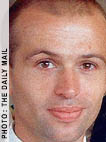
Gareth Williams

Gareth Williams

►►Lebanon intercepts covert arms shipment bound for Syria. It looks like anti-Syrian Lebanese groups, allied with former Lebanese Prime Minister Saad Hariri, are smuggling Kalashnikovs and M-16s across the border to anti-government rebels in Banyas and other Syrian towns. The question is, where are these arms coming from? It is also worth noting that the Syrian army claimed last week that it has detained hundreds of Salafi fighters –including Afghans– with Lebanese documents.
►►Russian embassy cars seen near murdered MI6 officer’s flat. British paper The Daily Mail quotes an unnamed “former KGB agent who fled to London 12 years ago”, who says that he “logged two cars with Russian diplomatic number plates […] parked or driving close” to the central London apartment of MI6 and GCHQ officer Gareth Williams. The unnamed former agent says he noticed the vehicles around the time when Williams is believed to have been murdered in his apartment.
►►Indonesian intel reports on West Papua leaked. Hundreds of intelligence briefs from Indonesia’s elite special forces unit, Kopassus, have been obtained by Australian newspaper The Age. They include a detailed analysis of the separatist movement in oil-rich Western Papua. According to the Australian press, the reports “illustrate the level of paranoia in Jakarta about its hold over the resource-rich region”.

British spies considered giving Hitler female hormones

Adolf Hitler

Adolf Hitler

By JOSEPH FITSANAKIS | intelNews.org |
Thanks to the tireless effort of intelligence historians, we now have a brand new revelation from spy archives that can proudly stand alongside the CIA’s acoustic kitty, and the plan to poison Cuban leader Fidel Castro with a chemical that would make his beard fall out. This latest disclosure, however, surely tops the list of lunatic covert-operation schemes. According to newly discovered documents, British intelligence planners seriously considered secretly administering small doses of estrogen into the food of Adolf Hitler, in order “to make his character less aggressive”. According to the documents, British intelligence had managed to recruit a number of agents who were close enough to the German Chancellor to have physical access to his daily meals. It would have been possible, therefore, to tamper with the Nazi leader’s food intake on a routine basis, in an effort to alter his brain chemistry, which, it was hoped, would “soften his character”. The obvious question to ask, of course, is: if British intelligence had access to the Führer’s food, and if his military policies were considered a clear and present strategic threat to Britain’s security, then why not lethally poison him altogether? According to Cardiff University Professor Brian Ford, who discovered the cunning estrogen plan, British intelligence planners knew that Hitler systematically employed food tasters; it would therefore have been close to impossible to employ food poisoning as a method of assassination. Estrogen, on the other hand, is tasteless, odorless, and —if properly dispensed— could have a subtle and gradual effect on Hitler’s brain chemistry and personality. Read more of this post

News you may have missed #554

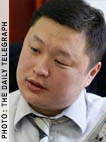
Bat Khurts

Bat Khurts

►►UK and US tried to delay Pakistan nuclear weapons program. We have written before about attempts by the CIA to delay or stop Pakistan’s nuclear program. Now newly declassified documents show that the United States and Great Britain undertook a coordinated secret diplomatic campaign between 1978 and 1981 to prevent Pakistan’s attempted covert purchasing of “gray area” technology for its nuclear weapons program.
►►FBI monitoring new phone technologies. According to an internal FBI document, obtained by the Federation of American Scientists through a FOIA request, the FBI continuously monitors the surveillance challenges posed by new mobile phone technologies. The document highlights the Bureau’s concerns that that 4G will require agencies to “deal with significantly higher data rates than in current wireless network intercepts”.
►►Mongolian ex-spy chief to be extradited to Germany. Britain has decided to extradite Bat Khurts, former director of the General Intelligence Agency of Mongolia, to Germany. Read more of this post

News you may have missed #542

Sir John Chilcot

Sir John Chilcot

By IAN ALLEN | intelNews.org |
►►Ex-spy says MI6 cut corners to back Blair’s Iraq war case. Britain’s ongoing Iraq Inquiry headed by Sir John Chilcot, heard last week from a former spy, identified in documents only as “SIS2”. The witness said that MI6 was “probably too eager to please” the government and was guilty of “flying a bit too close to the sun”. He was referring to the intelligence support provided by MI6 in support of the case for entering the Iraq War, made by the Labour government of Prime Minister Tony blair in 2003. He also told the committee that “the pressure to generate results, I fear, did lead to the cutting of corners”. ►►Medical group criticizes CIA’s vaccination scheme. A whimiscal tone prevails in most articles on the recent revelation that the CIA tried to collect DNA evidence on Osama bin Laden by running a phony vaccination program in Abbottabad, Pakistan. But medical groups engaged in organizing vaccination schemes are not amused. French-based international medical aid charity Médecins Sans Frontières has lashed out at the CIA because, it said, by using a medical cover for its assassination scheme, the Agency endangered those who conduct life-saving immunization work around the world. Read more of this post