Germans kidnapped in Ukraine had ‘intelligence connections’

Map of UkraineBy IAN ALLEN | intelNews.org
Four German military observers, who were kidnapped in Ukraine by pro-Russian separatists, are members of a military agency that has intelligence contacts, but are not themselves spies, according to a leading German newspaper. The German observers were abducted along with several other Western military officials on April 25, in the eastern Ukrainian city of Sloviansk. They were participating in a military verification mission organized by the Organization for Security and Cooperation in Europe (OSCE). At the time of the abduction, one pro-Russian separatist leader, Vyacheslav Ponomarev, said his group had decided to detain the OSCE monitors due to “credible information” that they were spies for the North Atlantic Treaty Organization (NATO). The OSCE strongly denied the accusation that its monitors were intelligence operatives, saying that the kidnappers’ claims were aimed at damaging the reputation of the organization. With nearly 60 signatories to its charter, the OSCE has operated since 1975 with the aim of securing peace across the European continent. It regularly supplies military observers to investigate what it terms “uncommon military operations” in nations that formally invite their presence, as Ukraine did last month. On Monday, German newspaper Süddeutsche Zeitung said that, although the four German OSCE observers are not employees of German intelligence agencies, they do maintain “certain connections” with Germany’s Federal Intelligence Service, known as Bundesnachrichtendienst, or BND. The Munich-based broadsheet claimed that the inspectors, who had been given diplomatic status during their deployment in Ukraine, are not members of staff at the BND or MAD, Germany’s Military Counterintelligence Service. However, they are employed at the Verification Center of the Bundeswehr —Germany’s federal armed forces. The mission of the Center, which is based in the town of Geilenkirchen, in Germany’s North Rhine-Westphalia, is to verify compliance with weapons control agreements signed between Germany and other countries. Read more of this post

Ukraine expels Russian diplomat for ‘spying activities’

Embassy of Russia in KievBy JOSEPH FITSANAKIS | intelNews.org
The Ukrainian government has issued an expulsion order for an unidentified Russian diplomat, who was detained on Wednesday for allegedly engaging in “spying activities”. On Thursday, Ukrainian government officials announced that a Russian naval attaché stationed in Ukrainian capital Kiev had been declared persona non grata (an unwelcome individual) for “engaging in acts incompatible with his diplomatic status”. The phrase is used in the international legal vernacular to describe an accredited diplomat engaging in intelligence operations abroad without the consent of his or her host nation. The Ukrainian Ministry of Foreign Affairs told reporters that the attaché had been found to “engage in spying activities”. Initially, ministry officials did not specify the nature of the Russian diplomat’s alleged spying activities. Later, however, in response to a question by a journalist, Ukrainian government representatives said that the diplomat was collecting intelligence on military and political cooperation between Ukraine and the North Atlantic Treaty Organization. At a separate public briefing, Maryna Ostapenko, spokeswoman for the SBU, Ukraine’s counterintelligence agency, said the Russian diplomat was in fact an accredited intelligence officer, who was detained “while committing spying activities” on April 30. She told reporters that the diplomat was “caught red-handed receiving classified material from his source”. Ostapenko later described the source as an unidentified colonel in the armed forces of Ukraine. A press release by the Ukrainian Ministry of Foreign Affairs said that the diplomat had been ordered to “leave the territory of the country [of Ukraine] as soon as possible”. There has been no immediate response from the Kremlin. Read more of this post

British spy chiefs ‘warn against’ Western military action in Ukraine

Map of UkraineBy IAN ALLEN | intelNews.org
The heads of British intelligence agencies are said to have advised London that interfering militarily in Ukraine would likely prompt a violent Russian response. The Sunday People said last weekend that Whitehall has been advised a Western military interference in Ukraine would “risk spiraling into an all-out war with Russia”. The Labour-supporting paper, which is published by the Trinity Mirror group, claimed that the head of MI6, Sir John Sawers, is understood to have told British Prime Minister David Cameron that the Russian government “will not stand idly by” if Western troops enter Western Ukraine, ostensibly to prevent westward military advances by Russian forces. One “senior source” told The People that the message delivered to Whitehall was that “it’s not worth starting World War Three over Ukraine”. The briefing appears to rest on intelligence acquired from sources in Russia, as well as by MI6 operatives on the ground in eastern Ukraine, which, according to the paper, “have been moving around [eastern Ukraine] covertly, monitoring border crossing points and towns where Russian support is strongest”. Meanwhile on Monday the United States Department of State distributed an 11-page document with photographs alleging that Russian Spetsnaz (special purpose forces) troops are among the occupiers of government buildings in eastern Ukraine. The same document was distributed last week by Ukrainian officials at a meeting of the Organization for Security and Co-operation in Europe. Early on Tuesday, US Vice President Joe Biden, who is visiting Ukrainian capital Kiev, pledged $50 million to help the country’s government carry out unspecified “political and economic reforms”. About a fifth of that amount has been earmarked to help fund Ukraine’s presidential election in late May of this year. Read more of this post

News you may have missed #876 (analysis edition)

Russian troops in UkraineBy IAN ALLEN | intelNews.org
►►Why did Obama not bomb Syria? In 2011 Barack Obama led an allied military intervention in Libya. Last August, after the sarin attack in Syrian capital Damascus, he was ready to launch an allied air strike to punish the Syrian government for allegedly crossing the ‘red line’ he had set in 2012 on the use of chemical weapons.​ But with less than two days to go before the planned strike, he announced that he would seek congressional approval for the intervention. The strike was later postponed. Why did Obama relent on Syria when he was not shy about rushing into Libya? Award-winning investigative reporter Seymour Hersh argues that the answer lies in “a clash between those in the Obama administration who were committed to enforcing the red line, and military leaders who thought that going to war was both unjustified and potentially disastrous”.
►►What is the role of the FSB in the Ukrainian crisis? On April 4, the Ukrainian Foreign Ministry sent a note to Moscow demanding to know why FSB Colonel General Sergei Beseda visited Kiev in February. The very next day Russian news agency InterFax cited a source in Russian intelligence confirming that visit. Beseda heads the FSB Fifth Service’s Operational Information Department, which is responsible for conducting intelligence activities focusing on the former Soviet republics. Agentura.ru intelligence analyst Andrei Soldatov says that the answer as to why Beseda was in Kiev could be key to understanding the role of Russia’s intelligence agencies in the current crisis and to the Kremlin’s entire strategy in Ukraine.
►►What would a US-Russia war look like? The chances that the US and Russia will clash militarily over Moscow’s invasion of Ukraine are very, very slim. But, says The Week’s Peter Weber, if we learned anything from World War I, it’s that huge, bloody conflicts can start with tiny skirmishes, especially in Eastern Europe. So what would a US-Russia war look like? The US is much wealthier than Russia and spends a lot more on its military. That doesn’t mean a war would be easy for the US to win, though, or even guarantee a victory. As Napoleon and Hitler learned the hard way, Russia will sacrifice a lot to win its wars, especially on its home turf.

White House confirms CIA Director visited Ukraine

John BrennanBy JOSEPH FITSANAKIS | intelNews.org
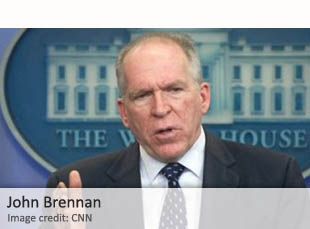
White House officials has confirmed that the director of the Central Intelligence Agency visited Ukraine over the weekend, following reports in the Russian media. On Sunday, Moscow urged Washington to respond to allegations in the Russian press that CIA Director John Brennan had made an incognito visit to Ukrainian capital Kiev. The reports alleged that Brennan, who assumed the directorship of the CIA a year ago, traveled to Ukraine on official business under a false identity in order to avoid attention. Russian media further alleged that the CIA head met with a host of Ukrainian intelligence and security officials and advised them on how to respond to the ongoing crisis in eastern Ukraine. Initially, Washington denied comment on the allegations. But early on Monday White House Press Secretary Jay Carney told reporters that Brennan had indeed traveled to Ukraine over the weekend. He said that the White House normally declines comment on the whereabouts of the CIA Director. However, “given the extraordinary circumstances” in the case of Ukraine, he said he was willing to confirm that Brennan was in Kiev over the weekend “as part of a trip to Europe”. He went on to state that he hoped the official confirmation of Brennan’s trip by the White House would suffice to discredit the “false claims being leveled by the Russians at the CIA”. Carney added that there was nothing inherently suspicious about a CIA Director’s trip to a foreign country. He argued that “senior-level visits of intelligence officials [abroad] are a standard means of fostering mutually beneficial security cooperation” and that such visits —some of which have been to Russia— go back “to the beginnings of the post-Cold War era”. Read more of this post

United States allegedly not sharing Russia intelligence with Ukraine

Russian troops in UkraineBy JOSEPH FITSANAKIS | intelNews.org
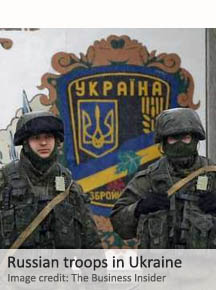
The United States is not sharing with the Ukrainian government detailed intelligence or Russia’s military buildup, according to American lawmakers. Moscow is reportedly deploying large numbers of troops along Russia’s border with Ukraine, while US intelligence agencies have allegedly detected the presence of Russian military supply lines that would be required for a land invasion of Ukraine. The US administration of President Barack Obama has publicly expressed solidarity with the Ukrainian government and has warned the Kremlin that any military incursions into eastern Ukraine would constitute a grave “historical error” that would bear serious consequences for the Russian leadership. But according to American news reporting website The Daily Beast, Washington has instructed the American military and intelligence community to refrain from sharing detailed intelligence on Russia’s military buildup with Ukrainian authorities. Details being kept from Ukrainian eyes include “imagery, intercepts and analysis” that pinpoint the exact location of Russian troops along the Ukrainian border. They also include intelligence predictions of how Russian units would deploy during a possible invasion of Ukraine. The Daily Beast, which is owned by Newsweek, cited “US officials and members of Congress” who were briefed by intelligence personnel earlier this week on the situation in Ukraine. They told the news website that senior American military officials have been instructed “to refrain from briefing their Ukrainian counterparts in detail” about information on Russian troop movements held by American intelligence agencies. The Daily Beast quotes Republican Representative Michael Turner, chair of a subcommittee of the House Armed Services Committee that oversees America’s tactical air and land force strength. Turner told the website that he is “not confident” that Washington is “sharing any of that kind of [detailed military] information” with Kiev. Read more of this post

Analysis: Time for Western spy agencies to refocus on Russia?

Pro-Russian celebrations in CrimeaBy JOSEPH FITSANAKIS | intelNews.org
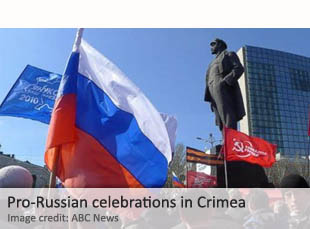
During the Cold War, Western intelligence agencies relied on legions of Soviet specialists to make sense of the Kremlin’s policy maneuvers. The American Intelligence Community in particular was almost exclusively engaged in collecting information on the USSR. To the extent that American intelligence collectors were active in countries other than the USSR, it was primarily in order to monitor Soviet activity. The implosion of the Soviet Union brought about a relaxation of Western intelligence collection efforts against Russian targets, a process that was further fueled by the 9/11 attacks. The latter turned the attention of Western intelligence collectors on Islamist-inspired militancy in the Middle East and other predominantly Muslim regions. The legions of Western Sovietologists and Russia specialists saw their careers stagnate, as counterterrorism became the predominant buzzword in intelligence circles. But the recent invasion and annexation of Crimea by Russia is prompting a reexamination of intelligence collection priorities among Western spy agencies. A recent analysis piece by the Reuters news agency suggests that some Western intelligence planners view the events in Crimea as “demonstrating a dramatic need for renewed focus” on Russia. There is concern among intelligence specialists, says Reuters, that no signals chatter was detected in Russia in the weeks prior to the invasion of Crimea to indicate an imminent Russian takeover of Ukrainian territory. This alleged weakness is coupled by concerns among some foreign-policy planners that the West is potentially entering “a new era of […] confrontation with Moscow”, argues Reuters. If this is true, then Western intelligence agencies will need to replenish their level of expertise on Russia, which, according to some intelligence insiders, “has diminished drastically” in the last decade. Read more of this post

News you may have missed #874

Hamid AboutalebiBy IAN ALLEN | intelNews.org
►►Intel involvement in flight MH370 sparks terrorism speculation. Malaysian authorities have revealed secret services from the UK, the US and China have been involved in the investigations into the disappearance of the missing Malaysia Airlines flight MH370, adding to speculation that the plane’s disappearance could be down to terrorism.
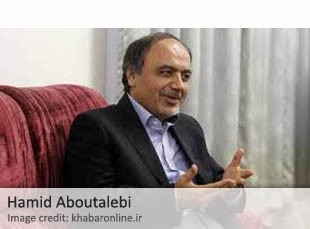
►►Iran picks former US Embassy hostage-taker as UN envoy. The Iranian government has applied for a US visa for Hamid Aboutalebi, Iran’s former ambassador to Belgium and Italy. Aboutalebi was a member of a group calling itself “Muslim Students Following the Imam’s Line”, a group of radical students controlled by Ayatollah Khomeini, who seized the US embassy in Tehran on November 4, 1979. A controversy over Aboutalebi’s appointment could prompt the Obama administration to take the unusual step of denying a visa to an official posted to the UN.
►►Analysis: Ukrainian Navy devastated by Russian move into Crimea. Ukraine’s maritime forces have been dealt a heavy blow by the Russian intervention in Crimea with 12 of its 17 major warships, nearly 40 support vessels, and much of its naval aviation assets now falling under Moscow’s control. Almost every Ukrainian naval base and ship on the peninsula has been seized by Russian forces or local pro-Moscow self-defense units. Over the past three weeks, the majority of the Ukrainian military personnel in Crimea have defected to the Russian military or resigned from military service.

Leader of Ukrainian ultra-nationalists killed by security forces

Oleksandr MuzychkoBy JOSEPH FITSANAKIS | intelNews.org
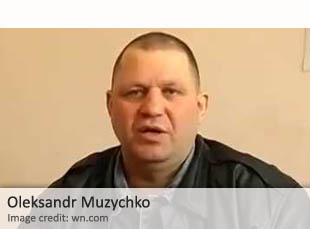
A senior official of Ukraine’s largest far-right group, which played a central role in anti-government protests earlier this year, has been shot dead by security forces, according to reports. The official, Oleksandr Muzychko, was the chief coordinator in western Ukraine of the Right Sector, known locally as Pravyi Sektor. The organization, which was founded in November of 2013, operates as an alliance of far-right Ukrainian nationalist groupings, whose ideological leanings range from ultra-conservative to openly neo-Nazi. The group’s active membership is estimated at below 10,000. However, its well-organized paramilitary wing was instrumental in helping demonstrators fight against government forces in the streets of Ukraine during the Euromaidan civil unrest that toppled the government earlier this year. Despite his vocal stance in favor of the anti-government demonstrators, Muzychko, who had in the past expressed strong anti-Russian and anti-Semitic views, was viewed as an embarrassment by Ukraine’s pro-Western authorities. The latter routinely referred to him as “a criminal” and “extortionist” —referring to his sting in prison following his conviction for extortion in 1999. Earlier this month, Russian authorities issued an arrest warrant for Muzychko, whom they accuse of having been part of a group of Ukrainian ultra-nationalists that fought alongside Muslim Chechen rebels against Russian forces in the Russian Caucasus. According to Ukraine’s Ministry of Interior, Muzychko, known locally as ‘Sashko Bily’, died during a shoot-out with Ukrainian security forces in a restaurant in the northwestern Ukrainian city of Rivne, which is considered a stronghold of the Right Sector. In a press conference on Tuesday, Ukraine’s Deputy Interior Minister, Vladimir Yevdokimov, said security forces had gone to the restaurant to arrest Muzychko and “three other gang members”. According to Yevdokimov, the high-profile Right Sector official was gunned down after he opened fire at the security forces, injuring one, and then tried to escape. But Ukrainian parliamentarian Oles Doniy told journalists that Muzychko had been killed under custody, after he was kidnapped by unknown assailants. Doniy said Muzychko’s body was later found “dumped with his hands tied behind his back and two bullet wounds in his heart”. Authorities in Kiev said the three “gang members” arrested at the site of the shootout had been taken in for questioning. Meanwhile, members of the Right Sector have threatened revenge for Muzychko’s killing.

Pro-Russian oligarch arrested —first sign of US sanctions on Russia?

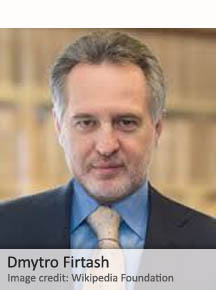
Dmytro FirtashBy IAN ALLEN | intelNews.org
A well-connected Ukrainian oligarch, who is considered one of Russia’s most trusted energy sales intermediaries, has been arrested in Austria at the request of the United States. Some speculate that this may be a first direct sign of America’s response to Russia’s military invasion of Ukraine. In an article published last week, The Washington Post suggested that the arrest of Dmytro Firtash, a citizen of Ukraine, may be “the beginning of a US effort to inflict financial pain on Russia over its role in the Ukrainian crisis”. Firtash’s lucrative business activities are inextricably tied to Gazprom, the world’s largest extractor of natural gas and one of the most powerful corporations in existence. The company, whose activities typically account for around 10 percent of Russia’s annual gross domestic product, is one of Moscow’s primary exporters of energy and among its most important sources of foreign revenue. Throughout the last decade, Firtash’s company, RosUkrEnergo, acted as the primary mediator between Gazprom and Naftohaz, Ukraine’s national oil and gas company. The latter would import Russian natural gas from Gazprom through RosUkrEnergo, which would purchase it from the Russian company and sell it to the Ukrainians at a noticeably steeper price. Eventually, in 2009, the government of pro-Western Ukrainian Prime Minister Yulia Tymoshenko managed to remove RosUkrEnergo as a broker from the energy deals between Kiev and Moscow. But Tymoshenko, who became herself embroiled in a financial corruption scandal, was soon imprisoned. And in 2013, Gazprom approached the pro-Russian government of Ukrainian politician Viktor Yanukovych and offered to sell natural gas to Ukraine at a 33 percent discount, providing that RosUkrEnergo was permitted to return as Moscow’s natural gas distributor to Ukraine. Last Wednesday, a statement from the Ukrainian government in Kiev confirmed that the man identified only as “Dmytro F., 48” in a laconic Austrian police report was indeed Dmytro Firtash. Read more of this post

US intelligence agencies urge ‘cautious approach’ on Ukraine

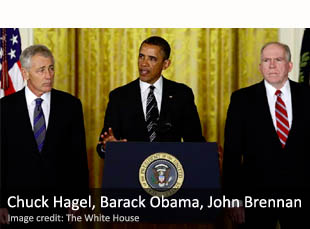
Chuck Hagel, Barack Obama, John BrennanBy IAN ALLEN | intelNews.org
American intelligence agencies see Russia’s control of the Crimean Peninsula as near-complete and urge Washington to take cautious steps on Ukraine, as Moscow appears prepared “to take military action” in defense of its strategic goals. The Los Angeles Times reported on Monday that some American intelligence analysts believe Moscow is genuinely convinced that its military action in Ukraine is justified under the Budapest Memorandum on Security Assurances. The agreement was signed in 1994 by the United States, United Kingdom, and the Russian Federation. The three nuclear powers guaranteed that they would refrain from actions that would subvert the territorial integrity and political autonomy of Ukraine. Western officials have accused Moscow of violating the agreement by dispatching Russian troops to southeastern Ukraine without the consent of the Ukrainian government. But some American intelligence analysts believe the Russian Foreign Ministry is convinced that Russian forces are acting within the scope of the 1994 agreement. The latter is interpreted by Russian officials as permitting Moscow to unilaterally dispatch up to 25,000 troops to the Crimea. This may even be the predominant view at the Central Intelligence Agency (CIA), judging by a briefing given last week by the Director of the CIA, John Brennan, to an unnamed “senior lawmaker”. The Times cited “US officials who declined to be named” as saying that Brennan suggested that Russian officials genuinely believe that the number of Russian troops in Ukraine “remains well below the threshold” specified in the Budapest Memorandum. Brennan added that, although he did not personally agree with Moscow’s interpretation of the Memorandum, it would be wise for Washington to tread cautiously on the subject, given the fact that Russian policy on Crimea remains unpredictable. Read more of this post

Comment: Is Ukraine’s Military Splitting in Two?

H First PostBy JOSEPH FITSANAKIS | intelNews.org
Much has been made about the presence of Russian troops —including what appear to be special forces units— in southern Ukraine. But peace and stability in the region are not threatened only by the actions of foreign troops; they are also threatened by the attitude of the armed forces of Ukraine, whose stance is likely to determine the outcome of the current crisis. The government of Ukraine has called all military reservists in the country to mobilize in order to “ensure the security and territorial integrity of Ukraine”. But what guarantee is there that the Ukrainian armed forces will remain united while the country is splitting in two —or three, counting the Tatars? At least 20 percent of Ukraine’s citizens consider themselves ethnically Russian, and there is little reason to believe that the ranks of the Ukrainian military, which reflect the ethnic makeup of the country’s divided population, will prove immune to rapidly intensifying sectarian tensions. Already Russian news outlets report that “the majority” of Ukrainian armed forces personnel stationed in Crimea have “switched to the side of local authorities” of the Autonomous Republic of Crimea. The secessionist government’s Deputy Prime Minister, Rustam Temirgaliev, said on Sunday that the Ukrainian armed forces in the breakaway region “have all but surrendered” and that many “are expected to take military oath soon”, declaring their allegiance to the Crimean Republic. Presumably these are ethnic Russians who are abandoning the Ukrainian military and joining that of the secessionist movement in Crimea out of nationalist allegiance.

Read more of this post

News you may have missed #869 (Ukraine edition)

H First PostBy IAN ALLEN | intelNews.org
►►US and UK warn Russia not to deploy troops in Ukraine. US National security adviser Susan E. Rice said Sunday that Russian troop intervention in Ukraine would be a “grave mistake”, arguing that a return to a Cold War posture would not reflect modern realities. Earlier on the same day, British foreign secretary William Hague cautioned Moscow “not to intervene” in Ukraine. “If there is an economic package” from Russia, said Hague, “it will be important that Russia doesn’t do anything to undermine that economic package and is working in cooperation and support of it”.
►►Analysts touting Ukraine’s East-West division are just plain wrong. “The image of two competing blocs is just dead wrong. Ukraine’s diversity is pretty much on par with that found in just about any country of the world. The real divide in Ukraine is not between East and West, but between the democratic forces on the one hand and the Party of Regions on the other. The latter is strongest in the southeast, mostly because its cadres (who are mostly former communists) have controlled the region’s information networks and economic resources since Soviet times and continue to do so to this day”.
►►The global implications of the Ukraine conflict. Thus far, the Kremlin hasn’t sought to encourage separatist sentiment in eastern and southern Ukraine. And it doesn’t appear that Vladimir Putin and his system of power is interested in the prospect of a civil war in his backyard. But it still has the potential to break out even if Moscow doesn’t want it. Those familiar with Ukraine’s history know that the militant nationalists in the west of the country have gone time and time again into battles they can’t win. Whatever the case, romanticizing revolution can only end in a “big bang”, the fallout from which would extend far beyond Ukraine.

Comment: Nuland’s leaked phone call is ‘populist intelligence’

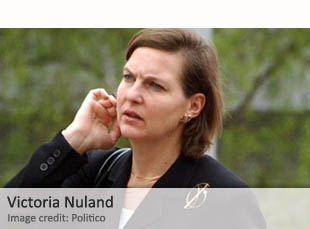
Victoria NulandBy JOSEPH FITSANAKIS | intelNews.org
My phone started ringing off the hook on Thursday evening, when a video appeared on YouTube containing a frank conversation between Victoria Nuland and Geoffrey Pyatt. Nuland, Assistant Secretary at the United States Department of State, and Pyatt, US Ambassador to Ukraine, were discussing US diplomatic moves on the political standoff in Ukraine. In the conversation, which was clearly meant to be private, Nuland expresses frustration with efforts by the European Union, which she deems weak and inadequate. In a shocking display of candor, Nuland tells Pyatt that the US should “help glue this thing and […] have the UN help glue it and, you know, f**k the EU”.

On Thursday night I spoke at the main news program of BBC television, where I agreed with most observers —some of the US government officials— that Russia was the obvious culprit behind the leaked conversation. The geopolitical interests of Washington and Brussels coincide almost completely when it comes to Ukraine, as both wish to detach the former Soviet republic from the Russian sphere of influence. So driving a wedge between the two allied sides is clearly to the benefit of Moscow. I added that the two American officials should have known better than to speak so frankly on the phone, given the constant monitoring of diplomatic communications by both adversary and friendly intelligence services, which is common knowledge in diplomatic circles. Read more of this post

Ship carrying 20,000 Kalashnikov rifles seized in Greece

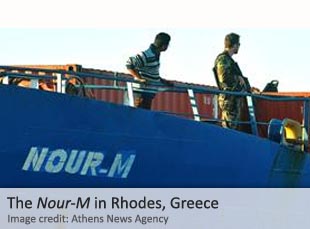
The Nour-MBy JOSEPH FITSANAKIS | intelNews.org
The Hellenic Coast Guard in Greece has seized a cargo ship carrying explosives, ammunition, and about 20,000 Kalashnikov assault rifles, allegedly bound for Syria or Libya. The Associated Press quoted an anonymous official from the Greek Ministry of Mercantile Marine, who said that the ship, Nour-M, is flagged under Sierra Leone and set sail from Ukraine early last week. It was intercepted on Friday while passing through Greek territorial waters, near the Aegean island of Symi. Upon inspection, it was found to be carrying thousands of AK-47s, as well as ammunition and an undisclosed quantity of explosives. As the ship’s documentation did not mention the highly irregular cargo, the Greek authorities decided to escort the vessel to the eastern Aegean island of Rhodes, where it remains under Coast Guard protection. The ship’s crew of three Turkish nationals, including the captain, and three Indian nationals, have been arrested. Interestingly, some maritime transportation databases state the vessel’s destination port as Tartus in Syria, while others suggest it was headed to Tripoli in Libya. Adding to the perplexity of the case, the ship’s Turkish captain told Greek authorities that his destination port was Iskenderun in Turkey. The Greek government has refused to give details about the ship’s itinerary, stating simply that “the exact destination of the arms and ammunition has yet to be verified”, while no precise information has been provided about Nour-M’s cargo. There are unconfirmed reports, however, that, in the past, the same vessel has troubled international maritime authorities, who suspect its captain of involvement in international narcotics smuggling. On Friday, the Reuters news agency aired an insightful analysis on the strong connection between the political chaos that rains in the Middle East and North Africa and the increase in smuggling activity across the Mediterranean. Read more of this post