US plans to beef up Cyber Command, separate cyberwar operations from NSA
July 19, 2017 Leave a comment
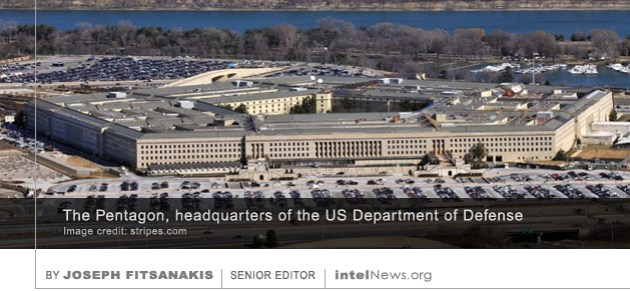 The White House will soon announce its decision to strengthen the United States Cyber Command and separate cyber war operations from intelligence functions, according to insider reports. For many decades, the National Security Agency has been in charge of protecting America’s cyber network and combating online threats. But in 2009, the Administration of US President Barack Obama established a brand new Cyber Command, proposing that the online environment represented a new theater of war. Since that time, the US Department of Defense has been campaigning in favor of strengthening the new Cyber Command and completely removing it from the patronage of the NSA –despite the fact that the latter is also a Pentagon agency.
According to media reports, US President Donald Trump has decided to follow the Pentagon’s suggestion. After several months of delay, his administration is now preparing to announce a major reinforcement of the US Cyber Command, and a formal separation between its functions and those of the NSA. According to the American news network PBS, which broke the news on Monday, the idea behind the move is to give the Cyber Command more operational autonomy and to allow it to establish its own mission statement, which will be distinct from that of the NSA. The latter is an intelligence organization, which means that it primarily seeks to exploit adversary networks for purposes of collecting information. Broadly speaking, therefore, the NSA finds operational adversary cyber networks far more useful than destroyed networks. That tends to clash with the goals of the US Cyber Command, whose tactical goals often center on launching destructive attacks on enemy networks. It is believed that the impending change will allow it to do so without the interference of the NSA.
According to PBS, which cited anonymous sources in its report, the details of the separation “are still being worked out”. Furthermore, some observers caution that the Cyber Command will continue to rely on NSA technology and expertise for years to come, until it is able to carry its own weight. There is even less discussion about the view of the NSA on the matter, which some claim is notably negative. However, the move appears to have been decided, and the Cyber Command’s budget will be increased by nearly 20% to $647 million in the coming year, reflecting its elevated role in US defense.
► Author: Joseph Fitsanakis | Date: 19 July 2017 | Permalink
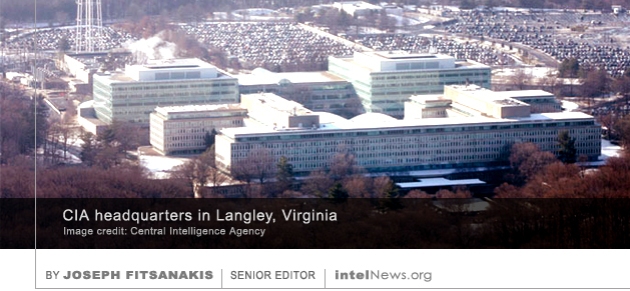 A contractor for the United States Central Intelligence Agency has complained in an interview that no action has been taken in the seven years since he revealed a “billion-dollar fraud” and “catastrophic intelligence failure” within the Agency’s ranks. John Reidy argues that his case illustrates the unreasonable delay that impedes investigations by whistleblowers like him inside the CIA. Individuals like him, he argues, are forced to seek justice through leaks to the media, something which could be avoided if the CIA’s Office of the Inspector General addressed concerns more promptly.
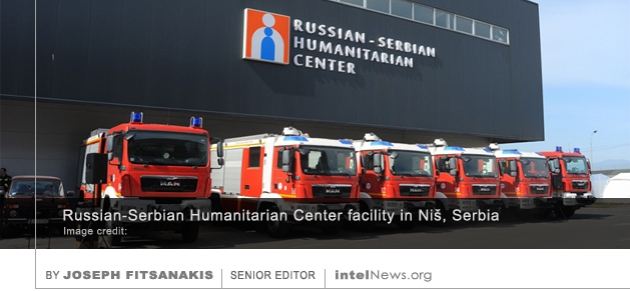 Staff at a Russian disaster relief center in southern Serbia have rejected claims by American officials that the facility operates as an espionage arm of Moscow’s foreign policy in the Balkans. The Russian-Serbian Humanitarian Center was built in 2012, at a cost of nearly $40 million, following an agreement between Belgrade and Moscow. Its
  Russia is planning to expel approximately 30 American diplomats from its territory, and seize buildings and property belonging to the United States Department of State, according to Russian media reports. The expulsions will be in response to the expulsion last December of 35 Russian diplomats stationed in the US by the administration of President Barack Obama. In addition to expelling the diplomats, Washington also reclaimed two “recreational facilities” (in reality intelligence outposts) that were used by the Russians in New York and Maryland. The White House said that the expulsions were ordered in response to alleged efforts by Russia to interfere in the 2016 US presidential election.
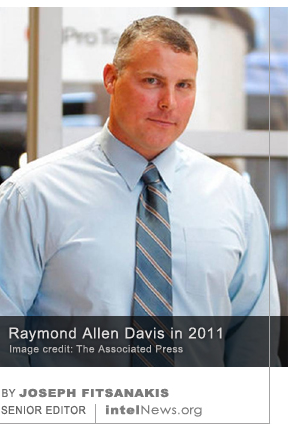 A former contractor for the United States Central Intelligence Agency, who was released from a Pakistani prison in 2011 despite being implicated in a double murder there, says he was freed with the help of senior Pakistani officials. Raymond Allen Davis was a CIA contractor posted in the US consulate in Pakistan’s Punjabi capital, Lahore, which is also the country’s second-largest city. It has been
  American intelligence services have made use of a little-known confidentiality exception to spy on the financial activities of foreign banks who have accounts with the United States Federal Reserve, according to Reuters. Established in 1913, the Federal Reserve System is the central banking structure of the US. It oversees and regulates the nation’s financial institutions, and is tasked with —among other things— maintaining the stability of the American financial system. Additionally, however, the Federal Reserve offers a host of financial services to official (government-owned or sanctioned) foreign institutions. Thus, over 250 foreign banks (typically central banks) from dozens of countries have deposited nearly $3.3 trillion in assets at the Federal Reserve Bank of New York, one of 12 Federal Reserve Banks in the US. Depositing assets at a US Federal Reserve Bank, allows these foreign ‘depository institutions’ to use the US Federal Reserve as a ‘custodial institution’. Through it, they get direct and immediate access to American debt markets, where they can trade directly in dollars — the reserve currency of the global economy.
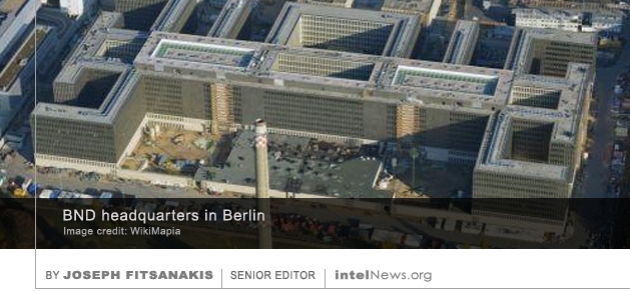 The foreign intelligence service of Germany spied on at least 4,000 targets in the United States from 1998 until 2006, according to a leaked document published yesterday by leading German newsmagazine Der Spiegel. The German investigative weekly said that the surveillance was carried out by the German Federal Intelligence Service, known as BND. The Hamburg-based magazine claimed to have in its possession a list of approximately 4,000 “selector keywords”, unique distinguishing terms, addresses or numbers that identify individual targets for surveillance. The list allegedly includes names, telephone or fax numbers, and email addresses of people that the BND had identified as worthy of individual attention between 1998 and 2006.
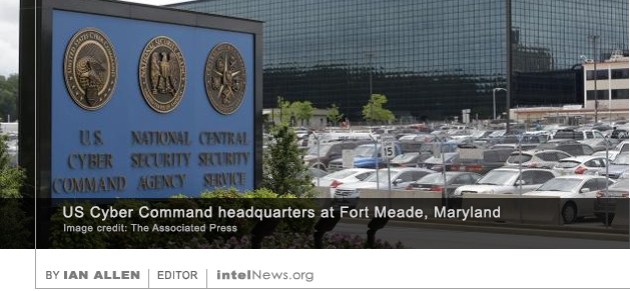 The global reach of the Islamic State through the use of the internet remains “largely intact” despite relentless efforts by some of America’s most advanced cyber warfare experts to neutralize the group’s online presence. It is now over a year since the United States Department of Defense announced that it had launched a cyber war against the Islamic State —the militant Sunni Muslim group that today controls large parts of Syria and Iraq.
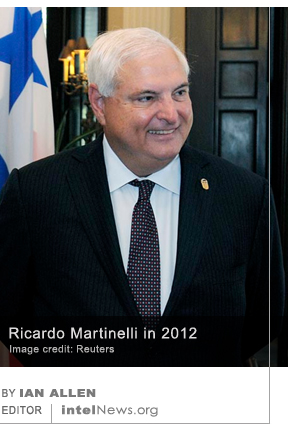 Police in the United States have arrested Panama’s former president Ricardo Martinelli, who is wanted in the Central American country on charges of using state resources to spy on his political opponents and business rivals. The center-right US-educated businessman won the 2009 presidential election in the country with a landslide, receiving over 60 percent of the national vote. His election prompted positive comments from Washington, because it marked a rare ascent to power of a conservative Latin American leader in a sea of socialist heads of state. But the euphoria did not last long. In 2014, Martinelli was succeeded in the presidency by his Vice President, Juan Carlos Varela. Varela promptly launched nearly 200 criminal investigations against his former political partner on issues ranging from embezzlement of state funds to political espionage.
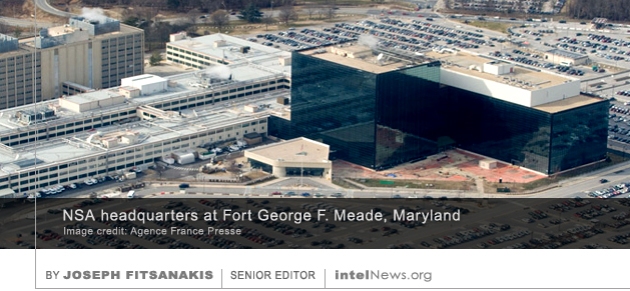
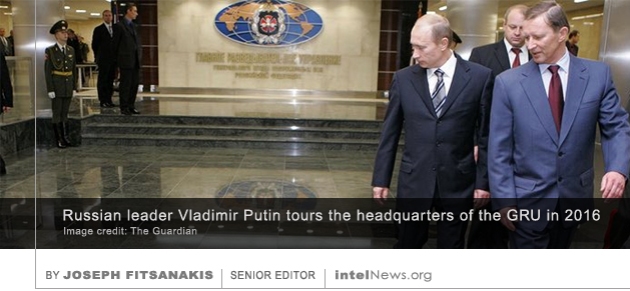 New information about carefully targeted attempts by Russian operatives to compromise the November 2016 presidential elections in the United States have emerged in a newly published intelligence document. The document, which dates from May of this year, was produced by the US National Security Agency and
  The security map of the Middle East changed within a few hours on Wednesday, when the Islamic State managed to strike Iran for the first time. Six assailants —five men and a woman— stormed the Islamic Consultative Assembly, which serves as the parliament of Iran, and the mausoleum of the founder of the Islamic Republic, Ayatollah Khomeini. By the time they killed themselves, or were killed by security forces, the six had murdered 12 people and injured over 60. The Islamic State, which carried out the attack, had warned for several months that it would launch a direct assault at the heart of
  the world’s largest Shiite state. It tried to do so before, several times, and failed. But
  At first sight, the case of Reality Leigh Winner, a United States federal contractor who has been
  between leakers based on their motives. It does, however, distinguish between simple leakers and whistleblowers. If a US government employee uncovers evidence of abuse of power, or becomes aware of a specific and critical threat to the security of Americans, he or she is required to notify his or her superiors. If the latter refuse to take action, then the employee is justified under the law in taking all necessary actions to warn the public of impending peril. That is precisely the function of the 1989 Whistleblower Protection Act, which affords protection to insiders who expose abuses of authority, or a concrete and critical threat to public safety.
  Russian espionage in the United States has become increasingly sophisticated and brazen, and American counterintelligence professionals are finding it difficult to contain it “after years’ worth of inattention” according to sources.
  The exiled half-brother of North Korea’s leader, who was assassinated in Malaysia in February, is thought to have met with a man believed to be an American intelligence officer shortly before he was killed, according to reports. Kim Jong-nam the grandson of North Korea’s founder Kim Il-Sung,






 intelNews.org
Dozens of Western ‘freelance fighters’ embedded with anti-ISIS forces in Syria
July 20, 2017 by Joseph Fitsanakis Leave a comment
In late 2015, independent researcher Nathan Patin published “The Other Foreign Fighters”, a rare examination of Americans who had joined the various armed groups fighting ISIS in the region. Patin found that at least 200 Americans had attempted to travel to the region in order to join the fight against ISIS as ‘freelance fighters’. Roughly half of those had managed to embed themselves with armed —primarily Kurdish— groups, and saw action on the ground. In 2016, three British and Irish anti-ISIS volunteers were jailed by Iraqi authorities while attempting to return to Europe after having fought for the Kurdish People’s Protection Unit (YPG), a group that serves as the armed wing of the Kurdistan Workers’ Party (PKK) in northern Syria. The three were initially suspected of being foreign ISIS volunteers, but were released from prison in April of 2016, after the YPG verified their bona fides.
A recent report by The Los Angeles Times claims that there are still “several dozen” Western volunteers embedded with anti-ISIS militias in Syria. They are doing so in the face of warnings by European and American government agencies that freelance participation in the Syrian civil war is a potentially punishable offense. The Times cited “local estimates” and spoke to Daman Frat, a YPG commander stationed in the eastern outskirts of Raqqa, who said that “several foreign volunteers” were embedded in YPG units. Most, though certainly not all of them, said Frat, had prior military experience. According to the paper, at least three Western volunteers, one British and two American citizens, have died in recent days, as YPG forces are closing in on the de facto ISIS capital. The US Departments of State and Defense, which are tacitly in support of the YPG and other Kurdish groups operating in Syria, did not comment on The Los Angeles Times report.
► Author: Joseph Fitsanakis | Date: 20 July 2017 | Permalink
Filed under Expert news and commentary on intelligence, espionage, spies and spying Tagged with Daman Frat, Islamic State, News, Syria, United States, volunteer fighters, YPG (Syria)