Brazil judges block international requests to extradite alleged Russian spy

GRUTHE BRAZILIAN GOVERNMENT IS blocking requests from the United States and Russia to extradite an alleged Russian deep-cover spy, whose forged Brazilian identity papers were discovered by Dutch counterintelligence. Sergey Cherkasov was expelled by authorities in the Netherlands in June 2022, after he attempted to enter the country using a Brazilian-issued passport under the name of Victor Muller Ferreira.

Within a few days of his expulsion, Dutch and American counterintelligence had outed Cherkasov as an intelligence officer of the Main Directorate of the Russian Armed Forces’ General Staff, which is commonly known as GRU. Cherkasov is alleged to have built his forged identity over several years, while operating in Brazil and the United States. Upon returning to Brazil, Cherkasov was sentenced to 15 years in prison for using forged Brazilian identity documents.

Last week, Cherkasov’s sentence was reduced to 5  years, after a court in Brazil dropped some of the initial charges that had been filed against him by the Brazilian government prosecutor’s office. Cherkasov’s lawyers are now arguing that their client does not pose a flight risk and should therefore be allowed to serve the remainder of his sentence outside of prison, wearing an electronic tagging device.

These recent developments are of concern to authorities in the United States. The latter have filed an extradition request for Cherkasov, claiming that he spent several years as a graduate student in an American university while using his forged Brazilian identity papers. During that time, Cherkasov is alleged to have repeatedly communicated with his Russian intelligence handlers, supplying them with information about American politics and policy.

However, the Ministry of Justice and Public Security of Brazil said on Friday that Washington’s extradition request had been denied and that Cherkasov would remain in Brazil. The apparent reason for the denial is that Brazil’s Supreme Federal Court had already approved a similar extradition request for Cherkasov, which was filed in April by the Russian government. Moscow claims that Cherkasov is wanted in Russia for narcotics trafficking. The Russians also deny that the alleged spy worked for the GRU or any other government agency.

Yet, despite claims to the contrary, the Brazilian government appears to be essentially stalling on Moscow’s extradition request. On Friday, Flávio Dino, who serves as Minister of Justice under the administration of President Inácio Lula, stated that Cherkasov would continue to serve his prison sentence in Brazil until further notice. In the United States, CBS News reported that Cherkasov’s extradition to Russia would take place “only […] after the final judgment of all of his cases here in Brazil” has been issued, according to the accused spy’s lawyers.

► Author: Joseph Fitsanakis | Date: 31 July 2023 | Permalink

Russian intelligence planned to assassinate SVR defector living in the United States

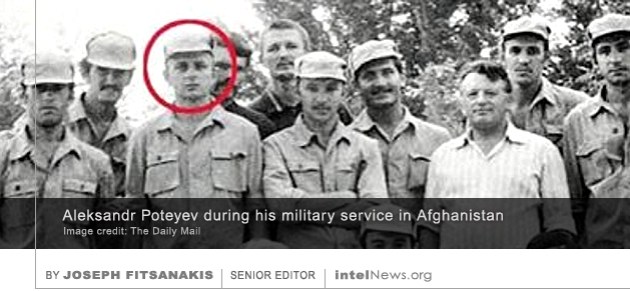
Aleksandr PoteyevTHE RUSSIAN INTELLIGENCE SERVICES planned to assassinate a Russian former intelligence officer, who had defected to the United States and was living in an apartment complex in Florida, according to a new report. The alleged assassination plan is discussed in the forthcoming book Spies: The Epic Intelligence War Between East and West (Simon and Schuster), authored by Harvard University academic Calder Walton.

According to Dr. Walton, Russian intelligence targeted Aleksandr Poteyev, who served as Deputy Director of the Russian Foreign Intelligence Service (SVR) from 2000 until 2010. Poteyev was reportedly in charge of the SVR’s Directorate “S”, which oversees the work of illegals —a term that refers to SVR operations officers who work in without official cover around the world. It is believed that Poteyev began working for the United States Central Intelligence Agency (CIA) in 1999, as an agent-in-place.

By 2010, when he openly defected to the United States, Poteyev had provided the CIA with information that led to the high-profile arrest of 10 Russian illegals by the Federal Bureau of Investigation (FBI). Some believe that the SVR defector was also responsible for the arrests of Russian spies in Germany and Holland. In 2011, a Russian court tried Poteyev in absentia and sentenced him to 25 years in prison. Poteyev remains at large and is believed to be living in the United States under the protection of the CIA’s National Resettlement Operations Center.

On Monday, The New York Times reported that it had independently confirmed Dr. Walton’s claims, with the help of “three former senior American officials who spoke” to the paper “on the condition of anonymity”. According to The Times, a 2016 report by the Moscow-based Interfax news agency, which claimed that Poteyev had died in the United States, was part of a deliberate disinformation operation by the SVR, which was aimed at enticing the defector to emerge from his hideout.

When that attempt failed, the SVR allegedly recruited a Mexican scientist who lived in Singapore, Hector Alejandro Cabrera Fuentes, to travel to Miami, Florida, in 2020, in order to locate Poteyev. But Fuentes attracted the attention of the authorities while driving around in Miami and was subsequently detained by US Customs and Border Protection agents as he was trying to board a flight to Mexico City. Fuentes then provided details of his mission to the FBI. The Bureau eventually determined that the goal of the SVR had been to assassinate Poteyev.

According to The New York Times, the realization that the SVR had planned to carry out an assassination operation on American soil “spiraled into a tit-for-tat retaliation by the United States and Russia”, which included cascading sanctions and diplomatic expulsions on both sides. The paper reports that, in April 2021, the White House ordered the expulsion of 10 Russian diplomats from the United States, including the SVR’s chief of station, who had two years left on his Washington, DC, tour. The Kremlin responded by expelling an equal number of American diplomats from Russia, including the CIA station chief in Moscow.

► Author: Joseph Fitsanakis | Date: 21 June 2023 | Permalink
Still unanswered: Trump’s motive for withholding classified documents

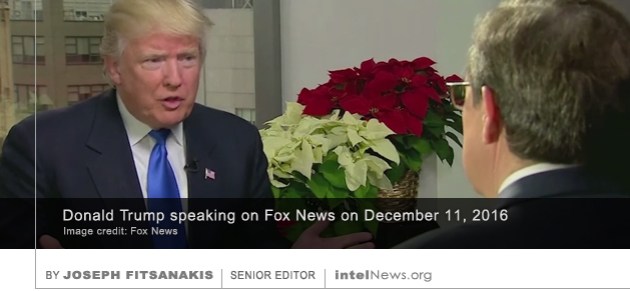
Trump 2016THE 49-PAGE GRAND JURY indictment, filed last week in Florida by the United States Department of Justice, contains 37 criminal charges against former president Donald Trump. The charges can be summarized into a two-fold accusation: Trump is alleged to have stolen more than 300 classified documents upon leaving the White House in January 2021. Moreover, he allegedly schemed with a group of advisors and aides in order to obstruct efforts by the government to retrieve the stolen documents. Both accusations are spelled out in stark detail in the pages of the indictment.
What remains unanswered, however, is the motive. Why did Trump allegedly take several hundred classified documents from the White House? Did he select specific documents to purloin? And, if so, why these specific documents? Lastly, why did the former president go to such pains to frustrate the government’s efforts to recover the documents? There has been intense public speculation about the answers to these questions. Yet the grand jury indictment does not appear to attempt to establish the possible motive behind the alleged crime. Nor Q Quotedoes it need to. Establishing a motive is not required in order to demonstrate the need for a trial, or indeed a conviction. Given the high stakes of this case, however, establishing a motive can provide much-needed clarity in the public sphere.
Accidental or Malicious?

It is important to clarify with precision what the grand jury indictment does not state: its pages do not contain any suggestion that Trump took possession of the classified documents in order to share them with specific individuals or entities, American or foreign. Nor does the indictment suggest that the former president intended to use the classified information in his possession for personal financial gain —for instance to promote his investment ventures at home or abroad, or to gain leverage and win over potential business partners.

So, why did Trump do it? As The New York Times explained on Sunday, the indictment does offer some hints of motives, if one reads between the lines. One possible explanation stems from Trump’s time in the White House, during which he learned to associate his access to classified information as a paramount perk that came with being president of the United States. It follows that, retaining access to classified information was a way for him to maintain control over the office of the presidency. That strong need intensified even more after January 2021, as Trump was clearly “not ready to let go of the perks of holding the highest office in the country”. Indeed, the indictment describes several examples that reveal the strong sense of ownership that the former president felt about the classified documents he kept at his private residence at Mar-a-Lago, as well as his determination to keep them in close proximity to his office and sleeping quarters.
Tertiary Motives

A plausible tertiary motive for Trump’s alleged crimes is the leverage and status that access to secrets can bestow upon an individual. It is possible that Trump viewed the classified documents as the apogee of the long list of his material prizes and trophies —as an important physical legacy of the zenith of his career. That would also explain why he allegedly fought so determinedly to keep the documents in his possession, even after he was told in no uncertain terms by the government that they did not belong to him. Moreover, as The Times notes, the former president may view his classified document collection as a way to insure his legacy —for instance as a means of rebutting critics of his policies and decisions while he was in office, or even as potential “payback against perceived enemies”.

But these motives are probably less prominent in Trump’s mind. A strong and deeply held sense of ownership of government information, no matter their classification grade, is likely the driving motive behind the alleged crimes. As The Washington Post noted in an insightful article in 2022, aides to the former president said that he appeared sincere and genuine about his conviction that the classified documents “were his, not the government’s”. When he was advised otherwise by his own aides, he noticeably “gravitated toward lawyers and advisers who indulged his more pugilistic desires”, according to the paper. His attitude was not a show. It was sincere. Moreover, there is no reason to believe that it has subsided since his indictment.

A Genuine Conviction of Ownership

Trump’s latest legal woes are rooted in his genuine belief that access to classified information is something he is owed —not simply because he served as president of the United States, but because, in his mind, he should still be in the Oval Office. These deeply entrenched beliefs are unlikely to be abandoned by the former president, regardless of the cost. More importantly, these same beliefs are passionately shared by millions of his supporters. The latter are sufficient in number to wreak havoc in the Republican Party and radically reshape American politics for years to come. If Trump avoids trial or a prison sentence, his support base will view such an outcome as a form of noble victory against the “deep state”. It is therefore likely to be energized, possibly like never before. Should Trump be jailed or seek political asylum abroad in order to evade incarceration, the American political landscape will undergo a major earthquake. Regardless of the outcome of this unprecedented saga, stormy waters seem to lie ahead.

► Author: Joseph Fitsanakis | Date: 12 June 2023 | Permalink

U.S. charges Greek businessman with smuggling military and dual-use goods to Russia

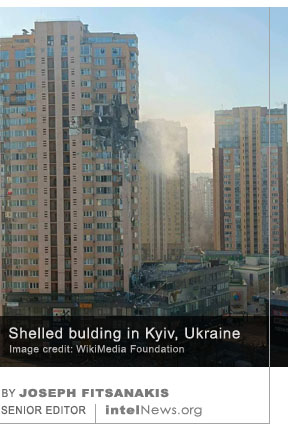
Rijen NetherlandsThe United States Department of Justice has charged a Greek national with wire fraud and smuggling sensitive military-grade and dual-use goods from the United States to Russia. The suspect, Dr. Nikolaos “Nikos” Bogonikolos, 59, was arrested in Paris, France, on May 9, at the request of the United States, and is currently in custody pending extradition proceedings.
Bogonikolos is a mathematician and self-described “serial entrepreneur”, with business activities dating back to 1987. He has authored and co-authored academic articles, holds a number of patents, and has published a book entitled Total Process Security Reengineering. Following the ECHELON revelations in the late 1990’s, he authored a report (.pdf) entitled “The Perception of Economic Risks Arising from the Potential Vulnerability of Electronic Commercial Media to Interception” as part of a study for the European Parliament.

In 2005, Bogonikolos received his PhD from the Kharkov National Economic University in Ukraine, focusing on applications of artificial intelligence in the field of economics. According to his own claims, he has been active as an entrepreneur or researcher in some 40 countries, including Russia. Bogonikolos is the founder of a Greek-based company called Aratos Group. In 2016, Aratos Systems BV was registered as legal entity in The Netherlands. Since 2020, the company has been located in the town of Rijen, which is also home to the main operational military helicopter base of the Royal Netherlands Air Force.

Aratos Systems BV describes itself on its website (currently offline) as an “independent and leading member of the Greek Aratos Group”. Its activities, as declared to the Netherlands chamber of commerce, are “the collection, processing, protecting, and selling of earth observation data to public and private parties”. Aratos Systems also “owns and runs a fully equipped Satellite Ground Station constantly connected with EUMETSAT” —the latter being the European operational satellite agency for monitoring weather, climate and the environment from space.

Last week, the Netherlands Public Prosecution Service and the Fiscal Information and Investigation Service raided the Aratos Systems offices in Rijen. According to the unsealed complaint (.pdf) it is believed that Bogonikolos was contacted in December 2017 by representatives of an illicit Russian procurement network that acquires sensitive military-grade and dual-use technologies, under the direction of Russia’s Foreign Intelligence Service (SVR). Elements of that network are often referred to by Western government officials as “the Serniya Network” or “Sertal”, among other names. In December 2022 the United States charged five Russian nationals, including a suspected intelligence officer, believed to be part of that network, as well as two United States nationals.

In December 2017, Bogonikolos allegedly accepted an invitation to travel to Moscow alone for a meeting. The complaint cites an email exchange between senior members of Sertal and Serniya Network, including Yevgeniy Grinin and Aleksey Ippolitov, who are both wanted by the FBI. In the email exchange, it is suggested that Bogonikolos is a “supporter of the Orthodoxy” and that he sees it as “the basis of friendship with Russia”.

Read more of this post

U.S., Russian spy agencies publish rival ads encouraging would-be informants

Russia Ukraine WarRIVAL ONLINE CAMPAIGNS BY American and Russian intelligence agencies are encouraging each other’s citizens to contact them, share information and possibly even defect. At least three ads have been  on social media, with the Federal Bureau of Investigation (FBI) issuing the earliest one in February of this year. The Central Intelligence Agency (CIA) and its Russian counterpart, the Foreign Intelligence Service (SVR), are now believed to have published similar ads.

The FBI ad initially appeared on Twitter, directing users to the website of the Bureau’s Washington Field Office. There, a text in Cyrillic urges Russian nationals to “change [their] future” by contacting the FBI. The CIA followed suit on Monday of this week by posting a video on its new channel on Telegraph, a popular social media platform among young Russians. The CIA video portrays frustrated Russian government employees morally torn by the Kremlin’s policies. It concludes with them contacting the CIA through a secure online connection. A narrator’s voice states, “my family will live with dignity thanks to my actions”. Viewers are then assured that their safety is the CIA’s highest priority, should the choose to do the same.

Shortly after the CIA video appeared online, the Russian Ministry of Foreign Affairs’ Director of Information, Maria Zakharova, said that the Russian government would respond “appropriately” to what she called a “CIA provocation”. On Wednesday, a number of Western media outlets reported that the SVR had unveiled a short recruitment video seemingly targeting Americans. The video, shared on Telegram, includes archival news footage of United States military and police personnel, flag-burning demonstrators, and protests against abortions. It concludes with footage of President Joe Biden overlaid with a sniper crosshairs. A narrator states in English: “If you want to help normalcy, help the Foreign Intelligence Service of the Russian Federation”.

Amid the ongoing war in Ukraine, both the United States and Russia are engaging in extensive cyber-enabled operations aimed at each other’s targets. However, these recruitment videos underscore the continued need for highly placed human sources and their central role in multi-platform intelligence collection efforts.

► Author: Joseph Fitsanakis | Date: 18 May 2023 | Permalink

China sentences US citizen to life for espionage following closed-door trial

Hong KongA CHINESE COURT HAS sentenced a United States passport holder to life in prison on espionage charges, following a brief closed-door trial. However, no information has been made available about the precise charges against him. Closed-door trials are frequent occurrences in Chinese courts, especially in cases relating to national security, which include charges of espionage against the state. However, life sentences are exceedingly rare for espionage cases.
The individual convicted in this case has been named in media reports as John Shing-Wan Leung, 78. He is reportedly a permanent resident of Hong Kong, a special administrative region of China, over which Beijing has near-absolute control. It is not known if Leung was a Chinese citizen at any time in his life. China does not recognize joint citizenship and requires its citizens to drop their Chinese citizenship when swearing allegiance to another country. The Reuters news agency reported on Monday that Leung was at some point a member of two American-based Chinese expatriate groups, which it described as “pro-China”. These are the United States-China Friendship Promotion Association and the United States-China Friendship Association.

Leung is believed to have been arrested in Hong Kong in 2021 by local Chinese counterintelligence officers. He has been held in prison ever since his arrest. A press release issued on Monday by the Intermediate People’s Court in Suzhou, a city located in southern Jiangsu province, 700 north of Hong Kong, said Leung had been found “guilty of espionage”. The press release added that Leung had been “sentenced to life imprisonment and deprived of [his] political rights for life”. However, the statement provided no information about Leung’s alleged crimes, or the country he was found to have spied for.

According to the BBC, the United States embassy in Beijing refused to discuss the details of this case, stating only that the United States government was aware of Leung’s conviction. An embassy spokesperson told the BBC that “the Department of State has no greater priority than the safety and security of US citizens overseas”.

► Author: Joseph Fitsanakis | Date: 15 May 2023 | Permalink

US-led ‘Five Eyes’ alliance dismantled Russia’s ‘premier espionage cyber-tool’

Computer hackingAN ESPIONAGE TOOL DESCRIBED by Western officials as the most advanced in the Russian cyber-arsenal has been neutralized after a 20-year operation by intelligence agencies in the United States, Australia, Canada, the United Kingdom and New Zealand. The operation targeted Turla, a hacker group that cyber-security experts have long associated with the Russian government.
Turla is believed to be made up of officers from Center 16, a signals intelligence unit of Russia’s Federal Security Service (FSB), one of the Soviet-era KGB’s successor agencies. Since its appearance in 2003, Turla has used a highly sophisticated malware dubbed ‘Snake’ to infect thousands of computer systems in over 50 countries around the world. Turla’s victims include highly sensitive government computer networks in the United States, including those of the Department of Defense, the National Aeronautics and Space Administration, and the United States Central Command.

The Snake malware has also been found in computers of privately owned firms, especially those belonging to various critical infrastructure sectors, such as financial services, government facilities, electronics manufacturing, telecommunications and healthcare. For over two decades, the Snake malware used thousands of compromised computers throughout the West as nodes in complex peer-to-peer networks. By siphoning information through these networks, the Turla hackers were able to mask the location from where they launched their attacks.

On Tuesday, however, the United States Department of Justice announced that the Federal Bureau of Investigation (FBI), along with its counterparts in the United States-led ‘Five Eyes’ intelligence-sharing alliance, had managed to dismantle Snake. This effort, codenamed Operation MEDUSA, was reportedly launched nearly 20 years ago with the goal of neutralizing the Snake malware. In the process, Five Eyes cyber-defense experts managed to locate Turla’s facilities in Moscow, as well as in Ryazan, an industrial center located about 120 miles southeast of the Russian capital.

The complex cyber-defense operation culminated with the development of an anti-malware tool that the FBI dubbed PERSEUS. According to the Department of Justice’s announcement, PERSEUS was designed to impersonate the Turla operators of Snake. In doing so, it was able to take over Snake’s command-and-control functions. Essentially, PERSEUS hacked into Snake and instructed the malware to self-delete from the computers it had compromised. As of this week, therefore, the worldwide peer-to-peer network that Snake had painstakingly created over two decades, has ceased to exist, as has Snake itself.

► Author: Joseph Fitsanakis | Date: 11 May 2023 | Permalink

US arrests two over alleged clandestine Chinese police station in New York City

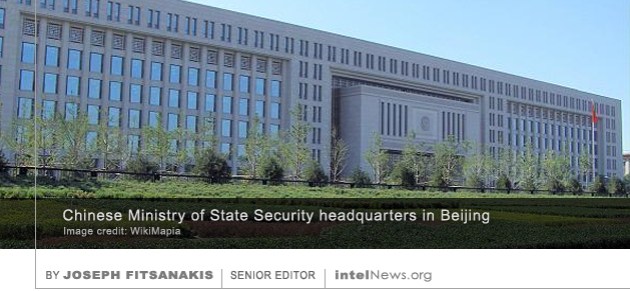
Chinese Ministry of State SecurityTHE UNITED STATES HAS arrested two residents of New York City for allegedly conspiring to create and operate a clandestine police station run by the Chinese government in the borough of Manhattan. The arrests come a month after authorities in Canada launched an investigation into allegations that the Chinese government was running at least two clandestine police stations in Montreal and four more in Toronto.
The allegations first surfaced in a 2022 report by Safeguard Defenders, a Spanish-based non-government organization that focuses on the state of human rights in China. The report, titled “110 Overseas: Chinese Transnational Policing Gone Wild”, claimed that China’s Ministry of Public Security, in association with Chinese diplomatic facilities around the world, operated dozens of clandestine police stations in over 50 countries. Their official mission, according to the report, was to service the needs of Chinese citizens living abroad, as well as visitors from China. However, these clandestine police stations were “actively […] engaging in covert and illegal policing operations” targeting Chinese citizens and expatriates, according to Safeguard Defenders.

On Monday, two New York City residents, Chen Jinping, 59, and Lu Jianwang, 61, were arrested and charged with conspiring to operate as unregistered agents of the People’s Republic of China. They were also charged with obstruction of justice in connection with the Department of Justice’s investigation into their activities. United States government prosecutors allege that Chen and Lu were behind the establishment of a clandestine police station in Manhattan. According to the indictment, the Manhattan police station —the first of its kind in the United States— was operated by China’s Ministry of State Security (MSS). It is reported that the station was shut down by the MSS in late 2022, soon after Chinese officials became aware of an investigation into the activities of the station by the United States Federal Bureau of Investigation.

A representative of the United States prosecutor accused the Chinese government of engaging in a “flagrant violation” of American sovereignty with “actions that go far beyond the bounds of acceptable nation-state conduct”. Meanwhile, Chen and Lu appeared before a federal judge in Brooklyn on Monday. They face up to 25 years in prison if convicted.

► Author: Joseph Fitsanakis | Date: 18 April 2023 | Permalink

United States charges Russian spy who lived in Maryland using forged identity

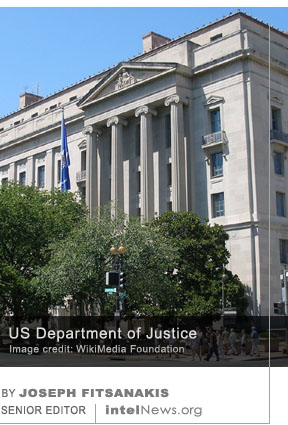
US Department of JusticeA RUSSIAN INTELLIGENCE OPERATIVE, who lived in Maryland using forged Brazilian identity documents, has been charged with espionage and other crimes by the United States Department of Justice. Victor Muller Ferreira, a Brazilian national, was stopped from entering the Netherlands in June of last year, where he had intended to join the International Criminal Court (ICC) as an intern.
Shortly after Muller was stopped at Amsterdam’s Schiphol International Airport, the Netherlands General Intelligence and Security Service (AIVD) revealed that he was in fact Sergey Vladimirovich Cherkasov, a 36-year-old Russian citizen. According to the AIVD, Cherkasov had worked for over a decade as an intelligence officer for the Main Directorate of the Russian Armed Forces’ General Staff, which is commonly known in the intelligence field as GRU.

A few days after Cherkasov returned to Brazil, a federal court in Guarulhos, a suburb of Sao Paolo, found him guilty of having used the identity of a dead Brazilian citizen to forge identity papers, which he then used to enter and leave Brazil 15 times over 10 years. The 10-year period had started in 2010, when Cherkasov had entered Brazil using his real Russian identity. But when he left the country a few months later, he did so using the forged identity that had allegedly been provided to him by Russian intelligence. Having examined the charges against Cherkasov, the court jailed him for 15 years.

Now the United States Department of Justice has charged Cherkasov with a list of new crimes, including acting as an unregistered agent of a foreign power and repeatedly carrying out visa, bank and wire fraud. The charges resulted from an investigation that was conducted by the Federal Bureau of Investigation’s counterintelligence division, in coordination with the Bureau’s Washington Field Office.

The charges stem from the years 2018-2020, when Cherkasov used his forged Brazilian identity to enroll as Master’s student at the Johns Hopkins University’s School of Advanced International Studies. Cherkasov successfully completed his graduate degree in 2020. Two years later, he left for the Netherlands, where he hoped to enter employment in the ICC.

► Author: Joseph Fitsanakis | Date: 27 March 2023 | Permalink

Social unrest threatens Israel’s intelligence relationship with West, officials warn

Mark MilleyTHE SPIRALING SOCIAL UNREST in Israel and the Palestinian Territories may harm longstanding intelligence-sharing agreements between Israel and its Western allies, including the United States, according to reports. Historically, intelligence-sharing partnerships between Israel and its closest ally, the United States, have tended to remain largely unaffected by regional upheavals. This time, however, some Israeli officials are concerned that the Israeli-American intelligence relationship is “under a question mark and under great tension”.
According to several reports from the Middle East, Washington was greatly disturbed last month, when leading hardliners in Israeli Prime Minister Benjamin Netanyahu’s coalition government attempted to boycott negotiations between Israeli and Palestinian officials in Jordan. The negotiations, which were sponsored by the United States, were an attempt by Washington to de-escalate the spiraling violence between Palestinian factions and Israeli settlers in the Occupied Territories.

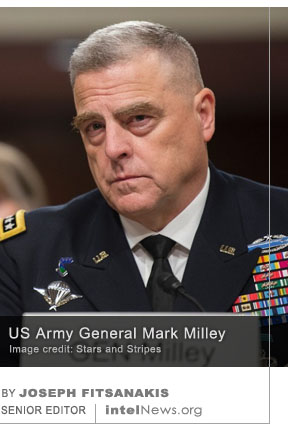
Security observers registered surprise on Friday, March 3, when it was announced that the Joint Chiefs of Staff Chairman General Mark Milley (pictured) had arrived in Israel for a previously unannounced visit. The official purpose of General Milley’s visit was to discuss “security cooperation” between Israel and the United States. The American military official made no public remarks while in Israel, where he reportedly met with Minister of Defense Yoav Gallant and Lieutenant General Herzl Halevi, Chief of General Staff of the Israel Defense Forces.

But, according to Al-Monitor, General Milley’s remarks to his Israeli counterparts were “unprecedented” in nature. The news outlet quoted an anonymous top Israeli security official, who said he could “not remember when our American allies spoke to us in such a way”. According to the anonymous official, General Milley’s remarks included the phrase “you have to decide which side you are on”. The American military official also told the Israelis that “if you want to continue to talking to us, you need to calm the [Palestinian] territories”. Read more of this post

WHO calls on US and China to release intelligence about origins of COVID-19

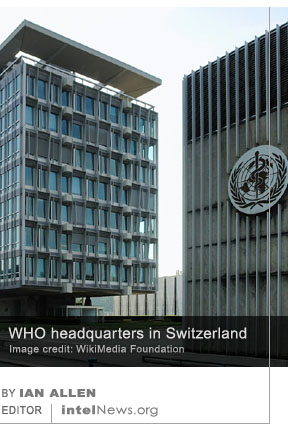
World Health OrganisationTHE WORLD HEALTH ORGANIZATION has called on the United States and China to share what they know about the source of the COVID-19 pandemic. The call, made by WHO’s Director-General Dr. Tedros Adhanom Ghebreyesus and others, came days after United States Federal Bureau of Investigation Director Christopher Wray said in a television interview that COVID-19 “most likely” originated from a Chinese government laboratory.
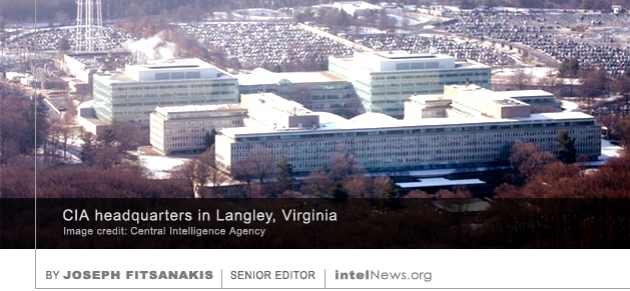
Wray made the statement last week in a televised interview with Fox News, in response to a question about the origins of the COVID-19 virus. Wray said that, “for quite some time now”, the FBI has “assessed that the origins of the pandemic are most likely a potential lab incident in Wuhan”, a city in central China. Wuhan hosts the Wuhan Institute of Virology, which includes laboratories that specialize on biosecurity and the study of newly emerging infectious diseases. Wray added that Beijing has “been doing its best to try to thwart and obfuscate the work” of the United States in trying to determine the precise origins of the virus.

Late last week, Dr. Maria Van Kerkhove, an infectious disease epidemiologist and the WHO’s technical lead on COVID-19, said the WHO had contacted the United States’ mission to the United Nations in Geneva, Switzerland, to inquire about the information that informs the FBI’s assessment. On Friday, meanwhile, Dr. Tedros called for “any country [with] information about the origins of the pandemic” to come forward. The WHO Director-General went on to say that “it’s essential for that information to be shared with WHO and the international scientific community”.

The WHO also called on China “to be transparent in sharing data and to conduct the necessary investigations and share the results” with the global scientific community, “not so as to apportion blame, but to advance our understanding of how this pandemic started, so we can prevent, prepare for and respond to future epidemics and pandemics”. When asked about the WHO’s own investigation into the origins of COVID-19, Dr. Tedros responded that “all hypotheses on the origins of the virus remain on the table”.

In the meantime, China responded angrily to the FBI director’s comments. Beijing has previously dismissed claims that COVID-19 may have emerged as a result of an accident at a Chinese government-funded lab as a disinformation campaign designed to smear its image and reputation around the world. Last week, Mao Ning, a spokeswoman for China’s Ministry of Foreign Affairs, reacted angrily to allegations that the government of China is responsible for the COVID-19 pandemic. Mao called on the United States to “look to its own biological laboratories scattered across the world when searching for the virus’s source”.

► Author: Ian Allen | Date: 08 March 2023 | Permalink

Espionage allegations prompt sharp exchanges between ex-CIA officials

CIAA BOOK BY A former Central Intelligence Agency (CIA) case officer, which alleges that a senior Agency official sabotaged American counterintelligence efforts on orders from Moscow, has prompted a series of fiery exchanges by retired CIA personnel. The primary figures in the dispute are the book’s author, Robert Baer, and Paul J. Redmond, who served as the CIA’s Associate Deputy Director of Operations for Counterintelligence.
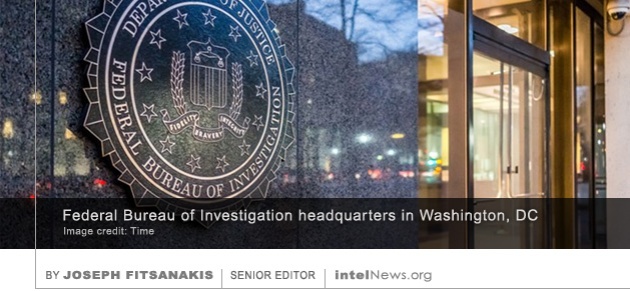
Baer’s book, The Fourth Man: The Hunt for a KGB Spy at the Top of the CIA and the Rise of Putin’s Russia (Hachette Books, May 2022), focuses on the period following the arrests of three American intelligence insiders, who were found to have spied for the Kremlin: Federal Bureau of Investigation (FBI) agent Robert Hanssen, and CIA officers Aldrich Ames and Edward Lee Howard. By 2002, Hanssen and Ames were serving life sentences for espionage, while Howard had died in Russia where he had fled while under investigation by the FBI. Collectively, these three had been responsible for some of the CIA’s gravest operational setbacks against the Soviet KGB and its Russian successor agencies.

Some in the CIA, however, remained convinced that not all of the CIA’s failures in the 1980s and 1990s could be explained away in this fashion. They held on to the suspicion that Moscow had been able to recruit a senior CIA executive, who —among other things— had sabotaged numerous probes by some of the Agency’s most committed spy-hunters. Baer’s book discusses how, in the mid-1990s, the CIA’s Directorate of Operations actively pursued those suspicions, by setting up a Special Investigations Unit (SIU). This new unit was led by one of the CIA’s most talented counterintelligence officers, Paul Redmond.

CONTROVERSY

This is precisely the point at which Baer’s book turns wildly controversial: it alleges that the missing spy, whom Baer refers to as “the fourth man”, is none other than Redmond himself. The retired CIA case officer further alleges that even the SIU eventually concluded that Redmond —i.e. its leading member— was a spy for Moscow. The author claims that the SIU presented those findings at a briefing with Redmond among the audience. The presentation prompted Redmond to storm out of the meeting, Baer alleges.

Importantly, Baer describes his case as “inconclusive”, and claims that he relies on information from some of his former CIA colleagues. He also admits that the very idea of a “fourth man” may be nothing more than a chimera. Nevertheless, the SIU probe did occur. It also appears that the FBI opened an investigation into the matter in 2006. Baer claims to have received a visit by two FBI agents in 2021, in which he was asked about what he knew about Raymond. This, he says, left him with the impression that some sort of counterintelligence effort to find the “fourth man” was “ongoing then and is continuing” now. Moreover, according to Baer, this counterintelligence investigation is no longer confined in-house at CIA; the FBI has now taken the lead.

REDMOND’S SIDE RESPONDS

Remarkably, Baer appears to have spoken to Redmond at least twice while preparing his book. On each occasion, the retired CIA senior executive fiercely rejected Baer’s claims that he was a spy for Moscow. In recent months, Redmond voiced his dismay at Baer’s claims publicly. As SpyTalk reports, the first time Redmond spoke publicly about Baer’s book was in November of last year, during an event held by the Association of Former Intelligence Officers. Read more of this post

Separate investigations focus on ex-FBI special agent’s Russian and Albanian ties

FBIAUTHORITIES IN THE UNITED States have launched at least two separate investigations into the business dealings of Charles McGonigal, the highest-ranking former employee of the Federal Bureau of Investigation (FBI) to face criminal charges in recent times. Much has been written about McGonigal’s alleged connection with Kremlin-linked Russian billionaire Oleg Deripaska. On the contrary, relatively little is known about his purported dealings with Albanian and other Balkan officials and middlemen, some of whom appear to have intelligence links. There is also the question of whether the criminal charges against McGonigal and his alleged co-conspirator, former Soviet and Russian diplomat Sergey Shestakov, are strictly financial in nature, or may eventually expand to include an espionage angle.
McGonigal, 54, retired in 2018 after a 22-year career at the FBI, during which he served as head of counterintelligence in New York, home of one of the Bureau’s largest field offices. He was arrested on Saturday in New York, upon returning to the United States from a trip to Sri Lanka. He faces charges of conspiring with Shestakov, a naturalized US citizen, to provide under-the-table services to Deripaska. The latter is among a long list of Kremlin-linked oligarchs, who have been subject to strict US sanctions since 2018. In working for Deripaska, McGonigal is accused in the state of New York of violating US government sanctions and engaging in money laundering, among five other charges.

However, the former FBI special agent is facing nine more charges in Washington, which involve illicit activities that he allegedly engaged in while still serving in the FBI. This is in contrast with his business relationship with Deripaska, which he is believed to have entered after his retirement from the Bureau. According to the indictment, McGonigal received in excess of $225,000 from an Albanian-born American businessman, who is also a former employee of Albanian intelligence. In return, McGonigal allegedly helped promote the businessman’s interests in the US and abroad. Throughout that time, McGonigal reportedly failed to disclose his alleged financial links with the businessman, as is required of all FBI employees. Read more of this post

CIA helped Ukraine foil two Russian plots on Zelenskyy’s life, new book claims

Volodymyr ZelenskyINFORMATION PROVIDED BY THE United States Central Intelligence Agency helped Kyiv foil two Russian plots against the life of Ukraine’s President, Volodymyr Zelenskyy, in the crucial early stages of the Russo-Ukrainian war, according to a new book. The claim is made in The Fight of His Life – Inside Joe Biden’s White House (Scribner) by Chris Whipple, the longtime investigative writer behind several books on American intelligence —most recently The Spymasters How the CIA Directors Shape History and the Future (2021, also by Scribner). Whipple’s latest book is scheduled for release today.
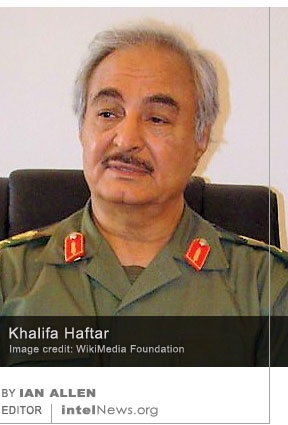
Throughout late 2021 and early 2022, the government of President Zelenskyy repeatedly dismissed American warnings, which came as early as November 2021, that Moscow was preparing to launch an unprovoked military invasion of Ukraine. Zelenskyy himself urged Washington to temper its public warnings about a possible war, because they were creating an atmosphere of panic in Ukrainian business circles. In his public statements, the Ukrainian leader insisted that Kyiv had a long history of facing —and staying calm in the face of— Russian threats against his country.

All that changed in January of 2022, just weeks before Russia launched its invasion of Ukraine. According to Whipple, Zelenskyy received a secret visit by CIA director William Burns. The two men met in Zelenskyy’s office in Kyiv, where Burns told the Ukrainian leader that he had been authorized by United States President Joe Biden to share with him “precise details of […] Russian pots”. According to Whipple, these plots were not only against Ukraine, but were aimed at Zelenskyy himself. This information, Whipple claims, “immediately got Zelenskyy’s attention; he was taken aback, sobered by this news”. Whipple suggests that the information Burns shared with Zelenskyy was specific enough to surprise and alarm the Ukrainian president. According to Whipple, the CIA’s information about the Kremlin’s assassination plots was “so detailed, that it would help Zelenskyy’s security forces thwart two separate […] attempts on his life” by Russian Special Forces.

The author further claims that the CIA also shared with Ukraine a precise “blueprint of [Russian President Vladimir] Putin’s invasion plan”. The intelligence given to Ukraine by the CIA included the Kremlin’s plans to attack the Antonov International Airport (also known as Hostomel Airport) northwest of Kyiv. The intelligence contributed substantially to Ukraine’s victory in the Battle of Antonov Airport, which took place on February 24 and 25. Ukrainian forces were successful in repelling a Russian air assault on the airport, thus keeping the airstrip under Ukrainian control during the crucial opening stages of the war. That success is often credited with preventing Russian forces from using the Antonov Airport as a strategically important staging location from which to entering and sack Kyiv in February of 2022.

► Author: Joseph Fitsanakis | Date: 17 January 2023 | Permalink

Embattled Libyan government announces surprise visit by CIA director

THE GOVERNMENT OF WAR-torn Libya announced on Thursday that William Burns, director of the United States Central Intelligence Agency (CIA) was in capital Tripoli for discussions with senior Libyan officials. By visiting Tripoli, Burns became the highest-ranking American government official to travel to the North African country under the presidency of Joe Biden.
According to reports in the Libyan media, Burns spent most of Thursday in Tripoli, where he met with Abdul Hamid Dbeibah, a controversial businessman who is serving as prime minister in the Government of National Unity (GNU). Burns also met with GNU Minister of Foreign Affairs Najla al-Mangoush, as well as with Hussein al-Ayeb, who leads the GNU’s intelligence agency. The CIA director also met with Field Marshal Khalifa Haftar (pictured), head of the Libyan National Army (LNA). The LNA nominally supports the GNU’s rival government in eastern Libya, the Government of National Stability (GNS). However, Haftar is seen by many as Libya’s de facto strongman. Notably, Burns did not meet with Fathi Bashagha, the self-styled ‘prime minister’ of the GNS, which, unlike the GNU, is not recognized by the United Nations, but is supported by a number of regional powers, including NATO member Turkey.

Al-Monitor reported that the subject of the GNU’s relations with Russia was high on the agenda during Burns’ visit, as was the subject of Libya’s energy exports to Europe. Counterterrorism was also discussed, which is unsurprising, given that last month the GNU surrendered Abu Agila Mohammad Mas’ud Kheir Al-Marimi to American authorities. Washington alleges that Al-Marimi was involved in the 1988 downing of Pan Am Flight 103 over Lockerbie, Scotland, which was conceived and plotted by the regime of the late Colonel Moammar al-Gadhafi. The move was seen as an attempt by the GNU to strengthen relations with Washington, in light of the challenge it faces from the GNS and the LNA.

► Author: Ian Allen | Date: 13 January 2023 | Permalink