Son of senior CIA official dies ‘fighting for Russia’ in Ukraine
April 28, 2025 1 Comment
 A 21-YEAR-OLD American citizen, whose mother is a senior Central Intelligence Agency (CIA) official, died while fighting with the Russian military in Ukraine in 2024, according to a news report. Late last week, the CIA confirmed the accuracy of the story while requesting that the media afford the bereaved family “privacy at this difficult time”.
On April 25, the independent Russian media website Important Stories (known as iStories) claimed that Michael Gloss, 21, the son of CIA Deputy Director for Digital Innovation Gallina Gloss, had “died within the borders of Ukraine” while fighting for the Armed Forces of the Russian Federation. Although his death had occurred in April 2024, the information about his American citizenship and his connection to the CIA had been kept from the media until the iStories report disclosed it to the public.
Later on the same day, a spokesperson for the CIA told NBC News that the spy agency was aware of the incident, which had been treated “as a private family matter for the Gloss family, not a national security issue”. The CIA spokesperson added that Michael Gloss had “struggled with mental health issues” and relayed the Gloss family’s wish for “privacy at this difficult time”.
According to iStories, Michael Gloss voiced strong support for Ukraine early in the Russo-Ukrainian war. He eventually traveled to Europe on his own, joining the Rainbow Family, a modern-day hippie movement with roots in late-1960s counterculture. Gloss eventually traveled across Turkey, where he reportedly began posting increasingly pro-Russian messages and strong criticism of the United States on his social media accounts.
In the summer of 2023, Gloss began posting stories and images from Russia. In one instance, he stated in a social media post that he had decided to “defeat mortality and the military-industrial complex”. Shortly afterwards he enlisted in the Russian army and began posting photos and videos from his military training alongside other international volunteers. He also began participating on Russian social media platforms, such as VKontakte, where he expressed strong support for the Russian war effort and blasted what he referred to as “Western propaganda” about Ukraine and its government.
According to iStories, Michael Gloss “died within the borders of Ukraine”, though it is not known whether he participated in any fighting. An obituary published by his family in the United States makes no mention of his enlistment in the Russian military, stating only that he was “tragically killed in Eastern Europe on April 4, 2024”, while “forging his own hero’s journey”.
► Author: Joseph Fitsanakis | Date: 28 April 2025 | Permalink
 THE UNITED STATES DEPARTMENT of Defense has reportedly ordered its Cyber Command to “stand down from all planning” of cyber operations aimed at Russia.
  UNITED STATES GOVERNMENT OFFICIALS have raised concerns that allowing Elon Musk’s Department of Government Efficiency (DoGE) access to Treasury Department databases could expose human intelligence assets operating abroad. On January 31, newly installed Treasury Secretary Scott Bessent gave two DoGE employees, Tom Krause and Marko Elez, read-only access to the Treasury Department’s payment system. Elez, 25, subsequently
  A GROUP OF FORMER United States government officials have warned against plans to build a new casino in a part of northern Virginia that is home to several intelligence agency facilities. The proposed casino would be built in Tysons, also known as Tysons’ Corner, an unincorporated community of about 30,000 residents, located between McLean and Vienna, west of the nation’s capital.
 THERE WERE
 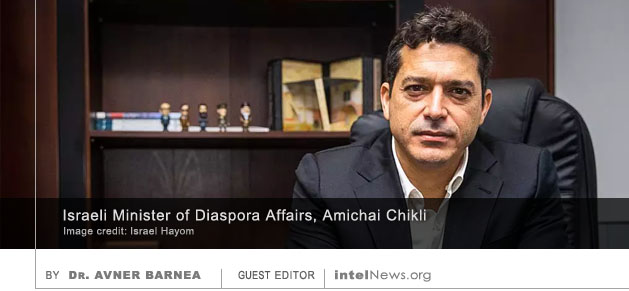 SEVERAL WEEKS AGO, ISRAEL’S Minister of Diaspora Affairs, Amichai Chikli, reportedly met with the chief executive officer (CEO) of Israeli private intelligence company Black Cube.
  AT LEAST FOUR OF the eight Russians
 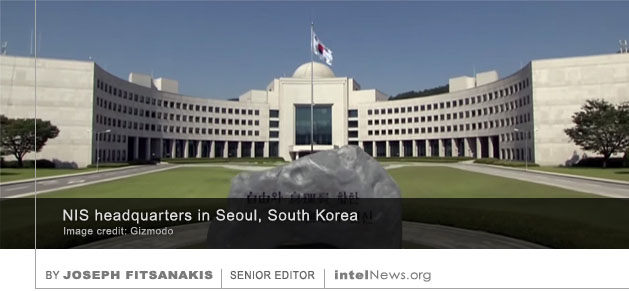 A FORMER INTELLIGENCE ANALYST for the Central Intelligence Agency (CIA), who is married to a high-profile columnist for The Washington Post, remains under arrest for allegedly spying for South Korea. According to an
  THE UNITED STATES SECRET Service is among the world’s most prestigious law enforcement agencies. Its institutional experience in protecting US presidents and presidential candidates dates to 1901. Given its high-stakes protective mission —safeguarding the executive leadership of the world’s most powerful nation— the agency has historically placed emphasis on flawlessness: it simply can’t afford to fail.
 NO COUNTRY HAS BETTER intelligence on the Islamic State-Khorasan Province (known as ISIS-K) than the United States. American forces have faced ISIS-K almost from the moment the group was founded in 2015 in Pakistan, just a few miles from the Afghan border. It was there that a group of disaffected members of the Tehreek-e-Taliban-e-Pakistan (TTP, commonly referred to as the Pakistani Taliban) began turning their backs on al-Qaeda, which they saw as a failing brand, and joined the Islamic State of Iraq and Syria (ISIS).
 not being taken into consideration by the group’s primary targets, namely Afghanistan, Iran, and Russia. Indeed, despite the Washington’s best efforts, its warnings about pending ISIS-K attacks have been ignored by the group’s primary targets. A few days after an ISIS-K attack killed nearly 100 people in Kerman, Iran, The Wall Street Journal
  THE GROWING LIST OF assassinations of prominent Russians and Ukrainian separatists shows that the Ukrainian intelligence services are using “liquidations” as a weapon of war, according to The Washington Post. Citing “current and former Ukrainian and United States officials”, the paper
  Crimea, the local head of the domestic security agency, the Ukrainian Security Service (SBU) defected to Russia.
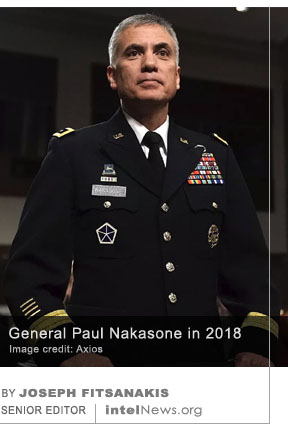 LAST WEEK, TWO SENIOR UNITED States intelligence officials shared rare insights on artificial intelligence, as they discussed some of the opportunities and threats of this new technological paradigm for their agencies. On Wednesday, Lakshmi Raman, Director of Artificial Intelligence at the Central Intelligence Agency, addressed the topic during an on-stage interview at Politico’s AI & Tech Summit in Washington, DC. On Thursday, the National Security Agency’s outgoing director, Army General Paul Nakasone, discussed the same subject at the National Press Club’s Headliners Luncheon in the US capital.
 FOR THE SECOND TIME in 10 days, the government of China has announced the arrest of a Chinese government employee on suspicion of spying for the United States Central Intelligence Agency (CIA). In a statement issued on Monday, China’s civilian intelligence agency, the Ministry of State Security (MSS), said it had launched an investigation into an official of a government ministry, who was allegedly caught conducting espionage on behalf of the CIA.
 A CHINESE GOVERNMENT EMPLOYEE gave “core information” about China’s military to the United States, after he was recruited by a Central Intelligence Agency (CIA) officer in Italy, a Chinese state agency has said. The allegation was made in a statement that was issued on Friday by China’s civilian intelligence agency, the Ministry of State Security (MSS), on its WeChat social media account.








White House orders spy agencies to prioritize intelligence collection on Greenland
May 12, 2025 by Joseph Fitsanakis 8 Comments
Citing “two people familiar with the effort”, the paper said that the classified message was communicated to the leadership of the National Security Agency, the Defense Intelligence Agency and the Central Intelligence Agency, among other members of the intelligence community. The recipients of the order were instructed to prioritize the collection of intelligence about the politics of Greenland and Denmark to which Greenland belongs. They were also instructed to collect information about the island’s economic and social dynamics, including its inhabitants’ views on the United States.
The United States government uses collection emphasis directives as a means of aligning the use of intelligence resources with the White House’s policy priorities. According to The Wall Street Journal, the directive appears to be among the first concrete steps taken by the White House to utilize the government’s national security apparatus in support of President Trump’s often-stated desire to acquire Greenland on behalf of the United States. The island’s 57,000 residents are citizens of Denmark, which is a member of the North Atlantic Treaty Organization and a longtime American military and political ally.
When asked to comment on this report by The Wall Street Journal, DNI Gabbard accused the newspaper of “breaking the law and undermining our nation’s security and democracy [by] leaking classified information”. She added that the newspaper “should be ashamed of aiding deep state actors who seek to undermine the President by politicizing and leaking classified information”.
Meanwhile, the Reuters news agency reported last week that White House officials have begun outlining a plan to pursue a so-called Compact of Free Association (COFA) between the United States and Greenland. The United States maintains COFA agreements with several Pacific Island nations, including Micronesia and Palau. These agreements permit the American military to operate on the soil and maritime jurisdiction of these nations. In return, the United States provides these nations with essential services, as well as security and military protection.
► Author: Joseph Fitsanakis | Date: 12 May 2025 | Permalink
Filed under Expert news and commentary on intelligence, espionage, spies and spying Tagged with collection emphasis directive, Denmark, Greenland, intelligence collection, News, Tulsi Gabbard, United States