North Korean commando cells may have infiltrated US in 1990s
December 24, 2014 Leave a comment
 By IAN ALLEN | intelNews.org
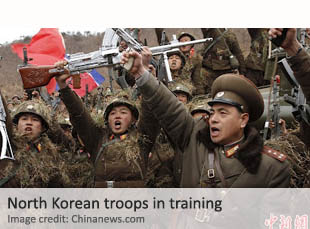
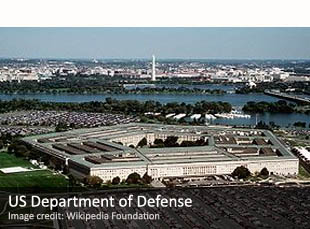
North Korean commandos, trained to attack large cities and nuclear installations, may have been secretly stationed on American soil in the 1990s, according to a declassified report from the United States Department of Defense’s intelligence wing. The report, dating from September 2004, was compiled by the Defense Intelligence Agency (DIA), which is America’s foremost intelligence organization concerned with military secrets. The report states that the North Korean commando cells were set up by the country’s Ministry of People’s Armed Forces under the command of its Reconnaissance General Bureau. Known as RGB, the Bureau is believed to have under its command an estimated 60,000 members of North Korea’s Special Forces. It is responsible for countless covert operations in South Korea, Japan, and elsewhere around the world, which include assassinations and kidnappings. Its most notorious action was the so-called Blue House Raid of 1968, in which a group of North Korean commandos infiltrated the South and attacked the official residence of South Korean President Park Chung-hui in an attempt to assassinate him. In 1983, RGB forces were responsible for a bomb attack in Rangoon, aimed at killing South Korean President Chun Doo-hwan during his official visit to the Burmese capital. The bomb killed 21 people, but Chun survived. According to the 2004 DIA report, the RGB established five “liaison offices” in the early 1990s, which were tasked exclusively with training a select number of operatives to infiltrate the US and remain in place until called to action by Pyongyang. They would become operational in the event of a war breaking out between America and North Korea, at which point they had been instructed to conduct raids on large US cities, sabotage nuclear power plants, etc. The DIA document states that the North Korean plan was put in place because Pyongyang had no other lethal means of reaching the US at the time. The report is significantly redacted and includes the warning that it contains raw information, meaning that it had not been cross-checked and could not be conclusively verified. Additionally, the document makes no mention of the fate of the RGB’s infiltration program and whether it continues to the present day.












Mystery surrounds CIA spy ‘of Cuban origin’ released last week
December 25, 2014 by intelNews Leave a comment
Almost nothing is known about a Cuban intelligence officer who spied for the United States and is now believed to be on American soil following his release from a Cuban prison last week. His release was part of a wider exchange between Washington and Havana of persons held in each other’s prisons on espionage charges. It included the release of Alan Gross, a contractor for the US Agency for International Development, who was imprisoned in the Caribbean island in 2009 on charges of political subversion. The deal also involved the release of the remaining three members of the so-called “Cuban Five”, a ring of Cuban intelligence officers operating on American soil, who were convicted in 1998 of spying on anti-Castro exile groups on behalf of Havana. But the ample media coverage has shied away from another prisoner who was exchanged as part of the deal, a spy for the Central Intelligence Agency who was described by US President Barack Obama as one of the most important intelligence assets that America has ever had in Cuba. The initial piece of information came from Cuban President Raul Castro himself, who on December 17 announced that an American spy “of Cuban origin” was to be released. Castro did not identify the spy. But later on that same day, Newsweek’s Jeff Stein said his name was “Rolando ‘Roly’ Sarraff Trujillo”, a former cryptographer in the Cuban Ministry of Interior’s Directorate of Intelligence. Trujillo was allegedly recruited by the CIA in the 1980s and spied for Washington until 1995, when he was arrested by Cuban counterintelligence, charged with espionage and sentenced to 25 years in prison. One source told Stein that the damage that Trujillo had caused Havana was so great that “the only thing that saved him from execution was the fact that both his parents were retired senior intelligence officers”. In a report published last Thursday, The Washington Post’s Adam Goldman said Trujillo’s release had been “a major priority for the [US] Intelligence Community” and would have been part of any spy swap with the Cuban government. Both Stein and Goldman claim that Trujillo was instrumental in the capture by the FBI of the Cuban Five, as well as in the 2009 arrest of State Department analysts Walter and Gwendolyn Myers, who spied on America for Cuba for 30 years. He is also said to have had a role in the capture of Ana Belen Montes, the top Cuba analyst in the Defense Intelligence Agency, who was convicted in 2002 of spying for Cuba. All this is speculative, however, as no official confirmation has been issued on Trujillo from either Washington or Havana. One former senior CIA official told The Post that the Agency had another spy in Cuba, alongside Trujillo, codenamed TOUCHDOWN. But, unlike Trujillo, he managed to defect to the US in the late 1980s, before getting captured by the Cubans.
Filed under Expert news and commentary on intelligence, espionage, spies and spying Tagged with Ana Belen Montes, Cuba, Cuban Five, Gwendolyn Steingraber Myers, imprisoned spy swaps, Jeff Stein, Rolando Sarraff Trujillo, Rolando Trujillo, Roly Trujillo, United States, Walter Kendall Myers