CIA shuts down office that declassifies historical materials

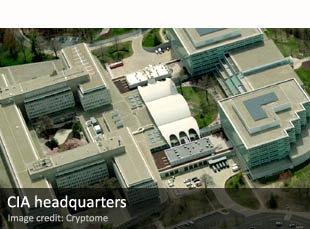
CIA headquartersBy JOSEPH FITSANAKIS | intelNews.org |
The division of the United States Central Intelligence Agency that is responsible for weeding through and declassifying historical materials from the Agency’s archives is to close due to the sequester budget cuts. The CIA’s Historical Collections Division has been at the source of some of the most sensational declassification of American intelligence material in recent years, spanning several decades of postwar history. But it has now been disbanded due to budget cuts associated with so-called sequester. The widespread cuts were automatically imposed after the two political parties in Congress failed to compromise last year on the Federal budget. The sequester is an across-the-board budget reduction that affects every single agency or office operating under the US government. It is believed that the CIA dealt with the cuts by terminating an unknown number of agreements with outside contractors, some of whom were responsible for the declassification of historical documents. The Los Angeles Times, which reported on the story, quoted CIA spokesman Edward Price, who told journalists last week that the Historical Collections Division had been “moved into a larger unit” within the Agency in order to “create efficiencies”. He identified that unit as the CIA’s Office of the Chief Information Officer, whose Information Management Services handle all Freedom of Information Act requests from the public. Price assured reporters that the CIA remained faithful to declassifying historical material, which it described as part of its “public interest mission”. But The Times quoted several scholars who said that the disbandment of the CIA’s Historical Collections Division will almost certainly result in a reduced number of public disclosures. Read more of this post

NSA operates ‘secret collection program’ out of US embassies

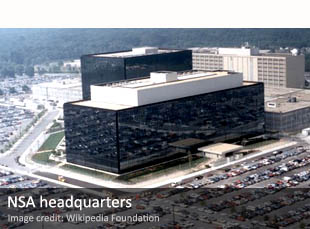
NSA headquartersBy JOSEPH FITSANAKIS | intelNews.org |
Documents leaked by American intelligence defector Edward Snowden point to the existence of a sizable signals intelligence collection program operating out of dozens of United States embassies and consulates located around the world. The documents, given by Snowden to German newsmagazine Der Spiegel, contain details of a monitoring program known as the Special Collection Service (SCS), which appears to operate under the auspices of the National Security Agency (NSA). The NSA is America’s largest intelligence agency —it is bigger than the CIA and the FBI combined— and is tasked by the US government with intercepting electronic communications worldwide. Snowden was a technical contractor for the NSA before he defected to Russia this past summer, where he was offered political asylum. Der Spiegel says that Snowden’s documents point to the existence of the SCS, which allegedly operates covert listening posts in over 80 American embassies and consulates worldwide. These listening posts operate clandestinely, without the knowledge or permission of the host countries. The German newsmagazine identifies the United Nations (UN) headquarters in New York as being among the SCS’s principal listening targets. In the summer of 2012, says Spiegel, an SCS operation managed to compromise the UN headquarters’ internal video conferencing system, by breaking the encryption used to secure the communications of resident diplomats. One NSA document seen by Spiegel hails the “dramatic improvement of data [collected] from video teleconferencing and the ability to decrypt the traffic”. It goes on to state that intercepted communication exchanges rose from 12 to nearly 500 within three weeks following the SCS penetration. Read more of this post

US goes after schools that teach how to beat polygraph tests

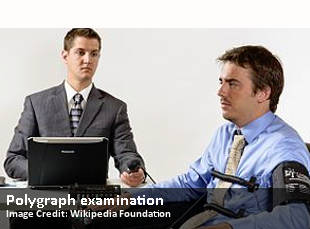
Polygraph examinationBy IAN ALLEN | intelNews.org |
The United States government has launched an extensive criminal investigation of companies and individuals who coach job applicants on how to deceive polygraph examiners. It is believed that the government administers about 70,000 polygraph tests a year to candidates seeking security-related jobs, or to employees who wish to maintain their security clearances. The significance of the tests, which can sometimes make or break a security or intelligence employee’s career, have given rise to the phenomenon of polygraph coaches. There are several dozen companies and individual instructors in the US, who claim to be able to teach people how to pass polygraph examinations. They train test-takers in methods such as controlling their breathing, tensing and relaxing their muscles, focusing their thoughts, or biting their tongue, in order to skew the results of the test in their favor. In the past, government agencies have largely ignored these instruction techniques, claiming that there is no proof they actually work (critics question whether polygraph tests themselves work, pointing to the fact that they are rarely permissible in court). But the US government’s attitude to these techniques appears to be changing, judging by a criminal investigation that was recently launched against polygraph coaches. The government has refused to acknowledge the existence of the investigation, but McClatchy newspapers said last week that its existence had been confirmed by “several people familiar” with the probe. Read more of this post

Analyst who spied on US for Israel speaks out for first time

Jonathan PollardBy JOSEPH FITSANAKIS | intelNews.org |
A convicted American spy, who is serving a life sentence for betraying American secrets to Israel in the 1980s, has broken his 28-year-long silence by penning an article in an Israeli newspaper. Jonathan Jay Pollard was a United States Navy intelligence analyst who spied for Israel in exchange for money from 1984 until his arrest in 1986. Many in US counterintelligence consider him one of the most damaging double spies in American history. But he is widely viewed as a hero in Israel, where many conservative Israelis, as well as pro-Israel Americans, are actively pressuring the US administration of President Barack Obama to release him. In 1998, after many years of official denials, Israel publicly admitted that Pollard had operated as an Israeli agent in the United States. Pollard, who acquired Israeli citizenship in 1995, has so far served 28 years of a life sentence in a US prison. Throughout his incarceration, Pollard has remained silent. But he broke his silence on August 16, by writing an editorial for conservative Israeli newspaper The Jerusalem Post. In it, he derides Israel for freeing 26 Palestinian prisoners, who were convicted of violent actions against Israel, ahead of peace talks with the Palestinian Authority. Pollard claims that most Israelis are against the move to free the prisoners, and describes Israel as a “strange kind of democracy that pays no heed whatsoever to the will of the people”. The jailed spy adds that “Israel is the only country in the world ever to voluntarily expel its own citizens from chunks of its homeland in order to hand over the land to its enemies”. He also reveals his displeasure with his own fate by claiming that Israel “holds unenviable world records for betraying those who serve the state”. Read more of this post

Document confirms CIA role in 1953 Iran coup

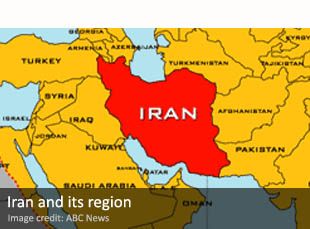
Iran and its regionBy JOSEPH FITSANAKIS | intelNews.org |
Almost exactly 60 years ago, on August 19, 1953, a military coup d’état deposed Iran’s legally elected Prime Minister, Dr. Mohammed Mossadegh, and replaced him with General Fazlollah Zahedi. Mossadegh was placed under house arrest, while his senior government associates and thousands of his supporters were arrested. Many, including Hossein Fatemi, Iran’s Minister of Foreign Affairs and Mossadegh’s trusted friend, were tortured and eventually executed. The coup, which reinstated the Shah at the helm of Iran’s government, is believed to have been planned and executed by Britain’s Secret Intelligence Service (MI6) in cooperation with the United States Central Intelligence Agency (CIA). This, however, has never been publicly acknowledged by the CIA. The Agency has consistently refused comment on the matter, saying that most of the records of its involvement in Iran at the time were “lost or destroyed” in the mid-1960s. This policy of silence, however, appears to have changed this week, after the CIA released an official document that acknowledges the Agency’s leading role in the coup. The document, entitled The Battle for Iran, is part of an internal CIA historical report produced in the mid-1970s by an Agency historian. Parts of it were declassified in 1981, but its most important chapter, titled “Section III: Covert Action”, had been redacted prior to its public release. Sometime ago, George Washington University’s National Security Archive filed a Freedom of Information Act request for the complete release of the report. This was not granted; but the CIA did release a new public version of the document, which contains fewer redacted passages. Among the newly uncovered information is a brief description of the operational side of the August 1953 coup, which the CIA codenamed TPAJAX. Read more of this post

New Snowden leaks reveal thousands of NSA privacy violations

NSA headquartersBy IAN ALLEN | intelNews.org |

New documents leaked by an American intelligence defector reveal that the National Security Agency (NSA) violated privacy protections nearly 3,000 times in 2012, many of them under an interception program that was later ruled unconstitutional. The documents were supplied to The Washington Post by former NSA and Central Intelligence Agency technical expert Edward Snowden, who recently defected to Russia. The paper published the documents on Thursday, indicating that they form part of an internal NSA audit completed in May of 2012. They detail 2,776 separate incidents of what the NSA describes as “unauthorized data collection”, between May 2011 and May 2012. The documented instances involve unauthorized interception of both email and telephone data belonging to American citizens and foreign nationals operating on American soil. The NSA is forbidden from spying on American citizens, while its interception activities targeting foreign nationals inside the US are severely limited by law. According to the audit report, some of the privacy violations occurred when foreign citizens targeted by the NSA entered US soil and continued to be monitored without prior permission from the Foreign Intelligence Surveillance Court (FISC). In other instances, the NSA’s auditors reported “inadvertent collection incidents” relating to targets believed to be foreign, and later proved to be American citizens. The report notes that the privacy violations were unintentional results of “errors and departures from standard [NSA] processes”, which occurred “due to operator errors” and the failure of NSA personnel to “follow procedures”. Read more of this post

Germany plans to limit NSA’s access to European communications

Philipp Rösler and Angela MerkelBy JOSEPH FITSANAKIS | intelNews.org |
The government of Germany plans to implement a series of measures designed to limit America’s access to the communications of European citizens and institutions, according to senior German cabinet officials. The move is part of a broader German response to news in July that the United States spies on the communications of Germany and other European Union countries with the same intensity it spies on China or Iraq. The information was leaked by American defector Edward Snowden, a former computer expert for the Central Intelligence Agency (CIA) and the National Security Agency (NSA), who is now living in Russia. Speaking to reporters on Wednesday, Germany’s Vice Chancellor and Minister of Economics and Technology, Philipp Rösler, said Germany will take action to limit NSA’s ability to spy on European Union communications traffic. The first step in the process will be to build “a strong European information technology industry which can offer alternatives” to American-owned firms that collaborate with the NSA, said Rösler. Further steps will include augmenting the security of European cloud computing processes and structures, and strengthening contacts between established information technology companies and start-up enterprises. At the same time, Germany will enter negotiations with the European Commission (the European Union’s executive arm) aimed at strengthening European data protection legislation and legally forcing the US to stop its indiscriminate surveillance of European communications networks. Read more of this post

CIA kept file on American academic Noam Chomsky, say experts

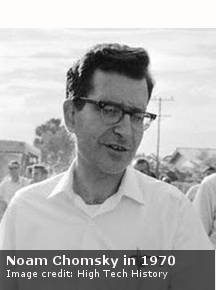
Noam Chomsky in 1970By JOSEPH FITSANAKIS | intelNews.org |
A 1970 communiqué between two United States government agencies appears to show that the Central Intelligence Agency (CIA) kept a file on the iconic American linguist and political dissident Noam Chomsky. Widely seen as a pioneer of modern linguistics, Chomsky adopted an uncompromisingly critical stance against the US’ involvement in the Vietnam War in the early 1960s. The US Intelligence Community’s systematic surveillance of antiwar and civil rights activists at the time prompted legal scholars and historians to deduce that Chomsky’s activities must have been routinely spied on by the American government. But a number of Freedom of Information Act (FOIA) requests in recent years turned up blank, with the CIA stating that it could “not locate any records” responsive to the requests. Scholars insisted, however, and a recent FOIA request unearthed what appears to be proof that the CIA did in fact compile a file on the dissident academic. The request was submitted to the Federal Bureau of Investigation (FBI) by attorney Kel McClanahan, executive director of National Security Counselors, a group specializing in “lawfully acquiring from the government material related to national security matters and distributing it to the public”. According to Foreign Policy magazine blog The Cable, McClanahan’s FOIA request revealed a memorandum sent from the CIA to the FBI on June 8, 1970. In it, the Agency seeks information about an upcoming trip by American antiwar activists to North Vietnam, which, according to the CIA, had received the “endorsement of Noam Chomsky”. The memo also asks the FBI for information on the trip’s participants, including Professor Chomsky. The Cable spoke to Marquette University Professor Athan Theoharis, domestic surveillance expert and author of Spying on Americans, who opined that the CIA request for information on Chomsky amounts to an outright confirmation that the Agency kept a file on the dissident academic. Read more of this post

News you may have missed #849 (analysis edition)

Edward SnowdenBy IAN ALLEN | intelNews.org |

►►Are American spies the next victims of the Internet age? The furor over the NSA’s data collection and surveillance programs has been fierce. But Daniel Prieto, of the Center for Strategic and International Studies, argues that the debate should be focusing on the US intelligence apparatus, transformed in the dozen years since 9/11, can meet the challenges and that the US faces today and into the future. He asks whether the “business model” of US intelligence –how intelligence is gathered, analyzed, and used– is sufficient and sustainable, or whether it needs to evolve to “something different or something more”.
►►What did Edward Snowden get wrong? Everything. Andrew Liepman, senior analyst at RAND Corporation, former career officer at the CIA, and former deputy director of the US National Counterterrorism Center, offers an insider’s view on the Edward Snowden case. He argues that those following the Snowden saga fail to understand that the US government “truly does make strenuous efforts not to violate privacy”. This is not simply because it respects privacy on principle, he says, but also because “it simply doesn’t have the time” to access irrelevant information that is not closely connected to possible espionage or terrorist plots against Americans.
►►Why US diplomatic missions became fortresses. Even during the Cold War, American diplomatic facilities were designed to be welcoming and to project the American values of openness and individual liberty. No more, argues John Campbell, former US Ambassador to Nigeria and Ralph Bunche Senior Fellow for Africa Policy Studies at the Council on Foreign Relations. Nowadays, US diplomatic facilities increasingly showcase “Fortress America”, he argues. And he concludes that, “the need to subordinate so much to security diminishes US soft power by undermining its traditional message of openness and welcome”.

Spy agencies failed to share intelligence on Omagh bombing: report

Real IRA paradeBy IAN ALLEN | intelNews.org |

A new report on the 1998 bombing of downtown Omagh by an Irish republican splinter group claims that the tragedy could have been avoided had British, Irish and American intelligence agencies shared information with British police. The car bomb attack was carried out on August 15, 1998, by the Real Irish Republican Army (RIRA). The militant organization consisted of former Provisional Irish Republican Army volunteers who rejected the Good Friday Agreement, part of the Northern Ireland peace process. It devastated the small Northern Irish town of Omagh, killing 29 and injuring over 200 people, including six children, several teenagers and a woman who was pregnant with twins. There have been no criminal convictions in connection with the bombing, despite the fact that it was the single worst instance of violence in the so-called Northern Ireland Troubles, which began in the 1960s and ended in 1998, largely because of the Omagh bombing. But now a new report commissioned by the families of the victims of the bombing claims that intelligence services from three countries failed to share information with British police, which could have prevented the disaster in Omagh. The report, authored by a group of retired security experts on behalf of London-based law firm SBP, says the RIRA had been infiltrated by the United States Federal Bureau of Investigation (FBI), Britain’s Security Service (MI5) and the Irish Garda’s Crime and Security Branch. These agencies, claims the report, had at least two informants inside the RIRA: a smalltime Irish criminal named Paddy Dixon, who frequently smuggled stolen cars from Ireland into Britain for use by the RIRA, and David Rupert, an American of Irish descent. Read more of this post

News you may have missed #848

US consulate in Benghazi, LibyaBy IAN ALLEN | intelNews.org |
►►UK officials saw ‘communist spies’ in Japan in 1983. British officials believed in the early 1980s that Japanese institutions had been “slightly” penetrated by communist intelligence services, according to documents declassified last week at the National Archives in London. The documents, from 1983, assert that there were approximately 220 communist intelligence officers working in Japan: 100 for the Soviet Union, 60 for China and 60 for other communist countries.
►►‘Dozens of CIA operatives on the ground’ during Benghazi attack. CNN claims that “dozens of people working for the CIA” were on the ground the night of the attack on the US consulate in Benghazi, Libya, which killed four Americans, including Ambassador Christopher Stevens. The news station adds that, according to one source, the CIA is involved in “an unprecedented attempt to keep [its] Benghazi secrets from ever leaking out”.
►►Australians call for national debate on privatization of intelligence. Dr Troy Whitford, Associate Investigator with the Australian Research Council’s Centre of Excellence in Policing and Security, and lecturer at Charles Sturt University, has called for “a national debate on the extent, cost and consequences of Australia’s security and intelligence outsourcing”. The call was apparently prompted by news that 51% of the intelligence gathering in the US is now carried out by non-government contractors.

News you may have missed #847

Abdel Baset al-MegrahiBy IAN ALLEN | intelNews.org |
►►Secret letter shows arms deal behind Lockerbie bomber release. An email sent in 2008 by Sir Vincent Fean, the then British ambassador in Tripoli, details how the release by Britain of Lockerbie air disaster bomber Abdelbaset al-Megrahi, was linked to a commercial deal. According to The Daily Telegraph, the email specifies that al-Megrahi would be released once Libya “fulfilled its promise” to buy an £400 million air defense system.
►►Is the US ramping up a secret war in Somalia? The US has expanded its secret war in Somalia, stepping up assistance for federal and regional Somali intelligence agencies that are allied against the country’s Islamist insurgency. It’s a move that’s not only violating the terms of an international arms embargo, according to UN investigators, but it also shows that Washington’s signature victory against al-Qaeda’s most powerful African ally may be in danger of unraveling.
►►Indonesian government ‘angry’ at alleged Western spying. The Indonesian government has reacted strongly to revelations in the Australian media that the country’s President and senior diplomats were spied upon during the 2009 G20 conference in London. The revelations appear to be based on leaks on intelligence-gathering techniques by US whistleblower Edward Snowden.

New documents reveal massive NSA surveillance capabilities

General Keith AlexanderBy JOSEPH FITSANAKIS | intelNews.org |
Documents provided by American former intelligence technician Edward Snowden show that the United States National Security Agency has unprecedented surveillance capabilities, which allow it to monitor nearly every online activity of targeted Internet users. Snowden, a self-styled whistleblower, who is currently in Russia, provided British newspaper The Guardian with an NSA training presentation. The visually based presentation explains the inner workings of an intelligence collection program called XKeyscore, which the NSA describes as its “widest-reaching” digital collection program. The system allows NSA data collectors to sift through massive online databases containing millions of individual users’ browsing histories, emails and chats —what the NSA calls digital network intelligence (DNI). According to the training presentation, authorized NSA analysts are able to target individual Internet users by entering their name, email address, IP address or telephone number. The presentation states that, upon entering the identifying information, an NSA analyst can tap into “nearly everything a typical user does on the Internet”, including the content and metadata of emails, website browsing and search terms used. Snowden told The Guardian that an NSA analyst only needs to know a user’s personal email address in order to “wiretap anyone [while] sitting at [his] desk, from you or your accountant to a federal judge or even the President”. What is more, it appears that NSA analysts are able to target individual Internet users by simply “filling in an […] on-screen form”, and by giving only a very broad justification for the probe. Additionally, individual digital collection operations are not approved by a court or senior NSA officers. According to Snowden, all an NSA analyst has to do is suspect that the targeted online user is in contact with “a foreign target”. Meanwhile, NSA Director Keith Alexander was jeered by participants during his keynote speech at the Black Hat Technical Security conference in Las Vegas on Wednesday. Read more of this post

Is mismanagement driving away some of the CIA’s best talent?

CIA headquartersBy IAN ALLEN | intelNews.org |
Poor management practices and a culture that tolerates blunders by senior officials are generating cynicism and disillusionment among employees at the United States Central Intelligence Agency, according to an internal study. Completed in 2010 by the CIA’s Office of the Inspector General, the study was released in heavily redacted form last week, in response to a Freedom of Information Act request. The Los Angeles Times, which filed the request in 2011, said the report identifies mismanagement and unaccountability among senior leadership as major factors contributing to the CIA’s “retention challenges”. It cites a 2009 Agency-wide anonymous survey, which found that around 12% of the CIA’s workforce was considering resigning. Over half of those said they wanted to leave because of “poor management and a lack of accountability for poor management” among senior-level staff. This feeling is stronger among younger recruits, “who have exhibited high resignation rates in current years”, according to the report. Operations officers at the National Clandestine Service —the CIA’s covert-action arm— are also more disturbed than other Agency employees by perceived mismanagement. The report also notes that the CIA has failed to introduce mechanisms for encouraging accountability, in response to growing concerns by lower-level staff. The Times said it spoke to “more than 20 former [CIA] officers”, who said the 2010 report echoed “longstanding concerns about the CIA’s culture”. Read more of this post

CIA finances geoengineering study on climate change

CIA headquartersBy JOSEPH FITSANAKIS | intelNews.org |
The United States Central Intelligence Agency (CIA) is among the principal funding bodies of a scientific research program on using geoengineering to slow down or halt climate change. The 21-month $630,000 study will be administered by the US National Academy of Science (NAS). Alongside the CIA, the project is funded by the National Oceanic and Atmospheric Administration (NOAA) and the National Aeronautics and Space Administration (NASA). The science of geoengineering encompasses techniques of large-scale intervention on the Earth’s climatic system, aimed at controlling solar radiation and removing carbon dioxide from the environment. Its ultimate goal is to reduce global warming by removing a portion of greenhouse gasses from the atmosphere and by causing the planet to absorb reduced amounts of solar radiation. The NAS study will be the first one of its kind at the Academy to be financially backed by an intelligence agency. In addition to exploring technical ways of altering the course of climate change, the study aims to evaluate the implications of geoengineering efforts on international security and American national security in particular. The CIA’s interest in climate science is not new. Since the middle of the last decade, intelligence agencies have shown interest in the national security ramifications of climate change, as well as in climate change negotiations between governments. In 2009, the CIA opened its Center on Climate Change and National Security, a small unit led by senior specialists from the Agency’s Directorate of Intelligence and the Directorate of Science and Technology. Read more of this post