US surveillance or Merkel’s phone prompts angry German reaction

Philipp Rösler and Angela MerkelBy JOSEPH FITSANAKIS | intelNews.org
News of an invasive intelligence-gathering operation by the United States, which allegedly targeted the official communications of German chancellor Angela Merkel, has prompted angry responses from the European Union. The news prompted the French government to request that US surveillance of European heads of state be discussed during an upcoming EU summit, while The New York Times warned yesterday that “invasive American intelligence gathering” against Europe could “severely damage […] decades of hard-won trans-Atlantic trust”. The latest row between Washington and Brussels was sparked by a report aired on ARD, Germany’s state television station. It said that the National Security Agency (NSA), America’s foremost communications interception agency, had monitored the official cellular telephone of German Chancellor Angela Merkel. A spokesperson for the German government told journalists yesterday that the German leader had “angrily” called US President Barack Obama and demanded assurances that her communications were “not the target of an American intelligence tap”. The German leader reportedly told Mr. Obama that there should be “no such surveillance of the communications of a head of government” belonging to a “friend and partner of the US”. The Times reported that Washington’s responded by assuring Chancellor Merkel that her communications were “not the target of current surveillance and would not be in the future”. But the White House is said to have refused to enter into a discussion of past interception activities. Mrs. Merkel’s telephone call was the second time in less than two days that Mr. Obama had to provide assurances of privacy to a European head of state. Read more of this post

News you may have missed #854 (SIGINT edition)

NSA/GCHQ listening station in Menwith HillBy IAN ALLEN | intelNews.org
►►British ex-minister accuses GCHQ of ignoring surveillance fears. Nick Brown, a former Labour Party cabinet minister, has warned that GCHQ and Britain’s other intelligence agencies appear to be undertaking mass surveillance without parliament’s consent because the country’s coalition failed to get the communications data bill –-dubbed the “snoopers’ charter” by critics– passed into law after Liberal Democrat opposition. Brown said there was an “uncanny” similarity between the GCHQ surveillance programs exposed by the US whistleblower Edward Snowden and proposals in the first part of the bill.
►►Analysis: The NSA’s new codebreakers. Matthew Aid writes: “There was a time when the codebreakers of the National Security Agency actually took the lead in solving enemy encryption systems. These days, not so much. In today’s NSA, it’s hackers, break-in artists, corporate liaisons, and shadow salesman using front companies who are at the forefront of this effort. Even so-called “hacktivists” play an unwitting role in helping the NSA gain access to computer networks –both hostile and friendly. Just about the only place that’s somewhat immune to the NSA’s new style of codebreaking attacks? North Korea, because it’s so disconnected from the rest of the world’s networks”.
►►UKUSA treaty countries collecting data for NSA. The latest leaks from former US intelligence contractor Edward Snowden reveal a new dimension to the US-led electronic eavesdropping, with address books and ”buddy lists” from Yahoo!, Hotmail, Facebook and Gmail accounts being harvested across the globe. The documents, published by The Washington Post on Tuesday, show the clear involvement of Australia along with the US, Britain, Canada and New Zealand —the so-called “five eyes” intelligence-sharing nations.

The story of a suspected KGB mole who shook the FBI in the 1960s

By JOSEPH FITSANAKIS | intelNews.orgKGB
Readers of this blog will know about the infamous case of James Jesus Angleton, who headed the counterintelligence department of the Central Intelligence Agency from the 1950s to the 1970s, and led the biggest mole hunt in the Agency’s history. David Wise, author of several intelligence-related books, including the best-selling Spy, about FBI double agent Robert Hanssen, writes in a new article that the Federal Bureau of Investigation (FBI) was also shaken by a similar mole hunt, which never became public. In an article published in this month’s Smithsonian Magazine, Wise claims that the probe constituted “the first mole hunt in the history of the FBI” and that it was “one of the most sensitive investigations” in the history of the Bureau. Wise suggests that the mole hunt began in the spring of 1962, when Aleksei Kulak, a 39-year-old Soviet scientific consultant to the United Nations, who was in fact KGB operative, defected to the FBI. He was instructed by his American handlers to operate as an agent-in-place and supplied the FBI for a decade with secret information from the Soviet Union. The FBI gave him the codename FEDORA, also known in Bureau files as “Source 10”. In his article in The Smithsonian, which is based on interviews with no fewer than 30 current and former FBI agents, Wise describes FEDORA as “one of the most important sources the FBI had” at the time. Kulak and another KGB agent, Valentin Lysov, who defected to American intelligence in the mid-1960s, told the FBI that the Soviet Union kept a source inside the FBI, known as “Dick”. But neither defector knew whether Dick was the source’s real name, or whether it was simply a KGB operational codename. The FBI, says Wise, gave the alleged mole the code term UNSUB (“unknown subject”) Dick, and began a massive mole hunt. Read more of this post

News you may have missed #853

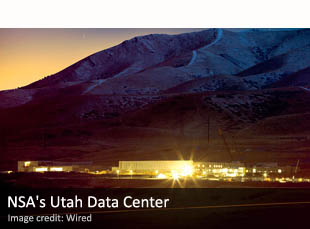
NSA's Utah Data CenterBy IAN ALLEN | intelNews.org
►►Meltdowns hobble NSA data center. Electrical surges at the National Security Agency’s massive data center in Utah have delayed the opening of the facility for a year as well as destroying hundreds of thousands of dollars in kit, the Wall Street Journal reports. Ten “meltdowns” in the past 13 months have repeatedly delayed the Herculean effort to get the spy agency’s colossal snooping facility up and running, according to project documents reviewed by the newspaper.
►►Uganda expels Sudan diplomat accused of spying. Sudanese diplomat Jad-el-Seed Mohammed Elhag has been expelled from Uganda on suspicion of espionage, Ugandan foreign ministry officials said Tuesday. “The reasons why he was expelled was that the activities he was involved in were beyond the norms and requirements of his tenure”, Uganda Ministry of Foreign Affairs spokesman Tayebwa Katureebe said. “These are issues of diplomacy and of two countries, which are not addressed normally in the press, but basically the main reason was espionage”, he said, declining to go into detail.
►►FBI accused of using no-fly list to recruit informants. A lawsuit in New York alleges that the FBI is violating the law by putting Muslim-Americans on the no-fly list not because of a “reasonable suspicion” of terrorist associations, but as a form of blackmail to coerce them into becoming informants at mosques and in their communities. Is this the beginning of the end for the US federal government’s no-fly list? According to the complaint, New York resident Muhammad Tanvir landed on the no-fly list after refusing an FBI request to work as an informant in his predominantly Muslim community.

News you may have missed #852

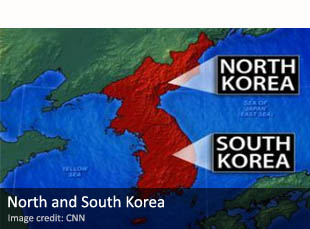
North and South KoreaBy IAN ALLEN | intelNews.org
►►Did US deny entry to German author because he criticized the NSA? Questions have arisen after the German author Ilija Trojanow was denied entry to the United States, apparently without reason. Trojanow had been invited to a German language convention in the US city of Denver. However, he was left stranded at Salvador da Bahia airport, in Brazil. A colleague of the writer claims his call for clarity about US spying activity is the answer. A spokeswoman for Trojanow’s publisher said he was on his way back to Germany on Tuesday.
►►Analysts stress ‘sophisticated tradecraft’ after Iranian spy arrested in Israel. Israeli officials over the weekend released details regarding the arrest of an Iranian-Belgian citizen accused of conducting extensive espionage against Israeli and American targets inside the Jewish state, deepening concerns regarding the scope and sophistication of Iranian intelligence tradecraft. Ali Mansouri, in his mid-50s, was arrested on September 11 at Tel Aviv’s Ben-Gurion Airport by the Shin Bet intelligence service. One Israeli military correspondent observed that, in the case of Mansouri, “Iran followed the playbooks of the most advanced intelligence agencies in the world”.
►►Northern spy lifts cloak on Koreas’ deadly rivalry. Kim Dong-sik is a North Korean agent captured in the South in 1995. He underwent four years of interrogations before joining the South Korean military counterintelligence command. He is now an analyst at the Institute for National Security Strategy, a research organization affiliated with the National Intelligence Service. His tale, detailed in a new memoir, provides a rare, firsthand look at the often lethal spy war that the rival Koreas waged for decades and that many fear may persist today.

British, American citizens among Kenya shopping center attackers

Westgate shpping mallBy JOSEPH FITSANAKIS | intelNews.org
Several Americans and at least one British subject were allegedly involved in planning and carrying out the armed attack on a shopping center in Kenya last week, according to the Kenyan government. The bloody attack was carried out on September 21 at the upscale Westgate shopping mall in Kenyan capital Nairobi. At least 15 attackers stormed the shopping complex and executed several shoppers in cold blood, before proceeding to take several people hostage. Responsibility for the attack has been claimed by Somali Islamist group al-Shabaab. The group has been at war with the Kenyan government since October of 2011, when Kenyan troops invaded Somalian territory. The group said that the attack had been carried out as retribution for Kenya’s invasion of Somalia. Kenyan officials have so far refused to speculate on the precise identity of the perpetrators of the Westgate attack. But on Tuesday, Kenyan President Uhuru Kenyatta said during a televised address to the nation that some of the identities of the armed militants who stormed the complex had been confirmed. He added that the perpetrators included a British woman and “two or three” American citizens. A few hours later, Kenyan Minister of Foreign Affairs, Amina Mohamed, said during a press conference that, according to information currently available, “one Brit[ish subject], a woman”, had been involved in the attack. She added that the female suspect “has done this many times before”, implying that she is a seasoned Islamist militant. Minister Mohamed added that “two or three Americans […], aged about 18 or 19”, were also involved in the attack, adding that they were Arab or Somali in origin and had moved to Africa from “Minnesota and one other place” in the United States. Read more of this post

CIA warned Tunisian officials about murder of opposition politician

Brahmi supporters in TunisBy JOSEPH FITSANAKIS | intelNews.org
The Tunisian government has admitted that it received advance warning by “an external intelligence source” of an assassination operation against a popular opposition figure. The politician, Mohammed Brahmi, a widely respected member of the country’s National Constituent Assembly, was gunned down 11 days after the alleged warning was received. His death, in July of this year, plunged the country into political chaos, which continues to dominate Tunisian politics today. Speaking to lawmakers on Thursday, Tunisia’s Minister of the Interior, Lotfi Ben Jeddou, said the warning had been received on July 15, 2013. He refused to identify the source of the warning, but Tunisian media speculated that it was most likely the United States Central Intelligence Agency (CIA). The warning was included in a memorandum, which stated that Brahmi was likely to be targeted by “Salafist elements” because of his secular and liberal political beliefs. The minister said that the warning contained no “further clarification”, but added that the absence of details in the memorandum did not justify the failure of the Tunisian security establishment to adequately respond to it. Brahmi, died on July 25 after being shot over a dozen times at close range outside his house in the al-Gazala neighborhood of Tunisian capital Tunis. On Saturday, two days after Minister Ben Jeddou’s revelation, Tunisian newspaper Al Maghreb published a leaked memorandum that contains a summary of the warning about Brahmi’s killing. The leaked summary, which is signed by Tunisia’s Director General of National Security, Mustafa Ben Amor, appears to be dated July 15, 2013, exactly 11 days before Brahmi’s assassination. It describes a warning issued by a CIA official, concerning credible threats to Brahmi’s life. Read more of this post

Interview with US airman who spied for East Germany

Jeff CarneyBy JOSEPH FITSANAKIS | intelNews.org
A former intelligence specialist in the United States Air Force, who became one of East Germany’s most lucrative spies in the West, has given a rare media interview. Jeff Carney was a linguist and intelligence specialist assigned to the US Electronic Security Command at Tempelhof Central Airport in West Berlin during the closing stages of the Cold War. In April of 1983, Carney, who was then aged just 19, walked across the dividing line between West and East Berlin and asked to speak to representatives of the East German government. He has since argued that his defection was prompted by his disagreement with the foreign policy of the administration of US President Ronald Reagan. But in an interview aired on Wednesday by the BBC, he claimed there was “nothing ideological about his decision to defect”, and that he, as a gay man, “felt unwanted” because of the US military’s stance on homosexuality. His plan, which he described in his interview as “an impulsive move” was to request to live in the German Democratic Republic. But instead of granting his wish, East German intelligence officials commanded him to return to his post at Tempelhof and become an agent-in-place. Carney claims that they threatened to reveal to his US Air Force superiors his attempt to defect if he refused to cooperate. The young airman returned to his base and began spying for East Germany’s Ministry for State Security (MfS), commonly known as Stasi. He was provided with a miniature camera, given the operational codename UWE, and was told supply his handler, codenamed RALPH, with classified documents, which he smuggled out of Tempelhof in his shoes and clothing. His West German tour came to an end in 1984, when he was transferred to the US state of Texas. While there, he continued to spy for the Stasi, traveling to Rio de Janeiro, Brazil, and Mexico City, Mexico, in order to meet with his East German handlers. However, in 1985, believing that his superiors in the Air Force were beginning to suspect him of espionage, he traveled to Mexico and walked in the East German embassy in Mexico City, demanding to be transferred to East Germany. The Stasi eventually smuggled him out of Mexico to Cuba, and from there to Czechoslovakia before resettling him to East Germany. Read more of this post

Belgian state telecom targeted by ‘international espionage’

Belgacom headquartersBy JOSEPH FITSANAKIS | intelNews.org
Belgium’s largest telecommunications service provider has fallen victim to a sophisticated cyberespionage operation that was most likely carried out by a government agency of another country. According to Flemish newspaper De Standaard, the operation targeted Belgacom, which is Belgium’s state-owned telecommunications company. The paper said that the cyberhacking was uncovered in June of this year during a routine maintenance check by technicians, who detected an “unidentified virus” that had infected several dozen mainframe computers. Belgacom’s technical experts seem to think that the malware had been active for at least two years on Belgacom’s computers, and that it specifically targeted telecommunications traffic carried by Belgacom’s international subsidiaries. Among them is Belgacom International Carrier Services (BCIS), which specializes in providing wholesale carrier services to over 1,000 telecommunications service providers across Africa and the Middle East. De Standaard’s article said that the sophisticated malware had been designed so as to prevent disruption of BCIS’ voice and Internet traffic, thus remaining unnoticed. Its ultimate goal, said the paper, was “not sabotage, but rather collecting strategic communications content”. Federal prosecutors told the Reuters news agency that the technical complexity of the virus meant that it must have been designed by “an intruder with significant financial and logistic means”. The malware’s complexity, coupled with its grand scale, “points towards international state-sponsored cyber espionage”, said the Federal prosecutors. Commenting on the story, De Standaard claimed that “everything points to the [United States] National Security Agency as the culprit” of the cyberespionage. Read more of this post

News you may have missed #851

EuropolBy IAN ALLEN | intelNews.org
►►Allegations that NSA has a listening post in Vienna. Both the US and Austrian governments have denied reports claiming to expose a major surveillance operation by the National Security Agency from within a villa in the Austrian capital Vienna. Austrian media reported last week that the US government had decided to end operations at the site because its cover was blown. Meanwhile, the allegations have turned into an Austrian affair of state.
►►Europol fighting unprecedented crime levels. Europe is dealing with an unprecedented surge in organized crime as sophisticated multinational groups, including child sex abusers and counterfeit gangs, expand their networks, according to Rob Wainwright, the British head of the European Union’s criminal intelligence agency, Europol. Wainwright says that thousands of gangs are capitalizing on the rise of smartphone and internet technology.
►►Are NSA revelations helping US tech industry? Edward Snowden’s unprecedented exposure of US technology companies’ close collaboration with national intelligence agencies, widely expected to damage the industry’s financial performance abroad, may actually end up helping. Despite emphatic predictions of waning business prospects, some of the big Internet companies that the former National Security Agency contractor showed to be closely involved in gathering data on people overseas –such as Google and Facebook– say privately that they have felt little if any impact on their businesses.

Ex-CIA officer seeks Italian pardon for role in abduction operation

Giorgio Napolitano By JOSEPH FITSANAKIS | intelNews.org |
A former officer of the United States Central Intelligence Agency (CIA), who has been convicted in absentia in Italy for his role in an abduction operation, has contacted the Italian president seeking a formal pardon. Robert Seldon Lady was the CIA station chief in Milan in February 2003, when a team of 23 Americans, most of them CIA operatives, abducted Mustafa Osama Nasr. The CIA suspected the Egyptian-born Nasr, also known as Abu Omar, of working as a recruiter for a host of radical Islamist groups, including al-Qaeda. In 2005, Italian authorities, which had not authorized Nasr’s kidnapping, convicted Lady, along with 22 other Americans, of abduction. The convictions were delivered in absentia, as the Americans had earlier left the country. Washington has refused to extradite them to Rome. Earlier this week, Lady wrote a letter to the President of the Italian Republic, Giorgio Napolitano, saying he had never intended to “disrespect Italy’s sovereignty” and asking for the President’s “personal forgiveness and pardon”. In his letter, Lady argues that he operated “under orders from senior American officials” with the aim of protecting lives, adding that US intelligence activities had been able to “stop numerous plans and targets of terrorists operating in Milan and elsewhere in Italy”. The former CIA officer also claims that the 2003 kidnapping of Nasr had taken place “in liaison with senior members of the Italian government”. He concludes by expressing his “regret” for his “participation in any activities which could be viewed as contrary to the laws of Italy”. Read more of this post

NSA gives Israel raw intercepts containing US citizens’ data

NSA headquartersBy JOSEPH FITSANAKIS | intelNews.org |
The United States National Security Agency (NSA) shares raw intercepted data with Israeli intelligence without first deleting information pertaining to American citizens, according to a leaked document. British newspaper The Guardian published on Wednesday an informal memorandum of understanding between the NSA and the Israel SIGINT National Unit (ISNU). The five-page document was supplied to the newspaper by Edward Snowden, a technical contractor for the NSA who defected to Russia this past summer. It outlines an agreement reached in 2009 between the NSA and the ISNU, under which the American side provides the Israelis with raw intercepts, which often contain telephone and email data belonging to American citizens. The memorandum describes this type intelligence sharing as a “routine” aspect of a broader “SIGINT relationship between the two organizations”. SIGINT refers to signals intelligence, a term used in the intelligence community to describe the interception of communications data or content. Additionally, the document specifically mentions that the data shared with the Israelis is “raw” or “unminimized”, meaning it has not been subjected to the process of extracting and deleting information that identifies US citizens or residents —known as “US persons”. By law, the NSA is not permitted to spy on US persons and is required to ‘minimize’ intercepted data so that the communications of US persons remain private, unless they are absolutely indispensible in understanding a piece of foreign intelligence. The memorandum describes a number of restrictions on the use of this information by Israeli intelligence, stating that the ISNU is forbidden from using it in order to target US persons. It also states that the ISNU must shield the identities of US persons when sharing the information with other Israeli government agencies. Read more of this post

NSA ‘broke, circumvented Internet encryption standards’

NSA headquartersBy IAN ALLEN | intelNews.org |
The United States National Security Agency (NSA) has been able to crack or get around basic encryption standards used daily by hundreds of millions of Internet users, according to newly leaked documents. The New York Times said on Friday that it was in possession of documents that prove that the NSA is not restrained by universal encryption standards used in the US and abroad. The NSA, which is America’s largest intelligence agency, and is tasked by the US government with intercepting electronic communications worldwide, is now able to routinely circumvent Secure Sockets Layer or virtual private networks, as well as encryption protection standards used on fourth-generation cell phones. It therefore has instant access to the content of billions of encrypted messages exchanged by users of some of the Internet’s most popular email companies, including Gmail, Hotmail, Yahoo and Facebook. The paper said it obtained the documents from Edward Snowden, a technical contractor for the NSA who defected to Russia this past summer. They include internal NSA memoranda that suggest the NSA deployed specially built supercomputers to break Internet encryption standards. In other cases, the Agency worked with selected companies and convinced them to “build entry points into their products”. The multi-billion effort was apparently launched by the NSA in the early 2000s, soon after the US government lost a lengthy battle with the communications industry centering on the so-called ‘clipper chip’. Read more of this post

News you may have missed #850 (Syria edition)

Regional map of SyriaBy IAN ALLEN | intelNews.org |
►►FBI sharpens scrutiny of Syrians in US. The FBI has increased its surveillance of Syrians inside the United States in response to concerns that a military strike against the government of President Bashar al-Assad could lead to terrorist attacks inside the US or against American allies and interests abroad. The US government has also taken the unusual step of warning federal agencies and private companies that American military action in Syria could spur cyberattacks, the officials said. There were no such alerts before previous military operations, like the one against Libya in 2011.
►►French spies provide details Syrian chemical weapons program. As Congress debates whether to authorize a military strike on Syria, the French government has released its declassified intelligence report on the August 21 chemical weapons attack in the eastern Damascus suburbs. While the American report focuses solely on the most recent attack, the French provide a comprehensive look at the nature of the Syrian chemical weapons program. Also, while US officials have conceded that they don’t know if Assad himself ordered the use of chemical weapons, the French assessment rebuts claims that the August 21 attack could have been the work of a rogue officer.
►►Ex-CIA WMD Counterterrorism Unit chief on Syria: “We cannot afford […] miscalculations in regard to Syria. We will launch our missiles and drop our bombs. Then we will announce the end of active operations. That will not signal the end of the war. It will signal its beginning […]. Assad and his Iranian and Hezbollah friends will begin to respond. They will do so on their timetable and only where they perceive the odds to be in their favor. Embassies will be struck. Hostages will be taken. American and Western tourists will be slaughtered. If the opportunity presents itself, we may even feel the impact here in the United States with attacks on prominent landmarks and public places”.

US spy agencies probed job seekers with links to al-Qaeda

CIA headquartersBy JOSEPH FITSANAKIS | intelNews.org |
One in five applicants for jobs in American intelligence agencies, who were rejected due to questionable backgrounds, were found to have connections with foreign intelligence or militant groups, including al-Qaeda.  This is revealed in an internal document provided to The Washington Post by American defector Edward Snowden. Snowden, a former technical expert for the Central Intelligence Agency (CIA) and the National Security Agency (NSA), is currently living in Russia, where he has been granted political asylum. Last week, he gave The Post a top-secret document containing the 2012 budget summary for the US National Intelligence Program. Among other things, the document reveals that individuals with links to what the United States Intelligence Community terms “hostile intelligence”, or foreign terrorist organizations, have sought to obtain intelligence-related jobs in the US. According to the paper, roughly one out of every five job seekers at the CIA,  whose applications were rejected by the Agency due to suspicious backgrounds, had “significant terrorist and/or hostile intelligence connections”. Such connections allegedly included links with Lebanese Hezbollah, Islamic Hamas, as well as various al-Qaeda affiliates, all of which are on the US State Department’s list of foreign terrorist organizations. The Post subsequently spoke to a CIA source who argued that the number of applicants found to have ties with militant groups was relatively small. The leaked document also mentions that the NSA has launched a major counterintelligence scheme aimed at uncovering “potentially suspicious or abnormal […] activity” among its employees. Read more of this post