Canada spy agency refused to notify Mounties about Russian agent

Jeffrey Paul DelisleBy JOSEPH FITSANAKIS | intelNews.org |
Canada’s main counterintelligence agency opted to keep secret from the Royal Canadian Mounted Police (RCMP) vital information about a Canadian naval officer who spied for Russia. Regular readers of this blog will be familiar with the case of Jeffrey Paul Delisle, a Sub-Lieutenant in the Royal Canadian Navy, who until 2011 was employed at Canada’s ultra-secure TRINITY communications center in Halifax. Delisle was arrested in January 2012 for passing information gathered from radio and radar signal interceptions to a foreign power, most likely Russia. In May of last year, it emerged that it was in fact the United States that alerted the Canadian Security Intelligence Service (CSIS) about Delisle’s espionage activities. What was supposed to happen next was that the CSIS —which is not a law enforcement agency— should have notified the RCMP of Delisle’s activities and requested his prompt arrest. Remarkably, however, the CSIS chose to keep the Delisle file concealed from the RCMP, ostensibly to prevent the possible exposure of intelligence sources and methods in open-court proceedings. The Canadian Press, which broke the story on Sunday, cited “numerous sources familiar with the Delisle case” in claiming that the CSIS’ refusal to request Delisle’s arrest “frustrated Washington”, which feared that the spy was routinely compromising United States secrets shared by America with its Canadian allies. So frustrated were the Americans, that the Federal Bureau of Investigation (FBI) sketched out a plan to lure Delisle onto US soil and arrest him there. Read more of this post

Russia expelled ex-US embassy official who rebuffed spy advances

US embassy in MoscowBy JOSEPH FITSANAKIS | intelNews.org |
Russian authorities expelled a former American diplomat living in Moscow earlier in May, less than two months after he allegedly rebuffed an offer to spy on the United States for Russia. The former official, Thomas Firestone, served two tours of duty as a Resident Legal Adviser at the American embassy in Moscow. He later joined the Moscow office of Baker & McKenzie, a US-based law firm with offices worldwide. Firestone had frequent and direct dealings with the Russian government in his capacity as a specialist in the Foreign Corrupt Practices Act. This US law permits the prosecution of bribery cases in American courts. According to The New York Times, Firestone was approached in March of this year by operatives of the Russian Federal Security Service, the FSB, one of the main successor agencies of the Soviet KGB. Citing “people familiar with the case”, The Times claims that the American lawyer turned down an offer to spy for Moscow on behalf of the FSB. On May 5, however, while returning to Moscow from a trip abroad, Firestone was detained at Sheremetyevo International Airport, 18 miles outside of the Russian capital. After a 16-hour detention, the former Justice Department official was told that he had been declared persona non grata (undesirable) and was to be denied entrance into Russia; he was promptly placed on a flight to the US, which departed shortly afterwards. The Times says that it remains unclear at this point whether Firestone’s expulsion was directly connected to his alleged refusal to give in to the FSB’s espionage advances. However, the paper claims that the matter has been raised with the Russian government by the administration of US President Barack Obama. Read more of this post

Russian news agency reveals name of CIA station chief in Moscow

US embassy in MoscowBy JOSEPH FITSANAKIS | intelNews.org |
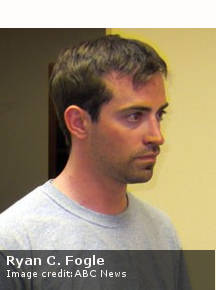
A Russian news agency revealed the name of the alleged station chief of the United States Central Intelligence Agency (CIA) in Moscow, but then deleted the information from its website. Russia Today, a multilingual Moscow-based television network funded by the Russian government, hosted an interview on May 17 with an anonymous representative of the FSB, the Russian Federal Security Service. The FSB official was commenting on the case of Ryan Fogle, an alleged CIA case officer who was detained in downtown Moscow by the FSB on the evening of Monday, April 13. The Russians claim that Fogle, who held the post of Third Secretary of the Political Department of the United States embassy in Moscow, was trying to recruit a Russian intelligence officer. Russia Today quoted the FSB official as saying that Fogle’s operations “crossed the red line and [the FSB] had no choice but to react [by] observing official procedures”. He added that Fogle had been detected trying to recruit Russian government employees in as early as 2011. At that time, the anonymous source told Russia Today the FSB had “decided to warn [its] American colleagues and ask them to stop these activities”. The warning, he said, had been delivered by the FSB directly to the CIA station chief in Moscow; the article then proceeded to name the American official. International media are not bound by the 1982 US Intelligence Identities Protection Act, which makes it a federal crime to intentionally reveal the identity of individuals engaged in covert roles with US intelligence agencies. However, publicly revealing the identity of senior intelligence officials during peacetime is highly irregular and frowned upon, even among adversaries. The BBC, which reported on the revelation, described the move as a “breach of diplomatic protocol”. Read more of this post

Analysis: Is US diplomat arrested in Russia a CIA case officer?

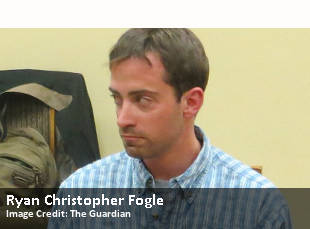
Ryan Christopher FogleBy JOSEPH FITSANAKIS | intelNews.org |
The Russian Ministry of Foreign Affairs lodged an official complaint yesterday with the United States Ambassador to Russia over the alleged espionage activities of Ryan Christopher Fogle. The Third Secretary in the Political Section of the US embassy was arrested with great media fanfare on Monday night, allegedly as he was trying to recruit a Russian intelligence officer. As can be expected, the Russian media had a field day with Fogle’s arrest; after all, it has been nearly a decade since the last time an American intelligence operative was publicly uncovered on Russian soil. Many Western observers, however, have questioned if Fogle could really be an officer of the Central Intelligence Agency, and whether the Russian Federal Security Service (FSB) simply framed an unsuspecting junior American diplomat. Much of the skepticism expressed by Western commentators focuses on the articles that were allegedly found by the FSB in Fogle’s backpack. They included several pairs of sunglasses, recording devices, as well as two wigs. Would a CIA officer be foolish enough to be carrying with him surreptitious recording devices in downtown Moscow? And do modern case officers still employ wigs when walking the streets of foreign capitals recruiting spies? The answer is, of course, yes. Read more of this post

Alleged CIA officer arrested in Moscow in Russian sting operation

Ryan Christopher FogleBy JOSEPH FITSANAKIS | intelNews.org |
Russia has accused an American diplomat of secretly working for the Central Intelligence Agency (CIA) following his arrest during a sting operation in Moscow. The diplomat, who was expelled from Russia on Tuesday, is Ryan Christopher Fogle; he held the post of Third Secretary of the Political Department of the United States embassy in the Russian capital. He was detained on Monday evening by counterintelligence officers of Russia’s Federal Security Service (FSB). Fogle’s arrest marked the first time in nearly a decade that espionage charges were leveled against an American government employee in Russia. Fogle, a 29-year-old native of St. Lous, Missouri, who graduated from Colgate University in New York in 2006, was arrested by the FSB in Moscow’s Akademika Pilyugina Street, allegedly right in front of an apartment complex reserved for foreign diplomatic personnel. He is accused by the FSB of conspiring to recruit a member of the Russian intelligence services, who is allegedly an antiterrorist expert working in Russia’s North Caucasus region. The FSB told Russian media that Fogle had communicated with his would-be recruit on the phone at least twice in the days prior to the sting operation. The FSB even took the extremely unusual step of airing footage of Fogle’s arrest on Russian state-run television. The American diplomat was shown pinned on the ground, wearing a blonde wig and baseball cap, while FSB officers handcuffed him. A second video released by the FSB, shows Fogle sitting quietly in a government office, in the presence of three other American government officials, including Michael Klecheski, Chief Political Officer at the US embassy in Moscow. All four of them are shown staring in silence, while an FSB official is expressing his strong displeasure over Fogle’s alleged espionage activities. According to the FSB, when Fogle was arrested, he was found to be carrying a backpack containing —among other things— his diplomatic identification card, two wigs, three pairs of sunglasses, recording devices, an RFID shield, a compass and a knife. He was also carrying three Ziploc bags filled with $100,000 in €500 notes, as well as a letter, written in Russian, addressed to his would-be recruit. Read more of this post

US government secretly obtained phone records of journalists

Associated PressBy JOSEPH FITSANAKIS | intelNews.org |
The Associated Press (AP) accused the United States government on Monday of secretly obtaining telephone records of its reporters, as part of a leak inquiry related to an intelligence operation. The news agency, which is owned cooperatively by news outlets worldwide, said the Department of Justice had secretly obtained pen-register information on 20 AP telephone lines in the US. Pen-register data includes lists of all numbers contacted from a particular telephone line and the duration of each call over a defined period. The agency said the government investigation included “the work and personal phone numbers of individual reporters”, as well as AP office telephone lines in New York and Washington, and even the main telephone line used by AP correspondents at the US Capitol Building. It is believed that government prosecutors were probing the source(s) of a May 7, 2012, AP report, which disclosed that the Central Intelligence Agency (CIA) had prevented a terrorist plot by al-Qaeda in the Islamic Arabian Peninsula. AP correspondents Matt Apuzzo and Adam Goldman had cited anonymous sources in claiming that the plot, allegedly hatched in Yemen, involved placing a bomb on a US-bound civilian airplane on the one-year anniversary of the death of al-Qaeda founder Osama bin Laden. Less than a fortnight later, sources told the Reuters news agency that the White House and CIA were furious with AP’s revelation, because it allegedly forced the termination of an “operation which they hoped could have continued for weeks longer”. Read more of this post

News you may have missed #836

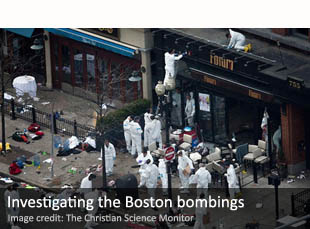
Investigating the Boston bombingsBy IAN ALLEN | intelNews.org |

►►NSA guide explains how to access private info on Google. In 2007, the US National Security Agency produced a book to help its spies uncover intelligence hiding on the World Wide Web. The 643-page tome, called Untangling the Web: A Guide to Internet Research (.pdf), has just been released by the NSA following a FOIA request filed in April by MuckRock, a site that charges fees to process public records for activists and others. Although the author’s name is redacted in the version released by the NSA, Muckrock’s FOIA indicates it was written by Robyn Winder and Charlie Speight.
►►Are the EU’s unofficial spy services growing out of control? Since its founding, the European Union has been building its own spy programs, often triggered by specific needs, in an ad-hoc manner, without strategy and without a coherent concept about their structure, methods, and people. Unofficially, the has been building an intelligence apparatus of six services so far, some of them brand new, populated already by 1,300 specialists. But because they are technically not conducting covert operations, they simply deny being intelligence services.
►►Hearing on Boston bombings exposes intelligence failures. The US House Committee on Homeland Security’s hearing on the Boston Marathon bombings on Thursday amounted to more than the usual political posturing: it exposed clear deficiencies in communications among intelligence- and law-enforcement agencies. whatever the cause of the intelligence breakdown, the failure to share vital information —and the continued finger-pointing between agencies yesterday— shows the need to improve coordination.

News you may have missed #835 (Americas edition)

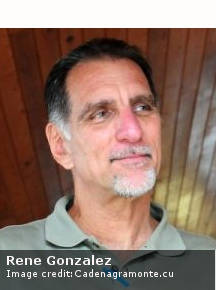
Rene GonzalezBy IAN ALLEN | intelNews.org |
►►‘Cuban Five’ spy member renounces US citizenship. Cuban intelligence officer Rene Gonzalez, who was a member of the “Cuban Five” spy group in South Florida, was released from a US prison in 2011, after serving 10 years for espionage. He was required to serve three years’ probation in the US. But on Friday US District Judge Joan Lenard ruled that Gonzalez, who had already been allowed to temporarily return to Cuba for his father’s funeral, could stay there if he renounced his US citizenship. Gonzalez is the first of the Cuban Five to return to the island. The other four men continue to serve lengthy sentences in US federal prisons.
►►US Defense Intelligence Agency contemplates austerity. Since 2001, intelligence agencies have had just about all money they wanted, but not anymore, as the cuts mandated by the Budget Control Act are hitting even previously inviolable spook accounts. In a reflection of this new reality, the Defense Intelligence Agency plans a conference with industry at its headquarters on June 27, 2013. Agency leaders will focus on “current and emerging challenges in the context of an increasingly austere fiscal posture”.
►►Report says Canada spies caught off guard by Arab Spring. The 2011 Arab Spring uprising in the Middle East came as a surprise to the Canadian government, which risks getting caught off-guard again without a new approach to gathering intelligence. This is according to a new report by Canada’s Intelligence Assessment Secretariat, a unit of the Privy Council’s Office, the bureaucratic arm of the Office of the Canadian Prime Minister. On the other hand, the report states, “there is no reason to believe that [Canadian intelligence agencies] did any worse than other allied agencies in its analysis of the Arab Spring, and in a few areas it appears to have done somewhat better”.

News you may have missed #834

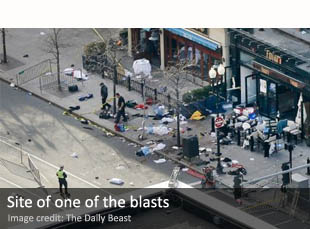
Site of one of the Boston Marathon blastsBy IAN ALLEN | intelNews.org |
►►Why FBI and CIA didn’t connect the dots on Boston bombers.  The FBI and the CIA are being criticized for not keeping better track of Tamerlan Tsarnaev in the months before the Boston Marathon bombings. How could they have ignored such a dangerous person? How do we reform the intelligence community to ensure this kind of failure doesn’t happen again? Legendary security expert Bruce Schneier says the idea of connecting the dots is a bad metaphor, and focusing on it makes us more likely to implement useless reforms.
►►Korean spy’s deportation reveals web of intrigue. Relations between Australia and South Korea have been strained after the East Asian economic powerhouse was caught soliciting sensitive information from public servants, and the deportation of a South Korean spy for espionage in 2009 was disclosed. New details of South Korean espionage in Australia were revealed in an unfair dismissal case before the Fair Work Commission brought by a former intelligence officer with the Australian Federal Police, Bo-Rim “Bryan” Kim.
►►Secret US court approved all domestic spying requests in 2012. The United States Foreign Intelligence Surveillance Court (also known as FISA court) quietly rubber-stamped nearly 2,000 government requests to search or electronically monitor people in the United States last year, according to a Justice Department report. The agency, which oversees requests for surveillance warrants against suspected foreign intelligence agents on US soil, released the report to Senate majority leader Harry Reid (D-Nevada), showing that by approving the 1,856 inquiries “for foreign intelligence purposes”, it had granted every single government request in 2012.

News you may have missed #833

Dawn MeyerriecksBy IAN ALLEN | intelNews.org |
►►Report states Switzerland increasingly targeted by spies. Cyber attacks and abductions of Swiss abroad were two of the main security challenges faced by Switzerland last year, according to report released on Tuesday by the alpine country’s Federal Intelligence Service (FIS). “Switzerland continues to be no priority for jihadist motivated attacks,” the report said. However, presenting the report, FIS head Markus Seiler said an Islamist attack on Swiss soil could not be ruled out. And Swiss nationals abroad were “more threatened than in the past by politically and terrorist motivated abductions”, he said.
►►Prosecutors raid South Korean spy agency. State prosecutors raided the headquarters of the National Intelligence Service of South Korea on Tuesday to investigate accusations that the spy agency used its agents and hired bloggers to influence the presidential election in December. The raid, which started in the morning and continued into the evening, was highly unusual, dealing a blow to the reputation of the spy agency. Such a raid would have been unthinkable decades ago when the agency had served as the main tool of political control for South Korea’s military dictators.
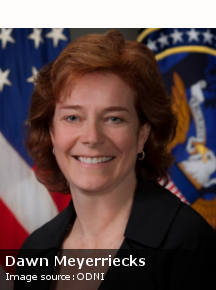
►►Former AOL VP to lead CIA tech and science division. The CIA has appointed Dawn Meyerriecks, former AOL Senior Vice President for Product Technology, as its new Chief of Science and Technology. According to Wired, Meyerriecks is the first internet executive to ever take a top-tiered position in the CIA. Some of the things Meyerriecks has done in the past include working as a Jet Propulsion Lab engineer for NASA, working as a Assistant Director of National Intelligence for Acquisitions and Technology, working as a Chief Technology Officer and Technical Director for the Joint Interoperabillity and Engineering Organization (JIEO), establishing an in-house app market for both spies and analysts, encouraging the US government to use open source software, and much more.

Is US-Mexico anti-drug intelligence cooperation about to end?

Enrique Peña NietoBy JOSEPH FITSANAKIS | intelNews.org |
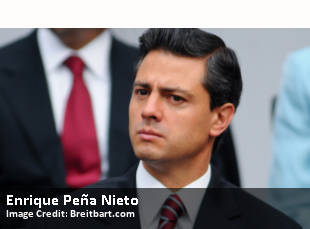
Some senior American officials believe that the anti-drug intelligence cooperation between the United States and Mexico is in its closing stages, following tens of thousands of deaths in the past decade. Intelligence cooperation between the two countries reached unprecedented levels in the post-9/11 era, following the establishment of the US Office of the Director of National Intelligence (ODNI). In the past decade, cooperation between Mexico’s Center for Research and National Security (CISEN) and ODNI, as well as the Central Intelligence Agency, resulted in what some observers call “unprecedented bilateral action” directed against Latin American narcotics cartels. This arrangement culminated under the administration of Mexico’s President Felipe Calderón, when the CIA —and to a lesser extent the US Drug Enforcement Administration and the National Security Agency— were given unprecedented access to Mexican territory and civilian communications networks. However, in an extensive article published Sunday, The Washington Post says the close operational connection between Mexican and US intelligence agencies is quickly winding down. Citing interviews with over “four dozen current and former US and Mexican diplomats, law enforcement agents, military offices and intelligence officials”, the paper suggests that Mexico City is wary about Washington’s involvement in the so-called ‘war on drugs’. The major change on the Mexican side, says The Post, occurred last December with the inauguration of Mexico’s new President, Enrique Peña Nieto, of the Institutional Revolutionary Party (PRI), which has returned to power after 13 years in opposition. Under Nieto’s administration, the Mexican security establishment, worn out by over 60,000 deaths and as many as 25,000 forced disappearances in the past few years, is intent on shifting its priorities. Instead of focusing on so-called ‘beheading operations’ —arresting or otherwise neutralizing the leadership of drug cartels— it has decided to stabilize the situation by containing —rather than eliminating— the operations of drug networks. Read more of this post

CIA bankrolling Afghan government officials ‘on a vast scale’

AfghanistanBy JOSEPH FITSANAKIS | intelNews.org |
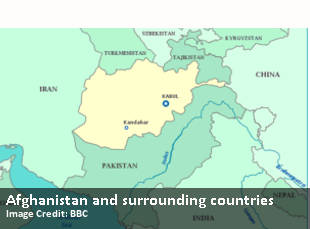
The United States Central Intelligence Agency (CIA) has delivered “tens of millions of dollars [in] off-the-books cash” to Afghanistan’s governing elite, but there is little evidence that such bribes have helped promote Washington’s interests in the country, according to a new exposé published over the weekend in The New York Times. The paper cites “current and former advisers to the Afghan leader” Hamid Karzai, who allege that, for over a decade, the CIA has secretly delivered to the presidential palace in Afghan capital Kabul monthly payments ranging “from hundreds of thousands to millions of dollars”. According to Khalil Roman, who was President Karzai’s Chief of Staff for four years until 2005, Afghan officials called the CIA funds “ghost money” because “it came in secret [and] left in secret”. The article suggests that the cash given to the Afghan government appears to be handled outside the CIA’s standard financial assistance programs, which are typically subject to restrictions and oversight from administrators both inside and outside the Agency. Some American officials, who spoke to The Times on condition of anonymity, said the CIA’s goal in funding the inner circle of the Afghan government is to maintain access to its members and to “guarantee the Agency’s influence at the presidential palace”. But there is little evidence that the funds, which are handled exclusively by a “small clique at [Afghanistan’s] National Security Council” have bought the CIA the political influence it seeks. Read more of this post

Second US government official indicted in Cuba espionage case

Ana Belen MontesBy IAN ALLEN | intelNews.org |
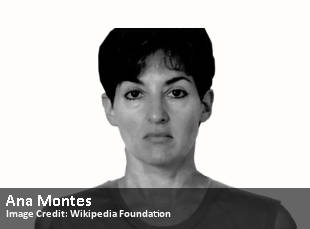
The United States has publicly unsealed for the first time the indictment of an American government official accused of spying for Cuba, in connection with former senior US military intelligence analyst Ana Belen Montes, who was jailed in 2002 for spying for Havana. Marta Rita Velazquez, a Puerto Rican-born American citizen, was originally indicted in 2004 for conspiracy to commit espionage as an unregistered agent of a foreign power. A graduate of Princeton University and Georgetown University Law School, Velazquez first met Montes while they were both studying at the Johns Hopkins University’s School of Advanced International Studies in Washington, DC. In 2002, when the Federal Bureau of Investigation ended Montes’ 17-year espionage career on behalf of Cuba, it was told that Velazquez helped the Cuban Intelligence Directorate recruit Montes. The military analyst told her FBI interrogators that Velazquez introduced her to a Cuban intelligence officer in New York; she then traveled with her to Cuba, where Montes received “operational training”, before helping her obtain a job with the US Defense Intelligence Agency. At the time, Velazquez was already working with for the US Department of State as a legal officer attached to the US Agency for International Development. In that position, which she held for over a decade, Velazquez had a top-secret security clearance; she also completed tours at the US embassies in Guatemala and Nicaragua. In 2004, a grand jury in Washington, DC, indicted Velazquez for espionage, accusing her of exchanging encrypted information with Cuban intelligence officers and traveling abroad to receive operational training while secretly in the service of Cuba. Read more of this post

News you may have missed #830 (Boston bombings analysis)

Site of one of the Boston Marathon blastsBy IAN ALLEN | intelNews.org |
►►Despite WMD fears, terrorists still focused on conventional attacks. The United States has spent billions of dollars to prevent terrorists from obtaining a weapon of mass destruction even as the bombings in Boston further show that a nuclear weapon or lethal bioagent is not necessary for causing significant harm. However, experts warn that, even though there is a considerably lower probability of a WMD attack versus a conventional strike, the much higher consequences necessitate continued US investment in prevention and preparation.
►►Why isn’t terrorism in the US a whole lot more frequent? While the horrific bombing at the Boston Marathon has brought concerns about terrorism back to the forefront of national attention, it is worth remembering that terrorism inside the United States is exceedingly rare. Over the past 40 years, just over 3 people on average have been killed by acts of terrorism per year (remove 9/11, and the average is 1.4 deaths per year). After 9/11 or an event like the Boston attack, we often think “it would be so easy to [fill in the blank] and cause massive damage.” And it’s true. Then why doesn’t it happen more often?
►►Boston bomb investigators can’t decide: foreign or domestic? Even the most experienced investigators are still trying to decide whether the Boston marathon bombs were carried out at the hands of domestic or foreign attackers. The inability to settle that question is proving frustrating to investigators. Former FBI assistant director Tom Fuentes told CNN: “I’ve run bomb scenes in Iraq and also in the US”, adding that the attack in Boston “has the hallmarks of both domestic and international, and you can see either side of that”.
►►Smoke color is key clue to analyzing Boston Marathon bombs. As a team of investigators led by the FBI begins deciphering the bombs that killed three people and wounded 150 more in Boston this week, a key clue is already in plain sight on countless videos taken during the blasts: the color of the smoke. Analyzing the color of the smoke can provide information about the explosive that powered the bombs, which in turn provides clues about its sophistication —and, possibly, that of the people who made it.

Analysis: Five dangerous myths about the Boston Marathon bombings

Investigating the Boston bombingsBy JOSEPH FITSANAKIS | intelNews.org |
The endless opinion pieces about the Boston bombings that have flooded the media-sphere since Monday have one thing in common: they are highly speculative and, for the most part, unreliable. At this early stage, nobody outside the security or intelligence establishments has any idea about the identity or motives behind the attacks —and if they say they do, they are lying. Even those on the inside routinely refer to the ongoing investigation as one of the most complex in the country’s post-9/11 history. As the probe continues, and the nation deals with the meaning of the Boston bombings, it is critical that some of the dangerously misinformed and premature notions about the attacks are dispelled.

To begin with, the Boston Marathon bombings were not necessarily terrorism. They were clearly calculated and indiscriminate, but in order for them to qualify as terrorism, their planners must have a broad political or ideological objective. Terrorism is a tactic used to further a political goal. There is a reason why we don’t refer to school shootings, such as the one that took place on December 14, 2013, at Sandy Hook Elementary in Newtown, Connecticut, as terrorism. They are calculated and extremely violent, but they do not contain a political motive. Before we can attach a terrorist label to the Boston bombings, we have to uncover the motive of the perpetrator(s). Barring that, the incident must be treated simply as a criminal act. Read more of this post