Turkey refused to extradite bin Laden’s son-in-law to US

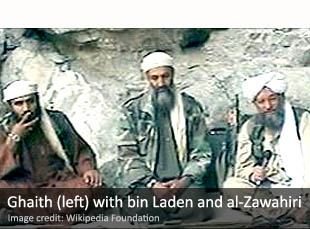
Ghaith (left) with bin Laden and al-ZawahiriBy JOSEPH FITSANAKIS | intelNews.org |
Turkish authorities have reportedly rejected a formal extradition request by the United States for a son-in-law of Osama bin Laden, who was arrested in Ankara on Friday following a tip-off by the Central Intelligence Agency. Suleiman Abu Ghaith was born in Kuwait but had his citizenship revoked after publicly opposing the rule of the Kuwaiti monarchy and demanding the institution of shari’a law in the oil emirate. In 2000, he traveled to Afghanistan where he met Osama bin Laden and joined al-Qaeda. He eventually married Fatima bin Laden, one of bin Laden’s numerous daughters, who is currently living in Saudi Arabia. He gradually rose within the ranks of the organization, eventually becoming one of its public spokesmen. Soon after the US invasion of Afghanistan, in 2001, Ghaith is believed to have escaped from Afghanistan by entering Iran on foot. He was eventually captured by Iranian government forces and placed in a detention camp along with other suspected al-Qaeda and Taliban members. It is not known how he managed to leave Iran and enter Turkey (though some say he was released the by Iranian authorities), or how the CIA knew of his presence there. However, according to Turkey’s leading daily Milliyet, the Agency contacted members of the Turkish National Intelligence Organization (known as MİT) and told them that Ghaith had entered the country on a forged passport. He was arrested soon afterwards at a hotel in Ankara’s affluent Çankaya district. The hotel where Ghaith was captured is reportedly located near the official residence of the Turkish President and a stone’s throw from numerous foreign embassies —including the embassy of the US, which was attacked by a suicide bomber on February 1. Read more of this post


Will former US government informant face terror charges in India?

David HeadleyBy IAN ALLEN | intelNews.org |

A former United States government informant, who helped an Islamist militant group plan the 2008 Mumbai attacks in India, has been sentenced to 35 years in prison. David Coleman Headley, a former US Drug Enforcement Administration informant, was arrested by the Federal Bureau of Investigation in 2009 for helping to plot an attack by Islamist radicals on a Danish newspaper. It eventually became apparent that Headley had been a member of Pakistani militant group Lashkar e-Taiba and had also helped plan the 2008 attacks in the Indian city of Mumbai. The terrorist plot involved at least a dozen attacks on tourist and other civilian targets in India’s largest city, conducted by small cells of highly trained LeT members who had arrived from Pakistan by boat. The coordinated attacks, which began on November 26 and ended three days later, killed 164 and wounded over 300 people. According to the FBI, Headley, who was born to a Pakistani father and an American mother, took advantage of his Western manners and physique to travel to Mumbai posing as an American tourist, in order to help map out the LeT operation. On Thursday, a court in Chicago sentenced Headley to 35 years in prison. Prior to his sentencing, Headley had pleaded guilty to all 12 counts brought against him by US prosecutors and is said to be cooperating with authorities —which is reportedly why he was spared the death penalty. However, the question in the minds of many terrorism observers is, will Headley be extradited to India to face charges there for what is often referred to as ‘India’s 9/11’? The answer is not so simple. Read more of this post

German intelligence report sees US leading global energy contest

The Tengiz oil refinery in KazakhstanBy JOSEPH FITSANAKIS | intelNews.org |
A leaked geopolitical study authored by German intelligence sees the United States as the primary beneficiary of the world’s drastically changing energy balance. The report, which was produced by the German Federal Intelligence Service (Bundesnach- richtendienst, or BND) was leaked to the Reuters news agency and accessed by Germany’s Frankfurter Allgemeine Zeitung. It sides with other recent estimates, notably by the International Energy Agency, which suggest that the domestic oil production of the United States might exceed that of Russia and Saudi Arabia by the year 2020. The BND estimates that, through the technique popularly known as fracking (using pressurized fluid to cause horizontal fractures on underground rock layers), the US will be able to exploit oil and natural gas reserves on its territory that were previously considered inaccessible. This could transform the US from the world’s largest energy importer of energy to a net exporter of both oil and natural gas. According to the report, such a massive transformation of the global energy import-export balance could have “particularly dramatic consequences” in the realm of international relations. Most crucially, it could transform the existing balance of power between the US and China. Specifically, German intelligence analysts forecast that, as the US becomes increasingly self-sufficient in energy, it will limit its import of oil and natural gas to its neighboring countries, namely Canada and Mexico. This could potentially lead the US to gradually disengage from the Middle East, allowing Washington’s foreign policy “increased freedom of action” vis-à-vis energy-rich Arab nations and Israel. At the same time, more Middle Eastern oil will find its way to China, as the Far-Eastern country will emerge as the world’s largest importer of energy. Read more of this post

US providing intelligence support to French forces in Mali

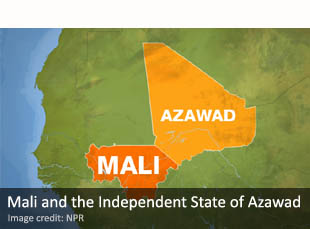
Mali and the Independent State of AzawadBy IAN ALLEN | intelNews.org |
The United States is providing intelligence support to hundreds of French troops that entered the West African nation of Mali last week, according to American and French officials. On January 11, at least 400 French soldiers entered Mali from French military bases in neighboring Burkina Faso and Chad, in what the French Ministry of National Defense has codenamed Opération SERVAL. The French intervention was sparked by the conflict in northern Mali, which erupted in 2012. In January of that year, Tuareg tribesmen formerly employed by the late Libyan leader Muammar al-Gaddafi teamed up with a host of local Islamist groups, including the Movement for Oneness and Jihad in West Africa (MUJWA) and Ansar Dine (Defenders of the Faith). Guided by members of the al-Qaeda Organization in the Islamic Maghreb (AQIM), these groups rapidly seized Mali’s massive northern region (which they call ‘the Independent State of Azawad’), where they are said to have imposed a strict version of Islamic sharia law. Last week’s intervention by the French military came to many as a surprise, though not to intelNews leaders, who have known for a while that Paris had been lobbying Western officials to help it launch a military intervention in the West African country. It now appears that Western countries are indeed helping France’s military operations in Mali. Outgoing US Defense Secretary Leon Panetta told reporters on Monday that the Pentagon is gathering intelligence for the benefit of French forces. The US, said Panetta, has “a responsibility to go after al-Qaida wherever they are” and ensure that its members do not “establish a base of operations” in West Africa. He added that Washington is considering widening its support to Paris by providing “logistics, surveillance and airlift capability”. Read more of this post

How did the US know that Syria was about to use chemical weapons?

Regional map of SyriaBy IAN ALLEN | intelNews.org |

Early last December, United States President Barack Obama issued a surprise warning to the government of Syria, saying that if it made “the tragic mistake” of using chemical weapons against rebel forces, there would be “immediate consequences”. Most observers took this as a clear indication that the US was prepared to intervene militarily in the ongoing Syrian civil war. Today, a month after Obama’s December ultimatum, one question is still in need of an official answer: namely, how did the United States come to suspect that the Syrians were contemplating using chemical weapons? An article by The New York Times‘ Eric Schmitt and Dave Sanger suggests that Washington was alarmed in late November by a tip-off from Israeli intelligence. According to The Times, the Israelis shared with officials at the US Department of Defense a series of satellite images showing Syrian government troops transporting tank-loads of chemicals to at least two storage sites along the country’s border with Jordan. The paper, which says it confirmed this information by speaking to “half a dozen military, intelligence and diplomatic officials”, claims that Syrian troops were ordered to load sarin nerve gas onto dozens of 500-pound bombs. The plan was for the bombs to be secretly transported by land to military air bases and from there onto planes, pending final approval by Syrian President Bashar al-Assad. According to the Israelis, the bombs could be airborne less than two hours after Assad’s order. By the time the information from the Israelis reached President Obama, American military commanders realized they had been caught by surprise, as there was no time to act in the two hours that it would take the Syrians to deploy the bombs. Read more of this post

Obama’s National Security Nominations: Nothing to See Here

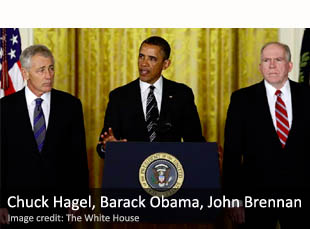
Chuck Hagel, Barack Obama, John BrennanBy I. ALLEN and J. FITSANAKIS | intelNews.org |
The deluge of reports that are flooding the news media about the national security nominations of United States President Barack Obama is both natural and understandable. The Departments of State and Defense, as well as the Central Intelligence Agency, are among the critical components of the American government, especially in matters of foreign policy. Yet much of the commentary on the nominations of John Kerry for State, Chuck Hagel for the Pentagon, and John Brennan for the CIA, is unduly over-dramatizing what is essentially a routine story. To begin with, it is clear that, in selecting Kerry, Hagel and Brennan for the nominations, the President’s priority was to surround himself with people he knows and trusts. Knowledgeable observers point out that all three nominees come from Obama’s most trusted circle of friends and —if appointed— will allow the President to stay well “within his comfort zone” as he begins his second term in office. In this sense, Obama selected the three candidates, not with some major policy shift in mind, but in order to ensure continuity and permanence in his foreign policy.

Take John Brennan, for instance: an Arabic-speaking career officer in the CIA, who has served the Agency in various positions for over 25 years. It is undeniable that, since 2008, Brennan has been instrumental in shaping the thinking behind the Obama administration’s targeted killings program using unmanned drones. According to some analysts, he has been the White House’s “most important adviser for shaping the campaign of drone strikes”. As intelNews explained recently, Washington’s unmanned drone program will continue and most likely expand, but this has little to do with Brennan. As an excellent analysis of Brennan’s nomination (by the Council on Foreign Relations’ Micah Zenko) points out, the CIA’s targeted killing program “has become institutionalized” with a momentum of its own, which ensures its sustainability, “making it far bigger than any one person —even John Brennan”.

Read more of this post

Analysis: Will 2013 Be the Year of the Unmanned Drone?

Predator droneBy JOSEPH FITSANAKIS | intelNews.org |
As United States President Barack Obama prepares to enter his fifth year in office, one may be excused for thinking that his administration’s response to insurgency warfare essentially boils down to one thing: the joystick. This is the means by which Washington’s unmanned aerial vehicle (UAV) fleet is remotely guided, usually from the safety of ground control stations located thousands of miles away from selected targets. Even prior to last November’s Presidential election, Obama administration officials declared in every possible way that the drone campaign would remain a permanent feature of the White House’s counterinsurgency campaign. Not only that, but it seems increasingly apparent that when, on November 19, 2012, Defense Secretary Leon Panetta announced that America’s UAV fleet would expand, he meant it both in terms of raw numbers and geographical reach. Africa appears now to be high on the list of UAV targets. The US is currently busy establishing a large network of small air bases located in strategic locations throughout the continent, in what US observers have termed a “massive expansion” of US covert operations in Africa. Read more of this post

Revealed: German neo-Nazi who helped Palestinians was CIA agent

Willi Pohl, a.k.a. Willi VossBy JOSEPH FITSANAKIS | intelNews.org |
A German far-right militant, whose animosity against Jews led him to aid Palestinians kill Israeli athletes in the 1972 Munich massacre, says he was later recruited by the United States Central Intelligence Agency. Willi Pohl, also known as Willi Voss, 68, was arrested by German authorities a few weeks after Palestinian terrorist group Black September stormed the Olympic village in Munich and took hostage 11 Israeli athletes. All of them were eventually killed by their captors during a botched escape attempt at the nearby Fürstenfeldbruck airport. Voss, who was a known neo-Nazi activist at the time, was charged with possession of weapons and providing logistical support to the Black September militants. However, after his sentence was suspended, Voss managed to secretly emigrate to Beirut, Lebanon, where he was recruited as an agent of Jihaz el-Razd, the intelligence service of the Fatah, the main group in the Palestine Liberation Organization. But in 1975, while on a PLO mission in Belgrade, Yugoslavia, he decided to switch sides. He made the decision after discovering that the car he and his girlfriend were transporting on behalf of the PLO from Beirut to Belgrade contained weapons and highly unstable explosives. He says that the PLO had apparently failed to mention the existence of the hidden items when they asked him to transport the car to Europe. According to Voss’ new book, which has just been published in Germany under the title UnterGrund (Underground), the guns and explosives were discovered by customs officers in Romania (then Rumania); but because at that time the communist country was an ally of the PLO, Voss and his girlfriend were allowed to travel to Belgrade, minus the car and the weapons. Read more of this post

Revealed: The CIA bodyguard unit that protects officers and spies

Raymond Allen DavisBy JOSEPH FITSANAKIS | intelNews.org |
The popular view of Central Intelligence Agency operations officers as gun-brandishing martial arts experts who can kill an adversary using their bare hands could not be further from the truth. Typically, CIA operatives are trained to avoid attracting attention while establishing useful, long-lasting relationships with foreign assets. Broadly speaking, guns are rarely used in day-to-day intelligence work. Increasingly, however, CIA case officers operating on counterterrorism assignments in the post-9/11 environment find themselves in warzones with a level of physical risk rarely encountered during the Cold War. CIA operations planners believe that case officers cannot properly run foreign assets while constantly having to worry about their personal safety, as well as the safety of their recruits. To address this problem, the CIA put together a new unit shortly after 9/11, which goes by the name Global Response Staff (GRS). An article published yesterday in The Washington Post provides the most detailed public examination of this new unit to date. The Post’s Greg Miller and Julie Tate, who authored the article, suggest that the GRS currently has around 250 members, about half of whom are detailed to CIA stations around the world at any given time. Most are contracted by the Agency as retired Special Forces officers, and only work three to four months a year for around $140,000. Recruitment is done largely by word of mouth. The Post quotes an unidentified former US intelligence official, who says that GRS recruits are not required to operate within the typical CIA operational framework: unlike their CIA colleagues, “they don’t learn languages, they’re not meeting foreign nationals and they’re not writing up intelligence reports”. Instead, they are expected to conduct “area familiarization” work, that is, mapping escape routes from places where CIA case officers meet their assets. Read more of this post

CIA helped senior Syrian defector escape to Washington, say sources

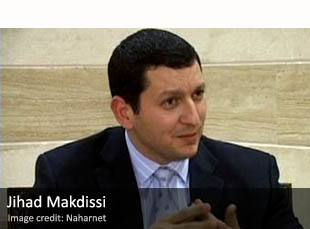
Jihad MakdissiBy JOSEPH FITSANAKIS | intelNews.org |
American intelligence operatives helped facilitate the escape of a senior Syrian government official, who is now allegedly assisting the Central Intelligence Agency’s operations in Syria, according to a British newspaper. The sudden disappearance last November of Jihad Makdissi, official spokesperson of Syria’s Foreign Affairs Ministry, caused widespread speculation that he might have defected. Makdissi, a career diplomat, had been a close collaborator of senior Syrian cabinet officials, including Minister of Foreign Affairs Walid al-Moallem, and Dr. Adnan Hassan Mahmoud, Minister of Information. Initial reports claimed that Makdissi, who is a Christian and is fluent in English and French, had crossed into Lebanon and was hiding in a Christian Beirut neighborhood. But London-based newspaper The Guardian said on Monday that the diplomat had been assisted by “US intelligence officials”, who organized his escape into Lebanon, along with his wife and two children, before secretly transferring them to Washington, DC, “almost one month ago”. If The Guardian’s claim is true, it would mean that US intelligence has secured the cooperation of one of the Syrian regime’s most prominent defectors in recent times. Some argue that Makdissi’s importance as a defector is second only to that of Syria’s former Prime Minister, Riyad Farid Hijab, who escaped with this immediate family to Jordan in August. Read more of this post

News you may have missed #819 (UKUSA edition)

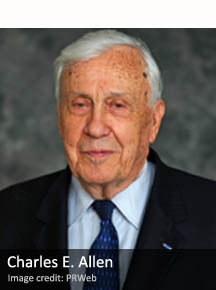
Charles E. AllenBy IAN ALLEN | intelNews.org |
►►Aussie spies’ exemption from Freedom of Information laws to end? Currently, all Australian intelligence agencies are exempt from the operation of federal Freedom of Information (FOI) legislation that allows the public and journalists to seek access to government records. But now Australian Information Commissioner John McMillan has called for the intelligence agencies to no longer be exempted from FOI laws. Professor McMillan and FOI Commissioner James Popple have made the recommendation in a 97-page submission to the review of FOI laws by former Defence Department secretary and diplomat Allan Hawke.
►►US spy agencies move towards single super-cloud. The US intelligence community is developing a single cloud computing network to allow all its analysts to access and rapidly sift through massive volumes of data. Now in its eighth month, the goal of the effort is to connect the Central Intelligence Agency’s existing cloud to a new cloud run by the National Security Agency. This NSA-run network consists of five other intelligence agencies and the FBI. Both of these clouds can interoperate, but the CIA has its own unique needs because it must work with human intelligence, which necessitates keeping its cloud slightly separate, according to Charles Allen, formerly Undersecretary of Homeland Security for intelligence and analysis.
►►Canadian Army struggles with intelligence-gathering. The Canadian Army is trying to hold on to its intelligence-gathering capability and its ability to disrupt spying in the face of budget strain, according to documents from the Canadian Department of National Defence. The Canadian Press, which obtained the documents, says the Army is “anxious to protect HUMINT network and to better resource its counterintelligence abilities”, but is worried that its shrinking budget in the post-Afghanistan War era will cause “degradation” in those disciplines.

US wants immunity for Pakistanis implicated in attacks that killed 166

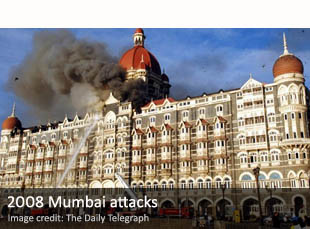
2008 Mumbai attacksBy JOSEPH FITSANAKIS | intelNews.org |
The United States government has argued in court that current and former officials of Pakistan’s intelligence service should be immune from prosecution in connection with the 2008 Mumbai attacks. At least 166 people, including 6 Americans, were killed and scores more were injured when members of Pakistan-based militant group Lashkar-e-Taiba stormed downtown Mumbai, India, taking the city hostage between November 26 and 29, 2008. The Indian government has openly accused Pakistan’s Inter-Services Intelligence directorate (ISI) of complicity in the attack, which has been described as the most sophisticated international terrorist strike anywhere in the world during the last decade. Using evidence collected by the Indian government, several Americans who survived the bloody attacks sued the ISI in New York earlier this year for allegedly directing Lashkar-e-Taiba and the Mumbai strikes. But Stuart Delery, Principal Deputy Attorney General for the US Department of State, has told the court that the ISI and its senior officials are immune from prosecution on US soil under the US Foreign Sovereign Immunities Act. According to the 12-page ‘Statement of Interest’ delivered to the court by Delery, no foreign nationals can be prosecuted in a US court for criminal actions they allegedly carried out while working in official capacities for a foreign government. The affidavit goes on to suggest that any attempt by a US court to assert American jurisdiction over current or former Pakistani government officials would be a blatant “intrusion on [Pakistan’s] sovereignty, in violation of international law”. It appears that nobody has notified the US Department of State that the US routinely “intrudes on Pakistan’s sovereignty” several times a week by using unmanned Predator drones to bomb suspected Taliban militants operating on Pakistani soil. Washington also “intruded on Pakistan’s sovereignty” on May 2, 2011, when it clandestinely sent troops to the town of Abbottabad to kill al-Qaeda founder Osama bin Laden. Read more of this post

News you may have missed #818 (USA edition)

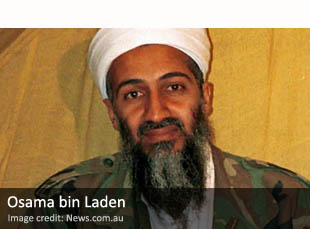
Osama bin LadenBy IAN ALLEN | intelNews.org |

►►The real-life female CIA officer who helped track bin Laden. The Washington Post has a good article on the real-life career of a female CIA officer who helped the Agency track al-Qaeda founder Osama bin Laden. It is disappointing, however that the article, authored by Greg Miller and Toby Warrick, is headlined “In Zero Dark Thirty she’s the hero; in real life, CIA agent’s career is more complicated”. The CIA employee in question is not an “agent”; she is an officer. In the CIA, agents are assets, people recruited and handled by CIA officers. Amazing that The Post, with its experienced journalists and editors would confuse such a basic operational distinction.
►►US spy agencies to detail cyber-attacks from abroad. The US intelligence community is nearing completion of its first detailed review of cyber-spying against American targets from abroad, including an attempt to calculate US financial losses from hacker attacks based in China. The National Intelligence Estimate, the first involving cyber-espionage, will also seek to determine how large a role the Chinese government plays in directing or coordinating digital attacks aimed at stealing US intellectual property, according to officials who spoke on the condition of anonymity to discuss a classified undertaking.
►►CIA begins LGBT recruiting. As part of the CIA’s efforts to diversify its workforce, the spy agency is reaching out to a group that once was unable to get security clearance: lesbians and gay men. CIA officials have held a networking event for the Miami gay community sponsored by the Miami-Dade Gay and Lesbian Chamber of Commerce and the CIA. “This is the first time we’ve done a networking event of this type with any of the gay and lesbian chamber of commerces in the United States,” says Michael Barber, a self-identified “straight ally” and the spy agency’s LGBT Community Outreach and Liaison program manager.

Jailed US spy gave Israel information on Pakistan nuclear program

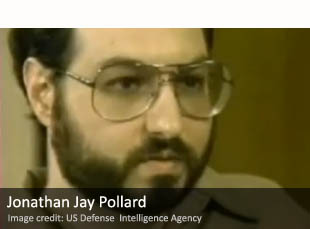
Jonathan Jay PollardBy JOSEPH FITSANAKIS | intelNews.org |
An American intelligence analyst, who was jailed in 1987 for spying for Israel, gave his spy handlers information on Pakistan’s nuclear weapons program, according to declassified documents. Former United States Navy intelligence analyst Jonathan Jay Pollard is currently serving a life sentence for selling classified information to the Israeli government between 1985 and 1987. On December 14, the Central Intelligence Agency declassified its official damage assessment of Pollard’s espionage, who some counterintelligence officials believe was the most prolific mole that ever spied on the US government for a foreign country. This was the second time that the CIA declassified the document, titled The Jonathan Jay Pollard Espionage Case: A Damage Assessment, following an appeal by George Washington University’s National Security Archive. Even though this latest version of the declassified document is still heavily redacted, it contains some new information. One new revelation is that Pollard’s Israeli handlers specifically asked him to acquire intelligence collected by the US government on the Pakistani nuclear weapons program. In a section titled “Implications of Compromises: What Israel Gained from Pollard’s Espionage”, the CIA assessment states that Pollard focused on “Arab and Pakistani nuclear intelligence” and gave his Israeli handlers information on a secret Pakistani “plutonium reprocessing facility near Islamabad”. Further information in the declassified report about this subject is completely redacted. The question is, what kind of information on Pakistan’s nuclear weapons program did Tel Aviv acquire from Pollard?  According to A.Q. Khan, the so-called father of the Pakistani nuclear bomb, Islamabad was able to detonate a nuclear device “within a week’s notice” by as early as 1984. Read more of this post

US Senate blocks Pentagon plan to launch new CIA-style agency

The US Department of DefenseBy JOSEPH FITSANAKIS | intelNews.org |
Last week the United States Department of Defense flooded media outlets with press releases announcing the planned establishment of a new military intelligence organization that would rival the Central Intelligence Agency in both size and scope. Not so fast. The US Senate has just blocked the plan citing gross mismanagement of the Pentagon’s existing intelligence operations. The proposed Defense Clandestine Service centers on plans to build an extensive overseas intelligence network, run by the Pentagon’s Defense Intelligence Agency and based on the CIA model of stations located in large metropolitan centers. The DoD said that the new intelligence organization will help the US armed forces broaden their intelligence collection from the current concentration in Afghanistan and Iraq. But the Senate, which was asked to review and approve the plan’s financial requirements, submitted under the 2013 National Defense Authorization Act, has refused to do so. Moreover, it issued a written rationale, drafted by the Senate Armed Services Committee, in which it explicitly forbids the Pentagon using US taxpayers’ money to expand its overseas intelligence operations. According to The Washington Post, the reason for the plan’s rejection is two-fold. First, the Senate appears unhappy with the financial management of the DoD’s existing intelligence collection efforts. The Senate report cites serious concerns about the excessive financial cost and management failures associated with the Pentagon’s ongoing intelligence operations. It specifically mentions “poor or non-existent career management” for DoD intelligence operatives who are often transferred back to regular military units after undertaking “unproductive” assignments overseas, despite extensive intelligence training. The Senate Armed Services Committee’s report stipulates that, before it asks for more money to build the proposed new agency, the Pentagon must “demonstrate that it can improve the management of clandestine [human intelligence] before undertaking any further expansion”. Read more of this post