US wants immunity for Pakistanis implicated in attacks that killed 166

2008 Mumbai attacksBy JOSEPH FITSANAKIS | intelNews.org |
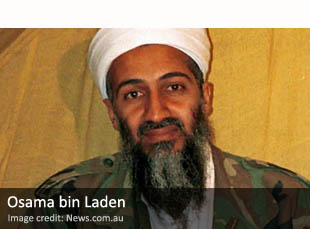
The United States government has argued in court that current and former officials of Pakistan’s intelligence service should be immune from prosecution in connection with the 2008 Mumbai attacks. At least 166 people, including 6 Americans, were killed and scores more were injured when members of Pakistan-based militant group Lashkar-e-Taiba stormed downtown Mumbai, India, taking the city hostage between November 26 and 29, 2008. The Indian government has openly accused Pakistan’s Inter-Services Intelligence directorate (ISI) of complicity in the attack, which has been described as the most sophisticated international terrorist strike anywhere in the world during the last decade. Using evidence collected by the Indian government, several Americans who survived the bloody attacks sued the ISI in New York earlier this year for allegedly directing Lashkar-e-Taiba and the Mumbai strikes. But Stuart Delery, Principal Deputy Attorney General for the US Department of State, has told the court that the ISI and its senior officials are immune from prosecution on US soil under the US Foreign Sovereign Immunities Act. According to the 12-page ‘Statement of Interest’ delivered to the court by Delery, no foreign nationals can be prosecuted in a US court for criminal actions they allegedly carried out while working in official capacities for a foreign government. The affidavit goes on to suggest that any attempt by a US court to assert American jurisdiction over current or former Pakistani government officials would be a blatant “intrusion on [Pakistan’s] sovereignty, in violation of international law”. It appears that nobody has notified the US Department of State that the US routinely “intrudes on Pakistan’s sovereignty” several times a week by using unmanned Predator drones to bomb suspected Taliban militants operating on Pakistani soil. Washington also “intruded on Pakistan’s sovereignty” on May 2, 2011, when it clandestinely sent troops to the town of Abbottabad to kill al-Qaeda founder Osama bin Laden. Read more of this post

News you may have missed #818 (USA edition)

Osama bin LadenBy IAN ALLEN | intelNews.org |
►►The real-life female CIA officer who helped track bin Laden. The Washington Post has a good article on the real-life career of a female CIA officer who helped the Agency track al-Qaeda founder Osama bin Laden. It is disappointing, however that the article, authored by Greg Miller and Toby Warrick, is headlined “In Zero Dark Thirty she’s the hero; in real life, CIA agent’s career is more complicated”. The CIA employee in question is not an “agent”; she is an officer. In the CIA, agents are assets, people recruited and handled by CIA officers. Amazing that The Post, with its experienced journalists and editors would confuse such a basic operational distinction.
►►US spy agencies to detail cyber-attacks from abroad. The US intelligence community is nearing completion of its first detailed review of cyber-spying against American targets from abroad, including an attempt to calculate US financial losses from hacker attacks based in China. The National Intelligence Estimate, the first involving cyber-espionage, will also seek to determine how large a role the Chinese government plays in directing or coordinating digital attacks aimed at stealing US intellectual property, according to officials who spoke on the condition of anonymity to discuss a classified undertaking.
►►CIA begins LGBT recruiting. As part of the CIA’s efforts to diversify its workforce, the spy agency is reaching out to a group that once was unable to get security clearance: lesbians and gay men. CIA officials have held a networking event for the Miami gay community sponsored by the Miami-Dade Gay and Lesbian Chamber of Commerce and the CIA. “This is the first time we’ve done a networking event of this type with any of the gay and lesbian chamber of commerces in the United States,” says Michael Barber, a self-identified “straight ally” and the spy agency’s LGBT Community Outreach and Liaison program manager.

Jailed US spy gave Israel information on Pakistan nuclear program

Jonathan Jay PollardBy JOSEPH FITSANAKIS | intelNews.org |
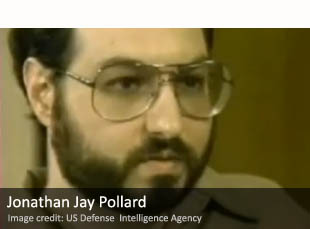
An American intelligence analyst, who was jailed in 1987 for spying for Israel, gave his spy handlers information on Pakistan’s nuclear weapons program, according to declassified documents. Former United States Navy intelligence analyst Jonathan Jay Pollard is currently serving a life sentence for selling classified information to the Israeli government between 1985 and 1987. On December 14, the Central Intelligence Agency declassified its official damage assessment of Pollard’s espionage, who some counterintelligence officials believe was the most prolific mole that ever spied on the US government for a foreign country. This was the second time that the CIA declassified the document, titled The Jonathan Jay Pollard Espionage Case: A Damage Assessment, following an appeal by George Washington University’s National Security Archive. Even though this latest version of the declassified document is still heavily redacted, it contains some new information. One new revelation is that Pollard’s Israeli handlers specifically asked him to acquire intelligence collected by the US government on the Pakistani nuclear weapons program. In a section titled “Implications of Compromises: What Israel Gained from Pollard’s Espionage”, the CIA assessment states that Pollard focused on “Arab and Pakistani nuclear intelligence” and gave his Israeli handlers information on a secret Pakistani “plutonium reprocessing facility near Islamabad”. Further information in the declassified report about this subject is completely redacted. The question is, what kind of information on Pakistan’s nuclear weapons program did Tel Aviv acquire from Pollard?  According to A.Q. Khan, the so-called father of the Pakistani nuclear bomb, Islamabad was able to detonate a nuclear device “within a week’s notice” by as early as 1984. Read more of this post

US Senate blocks Pentagon plan to launch new CIA-style agency

The US Department of DefenseBy JOSEPH FITSANAKIS | intelNews.org |
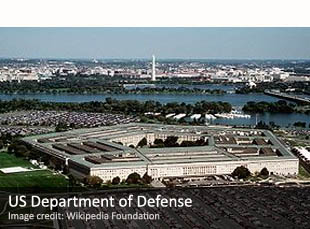
Last week the United States Department of Defense flooded media outlets with press releases announcing the planned establishment of a new military intelligence organization that would rival the Central Intelligence Agency in both size and scope. Not so fast. The US Senate has just blocked the plan citing gross mismanagement of the Pentagon’s existing intelligence operations. The proposed Defense Clandestine Service centers on plans to build an extensive overseas intelligence network, run by the Pentagon’s Defense Intelligence Agency and based on the CIA model of stations located in large metropolitan centers. The DoD said that the new intelligence organization will help the US armed forces broaden their intelligence collection from the current concentration in Afghanistan and Iraq. But the Senate, which was asked to review and approve the plan’s financial requirements, submitted under the 2013 National Defense Authorization Act, has refused to do so. Moreover, it issued a written rationale, drafted by the Senate Armed Services Committee, in which it explicitly forbids the Pentagon using US taxpayers’ money to expand its overseas intelligence operations. According to The Washington Post, the reason for the plan’s rejection is two-fold. First, the Senate appears unhappy with the financial management of the DoD’s existing intelligence collection efforts. The Senate report cites serious concerns about the excessive financial cost and management failures associated with the Pentagon’s ongoing intelligence operations. It specifically mentions “poor or non-existent career management” for DoD intelligence operatives who are often transferred back to regular military units after undertaking “unproductive” assignments overseas, despite extensive intelligence training. The Senate Armed Services Committee’s report stipulates that, before it asks for more money to build the proposed new agency, the Pentagon must “demonstrate that it can improve the management of clandestine [human intelligence] before undertaking any further expansion”. Read more of this post

News you may have missed #816

Kim Jong-namBy IAN ALLEN | intelNews.org |
►►Danish minister vows more control over spy agency. Following the uproar created by the revelations from former Danish secret service (PET) agent Morten Storm, Denmark’s Minister of Justice, Morten Bødskov, is now calling for parliament to have more control over the domestic intelligence agency. In an interview with Berlingske newspaper, Bødskov said that he is seeking increased powers for parliament’s Kontroludvalg, a committee established in 1964 to oversee PET. The move comes in response to the many questions that have arisen about PET’s actions following Storm’s decision to contribute to a series of articles in Jyllands-Posten newspaper that chronicled his time as a PET double-agent.
►►South Korea jails alleged North Korean assassin. A South Korean court has jailed an unidentified North Korean spy reportedly ordered to attack Kim Jong-nam, the eldest son of late North Korean leader Kim Jong-il. Kim Jong-nam, who is believed to have fallen out of favor with Kim Jong-il in 2001, was thought to have been living in Macau, but media reports indicate he may have moved to Singapore. South Korean media said the alleged assassin had spent a decade in China tracking down North Korean defectors before coming to the South, and that he had admitted trying to organize “a hit-and-run accident” targeting Kim Jong-nam.
►►US Pentagon to double the size of its worldwide spy network. The Defense Intelligence Agency (DIA), the US Pentagon’s military intelligence unit, is aiming to recruit 1,600 intelligence collectors —up from the several hundred overseas agents it has employed in recent years. The DIA’s new recruits would include military attachés and others who do not work undercover. But US officials say that the growth will be driven a new generation of spies who will take their orders from the Department of Defense. The project is reportedly aimed at transforming the DIA into a spy service more closely aligned with the CIA and elite military commando units.

News you may have missed #815 (analysis edition)

Polygraph testBy IAN ALLEN | intelNews.org |
►►Should polygraph tests be trusted?  US federal polygraph programs have flourished, targeting a growing number of private contractors with more intensely personal questions than ever before. More than 70,000 people are now screened yearly in the US. Yet thousands of people a year could be identified as lying in polygraph screenings when they are not, according to statistical models by the National Academies, which advises the federal government on scientific matters. Under the current system, many of them would have no way to legally challenge polygraphists’ conclusions, especially in the intelligence world.
►►Why the US does not need another law against intelligence leaks. Leonard Downie Jr., vice president at large of The Washington Post, warns that the 2013 Intelligence Authorization Act “would make it a crime for career intelligence officers to provide almost any type of information to the news media, whether the information is classified or not”. He argues that the proposed legislation would “end contacts that often benefit both the government and the public by allowing the exchange of accurate information about vital national security issues and intelligence activities, including abuses requiring attention”.
►►The preventable decline of British defense intelligence. Defense intelligence refers to something rather different from ‘military intelligence’. It takes place at the topmost levels of defense coordination and decision-making and draws together participation from all of the armed services with civilian subject-matter and technical experts and produce consolidated assessments for senior civil servants, ministers and the service chiefs of staff. Philip Davies, director of the Brunel Centre for Intelligence and Security Studies in the United Kingdom, argues that, in Britain, defense and military intelligence remains “something of a poor cousin in the intelligence community, the eternal Peter robbed to pay the Paul of other, seemingly more urgent, defense expenditure and policy priorities”.

Illegal spy agency operated in West Germany, new book claims

Willy BrandtBy JOSEPH FITSANAKIS | intelNews.org |
Conservative politicians in Cold-War West Germany set up an illegal domestic intelligence agency in order to spy on their political rivals, a forthcoming book claims. In Destroy After Reading: The Secret Intelligence Service of the CDU and CSU, German journalist Stefanie Waske exposes what she says was an elaborate plot to undermine West Germany’s rapprochement with Soviet-dominated Eastern Europe. The book, which is scheduled for publication in February of 2013, claims that the illegal intelligence agency, known as ‘the Little Service’, was set up by politicians from Germany’s conservative Christian Democratic Union (CDU) and its sister organization, the Christian Social Union of Bavaria (CSU). The two parties allegedly founded ‘the Little Service’ in 1969, in response to the election of Willy Brandt as German Chancellor in 1969. Brandt, who was leader of the center-left Social Democratic Party of Germany (SDP), was elected based on a program of normalizing West Germany’s relations with Eastern Europe. Under this policy, which became known as ‘Neue Ostpolitik’ (‘new eastern policy’), Brandt radically transformed West German foreign policy on Eastern Europe. In 1970, just months after his election, he signed an extensive peace agreement with the Soviet Union, known as the Treaty of Moscow, which was followed later that year by the so-called Treaty of Warsaw. Under the latter agreement, West Germany officially recognized the existence and borders of the People’s Republic of Poland. Brandt’s Neue Ostpolitik, which continued until the end of his tenure in the Chancellery in 1974, earned him the Nobel Peace Prize for his efforts to achieve reconciliation between West Germany and the countries of the Soviet bloc, primarily East Germany. But Brandt’s policy of rapprochement alarmed the CDU/CSU coalition, says Waske, which quickly set up ‘the Little Service’ by enlisting former members of Germany’s intelligence community. Read more of this post

Did US spies hack French government computers using Facebook?

The Palais de l'ÉlyséeBy JOSEPH FITSANAKIS | intelNews.org |
A sophisticated computer virus discovered at the center of the French government’s secure computer network was planted there by the United States, according to unnamed sources inside France’s intelligence community. Paris-based magazine L’Express, France’s version of Time magazine, says in its current issue that the alleged American cyberattack took place shortly before last April’s Presidential elections in France. It resulted in the infection of the entire computer system in the Palais de l’Élysée, which is the official residence of the President of France. The French magazine cites unnamed sources inside the French Network and Information Security Agency (ANSSI), which is responsible for cybersecurity throughout France. The sources claim that the snooping virus allowed its handlers to gain access to the computers of most senior French Presidential aides and advisers during the final weeks of the administration of French President Nicolas Sarkozy, including his Chief of Staff, Xavier Musca. The article claims that the virus used a source code nearly identical to that of Flame, a super-sophisticated version of Stuxnet, the virus unleashed a few years ago against the computer infrastructure of the Iranian nuclear energy program. Many cybersecurity analysts believe that the US and Israel were instrumental in designing both Stuxnet and Flame. IntelNews understands that the alleged virus was initially directed at employees of the Palais de l’Élysée through Facebook. The targets were allegedly befriended by fake Facebook profile accounts handled by the team that operated the virus. The targets were then sent phishing emails that contained links to phony copies of the login page for the Palais de l’Élysée intranet website. Read more of this post

News you may have missed #813 (CIA edition)

CIA headquartersBy IAN ALLEN | intelNews.org |
►►Who is leading the CIA for now? Acting CIA Director Michael J. Morell, who has worked for the CIA for 32 years, served a stint as acting director last year and his will be one of several names considered by US President Barack Obama for the permanent job. Starting as an analyst tracking international energy issues, Morell worked for 14 years as an analyst and manager on East Asia, rising to director of the Directorate of Intelligence’s Office of Asian Pacific and Latin American Analysis in 1999. In May 2010, Morell succeeded Stephen Kappes, who had resigned suddenly and without explanation, as deputy director of the CIA, serving under Directors Leon Panetta (February 2009-June 2011) and David Petraeus (September 2011-November 2012).
►►No perfect choice to fill Petraeus vacancy at CIA. President Barack Obama needs a quick, no-drama solution to a sensational personnel problem. But the vacancy left at the top of the Central Intelligence Agency by David Petraeus’s abrupt departure amid a headline-grabbing sex scandal calls for a particularly complex skill set. It requires a charismatic chief to oversee the large, notoriously tough-to-manage intelligence apparatus. It needs a leader who has a strong relationship with the president. And most of all, it calls for a politically savvy operator who understands how to interact with Congress —and can assuage some of the current anger on Capitol Hill that lawmakers were kept in the dark about the probe.
►►CIA climate-change unit is shut down. Republican lawmakers in the US began criticizing the Central Intelligence Agency’s Center on Climate Change and National Security before it was even established, calling it a “misguided defense funding priority”. Concerted resistance by conservative lawmakers did not allow the program to stand on solid ground, and it now looks like the Center has actually closed down, having lost its most important supporter, former CIA Director Leon Panetta.

Analysis: Should the CIA kill less and spy more?

CIA headquartersBy JOSEPH FITSANAKIS | intelNews.org |
The Central Intelligence Agency’s awkward silence about the recent resignation of its Director, General David Petraeus, is indicative of an organization that remains distinctly uncomfortable with publicity. The added layer of the sexual nature of Petraeus’ impropriety has increased exponentially the degree of unease at Langley. Yet sooner or later the news media will move on to something else and General Petraeus will fade into the distance. For seasoned intelligence observers, however, the question of the CIA’s future will remain firmly in the foreground. In an interview earlier this week with Wired magazine, former CIA Director General Michael Hayden (ret.) opined that Petraeus’ resignation presents the Agency with the opportunity to return to its operational roots. Hayden, who led the CIA from 2006 to 2009, said that the Agency has been “laser-focused on terrorism” for many years. Consequently, much of its operational output “looks more like targeting than it does classical intelligence”, he said. His views were echoed by the CIA’s former Acting Director, John McLaughlin, who told Wired that the most significant challenge for the post-Petraeus CIA “may be the sheer volume of problems that require [good old-fashioned] intelligence input”. Yesterday, meanwhile, saw the publication of two opinion pieces by two of America’s most experienced intelligence watchers. In the first one, The Washington Post’s Walter Pincus urges United States President Barack Obama to pause and think about the role of America’s foremost external intelligence organization before appointing a successor to General Petraeus. For over a decade, argues Pincus, the CIA’s focus has been to fulfill covert-action tasks in the context of Washington’s so-called “war on terrorism”. But through this process, the Agency “has become too much of a paramilitary organization” and has neglected its primary institutional role, which is to be “the premier producer and analyst of intelligence for policymakers, using both open and clandestine sources”. Read more of this post

Opinion: When Did Obama Know About CIA Director’s Affair?

David Petraeus and Paula BroadwellBy JOSEPH FITSANAKIS | intelNews.org |
The standard reaction to last week’s resignation of Central Intelligence Agency Director David Petraeus, following the revelation of his extramarital affair, has been stunned silence. Not so much because of the affair itself —what is one more affair in the slippery world of Washington politics?— but because it involved the eminent figure of Petraeus. Former aides to the retired General have been confiding to journalists that “never in a million years” would they have thought that the high-achieving CIA Director would have risked his career and reputation in such a reckless fashion. Many thought that the relationship between him and his biographer, Paula Broadwell, had grown suspiciously close in recent years; but Petraeus had a general way of seeming beyond reproach.

It is worth pointing out that much of this unfolding story is so far based on hearsay, as opposed to concrete, verifiable information. It is suggested that Petraeus’ extramarital tryst was accidentally discovered by agents of the Federal Bureau of Investigation, who were looking into a seemingly unrelated case. Some news outlets, mostly in the UK, suggest that a female employee of the US military’s Joint Special Operations Command contacted the FBI after receiving threatening messages from Broadwell, warning her to “stay away from [her] man” —allegedly Petraeus. While investigating the Gmail account from which the threatening messages were allegedly sent, the FBI allegedly discovered “thousands” of messages exchanged between the CIA Director and Broadwell, some of which were sexually explicit. Read more of this post

News you may have missed #810 (Petraeus resignation edition)

David PetraeusBy JOSEPH FITSANAKIS | intelNews.org |
►►How did Petraeus’ affair come to light? CIA Director David Petraeus resigned after a probe into whether someone else was using his email. The probe eventually led to the discovery that he was having an extramarital affair, according to The Wall Street Journal, which cites “several people briefed on the matter”. An FBI inquiry into the use of Petraeus’s Gmail account led agents to believe the woman or someone close to her had sought access to his email. An extramarital affair has significant implications for an official in a highly sensitive post, such as that held by Petraeus, because it can open an official to blackmail.
►►Who did Petraeus have an affair with? The woman with whom General David Petraeus was having an affair is Paula Broadwell, a West Point graduate and the author of a recent hagiographic book about him, entitled All In: The Education of General David Petraeus, co-written with Vernon Loeb. Slate‘s Fred Kaplan reports that “it had long been rumored that something was going on between Petraeus and Broadwell. When she was embedded with him in Afghanistan, they went on frequent 5-mile runs together. But Petraeus went on 5-mile runs with many reporters, and few people who knew him took the rumors seriously”.
►►Who is leading the CIA now? With General David Petraeus stepping down as director of the CIA, following reports of an extra-marital affair, the agency’s current deputy director will take over as director on an interim basis. His name is Michael Morell, and he was a senior CIA aide in the White House to President George W. Bush. Morell had served as deputy director since May 2010, after holding a number of senior roles, including director for the agency’s analytical arm, which helps feed intelligence into the President’s Daily Brief. He also worked as an aide to former CIA Director George Tenet.

Afghan intelligence officials ‘missing’ in the United States

Alibaba GhasheeBy IAN ALLEN | intelNews.org |
On November 2, the Federal Bureau of Investigation announced that two highly trained Afghan intelligence officers had gone missing in the United States. IntelNews hears that American authorities are still looking for the two Afghans, who seem to have disappeared without trace. The two missing officers work for Afghanistan’s main domestic intelligence agency, the National Security Directorate (NDS), which was founded following the 2001 US invasion of Afghanistan and is mostly funded by Washington. The missing officers are Captain Alibaba Ghashee (pictured), Deputy Director of the NDS’ American and European Department, and Major Mohd Farooq Ghanizada, who directs agency’s Counterterrorism and Organized Crime Department. Both offices disappeared while in Washington, DC, for a high-level executive training program run jointly by the American and German governments. The 10-week intensive course, taught as part of the George C. Marshall Center Advanced Security Studies program, trains elite members of security and intelligence agencies from NATO member-states and other Western-allied countries. Although headquartered in Germany, the program involves a trip to Washington, DC, where participants are briefed by officials from —among other agencies— the FBI and the Defense Intelligence Agency. The two Afghans were supposed to meet their American government escorts on October 22 in downtown Washington, before heading to the airport for their return flight to Afghanistan. However, they never appeared, nor did they show up for their flight at Washington Dulles International Airport. Read more of this post

News you may have missed #809 (Obama-Iran edition)

Iran and its regionBy IAN ALLEN | intelNews.org |
►►Will re-elected Obama take a new line on Iran? Barack Obama returns to office after an election campaign in which Iran’s nuclear program often dominated foreign-policy debates. Mitt Romney frequently accused him of taking too soft a line toward Tehran. Now, as Obama begins a second term, the question is how much he has been stung by such criticism. Will Obama retain confidence in his dual strategy of squeezing Iran with economic sanctions while also extending offers of rapprochement? Or will the fact that Iran keeps building centrifuges and enriching uranium despite Obama’s efforts persuade the White House it needs to try something new?
►►Obama’s victory vindicates his Iran policy. President Barack Obama’s re-election victory represents an important vindication of his approach to Iran and its potential nuclear ambitions —and, for the world, a new face of American policy in the Middle East that will relegate the aggressive policies of George W. Bush into the distant past. The election confirmed what polls have clearly shown, that while Americans are deeply concerned about the prospect of an Iranian nuclear weapon, they also view addressing the problem through vigorous diplomatic engagement and sanctions as the most appropriate exercise of American power and leadership.
►►Iranians see reduced risk of war in Obama’s reelection. In Iran, there is a sense of relief these days, as concerns of a military attack by US and Israeli forces over Iran’s nuclear energy program if Mitt Romney were elected, had become widespread. While there continues to be no official response from Iran’s leadership about US election results, Iranian media is still heavily focused on covering American polls. Commenting on one of Iran’s most popular political Web sites, Asriran, one reader wrote, “At least we know we won’t be going to war during the next four years”. And Iran’s state-run English language television channel, Press TV, carried a live and uninterrupted broadcast of President Barack Obama’s acceptance speech.

News you may have missed #808 (Obama-Netanyahu edition)

Benjamin Netanyahu and Barack ObamaBy IAN ALLEN | intelNews.org |
►►The other concession speech: Netanyahu congratulates Obama. At least there was no pretending. In the language of diplomacy, the greeting Israeli Prime Minister Benjamin Netanyahu extended to Barack Obama on the occasion of his re-election was “correct” and nothing more. “Prime Minister Netanyahu congratulates US President Barack Obama on his election victory,” read the public statement issued early Wednesday in Jerusalem. The next word out of Balfour Street, where Netanyahu mulled the returns, was a warning to members of his Likud party to shut up about how they figure the premier might really feel. By then, the deputy speaker of the Knesset had already called Obama “naïve” and vowed Israel would not “surrender” to him.
►►Netanyahu rushes to repair damage with US President. Over the past several years, Prime Minister Benjamin Netanyahu has on several occasions confronted or even undercut US President Barack Obama, taking his message directly to the Israel-friendly United States Congress, challenging Mr. Obama’s appeal to the Arab world, and seeming this fall to support his opponent, Mitt Romney. Mr. Netanyahu woke up Wednesday to find not only that his Republican friend had lost, but also that many Israelis were questioning whether he had risked their collective relationship with Washington.
►►Barack Obama victory spells trouble for Israel’s Netanyahu. Israeli Prime Minister Benjamin Netanyahu faces an even more awkward time with Washington and re-energized critics at home who accused him on Wednesday of backing the loser in the US presidential election. With Iran topping his conservative agenda, Netanyahu will have to contend with a strengthened second-term Democratic president after four years of frosty dealings with Barack Obama and a rift over how to curb Tehran’s nuclear program.