News you may have missed #749

Mohammed DahabiBy IAN ALLEN | intelNews.org |
►►Why did CIA Director secretly visit Czech Republic? The CIA Director, David Petraeus, is known to make frequent secret trips to places like Pakistan, Afghanistan, or Iraq. But why was his recent trip to the Czech Republic kept secret? Photographs published in a Czech daily paper showed the CIA director and his team boarding a military plane at Prague’s Ruzyne Airport, headed for their next destination, Sofia, Bulgaria. But neither the US Embassy in Prague, nor the CIA will respond to questions by Czech media about Petraeus’ secretive visit to the former Soviet Bloc nation.
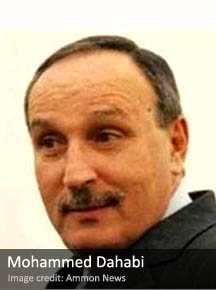
►►Jordan’s ex-spy chief on trial for corruption. Jordan’s former spy chief, General , who headed the General Intelligence Department (GID) from 2005 to 2009, has gone on trial in Amman on charges of corruption, which carry a maximum sentence of life imprisonment. In a case highlighting corruption in the country’s vaunted intelligence community, the prosecutor said Dahabi’s wealth had quadrupled during his years in office, reaching almost $40 million by the end of 2011. The money, he said, was held in several foreign currency accounts in a leading domestic bank.
►►CIA still refuses to comment on Predator drone attacks. The Central Intelligence Agency continues to refuse to confirm or deny the covert military use of drones to kill suspected terrorists overseas. This is despite numerous public comments on the CIA’s drone attacks in far-flung locales such as Yemen from various government officials, including former CIA Director Leon Panetta and US President Barack Obama. The development comes as 26 members of Congress asked Obama, in a letter, to consider the consequences of drone killing and to explain the necessity of the program.
News you may have missed #748 (US edition)

Michael HaydenBy IAN ALLEN | intelNews.org |
►►US lawmakers probe China companies over spy concerns. In letters sent last week to Chinese communications hardware firms Huawei Technologies and ZTE Corporation, a group of senior members of the US House of Representatives Intelligence Committee have outlined concerns about the companies’ ties with the Chinese government, including the role of a “party committee” at Huawei. The lawmakers have also asked about Huawei’s relationships with five US consulting firms and requested an expansive collection of documents, including the contracts between the firms and Huawei.
►►Lone Senator resists Bush/Obama NSA wiretapping plan. The Obama administration wanted a quick, no-questions-asked-or-answered renewal of broad electronic eavesdropping powers that largely legalized the Bush administration’s illegal warrantless wiretapping program. That’s despite President Barack Obama’s campaign promise to revisit and revise the rules to protect Americans’ rights. Everything seemed to be going to plan after a Senate committee approved the re-authorization in secret last month. But Senator Ron Wyden (D-Oregon) has stepped in to stop the bill because the government refuses to say how often the spy powers are being used.
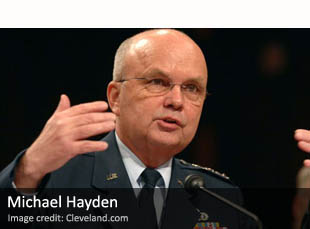
►►What did Hayden tell Obama in January 2009? In December of 2008, a meeting took place between the incoming US Presiden Barack Obama and the departing CIA Director Michael Hayden. Several days later, on January 15, Hayden told journalists that Obama had privately assured him that “no plans to launch a legal inquiry” into the CIA’s use of controversial interrogation methods during the Bush administration. Now, several years later, Salon has published an insider’s account of what was said in that meeting between Obama and Hayden, as well as during the days that followed.

Western spy agencies ‘sharing intelligence’ with Syrian rebels

Robert MoodBy JOSEPH FITSANAKIS | intelNews.org |
A British newspaper has cited defense sources claiming that British and American intelligence agencies are passing vital information to Syrian rebels fighting to overthrow the country’s government. British tabloid The Daily Star quoted “a British defense source” who said that most of the raw intelligence on Syria is picked up by sophisticated British and American satellites monitoring Syrian communications. Once gathered and assessed by intelligence analysts in Washington and London, the information is passed on to operatives of the United States Central Intelligence Agency and Britain’s MI6, who are allegedly operating on the ground in Syria. They in turn communicate actionable intelligence to rebel leaders in Syria, who are fighting the government of Syrian President Bashar al-Assad. According to the British tabloid, information passed on to rebel leaders includes detailed satellite imagery of Syrian pro-government troop movements around the country, as well as the contents of intercepted communications between senior Syrian military commanders and their subordinates in the field. The Star quotes one unnamed British government source who claims that the satellites are so sophisticated that they allow British and American eavesdroppers to identify the individuals whose voices are heard in the intercepted communications, with the aid of advanced voice recognition systems. The intelligence has reportedly enabled rebel commanders to evacuate locations targeted by government forces, and may also have allowed the rebels to organize successful counterstrikes in response to offensives conducted by troops loyal to Damascus. Washington-based publication The Hill contacted the CIA and the White House but their spokespersons refused to comment on what they called “an ongoing intelligence operation” in Syria. A spokesman from the British Foreign and Commonwealth Office would only tell The Star that “all actions remain on the table”.   Read more of this post

News you may have missed #746

Jeffrey Paul DelisleBy IAN ALLEN | intelNews.org |
►►Germany charges alleged Moroccan spy. German Federal prosecutors on Tuesday said the suspect, identified only as Moroccan-German dual national Mohammed B., was spying for Moroccan intelligence on supporters of the POLISARIO Front, which seeks independence for the Western Sahara region. They say he was paid €22,800 for the work in 2011, and then falsified invoices to claim he had done work for Morocco’s state airline to disguise where the money originated. He was arrested in February but released from custody on June 5 after prosecutors say he admitted to the charges.
►►Delisle spy case in Canada adjourned until July 4. The case of Canadian navy intelligence officer Jeffrey Paul Delisle, who is accused of espionage, has been adjourned until next month, because his lawyer, Mike Taylor, says he needs more time to review information about his client. According to Taylor, much of the information he has received so far from the Canadian government has been redacted because of security concerns. Moreover, he said that the “voluminous” amount of information has to be vetted by several justice and intelligence agencies before it can be handed over to him, slowing down the process of moving the case forward.
►►Obama to deny Israeli calls for Pollard’s release. The administration of US President Barack Obama has indicated that it will reject any appeal by senior Israeli political figures to commute the life sentence of convicted Israeli spy Jonathan Pollard. “Our position has not changed and will not change today”, White House spokesman Jay Carney told reporters at his daily briefing last week. “Mr. Pollard was convicted of extremely serious crimes”, he said.

CIA ‘seriously damaged’ China’s overseas spy network, sources say

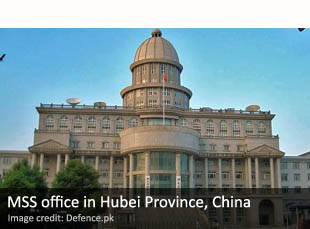
Ministry of State Security branch office in Hubei Province, ChinaBy JOSEPH FITSANAKIS | intelNews.org |
A high-level Chinese security official, who was arrested earlier this year in China for spying for the United States, compromised several Chinese agents operating on American soil, according to sources. Reuters news agency, which broke the initial story of the Chinese official’s arrest earlier this month, published last week a lengthy update on the spy affair. The article quoted “two sources with direct knowledge on the matter”, who claimed the issue was considered serious enough in Beijing to prompt the personal intervention of Chinese President Hu Jintao. Jintao, who is also General Secretary of the Communist Party of China, personally ordered an investigation into the case, said Reuters. The investigation focused on China’s Ministry of State Security (MSS), China’s primary intelligence agency, where the accused spy was reportedly working at the time of his arrest. Although Chinese media have remained silent on the issue, the arrested official is said to have worked as a senior aide to MSS Vice Minister Lu Zhongwei. The Reuters article alleges that the investigation, which is said to be continuing, has concluded that the aide had been a paid informant of the US Central Intelligence Agency, and that the information he provided to the CIA included “political, economic and strategic intelligence”. But the sources also told Reuters that some of the government secrets that the MSS aide gave the CIA related to China’s network of spies operating on American soil. The latest Reuters article strengthens the widespread view that the latest espionage scandal caused serious damage to China’s espionage network in the US. Some observers now argue that this represents China’s most damaging espionage scandal since 1985, when Yu Qiangsheng, a senior Chinese intelligence official, defected to the United States. Read more of this post

‘Massive expansion’ in US covert operations in Africa

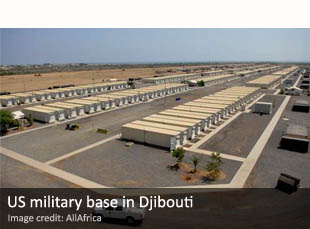
US military base in DjiboutiBy JOSEPH FITSANAKIS | intelNews.org |
The United States administration of President Barack Obama is implementing a near-unprecedented expansion of covert operations by American military forces throughout Africa, aimed at a host of armed groups deemed extremist by Washington. A lead article published yesterday in The Washington Post quotes over a dozen unnamed American and African officials, as well as military contractors, who refer to the US military-led effort as Project CREEKSAND. It allegedly involves secret operations in several African countries, conducted out of a large network of small air bases located in strategic locations around the continent. According to The Post, most of the airplanes used in Project CREEKSAND are small, unarmed, disguised to look like private aircraft, and bear no military markings or government insignia. In reality, however, they carry sophisticated electronic equipment designed to collect signals intelligence, while some are used to transport US Special Forces troops during capture or kill missions. The paper quotes an unnamed “former senior US commander […] involved in setting up the [air bases] network”, who alleges that the US government has built about a dozen such bases throughout Africa since 2007. These secret air bases are located in countries such as Mauritania, Burkina Faso, Ethiopia, Djibouti, Uganda, South Sudan, Kenya, and Seychelles. Most of the US personnel involved in Project CREEKSAND consists of Special Operations forces tasked with “training foreign security forces [and] performing aid missions”. However, The Post alleges that there are also small teams of US operatives who are “dedicated to tracking and killing suspected terrorists”. Read more of this post

Ex-diplomat: US thinks Israeli spy Pollard was not acting alone

Itamar RabinovichBy JOSEPH FITSANAKIS | intelNews.org |
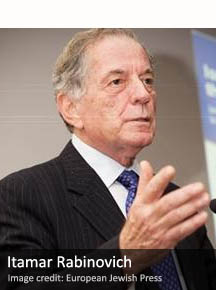
One of Israel’s former ambassadors to Washington has told a radio program that United States officials suspect Jonathan Jay Pollard, an American who spied for Israel in the 1980s, was not acting alone. Itamar Rabinovich, who was Tel Aviv’s most senior diplomat on US soil from 1993 to 1996, told Israel Radio on Monday that this is probably the reason behind Washington’s refusal to release the imprisoned spy. Pollard was a US Navy intelligence analyst who spied for Israel, in exchange for money, from 1984 until his arrest in 1986. Many in US counterintelligence consider him one of the most damaging double spies in American history. But he is widely viewed as a hero in Israel, and Israelis, as well as many pro-Israel Americans, are actively pressuring the US administration of President Barack Obama to release him. According to Rabinovich, however, the main reason behind the US refusal to release Pollard is that officials in the US Intelligence Community think that Israel has concealed the full extent of his activities on US soil. Furthermore, Rabinovich said in his interview that Washington believes Israel has shielded other Americans who either collaborated with Pollard or worked alongside him at the time. “They suspect that he wasn’t the only one, that there were additional Pollards”, said Rabinovich, adding that “Israel, despite its promises, did not reveal all the cards in this case and in similar cases”. The former ambassador said that, to his knowledge, “Israel [still] hasn’t said everything” to the Americans about the extent of Pollard’s espionage activities on US soil. Expounding on this, he said that “the claim concerning the enormous damage done to the Americans” by Pollard’s activities is one thing, “but there is also a hidden [claim], which is not voiced openly, but is implied”. The Americans, said Rabinovich, are “punishing Israel at Jonathan Pollard’s expense. They are angry with Israel more than with Pollard”. Read more of this post

Interview with agent who caught US-Israeli spy Jonathan Pollard

Jonathan PollardBy JOSEPH FITSANAKIS | intelNews.org |
Twenty-six years ago this month, a United States court convicted Jonathan Jay Pollard, a US Navy analyst who had been caught spying on his country for Israel. Pollard, who is still serving his life sentence, enjoys tremendous popularity in Israel as well as among pro-Israeli public figures in the US. His supporters in Israel and elsewhere view him as a hero who is serving an unfairly harsh sentence and they pressure the US government to release him. In light of that, it is worth paying attention to a recent radio interview with the man who caught him spying on America. The interview was conducted by Mike Lanchin, a reporter and producer for BBC radio’s Witness program. Lanchin managed to trace Ron Olive, a retired Assistant Special Agent at US Navy Counterintelligence, who in June 1986 cracked the Pollard case, leading to the spy’s arrest and eventual conviction. Olive, who now runs his own security consultancy firm in Arizona, told Witness that it took him and his fellow investigators over six months to piece together their case against Pollard. He added that, according to his investigation, “Pollard stole so many documents, so highly classified, more so than any other spy in the history of this country, in such a short period of time”. The case, said Olive, was the worst he had ever seen and it “devastated the entire [US] Intelligence Community”. The reason was not only the volume of stolen classified material, but also the fact that Pollard “could have been stopped from the very beginning”. Read more of this post

U-2 pilot captured by USSR in 1960 to receive posthumous Silver Star

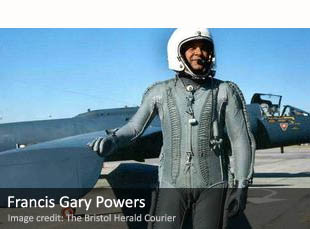
Francis Gary PowersBy JOSEPH FITSANAKIS | intelNews.org |
An American Central Intelligence Agency pilot, who was criticized during the Cold War for allowing Soviet forces to capture him alive during the 1960 U-2 incident, is to be posthumously awarded a military decoration for valor. Francis Gary Powers was one of several pilots who participated in Project HOMERUN, a joint effort by the CIA and the National Security Agency that surreptitiously gathered signals and photographic intelligence on Soviet military sites. The program, which has been described by some historians as one of the most successful intelligence projects in US history, relied on the U-2’s ability to fly beyond 70,000 feet over the Soviet Union, thus avoiding detection or attack by Soviet forces. But this impression was false; in reality, Soviet radars had been able to detect nearly every U-2 flight over Soviet territory. Eventually, on May 1, 1960, Soviet forces were able to shoot down one of the U-2 flights using a surface-to-air missile. Shortly after the USSR announced that an American plane had been shot down over Soviet territory, the US administration of President Dwight Eisenhower pretended that the plane was a NASA weather research aircraft that had “drifted into Soviet airspace” when the pilot had “lost consciousness”. At that point, however, Washington had no idea that the CIA pilot, Francis Gary Powers, had been captured alive by Soviet forces. This was later announced by Soviet Premier Nikita Khrushchev, who scored a major diplomatic coup for the Soviets. Following his arrest, Powers spent nearly two years in a Moscow prison before being exchanged for Soviet KGB spy Rudolf Abel, who had been captured in the US in 1957.  Recently declassified documents show that some CIA analysts had refused to believe that the USSR was capable of shooting down a U-2 aircraft, and thought that Powers had voluntarily defected to the Soviet Union. Read more of this post

News you may have missed #744

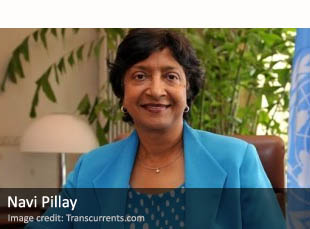
Navi PillayBy IAN ALLEN | intelNews.org |
►►Source says Mikhailov ‘will not be exchanged’ with US. There are rumors going around that the US might consider exchanging Russian arms merchant Viktor Bout, who is serving a 25-year sentence in a New York prison, for one or more CIA spies currently being held in Russian prisons. Russian news agency RIA Novosti has cited a “high ranking official in the Russian security services”, who suggests that Bout “might be exchanged”, but not with Valery Mikhailov, a Russian former counterintelligence officer, who was sentenced this week to 18 years in prison for allegedly spying for the CIA.
►►CIA preparing to pull back from Iraq. The US Central Intelligence Agency is preparing to cut its presence in Iraq to less than half of wartime levels, according to The Wall Street Journal, which cites “US officials familiar with the planning”. Under the plans being considered, says the paper, the CIA’s presence in Iraq would be reduced to 40% of wartime levels, when Baghdad was the largest CIA station in the world with more than 700 agency personnel. Interestingly, the plan would also reduce the US intelligence presence in the region as neighboring Syria appears to be verging on civil war.
►►Senior UN official blasts US drone strikes. The United Nations High Commissioner for Human Rights, Navi Pillay, has said US drone attacks in Pakistan “raise serious questions about compliance with international law, in particular the principle of distinction and proportionality”. She also voiced concerns that the strikes were being conducted “beyond effective and transparent mechanisms of civilian or military control”. IntelNews provided this opinion on the matter, in 2009.

Russian colonel was ‘most successful CIA spy’ in recent years

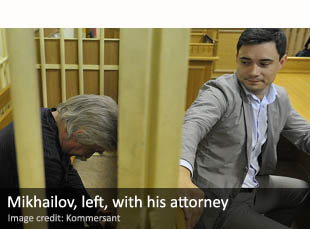
Valery Mikhailov, left, with his attorneyBy JOSEPH FITSANAKIS | intelNews.org |
Before the dust could settle from last month’s closed-door trial of Vladimir Lazar, and the arrest of an unnamed missile engineer on charges of espionage, Russia claims to have exposed yet another spy. Valery Mikhailov, a retired Russian counterintelligence officer, has been given an 18-year prison sentence for allegedly spying on behalf of the United States Central Intelligence Agency. In disclosing Mikhailov’s sentence yesterday, Moscow District Military Court officials were deliberately vague about Mikhailov’s alleged espionage activities, and provided limited information on the precise charges against him. But reporters, who were not allowed to attend Mikhailov’s trial, were told that he voluntarily approached CIA officers in Russia in 2001 and offered to spy on his country on behalf of the US, in exchange for regular payments in cash. Russian government prosecutors said that, from 2001 until 2007, when his activities were detected by Russia’s Federal Security Service (FSB), Mikhailov gave his American handlers access to over a thousand copies of secret or top-secret documents. Most of these, according to reports in the Russian media, had been prepared by FSB analysts for top-level Russian government officials, including the President, Prime Minister, and members of the Security Council of the Russian Federation. Russian government prosecutors say that Mikhailov was arrested following an extensive period of surveillance by the FSB, which allegedly resulted in the capture of an American CIA courier. The latter was apprehended while surreptitiously collecting classified documents copied by Mikhailov. Following his arrest, Mikhailov is said to have admitted that he earned over $2 million from his espionage activities. Read more of this post

US State Department silent on ‘massive’ China spy revelations

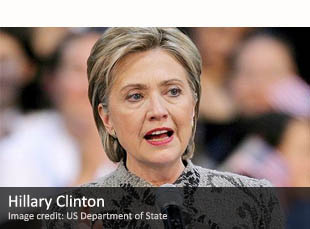
Hillary ClintonBy JOSEPH FITSANAKIS | intelNews.org |
The United States Secretary of State, Hillary Clinton, has declined to comment publicly on the arrest of a senior Chinese government aide, who is said to have conducted “massive” spying for Washington. According to Reuters news agency, who broke the story last week, the aide was arrested several months ago, but both the US and China have chosen to keep the issue under wraps in order “to prevent a fresh crisis in relations” between the two countries. Reuters cited “three sources [with] direct knowledge of the matter”, who said that the aide was employed at a critical post in the office of a vice minister in China’s Ministry of State Security (MSS). The MSS is China’s foremost intelligence agency, with responsibility for both domestic and international intelligence collection. According to the sources quoted by Reuters, the unnamed aide was arrested “sometime between January and March” of 2012 and stands accused of supplying his American handlers with classified information on Chinese espionage activities abroad. According to the report, the accused spy had been working for the US “for several years” and his case could represent the worst breach of China’s MSS in two decades; according to one source, the damage inflicted to the MSS’ operations by this case “has been massive”. Reuters said that the aide, who speaks English, was recruited by the US Central Intelligence Agency, and was paid “hundreds of thousands of US dollars” to provide “political, economic and strategic intelligence” to American intelligence officers. Read more of this post

News you may have missed #743 (espionage edition)

Vladimir LazarBy IAN ALLEN | intelNews.org |
►►Denmark professor jailed for spying. Timo Kivimäki a Finnish professor of international politics in Copenhagen, Denmark, has been sentenced to five months in prison for spying, following a trial held behind closed doors, from which even the verdict was not released. Several Russian diplomats left Denmark after the start of the spy case and, according to Danish media, Kivimäki’s lawyer, Anders Nemeth, had attempted to have them return to act as witnesses.
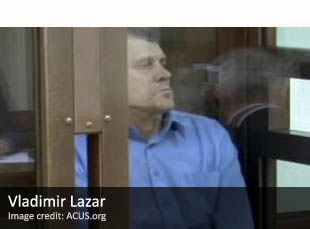
►►Retired Russian colonel convicted of spying for US. A Russian court has ruled that retired Colonel Vladimir Lazar spied for the US, and sentenced him to 12 years in prison. Lazar will be sent to a high-security prison and stripped of his military rank, the Federal Security Service said in a statement. Prosecutors said Lazar purchased several computer disks with more than 7,000 images of classified maps of Russia from a collector in 2008 and smuggled them to neighboring Belarus, where he gave them to an alleged American intelligence agent.
►►India arrests military intel staffer for spying. The soldier, identified only as Shivdasan, worked for the Indian Army’s Technical Support Division, which is a newly founded unit within Indian Military Intelligence. He was reportedly trapped by the Indian Directorate of Revenue Intelligence in an elaborate operation that involved a “double agent” and a relative of the soldier in Dubai.

News you may have missed #742

'Spy rock' used in AfghanistanBy IAN ALLEN | intelNews.org |
►►Obama warns Congress of overspending on intelligence. The administration of US President Barack Obama is warning that it has “serious concerns” about a 2013 intelligence authorization bill that the House of Representatives passed on Thursday, because it authorizes spending on intelligence activities that go well beyond President Obama’s request. Despite this concern, the administration said that it “does not oppose” the Intelligence Authorization Act, HR 5743, instead supporting language that would repeal some reporting obligations that the government now has to Congress.
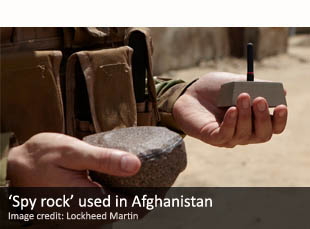
►►US forces use fake rocks to spy on Afghans. Palm-sized sensors, disguised as rocks, developed for the American military, will remain littered across the Afghan countryside –detecting anyone who moves nearby and reporting their locations back to a remote headquarters. Some of these surveillance tools could be buried in the ground, all-but-unnoticeable by passersby. These rocks contain wafer-sized, solar-rechargeable batteries that could enable the sensors’ operation for perhaps as long as two decades. Hmm…where have we seen this before?
►►Pakistan spy chief postpones US trip. Pakistan’s spymaster, Lieutenant-General Zahir ul-Islam, has postponed a trip to the United States in the latest sign of the dire state of relations between two supposed allies in the war against Islamist extremists. America has stepped up drone strikes on Pakistani territory in the week since the two countries failed to reach an agreement on NATO supply convoys at a summit in Chicago. Last week, officials in Washington also condemned Pakistan’s decision to jail a doctor who helped the CIA hunt Osama bin Laden.

News you may have missed #741

Glenn CarleBy IAN ALLEN | intelNews.org |
►►MI6 role in rendition could be concealed in new bill. Libyan government officials Sami al-Saadi and Abdel Hakim Belhaj, who allege that they were taken by rendition by Britain to Libya eight years ago, are expected to begin legal proceedings against the British government and Jack Straw, Britain’s former foreign secretary, next month. However, after pressure from the security services, MI5 and MI6, the British government is preparing to publish a Justice and Security Bill that could allow these cases to be held in their entirety behind closed doors.
►►Aussie spy agency defends new headquarters. The Australian Security Intelligence Organisation says its new headquarters in Canberra is not at risk of being spied upon, despite the use of a lot of glass. ASIO director general David Irvine told a senate committee on Thursday it would be impossible for someone with a high resolution camera on the other side of Lake Burley Griffin to spy on the nation’s spies. Australian Greens senator Scott Ludlam had asked whether the design of the “glass palace” could threaten the secrecy of its work.
►►Good interview with ex-CIA officer Glenn Carle. In this interview, Carle, a retired CIA case officer who wrote The Interrogator: An Education, says his former employers have called his publisher asking them to pulp his book; they rang every major network to prevent him going on air. They are, he says several times, “vicious” and have perpetrated a stain on America’s national character.