News you may have missed #744

Navi PillayBy IAN ALLEN | intelNews.org |
►►Source says Mikhailov ‘will not be exchanged’ with US. There are rumors going around that the US might consider exchanging Russian arms merchant Viktor Bout, who is serving a 25-year sentence in a New York prison, for one or more CIA spies currently being held in Russian prisons. Russian news agency RIA Novosti has cited a “high ranking official in the Russian security services”, who suggests that Bout “might be exchanged”, but not with Valery Mikhailov, a Russian former counterintelligence officer, who was sentenced this week to 18 years in prison for allegedly spying for the CIA.
►►CIA preparing to pull back from Iraq. The US Central Intelligence Agency is preparing to cut its presence in Iraq to less than half of wartime levels, according to The Wall Street Journal, which cites “US officials familiar with the planning”. Under the plans being considered, says the paper, the CIA’s presence in Iraq would be reduced to 40% of wartime levels, when Baghdad was the largest CIA station in the world with more than 700 agency personnel. Interestingly, the plan would also reduce the US intelligence presence in the region as neighboring Syria appears to be verging on civil war.
►►Senior UN official blasts US drone strikes. The United Nations High Commissioner for Human Rights, Navi Pillay, has said US drone attacks in Pakistan “raise serious questions about compliance with international law, in particular the principle of distinction and proportionality”. She also voiced concerns that the strikes were being conducted “beyond effective and transparent mechanisms of civilian or military control”. IntelNews provided this opinion on the matter, in 2009.

Russian colonel was ‘most successful CIA spy’ in recent years

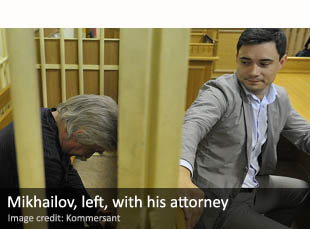
Valery Mikhailov, left, with his attorneyBy JOSEPH FITSANAKIS | intelNews.org |
Before the dust could settle from last month’s closed-door trial of Vladimir Lazar, and the arrest of an unnamed missile engineer on charges of espionage, Russia claims to have exposed yet another spy. Valery Mikhailov, a retired Russian counterintelligence officer, has been given an 18-year prison sentence for allegedly spying on behalf of the United States Central Intelligence Agency. In disclosing Mikhailov’s sentence yesterday, Moscow District Military Court officials were deliberately vague about Mikhailov’s alleged espionage activities, and provided limited information on the precise charges against him. But reporters, who were not allowed to attend Mikhailov’s trial, were told that he voluntarily approached CIA officers in Russia in 2001 and offered to spy on his country on behalf of the US, in exchange for regular payments in cash. Russian government prosecutors said that, from 2001 until 2007, when his activities were detected by Russia’s Federal Security Service (FSB), Mikhailov gave his American handlers access to over a thousand copies of secret or top-secret documents. Most of these, according to reports in the Russian media, had been prepared by FSB analysts for top-level Russian government officials, including the President, Prime Minister, and members of the Security Council of the Russian Federation. Russian government prosecutors say that Mikhailov was arrested following an extensive period of surveillance by the FSB, which allegedly resulted in the capture of an American CIA courier. The latter was apprehended while surreptitiously collecting classified documents copied by Mikhailov. Following his arrest, Mikhailov is said to have admitted that he earned over $2 million from his espionage activities. Read more of this post

US State Department silent on ‘massive’ China spy revelations

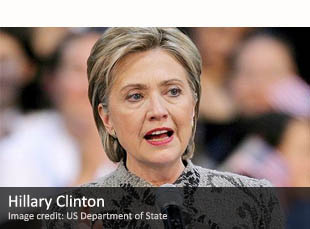
Hillary ClintonBy JOSEPH FITSANAKIS | intelNews.org |
The United States Secretary of State, Hillary Clinton, has declined to comment publicly on the arrest of a senior Chinese government aide, who is said to have conducted “massive” spying for Washington. According to Reuters news agency, who broke the story last week, the aide was arrested several months ago, but both the US and China have chosen to keep the issue under wraps in order “to prevent a fresh crisis in relations” between the two countries. Reuters cited “three sources [with] direct knowledge of the matter”, who said that the aide was employed at a critical post in the office of a vice minister in China’s Ministry of State Security (MSS). The MSS is China’s foremost intelligence agency, with responsibility for both domestic and international intelligence collection. According to the sources quoted by Reuters, the unnamed aide was arrested “sometime between January and March” of 2012 and stands accused of supplying his American handlers with classified information on Chinese espionage activities abroad. According to the report, the accused spy had been working for the US “for several years” and his case could represent the worst breach of China’s MSS in two decades; according to one source, the damage inflicted to the MSS’ operations by this case “has been massive”. Reuters said that the aide, who speaks English, was recruited by the US Central Intelligence Agency, and was paid “hundreds of thousands of US dollars” to provide “political, economic and strategic intelligence” to American intelligence officers. Read more of this post

News you may have missed #743 (espionage edition)

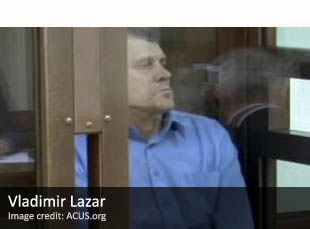
Vladimir LazarBy IAN ALLEN | intelNews.org |
►►Denmark professor jailed for spying. Timo Kivimäki a Finnish professor of international politics in Copenhagen, Denmark, has been sentenced to five months in prison for spying, following a trial held behind closed doors, from which even the verdict was not released. Several Russian diplomats left Denmark after the start of the spy case and, according to Danish media, Kivimäki’s lawyer, Anders Nemeth, had attempted to have them return to act as witnesses.
►►Retired Russian colonel convicted of spying for US. A Russian court has ruled that retired Colonel Vladimir Lazar spied for the US, and sentenced him to 12 years in prison. Lazar will be sent to a high-security prison and stripped of his military rank, the Federal Security Service said in a statement. Prosecutors said Lazar purchased several computer disks with more than 7,000 images of classified maps of Russia from a collector in 2008 and smuggled them to neighboring Belarus, where he gave them to an alleged American intelligence agent.
►►India arrests military intel staffer for spying. The soldier, identified only as Shivdasan, worked for the Indian Army’s Technical Support Division, which is a newly founded unit within Indian Military Intelligence. He was reportedly trapped by the Indian Directorate of Revenue Intelligence in an elaborate operation that involved a “double agent” and a relative of the soldier in Dubai.

News you may have missed #742

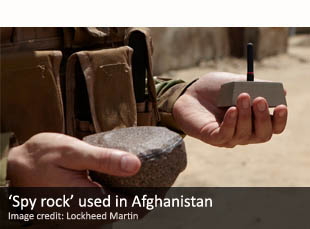
'Spy rock' used in AfghanistanBy IAN ALLEN | intelNews.org |
►►Obama warns Congress of overspending on intelligence. The administration of US President Barack Obama is warning that it has “serious concerns” about a 2013 intelligence authorization bill that the House of Representatives passed on Thursday, because it authorizes spending on intelligence activities that go well beyond President Obama’s request. Despite this concern, the administration said that it “does not oppose” the Intelligence Authorization Act, HR 5743, instead supporting language that would repeal some reporting obligations that the government now has to Congress.
►►US forces use fake rocks to spy on Afghans. Palm-sized sensors, disguised as rocks, developed for the American military, will remain littered across the Afghan countryside –detecting anyone who moves nearby and reporting their locations back to a remote headquarters. Some of these surveillance tools could be buried in the ground, all-but-unnoticeable by passersby. These rocks contain wafer-sized, solar-rechargeable batteries that could enable the sensors’ operation for perhaps as long as two decades. Hmm…where have we seen this before?
►►Pakistan spy chief postpones US trip. Pakistan’s spymaster, Lieutenant-General Zahir ul-Islam, has postponed a trip to the United States in the latest sign of the dire state of relations between two supposed allies in the war against Islamist extremists. America has stepped up drone strikes on Pakistani territory in the week since the two countries failed to reach an agreement on NATO supply convoys at a summit in Chicago. Last week, officials in Washington also condemned Pakistan’s decision to jail a doctor who helped the CIA hunt Osama bin Laden.

News you may have missed #741

Glenn CarleBy IAN ALLEN | intelNews.org |
►►MI6 role in rendition could be concealed in new bill. Libyan government officials Sami al-Saadi and Abdel Hakim Belhaj, who allege that they were taken by rendition by Britain to Libya eight years ago, are expected to begin legal proceedings against the British government and Jack Straw, Britain’s former foreign secretary, next month. However, after pressure from the security services, MI5 and MI6, the British government is preparing to publish a Justice and Security Bill that could allow these cases to be held in their entirety behind closed doors.
►►Aussie spy agency defends new headquarters. The Australian Security Intelligence Organisation says its new headquarters in Canberra is not at risk of being spied upon, despite the use of a lot of glass. ASIO director general David Irvine told a senate committee on Thursday it would be impossible for someone with a high resolution camera on the other side of Lake Burley Griffin to spy on the nation’s spies. Australian Greens senator Scott Ludlam had asked whether the design of the “glass palace” could threaten the secrecy of its work.
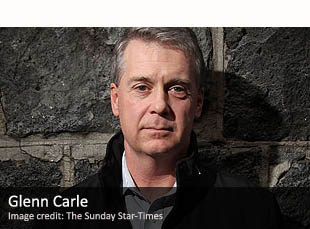
►►Good interview with ex-CIA officer Glenn Carle. In this interview, Carle, a retired CIA case officer who wrote The Interrogator: An Education, says his former employers have called his publisher asking them to pulp his book; they rang every major network to prevent him going on air. They are, he says several times, “vicious” and have perpetrated a stain on America’s national character.

News you may have missed #740

Timo KivimäkiBy IAN ALLEN | intelNews.org |
►►Denmark professor accused of spying challenges court secrecy. Timo Kivimäki, a Finnish humanities professor at the University of Copenhagen, is accused of spying for the Russians and is being tried at the city court in the Danish city of Glostrup behind closed doors, meaning no information about the trial, including the precise charges, can be disseminated. But following demands from both Kivimäki’s lawyer and the Danish media, he has been granted permission to appeal against the decision to hold the trial in secret.
►►Analysis: CIA’s links with Hollywood are longstanding. Some US officials are suggesting that the producers of a new motion picture, which deals with the raid that killed al-Qaeda founder Osama bin Laden, received “extremely close, unprecedented and potentially dangerous collaboration” from the Obama administration, and particularly the US Intelligence Community. In light of this, a well-researched article in The Los Angeles Times reminds readers that the close connection between the movie industry and the US military and intelligence community goes back decades. The US military has been using movies to drive up recruitment since the 1920s; and the CIA these days even posts potential movie story lines on its website.
►►CIA funds helped launch literary journal. The Paris Review has been hailed by Time magazine as the “biggest ‘little magazine’ in history”. At the celebration of its 200th issue this spring, current editors and board members ran down the roster of literary heavyweights it helped launch since its first issue in 1953. Philip Roth, V. S. Naipaul, T.C. Boyle, Edward P. Jones and Rick Moody published their first stories in The Review; Jack Kerouac, Jim Carroll, Jonathan Franzen and Jeffrey Eugenides all had important early stories in its pages. But as American novelist Peter Matthiessen has told interviewers –most recently at Penn State– the journal also began as part of his CIA cover.

Comment: US cybersecurity posture is not purely defensive

NSA headquartersBy JOSEPH FITSANAKIS | intelNews.org |
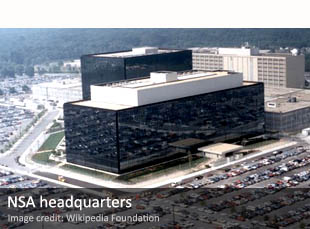
In recent years, news coverage of cyberespionage and cybersecurity has increased several times over; both subjects have escaped the narrow confines of technical literature and have entered the broad expanses of popular news media. This blog is no exception; since 2008, we have covered both cybersecurity and cyberespionage at length. In looking back at our coverage, it takes but a cursory glance to conclude that most of our reports feature the names of two countries: China and –to a far lesser extent– Russia. Moreover, the vast majority of our cybersecurity and cyberespionage coverage portrays the United States as a defensive actor, trying desperately to protect the integrity of its networks from foreign hackers. But is this accurate? How realistic is it to assume that the US, the world’s leading military power, abstains from offensive cyberespionage as a matter of strategy? The most likely answer is: not very. The problem is that much of the reporting on cybersecurity is based on national allegiances. Many American media pundits thus tend to forget that Washington, too, conducts cyberespionage. Read more of this post

Comment: US helped Canada nab accused spy Jeff Delisle

Jeffrey Paul DelisleBy JOSEPH FITSANAKIS | intelNews.org |
Back in January of this year, when the Jeffrey Delisle spy affair made headlines around the world, I spoke with several journalists from The Globe & Mail, The Canadian Press, and other Canadian news outlets. Most of them were –rightly– curious about the role of the United States in the affair, in which Sub-Lieutenant Delisle, who had been employed at Canada’s ultra-secure TRINITY communications center in Halifax, was accused of spying for a foreign power. I told them that, given that Trinity handled –aside from Canadian– NATO communications, Canada was in fact obligated to notify all of its NATO partners about the suspected penetration. That aside, I said that it could be “safely assumed” that US counterintelligence agencies were “fully involved in the Delisle case, and probably ha[d] been for several months”. By the latter phrase, I implied that US counterintelligence agencies had been closely involved in helping their Canadian counterparts build their case against Delisle. Now a new report in The Globe & Mail suggests that US counterintelligence officials “supplied vital information” to their Canadian colleagues during “the early days of the investigation” into the Delisle affair. The article says that the full extent of what the Americans told Canadian authorities remains unclear; but it quotes “a source familiar with the matter”, who claims that the US “helped Canada build its investigation”, not necessarily by providing a single tipoff clue, but through “an accumulation of information”. The paper adds that Washington’s involvement in the investigation from an early stage “adds a key new detail to [the] story”. Not necessarily, I would argue. Read more of this post

News you may have missed #736

Abdel Baset al-MegrahiBy IAN ALLEN | intelNews.org |
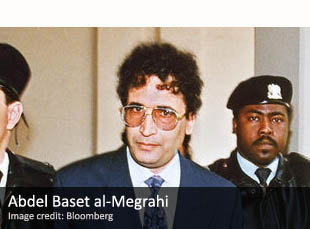
►►Convicted Lockerbie bomber dies. Abdelbaset al-Megrahi, a former Libyan intelligence officer who was the only person ever convicted in the 1988 Lockerbie bombing, died at home in Tripoli Sunday, nearly three years after he was released from a Scottish prison to the outrage of the relatives of the attack’s 270 victims. He was 60. Scotland released Mr. al-Megrahi on Aug. 20, 2009, on compassionate grounds to let him return home to die after he was diagnosed with prostate cancer. Anger over the release was further stoked by subsequent allegations that London had sought his release to preserve business interests in the oil-rich North African nation, strongly denied by the British and Scottish governments.
►►Federal appeals panel to hear CIA leak case. A federal appeals panel in the United States will hear the case of ex-CIA officer Jeffrey Sterling, who has been charged with leaking classified information about Iran’s nuclear program to New York Times reporter James Risen. Prosecutors say Sterling was a key source in Risen’s 2006 book, State of War. They are also challenging the court’s decision to strike two government witnesses and allow disclosure of the identities of covert CIA operatives to Sterling’s lawyers.
►►New study of British Empire’s spies published. British newspaper The Guardian has published a review of William Beaver’s newly published book, Under Every Leaf: How Britain Played The Greater Game From Afghanistan to Africa. Much of the book concerns the creation in the mid-1850s of the British War Office Intelligence Department. According to the review, the book does much to restore the “missing dimension” to Britain’s military-imperial history between 1855 and the creation of her modern intelligence agencies in the early 1900s.

How an ambitious Nazi spy operation in the US ended in failure

Norden bombsightBy IAN ALLEN | intelNews.org |
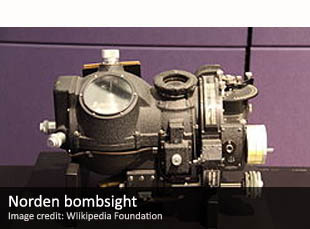
A well-researched article in The Chicago Tribune revisits one of the least known covert action episodes of World War II, which involved an ambitious Nazi espionage operation on US soil. The article, written by Ron Grossman, centers on Herbert Haupt, one of several American citizens and Nazi sympathizers, who were involved in the ruse. The German-born Haupt grew up in Chicago’s North Side and was working in West Garfield Park, at a factory that produced parts used for the Norden bombsight. The Norden bombsight was a sophisticated device that calculated the trajectory of a bomb dropped by an airplane, based on real-time flight conditions; moreover, it was connected to the aircraft’s autopilot, and was thus able to alter bomb trajectories according to changes in the wind, altitude, aircraft speed, or other effects. The Norden bombsight facilitated unprecedented bombing accuracy from high altitudes, and was thus rightly considered one of America’s most highly valued military secrets. In 1941, shortly before the United States entered World War II, Haupt took a leave of absence from his factory job and disappeared from the streets of Chicago’s North Side. It was later revealed that he traveled to Mexico City and presented himself at the German embassy there, offering to conduct espionage work for Nazi Germany. After securing a sum of money from German embassy officials, Haupt sailed to Japan and eventually made his way to Germany. A few months later, he illegally re-entered the US, sailing on a German U-boat that landed secretly in Florida carrying four German agents, all fluent English speakers. A second U-boat, carrying another four German agents, had landed almost simultaneously on Long Island. Haupt’s mission was to reenlist at the Norden bombsight factory in Chicago, so as to provide Nazi Germany with access to the top-secret device. Read more of this post

News you may have missed #735

Blast site in Deir Ezzor, SyriaBy IAN ALLEN | intelNews.org |
►►Pakistan imposes new restrictions on CIA operatives. The government of Pakistan has issued a set of new rules and regulations for officials, ambassadors and contractors of the United States Central Intelligence Agency (CIA). According to Pakistani news reports, Pakistan and the US finalized these new rules in the course of 13 meetings between representatives of both countries. Under the new rules, CIA officers deployed in Pakistan “must prove their identity” to Pakistani counterintelligence officials. Some officials, including former Pakistani ambassador to the United States Sherry Rehman, are already talking of a “new beginning for US-Pakistani relations”.
►►Car bomb strikes near Syrian intelligence agency. The Syrian Observatory for Human Rights confirmed reports on Saturday of an explosion in the Ghazi Ayyash neighborhood of the eastern Syrian city Deir al-Zour. The site of the blast, which killed at least seven people and injured 100 others, was close to the city branches of the Military Intelligence Directorate and Air Force Intelligence, the London-based activist group reported. There has been no immediate claim of responsibility for the attack.
►►China denies US cyberespionage claims. The Chinese government has hit back at a US Pentagon report that said it is carrying out aggressive cyber-spying as part of a military build-up. Chinese Foreign Ministry spokesman Hong Lei said “China’s justified and normal military development” had been unjustly criticized in the annual report, which was released on Friday. The development of China’s “limited” military force was only geared towards safeguarding its independence, sovereignty and territorial integrity, said the spokesman.

News you may have missed #734

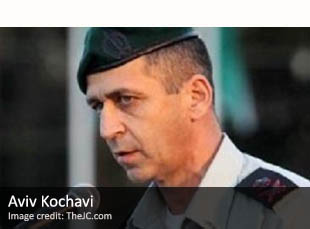
Aviv KochaviBy IAN ALLEN | intelNews.org |
►►Australian spy agency in rent dispute. The Australian government insists there is no dispute over the lease of the new, state-of-the-art headquarters of the Australian Security Intelligence Organisation, which cost nearly A$589 to build. But according to a number of government sources, the property has become the subject of a standoff between the ASIO and Australia’s Department of Finance and Deregulation. The Canberra Times reports that the Finance Department has told ASIO it will have to hand over more money than anticipated because of a blowout to building costs and timing. But the ASIO is refusing to pay more than initially agreed.
►►US unveils spy model of bin Laden compound. The United States intelligence community has unveiled a scale model of the compound in Abbottabad, Pakistan, where Osama bin Laden spent the last few years of his life in hiding. The model was built by the National Geospatial-Intelligence Agency (NGIA) and used by military and intelligence leaders to plan the daring night raid on May 2, 2011, that killed the al Qaeda founder. Its scale is an exact 1:84; every tree, bush, wall, animal pen, trash can and physical structure in the model existed at one time at the original compound in Abbottabad.
►►Israel military intelligence head in secret US visit. Israeli military intelligence chief Aviv Kochavi made a “secret visit” to Washington earlier this month to discuss the upcoming talks between world powers and Iran. An Israeli security official confirmed the visit, which was reported in Israel’s Haaretz newspaper, but could not provide further details. Meanwhile, three senior IDF intelligence officers resigned recently, following what they called “questionable” appointments to key positions. The three colonels held some of the most senior and classified positions in the Israeli military intelligence community.

News you may have missed #733

Stella RimingtonBy IAN ALLEN | intelNews.org |
►►Women in US intelligence seek balance in life. Nada Bakos (photo) was one of many women serving as CIA analysts before 9/11, who then moved to the operations side after the terrorist attacks. She didn’t yet have a family when she accepted her assignment as a targeting officer in Iraq. After a couple of years, as Bakos was deep into her career on the operations side, she decided she wanted to start a family. That was a problem. At least 160 other women feel her pain. Women from the CIA, the National Security Agency, Naval Office of Intelligence and dozens of other agencies met last week at the Women in National Security conference in McLean, Virginia, to try and find a better way.
►►Interview with ex-MI5 Director Stella Rimington. Australian Radio hosts an interesting audio interview with Dame Stella Rimington, who headed MI5, Britain’s domestic intelligence agency, from 1992 to 1995. She speaks about the experience of being the first director of MI5 to be publicly identified and the sometimes sinister invasions to her privacy as a result. Moreover, she says the only thing that surprised her about the Leveson inquiry into phone hacking and the conduct of the British media is that nobody recognized it was going on before.
►►US government think-tank warns against strikes on Iran. The RAND Corporation, a think tank which advises the United States Department of Defense, warned last week Tuesday against an Israeli or American attack on Iran’s nuclear reactors, and recommended that the administration of Barack Obama try to “quietly influence the internal Israeli discussion over the use of  military force”. In 2009, before Stuxnet, a RAND report had argued that the US may be better off focusing on cyber-defense instead of resorting to cyberattacks.

Is US considering transferring convicted arms smuggler to Russia?

Viktor BoutBy JOSEPH FITSANAKIS | intelNews.org |
Former Soviet military intelligence officer Viktor Bout is one of the world’s most notorious weapons dealers. In 2008, Bout, known informally as ‘the merchant of death’, was finally arrested in Bangkok by the United States Drug Enforcement Administration, with the cooperation of the Royal Thai Police. He was eventually extradited to the US and convicted to a 25-year prison term, which he is serving at the Brooklyn Metropolitan Detention Center in New York. Last week, it emerged that the US Bureau of Prisons was about to transfer Bout to the Florence Federal Correctional Facility in Colorado. Widely referred to as ‘Supermax’, the Florence facility houses some of America’s most notorious prison inmates. It seems a proper fit for someone like Bout, who for decades supplied weapons to African warlords, who is accused by the United States of having supplied weapons to the Taliban, and who was arrested while trying to sell arms to the Revolutionary Armed Forces of Colombia (FARC). On Tuesday, however, it was suddenly reported that the Bureau had decided to delay Bout’s transfer to Supermax. Bout’s attorney, Albert Y. Dayan, said he had been notified in a letter that the Bureau was “re-evaluating where to send Bout” and that it was “reconsidering its plan” to send the notorious weapons merchant to the Colorado maximum security facility. As might be expected, Dayan called the news “a credit [to] the Bureau of Prisons and the US Attorney’s office”; but the question, of course, is why did the Bureau decide on the delay, and what does the US Department of Justice know about it? The answer could perhaps be found in an interview given on Wednesday by no other than the US Attorney General, Eric Holder. Read more of this post