News you may have missed #513 (Pakistan edition)

  • Pakistan spy chief tells US to end drone strikes. Ahmed Shuja Pasha, the outgoing director of Pakistan’s Inter-Services Intelligence (ISI), has reportedly told CIA Deputy Director Michael Morell that Pakistan “will be forced to respond” if the US does not stop its drone strikes in the country.
  • CIA-ISI back in business. Overall, however, the meeting between Pasha and Morell was focused on mending CIA-ISI relations, according to Pakistan’s leading newspaper The Nation.
  • Leaked cables reveal joint US-Pakistan missions. US Special Forces were embedded with Pakistani troops on intelligence-gathering missions by 2009, confidential American diplomatic cables showed, a revelation that could hurt the Pakistani military’s public image. The Pakistani government has denied the reports.

Spy defectors claim Iran had foreknowledge of 9/11

9/11 attack

9/11 attack

By IAN ALLEN | intelNews.org |
A new filing in a nine-year court case in Manhattan contains testimony by two defectors from Iran’s intelligence service, who claim that Tehran had “foreknowledge of the 9/11 attacks”. According to The New York Times, the two unnamed defectors also claimed that the Iranian intelligence services helped al-Qaeda in planning the attacks, and that operatives of the Iranian government funded and helped train the 9/11 hijackers. The filing also claims that Hezbollah, the Iranian-linked militant group that controls large parts of Lebanon, helped shelter al-Qaeda members in the months and years following the American invasion of Afghanistan. The filing was submitted to a US federal court on last week, in support of a lawsuit seeking damages from the government of Iran for its alleged “direct support for, and sponsorship of, the most deadly act of terrorism in American history”. The lawsuit was initiated 2002 on behalf of families of people who died in the 9/11 attacks. But neither the names of the Iranian defectors nor the precise content of their testimony has been revealed to the public, as their assertions were submitted to the presiding judge under seal. Read more of this post
News you may have missed #512

Iran arrests dozens in connection with alleged CIA spy ring

Iran

Iran

By IAN ALLEN | intelNews.org |
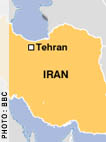
The Iranian intelligence services have announced the arrest of at least 30 individuals accused of being part of an elaborate CIA “espionage and sabotage network” operating in the country. According to Iran’s Fars News Agency, spy ring members, which include government administrators, were handled from abroad by as many as 42 CIA operatives, whose identities are allegedly known to Iranian counterintelligence investigators. Iran’s Intelligence Ministry claims that spy ring members, who are believed to be Iranian, were recruited by CIA officers operating out of US embassies in several predominantly Muslim countries, including the United Arab Emirates, Turkey and Malaysia. They were then trained and sent into Iran to gather intelligence on energy projects, academic research, as well as telecommunications installations and border control systems. Read more of this post

News you may have missed #510 (bin Laden edition)

  • Europe says US slow in sharing bin Laden intel. European security officials have lots of questions about the intelligence being analyzed from Osama bin Laden’s compound in Pakistan, but so far they have seen very little of it, they say.
  • Did Pakistani official lead US to bin Laden? There are rumors in Pakistan that the CIA was tipped off about the location of bin Laden’s hideout from a walk-in informant at the US Embassy in Islamabad.
  • CIA interrogates bin Laden’s wives. US intelligence officials have interrogated the three wives of Osama Bin Laden who were left behind in his compound after Navy Seals shot dead the al-Qaeda leader. The women, Amal Ahmed Abdel-Fatah al-Sada, of Yemen, and Khairiah Sabar and Siham Sabar, both of Saudi Arabia, were apparently “hostile” and uncooperative during the interrogations

Did compromised laptop prompt Israel to bomb Syrian nuclear reactor?

Al-Kibar reactor

Al-Kibar reactor

By JOSEPH FITSANAKIS | intelNews.org |
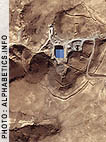
One of the Middle East’s biggest mysteries in recent years concerns Operation ORCHARD, the September 6, 2007, attack by Israeli fighter jets on a site deep in the Syro-Arabian Desert. Many observers, including former CIA Director, General Michael Hayden, have called for the secrecy surrounding the covert operation to be finally lifted. But it has been more-or-less confirmed that the attack targeted a plutonium production reactor, which was part of Syria’s secret nuclear weapons program. And officials in Tel Aviv have repeatedly hinted that Israel was behind the operation. The burning question, however, is how did Israel learn of the existence of Syria’s nuclear reactor at Al-Kibar, a secret and isolated site deep in the Syro-Arabian Desert? The authoritative account of the operation, which appeared in German newsmagazine Der Spiegel in 2009, suggested that the initial tip came from the US National Security Agency, which “detected a suspiciously high number of telephone calls between Syria and North Korea”. But it also alleged that the Mossad managed to acquire vital clues about the Al-Kibar building site by installing a stealth “Trojan horse” program on the laptop of a Syrian government official, while the latter was visiting Britain. Read more of this post

News you may have missed #508

  • US not to withdraw Pakistan CIA chief. The US has said it will not withdraw the CIA station chief in Pakistan, despite his name being leaked to local media last week. But officials quoted by US media said the name published in Pakistani news outlets was spelled incorrectly.
  • CIA, not Pentagon, ran bin Laden operation. Has anyone noticed that CIA Director Leon Panetta has said a lot more about the Navy commandos’ killing of Osama bin Laden than has the Pentagon chief? The reason Defense Secretary Robert Gates has said exactly nothing about the raid is that the CIA, not the Pentagon, ran the operation.
  • Spy vs. spy in China. Interesting summary of the case of Glenn Shriver, an American who was arrested last year for accepting $70,000 from Chinese spies as he attempted to secure jobs with the CIA and US Foreign Service that would have allowed him to expose US government secrets.

Comment: Was the Killing of Osama bin Laden Legal?

Osama bin Laden

Osama bin Laden

By IAN ALLEN* | intelNews.org |
The reaction of Americans to news of the assassination of Osama bin Laden has been overwhelmingly jubilant. Many will say that the killing of al-Qaeda’s founder was justified. But was it legal? Responding to news of the killing, famed linguist and political commentator Noam Chomsky suggested that “we might ask ourselves how we would be reacting if Iraqi commandos landed at George W. Bush’s compound, assassinated him, and dumped his body in the Atlantic”. Commenting from a different viewpoint, CNN legal analyst Jeffrey Toobin argues that the legal complications of arresting bin Laden would have been immense, and would have perhaps signaled “the most complex and wrenching legal proceeding in American history”.  We could would add to this that the White House was probably concerned about a prolonged state of heightened security for American embassies and civilian or military installations around the world, which could have lasted for as long as bin Laden’s hypothetical trial continued —which could have been years. Read more of this post

News you may have missed #507

  • Pakistani media reveal name of CIA station chief. Mark Carlton, the purported CIA station chief in Islamabad, was named by a Pakistani newspaper and a private television news network over the weekend, the second holder of that post in less than a year to have his cover blown by the media.
  • How an immigrant from Taiwan came to spy for China. Well-researched article on Tai Shen Kuo, a Taiwanese-born American citizen who is serving time in an Arizona prison for spying on the US for China.
  • Domestic surveillance grew in US in 2010. The level of domestic US intelligence surveillance activity in 2010 increased from the year before, according to a new Justice Department report to Congress. Moreover, the secretive Foreign Intelligence Surveillance Court approved all 1,506 government requests to electronically monitor suspected “agents” of a foreign power or terrorists on US soil.

News you may have missed #506 (bin Laden edition)

News you may have missed #505 (bin Laden edition)

  • Bin Laden assassins confiscated digital devices. According to US officials, members of the US elite forces that raided Osama bin Laden’s residence in Pakistan “carried off five computers, 10 hard drives and more than 100 storage devices, such as DVDs and removable flash drives”.
  • Bin Laden compound was once spy agency safe house. Reports from the United Arab Emirates suggest that the compound in Abbottabad where Osama bin Laden was killed was once used as a safe house by the Inter-Services Intelligence Directorate, Pakistan’s premier spy agency.
  • CIA says it will release bin Laden pictures. The White House says that it intends to release images of Osama bin Laden’s assassination, but warns that they are “gruesome” and “could be inflammatory”.

Analysis: Myths and Questions on bin Laden’s Assassination

Osama bin Laden

Osama bin Laden

By J. FITSANAKIS and I. ALLEN | intelNews.org |
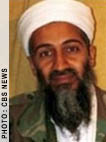
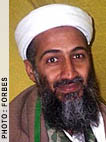
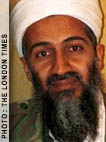
The assassination of al-Qaeda leader, Osama bin Laden, has helped dispel several myths about him and the organization he founded in 1988 in Soviet-occupied Afghanistan. Among them is the idea that the Saudi-born militant was leading a primitive existence in some remote hillside in Waziristan, sheltered by mountainous tribes that were supposedly loyal to him. Nothing could be further from the truth. Despite his reputation as a hardened mujahedeen, bin Laden had chosen to spend his days in the unmatched comfort of a sprawling luxury compound located only an hour’s drive from Pakistan’s capital, Islamabad. The compound is located in a relatively wealthy suburb of the city of Abbottabad, which is also home to the Kakul Military Academy, Pakistan’s elite army training school. More importantly, the descriptions of bin Laden’s luxurious hideout fly in the face of the predominant view of al-Qaeda as an organization that knows how to blend in with its surroundings. Not only did the compound stand out, but, according to one American official, it was “eight times larger than the other homes in the town”. It featured 3,000 feet of living space, to house bin Laden, his four wives, and several advisors and guards. It appears to have been custom-built to bin Laden’s specifications in 2005, which would explain the existence of numerous built-in security features, including at least two heavily fortified security gates, seven-foot-high perimeter walls, and even solid blast-proof enclosures on all balconies. Continue reading →

Comment: Some early remarks on bin Laden’s assassination

Osama bin Laden

Osama bin Laden

By JOSEPH FITSANAKIS* | intelNews.org |
It is tempting to consider the impact of Osama bin Laden’s assassination on al-Qaeda-inspired groups and, more broadly, on America’s “global war on terrorism”. Yet any such endeavor at this point would be inevitably speculative. The truth is, nobody has the slightest idea of the possible strategic spillover of bin Laden’s killing, and this includes the White House, the CIA and NATO. There are, however, some general remarks, mostly of operational nature, that can safely be made on the basis of the limited factual information that has been made available. To begin with, it appears that the assassination of al-Qaeda’s senior figurehead was conducted by ground forces, and not remotely, as has been the case with the vast majority of US assassination operations carried out in Afghanistan and Pakistan during the past several years. This potentially strengthens the argument, made frequently by Western and Pakistani officials, that significant achievements in the field of counterterrorism can only be conducted by surgical-type ground operations, based on accurate and actionable intelligence.

Read more of this post

News you may have missed #504

  • Israel spy pleads to Obama for release. United States Navy analyst Jonathan Pollard, who was sentenced to life in prison in 1987 for spying for Israel, has pleaded for his release in a personal letter to President Barack Obama. The letter was apparently handed to Obama by Israeli President Shimon Peres when he visited the White House on April 5.
  • US-Pakistan spy feud boils over CIA drone strikes. The Pakistani government has voiced strong criticism of a fresh CIA drone attack, which has killed 26 people. But an anonymous US counterterrorism official, who spoke to the McClatchy news agency, said that “the Pakistanis should spend less time complaining to the press [about the drone strikes] and more time trying to root out terrorists within their country”.
  • Colombia to issue international warrant for ex-spy chief. Colombia’s Prosecutor General’s Office will issue an international arrest warrant for Maria Pilar Hurtado, former director of the country’s disgraced DAS intelligence agency, who was granted political asylum in Panama.

News you may have missed #503

  • Dutch forces’ covert operations in Africa revealed. Dutch forces have for several years been training government soldiers in Mali, Senegal and Chad, without the Dutch parliament being informed, according to Dutch newspaper AD, which cites documents from the US Congress and the Pentagon.
  • Israel destroys spying devices found in Gaza. Hamas sources have told Egyptian newspaper al-Ahram that they discovered several “audio-visual spying devices” in the sand hills south of Gaza City. But, as soon as they started removing the devices, they “received a phone call from Israeli intelligence elements” telling them that the site would be bombed “within three minutes” —which is precisely what happened, according to al-Ahram. Regular readers of this blog will know this incident was not a first.
  • Leaked documents reveal Guantanamo secrets. A batch of leaked US government intelligence documents, not meant to surface for 20 years, shows that intelligence collection at Guantánamo often was much less effective than the George Bush administration has acknowledged. According to the documents, the US military used interrogation and detention practices that they largely made up as they went along.