News you may have missed #520

  • CIA director returns from Pakistan empty-handed. CIA Director Leon Panetta’s surprise visit to Pakistan last week yielded little, according to US officials. Panetta bypassed the protocol of first meeting with the president and prime minister, and instead met with Pakistan’s military and intelligence directors.
  • Chinese spying devices found in Hong Kong cars. A Hong Kong newspaper has alleged that the Chinese authorities have been secretly installing spy devices on all dual-plate Chinese-Hong Kong vehicles since July of 2007. Photographic evidence is here.
  • NSA releases over 50000 pages of documents. The US National Security Agency has announced that it has declassified and released to the US National Archives and Records Administration over 50,000 pages of historic records, covering a time-frame from before World War I through the 1960s.

News you may have missed #519

  • Australian ex-spy wins right to compensation. The former spy, known only as FXWZ, worked for the Australian Security Intelligence Organisation for almost 15 years before leaving it in 1979. Now at 67, he has won the right to compensation claiming that his work for ASIO induced a mental disorder.
  • Eritrea releases UK citizens detained for espionage. The four British men, two of whom are former Royal Marines, were arrested in Eritrea last December on suspicion of espionage, after they were caught in possession of arms including 18 different types of snipers, ammunition and night vision equipment. They have been released after a months-long diplomatic row between Eritrea and Britain.
  • Pakistan to deport US national suspected of spying. Twenty-seven year-old Matthew Craig Barrett has been arrested for allegedly scouting nuclear facilities near the Pakistani capital Islamabad, and is expected to be deported soon.

Massive IMF cyberattack ‘was state-backed’, say sources

International Monetary Fund seal

IMF seal

By JOSEPH FITSANAKIS | intelNews.org
A massive and sophisticated cyberattack that targeted the computer systems of the International Monetary Fund last month was “linked to a foreign government”, according to sources familiar with the incident. The IMF, an international institution which oversees financial crises around the world, revealed the security breach in an internal email sent last week, but has yet to make a public announcement about the incident. Although the cyberattack was not publicly announced, it was revealed last weekend by The New York Times, which cited a “security expert […] familiar with the incident”. The paper notes that IMF’s computer databases function as “a repository of highly confidential information about the fiscal condition of many nations”, and that they contain “potentially market-moving information”. British daily The Independent adds that “internal political opponents and foreign intelligence services could […] find [in the IMF databases] explosive information about government dealings with the fund”. Intriguingly, the attack occurred in the weeks prior to the arrest of the Fund’s Director, Dominique Strauss-Kahn, who was detained on American soil on charges of sexually assaulting a female worker at his luxury New York hotel. Read more of this post

News you may have missed #518

  • Pakistan to intensify intel collaboration with China. Pakistan has assured China of full co-operation in providing intelligence about the activities of the East Turkestan Islamic Movement (ETIM), which aims to separate Xinjiang, an autonomous region, from China.
  • US spy community launches ‘Analytical Olympics’. This new competition for analysts to see who makes the best predictions, was outlined in a recent report by the US National Research Council, which suggests practical ways to apply insights from the behavioral and social sciences to the intelligence community.
  • UAE mercenaries say they have no Blackwater contacts. Michael Roumi, president of Reflex Responses, a company training foreign mercenary troops for the United Arab Emirates, has told the US State Department and members of Congress that Erik Prince, the former head of the security firm Blackwater Worldwide, plays no role in operating the business.

News you may have missed #517

  • New Zealand to launch new cybersecurity agency. The new National Cyber Security Centre will protect high-risk government agencies from attacks by cyber spies and criminals. It will also take on the functions of the Centre for Critical Infrastructure Protection, which helps protect critical national infrastructure such as the computer networks of banks and power companies.
  • New book on China-US spy wars. An extensive review by Joseph Goulden (author of SpySpeak: The Dictionary of Intelligence) of David Wise‘s new book, Tiger Trap: America’s Secret Spy War with China, which has been published by Houghton Mifflin Harcourt.
  • Over 1,000 cyber attacks against UK MoD last year. Criminals and foreign spy agencies launched more than 1,000 cyber attacks on Britain’s Ministry of Defence last year in an effort to steal secrets and disrupt services, Britain’s Defence Secretary Liam Fox has revealed.

One in four US hackers is FBI informant, says report

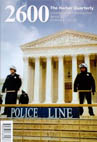
2600 magazine

2600 magazine

By JOSEPH FITSANAKIS | intelNews.org
Experienced observers with strong links in the American computer hacker community estimate that around 25 percent of its members are working as informants for the Federal Bureau of Investigation and other US government agencies. This according to an investigative report published in British quality broadsheet The Guardian, which claims that the large numbers of government operatives have spread unprecedented “paranoia and mistrust” inside the US computer hacker underground. According to the report, the authorities have made significant inroads, not by training their officers in hacking skills, but by employing the threat of lengthy prison sentences as a means of convincing captured hackers to turn into government informants. This technique is largely responsible for the creation of an “army of informants” operating “deep inside the hacking community” in the US. An example provided in the report is the infiltration of online forums used by the cybercriminal community as marketplaces for credit card, bank account, and other stolen identity information, which are often traded in bulk around the world. Read more of this post

News you may have missed #515

  • US spies tracked suspected terrorists in Sweden. US intelligence agents have staked out suspected terrorists in Sweden without the authorization of the government there, Svenska Daglbadet newspaper has reported. Last November, Norway, Sweden and Denmark launched official investigations into reports that US embassies there operated illegal intelligence-gathering networks.
  • Aussie spy agency reported on WikiLeaks. Australian Prime Minister Julia Gillard’s department has revealed that WikiLeaks and its founder, Julian Assange, were the subject of Australian intelligence reporting last year, as the government anticipated the whistleblower website would spill “highly sensitive and politically embarrassing” secrets.
  • Former Taiwanese general accused of spying. Taiwanese government prosecutors are seeking a life sentence for Major General Lo Hsien-che, the most senior Taiwanese official to be arrested on espionage charges in the country since the early 1960s.

US SEALs ‘pocket guide’ left behind in bin Laden hideout

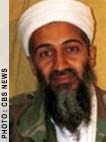
Osama bin Laden

Osama bin Laden

By JOSEPH FITSANAKIS | intelNews.org |
A document provided to members of the US Navy SEALs who assassinated Osama bin Laden, was left behind in bin Laden’s compound by mistake, and has reportedly been accessed by The London Times. It contains remarkably detailed descriptions of the compound’s occupants and frequent visitors, including their ages and legal names, all the way down to bin Laden’s wives, children and grandchildren. It also details the approximate timing of the arrival of each of the compound’s residents, as well as the precise location of their bedrooms and living quarters. Furthermore, the guidebook discusses the possibility that bin Laden’s youngest wife, Amal Ahmed Abdel-Fatah al-Sada, who also lived in the compound, may have given birth to twins in recent years. Remarkably, the pocket guide, which must have been carried by every member of the SEALs team that attacked the al-Qaeda founder’s hideout in Abbottabad, Pakistan, earlier this month, describes even bin Laden’s usual clothing preferences. It states that he “[a]lways wears light-colored shawal kameez with a dark vest” and that he “occasionally wears light-colored prayer cap”. Read more of this post

News you may have missed #513 (Pakistan edition)

  • Pakistan spy chief tells US to end drone strikes. Ahmed Shuja Pasha, the outgoing director of Pakistan’s Inter-Services Intelligence (ISI), has reportedly told CIA Deputy Director Michael Morell that Pakistan “will be forced to respond” if the US does not stop its drone strikes in the country.
  • CIA-ISI back in business. Overall, however, the meeting between Pasha and Morell was focused on mending CIA-ISI relations, according to Pakistan’s leading newspaper The Nation.
  • Leaked cables reveal joint US-Pakistan missions. US Special Forces were embedded with Pakistani troops on intelligence-gathering missions by 2009, confidential American diplomatic cables showed, a revelation that could hurt the Pakistani military’s public image. The Pakistani government has denied the reports.

Spy defectors claim Iran had foreknowledge of 9/11

9/11 attack

9/11 attack

By IAN ALLEN | intelNews.org |
A new filing in a nine-year court case in Manhattan contains testimony by two defectors from Iran’s intelligence service, who claim that Tehran had “foreknowledge of the 9/11 attacks”. According to The New York Times, the two unnamed defectors also claimed that the Iranian intelligence services helped al-Qaeda in planning the attacks, and that operatives of the Iranian government funded and helped train the 9/11 hijackers. The filing also claims that Hezbollah, the Iranian-linked militant group that controls large parts of Lebanon, helped shelter al-Qaeda members in the months and years following the American invasion of Afghanistan. The filing was submitted to a US federal court on last week, in support of a lawsuit seeking damages from the government of Iran for its alleged “direct support for, and sponsorship of, the most deadly act of terrorism in American history”. The lawsuit was initiated 2002 on behalf of families of people who died in the 9/11 attacks. But neither the names of the Iranian defectors nor the precise content of their testimony has been revealed to the public, as their assertions were submitted to the presiding judge under seal. Read more of this post

News you may have missed #512

Iran arrests dozens in connection with alleged CIA spy ring

Iran

Iran

By IAN ALLEN | intelNews.org |
The Iranian intelligence services have announced the arrest of at least 30 individuals accused of being part of an elaborate CIA “espionage and sabotage network” operating in the country. According to Iran’s Fars News Agency, spy ring members, which include government administrators, were handled from abroad by as many as 42 CIA operatives, whose identities are allegedly known to Iranian counterintelligence investigators. Iran’s Intelligence Ministry claims that spy ring members, who are believed to be Iranian, were recruited by CIA officers operating out of US embassies in several predominantly Muslim countries, including the United Arab Emirates, Turkey and Malaysia. They were then trained and sent into Iran to gather intelligence on energy projects, academic research, as well as telecommunications installations and border control systems. Read more of this post

News you may have missed #510 (bin Laden edition)

  • Europe says US slow in sharing bin Laden intel. European security officials have lots of questions about the intelligence being analyzed from Osama bin Laden’s compound in Pakistan, but so far they have seen very little of it, they say.
  • Did Pakistani official lead US to bin Laden? There are rumors in Pakistan that the CIA was tipped off about the location of bin Laden’s hideout from a walk-in informant at the US Embassy in Islamabad.
  • CIA interrogates bin Laden’s wives. US intelligence officials have interrogated the three wives of Osama Bin Laden who were left behind in his compound after Navy Seals shot dead the al-Qaeda leader. The women, Amal Ahmed Abdel-Fatah al-Sada, of Yemen, and Khairiah Sabar and Siham Sabar, both of Saudi Arabia, were apparently “hostile” and uncooperative during the interrogations

Did compromised laptop prompt Israel to bomb Syrian nuclear reactor?

Al-Kibar reactor

Al-Kibar reactor

By JOSEPH FITSANAKIS | intelNews.org |
One of the Middle East’s biggest mysteries in recent years concerns Operation ORCHARD, the September 6, 2007, attack by Israeli fighter jets on a site deep in the Syro-Arabian Desert. Many observers, including former CIA Director, General Michael Hayden, have called for the secrecy surrounding the covert operation to be finally lifted. But it has been more-or-less confirmed that the attack targeted a plutonium production reactor, which was part of Syria’s secret nuclear weapons program. And officials in Tel Aviv have repeatedly hinted that Israel was behind the operation. The burning question, however, is how did Israel learn of the existence of Syria’s nuclear reactor at Al-Kibar, a secret and isolated site deep in the Syro-Arabian Desert? The authoritative account of the operation, which appeared in German newsmagazine Der Spiegel in 2009, suggested that the initial tip came from the US National Security Agency, which “detected a suspiciously high number of telephone calls between Syria and North Korea”. But it also alleged that the Mossad managed to acquire vital clues about the Al-Kibar building site by installing a stealth “Trojan horse” program on the laptop of a Syrian government official, while the latter was visiting Britain. Read more of this post

News you may have missed #508

  • US not to withdraw Pakistan CIA chief. The US has said it will not withdraw the CIA station chief in Pakistan, despite his name being leaked to local media last week. But officials quoted by US media said the name published in Pakistani news outlets was spelled incorrectly.
  • CIA, not Pentagon, ran bin Laden operation. Has anyone noticed that CIA Director Leon Panetta has said a lot more about the Navy commandos’ killing of Osama bin Laden than has the Pentagon chief? The reason Defense Secretary Robert Gates has said exactly nothing about the raid is that the CIA, not the Pentagon, ran the operation.
  • Spy vs. spy in China. Interesting summary of the case of Glenn Shriver, an American who was arrested last year for accepting $70,000 from Chinese spies as he attempted to secure jobs with the CIA and US Foreign Service that would have allowed him to expose US government secrets.