Iran state media claims Britain and Germany helped US kill Soleimani

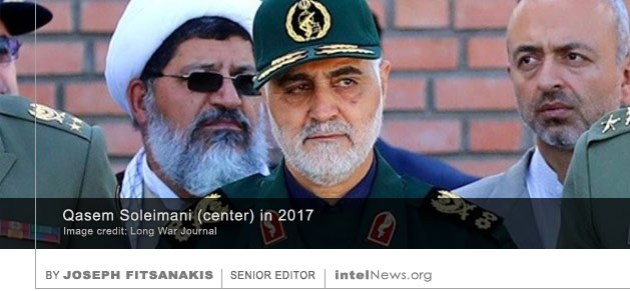
Qasem SoleimaniIRANIAN STATE MEDIA CLAIMED last week that several countries, including Britain and Germany, helped the United States assassinate its top paramilitary commander, Qassem Soleimani (pictured). The reports emerged on the one-year anniversary of the assassination of Soleimani, who led Iran’s Islamic Revolutionary Guard Corps (IRGC). He was killed by a drone strike on January 3, 2020, in Baghdad, Iraq. The same missile strike also killed Abu Mahdi al-Muhandis, who commanded the Popular Mobilisation Committee, an umbrella organization composed of about 40 pro-Iranian militias in Iraq.

Last week, Iran’s state-owned DEFA Press news agency reported that Tehran’s own investigation into the assassination operation showed that Washington was assisted by several countries, and even by some private security firms. According to the report, the Iranian government’s prosecutor, Ali Alqasimehr, stated that G4S, a security services contractor based in Britain, had “played a role” in Soleimani and al-Muhandis’ killing. He added that the US forces also made use of facilities at the Ramstein Air Base, located in southwestern Germany, to carry out the attack.

In addition to Britain and Germany, Iranian officials said that the governments of Qatar, Kuwait, Lebanon, Syria and Iraq assisted in the operation by providing logistical support and intelligence. According to DEFA Press, more countries are likely to be added to the Iranian government’s list of culprits, once Tehran concludes its investigation into the killing. Iranian officials have provided no evidence for such claims. It is also unclear whether Iran is considering launching revenge attacks against countries that allegedly assisted the US in its effort to kill the two paramilitary commanders.

Speaking during a commemoration event on Friday, Soleimani’s successor at the helm of the IRGC, Esmail Ghaani, said that Iran was “ready to avenge” Soleimani’s death. During the event, which was held at the University of Tehran, Ghaani warned that “someone who will retaliate for your crime […] may emerge from inside your own house”. He did not elaborate. Large commemorative gatherings to mark the one-year anniversary of the assassinations took place throughout Iran and Iraq, where Iran-backed paramilitary groups hold significant power.

Last January Iran issued a warning against Greece, saying that it would retaliate if the US used its military bases on Greek soil to attack the Islamic Republic. It was the first time that Iran had threatened to launch attacks against a member of the European Union in connection with the ongoing rise in tensions between Tehran and Washington.

Author: Joseph Fitsanakis | Date: 04 January 2021 | Permalink

Mutual distrust of China heightens US-Indian intelligence cooperation to historic levels

India External Affairs MinistryINTELLIGENCE COOPERATION BETWEEN THE United States and India has reached historic levels in the closing months of 2020, and is driven by the two countries’ mutual distrust of China. This development is particularly noteworthy for India, which has traditionally maintained a non-aligned stance in military and intelligence matters for much of its existence. New Delhi’s increasingly close relationship with Washington is described by some experts as “a revolution in the way that India views the world and aligns with partners in Asia”.
The deepening intelligence cooperation between India has its roots in 2002, when the military forces of the two nations formalized intelligence-sharing systems on matters of regional security. In 2016, a new bilateral logistics agreement enabled them to share each other’s facilities in order to repair or resupply vehicles, vessels and aircraft. Two years later, the US gave India access to secure communications equipment that is also used by the US Navy and Air Force.

These military- and intelligence-sharing agreements were reinforced in recent months, after India and China were involved in a bloody border dispute in the Himalayan region. The heated dispute lasted for over a month, resulting in the death of nearly 30 Indian and Chinese military officers. The incidents alarmed observers, as they marked the first violent clashes between Indian and Chinese troops in several decades. Since that time, India has deliberately deepened its intelligence-sharing relationship with the US, led by its growing rift with China.

The most recent demonstration of the deepening relationship between India and the US is the Basic Exchange and Cooperation Agreement (BECA), which was signed by Washington and New Delhi in October of this year. It allows US intelligence agencies, such as the Defense Intelligence Agency and the National Geospatial-Intelligence Agency, to provide India with archival and real-time geospatial data. The latter includes aeronautical, nautical and topographical intelligence, much of which concerns China or the activities of Chinese vessels and aircraft in Southeast Asia and the Pacific. BECA is said to be instrumental in allowing India to advance its understanding of Chinese military targets, as well as detect the pattern of Chinese military activity in the wider region. However, the agreement has raised concerns among officials in India’s regional foe, Pakistan, as well as in Russia, which has historically been one of India’s closest regional allies.

Author: Ian Allen | Date: 23 December 2020 | Permalink

White House seeks to split Pentagon cybersecurity functions from signals intelligence

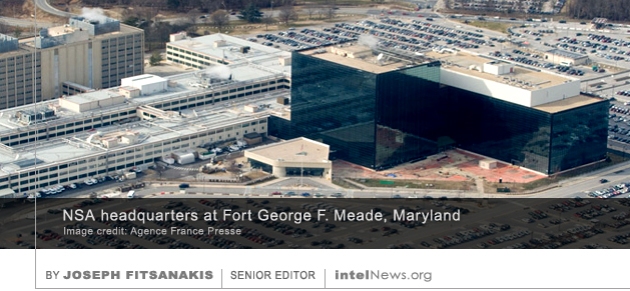
NSATHE WHITE HOUSE IS reportedly trying to implement what could be one of the most important changes in the United States Department of Defense in recent years, by separating the cybersecurity functions from its signals intelligence functions. Until 2009, the US National Security Agency (NSA) was in charge of protecting America’s cyber networks and combating online threats. But in 2009 the administration of US President Barack Obama determined that the online environment represented a new theater of war and established a brand new Cyber Command (CYBERCOM).
Since that time, these two agencies, NSA and CYBERCOM, have been operated in parallel and have been led by the same director, who is always a four-star military officer. Moreover, CYBERCOM has historically relied on NSA’s impressive technical infrastructure and cyber arsenal. But there are some in government, especially those who support a more offensive US cyber posture, who have championed the view that CYBERCOM should be removed from the NSA’s command structure, and should operate as a completely separate agency. The administration of US President Donald Trump pushed this idea in 2017, but strong resistance from the NSA prevented it from materializing.

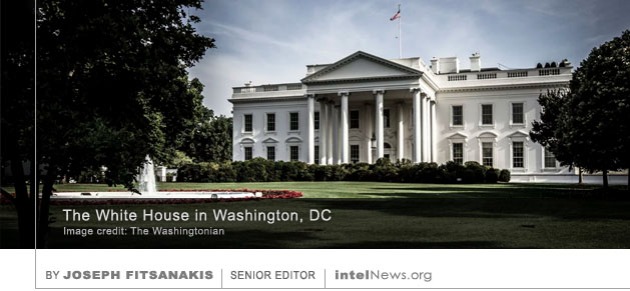
Now, however, the Trump administration appears determined to implement this proposed split, despite strong resistance from NSA’s leadership. Citing anonymous US officials, Defense One reported last week that the White House had sent Chairman of the Joint Chiefs of Staff General Mark Milley and Acting Secretary of Defense Christopher Miller documents detailing the proposed split. The two men are required to consent to the proposal before its implementation is officially authorized.

Acting Secretary Miller is believed to be in support of the move, according to several sources. However, General Milley has previously voiced support for the logic behind the existing close operational relationship between NSA and CYBERCOM. Therefore, some believe he may decide to stall on the proposal, thus waiting for the Trump administration to transition out of power. On Sunday a spokesman for Milley said that the General had “not reviewed, nor endorsed, any proposal to split CYBERCOM and NSA”.

According to reports, there are some at the Pentagon who feel strongly that the decision to split CYBERCOM from NSA should be left to the incoming administration. Nevertheless, the Trump administration seems determined to demonstrate that it can enact sweeping changes in the Department of Defense, as demonstrated by its recent decision to scale down significantly America’s military footprint in Afghanistan, Iraq and Somalia.

Author: Joseph Fitsanakis | Date: 21 December 2020 | Permalink

Massive hacker attack triggers US National Security Council emergency meeting

White HouseA large-scale cyberespionage attack targeting United States government computer systems, which some experts described as potentially being among “the most impactful espionage campaigns on record”, triggered an emergency meeting of the US National Security Council on Sunday, according to reports. Chaired by the US president, the National Security Council is the country’s most senior decision-making body.
Although it was only discovered last week, the cyberespionage campaign is believed to date to last spring, possibly as early as March. Sources called it a highly sophisticated operation that originated from a “top-tier” adversary –a term that refers to a handful of state actors that have access to the most elite cyber operatives and advanced technologies known to exist.

As of last night, US government officials had not publicly identified the state actor believed to be behind the cyberespionage campaign, which experts have coined the “2020 supply chain attack”. But several American and European news outlets pointed to Russia as the culprit, citing sources familiar with the investigation. The Washington Post said the Russian Foreign Intelligence Service, known as SVR, was behind the attack. The Russian government denied on Monday that its agencies had any role in the attacks.

The origins of the attack are believed to be in the private sector. It began when a sophisticated illicit cyber actor, known by the nickname Advanced Persistent Threat (APT) 29, or Cozy Bear, stole cyber tools used by two major government contractors, FireEye and SolarWinds. These cyber tools are used to detect and patch vulnerabilities in computer systems. These companies provide services to numerous US government customers, including the Departments of Defense, State, Treasury and Commerce. Other US government customers include the National Security Agency and the Office of the President, including the White House Situation Room. All of these entities have reportedly been affected by this cyber espionage operation.

By disguising their malicious software as software patches, the hackers were reportedly able to access and monitor, in real time, email traffic within and between government agencies. It is not known at this time whether US intelligence agencies, other than the National Security Agency, have been affected by this hack. All branches of the US military maintain intelligence components. Additionally, the Department of the Treasury operates the Office of Intelligence Analysis, while the Department of State is in charge of the Bureau of Intelligence and Research. The White House said yesterday that it had asked the Federal Bureau of Investigation and the Cybersecurity and Infrastructure Security Agency to probe the attack and evaluate the extent of the damage caused to US government operations.

Author: Joseph Fitsanakis | Date: 15 December 2020 | Permalink

US Pentagon signals it will stop supporting CIA’s counterterrorism mission

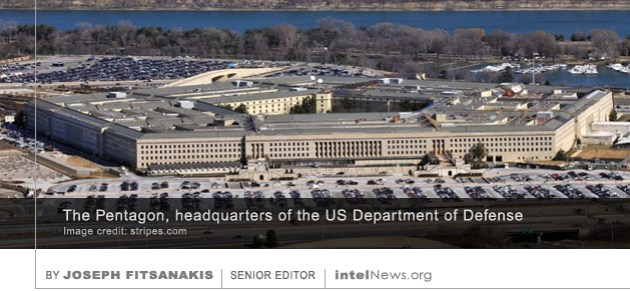
PentagonTHE UNITED STATES DEPARTMENT of Defense has reportedly notified the Central Intelligence Agency that it plans to terminate most of the military support it provides for the spy agency’s counterterrorism operations. Some of these changes may occur as early as January, according to reports published on Thursday in several US news outlets.

After the terrorist attacks of September 11, 2001, the CIA incorporated an increasingly expansive counterterrorist mission into its list of activities. But it has relied on Pentagon resources to support many of these activities, for things like transportation, physical security, logistics, and even execution. The Pentagon’s role in these activities tends to be crucial, given that they usually take place in active combat zones or other dangerous locations around the world. They therefore require heavy military protection.

However, President Trump has been implementing his plan to withdraw American military forces from warzones such as Somalia, Afghanistan and Iraq. These troops provide logistical and material support to CIA missions in some of the world’s most dangerous regions. Additionally, the Department of Defense has been signaling for quite some time its intention to focus less on counterterrorism and more on what experts refer to as “near-peer competitors” —namely China and Russia.

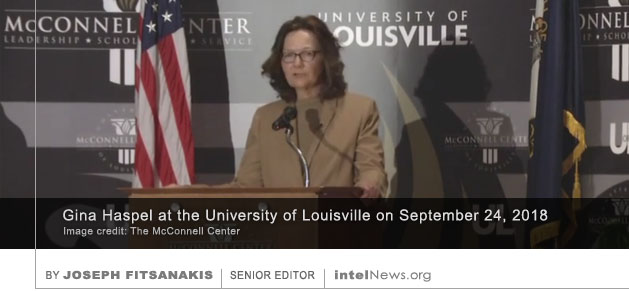
According to reports, Acting Defense Secretary Christopher Miller sent a letter to CIA Director Gina Haspel, in which he informs her of the Pentagon’s decision to make drastic changes to its support for the spy agency’s counterterrorism operations. It is believed that some of these changes will take place as early as January 5, 2021. It has also been reported that this decision marks the culmination of a so-called “pet project” of Acting Under-Secretary of Defense for Intelligence Ezra Cohen-Watnick, a Trump political appointee, who was placed in his current position by the president following November’s election.

Author: Joseph Fitsanakis | Date: 11 December 2020 | Permalink

New report says ‘Havana Syndrome’ was caused by directed microwave radiation

US embassy in CubaA NEW REPORT BY the United States National Academies of Sciences, Engineering, and Medicine, has found that the so-called ‘Havana Syndrome’, which afflicted American and Canadian diplomats in Cuba and China in 2016 and 2017, was likely caused by directed microwave radiation. The study, which was commissioned by the US Department of State, is the latest in a long list of scientific assessments of the mysterious syndrome. The case remains a source of debate in the scientific, diplomatic and intelligence communities.
In 2017 Washington recalled the majority of its personnel from the US embassy in Havana, and at least two more diplomats from the US consulate in the Chinese city of Guangzhou. The evacuees reported experiencing “unusual acute auditory or sensory phenomena” and hearing “unusual sounds or piercing noises”. Subsequent tests showed that they suffered from sudden and unexplained loss of hearing, and possibly from various forms of brain injuries. In April of 2019 the Canadian embassy evacuated all family members of its personnel stationed in the Cuban capital over similar health concerns.

The latest study by the National Academies of Sciences resulted from the coordination of leading toxicologists, epidemiologists, electrical engineers and neurologists. The resulting 66-page report describes in detail the symptoms experienced by nearly 40 US government employees, who were examined for the purposes of the study. Its authors said they examined numerous potential causes, including psychological factors, infectious diseases, directed radio frequency energy, and even exposure to insecticides. Ultimately, the authors concluded that “many of the distinctive and acute signs, symptoms and observations reported by [US government] employees are consistent with the effects of directed, pulsed radio frequency (RF) energy”, according to their report.

However, the study does not attempt to answer the burning question of whether the symptoms experienced by the sufferers resulted from deliberate attacks, and if so, who may have been behind them. Some have accused the governments of Cuba and/or Russia of being responsible for the syndrome. However, the Cuban and Russian governments have strongly denied the accusations. The National Academies of Sciences report does state that the systematic study of pulsed radio frequency energy has a history of over half a century in Russia and the Soviet Union.

Author: Joseph Fitsanakis | Date: 07 December 2020 | Permalink

US wants to share sensitive intelligence with Honduras to combat drug traffickers

Tony HernandezA PROPOSED MEMORANDUM OF understanding could enable the sharing of extremely sensitive intelligence between the United States and Honduras, as part of an effort by Washington to stop the impoverished Central American country from becoming a drug-trafficking stronghold. However, some in the US intelligence community are concerned that the sensitive intelligence given to the Honduran government may be passed on to the drug cartels by paid informants.

According to the Reuters news agency, American and Honduran officials are currently finalizing a proposed memorandum of understanding between the two nations’ intelligence communities. The memorandum would allow the US to provide the Honduran government with information about secret flights carrying drugs, which are known to regularly enter the Honduran airspace. The drugs are then trafficked north and subsequently enter the US through Mexico. Reuters said that, although the memorandum of understanding is in the drafting stage, the Honduran government appears to be willing to accommodate its conditions. The latter include provisions allowing for planes that do not identify themselves and are believed to be carrying drugs to be shot down by military aircraft.

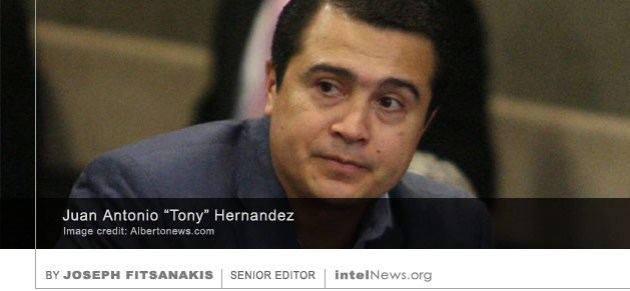
There are, however, concerns among some in the US intelligence community that the Honduran government and its institutions cannot be trusted with sensitive intelligence. They argue that the corruption at all levels of the Honduran government and intelligence establishments is so extensive, that the drug traffickers will be able to access the information provided by the US government. It should be noted that last year a court in New York convicted one of Central America’s most notorious cocaine traffickers, Juan Antonio “Tony” Hernandez (pictured), who is the brother of Honduras’ current president, Juan Orlando Hernandez. During the trial, it was repeatedly alleged that President Hernandez provided protection to his brother and other drug traffickers in Honduras.

But Honduran officials, including the country’s ambassador to the US, Luis Fernando Suazo Barahona, point out that those receiving sensitive intelligence form the US would be carefully vetted —and presumably polygraphed— prior to being given access to the information. Reuters reports that the US Department of State says it is “taking steps to resume information-sharing [with the government of Honduras] for aerial interception upon the successful negotiation and conclusion” of the memorandum of understanding that is currently being drafted.

Author: Joseph Fitsanakis | Date: 03 December 2020 | Permalink

A CIA paramilitary officer was killed in Somalia, reports claim

CIA memorial wallA PARAMILITARY OPERATIONS OFFICER serving in the United States Central Intelligence Agency (CIA) has reportedly been killed in Somalia. This is a rare occurrence for the clandestine agency, which has lost about 140 officers in its 73-year history. The New York Times, which first reported the news on Wednesday, said the officer had joined the CIA after serving in the US Naval Special Warfare Development Group, which is commonly known as SEAL Team Six. Upon joining the CIA, the late officer served in the Special Activities Center (formerly Special Activities Division), which is the Agency’s paramilitary section.

The identity of the officer has not been released, and it is unlikely that it will become known in the future. It is believed that the officer’s family has been notified. Citing “current and former US officials”, The Times said it was not known whether the officer had been killed while participating in a counterterrorism raid, or whether he had been targeted by al-Shabaab, the al-Qaeda affiliate that is active in the Horn of Africa. Neither al-Qaeda nor al-Shabaab, have said anything about the alleged incident.

The US has been participating in a low-intensity war against Islamist militants in the region for over a decade. There are currently over 700 American military personnel in Somalia, most of whom provide training for the Somalian Armed Forces. But the CIA, as well as US Special Operations Forces personnel, are also known to carry out raids throughout the country. Additionally, the CIA, in association with the Department of Defense and the Office of the Director of National Intelligence, has carried out dozens of drone strikes in Somalia in recent years.

In September of this year, Yahoo News reported that the CIA had lost four paramilitary operations officers in 2008. The four men allegedly died during a secret maritime operation off the coast of the Philippines, and their bodies were never recovered. According to the report, the four men were members of the CIA’s Maritime Branch, one of the three branches of the Special Operations Group, which works under the Special Activities Center. The agency never spoke publicly about the officers’ deaths, but allegedly notified their families, who were also invited to Langley for a private ceremony attended by the CIA’s leadership.

Author: Joseph Fitsanakis | Date: 25 November 2020 | Permalink

Trump administration cancels parole for US Navy analyst who spied for Israel

Pollard - aA UNITED STATES NAVY analyst who spent 30 years in prison after being convicted of spying on the United States for Israel, is expected to receive a hero’s welcome in Israel in the coming days, after the administration of President Donald Trump lifted his parole restrictions that prevented him from leaving the country. Jonathan Pollard, a former intelligence analyst for the United States Navy, was released from an American prison in 2015, after serving a lengthy sentence for selling US government secrets to Israel.

Throughout Pollard’s time in prison, the government of Israel lobbied for his release, claiming that the convicted spy did not harm American interests, but was simply trying to help Israel. However, the US Intelligence Community and successive American presidents consistently rejected Israel’s claims, arguing that Pollard’s activities were severely detrimental to US interests. Pollard was eventually released after serving the entirety of his sentence.

Ever since his release, Pollard had been required to wear an ankle monitor at all times. His Internet browsing was strictly regulated by the US government and he was not permitted to leave his New York home after sunset. He was also not permitted to leave the US, and Washington had refused to allow him to move to Israel, for fear that the Israeli government would provide him with monetary rewards for his espionage.

But now Pollard is expected to travel to Israel soon, after the Department of Justice announced on Friday that his parole would not be renewed —a move that effectively allows Pollard to leave the United States for the first time since his imprisonment. His lawyer, Eliot Lauer, told an Israeli television station that Pollard would soon be departing for Israel, adding that he looked forward to “seeing our client in Israel”. On Saturday, a press statement issued from the office of Israeli Prime Minister Benjamin Netanyahu celebrated the lifting of Pollard’s parole restrictions, and said Israeli leaders “hope to see Jonathan Pollard in Israel soon”.

Pollard is expected to receive a hero’s welcome in Israel, where he has achieved celebrity status. He is especially revered by supporters of the center-right Likud party, which is currently led by Netanyahu. There are, however, many in Israel who see Pollard as an opportunist and have derided him publicly for accusing the state of Israel of abandoning him. Others in the Israeli intelligence community see the Pollard episode as deeply damaging to relations between the United States and Israel, and are critical of the decision to recruit Pollard, whose carelessness and brazen espionage style were bound to lead to his arrest sooner or later.

Author: Ian Allen | Date: 23 November 2020 | Permalink

North Korean leader Kim Jong-un’s half-nephew is in CIA custody, report claims

Kim Jong-nam murderTHE HALF-NEPHEW OF North Korean leader Kim Jong-un, who disappeared in 2017 and has not been seen since, is in the custody of the United States Central Intelligence Agency (CIA), according to a new report. The missing man’s name is Kim Han-sol. He is the son of the late Kim Jong-nam (pictured), the eldest son of Kim Jong-il and grandson of Kim Il-Sung, who founded the Democratic People’s Republic of Korea in 1948. A critic of North Korea’s rulers, Kim lived in self-exile in the Chinese territory of Macau, and split his time between China, Singapore and Malaysia.

In February of 2017, Kim Jong-nam was assassinated in audacious attack at a busy airport in Malaysia by two women who used a poisonous substance to murder him in broad daylight. Suspicions fell immediately on the North Korean government, and many assumed that his two children and wife would be next. The family, who lived in Macau at the time, frantically made plans to leave for the West and seek political asylum there. To make it more difficult for potential assassins to find them, Kim Jong-nam’s family members made the decision to separate and take different routes to Europe.

As intelNews has reported before, Kim Jong-nam’s eldest son, Kim Han-sol, sought and received protection from an obscure North Korean dissident group, which calls itself Cheollima Civil Defense and is also known as Free Joseon. Cheollima Civil Defense, whose members support on principle anyone who challenges the regime in Pyongyang, helped Kim’s family relocate to the West, allegedly with assistance from China, the United States and Holland.

However, unlike Kim Jong-nam’s wife and youngest son, Kim Han-sol never made it to Europe, and his whereabouts remain unknown. Now a new report in The New Yorker magazine claims that Kim Han-sol flew from Macau to Taiwan, escorted by Cheollima Civil Defense members. From there, he was scheduled to take a flight to Amsterdam’s Schiphol Airport, where Cheollima Civil Defense members and Dutch activists were waiting for him. But he never emerged from the arrivals gate. According to The New Yorker, that was because a team of CIA officers intercepted Kim Han-sol in Taiwan and took him under US custody.

The magazine claims Kim Han-sol remains under US custody to this day, but does not clarify whether that is a voluntary arrangement on the part of the North Korean exile. It is also not clear if Kim Han-sol’s mother and brother are with him, or if they are aware of his whereabouts. It is believed that Kim Jong-nam’s income came from a North Korean government slush fund that he was managing in Macau, and that much of the fund came from illicit sources. It is possible that Kim Han-sol was also involved in running that fund, which would explain the CIA’s interest in him.

Author: Joseph Fitsanakis | Date: 18 November 2020 | Permalink

Danish spy service helped US collect intelligence on NATO allies, report claims

DDIS Denmark

A SECRET COOPERATION BETWEEN Danish and American intelligence agencies enabled the United States to collect intelligence on some of its closest European allies, according to a new report. Affected countries include Germany, France, Sweden, Norway, and Holland, according to Danish newspaper Jyllands-Posten and Danmarks Radio, Denmark’s public-service broadcaster. The two media outlets say they spoke to “several independent sources” who confirmed the allegations.

The revelations appear to be connected with the surprise firing of Lars Findsen, director of the Danish Defense Intelligence Service (FE, or DDIS in English), in August of this year. It was reported at the time that Findsen was fired following a series of whistleblower revelations. However, almost nothing was released by the Danish government about the precise nature of the revelations. It was claimed that the revelations concerned “improper intelligence collection practices”.

It now appears that the whistleblower revelations concerned a secret intelligence collection agreement struck between the DDIS and the US National Security Agency (NSA) in 2008. According to the agreement the NSA would help the DDIS tap a number of fiber optic Internet cables that pass through Danish territory, in return for being given access to the content of intercepted traffic. This collaboration was physically facilitated at a data-processing center located on the Danish island of Amager, south of the Danish capital Copenhagen, which was allegedly built for that purpose.

In 2015, however, a Danish whistleblower approached the Danish Oversight Board, known as TET, which is responsible for supervising the work of Denmark’s intelligence agencies. The whistleblower alleged that the Amager data-processing center had been used by the NSA to spy on Danish targets, including the Ministry of Foreign Affairs and the Ministry of Finance. Moreover, a list of the keywords used by the NSA between 2012 and 2015 to flag Internet traffic allegedly suggests that the governments of Germany, France, Sweden, Norway and Holland were also targeted.

The revelation has prompted a heated political discussion in Denmark, while Norwegian, Swedish and Dutch authorities have launched investigations into the alleged spying. Some in Denmark are now calling for the Minister of Defense, Trine Bramsen, to release to the public a four-volume report produced by the TET about the alleged DDIS-NSA collaboration.

Author: Joseph Fitsanakis | Date: 17 November 2020 | Permalink

More details emerge about alleged killing of al-Qaeda #2 in Iran by Israeli spies

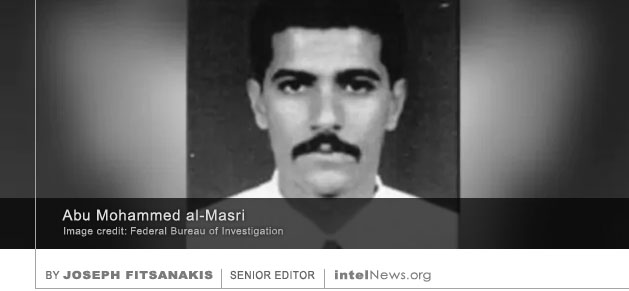
Abu Mohammed al-Masri

THE ASSOCIATED PRESS SAYS it has confirmed a claim made last week by The New York Times, according to which an Israeli assassination team killed al-Qaeda’s deputy leader in a daring operation inside Iran in August. The paper said on November 13 that Abdullah Ahmed Abdullah, who went by the operational name Abu Muhammad al-Masri, had been assassinated in Tehran on August 7. He was the deputy leader of al-Qaeda, and was wanted by the United States Federal Bureau of Investigation for helping plan the 1998 bombings of American embassies in Kenya and Tanzania.

On Sunday, the Associated Press said it was able to corroborate the The Times’ story with “four current and former US [intelligence] officials”, one of whom had “direct knowledge of the operation” and another, a former CIA officer, had been briefed about it. The news agency said the operation was carried out by Israel, acting on information given to it by the US. The Americans gave the Israelis information about al-Masri’s whereabouts in Iran, as well as the cover he was using to avoid detection.

Al-Masri was killed by a team of Israeli assassins while driving his car in a quiet street in the suburbs of Tehran, according to The Times. The assassins, who were riding on motorcycles, shot him with guns equipped with silencers. Al-Masri’s daughter, Maryam, who was riding with him in the car, was also killed. This was part of the plan, said the Associated Press. Al-Masri’s daughter was also the widow of Hamza bin Laden, the son of al-Qaeda founder Osama bin Laden. Hamza bin Laden was killed in 2019 by the US at the border between Afghanistan and Pakistan. According to the Associated Press, US intelligence planners believed Maryam was “being groomed for a leadership role in al-Qaeda” and “was [already] involved in operational planning”.

Iranian media portrayed the incident as the murder of Habib Daoud, a Lebanese professor of history, who was gunned down in the Iranian capital along with his daughter by unknown suspects. In reality, said the Associate Press, the father and daughter were killed by the Kidon, (“tip of the spear” in Hebrew), an elite assassination unit within Israel’s Mossad intelligence agency.

Author: Joseph Fitsanakis | Date: 16 November 2020 | Permalink

Senior Homeland Security officials resign, reportedly under White House pressure

Department of Homeland Security DHS

TWO SENIOR OFFICIALS AT the United States Department of Homeland Security have resigned, reportedly after coming under pressure to do by the White House. The resignations may point to the latest incidents in an ongoing string of firings and resignations in the US intelligence and national security communities, part of a concerted effort by President Donald Trump.

The more senior of the two DHS officials who have resigned as of today is Bryan Ware, DHS assistant director for cybersecurity. Ware served at the DHS’s cybersecurity wing, the Cybersecurity and Infrastructure Security Agency (CISA). CISA was created by the Trump administration two years ago, when the president signed into law the Cybersecurity and Infrastructure Security Agency Act. The mission of the young agency is to streamline cybersecurity efforts across government agencies and departments, in order to improve the government’s cybersecurity protections.

Ware’s resignation coincided with a rare announcement by top officials at CISA, which called the US presidential election of November 3 “the most secure in American history”. The officials, who are members of the Election Infrastructure Government Coordinating Council (GCC) Executive Committee, added that “[t]here is no evidence that any voting system deleted or lost votes, changed votes or was in any way compromised”. The announcement appeared to be a refutation of claims made by President Trump and his supporters that the election was marred by significant irregularities.

The DHS assistant secretary for international affairs, Valerie Boyd, also resigned as of today. In her resignation letter, Boyd states that her “belief that people of character should support the institution of the Presidency […] has been tested many times these past few years”. In his farewell letter to colleagues, Ware states that his departure from the DHS came “too soon”, indicating that the decision to resign was not his own. Several sources suggest that both Ware and Boyd were pressured to resign by White House aides close to President Trump.

Reporters said last night that officials at the White House, the DHS and the CISA did not respond to requests for comment about the two DHS officials’ resignations. There were also rumors last night that CISA director, Chris Krebs, would be fired by President Trump in a matter of days.

Author: Ian Allen | Date: 13 November 2020 | Permalink

Senior US Republicans split on whether CIA director Gina Haspel should be fired

Gina Haspel

SENIOR FIGURES IN THE United States Republican Party appear to be split on whether President Donald Trump should fire Gina Haspel, the first female director of the Central Intelligence Agency, who has been serving in that capacity since 2018. According to The New York Times, Haspel is on a list of senior intelligence and national security officials that the embattled American president plans to fire in the coming days. He already fired key defense officials this week, including the Secretary of Defense Mark Esper, as well as the Pentagon’s head of policy and director of intelligence.

Trump administration insiders, who want to see Haspel gone, are aware that Trump will not be president for much longer, and are thus pushing for her immediate termination, said The Times. They blame Haspel for not stopping the CIA whistleblower who filed a complaint about the president’s July 2019 telephone call with his Ukrainian counterpart, Volodymyr Zelensky. The complaint led to Trump’s impeachment in the House of Representatives. Haspel had no role in that incident, but senior Trump loyalists believe she could have stopped the complaint before it reached the office of the US Intelligence Community’s Inspector General.

Haspel is also accused by Trump loyalists of not following the directives of the Office of the Director of National Intelligence, under John Ratcliffe, a Trump appointee who serves as the most senior intelligence officer in the US government. The CIA and the ODNI have not seen eye-to-eye since the latter’s founding in 2005. Additionally, unlike Haspel, who rose through the ranks of the Intelligence Community, Ratcliffe had no intelligence experience before this year, when he was appointed by Trump to lead the ODNI. It is believed that his status as an outsider has made it difficult for him to exercise leadership in the close-knit Intelligence Community.

But other senior Republicans have rallied around Haspel. They are said to include the powerful Senator Mitch McConnell, who on Tuesday met with Haspel in his office on Capitol Hill. The closed-door meeting between McConnell and Haspel alarmed the Trump inner circle, with Donald Trump, Jr., calling the CIA director a “trained liar” and accusing those Republicans who support her of undermining his father. The CIA declined to comment on the story.

Author: Joseph Fitsanakis | Date: 13 October 2020 | Permalink

US forces are secretly helping the Taliban fight the Islamic State in Afghanistan

Taliban

UNITED STATES TROOPS ARE secretly re-purposing weapons that were initially used to fight the Taliban, in order to help the Taliban defeat the Islamic State in northeastern Afghanistan, according to a new report. The American military’s newfound role in Afghanistan reportedly reflects the view of the White House that the Taliban have no aspirations outside of Afghanistan, while the Islamic State seeks to challenge America’s interests worldwide.

The rumors that the US Department of Defense has been providing assistance to the Taliban as they battle the Islamic State in Afghanistan are not new. In March of this year, General Frank McKenzie, Commander of US Central Command, admitted as much during Congressional testimony. He told the US House Armed Services Committee that the Taliban had received “very limited support from us”, but declined to elaborate during open-door testimony.

What did General McKenzie imply? According to veteran military affairs reporter Wesley Morgan, US Joint Special Operations Command (JSOC) forces in Afghanistan have been instructed to provide air cover to Taliban forces as they fight the Islamic State. Morgan said he spoke to members of a JSOC Task Force in Afghanistan’s northeastern Kunar Province, who confirmed General McKenzie’s comments from back in March.

Importantly, the JSOC’s air support to the Taliban is reportedly provided without direct communication between the US forces and the Taliban. Instead, the Americans simply “observe battle conditions” and “listen in on the [communications of the] group” in order to determine what kind of air support it needs. The resources used in that capacity consist of weaponry that was initially deployed against the Taliban, but is now being secretly repurposed to assist the Taliban in their fight against the Islamic State. According to Morgan, the JSOC team in Kunar, which provides air cover to the Taliban, jokingly refers to itself as the “Taliban air force”.

Miller adds it is unclear whether the Afghan government in Kabul is aware that US forces are providing assistance to the Taliban. It is also unclear whether al-Qaeda, which is a close ally of the Taliban, is benefiting from that assistance. Recently a United Nations report warned that al-Qaeda remains “heavily embedded” with the Taliban in Afghanistan, despite assurances by officials in the administration of US President Donald Trump that the two groups are in the process of parting ways.

Author: Joseph Fitsanakis | Date: 03 November 2020 | Permalink