FBI arrests two men who tried to influence Secret Service agents – motive unknown
April 8, 2022 Leave a comment
 THE FEDERAL BUREAU OF Investigation arrested two men on Wednesday, who allegedly tried to influence four agents of the United States Secret Service with money and gifts, according to an affidavit. The men were identified on Thursday as Haider Ali, 36, and Arian Taherzadeh, 40. Both are United States citizens and residents of Washington, DC. On the same day, FBI personnel searched five apartments and a number of cars that belong to the two men.
According to the FBI, in February of 2020 the two men began posing as employees of the Department of Homeland Security (DHS). At around the same time, they began telling people they knew that they were involved in undercover investigations. After the United States Capitol attack of January 6, 2021, they told neighbors they had been tasked with uncovering the identities of participants in the attack. The FBI alleges that the two men spent thousands of dollars on buying equipment that would help them pass for DHS employees, including a black sports utility vehicle equipped with emergency lights. They had also rented several apartments in Washington, at the cost of hundreds of thousands of dollars a year.
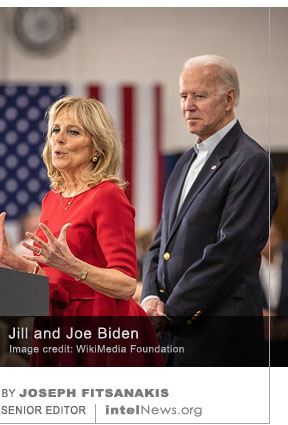
Eventually they became friendly with four Secret Service agents, one of whom served on the protection detail of Dr. Jill Biden, the wife of President Joe Biden. They gradually began giving their Secret Service agent friends gifts, including a flat screen television, a power generator, as well as “law enforcement paraphernalia”.
The FBI has not provided a motive for the activities of the two men, saying only that the investigation into their activities is “ongoing”. According to the New York Times, Ali told witnesses he was connected to the Inter-Services Intelligence directorate, which is the primary intelligence agency of Pakistan. It is also believed that Ali’s passport contains a number of entry visas issued by Pakistani and Iranian authorities, the paper said.
The two men appeared on Thursday at a court hearing in Washington, via videoconference. They are scheduled to attend a detention hearing later today. Meanwhile, the Secret Service agents who were befriended by the two suspects have been placed on administrative leave, according to a Secret Service spokesperson. The investigation into the case continues.
► Author: Joseph Fitsanakis | Date: 08 April 2022 | Permalink
 A Chinese woman who entered President Donald Tump’s Mar-a-Lago resort in Palm Beach, Florida, was found to be in possession of two passports, four mobile phones and a flash drive containing “malicious software”, according to the United States Secret Service. Secret Service agents told a US District Court for the Southern District of Florida on Monday that the woman, identified as Yujing Zhang, entered the private club –which serves as President Trump’s vacation home– on Saturday afternoon. She
 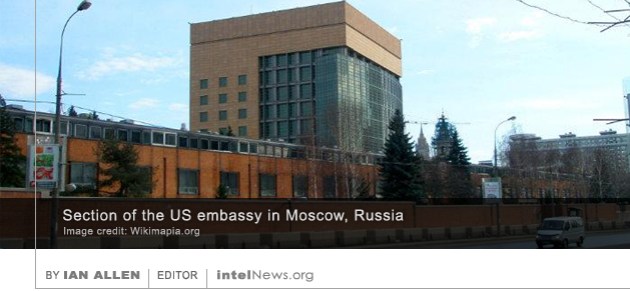 A female Russian national who worked for the United States Secret Service in Moscow was quietly dismissed in 2017, amidst concerns that she was spying for Russia. British newspaper The Guardian, which
  A former senior member of the Official Irish Republican Army in the United Kingdom claims that he was abandoned by British and American spy agencies after he testified in a high-profile counterfeiting case. The case involves members of the Official IRA, including its alleged former chief of staff, who is wanted in the United States in connection with the so-called supernote counterfeit money investigation. The supernote, also known as superdollar or superbill, is a fake 100-dollar bill believed to be one of the highest-quality counterfeit banknotes ever detected. The US government believes that a nation-state is behind the production of the supernote, with North Korea being the primary suspect.







 intelNews.org
Analysis: Secret Service failed Trump because it can’t keep up with the growing threat
July 15, 2024 by intelNews 13 Comments
Yet it did just that on Saturday in Butler, Pennsylvania. Presidential candidate Donald Trump did not survive the attempted assassination because his Secret Service detail neutralized the threat to his safety in time. Instead he survived because the shooter, 20-year-old Thomas Matthew Crooks, from the small suburb of Bethel Park in Pittsburgh, missed. How are we to explain this abject failure by one of the world’s most venerated law enforcement agencies?
POLICING IN A DEMOCRACY
Unlike tyrannical regimes, where law enforcement is nearly omnipresent, policing functions in democratic societies are relatively limited. They rely on what can be essentially described as a numbers game. Under this model, the effectiveness of policing functions inherently rests on the assumption that the vast majority of the population will comply with legal norms voluntarily, and that it will do so most of the time.
Thus, the sustainability of law and order in democratic societies hinges, not just on the capabilities of the enforcement agencies, but significantly on the general populace’s commitment to uphold the rule of law. This tacit social contract allows law enforcement agencies to operate with a relatively small logistical footprint. It also allows police forces to focus their efforts on a relatively small number of individuals, or groups, who do not adhere to the law.
WIDESPREAD BREAKDOWN
The US has relied on this model of policing since the Civil War. However, this model tends to falter once a substantial segment of the population refuses to voluntarily adhere to legal conventions. In such a scenario, the sheer number of non-compliant individuals can overwhelm the policing system, leading to a widespread breakdown in law and order.
The US has witnessed such incidents with alarming intensity in recent years. Examples include the 2014 Bundy standoff and the 2016 occupation of the Malheur National Wildlife Refuge by armed groups of anti-government extremists. It also witnessed the —often gratuitously violent— George Floyd protests, as well as the armed occupation of the Capitol Hill neighborhood of Seattle, Washington, in 2020.
Most notably, America witnessed widespread civil disobedience on January 6, 2021, when thousands of frenzied Trump supporters stormed the US Capitol and attempted to bring an end to the Constitutional order in one of the world’s oldest democracies. In addition to exposing the fragility of American democracy, the January 6 attack drew attention to the ineffectiveness of the state’s policing functions, thus further-eroding public trust and compliance.
AMERICANS ARE EMBRACING VIOLENCE
There is no denying that Americans are viewing violence as an element of national politics with an alarming rate. Last summer, a survey conducted by the University of Chicago’s Project on Security and Threats revealed that 4.4 percent of the adult population of the US —12 million Americans— believed that violence was justified to restore Donald Trump to power. Granted, very few of those survey responders would actually be willing to act on such extreme beliefs. But even a mere 1 percent of those 12 million people who appear to endorse violence in support of Trump amounts to 120,000 individuals. That’s an enormously large number of radicalized Americans. Read more of this post
Filed under Expert news and commentary on intelligence, espionage, spies and spying Tagged with Analysis, assassinations, Donald Trump, Joseph Fitsanakis, Newstex, United States, US Secret Service