‘Treasure trove’ of al-Qaeda documents uncovered in Germany

Al-Qaeda propaganda videoBy JOSEPH FITSANAKIS | intelNews.org |
German police have uncovered what appears to be the most significant collection of al-Qaeda planning documents to be acquired by Western intelligence since last year’s assassination of Osama bin Laden. It has been reported that the United States Navy Seals, who raided the late bin Laden’s compound in Pakistan nearly a year ago, obtained thousands of al-Qaeda documents. But the latest acquisition, which reportedly consists of over 100 digital documents, is described by Western intelligence sources as “pure gold”. The documents were in possession of Maqsood Lodin, a 22-year-old Austrian, who was detained by German police last year as he was returning to Europe from a trip to Pakistan, via the Hungarian capital Budapest. During his detention, German authorities found hidden in his underwear a number of digital storage devices. One of them contained a pornographic video called “Kick Ass”, which, upon further investigation, was found to contain encrypted documents, in .pdf format, that had been disguised to look like video files. According to German newspaper Die Zeit, which first reported on the finding in March, many of the documents were training manuals written in several different languages, including Arabic, German, and English. But intelligence experts are mostly interested in a collection of documents entitled “Future Works”. These contain notes from what seem like al-Qaeda brainstorming sessions on plans for possible terrorist plots in Europe. Among them is a suggestion to “seize passenger ships and use them to put pressure on the public”, according to Die Zeit. A subsequent section in the document discusses the idea of ordering passengers in the hijacked ship or ships to dress in orange-color jumpsuits, similar to those used by the United States in the Guantánamo Bay prison in Cuba. That section is somewhat obscure, but Die Zeit interprets it as a plan to stage public executions of passengers as a way of pressuring Western governments to release al-Qaeda-affiliated detainees. Read more of this post

News you may have missed #716 (analysis edition)

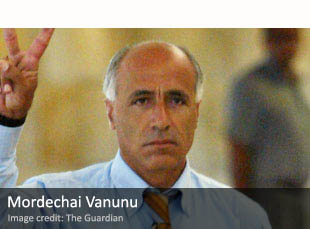
Mordechai VanunuBy IAN ALLEN | intelNews.org |
►►Kabul attacks show intel failures in Afghanistan. Dozens, possibly hundreds of people would have been involved in training, equipping and then infiltrating into the heart of Kabul the large number of insurgents who were prepared to fight to a certain death in the Afghan capital last Sunday. Yet neither Afghan nor foreign intelligence operatives appeared to have any idea that an unprecedented wave of attacks was about to engulf both Kabul and several other key locations around the country. So it seems that Afghan President Hamid Karzai may have a point when he says that the “infiltration in Kabul and other provinces is an intelligence failure for us and especially for NATO and should be seriously investigated”.
►►Report claims China spies on US space technology. China is stealing US military and civilian space technology in an effort to disrupt US access to intelligence, navigation and communications satellites, according to a report authored by the State and Defense Departments. The report (.pdf) argues China should be excluded from recommendations made to the US government to ease restrictions on exports of communications and remote-sensing satellites and equipment. Chinese officials have denied the report’s allegations, calling it a “Cold War ghost”.
►►The long and sordid history of sex and espionage. Using seduction to extract valuable information is as old as the Old Testament —literally— Whether from conviction or for profit, women —and men— have traded sex for secrets for centuries. The Cold War provided plenty of opportunities for so-called “honey-pot” scandals. Perhaps the most dramatic case of seduction in recent times involved Israeli nuclear technician Mordechai Vanunu. In 1986 he visited London and provided The Sunday Times with dozens of photographs of Israel’s alleged nuclear weapons program. But Mossad was on his trail and a female agent —Cheryl Ben Tov— befriended him (reportedly bumping into him at a cigarette kiosk in London’s Leicester Square). She lured him to Rome for a weekend, where he was drugged and spirited to Israel.

News you may have missed #708

Bertil StrobergBy IAN ALLEN | intelNews.org |
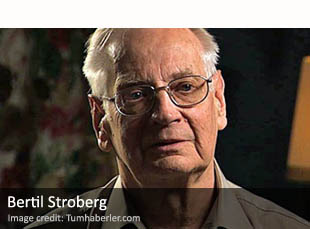
►►Swedish Cold War spy dies at 79. Bertil Stroberg, a former Swedish air force officer, who was convicted of spying for Poland during the Cold War, but always maintained his innocence, has died, following a yearlong battle against cancer. He was sentenced to six years in prison for spying in 1983, but released on parole after serving three years. The key evidence in his case was a letter the prosecution said he had written to the Polish embassy offering to sell military secrets. The letter was signed Sven-Roland Larsson and asked that money be sent in that name to the Central Post Office. Stroberg was arrested when he went to the post office to collect Larsson’s mail.
►►US keeping Britain in the dark on intel issues. American intelligence agencies are increasingly keeping their British counterparts in the dark on key information, for fear those secrets could end up on full display in UK courts. “The Americans have got nervous that we are going to start revealing some of the information and they have started cutting back, I’m sure, on what they disclose”, Ken Clarke, the United Kingdom’s justice secretary, said in a Wednesday interview with the BBC. The American intelligence community has become wary about sharing sensitive intelligence with the UK ever since a 2008 court case forced the British government to disclose specific details on terror detainee operations.
►►Bush official says CIA ‘committed war crimes’. Philip Zelikow, who was a top adviser to former Secretary of State Condoleezza Rice, warned the Bush administration that its use of “cruel, inhuman or degrading” interrogation techniques like waterboarding were “a felony war crime”. What is more, newly obtained documents reveal that State Department counselor Zelikow told the Bush team in 2006 that using the controversial interrogation techniques were “prohibited” under US law —“even if there is a compelling state interest asserted to justify them”. Zelikow’s memo was an internal bureaucratic push against an attempt by the Justice Department to flout long-standing legal restrictions against torture.

News you may have missed #677: Analysis edition

Che Guevara after his arrest in BoliviaBy IAN ALLEN | intelNews.org |
►►New book ties Johnson administration to Che Guevara’s death. Michael Ratner and Michael Steven Smith are the co-authors of a new book about the US role in the killing of Cuban revolutionary Ernesto “Che” Guevara. In their book, Who Killed Che?, Ratner and Smith draw on previously unpublished government documents to argue the CIA played a critical role in the killing. “The line of the [US] government was that the Bolivians did it, we couldn’t do anything about it. That’s not true”, Smith said. “This whole operation was organized out of the White House by Walt Whitman Rostow. And the CIA, by this time, had become a paramilitary organization”.
►►CIA digs in as US withdraws from Iraq and Afghanistan. The CIA is expected to maintain a large clandestine presence in Iraq and Afghanistan long after the departure of conventional US troops as part of a plan by the Obama administration to rely on a combination of spies and Special Operations forces to protect US interests in the two longtime war zones, US officials said. They added that the CIA’s stations in Kabul and Baghdad will probably remain the agency’s largest overseas outposts for years.
►►Indian Army ‘preparing for limited conflict with China’. Noting that India is increasingly getting concerned about China’s posture on its border, James Clapper, US Director of National Intelligence, said this week that the Indian Army is strengthening itself for a “limited conflict” with China. “The Indian Army believes a major Sino-Indian conflict is not imminent, but the Indian military is strengthening its forces in preparation to fight a limited conflict along the disputed border, and is working to balance Chinese power projection in the Indian Ocean,” he said.

News you may have missed #667

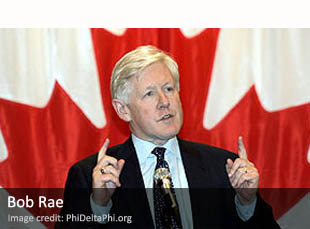
Bob RaeBy IAN ALLEN | intelNews.org |
►►Canadian authorities spied on political leader. The Royal Canadian Mounted Police spied on Bob Rae, current leader of Canada’s Liberal Party, when he was a student, and likely amassed a personal dossier on him, newly declassified documents reveal. Really, is there anyone in Canada who has not been spied on by the RCMP?
►►US intel community says Taliban want Afghanistan back. The Associated Press cites “two current and one former US official” who said anonymously that the classified Afghan National Intelligence Estimate declares the Afghanistan War “at a stalemate“, and says NATO security gains are “far outweighed by corruption at all levels of Afghan government”.
►►Canadian naval officer charged with espionage. A member of the Royal Canadian Navy has become the first person charged under the country’s post-9/11 secrets law for allegedly passing protected government information to an unknown foreign body. Sub-Lt. Jeffrey Paul Delisle, 40, was charged Monday under the Security of Information Act, which came into effect in 2001.

News you may have missed #665

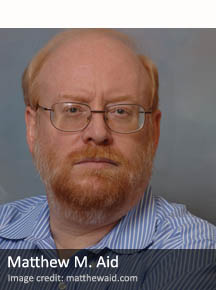
Matthew M. AidBy IAN ALLEN | intelNews.org |
►►Joseph Fitsanakis interviewed on ABC Radio National. IntelNews‘ own Dr Joseph Fitsanakis was interviewed on Friday by reporter Suzanne Hill, for ABC Radio National’s flagship evening news program ‘PM‘. In the interview, which was about the assassination of Iranian nuclear scientist Mostafa Ahmadi-Roshan, Fitsanakis points the finger at the Mossad, and explains why he doesn’t believe the United States had anything to do with the killing. You can listen to the interview here. The transcript is here.
►►India releases diplomat jailed for spying. Last April, Madhuri Gupta, second secretary at the Indian high commission in Islamabad, Pakistan, was arrested for working for Pakistan’s ISI spy agency. She apparently had a “relationship of personal affection” with an aide of her Pakistani handler. On Tuesday, she was granted bail by an Indian court, after 21 months in prison.
►►Matthew Aid interviewed about his new book. Matthew M. Aid, author of The Secret Sentry, has written a new book, Intel Wars: The Secret History of the Fight Against Terror. You can listen to an extensive interview he gave on January 11 on NPR’s Fresh Air, in which Aid outlined his view that “overlapping jurisdictions, bureaucratic policies and a glut of data have crippled the intelligence community in its war against would-be terrorists”.
►►British spies to be cleared on torture allegations. The British government, including Scotland Yard and the Crown Prosecution Service, has just finished a four-year inquiry into the country’s security and intelligence services, sparked by allegations by terrorist suspects released from Guantanamo Bay, that they were severely tortured. The results have not yet been announced. But British media report that, according to information from trusted sources, the inquiry has concluded that (…drumroll…) there is no evidence that officers from either MI5 or MI6 were aware of the mistreatment of prisoners.

News you may have missed #654

Abdel Hakim Belhaj►►Libyan military commander sues British intelligence. Just as he said he would, Abdel Hakim Belhaj, who commands the new Libyan military forces in Tripoli, has sued Britain for its role in his rendition into imprisonment and torture at the hands of Muammar Gaddafi’s regime. He said he resorted to legal action after waiting in vain for the British government to offer an apology for his seven years spent in the jails of the secret police.
►►Argentine Admiral fired over espionage scandal. The head of the Argentine Navy, Admiral Jorge Godoy, has stepped down after being accused of illegal espionage. He has been indicted for alleged practices of “domestic intelligence” –which are prohibited by Argentina’s laws– against political leaders and of human rights activists, in the years between 2003 and 2006.
►►US intelligence warned of strive after US Iraq pullout. This is what Reuters news agency reports, citing anonymous sources inside the US government. Then again, US intelligence agencies warned in 2002 of increasing strife in case of a US invasion in Iraq, and nobody in government listened to them. So why would anyone listen to them now?

News you may have missed #641 (US edition)

Dennis Blair

Dennis Blair

►► US Navy memo had warned Roosevelt of 1941 attack. Three days before the December 7, 1941, Japanese attack on Pearl Harbor, US President F.D. Roosevelt was warned in a memo from US naval intelligence that Tokyo’s military and spy network was focused on Hawaii. The 20-page memo has been published in the new book December 1941: 31 Days that Changed America and Saved the World, by Craig Shirley.
►►US spy agencies cut their holiday parties. Holiday gatherings have provided rare opportunities for US congressional staff, embassy aides, government officials, and the media to mix it up —off the record— with the spy set. But this year, agency budget Scrooges have taken aim at high-priced holiday merriment. The Director of National Intelligence has canceled holiday parties altogether, and the Central Intelligence Agency has drastically downsized its guest list and lavish spread by more than 50%.
►►Ex-DNI Blair wants Pentagon in charge of drone strikes. The United States’ former Director of National Intelligence Dennis Blair, who previously proposed scaling back the armed drone operation run in Pakistan by the CIA, is now urging that the program be publicly acknowledged and placed in the hands of the US military.

News you may have missed #628 (analysis edition)

Michael Scheuer

Michael Scheuer

►►Should intelligence agencies chase tax evaders? Three years ago, Germany’s foreign intelligence service, the BND, paid a whistleblower close to $7 million for DVDs containing information on thousands of secret accounts at a leading Liechtenstein bank. The discs contained data on 4,527 Liechtenstein foundations and financial entities, 1,400 of which were owned by Germans. But should a spy agency like the BND take part in the unglamorous and politically charged business of collecting information on tax cheats?
►►UK ex-spy chief says Google makes spies work harder. The rise of the web and Google means Britain’s spies have to work harder to produce genuinely secret intelligence, according to Sir David Pepper, the former director of GCHQ, Britain’s signals intelligence agency. He said “the Google effect” of so much information being readily available online had “very substantially” raised the “threshold for producing intelligence” for MI5, MI6 and GCHQ.
►►Ex-CIA official says America ‘creates its own enemies’. Americans are in the crosshairs of terrorists worldwide purely due to Washington’s policy in the Muslim world, according to former CIA officer Michael Scheuer, who spoke to Russia Today. Scheuer, author of Through Our Enemies’ Eyes, worked for the CIA for over 20 years and at one time was the chief of the agency’s ‘Bin Laden unit’.

News you may have missed #609

Ilan Grapel

Ilan Grapel

►►Questions over Chinese spy hang over Putin visit. The arrest of a Chinese spy in Moscow has cast a cloud over Vladimir Putin’s two-day visit to Beijing. Tong Shengyong was arrested last October for allegedly trying to buy plans to the Russian S-300 anti-aircraft missile system. But perplexingly, the news of his arrest only emerged last week, in what appears to have been a deliberate leak by Russia’s Federal Security Service (FSB).
►►Egypt steps up charges against suspected Israel spy. Egypt’s State Security Prosecutor has added additional criminal offenses against alleged Israeli spy Ilan Grapel. Meanwhile, there are indications that Egypt seeks the release of 78 Egyptian prisoners held in Israeli jails in return for Grapel. Israel may agree with the proposal.
►►CIA to be last out of Afghanistan. US Special Forces and the CIA are girding for the moment when Afghanistan’s security rests once again with them, working together with Afghan forces against the Taliban. Recent remarks from the White House suggest the CIA and special operations forces will be hunting al-Qaida and working with local forces long after most US troops have left.

Analysis: Ex-CIA WMD director warns of ‘morphed’ Islamist groups

Charles S. Faddis

Charles S. Faddis

By JOSEPH FITSANAKIS | intelNews.org |
In recent months, the heads of the United States Pentagon and the Central Intelligence Agency have opined that the United States may be close to “strategically defeating al-Qaeda”. These were the words used by former CIA Director and current Defense Secretary, Leon Panetta in July, to describe the current state of Washington’s ‘war on terrorism’. Shortly afterwards, General David Petraeus, who replaced Panetta at the helm of the CIA, echoed his predecessor, arguing that the situation following the death of Osama bin Laden “hold[s] the prospect of a strategic defeat […], a strategic dismantling, of al-Qaeda”. But do such optimistic projections correspond to reality on the ground? In a new column for Homeland Security Today, former CIA operations officer Charles S. Faddis, who retired from the Agency in 2008 as the chief of its weapons of mass destruction counterterrorism unit, agrees that al-Qaeda has been “severely battered” in the ten years since 9/11. But he warns that, while America insists of engaging in “large-scale conventional military operations” in Afghanistan, and essentially “a strategic bombing campaign” in Pakistan, a new generation of terrorist groups appears to have “shifted, morphed and evolved”. In light of this reality, the recent comments by Panetta and Petreaus may suggest “the possibility of a loss of focus” in American counterterrorist operations, says Faddis. The former CIA covert operations officer, who has written several books since his retirement, goes on to discuss the rapid rise of several ethnic or regional militant Islamist groups, including Nigeria’s Boko Haram. The organization made macabre headlines earlier this month, when it launched a massive suicide attack against a United Nations office complex in the Nigerian city of Abuja, killing and injuring over 100 people. He also mentions the Islamic State of Iraq, a notorious outfit whose most recent strikes display an operational sophistication that often surpasses that of Boko Haram’s. Read more of this post

News you may have missed #590

Baroness Manningham-Buller

Manningham-Buller

►►Saudi ex-spy chief on US war on terrorism. The longtime head of Saudi Arabia’s foreign intelligence service, Prince Turki al-Faisal, who resigned shortly before the Sept. 11, 2001, hijackings, says that the US should be using Osama bin Laden’s demise as a pretext for declaring victory in the war in Afghanistan and withdrawing US troops. Not by the end of 2014, which is the current timetable, but immediately.
►►Ex-MI5 chief says ‘9/11 made us stronger’. Britain’s foremost domestic intelligence agency, MI5, felt almost swamped after 9/11, inundated with leads to plots and fragmentary intelligence, according to Lady Eliza Manningham-Buller, former head of Britain’s Security Service. But in the decade since the attacks, its budget doubled and its headcount has almost tripled, while intelligence operations have increased fivefold, she said.
►►Captured Libyan spy chief defiant. Defiant and angry, captured Libyan spy chief Bouzaid Dorda, who directed the country’s External Security Organization (ESO), denied any wrongdoing when he was presented to reporters on Sunday by former insurgents who tracked him down in the capital Tripoli. He is believed to have taken on his job in 2009 when his predecessor Moussa Koussa, who defected earlier this year, became foreign minister.

News you may have missed #582

John Yoo

John Yoo

►►US government conceals Bush surveillance memos. The Justice Department is refusing to release legal memos by lawyer John Yoo, which the George W. Bush administration used to justify its warrantless surveillance program, one of the most contentious civil liberties issues during the Republican president’s time in office.
►►Ex-CIA bin Laden Unit boss wants rendition back. Michael Scheuer, a former insider and vocal critic of the US intelligence establishment, has described the Arab revolutions as “an intelligence disaster for the US and for Britain, and other European services”. Speaking from Scotland, he also urged for a return to the Bush administration’s rendition program, in order to gather new intelligence on Middle Eastern and North African groups.
►►French firm helped Gaddafi spy on opposition. We have written before about technical intelligence support provided by Western firms to some of the world’s most brutal regimes, including Iran and Bahrain. We can no add Libya to the long list. The Wall Street Journal reports that Amesys, a subsidiary of French telecommunications firm Bull helped the Gaddafi regime spy on the emails and chat messages of its opponents.

News you may have missed #581

Jin Yinan

Jin Yinan

►►CIA wants to censor book by ex-FBI agent. The agent, Ali H. Soufan, argues in the book that the CIA missed a chance to derail the 9/11 plot by withholding from the FBI information about two future 9/11 hijackers living in San Diego. He also says that torture interrogation methods against terrorism detainees were unnecessary and, ultimately, counterproductive. Both these things are known and have been publicly discussed. As The Independent correctly notes, the CIA’s objections are “less for national security reasons than out of a desire to avoid re-airing incidents that show the Agency in an unflattering light”.
►►New scandal at India’s SIGINT agency. The Indian government founded the National Technical Research Organisation (NTRO) in 2004, as a potential communications nerve center for all of India’s intelligence agencies. But the SIGINT agency has been involved in one financial scandal after the other, most recently relating to an elaborate procurement scam.
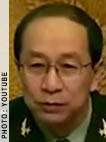
►►China silent about spy lecture leak. China has remained quiet as a recently leaked video of a Chinese general’s candid remarks on sensitive spying cases continued to draw international attention. The ministries of defense and foreign affairs have not responded to media inquiries, and numerous phone calls to National Defense University, where the general, Jin Yinan (pictured), teaches, went unanswered. State media made no mention of the story.

Ex-CIA counterterrorist chief says al-Qaeda to turn to computer hacking

Cofer Black

Cofer Black

By JOSEPH FITSANAKIS | intelNews.org |
The strategic retreat currently being experienced by al-Qaeda will force the group to concentrate on inflicting damage on its enemies through the Internet. This is the opinion of Cofer Black, the straight-talking CIA veteran who retired in 2002 as Director of the Agency’s Counterterrorism Center. Black, who is known for his hawkish views on Washington’s ‘war on terrorism’, gave the keynote speech on Wednesday at the Black Hat Technical Security Conference in Las Vegas, Nevada. He told an audience of nearly 7,000 conference participants that “the natural thing” would be for al-Qaeda in the post-bin-Laden age to continue to engage in terrorism by “fall[ing] back to things that are small and agile”, with computer hacking being an ideal candidate. Black, who since 2002 has worked for private contractors, including Blackwater/Xe, illustrated his point by referring to Stuxnet, the elaborately programmed computer virus that targeted electronic hardware in Iran’s nuclear energy program in July of 2010. “The Stuxnet attack is the Rubicon of our future”, said the former CIA official, adding that it was the computer virus designed to cause “physical destruction of a national resource”. Black is rightly revered by intelligence observers for having warned US government officials of a large-scale terrorist attack in August of 2001, one month prior to the September 11 hijackings. Having said this, it is not exactly prophetic to state, as he did, that “cyber will be a key component of any future conflict”. Read more of this post