Former US spy chief questions ‘war on terrorism’ logic, tactics

Dennis Blair

Dennis Blair

By JOSEPH FITSANAKIS | intelNews.org |
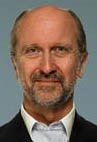
America’s former top intelligence official has publicly questioned the logic and methods informing Washington’s “war on terrorism”, and called for the CIA unmanned drone assassination program in Afghanistan and Pakistan to be grounded. Dennis C. Blair, who was Director of National Intelligence (DNI) until May of 2010, was speaking last week at the Aspen Security Forum in Colorado.  In an hour-long forum conversation with television journalist Leslie Stahl, Blair —a retired Admiral— explained that, in his view, America’s “war on terrorism” is misconceived, strategically counterproductive and ludicrously expensive. Speaking on the CIA’s unmanned drone war in Afghanistan and Pakistan, Admiral Blair agreed that the drone attacks have killed some “mid-level” Taliban or al-Qaeda operatives, but said that the strikes have had a negligible overall impact on American security. As a terrorist outfit, al-Qaeda has shown that it is able to easily “sustain its level of resistance to an air-only campaign”, said Blair. Additionally, the former DNI said that unilateral air strikes are legally questionable and have proven strategically damaging, by “alienating the countries concerned” and dominating Washington’s relations with key nations such as Pakistan, Yemen and Somalia (click here to read intelNews’ criticism of American raids in Somalia). In doing so, the drone attacks tend to “threaten the prospects of long-term reform” in those countries, said the retired Admiral. Earlier in the conversation, Blair had questioned the economic basis of America’s “war on terrorism”, telling his audience that the US intelligence and security establishment currently spends around $20 million a year for each member of al-Qaeda scattered around the world. Read more of this post

News you may have missed #552

Nikolai Kuznetsov

Nikolai Kuznetsov

►►This just in: South Korea arrests five for spying for North. South Korean prosecutors have arrested five people on charges of “setting up an underground communist group on the instructions of an espionage unit of North Korea’s ruling Workers Party”, a report from South Korea’s Yonhap news agency said on Friday. According to the report, South Korean authorities are “investigating about 20 other people including union activists and opposition party members”. We will publish more information as it comes in.
►►Some US intel analysts believe al-Qaeda near collapse. Citing classified intelligence reports and closed-door Capitol Hill briefings from the CIA, the National Counterterrorism Center and other agencies, some US officials are telling The Washington Post that bin Laden’s death has “pushed al-Qaida to the brink of collapse”. One official told the paper that al-Qaeda is now “largely incapable” of mass-casualty attacks against the United States. Could the ‘Leon Panetta Legacy Committee’ be the source of this report?
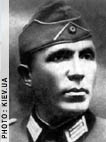
►►Russia and Ukraine commemorate legendary Soviet spy. Russia and Ukraine are celebrating 100 years from the birth of legendary Soviet spy Nikolai Kuznetsov. Kuznetsov, who operated in Nazi-occupied Ukraine, uncovered Read more of this post

News you may have missed #547

Imtiaz Ahmad

Imtiaz Ahmad

By IAN ALLEN | intelNews.org |
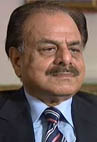
►►Finland cancels visa of ex-KGB general. We reported recently on the case of Mikhail Golovatov, a former commander of the Soviet KGB’s Alpha Group, who is wanted in Lithuania for alleged war crimes against the country’s secession movement in the early 1990s. Last week, Austria arrested Golovatov, but released him 24 hours later, claiming that his Lithuanian-issued European arrest warrant was “too vague” to justify his continued detention. There are now reports that the Finnish embassy in Moscow has annulled the Schengen visa it had previously issued to the former KGB officer. In a statement, Finnish officials said they would not have granted Golovatov a visa in the first place, except there had been “a spelling mistake in Golovatov’s first name”, which made them think he the applicant was not General Golovatov of KGB fame. Hmmm…. ►►Georgian ‘spy photographers’ to be released. In a bizarre twist to the ‘photojournalist spies’ saga in Georgia, the government has announced that the three will be released under an agreed plea-bargain deal, because they had given the authorities “information of particular importance for national security” about Russian intelligence operations in Georgia. The three have allegedly “revealed the identities of Russian spies working in the country as well as the names of their Georgian collaborators and cover organizations operating on behalf of Moscow”. The three, Zurab Kurtsikidze, Irakli Gedenidze and Giorgi Abdaladze, are all professional photojournalists, who are accused by Tbilisi of spying for Moscow. ►►Pakistani ex-spy director says US owes Pakistan. Imtiaz Ahmed (often spelled Ahmad) is the former Director General of Pakistan’s main domestic intelligence agency, the Intelligence Bureau (IB). In a recent interview, he accused the United States of using the ‘war on terrorism’ as a strategic pretext for capturing energy resources and limiting China’s economic growth. He also said that the US owes the Pakistani intelligence agencies, because without them it could not have accomplished its task in the Afghan war against the Soviet Union. IntelNews readers may remember the last time Ahmad had made headlines, when he revealed a series of CIA operations against Pakistan’s nuclear program.

News you may have missed #539

Milt Bearden

Milt Bearden

By IAN ALLEN | intelNews.org |
►►Former CIA officer urges US-Pakistan reconciliation. During the 1980s, CIA officer Milt Bearden managed the CIA’s covert assistance to the Mujahedeen, who were fighting the Soviet army in Afghanistan. This means Bearden was dealing with Pakistan’s Inter-Services Intelligence directorate (ISI) on an almost daily basis. He has now written an article for Foreign Policy journal, in which he advises CIA and ISI officials to “cut through the shrillness, the schoolyard taunts that characterize […] the current feud between their services; decide on what is worth fixing; agree on important common goals; and get to work”. He also reminds policymakers in Washington that America’s “influence in the Indian Ocean is slipping as China and India flex their growing economic muscle”, and that the US needs Pakistan’s assistance to remain relevant in that part of the world. ►►Pakistan spy director comes to US following aid cut. Meanwhile, Washington’s decision to withhold nearly a billion dollars in annual military aid to Pakistan has shaken up Islamabad. The Associated Press reports that high-level US-Pakistan meetings are quickly “unfolding”. One such meeting involves ISI’s fiery Director, Lt. Gen. Ahmed Shuja Pasha, who just made an emergency visit to Washington, reportedly “for talks”. Pakistani officials insist, however, that “the trip was planned for some time”. Sure. In case you are wondering, Pasha’s visit went “very well“, according to both US and Pakistani officials. ►►Secret CIA site in Somalia revealed. While most intelligence observers are concerned with the latest US-Pakistan spat, Jeremy Scahill, one of America’s most tireless investigative reporters, has revealed that the CIA maintains a large secret site in Somalia. Read more of this post

News you may have missed #531 (US edition)

  • US spy agencies looking into cloud computing. In-Q-Tel, the investment arm of the US intelligence community, recently sunk money into a cloud-based storage company called Cleversafe. The CIA has emerged as one of the US government’s strongest advocates of cloud computing, but some US intel insiders are not so hot on the idea.
  • Obama administration drops most CIA torture probes. So, this is how one of the darkest chapters in US counterterrorism ends: with practically every instance of suspected CIA torture dodging criminal scrutiny. Wired’s Danger Room blog calls it “one of the greatest gifts the Justice Department could have given the CIA as David Petraeus takes over the agency”.
  • US report shows increase in authorized wiretaps. US federal and state applications for orders authorizing or approving the interception of wire, oral or electronic communications increased 34 percent in 2010, compared to the number reported in 2009.

News you may have missed #524 (analysis edition)

  • US intelligence shift shows change in Afghan war aims. American military intelligence officers were scrambling a year ago to collect and analyze the social, economic and tribal ins and outs of each valley and hamlet in Afghanistan. But the gradual scaling back of US operations (and ambitions) in Afghanistan is driving a shift away from that labor-intensive attention to detail. Now targeting insurgent leaders and their close support networks is seen as an important part of the US exit strategy (some would call this settling old scores before the US leaves the area).
  • Ex-CIA officer questions West’s motives in Syria. The European and American intervention in Syria is designed to harm Iran and to protect Israel and Lebanese Christians, not Syrian people, according to Robert Baer, a retired CIA officer with direct experience in the region.
  • Will new CIA director rein in the drone war? When General David Petraeus takes heads to the CIA, he’ll put “relentless pressure” against al-Qaida, he told senators last week. But in a rare public discussion of the CIA’s drone war in Afghanistan and Pakistan, Petraeus suggested it may not be his first counterterrorism option.

Analysis: Arab revolutions cause blind spot for US spies

Christopher Dickey

Dickey

By JOSEPH FITSANAKIS | intelNews.org
An unusually blunt piece published in Newsweek magazine describes the Arab democratic revolutions in Egypt, Tunisia, Libya and elsewhere as serious detriments to US intelligence collection in the Muslim world. Written by Newsweek’s Middle East Regional Editor Christopher Dickey, the lengthy article argues that the ongoing political changes in several Arab countries make US counterterrorism professionals long for the days “when thuggish tyrants, however ugly, were at least predictable”. It even quotes an unnamed senior intelligence officer who denounces the celebration of democracy in the Arab world as “just bullshit”, and sees “disaster […] lurking” in the region. The reason for such vehement reaction is plain: US intelligence professionals are witnessing an elaborate network of informants across the Arab world, which they painstakingly built and cultivated since the late 1960s, crumble before their very eyes. These informants, who had senior government positions in secularist Arab dictatorships, “are either gone or going”, says Christopher Boucek, of the Carnegie Endowment for International Peace. Read more of this post

Comment: Was the Killing of Osama bin Laden Legal?

Osama bin Laden

Osama bin Laden

By IAN ALLEN* | intelNews.org |
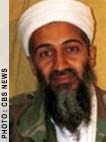
The reaction of Americans to news of the assassination of Osama bin Laden has been overwhelmingly jubilant. Many will say that the killing of al-Qaeda’s founder was justified. But was it legal? Responding to news of the killing, famed linguist and political commentator Noam Chomsky suggested that “we might ask ourselves how we would be reacting if Iraqi commandos landed at George W. Bush’s compound, assassinated him, and dumped his body in the Atlantic”. Commenting from a different viewpoint, CNN legal analyst Jeffrey Toobin argues that the legal complications of arresting bin Laden would have been immense, and would have perhaps signaled “the most complex and wrenching legal proceeding in American history”.  We could would add to this that the White House was probably concerned about a prolonged state of heightened security for American embassies and civilian or military installations around the world, which could have lasted for as long as bin Laden’s hypothetical trial continued —which could have been years. Read more of this post

Comment: Five Surprising Truths About the Killing of Bin Laden

Osama bin Laden

Osama bin Laden

By JOSEPH FITSANAKIS* | intelNews.org |
For intelligence and terrorism experts, the frustrating part of Osama bin Laden’s assassination is not the lack of details on the operation, nor the diplomatic ping-pong currently taking place between America and Pakistan. Rather it is the media spectacle that has unfolded around the story ever since it first made headlines. The cacophony of conjecture that has hijacked the global news agenda is maintained by an army of talking heads, who rely on rumor and speculation to satisfy sensationalist media editors. The outcome is a sterile media circus, devoid of substance, which leaves news consumers confused and uninformed. To counter this trend, intelNews lists here five truths of critical importance about Osama bin Laden’s assassination. In summary: One, America does not have to prove it killed bin Laden. Two, bin Laden’s assassination is not a victory against terrorism. Three, it likely will not reduce —and may even increase— terrorism. Four, it will not have the slightest effect on the Taliban or the war in Afghanistan. Five, even if the Pakistani government consciously shielded bin Laden, there is not much the US can do about it. More specifically:

Read more of this post

Comment: Some early remarks on bin Laden’s assassination

Osama bin Laden

Osama bin Laden

By JOSEPH FITSANAKIS* | intelNews.org |
It is tempting to consider the impact of Osama bin Laden’s assassination on al-Qaeda-inspired groups and, more broadly, on America’s “global war on terrorism”. Yet any such endeavor at this point would be inevitably speculative. The truth is, nobody has the slightest idea of the possible strategic spillover of bin Laden’s killing, and this includes the White House, the CIA and NATO. There are, however, some general remarks, mostly of operational nature, that can safely be made on the basis of the limited factual information that has been made available. To begin with, it appears that the assassination of al-Qaeda’s senior figurehead was conducted by ground forces, and not remotely, as has been the case with the vast majority of US assassination operations carried out in Afghanistan and Pakistan during the past several years. This potentially strengthens the argument, made frequently by Western and Pakistani officials, that significant achievements in the field of counterterrorism can only be conducted by surgical-type ground operations, based on accurate and actionable intelligence.

Read more of this post

Analysis: Spy Agencies Failed to Predict Egypt Uprising

Egypt uprising

Egypt uprising

By JOSEPH FITSANAKIS| intelNews.org |
It is becoming increasingly clear that the ongoing popular uprising in Egypt represents the most important geopolitical development in the Middle East since the 1979 Islamic Revolution in Iran. In light of this, it is remarkable how unprepared foreign intelligence agencies have proven in forecasting the crisis. Even the Israelis were caught completely unaware: on January 25, the day when massive protests first erupted across Egypt, Major General Aviv Kochavi, newly appointed head of Israel’s Military Intelligence Directorate, told a Knesset committee that “there are no doubts about the stability of the regime in Egypt” and that “the Muslim Brotherhood is not organized enough to take over”. Instead, Kochavi focused on political volatility in Lebanon; ironically, the latter now seems like an oasis of tranquility compared to the explosive state of Egyptian politics. If the Israelis, whose very concept of national security is inextricably linked with developments in Cairo, were so unsuspecting of the popular wave of anger against the thirty-year dictatorship of President Hosni Mubarak, one can only imagine Washington’s surprise at the protests. Click here to read my article in Intelligent-Intelligence.com, a specialist publication edited by Kyle Cunliffe. Continue reading →

Largest Afghan narcotrafficker was CIA, DEA informant

Haji Juma Khan

Haji Juma Khan

By JOSEPH FITSANAKIS | intelNews.org |
The history of operational collision between the Central Intelligence Agency and illicit narcotics traders is both long and largely documented. But new revelations published in The New York Times this week come to add a new chapter in this ever-expanding saga. The revelations this time concern Haji Juma Khan, perhaps the most notorious of Afghanistan’s drug lords, who has been described by US federal officials as arguably the most dangerous narcotrafficker in Central Asia. In 2008, Khan was finally arrested in New York, where he was charged with conspiracy to fund terrorist operations through trading in narcotics. American prosecutors allege that Khan literally “helped keep the Taliban in business”, providing them with weapons and cash on a systematic basis. But The Times reveal that, over a number of years, Khan also acted as an informant for both the CIA and the Drug Enforcement Administration and was “paid a large amount of cash” in return for his services. Read more of this post

US considering CIA targeted killings in Yemen

Yemen

Yemen

By JOSEPH FITSANAKIS | intelNews.org |
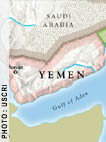
The White House is considering an unprecedented expansion of operations by the Central Intelligence Agency in Yemen, following last week’s foiled toner cartridge bomb plot. There are reports that the plot, which appears to have originated in Yemen, and was foiled through a last-minute tip from Saudi intelligence, may tip the balance in Washington in favor of those wishing to enhance the CIA’s activities in Yemen’s Sunni areas. According to The Wall Street Journal, the Obama Administration is close to authorizing the CIA’s use of unmanned drones to bomb suspected targets in Yemen, something that the Agency has been doing for over a year in Pakistan. But there also appears to be a wider consensus forming in favor of authorizing covert targeted killings inside Yemen by Special Forces operating on the ground under Langley’s command. This consensus appears to be forming in both civilian and military circles in Washington, despite fears that such tactics may backlash, leading to a severance of ties between the United States and the Yemeni government of President Ali Abdullah Saleh. The Journal article mentions that the White House is now considering authorizing the CIA to conduct targeted killings “even without the explicit blessing of the Yemeni government”. Read more of this post

News you may have missed #446

  • American pleads guilty to spying for China. Glenn D. Shriver acknowledged on Friday that he accepted $70,000 from Chinese spies as he attempted to secure jobs with the CIA and US Foreign Service that would have allowed him to expose US government secrets. He apparently spent two years going through the CIA hiring process and reached the final security screenings. But US intelligence sources say Shriver was discovered very early in the hiring process.
  • Obama widens CIA operations in Pakistan. The US is pushing to expand secret CIA operations in Pakistan. But Islamabad is so far rebuffing US requests to allow additional CIA officers and special operations military trainers to enter the country.
  • US spy balloons blew towards Iran. The latest WikiLeaks revelations show that on two occasions in 2006 American JLens spy balloons broke from their moorings in Iraq and drifted toward the Iranian airspace. No information on the balloons’ fate is reported in the war logs. Did Iran get hold of them?

CIA hid terrorism prisoners from US Supreme Court

CIA HQ

CIA HQ

By JOSEPH FITSANAKIS | intelNews.org |
The Central Intelligence Agency purposefully concealed at least four terrorism detainees from the US legal system, including the Supreme Court, according to an exclusive report by the Associated Press. The news agency has revealed that the CIA secretly transported the four to Guantánamo Bay Detention Camp on Cuba in 2003, two years before it publicly admitted their capture. It then secretly transferred them again to other sites in its black site prison network in various countries around the world, just three months before their prolonged stay at Guantánamo would entitle them to legal representation. While at Guantánamo, the four prisoners, Abd al-Nashiri, Mustafa al-Hawsawi, Ramzi Binalshibh and Abu Zubaydah, were kept at a facility known as ‘Strawberry Fields’, which is detached from the main prison site at the bay. By hiding the four, the Bush Administration managed to keep them under CIA custody while denying them legal representation for two years longer than allowed by US law. It also concealed their detention from national and international human rights monitoring bodies and from the US justice system, including the Supreme Court. Read more of this post