British government tries to block probe into ex-KGB officer’s murder
February 27, 2013 4 Comments
 By JOSEPH FITSANAKIS | intelNews.org |
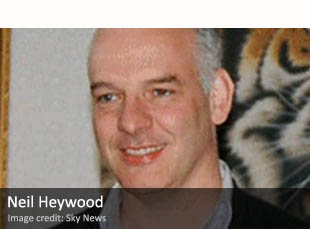
The family of a Russian spy, who died of poisoning after defecting to Britain, has accused the British government of trying to cover up the affair in order to avoid embarrassing Russia. Alexander Litvinenko was an employee of the Soviet KGB and one of its successor organizations, the FSB, until 2000, when he defected with his family to the United Kingdom. He soon became widely known as a vocal critic of the administration of Russian President Vladimir Putin. In 2006, Litvinenko came down with radioactive poisoning soon after meeting a former KGB/FSB colleague, Andrey Lugovoy, at a London restaurant. He died in hospital three days later. A public inquest into Litvinenko’s murder had been scheduled for May, 2013. On Tuesday, however, it was revealed that the British government had filed a written petition to limit the information disclosed in the inquest. According to The London Times, British Foreign Secretary William Hague filed a Public Interest Immunity Certificate (PIIC), which, if allowed to stand, would limit the scope of the inquest on national security grounds. It is believed that the government wishes to block information linking Litvinenko to the Secret Intelligence Service —also known as MI6— Britain’s primary external spy agency. Last December, Ben Emmerson, the lawyer representing Litvinenko’s widow, claimed that the late Russian spy was a “registered and paid” agent of MI6 and Spanish intelligence at the time of his death. Read more of this post








 intelNews.org
UK foreign secretary warns Israel against sabotaging Iran nuke deal
November 27, 2013 by Joseph Fitsanakis Leave a comment
The British foreign secretary warned Israel on Monday not to try to sabotage the interim nuclear deal with Iran “in any practical way”. William Hague, a senior cabinet member in the Tory-led British government, was speaking at the House of Commons on Monday, when he urged the world, “including Israel”, to act positively toward the accord. The latter was struck last week between the Islamic Republic of Iran and a group of nations that have come to be known as P5+1, representing the five permanent members of the United Nations Security Council plus Germany. Tehran has provisionally agreed to limit the scope of its nuclear energy program in exchange for the P5+1 group of nations taking initiative to have certain economic sanctions on Iran lifted. Although the agreement is still in its interim stage, participating nations hope to have it finalized before the end of 2014. There are fears, however, that some Middle Eastern nations, notably Israel and Saudi Arabia, might try to sabotage the deal. Last weekend, Israeli Prime Minister Benjamin Netanyahu described the interim agreement as an “historic mistake” and stressed that Tel Aviv was not involved in, and therefore not bound, by the accord. He concluded his speech at the Israeli Knesset by promising that Israel “will not allow Iran to develop a military nuclear capability”. In his speech to members of parliament, Mr. Hague agreed that it was crucial to “try to understand” those nations that oppose the agreement. However, he urged critics to “confine their criticism to rhetoric”. He specifically named Israel, saying that the British government “would discourage anybody in the world, including Israel, from taking any steps that would undermine this agreement”. He added that Downing Street would make that message “very clear to all concerned”. The foreign secretary went on to say that London had no evidence that parties opposed to the agreement were prepared to sabotage it “in any practical way”; but he emphasized that Britain would remain “on its guard”. Read more of this post
Filed under Expert news and commentary on intelligence, espionage, spies and spying Tagged with Iran, Iranian nuclear program, Israel, News, P5+1, UK, William Hague