News you may have missed #639 (Katia Zatuliveter edition)

Katia Zatuliveter

Katia Zatuliveter

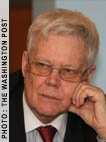
►►Russian woman accused of spying wins right to stay in UK. Katia Zatuliveter, 26, who was accused by British counterintelligence service MI5 of being a spy for Russia, has won a court appeal against her planned deportation. A panel of the UK’s Special Immigration Appeals Commission, which included the former MI5 director general Sir Stephen Lander, ruled that MI5′s suspicions about Zatuliveter had been reasonably held, but were wrong.
►►Zatuliveter espionage case reveals MI5 fears. MI5, the security service, will be hugely disappointed that the Special Immigration Appeals Commission has overturned the government’s attempt to deport Katia Zatuliveter on allegations that she spied for Russia. But senior figures at the domestic intelligence service will have no regrets about undertaking their yearlong attempt to secure the expulsion of an individual who has given them ample grounds for suspicion.
►►How big is the threat from Russian spies? There may well be Russian spies operating in Britain today, but Katia Zatuliveter –who has won an appeal against deportation– is not one of them, and the failure of the case against her is an embarrassing blow to a security service for whom the Russians were once the top target.

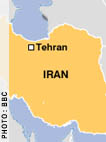
Blast reported in Isfahan, site of major Iranian nuclear facility

Iran

Iran

By JOSEPH FITSANAKIS | intelNews.org |
Iranian media are reporting a blast in the city of Isfahan, in central Iran, which is home to one of Iran’s most active nuclear facilities. News reports, including one from Iran’s state-operated FARS News Agency, say that the blast was heard across the city at 2:40 p.m. on Monday, and that an investigation is currently underway to determine its cause. With a population of nearly two million, Isfahan, capital of the province by the same name, is Iran’s third largest city. It is also home to one of the country’s premier nuclear research facilities, which includes a nuclear plant that produces uranium pellets for use in nuclear reactors. Intriguingly, after an initial period of silence, regional government officials in Isfahan appeared to downplay reports of the explosion. Speaking to Iran’s Mehr news agency, the Deputy Governor of Isfahan, Mohammad-Mehdi Ismaeli, said characteristically that reports of an explosion were “unfounded”, and speculated with a dose of sarcasm that “maybe someone’s water heater blew up”.  But Western reports from Iran, including one by United Press International, interpret the media attention given to the Isfahan blast as an indication of “how the country is being spooked by cover operations against its nuclear program”. Reports of the alleged blast come only weeks after a major explosion at a military base 25 miles west of Iranian capital Tehran killed 17 members of Iran’s elite Revolutionary Guards Corps, including Major General Hassan Moqqadam. The late General was described by Iran’s state media as the “founder of Iran’s missile program” and a pioneer in the country’s missile development after the 1979 Iranian Revolution. Meanwhile, the former Director of Israeli intelligence agency Mossad, Meir Dagan, has reiterated his warnings against plans by Tel Aviv to attack Iran. Speaking on Israeli television on Tuesday, Dagan cautioned Israel Read more of this post
News you may have missed #639

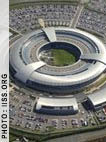
GCHQ

GCHQ

►►GCHQ will sell cyberdefense tech to private firms. The GCHQ, Britain’s signals intelligence agency, is to market some of its security technologies to companies in the private sector, in an attempt to bolster defenses against the foreboding threat of cyberwarfare. The UK government’s “cyber security strategy”, which was unveiled this month, has earmarked £650 million in public funding to set up a four-year National Cyber Security Program, a percentage of which will be used to collaborate with private companies. Click here for an excellent analysis on the public-private cybersecurity collaboration in Britain.
►►Was there a coup attempt in Trinidad? Many in Trinidad and Tobago were expressing skepticism yesterday about an alleged assassination plot, which Prime Minister Kamla Persad-Bissessar said had been uncovered against her and several of her ministers. Police said nearly a dozen people had been arrested, including members of the army and police, but authorities have not given more details, citing the need to maintain security in operations to dismantle the plot.
►►US Senators resist $7 Billion in spending cuts for spy satellites. The Obama Administration wants to stop incessant spending by Defense Department contractors, especially those who have wasted billions of US taxpayers’ money in failed spy satellite projects. But the contractors’ friends in Congress, including lawmakers on the US Senate Intelligence Committee, are trying to stop the White House from cutting a $7 billion commercial satellite program being developed by GeoEye Inc. and DigitalGlobe Inc. What else is new?

News you may have missed #638 (analysis edition)

Dominique Strauss-Kahn

Strauss-Kahn

►►What really happened to Strauss-Kahn? Earlier this year, Dominique Strauss-Kahn lost his political career and his job as head of the International Monetary Fund after he was indicted in New York on sexual assault charges, which were later dropped. But investigative journalist Edward J. Epstein alleges that the French politician may have been the target of a deliberate attempt to destroy him as a political force. His allegations relate to a missing BlackBerry phone which is said to have been hacked by Strauss-Kahn’s political rivals.
►►Spy game revs up with Arab Spring. A broad –perhaps too broad– primer on espionage and intelligence operations in the Middle East, with quotes by several academics and former intelligence operatives. Parts of it are probably too basic for intelNews regulars, but worth a look nonetheless.
►►Why is UK police not investigating Climategate? The UK police force tasked with investigating the hacking of emails and documents from the Climatic Research Unit at the University of East Anglia (the debunked “Climategate“), seems to have quietly de-prioritized its investigation. According to documents released under the UK Freedom of Information Act, the amount spent on attempts to identify the hacker in the last year was just £5,649.09 (less than $8,000), suggesting police work on the investigation has ground to a halt.

News you may have missed #637

Dmitri Bystrolyotov

D.A. Bystrolyotov

►►South African spy boss to quit. Director General of the State Security Agency Jeff Maqetuka, who has been entangled in a never-ending war with Minister Siyabonga Cwele, is expected to step down this week, according to South Africa’s Sunday Independent. The paper claims that that plans are afoot to expedite Maqetuka’s departure from the country’s intelligence infrastructure by placing him on summer leave and then making sure he would not return to work in 2012.
►►Slovakian defense minister resigns over wiretap scandal. The interception of journalists’ telephone calls by the Slovakian Defense Ministry’s counterintelligence arm has cost the country’s Defense Minister, Lubomír Galko, his job. The scandal involved Slovakia’s Military Defense Intelligence (VOS). It has also emerged that the VOS operation involved wiretapping of the head of TV news channel TA3 and two senior Defense Ministry employees, according to leaked documents obtained by Slovak media outlets.
►►Book on Soviet spy Dmitri Bystrolyotov. Excerpt from Emil Draitser’s book Stalin’s Romeo Spy: The Remarkable Rise and Fall of the KGB Most Daring Operative (Northwestern University Press, 2010), about one of the 20th century’s most outstanding undercover operatives. Bystrolyotov acted in Western Europe in the interwar period, recruiting and running several important agents in Great Britain, France, Germany, and Italy.

Analysis: Cloud computing causes ‘cosmic shift’ in US spy community

Cloud computing

Cloud computing

By JOSEPH FITSANAKIS | intelNews.org |
While many are focusing on recent reports of arrests of CIA operatives in Lebanon and Iran, American intelligence planners have other things on their minds: the latest buzzword is ‘cloud’; specifically, ‘cloud computing’. The term means storing information and software on a network, which can then be shared on demand by users of interconnected electronic devices. The US intelligence community’s interest in this form of data organizing has been known for quite some time. But according to specialist publication Federal Computer Week, cloud computing is rapidly becoming a reality, as one after the other, US intelligence agencies are “moving their classified, sensitive information off their own servers and into the cloud”. Such a change “might have sounded crazy five years ago”, says FCW, and the fact that it is happening marks nothing less than a “cosmic shift” for American intelligence. The migration unto the cloud was spearheaded two years ago by the National Security Agency; the NSA was later joined by the Defense Intelligence Agency, the National Geospatial-Intelligence Agency, and the super-secretive National Reconnaissance Office. Soon the CIA wanted in: in 2009, Jill Tummler Singer, the CIA’s deputy Chief Intelligence Officer, told ComputerWorld that the CIA was becoming one of the US government’s strongest advocates for cloud computing, even though “the term really didn’t hit our vocabulary until a year ago”. Not everyone is super-excited about the cloud. Last year, Brian Snow, the NSA’s former Technical Director, said at a conference that he didn’t trust cloud services, mostly because of the existence of countless unpatched software vulnerabilities. But the move is heavily supported by two of America’s most senior intelligence officials: Keith Alexander, commander of US Cyber Command and director of NSA —America’s largest intelligence agency— and Director of National Intelligence James Clapper. Read more of this post

News you may have missed #636

Lebanon

Lebanon

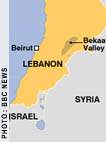
►►Careless codeword may have cost CIA its Lebanon network. Hezbollah have reportedly just rolled up the CIA’s network of spies in Lebanon. If so, it’s because of one of the stupidest, least secure code words in history. According to ABC News, Hezbollah operatives figured out that CIA informants, who had infiltrated the Iranian proxy group, were meeting with their agency handlers at a Beirut Pizza Hut. How could Hezbollah deduce that location? “The CIA used the codeword ‘PIZZA’ when discussing where to meet with the agents,” ABC reports.
►►UK spy chiefs to be publicly questioned for first time. The heads of British intelligence agencies are set to be questioned for the first time in public, under plans to make spies more accountable. The directors of MI5, MI6 and GCHQ will face Parliamentarians on the Intelligence and Security Committee. Although, they have recently begun to make rare public appearances, and deliver speeches, it will be the first time the intelligence agency heads will face public cross-examination over their activities.
►►Documents reveal largest domestic spy operation in Canadian history. Police organizations across Canada co-operated to spy on community organizations and activists in what the Royal Canadian Mounted Police called one of the largest domestic intelligence operations in Canadian history, documents reveal. Information about the extensive police surveillance in advance of last year’s G8 and G20 meetings in southern Ontario comes from evidence presented in the case of 17 people accused of orchestrating street turmoil during the summits.

Did US agencies fail to heed warnings of 2008 Mumbai attacks?

David Coleman Headley

David Headley

By JOSEPH FITSANAKIS | intelNews.org |
We have written before that the CIA alerted Indian authorities prior to the 2008 Mumbai attacks, which killed 166 people, including six American citizens. The incident, which was perpetrated by Pakistani-based militant group Lashkar-e-Taiba, is routinely described as the most sophisticated and spectacular terrorist strike since 9/11.  But there are numerous questions about the complex relationship between the United States, Lashkar-e-Taiba, and Pakistan’s Inter-Services Intelligence (ISI) directorate, which is widely believed to be protecting the terrorist group. Many of these questions center on David Coleman Headley, an American citizen, born in Washington, DC, who is currently in US custody, having confessed to helping plan the Mumbai attacks. According to Headley’s own court testimony, he worked for the ISI; moreover, despite early denials, the US government eventually admitted that Headley was a paid informant for the US Drug Enforcement Administration. There is, however, intense speculation in India and Pakistan that Headley, who is of Pakistani background, is in fact a CIA agent-gone-rogue, who used his CIA connections to pursue his militant plans undisturbed (something with the CIA flatly denies). Such rumors are reinforced by the US authorities’ puzzling refusal to allow Indian government investigators of the Mumbai attacks access to Headley. The curious relationship between US intelligence agencies and David Headley has been probed by several media outlets, including The New York Times, which in March of 2010 pointed out that Headley “moved effortlessly between the United States, Pakistan and India for nearly seven years, training at a militant camp in Pakistan on five occasions”. Now a new documentary by investigative group ProPublica, which aired on Tuesday as part of PBS’ Frontline television series, has unearthed new information that shows US government agencies failed to heed “repeated warnings over seven years”, which might have helped prevent the Mumbai attacks. Read more of this post

News you may have missed #635

Vitaly Shlykov

Vitaly Shlykov

►►UK to support Colombia’s new intelligence agency. The UK has announced that it will provide help and advice on the implementation of Colombia’s new national intelligence agency. Colombian President, Juan Manuel Santos, along with National Security Adviser, Sergio Jaramillo, met with the director of Britain’s secret service MI6 to exchange experiences in intelligence to implement the new National Intelligence Agency of Colombia (ANIC). ANIC is supposed to replace the DAS, Colombia’s disgraced intelligence agency, which has been stigmatized by colluding with paramilitary groups and spying on union leaders, journalists and opposition politicians.
►►US intelligence to train analysts with videogames. The US intelligence community’s research group, the Intelligence Advanced Research Projects Agency (IARPA), has handed over $10.5 million to Raytheon BBN Technologies to start work on the Sirius program. The initiative aims to create a series of so-called “serious games” that would help intelligence analysts improve their objectivity and reasoned judgment when confronted with complex or culturally foreign scenarios.
►►Soviet spy who spent years in Swiss prison dies at 77. Vitaly Shlykov served for 30 years in the Main Intelligence Directorate of the Russian General Staff, known as GRU. During his career, he made frequent trips to the West on a false American passport. One of his duties was to maintain contacts with Dieter Felix Gerhardt, a senior officer of the South African Navy who was working as a Soviet spy. In 1983, Shlykov was arrested in Zurich while carrying about $100,000 in cash to hand over to Gerhardt’s wife. Soviet intelligence was unaware that Gerhardt and his wife had been arrested a few weeks earlier and had told interrogators about the meeting in Switzerland.

News you may have missed #634

Husain Haqqani

Husain Haqqani

►►Korean ex-soldier investigated for spying. Police suspect that a former South Korean Army soldier, Kim, 34, whose full name was undisclosed to the media, crossed through Shenyang, northeastern China, into the North and handed over information gathered during and after his military service. This is the second case involving alleged North Korean spying on the South in as many days.
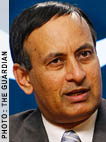
►►Pakistan ambassador to US resigns over spy memo row. Islamabad’s ambassador to Washington, Husain Haqqani, has resigned after a confrontation between Pakistan’s military and the civilian government of President Asif Ali Zardari. His resignation follows reports of an offer by the Pakistani government to the United States to rein in the army and its spy agency, Inter-Services Intelligence. Zardari’s government was accused of treachery over the proposal, which was made in a memo delivered to the US military chief, Admiral Mike Mullen.
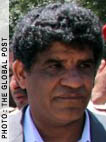
►►US says ‘no proof’ of Libyan ex-spy chief’s capture. It emerged earlier this week that former Libyan intelligence chief Abdullah al-Senussi had been captured. But the United States now says there is no proof he is in custody. According to Susan Rice, the US envoy to the United Nations, Libyan authorities “were not able to confirm that Senussi was in anybody’s custody”.

News you may have missed #633

Abdullah al-Senussi

Al-Senussi

►►Is Britain secretly assisting the CIA’s drone campaign? In the latest casualties from America’s hidden war in Pakistan, two British nationals, Ibrahim Adam and Mohammed Azmir, have reportedly been killed by drone missiles. The death of two men already known to UK authorities raises serious questions about the role that the British intelligence services are playing in the CIA’s unmanned drone war.
►►Gaddafi’s intelligence chief captured. Libya’s interim authorities have captured the last totem of the Gaddafi regime, seizing former intelligence chief Abdullah al-Senussi in the country’s southern desert. The arrest means that all leading figures from the Gaddafi regime have now been killed, captured or driven into exile.
►►South Korea says it caught North spy. A North Korean spy has been arrested after arriving in South Korea posing as a refugee, according to South Korean authorities. The latter claim to have found during a routine background check that the man, surnamed Kim, was assigned to the North’s military intelligence command and had received espionage training.

Hezbollah uncovered CIA network in Lebanon, admit US officials

Hezbollah rally

Hezbollah rally

By JOSEPH FITSANAKIS | intelNews.org |
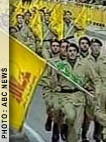
In June of this year, Lebanese militant group Hezbollah claimed it had rooted out three of its members who were allegedly spying for the United States Central Intelligence Agency. The US State Department refused to comment on the allegations, and the US embassy in Lebanon issued a statement denying Hezbollah’s accusation. But the Associated Press now says that the Lebanese Shiite group’s claims were accurate, and that the CIA has had to significantly scale back its operations in Lebanon, as a result of Hezbollah’s counterintelligence success. The news agency cites current and former US officials, who say that the Agency’s operations in Lebanon were “badly damaged” after Hezbollah identified and captured several CIA ‘assets’. It appears that the militant group, which controls large parts of southern Lebanon, was able to capture CIA agents —local ‘assets’ recruited by CIA case officers to spy on behalf of Washington— but not actual CIA officers. Still, according to the Associated Press, the operational blow suffered by the Agency’s station in the Near Eastern country has been substantial, and local CIA case officers “have secretly been scrambling to protect their remaining spies [...] before Hezbollah can find them”. The agency quotes an unnamed government source, who claims that the damage to the CIA’s network of agents in Lebanon has been “greater than usual”. Many attribute the Shiite group’s counterintelligence success to a relatively new counterespionage apparatus, which Hezbollah’s leader, Sheik Hassan Hasrallah often calls the “spy combat unit”. The group, which is said to have gone operational in 2004, is responsible for essentially decimating Israel’s intelligence network in southern Lebanon, having conducted over 100 arrests since 2009.   Read more of this post

News you may have missed #632 (Israel edition)

Ari Ben-Menashe

Ari Ben-Menashe

►►What are Mossad ex-chief’s business ties to Uganda? Former director of operations in the Israeli spy agency Mossad, Rafi Eitan, is now a private businessman. Yet he helped organize Ugandan President Yoweri Museveni’s recent visit to Israel. He is said to have been trying to establish business operations in Uganda and to set up a cattle ranch in the country.
►►Israel FM meets Mossad chief in bid to end row. Israel’s Foreign Minister Avigdor Lieberman met on Sunday with Mossad chief Tamir Pardo, in a bid to end the crisis between the two men, which culminated last week, when Lieberman ordered the foreign ministry to boycott the Mossad, to stop sharing information and to refrain from inviting Mossad officials to discussions and meetings.
►►Canada’s spy watchdog’s in shady deal with Israeli businessman. Arthur Porter, the federally appointed chairman of Canada’s Security and Intelligence Review Committee (SIRC), wired $200,000 in personal funds to Ari Ben-Menashe. A former Israeli government employee, Ben-Menashe was charged in the United States with illegally attempting to sell military planes to Iran. He said that he acted on orders from Israel. He then wrote a memoir called Profits of War, filled with accounts of international espionage and conspiracies he says he either participated in or was privy to.

Leaked documents show capabilities of new surveillance technologies

Net Optics logo

Net Optics logo

By JOSEPH FITSANAKIS | intelNews.org |
A trove of hundreds of documents, obtained by participants in a secretive surveillance conference, displays in unprecedented detail the extent of monitoring technologies used by governments around the world. The Wall Street Journal, which obtained the leaked documents, says they number in the hundreds; they were reportedly authored by 36 different private companies that specialize in supplying government agencies with the latest surveillance hardware and software. They were among dozens of vendors that participated in an unnamed conference near Washington, DC, in October, which attracted interested buyers from numerous government agencies in America and beyond. The Journal, which has uploaded scanned copies of the leaked documents, says that many include descriptions of computer hacking tools. The latter enable government agencies to break into targeted computers and access data stored in hard drives, as well as log keystrokes by the targeted computers’ users. Other applications target cellular telecommunications, especially the latest models of so-called ‘smartphones’; one vendor in particular, Vupen Security, gave a presentation at the conference, which describes how its products allow for electronic surveillance of cell phones by exploiting security holes unknown to manufacturers. Some of the most popular products at the conference related to what the industry calls “massive intercept” monitoring, namely large-scale software systems designed to siphon vast amounts of telephonic or email communications data, or to capture all Internet exchanges taking place within a country’s computer network. One conference participant, California-based Net Optics Inc., bragged in its presentation about having enabled “a major mobile operator in China” to conduct “real-time monitoring” of all cell phone [and] Internet content on its network. The stated goal of the surveillance was to “analyze criminal activity” and “detect and filter undesirable content”. Read more of this post

News you may have missed #631

Tommy Douglas

Tommy Douglas

►►Some spy files on Canadian prominent politician released. Newly declassified records from the early 1960s show that the Royal Canadian Mounted Police spied on Saskatchewan Premier Tommy Douglas (pictured), suspecting him of communist sympathies. Douglas, a popular leftwing politician, led the first social democratic government in North America.
►►Aussie diplomats urged to welcome defectors in 1980s. The Australian government urged its spies and diplomats to encourage foreign officials to defect to Australia and welcome intelligence they might bring with them, according to internal documents from the 1980s, released this week. The directives noted that applications from defectors were not expected to be numerous “but failure on our part to handle them deftly could result in the loss of intelligence relevant to Australia’s security and other interests”. One observer notes that the 1980s policy towards defectors still applies today in Australia’s diplomatic community.
►►Iran arrests two Kuwaitis on suspicion of espionage. Iran’s semiofficial Fars news agency says Iranian security has detained two Kuwaiti citizens in southwestern Iran for suspected espionage activities. Fars quoted Bahram Ilkhaszadeh, governor of Abadan, a town close to Kuwait, as saying that Iran’s security agents detained the two on possession of “spying equipment”. Kuwait has denied the charges.

Turf war between Mossad and Israel’s Foreign Ministry worsens

Avigdor Lieberman

Avigdor Lieberman

By JOSEPH FITSANAKIS | intelNews.org |
Israel’s foreign affairs minister has ordered his department’s employees to stop cooperating with the Mossad, according to media reports. Minister Avigdor Lieberman, one of Israel’s most hardline nationalist politicians, accuses the country’s covert operations agency of meddling in the tasks of Israel’s diplomatic community, while at the same time refusing to share its intelligence output with foreign affairs officials. According to The Washington Times, which cites the Hebrew-language edition of reputable Israeli newspaper Yediot Achronot, Mr. Lieberman’s decision was prompted by the Israeli Prime Minister’s move to entrust the country’s relations with Turkey to a Mossad official. Media reports state that the spy agency’s David Meidan has been dispatched by Benjamin Netanyahu to Turkey, in order to patch up the Jewish state’s anemic relationship with its once close regional ally. This has enraged the foreign affairs ministry’s leadership, which was already upset over salary discrepancies between diplomats and Mossad spies, as well as the latter’s chronic refusal to share intelligence with foreign policy planners. The friction between the Mossad and Israel’s diplomatic community goes back decades, but Lieberman’s controversial ascendance to Foreign Affairs Minister in 2009 intensified the turf war. At the beginning, Lieberman made calculated friendly gestures toward the Mossad, in one instance going as far as appointing a former Mossad official as Israel’s first-ever ambassador to Turkmenistan. But such moves quickly gave way to direct bureaucratic confrontations, which included direct strikebreaking action by Mossad officers, who assumed the duties of Foreign Affairs officials when the latter went on strike demanding better pay and work conditions. Read more of this post

News you may have missed #630

Riad Al Assad

Riad al-Assad

►►Senior Syrian military defector in Turkey denies training troops. Colonel Riad al-Assad, who acts as head of Syria’s military defectors, has denied a news report that he crossed the border from Turkey to Syria to command troops loyal to the opposition force called the Free Syrian Army. “News reports that appeared on a number of Internet sites that I had crossed into Syria to command troops there are false. I am in Turkey at the moment, in a safe place,” he told the Turkey’s Anadolu Agency on Tuesday.
►►Iran says missile base blast was not caused by Mossad. Iran has insisted that last weekend’s huge blast at the Alghadir missile base at Bid Ganeh, 30 miles to the west of Tehran, was not carried out by Israel or the US, despite widespread reports that it was the work of the Israeli secret service, the Mossad. The explosion killed 17 of the country’s elite revolutionary guards, including Major General Hassan Moqqadam, a senior commander described as the pioneer of the regime’s missile programme.
►►British official says MI6 foiled Libyan assassination plan. British intelligence foiled a plot by Colonel Muammar al-Gaddafi’s forces to assassinate Western diplomats and Libya’s revolutionary leadership, Britain’s Foreign Secretary has disclosed. In a rare speech about the secret services, William Hague said the Libyan intelligence service launched a “sustained effort” to conduct suicide and car bomb attacks against the National Transitional Council, but that “the attacks were prevented”.

Revealed: Afghan government at war with ‘CIA vigilante group’

Afghanistan

Afghanistan

By JOSEPH FITSANAKIS | intelNews.org |
Very little has been written about the Kandahar Strike Force, a controversial CIA-funded vigilante group operating in Afghanistan’s Kandahar, Zabul and Uruzgan provinces. In 2009, The New York Times reported that the late Ahmed Wali Karzai, notorious drug lord and younger brother of Afghan President Hamid Karzai, helped the CIA run the group. But ever since Wali Karzai’s assassination, in July of this year, the CIA-operated group appears to be engaged in a brutal war, not with the Taliban and al-Qaeda, but with provisional Afghan authorities. The Christian Science monitor spoke to the former leader of the Kandahar Strike Force, Atal Afghanzai, who is currently in prison, having been convicted of shooting dead a senior Afghan police commander in broad daylight. The group is made up of elite members of Afghanistan’s regular army, selected by CIA case officers and trained by US Special Forces personnel in Kandahar’s Camp Gecko, a former al-Qaeda base built by Osama bin Laden’s forces in 1996. The group operates outside the institutional parameters of the Afghan government, and answers directly to the CIA, says The Monitor, which claims to have corroborated this information with “US diplomats, other Western officials, and Afghan authorities”. The group’s imprisoned former leader told the newspaper that he and his men were paid directly by the CIA, and that they were transported by United States Blackhawk helicopters to various locations around the country, where they were expected to conduct “raids on Taliban targets at a moment’s notice”. Afghanzai claims that the group’s operations were so effective that they received letters of appreciation by no other than Hamid Karzai. But the idyllic relationship between the Kandahar Strike Force and the Afghan government appears to have ended, as members of the group are now accused of “extrajudicial killings, torture, rape, and larceny”. Read more of this post

News you may have missed #629

William Hague

William Hague

►►CIA urged to be more open about climate change. America’s intelligence establishment has come out with a bold new suggestion: maybe it’s time the CIA stopped treating climate change as a secret. A new report from the Defense Science Board –a US government agency– urges the CIA to step outside its traditional culture of secrecy and begin sharing the intelligence it has been gathering on climate change.
►►Three Czechs to be tried for spying in Zambia. The fate of three Czech nationals, who are awaiting trial in Zambia on suspicion of spying, remains highly uncertain. The three face 25 years in prison for having taken photographs of an old plane displayed outside a military base in Lusaka. The Czech Foreign Ministry has tried in vain to intervene on their behalf and is now sending a special envoy to the country to present the case in person.
►►First-ever speech on MI6 by a UK Foreign Secretary. In the first speech given by a British Foreign Secretary on the activities of MI6, William Hague (pictured) called today for a line to be drawn under the controversy over the involvement of its agents in the abuse of terror suspects, and argued that the spy agency thwarts terrorists and foreign agents hundreds of times a year.

Inquiry examines whether IRA had mole inside Irish police

Provisional IRA muralBy JOSEPH FITSANAKIS | intelNews.org |
An Irish government investigation has unearthed intelligence reports claiming that an informant within the Irish police, the Garda, helped the Provisional Irish Republican Army plan the killings of a judge and two senior British police officers in the 1980s. Sir Maurice Gibson, a Lord Justice of Appeal for the British Crown, was killed along with his wife, by a remote-controlled car bomb, as they drove over the Irish border back into Northern Ireland on 27 April 1987, following a holiday. A little less than two years later, on March 20, 1989, Royal Ulster Constabulary officers Harry Breen and Robert Buchanan, were killed in an IRA road ambush in South Armagh. The two RUC officers, who were killed as they drove back from a meeting with Garda officers in the Republic of Ireland, were targeted despite the fact that they were riding in an unmarked car. This has sparked rumors that the victims’ travel itinerary had been supplied to the IRA by an inside source, possibly an officer in the Garda. In 2000, Jeffrey Donaldson, a British Member of Parliament, told the House of Commons that Garda Detective Sergeant Owen Corrigan was the IRA mole that leaked the itineraries of Judge Gibson and the two RUC officers. The Smithwick Tribunal in Dublin, which was set up in response to Mr. Donaldson’s allegations, is scheduled to conclude at the end of this month, following public testimony by several individuals. One of those is Detective Superintendent Brian Burton, of the Dundalk Garda station, the very same station in which Det. Sgt. Corrigan served at the time of the IRA killings. Read more of this post

Follow

Get every new post delivered to your Inbox.

Join 778 other followers