News you may have missed #807

Noor Inayat KhanBy IAN ALLEN | intelNews.org |
►►Britain to unveil statue of female SOE spy of Indian origin. Born in Moscow to an Indian father and an American mother, Noor Inayat Khan was in Paris when it fell to Nazi occupation. She immediately returned to London to volunteer for the war effort, joined the Women’s Auxiliary Air Force and was recruited by the Special Operations Executive (SOE). She was sent into France on a secret mission in June 1943, but was betrayed and captured a few months later. She was shot by the Nazis in Dachau in September 1944, aged 30, and was posthumously awarded the George Cross as well as the Croix de Guerre by France. She was one of only three women in the SOE to be awarded the George Cross.
►►US intelligence spending falls or second year in a row. The US government’s total spending on intelligence activities fell in 2012, the second year in a row of declining numbers after years of soaring security spending since the September 11 attacks in 2001. The Office of Director of National Intelligence, the top US intelligence authority, announced on Tuesday that total funding appropriated for the National Intelligence Program, covering activities of the CIA and high-tech spy agencies such as the National Reconnaissance Office, was $53.9 billion in Fiscal Year 2012, which ended on September 30. That was down from the $54.6 billion appropriated during Fiscal Year 2011, according to government officials and figures published by the private Federation of American Scientists.
►►Russia wants to park spy planes on French base. France has been asked by Moscow to allow two Russian spy planes to be deployed at a French base in Djibouti to help track down pirates. Russian Defense Minister Anatoly Serdyukov said last week that the Ilyushin Il-38 naval reconnaissance planes would improve Russia’s ability to spot pirates plaguing waters off the coast of Somalia. Djibouti is at the juncture of the Red Sea and the Gulf of Aden. The French base is home to several thousand French service members and a number of military aircraft.

News you may have missed #806

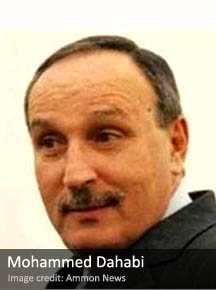
Mohammed DahabiBy IAN ALLEN | intelNews.org |
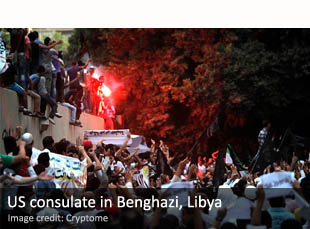
►►Most staff at US consulate in Libya were CIA personnel. Most of the personnel attached to the US diplomatic mission in Benghazi, the Libyan city where a US consulate was attacked ending with the deaths of four Americans, including Ambassador Christopher Stevens, were spies, according to The Wall Street Journal. The paper said 23 of the 30 Americans evacuated from Benghazi in the wake of the September 11, 2012, attack were employees of the CIA. Tyrone Woods and Glen Doherty, two of the men killed that day, and later publicly identified as contract security workers with the State Department, were in fact under contract with the CIA, said the paper.
►►India accuses Pakistan of printing counterfeit banknotes. The Central Economic Intelligence Bureau in India says that the Pakistani spy agency, the Inter-Services Intelligence Directorate (ISI) is printing counterfeit Indian and Bangladeshi currencies from the state-owned security printing presses “under special arrangement” and circulating the same through a well-organized network, which is coordinated by senior ISI officials. This is not the first time that the Indian government has accused Pakistan of counterfeiting Indian currency.
►►Jordan court to announce ex-spy chief’s sentence on November 11. A Jordanian criminal court has postponed a verdict in the case of Mohammed al-Dahabi, who ran the General Intelligence Department between 2005 and 2008 and is on trial for alleged embezzlement of public funds, money laundering and abuse of office. Presiding judge Nashaat Akhras said in court Sunday that the verdict will be pronounced November 11, without giving a reason. Dahabi was arrested in February, when inspectors from the Central Bank of Jordan suspected transactions worth millions of dollars had gone through his bank account.
News you may have missed #805 (analysis edition)

US consulate in Benghazi, LibyaBy IAN ALLEN | intelNews.org |
►►Should the US be wary of Huawei? Regular readers of intelNews know that this blog has been covering the subject of Chinese telecommunications hardware manufacturer Huawei for several years now. During the past few weeks, the United States Congress has flagged the company as being too closely associated with the Chinese intelligence establishment. Other countries have done so as well. But not everyone agrees. New York-based newspaper The Wall Street Journal said recently that “bashing Chinese companies on national security grounds seems like a risk-free strategy” for US politicians and added that, unlike Congress, American governors and mayors are eager to promote investment by Chinese companies. Moreover, Wired‘s Marcus Wohlsenemail suggests that, spies or no spies, US telecommunications companies should fear Huwaei, which is here to stay.
►►Should CIA share some of the blame for Benghazi? For the last month, the US media and Congress have been grilling the State Department for the security failures during the deadly assault on a US compound in Benghazi, Libya. But what if the State Department is the wrong target of scrutiny? According to a counter-theory advanced recently by The Washington Post‘s Dana Milbank, the CIA, not the State Department, bears some responsibility for the security lapse that led to the death of Ambassador Chris Stevens and three other Americans, but is flying under the radar due to the classified nature of its activities in Libya.
►►Could unmanned drones go rogue? Unmanned aerial vehicles, commonly known as drones, have been in the news a lot lately: the US Congress has given the green light for their use by state and local law enforcement, academic researchers, and the private sector. UAVs are rapidly becoming a new tool in patrolling US borders and in NATO military operations in Afghanistan and Pakistan. But non-state actors, including organized criminal gangs and drug cartels, may also be seeing the benefits of UAVs before too long. Read an interesting analysis piece that includes comments by intelNews‘ own Joseph Fitsanakis.

Taiwan arrests eight military officers for spying for China

China and TaiwanBy IAN ALLEN | intelNews.org |
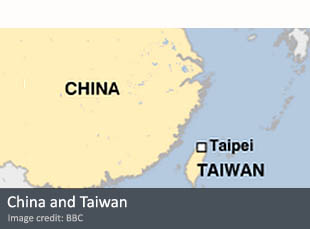
Authorities in Taiwan have announced the arrest at least eight current and former military officers on suspicion of conducting espionage on behalf of China. The eight are accused of leaking Taiwanese military secrets to Beijing, in a case that some Taiwanese legislators described yesterday as one of the most serious instances of espionage in the island’s history. According to official statements issued yesterday, the person in charge of the alleged spy ring appears to be Lieutenant Colonel Chang Chin-hsin, who until his retirement earlier this year was charge of political warfare at the Naval Meteorology and Oceanography (METOC) Office. Based outside of Taipei, METOC is in charge of producing mapping data for use by Taiwan’s naval forces, including cartographic manuals used by Taiwanese warships and submarines guarding the Taiwanese coastline. Taiwanese authorities allege that Chang “initiated contacts” with Chinese mainland officials while still serving in the Taiwanese Navy. Following his recruitment, Chang gradually enlisted several other members of the Taiwanese military by offering hefty monetary bribes in exchange for military secrets. Taipei authorities claim that they found out about Chang’s espionage activities in March of this year, and that Taiwan’s Military Prosecutors Office gathered evidence against him before he was able to seriously compromise national security. Read more of this post

ExxonMobil executive shot dead ‘assassination-style’ in Brussels

Nicholas MockfordBy IAN ALLEN | intelNews.org |
A senior British executive of American multinational oil and gas corporation ExxonMobil has been killed in an alleged “assassination-style” shooting in Belgium. Nicholas Mockford, 60, was a technical support manager for ExxonMobil Chemicals, Europe, specializing in intermediate technology, also known as alternative energy generation. He was shot dead at 10:00 in the evening as he was leaving an Italian restaurant on Rue de Beyseghem, in Neder-over-Heembeek, a leafy suburb of Belgian capital Brussels, where he lived with his Belgian wife and three children from a previous marriage. British newspaper The Daily Telegraph, which published news of the incident last week, said that Mr. Mockford was killed on October 14. But the paper said a “judicial instruction” had been imposed on the case by the investigating judge, which amounted to a news blackout. According to reports, Mr. Mockford was with his wife Mary when he was shot in the attack, which witnesses said happened “very quickly”. The couple was allegedly seen walking across the street from the restaurant to their car, when all of a sudden several shots were fired. The Telegraph said that Mr. Mockford’s wife was left at the scene of the crime “covered in blood” and crying for help. Two men were apparently seen running away from the area where the shooting took place, carrying motorcycle crash helmets. Soon afterwards Mr. Mockford died on his way to the hospital, said the paper. Read more of this post

News you may have missed #804

Jeffrey Paul DelisleBy IAN ALLEN | intelNews.org |
►►CIA officer reportedly among dead in Afghanistan bombing. The attack, which was carried out in a remote area of Kandahar Province, occurred when a guard working for the Afghan intelligence service detonated a suicide vest as a delegation of American coalition members and Afghan intelligence officials arrived at the intelligence office in the Maruf District. The blast killed Ghulam Rasool, the deputy intelligence director for Kandahar Province, two of his bodyguards, another Afghan intelligence official, and some Americans, including the CIA officer. A spokeswoman for the CIA declined to comment.
►►Canadian intel officer was ‘on Russian payroll for years’. Former navy intelligence officer Jeffrey Paul Delisle, who pleaded guilty this month to spying, was leaking secrets to Russia, sending classified data about Canada as well as the United States, according to David Jacobson, the US ambassador in Ottawa. So far, the Canadian government has refrained from revealing the identity of “the foreign entity” to whom Delisle passed the classified information. Ambassador Jacobson refused to specify the nature of the information, saying only that “there was a lot of highly classified material”.
►►Panama wants to adopt euro as legal tender. Panama, one of the fastest growing economies in Latin America, wants to adopt the euro as legal tender to run alongside the country’s US dollar economy. Panama’s President Ricardo Martinelli made the request to German Chancellor Angela Merkel during a visit to Europe. The president indicated he had every faith that the crisis in the eurozone would soon be at an end, adding that Panama “would be possibly the only country in the world to have two currencies, the euro and the dollar”.

Jordan claims arrest of seven-member Syrian spy cell in Amman

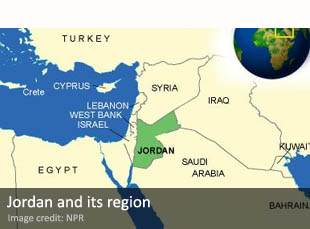
Jordan and its surrounding regionBy IAN ALLEN | intelNews.org |
Security services in the Kingdom of Jordan announced on Tuesday the detention of seven Syrian nationals who were allegedly caught with sophisticated communications devices in their possession. The announcement was made in a laconic press release issued early yesterday evening by Jordan’s Public Security Directorate (PSD), which is the Kingdom’s counterintelligence agency operating under the Ministry of the Interior. The press release said a Syrian national had been arrested in Jordanian capital Amman following “intelligence tips”. Following his detention, the man allegedly told his interrogators that he was a member of a larger Syrian spy cell active in and around Amman. On Monday, PSD forces conducted simultaneous raids across Amman and the nearby city of irbid (50 miles north of the capital), and arrested another six Syrians. According to the PSD, the detainees were found to be in possession of 35 “advanced communications devices” that are “banned in the Kingdom of Jordan”. Sources tell intelNews that the devices are portable two-way radio transceivers, which appear to be satellite-enabled and to have encryption capabilities. In addition to the transceivers, Jordanian counterintelligence allegedly confiscated three laptop computers and a “night vision device”. Special Police Force spokesman Mohammed Khatib told reporters on Tuesday that the seven Syrians were collaborating with Jordanian authorities, but refused to provide specific information on their identities, condition or whereabouts. Read more of this post

News you may have missed #803

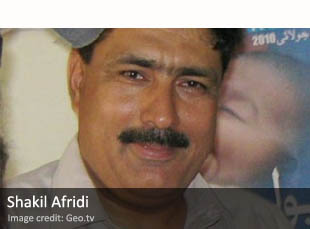
Shakil AfridiBy IAN ALLEN | intelNews.org |
►►Phone seized from Pakistani doctor who helped CIA find bin Laden. Pakistani authorities have seized a Thoraya satellite phone from jailed doctor Shakil Afridi, who helped the CIA trace Osama bin Laden, and also arrested four police commandos guarding his cell. After interrogation, one of the four arrested commandos confessed that he had provided the satellite phone to Afridi. The doctor had reportedly made more than 68 calls from the satellite phone set and most of these calls were long-distance, but the authorities are assessing the satellite phone data to ascertain the country location.
►►US whistleblower protections extended to intelligence community. US President Barack Obama has extended whistleblower protections to national security and intelligence employees. A new Presidential policy directive says employees “who are eligible for access to classified information can effectively report waste, fraud, and abuse while protecting classified national security information. It prohibits retaliation against employees for reporting waste, fraud, and abuse”. The President has also instructed agencies, including the CIA, to establish a review process, within 270 days, that allows employees to appeal actions in conflict with the directive that affect their access to classified information. It is worth noting that the Obama administration has been criticized by open-government advocates for aggressively prosecuting self-described whistleblowers.
►►What do CIA spies do after retirement? What do former spies do when they quit the spy game? Plan covert action campaigns against the nasty old ladies in their homeowners’ association? Overthrow their city council for fun? No, the majority of former CIA case officers work as consultants or contractors within the US intelligence community. However, while returning to work as intelligence consultant is the norm, some few do forge a different path, applying lessons learned from government service to a new life in the private sector.

News you may have missed #801

Alan TuringBy IAN ALLEN | intelNews.org |
►►Israel charges Arab man with spying for Hezbollah. Israel has charged Milad Khatib, a 26-year-old Arab Israeli truck driver, who was arrested a month ago, with spying for Hezbollah, making contact with a foreign agent, conspiring to aid the enemy and belonging to an illegal group. According to the indictment, Khatib was in contact with a man named Barhan, a Hezbollah agent who operated in various European locations. The two allegedly met several times between 2007-2009 in Barhan’s home in Denmark, with all of Khatib’s expenses, including food, hospitality and entertainment, covered by Barhan.
►►Britains’ GCHQ praises Alan Turing legacy. In a rare public speech, Iain Lobban, the Director of GCHQ, Britain’s signals intelligence agency, has praised the legacy of British mathematician and codebreaker Alan Turing. Widely considered the father of computer science and artificial intelligence, Turing committed suicide in 1954, after the British government prosecuted him for being a homosexual. In 2009, British Prime Minister Gordon Brown offered a public apology for Turing, who is also credited with cracking the Nazi Enigma code —a vital part of the Allied effort in World War II.
►►Canada’s SIGINT agency to get new headquarters. Canada’s electronic spy organization believes that the state-of-the-art headquarters now being built in an Ottawa suburb will make it a leader among its allies and attract the best and brightest of spies, according to newly released Canadian government documents obtained by The Ottawa Citizen. When finished in 2015-16, the Canadian Communications Security Establishment’s new $880-million spy campus in Gloucester is expected to be home to more than 1,800 employees.

News you may have missed #800

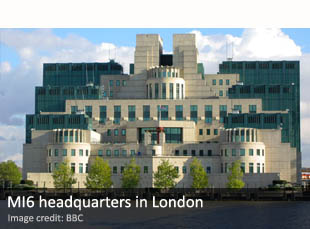
MI6 headquartersBy IAN ALLEN | intelNews.org |
►►British MI6 spy agency feeling shaken not stirred. Analysis on Salon.com about the current state of MI6, Britain’s external intelligence agency, featuring comments by intelNews‘ own Joseph Fitsanakis. The article, written by former CNN and BBC correspondent Barry Neild, argues that MI6 is feeling the heat caused by a series of recent allegations which threaten to disrupt its clandestine operations. The agency, he suggests, is thus undergoing one of the most troubling periods of its hundred-year existence.
►►Germany charges couple with spying for Russia. German government prosecutors say the couple, who called themselves Andreas and Heidrun Anschlag, worked in Germany for Russia’s foreign intelligence service for more than 20 years, gathering information on European Union and NATO strategy. The pair entered Germany in 1988 and 1990, claiming to be Austrian citizens of South American origin. They were arrested in October 2011. German media said it is the first such case in Germany since the end of the Cold War.
►►US allegedly widens covert operations in North Africa. The Associated Press quotes “three US counterterror[ism] officials and a former intelligence official” as saying that the United States is in the process of building “a new military task force” in the North African region. But by the time the US consulate in the east Libyan city of Benghazi was attacked last month, the new task force consisted only of “liaison officers who were assigned to establish relationships with local governments and US officials in the region”.

News you may have missed #799

Russell TiceBy IAN ALLEN | intelNews.org |
►►Is NSA using UK spy base to guide predator drones? Surrounded by farmland and sheep, hundreds of National Security Agency staff go to work every day at RAF Menwith Hill, where they eavesdrop on communications intercepted by satellite dishes contained in about 30 huge golf ball-like domes. Menwith Hill has been used by the NSA since the 1960s; but lately there is growing disquiet in Britain over whether intelligence gathered at the base is being used to help with the CIA’s controversial clandestine drone strikes. And the British government is keeping mum.
►►Aussie envoy seduced by spy feared her phone was bugged. Former senior Austrade commissioner to Hanoi Elizabeth Masamune, who recently admitted before an Australian court that she had sexual relations with a Vietnamese intelligence officer, told police she feared her Hanoi offices were bugged. In her statement during the trial of eight former Reserve Bank company executives on bribery charges, she said that after receiving a call from a journalist she recalled “being concerned of the level of information which she had. I was also more concerned about whether my phone was being monitored”, she said.
►►NSA whistleblower describes beating polygraph test. Russell Tice, the National Security Agency whistleblower who helped blow the lid open on warrantless wiretapping conducted by the federal government on US citizens post-9/11, says that he took between 12 and 15 polygraph tests during his nearly 20-year-long government career. The tests mellowed over time, Tice says, and they may have also gotten easier to beat. Tice, who is no longer at the NSA, says he, along with those still in contact with at the agency, marvel at how easy it is to beat the lie detector.

News you may have missed #798

Alexander LitvinenkoBy IAN ALLEN | intelNews.org |
►►Britain to hold inquest over death of ex-KGB officer. Britain and Russia appear to be on a collision course over the death of Alexander Litvinenko, a former Russian intelligence officer who died in 2006 after ingesting polonium-210, a rare radioactive isotope. Britain’s Crown Prosecution Service has accused Andrei Lugovoi and Dmitry Kovtun, both former KGB agents, for the death of Litvinenko. Russia has refused British requests to extradite the two, leading to a row with Moscow and the tit-for-tat expulsion of Russian and British diplomats. Until now, the British Foreign Office had attempted to limit the scope of an inquest into the death of Litvinenko, fearing further diplomatic fallout. But coroner Sir Robert Owen said last week that he endorsed a previous ruling by his predecessor in the case, Andrew Reid, that there should be an “open and fearless” investigation into the matter.
►►Ex-CIA operative who illegally sold arms to Libya dies. Edwin P. Wilson, a former CIA officer who was convicted in 1983 for illegally shipping 20 tons of C4 plastc explosives to Libya, has died aged 84. In his trial he claimed he had shipped the weapons to Libya at the request of the CIA, because, as he said, the agency was trying to establish good relations with the Libyan government. But the court did not buy his story, so he spent over 20 years in prison, mostly in solitary confinement, until his release in 2004. He maintained his innocence to the very end.
►►Analysis: Libya an opportunity for CIA if it sticks around. The attack in Benghazi, Libya, that killed four Americans, including a US ambassador and two former Navy SEALs, has led Americans to vacate Benghazi for their safety, even though various militant groups continue their operations. It is a disaster for US intelligence efforts in the region, especially since the attack has made brutally clear how real the jihadi threat in eastern Libya remains. But there may be the smallest of silver linings to this black cloud, if American operatives are able to capitalize on it. The aftermath of the attack shows widespread displeasure with Benghazi’s jihadist groups, with thousands marching in protest. That is an opportunity the CIA could use to rebuild its intelligence gathering.

News you may have missed #797

Mohamed MorsiBy IAN ALLEN | intelNews.org |
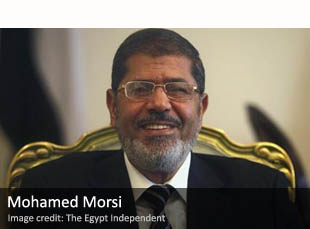
►►Egypt names new intelligence chief. Egyptian President Mohamed Morsi last week issued a decree naming Mohammed Raafat Shehata the country’s new head of intelligence, after the former spy chief was forced into retirement. Shehata had been acting director of the Egyptian General Intelligence Services Directorate since August 8, when his predecessor Murad Muwafi was sacked, after after gunmen killed 16 Egyptian border guards in Sinai.
►►Ex-Blackwater firm to teach US spies survival skills. The Defense Intelligence Agency announced on Thursday evening it would award six private security companies a share of a $20 million contract to provide “individual protective measures training courses” for its operatives. Among them is Academi, the 3.0 version of Blackwater, now under new ownership and management. The US military’s intelligence service is hiring the firm, along with five others, to train its operatives to defend themselves as they collect information in dangerous places.
►►Turkey court convicts 326 of coup plotting. A Turkish court on Friday convicted 326 military officers, including the former air force and navy chiefs, of plotting to overthrow the nation’s Islamic-based government in 2003, in a case that has helped curtail the military’s hold on politics. A panel of three judges at the court on Istanbul’s outskirts initially sentenced former air force chief Ibrahim Firtina, former navy chief Ozden Ornek, and former army commander Cetin Dogan, to life imprisonment but later reduced the sentence to a 20-year jail term because the plot had been unsuccessful. The trial of the high-ranking officers —inconceivable in Turkey a decade ago— has helped significantly to tip the balance of power in the country in favor of civilian authorities.

Court papers reveal Australian official’s affair with Vietnamese spy

Elizabeth MasamuneBy IAN ALLEN | intelNews.org |
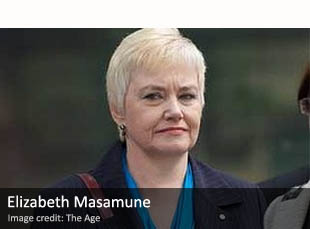
A statement filed with a federal court in Australia reveals that a Vietnamese intelligence officer, who is accused of having received millions of dollars in bribes to secure an international business contract, had an affair with an Australian government official involved in the deal. Australian federal authorities allege that the officer, Anh Ngoc Luong, a Colonel with Vietnam’s General Department of Military Intelligence, received AU$20 million (US$20.8 million) from Securency, a subsidiary of the government-owned Reserve Bank of Australia. According to Australian government prosecutors, who are suing eight Reserve Bank executives for bribing Anh, the Vietnamese intelligence officer was secretly paid to help secure a contract for the provision of banknote technology services between Securency and the State Bank of Vietnam. But it now appears that, while helping secure the lucrative deal, Anh had at least “two isolated sexual encounters” with Elizabeth Masamune, who at the time was a senior official with the Australian Trade Commission. Known informally as Austrade, the Commission operates under the country’s Department of Foreign Affairs and Trade and has offices in most Australian embassies and consulates around the world. It is tasked with representing Australia’s business interests abroad and helping Australian companies secure international business contracts. In a statement filed in court on Monday, Masamune said Anh had asked her out to dinner in the spring of 2002, while she was stationed in Vietnam. At the end of the dinner, the Vietnamese intelligence officer suggested that Masamune “go upstairs with him to a room in the hotel”. According to her statement, the Australian trade official agreed to do so “on the spur of the moment”. She added that her decision was motivated by her attraction to Anh and problems she was having in her marriage at the time. Read more of this post

News you may have missed #796

Richard FaddenBy IAN ALLEN | intelNews.org |
►►Iranian spy scandal sparks outrage in Turkey. After a nearly yearlong investigation into an alleged Iranian spy ring in Turkey, seven people were charged in early September with “providing information related to state security and establishing an [illegal] organization”. The charges against five Turkish citizens and two Iranian nationals followed a raid on the suspects’ residences and workplaces on August 29, in which videos and pictures of border security, documents, correspondence with Iranian intelligence and weapons were found, according to the investigation materials. Tehran denied any connections to those arrested, while officials in Ankara revealed more alleged evidence showing that Iran is providing support to the PKK.
►►British SIGINT agency ‘helps US drone attacks’. Britain’s former Director of Public Prosecutions, Lord Macdonald, has said there is “pretty compelling” evidence that the British government’s signals intelligence agency, GCHQ, is passing information to the United States to help it locate targets for controversial drone attacks in Pakistan. Earlier this year David Anderson, the British state’s independent reviewer of terrorism-related legislation, warned that the British government faced “a raft of civil cases” over possible complicity in the CIA drone attacks.
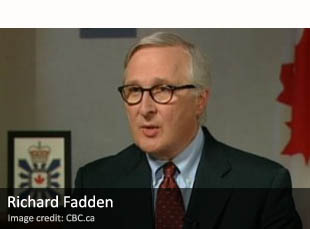
►►Canada’s top spy dismisses call for human rights scrutiny. In a newly declassified memo, CSIS director Richard Fadden appears to dismiss the Canadian Human Rights Commission’s recommendation that national security agencies do more to ensure they are not taking part in racial profiling or other objectionable practices. “I am confident in the service’s existing human rights policies and procedures, as well as our accountability and review structures”, Fadden says in the January 2012 memo, which is addressed to Canada’s Public Safety Minister Vic Toews. The memo —initially classified secret— was discovered by Mike Larsen, a criminology instructor in British Columbia, who obtained it under the Access to Information Act.