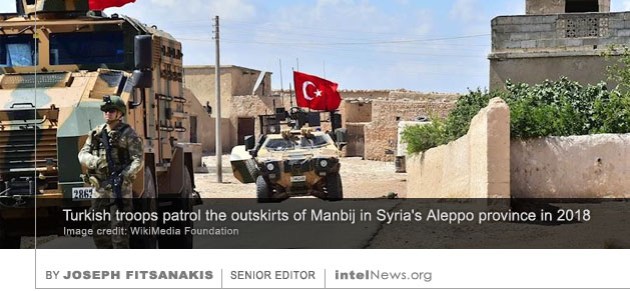
 In 2011, the discovery of Osama bin Laden’s hideout in Abbottabad raised questions about Pakistan’s knowledge of his whereabouts. Today it is hardly controversial to suggest that at least some elements in the Pakistani government must have been aware of bin Laden’s location. Last week’s discovery of Abu Bakr al-Baghdadi in a region of Syria controlled by Turkey inevitably raises similar questions about Ankara’s role in the Syrian conflict and its relationship with the Islamic State.
The self-proclaimed caliph of the Islamic State was found hiding in Barisha, a village in the Syrian province of Idlib, which is located just two miles from the Turkish border. The region that surrounds Barisha is under the control of Turkey and can most accurately be described as a Turkish protectorate inside Syria. The area north of Barisha has been under Turkish control since August of 2016, when Ankara launched Operation Euphrates Shield, a cross-border operation conducted by the Turkish Armed Forces in cooperation with Turkish-baked militias in Syria. In early 2018, Turkish and pro-Turkish forces extended their territorial control further south, capturing Barisha and all surrounding regions. They remain in control of the area to this day.
Turkish-occupied northern Syria is often described as a “proto-state”. It is governed by a collection of local councils of Turkmens and Arabs, with some Kurds and Yazidis also present. These councils elect representatives to the self-proclaimed Syrian Interim Government, which was formed in Turkey by Turkish-backed Syrian exiles and is currently headquartered in Azaz, an Arab-majority city of 30,000 that is under direct Turkish military control. Azaz is also the headquarters of the Turkish-backed “Free Police”, a gendarmerie-style militia that is funded, trained and equipped by the Turkish government.
In addition to the Turkish troops, the region is controlled by the Turkish-funded Syrian National Army. The 25,000 troops of the SNA —which is jokingly referred to by the locals as the “Turkish Syrian National Army”— operate completely under Turkish command. A substantial portion of the SNA’s force consists of former Islamic State fighters who switched their allegiance to the SNA once they saw the writing on the wall. Others are former members of the group that used to call itself Jabhat al-Nusra, an al-Qaeda affiliate that has become the most powerful Salafi-jihadist force in Syria after the demise of the Islamic State.
Turkish-occupied northern Syria is also the base of Ahrar al-Sham, a Salafi-jihadist group consisting of over 20,000 fighters, which is not officially aligned with al-Qaeda, but has similar goals. Since at least 2017, Ahrar al-Sham has effectively operated as a Turkish proxy militia and is in charge of dozens of check points and observation posts throughout the region. Lastly, the area is home to Hurras al-Din, yet another Salafi-jihadist group that is affiliated with al-Qaeda —though its leaders deny it. The group is able to operate in Turkish-controlled areas of Syria with suspicious ease. It was this group, Hurras al-Din, that sheltered al-Baghdadi in Barisha in return for cash.
Given Turkey’s military and political control of Idlib province, the question arises of how the world’s most high-profile terrorist leader was able to enter the region and receive protection from a militia that operates there under the watchful eye of the Turkish military. The New York Times reports that al-Baghdadi had been living in Barisha for several months before last week’s raid, and that Washington had been aware of his hideout location since the summer. Was Turkish intelligence also aware of the Islamic State leader’s whereabouts? If not, how could that be? If yes, why did it take a Kurdish spy, handled by Syrian Kurdish intelligence, to locate him and provide information to the Untited States? More importantly, what exactly is the relationship between Turkey and the al-Qaeda-linked Islamists who seem to operate freely in Idlib and provide protection to senior Islamic State officials in exchange for cash?
There are clearly more questions than answers here. If the United States is serious about combating Islamist extremism in the Middle East, it must press Ankara on these questions as a matter of urgency.
► Author: Joseph Fitsanakis | Date: 31 October 2019 | Permalink
 A day after the United States Department of Justice charged two Saudi citizens with engaging in espionage on American soil, Saudi officials hosted the director of the Central Intelligence Agency in Riyadh, reportedly to discuss “the longstanding Saudi-US partnership”.
 United States authorities have charged two employees of the social media firm Twitter and a member of staff of Saudi Arabia’s royal family with spying for Riyadh. The Federal Bureau of Investigation filed a complaint on Wednesday in San Francisco, accusing the three men of “acting as unregistered agents” for Saudi Arabia. The phrase is used in legal settings to refer to espionage.
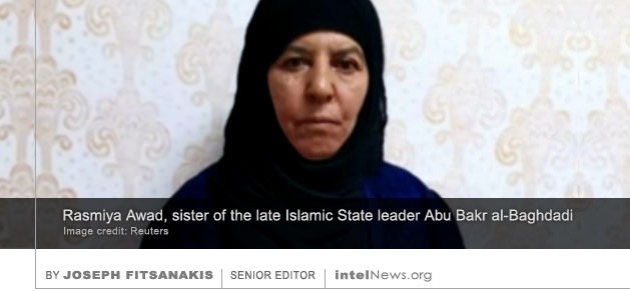 A Turkish government official has described the arrest of the sister of the late Islamic State leader Abu Bakr Al-Baghdadi as “an intelligence goldmine”. The official was referring to the arrest of Rasmiya Awad, an Iraqi citizen, who was reportedly arrested on Monday. Little is known about al-Baghdadi’s sister. She is believed to have been born in 1954, which makes her 65 years old this year.
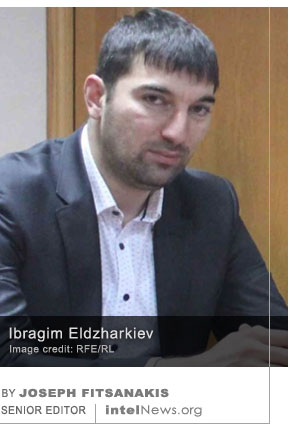 A senior counter-terrorism officer in the Russian police has been gunned down along with his brother in a downtown Moscow street, in what authorities describe as a contract killing. One of the two victims has been named as Ibragim Eldzharkiev (pictured), who headed the Russian Interior Ministry’s Anti-Extremism Center in the Republic of Ingushetia in the Russian Caucasus. His younger brother was reportedly also killed in the attack.
 The Facebook-owned company WhatsApp has filed a lawsuit against a leading Israeli technology firm, accusing it of enabling governments around the world to spy on 1,400 high-profile users, including politicians and diplomats. The Reuters news agency
 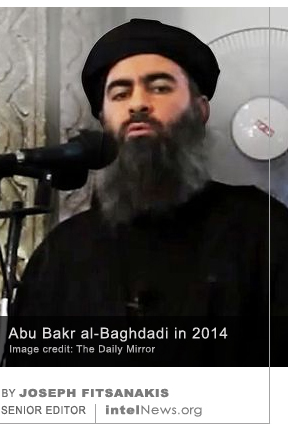 American intelligence agencies are studying up to seven terabytes of data that were captured by Special Operations Forces during last week’s nighttime raid that killed Abu Bakr al-Baghdadi in Syria. Officials in Washington
 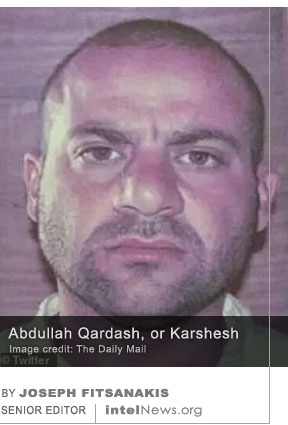 Barely a day after the United States announced the killing of Islamic State leader Abu Bakr al-Baghdadi, the militant Sunni group has replaced him with an Iraqi former military officer, according to sources. US President Donald Trump said on Sunday that al-Baghdadi, the self-styled Caliph of the Islamic State of Iraq and Syria (ISIS), died by detonating an explosive vest. He reportedly did so after being cornered by American Special Operations Forces troops at his hideout in the northwestern village of Barisha, which is located in the Syrian province of Idlib near the border with Turkey.
 The chemical structure and action mechanism of a top-secret family of nerve agents known as novichoks may soon be available to a wider pool of researchers through its inclusion into the Chemical Weapons Convention (CWC) list of the Organization for the Prohibition of Chemical Weapons (OPCW). The term novichok (meaning ‘newbie’ in Russian) was given by Western scientists to a class of rarely used nerve agents that were developed in the Soviet Union and Russia between 1971 and the early 1990s.
 The Iranian government may have used a female intelligence officer to lure a leading Iranian dissident from his home in France to Iraq, where he was abducted by Iranian security forces and secretly transported to Iran. Iranian authorities
  Russian hackers hijacked an Iranian cyber espionage group and used its infrastructure to launch attacks, hoping that their victims would blame Iran, according to British and American intelligence officials. The information,
  Iranian authorities have announced the capture of a Paris-based Iranian dissident, who was reportedly lured out of France and then abducted by Iranian agents in a third country. The kidnapped dissident is Ruhollah Zam, 46, son of Mohammad-Ali Zam, a well-known reformist cleric who served in top Iranian government posts after the 1979 Islamic Revolution. But in 2009 the younger Zam distanced himself from this father and sided with the so-called Green Movement, whose leaders called for the toppling of the government in Tehran. Around that time, Zam was part of a group of Internet-savvy Iranians who launched AmadNews. The website’s stated purpose was “spreading awareness and seeking justice” in Iran, and it soon became the online voice of the Green Movement.
 The Russian government is preparing to swap a number of imprisoned spies with at least two member states of the North Atlantic Treaty Organization (NATO), according to reports. The Estonia-based news agency BNS, which is the largest news agency in the Baltics,
  Russian authorities detained three American diplomats because they allegedly tried to enter a highly secret weapons testing site in northern Russia, according to reports. The site in question is located near the northern Russian city of Severodvinsk. The city is home to a number of military shipyards and is thus restricted for non-Russians. The latter require a special permit to enter it.






 intelNews.org
Turks feared Russia might bomb Erdoğan’s palace in 2015, intelligence memo shows
November 11, 2019 2 Comments
A few hours after the incident, Russian President Vladimir Putin described it as “a stab in the back by terrorist accomplices” and warned Ankara that Moscow would not tolerate such attacks on its armed forces. International observers expressed concern about a possible armed retaliation by Russia against the Turkish military. Now a formerly classified intelligence report suggests that Turkish authorities were concerned that Russia might bomb the country’s presidential palace in Ankara. The report was unearthed by the Nordic Research Monitoring Network (NRMN), a security-oriented research initiative staffed by Turkish experts who live in Europe and the United States.
The NRMN said the previously classified report was authored by Signals Intelligence Directorate of Turkey’s National Intelligence Organization, known as MİT. It describes an intercepted conversation that took place on December 3, 2015. The conversation involved a Syrian military officer, who was believed to be a brigadier general in the army of Syrian President Bashar al-Assad. The officer, identified in the document only as Adnan, was reportedly speaking with an unnamed Russian general, identified only as Sergei, and another unidentified senior officer in the Syrian armed forces. The discussion concerned an upcoming meeting between Syrian and Russian military officials at the Hmeimim Airbase, a Russian-operated military installation on the outskirts of Latakia.
The purpose of the meeting was for the Russian forces to officially notify the Syrians that their warplanes would be carrying a heavier payload in the future, and to explain why. At one point in the conversation the Russian general told the Syrians that part of the heavier payload would consist of “barrel bombs [that] will go to Erdoğan’s palace”. The MİT interpreted that to mean the Turkish Presidential Complex, which is located inside the Atatürk Forest Farm in the Beştepe neighborhood of Ankara. The ensuing intelligence report contains handwritten notes indicating that the information contained in it was communicated to the leadership of the Turkish Armed Forces and the Turkish General Staff.
At the end no attack took place. In June of the following year President Erdoğan sent a letter to his Russian counterpart, in which he expressed his condolences for the family of the Russian pilots who were killed when their aircraft was shot down. Following the July 2016 coup, the two Turkish pilots who had shot down the Russian aircraft were arrested on suspicion of being involved in the attempt to topple Erdoğan. This, in association with the Turkish president’s letter of sympathy, were seen by Moscow as goodwill gestures from Ankara. Relations between the two countries were eventually restored.
► Author: Joseph Fitsanakis | Date: 11 November 2019 | Permalink
Filed under Expert news and commentary on intelligence, espionage, spies and spying Tagged with Hmeimim Airbase (Syria), MİT (Turkey), News, Russia, Syria, Turkey