Details of Albania’s clandestine operatives posted online due to admin error

Albanian State Intelligence Service Sensitive information about the identities and activities of Albania’s intelligence operatives appeared online, apparently due to an administrative blunder. The incident has reportedly alarmed officials at the North Atlantic Treaty Organization (NATO), of which Albania has been a member since 2009. British newspaper The Independent, which reported the incident earlier this month, described it as “a dangerous breach that could have international consequences”. The paper quoted a former officer in the United States Central Intelligence Agency who described the breach as “the type of bureaucratic catastrophe that could put lives at risk”.

Until the end of the Cold War, Albania was a communist state aligned with China. Since 1991, however, the former communist country has tried to align itself with the West. As part of this strategy, successive Albanian administrations have tried to combat widespread nepotism and government corruption. A significant aspect of this ongoing anti-corruption campaign involves the daily publication of the financial activities of Albanian government agencies. This information is available in searchable spreadsheets on the website of Albania’s Ministry of Finance and Economy. Recently, however, Vincent Triest, a researcher with British-based investigative website Bellingcat, noticed that the publicly available spreadsheets contained information about the State Intelligence Service, Albania’s spy agency, known as SHISH. In reading through the spreadsheets, Triest was able to find the names, official job titles, salaries and monthly expenses of at least eight senior members of SHISH. Most of them, said Triest, serve under official (diplomatic) cover at Albanian embassies and consulates in Greece, Italy, Belgium, Serbia, and elsewhere in Europe.

In a follow-up article posted yesterday on Bellingcat’s website, Triest said that the spreadsheets on the website of the Albanian Finance Ministry contain names and national identification records of SHISH officers, the agency field offices where they are serving, and even the make and model of the vehicles they drive along with their license plate numbers. A separate spreadsheet lists the construction contractors, plumbers and electricians used by various SHISH field offices, as well as the mechanics that are contracted to service the agency’s vehicles. Remarkably, at least two of the exposed SHISH officers are serving in “sensitive posts at NATO headquarters in Brussels”, writes Triest. This has raised alarms at NATO, as Albanian intelligence officers with access to NATO’s secrets could now become susceptible to possible recruitment by adversary spy agencies, said The Independent. The paper added that it notified the Albanian government of the security breach, and was told that the sensitive data would be promptly removed from government websites.

Author: Joseph Fitsanakis | Date: 19 December 2018 | Permalink

Analysis: Iraq’s revenge campaign against Sunnis fuels new pro-ISIS wave

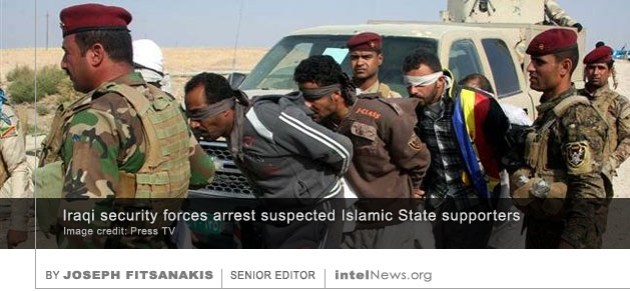
Iraq security forcesA campaign of revenge by Iraq’s Shiite-dominated government against Sunni Arabs in regions once controlled by the Islamic State is aiding Islamists and fueling another rebellion in the country, according to a new report. In 2014, the meteoric rise of the Islamic State of Iraq and Syria —ISIS, later renamed to Islamic State— was largely aided by the strong belief among Iraqi Sunnis that they were second-class citizens in a Shiite-dominated Iraq. In addition to its Sunni credentials, the Islamic State was also able to appeal to Iraqi Sunnis by portraying itself as pious, efficient and trustworthy. This image was in a sharp contrast to the widespread provincial view of politicians in Baghdad as corrupt, indifferent and ineffectual. Popular support for the Islamic State among Iraq’s Sunni Arab minority took the Iraqi government by surprise and almost enabled the militant group to conquer Baghdad in 2015.

Today, after the destruction of the Islamic State’s self-declared caliphate, Iraq’s Shiite-dominated security and intelligence services have returned to Sunni-majority regions that were once ruled by ISIS. But their systematic campaign of human-rights violations against Sunnis, whom they see as ISIS collaborators, is playing into Islamist propaganda and fueling a new wave of rebellion against Baghdad, according to a new report by the Washington-based Pulitzer Center on Crisis Reporting. The report, authored by The New Yorker staff writer Ben Taub, warns that the Iraqi government has no strategy on how to reach out to Iraq’s disaffected Sunni Arabs. Even worse, a state-sanctioned campaign of revenge and intimidation is taking place throughout western Iraq, in which “hundreds of thousands of civilians are suffering at the hands of their liberators”, says Taub.

In areas that until a few months ago were ruled by ISIS, anyone —regardless of age or sex— perceived as having previously supported ISIS is outright killed or sent to concentration camps. For Iraqi security forces, says Taub, civilians who did not flee ISIS are seen as inherently suspicious. Bearded men are often viewed as displaying evidence of ISIS support, even though the militant group had a policy of punishing any man who did not grow a beard in accordance with Quranic directives. Most of these people, says Taub, are fired from their jobs, sent to prison, or worse are executed by the dozens and even hundreds. A handful are tried in a court of law each month, but these are usually show trials with a conviction rate of 98 percent, he adds. Family members of the accused rarely show up in court, fearing immediate arrest and imprisonment, which appears to be a regular occurrence. It is “not uncommon for relatives [of accused ISIS supporters] to be rounded up by the security forces and sent to remote desert camps, where they are denied food, medical services, and access to documents”, reports Taub.

These arbitrary arrests are happening alongside an untold number of battlefield executions —many captured on video by jubilant Shiite soldiers and militia members— and killings of prisoners in detention centers. Taub quotes an anonymous senior official in the Iraqi intelligence services who says that “this is not just revenge on ISIS. It is revenge on Sunnis”. The widespread criminality and brutality of the Iraqi security and intelligence forces “plays directly into the jihadis’ narrative”, says Taub, by convincing Sunni Arabs that they “cannot live safely under a government dominated by Shiites”. Ultimately, what is at stake is “whether the Iraqi government can win over the segment of the population for whom ISIS seemed a viable alternative”, concludes Taub, and warns of the possibility of another armed rebellion against Baghdad by what is left of Iraq’s Sunni minority.

Author: Joseph Fitsanakis | Date: 18 December 2018 | Permalink
French security services investigate Russian role in yellow vests movement

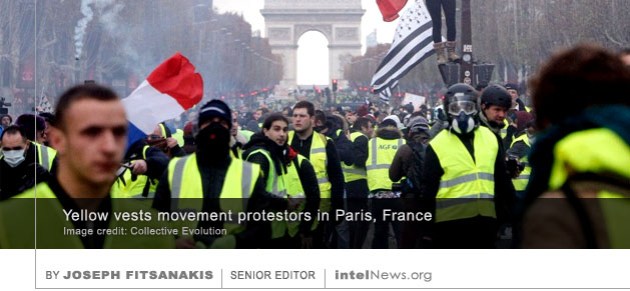
yellow vests movementIntelligence and security services in France are investigating whether Russian involvement on social media and other platforms is playing a role in amplifying the so-called ‘yellow vests’ movement. Known in French as le mouvement des gilets jaunes, the campaign began online in May of this year as a popular protest against rising fuel prices and the high cost of living in France. In mid-November, the movement made its first public appearance with large demonstrations that have continued every weekend since then. Yellow vest protestors claim that tax increases are disproportionally affecting working- and middle-class people and that everyday life is becoming economically unsustainable in France. Some of the demonstrations have turned violent, and so far at least eight people have died as a result. The ensuing crisis has become the most significant threat to the government of Emmanuel Macron, as the protests are increasingly evolving into an anti-Macron rallies.
So far, the yellow vests campaign has been largely bipartisan, bringing together protestors from the entirety of the French political spectrum. Additionally, there are no identified leaders or coordinators of the movement. However, some suspect that Russian government operatives may be further-inflaming an already incensed protest movement. On Friday, The Wall Street Journal said that French security agencies were investigating potential involvement by the Kremlin in the yellow vests campaign. The paper quoted an unnamed French government cybersecurity official as saying that “there has been some suspect activity [and] we are in the process of looking at its impact”. The official was referring to the online activity of some leading social-media accounts involved with the yellow vests, which appear to also be “promoting Russian-backed coverage” of French politics. The Journal also cites Ryan Fox, a cybersecurity expert for the Texas-based firm New Knowledge, who claims that “several hundred accounts on Twitter and Facebook” that are involved in the yellow vests movement “are very likely controlled by Moscow”.

However, there is disagreement among cybersecurity experts about the extent of the Kremlin’s involvement in the yellow vests. Paris has previously accused Moscow of trying to influence the direction of French politics. In February of 2017, France’s Directorate-General for External Security warned that Russia had launched a secret operation to try to influence the outcome of that year’s French presidential election in favor of the far right. However, if such an effort existed, it failed to stop the rise to power of Emmanuel Macron. Since assuming the country’s presidency, Macron has been a leading international critic of Russia’s domestic and foreign policies. The Kremlin, therefore, has strong reasons to want to see a premature end to Macron’s presidency.

This does not necessarily mean that Moscow has been able to anticipate —let alone influence— the yellow vests movement, whose energy has surprised even the most experienced French political observers. The Journal notes that many leading Western cybersecurity bodies, including the Atlantic Council’s Digital Forensic Research Lab, have “not seen significant evidence of state-sponsored interference” in the yellow vests movement, whether by Russia or any other government. Facebook also said that its monitors have not uncovered any evidence of an organized campaign by Moscow to coax the yellow vests protests. The paper also cited Dimitri Peskov, a spokesman for the Kremlin, who categorically denied allegations that Russia was in any way involved in directing yellow vests activists.

Author: Joseph Fitsanakis | Date: 17 December 2018 | Permalink

Analysis: Strasbourg attack raises serious security concerns in Europe

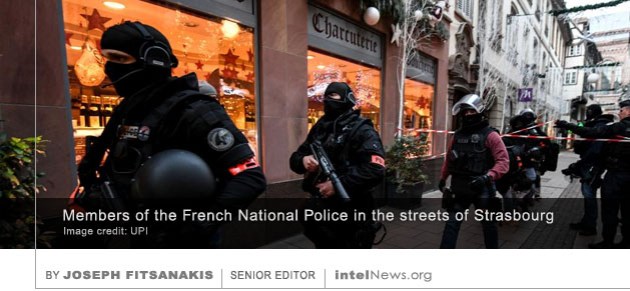
StrasbourgThe terrorist attack in the French city of Strasbourg on December 11 raises important security concerns for Europe’s ability to defend itself against a rapidly evolving Islamist insurgency. The attack lasted 10 minutes, from 7:50 to 8:00 p.m. on Tuesday evening, and targeted shoppers in Christkindelsmärik, a large Christmas market held annually in Strasbourg. The lone shooter, who has since been identified as Chérif Chekatt, a French citizen, was reportedly heard shouting “Allahu Akbar” (God is great) repeatedly as he opened fire on the unsuspecting shoppers. He also tried to stab some of them using a knife. Chekatt eventually exchanged fire with French soldiers and officers of the National Police before fleeing the scene of the attack in a taxi cab. Three people were declared dead at the scene, while 12 others were urgently transported to nearby hospitals. Six of them remain in critical condition. Chekatt remained at large until Thursday evening, when he was shot dead by police in Strasbourg.

It is important to stress that the choice of Strasbourg as the site of the terrorist strike was not accidental, nor was the attack spontaneous. A city and of nearly 500,000 inhabitants in its greater district, Strasbourg is one of the European Union’s de facto capitals. It hosts several European institutions, including the building of the European Parliament. Its geographical location on the French-German border epitomizes the crossroads of Franco-German cultural traditions. Its distinct character symbolizes the coexistence of Europe’s two leading powers, which forms the cornerstone of the European Union project. The majority of Strasbourg’s residents are bilingual and communicate in Alsacien, a peculiar mixture of French and German. The city also exemplifies a distinctive brand of 21st-century Christian unity through the balanced coexistence of Catholic and Protestant religious cultures. The Christkindelsmärik —the venue that was attacked on Tuesday— is Europe’s largest Christmas market and symbolizes precisely that coexistence. Providing that Tuesday’s attack was sanctioned and/or planned by the Islamic State or one of its affiliate organizations, its strong symbolism is apparent.

As Washington Examiner commentator Tom Rogan noted on Wednesday, it appears that the perpetrator of the attack was able to acquire a semi-automatic weapon, as well as grenades. Unlike the United States, accessing these types of weapons in Western Europe is exceedingly difficult. This is so especially in France, a country that has remained in a perpetual state of heightened security since the Paris attacks of November 2015. It is even more perplexing that Chekatt was able to acquire this type of weaponry, given that his name featured on the terrorism watch lists of France’s security and intelligence services. Additionally, says Rogan, one of the operational trademarks of the Islamic State centers on adhering to a sharp division between its arms procurement networks and the individuals who carry out terrorist attacks. This means that a wider Islamist network in France, Switzerland or Germany, was able to armed and possibly trained Chekatt in Europe, since the attacker is not believed to have visited the Middle East or North Africa.

Rogan also points out that Chekatt —a French-born 29-year-old petty criminal— was radicalized while serving time in prison. This raises important questions about Salafist-Jihadi radicalization networks inside Western European prison systems. The security implications of this realization inevitably widens the security considerations of Europe’s counterterrorism agencies. The latter have so far focused primarily on the danger posed by the return of European Islamic State volunteers from the Middle East. The problem, however, appears to be more complicated.

Ultimately, the Strasbourg attack demonstrates that, despite several years of concerted efforts, the ability of European counterterrorism agencies to prevent strikes by Islamist groups on European soil is limited. Meanwhile, European streets are busy during the Christmas season, with indoor and outdoor markets and festivals, concerts, as well as a host of religious observances taking place in thousands of different locations across the continent. Should Tuesday’s attack in Strasbourg mark the beginning of a sustained terrorism campaign by the Islamic State, December could prove to be a deadly month in Europe.

Author: Joseph Fitsanakis | Date: 13 December 2018 | Permalink

Russian spies ‘launched major cyber attack on Ukraine’ prior to naval incident

Strait of KerchRussia “paved the way” for last November’s seizure of Ukrainian Navy ships by launching a major cyber attack and disinformation campaign aimed at Ukraine, according to a cyber security firm and the European Union. In what has become known as the Kerch Strait incident of November 25, border service coast guard vessels belonging to the Russian Federal Security Service (FSB) opened fire on three Ukrainian Navy ships that were attempting to enter the Sea of Azov through the Kerch Strait. All three Ukrainian vessels, along with crews totaling 24 sailors, were captured by the Russian force and remain in detention. Ukraine condemned Russia’s action as an act of war and declared martial law in its eastern and southern provinces. But Moscow said the incident had been caused by a provocation by the Ukrainian government, in a desperate effort to increase its popularity at home. Meanwhile, the three Ukrainian ships and their crews remain in Russia.
But now a private cyber security firm has said that Moscow launched a series of cyber attacks on Ukrainian government servers, which were aimed at gathering intelligence that could be used for the ships’ capture. In a separate development, the European Union’s security commissioner has alleged that the Kremlin launched an elaborate “disinformation campaign” aiming to “soften up public opinion” before seizing the Ukrainian ships.

The American-based cyber security firm Stealthcare said this week that the cyber attacks were carried out by Carbanak and the Gamaredon Group, two hacker entities that are believed to be sponsored by the Russian intelligence services. The first wave of attacks, which occurred in October of this year, centered on a phishing campaign that targeted government agencies in Ukraine and other Eastern European countries. Victims of these attacks had “important functions” of their computers taken over by remote actors who stole and exfiltrated data, according to Stealthcare. Another attack installed back doors on computer servers belonging to Ukrainian government agencies in November, just days prior to the Kerch Strait crisis. The two attacks, said the company, provided the hackers with “information that would have been very […] relevant in planning” the November 25 naval crisis, said Stealthcare. The company added that there was “no doubt that this was a Kremlin-led reconnaissance effort to prepare for the Kerch Strait crisis”.

Meanwhile on Monday Julian King, a British diplomat who is currently the European Commissioner for the Security Union, said that Russia “paved the way for the Kerch Strait crisis” through a systematic fake news campaign that “lasted for more than a year”. The campaign, said King, included the use of social media to spread false rumors, such as claims that the Ukrainian government had infected the Black Sea with bacteria that cause cholera. Another report by Russian media allegedly claimed that Kiev had tried to secretly transport a nuclear device to Russian-annexed Crimea through the Kerch Strait. The EU security commissioner added that social media platforms and online search engines like Google had a responsibility “to identify and close down fake accounts that were spreading disinformation”.

Author: Joseph Fitsanakis | Date: 12 December 2018 | Research credit: D.V. | Permalink

CIA names first woman to lead Directorate of Operations

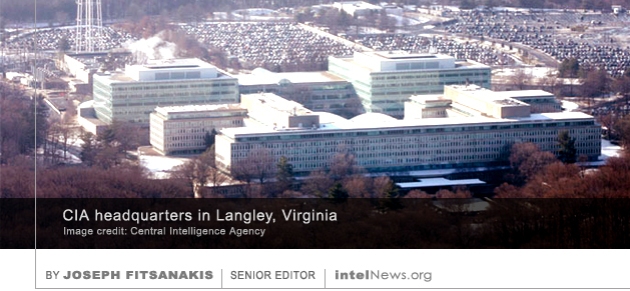
CIAIn a surprising departure from established practice, the United States Central Intelligence Agency has publicized the name of its incoming head of operations. Beth Kimber, a 34-year veteran of the Agency, will become the first woman in the CIA’s 70-year history to lead the Directorate of Operations. Officers in the Directorate of Operations, formerly known as the National Clandestine Service, spend their careers recruiting foreign agents to spy for the United States, while also carrying out covert operations around the world. This is also the first time that the CIA has chosen to publicly identify its Deputy Director for Operations —Kimber’s official title, abbreviated as DDO. Previous DDO have been undercover officers whose namse have remained undisclosed. Kimber’s promotion was announced on December 7 by Brittany Bramell, the CIA’s Director of Public Affairs.

Little is known about Kimber, who spent much of her career as a case officer before joining the CIA’s senior intelligence staff. She is a graduate of Hamilton College, a private, liberal arts college situated in upstate New York, and spent much of her early career with the CIA as a case officer in Western Europe. She is also believed to have led the “Russia Group”, a network of intelligence planners in the CIA’s Directorate of Operations that manage a broad spectrum of espionage operations targeting the Russian spy services. She has also served as deputy director of the National Clandestine Service, before it was renamed to Directorate of Operations. Newsweek intelligence correspondent Jeff Stein wrote about Kimber in 2014, but did not name her, as she was still serving in an undercover capacity.

For a few months this year, Kimber served as the CIA’s acting deputy director while Congress considered President Donald Trump’s nomination of Gina Haspel’s for the Agency’s director position. Kimber’s most recent prior post in the CIA was head of the Agency’s Europe and Eurasia Mission Center. Kimber is the third woman to assume a central role in the CIA in the past six months. In May of this year, Gina Haspel, a 33-year veteran of the CIA, became the Agency’s first female director. In August, Haspel picked Sonya Holt, a 34-year CIA veteran, to serve as the Agency’s chief diversity and inclusion officer. On Friday, the American news network CBS cited “people familiar with the shift”, who said that the outgoing DDO “will take another role within the agency” and is expected to remain undercover.

Author: Joseph Fitsanakis | Date: 11 December 2018 | Permalink

Jailed Russian who spied for CIA writes letter to Trump, asking to be freed

Russian Ministry of Internal AffairsA Russian former police officer, who is serving a prison sentence in Russia for having spied for the United States Central Intelligence Agency, has written an open letter to President Donald Trump, asking to be freed. Yevgeny A. Chistov was arrested by the Russian Federal Security Service (FSB) in 2014 on charges of spying for Washington. During his trial, he admitted having been recruited by the CIA when he worked as an officer in the police, Russia’s federal law-enforcement agency, which operates under the Ministry of Internal Affairs. Russian state prosecutors accused him of having established contact with the CIA in 2011. In 2015, he was sentenced to 13 years in prison, which he is currently serving at a labor camp in the Nizhny Novgorod town of Bor, located in central European Russia.
On Saturday, British newspaper The Guardian published a letter that was allegedly written by Chistov. In the letter, the jailed spy admits that he passed Russian state secrets to the CIA for three years, after deciding “to help the US as a friend”. He claims that he did it out of love for his country, and in order to help “overthrow […] the regime” of Russian President Vladimir Putin. Chistov goes on to accuse “Putin and his cronies” of having plundered Russia and of oppressing its people through “corruption and extortion”. He blames the Kremlin for Russia’s current economic state: “we have a resource-rich country yet our people are poor”, he says. The jailed spy adds that he told the CIA about the “secret plans” of the Ministry of Internal Affairs, that he provided “names of some people from the FSB”, and that he “revealed some objectives of Russia’s Ministry of Defense”. He does not provide details. He then claims that, even though he was paid by the CIA for his services, he did not act out of self-interest.

Chistov says that the conditions of his imprisonment are inhumane and that he and his family “are in great danger in Russia”. He also claims that his wife visited the US embassy in Ukraine in an attempt to secure a travel visa, but that her application was rejected and she was forced to return to Russia. The jailed spy adds that he “wrote two letters to the CIA asking them to help and received no response”. He then pleads with President Trump to help him, in two ways. First, by granting asylum in the US to his wife and mother. Second, by swapping him with someone “who worked for Russia” and is serving time in a US prison. “I want to appeal to the president to conduct the exchange”, he concludes.

The United States has participated in very few spy swaps in the post-Cold War era. In 2010, Washington and Moscow conducted one of history’s largest spy exchanges, as ten deep-cover Russian agents captured in the US earlier that year were swapped for four Russian citizens imprisoned by Moscow for spying for the US and Britain. Four years later, a Cuban intelligence officer who spied for the CIA was released as part of a wider exchange between Washington and Havana of persons held in each other’s prisons on espionage charges. The White House has not commented on Chistov’s letter.

Author: Joseph Fitsanakis | Date: 10 December 2018 | Permalink

ISIS evolving into ‘effective clandestine organization’ US Pentagon warns

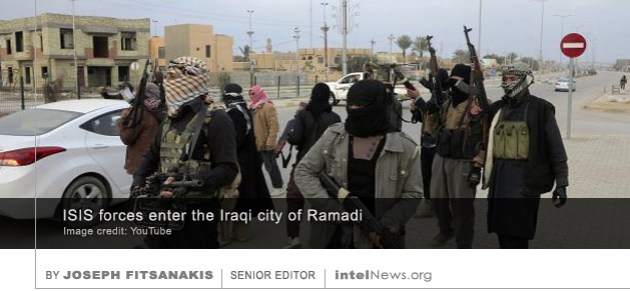
ISIS forces in RamadiA report from the United States Department of Defense warns that the Islamic State is swiftly returning to its insurgent roots, as observers in Iraq and Syria caution that the group is witnessing a revival. It has been four years since the Islamic State —known then as the Islamic State of Iraq and Syria, or ISIS— conquered much of eastern Syria and more than a third of Iraq’s territory. But by the end of 2017, virtually the entirety of ISIS’ self-styled ‘caliphate’ had been obliterated by an ‘unholy alliance’ of US-backed Iraqi government forces, Iranian-supported Shiite militias, Kurdish guerillas and Western airpower.

However, experts warn that, despite its loss of territorial control, the Islamic State maintains an active force of as many as 30,000 armed fighters in Iraq and Syria. Additionally, a recent US government report argues that, having been driven out of nearly all of the territory that it once held, the Islamic State is promptly “returning to its insurgent roots”. The report, authored by analysts at the US Department of Defense, claims that the militant Sunni group is “re-emerging as a guerrilla force”. In the place of what used to be a de-facto state, an “effective clandestine ISIS organization appears to be taking hold”, it states. The Pentagon document, summarized in a Financial Times article on Thursday, appears to be backed by information from the ground in Iraq and Syria. Iraqi military sources told The Times that ISIS appears to have more fighters in its ranks than initially thought, and that the group’s organizational structure that helped it grow in the first place “has not been eliminated”.

Moreover, the group is “still well-funded” and its operations remain lethal, said the paper, especially in Iraq, where it continues to undermine the government’s efforts to improve the country’s security. Islamic State fighters are systematically targeting regional leaders, said The Times, in an effort to prevent the government from delivering economic development in Iraq’s Sunni-majority western regions. A similar pattern of activities is being observed in Syria, where a resurgence of ISIS activity has prolonged the deployment of around 2,000 US military personnel there. What is more, ISIS fighters frequently cross the Iraq-Syria border and spend much of their time in safe houses and other hideouts. The paper quotes Yahya Rasool, spokesperson for the Iraqi Army’s Joint Operations Command, who says that “our war on ISIS today is an intelligence war, not a military war. We are searching and raiding their hide-outs”.

Author: Joseph Fitsanakis | Date: 07 December 2018 | Permalink

Canada arrests daughter of Chinese telecom giant’s founder at US request

Meng WanzhouThe daughter of the founder of Huawei Technologies, one of the world’s leading telecommunications hardware manufacturers, has been arrested in Canada, reportedly at the request of the United States. Meng Wanzhou (pictured, also known as Sabrina Meng) serves as Huawei’s deputy chair and chief financial officer. She is the daughter of Ren Zhengfei a former officer in the Chinese People’s Liberation Army, who established the company in 1988 and has since amassed a personal fortune estimated at $3.5 billion. By virtue of her family background and position in Huawei, Meng is often referred to as “a member of China’s corporate royalty”.
Few details of Meng’s arrest have been publicized. On Wednesday, Canada’s Department of Justice confirmed that the Huawei CFO was detained on December 1 in Vancouver as she was transferring between flights. The Justice Department also confirmed that the arrest occurred at the request of American law enforcement officials. In a carefully worded statement, the Canadian government said Meng is “sought for extradition by the United States” and that her bail hearing will be taking place this coming Friday. On Wednesday, the Canadian newspaper The Globe and Mail cited an unnamed “Canadian law enforcement source with knowledge of the arrest”, who said that US authorities had evidence that Meng “tried to evade the American embargo against Iran”. This statement appears to refer to reports in Western media in April of this year, according to which the US Departments of Commerce and Treasury were probing suspected violations of Washington’s sanctions against Iran and North Korea by Huawei.

The embassy of China in Canada immediately protested news of Meng’s arrest, saying that the Huawei CFO had been detained despite “not violating any American or Canadian law”. In a statement issued on Wednesday, the embassy added that it had “lodged stern representations” to the Canadian government and “urged them to immediately […] restore the personal freedom of Ms. Meng Wanzhou”. Meanwhile, a representative at Huawei’s corporate headquarters in the southern Chinese city of Shenzhen told the BBC that the company is certain “the Canadian and US legal systems will ultimately reach a just conclusion” in the case.

Several officials in the United States, United Kingdom, Australia and other Western countries, have repeatedly flagged Huawei as a company that is uncomfortably close to the Chinese government and its intelligence agencies. In 2011, the US Open Source Center, which acts as the open-source intelligence arm of the Office of the Director of National Intelligence, became the first US government agency to openly link Huawei with the Chinese intelligence establishment. In 2013, the British government launched an official review of Huawei’s involvement in the UK Cyber Security Evaluations Centre in Oxfordshire, England, following a British Parliament report that raised strong concerns about the Chinese company’s links with the government in Beijing. And in 2017 the Australian government expressed concern about Huawei’s plan to provide high-speed Internet to the Solomon Islands, a small Pacific island nation with which Australia shares Internet resources.

Author: Joseph Fitsanakis | Date: 06 December 2018 | Permalink

Czechs accuse Moscow of ‘most serious wave of cyberespionage’ in years

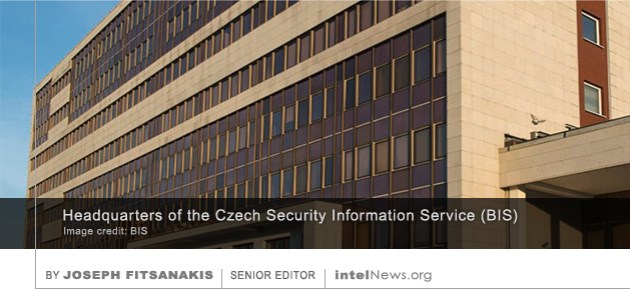
Czech Security Information ServiceThe main domestic intelligence agency of the Czech Republic has accused Russia of “the most serious wave of cyberespionage” to target the country in recent years. The claim was made on Monday in Prague by the Security Information Service (BIS), the primary domestic national intelligence agency of the Czech Republic. Details of the alleged cyberespionage plot are included in the BIS’ annual report, a declassified version of which was released this week.
According to the document, the cyberespionage attacks were carried out by a hacker group known as APT28 or Fancy Bear, which is believed to operate under the command of Russian intelligence. The hacker group allegedly targeted the Czech Ministry of Defense, the Ministry of Foreign Affairs and the headquarters of the country’s Armed Forces. As a result, the electronic communication system of the Ministry of Foreign Affairs was compromised “at least since early 2016”, said the report (.pdf). More than 150 electronic mailboxes of ministry employees —including diplomats— were accessed, and a significant number of emails and attachments were copied by the hackers. The compromise was terminated a year later, when BIS security personnel detected the penetration. The BIS report goes on to say that a separate cyberespionage attack was carried out by a Russian-sponsored hacker group in December of 2016. An investigation into the attacks concluded that the hackers were not able to steal classified information, says the report. It adds, however, that they were able to access personal information about Czech government employees, which “may be used to launch subsequent attacks [or to] facilitate further illegitimate activities” by the hackers.

The BIS report concludes that the hacker campaign was part of “the most serious wave of cyberespionage” to target the Czech Republic in recent years. Its perpetrators appear to have targeted individuals in “virtually all the important institutions of the state” and will probably continue to do so in future attacks, it says. Moreover, other European countries probably faced similar cyberespionage breaches during the same period, though some of them may not be aware of it, according to the BIS. Czech Prime Minister Andrej Babis told parliament on Tuesday that his cabinet will discuss the BIS report findings and recommendations early in the new year.

Author: Joseph Fitsanakis | Date: 05 December 2018 | Permalink

MI6 spy chief outlines ‘fourth generation espionage’ in rare public speech

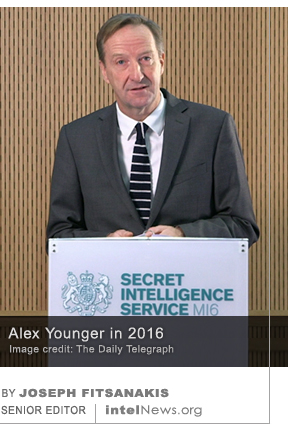
Alex YoungerThe director of Britain’s Secret Intelligence Service —known as MI6— has outlined the parameters of a new, “fourth generation of espionage”, which he said is needed to combat the “threats of the hybrid age”. Alex Younger, 55, is a career intelligence officer who joined MI6 in 1991, after serving in the British Army. He served as chief of global operations —considered the number two position at MI6— before being appointed director of the spy agency in October 2014. He previously served in the Middle East, Europe, and Afghanistan, where he represented MI6 as its most senior officer in the country following the US-led military invasion of 2001. Until this week, Younger had given a single public address since becoming director of MI6. But on Monday he spoke again, this time at the University of St. Andrews in Scotland, from where he graduated with a degree in economics.
After cautioning his audience that MI6’s methods, operations and people —some of whom “have paid the ultimate price”— must remain secret, Younger said that technological progress has “profoundly changed [MI6’s] operating environment”. Technological change, as well as the degree of interconnectedness, he said, has made the world “dramatically more complicated”. He went on to add that the resulting ambiguity is referred to by MI6 as a constant stream of “hybrid threats”, namely challenges posed by nation-states operating “in the gray spaces of the hybrid era”. They do so in order to probe the West’s “institutions and defenses in ways that fall short of traditional warfare”, said Younger. The British spy chief added that MI6, as “one of the few truly global intelligence agencies” is well positioned to respond to hybrid threats, mostly by augmenting its human intelligence role —using human spies to collect information.

Human intelligence, which is MI6’s core task, “will never change fundamentally”, said Younger, adding that “in fact it will become even more important in a more complex world”. However, it will need to evolve to meet the challenges of the hybrid age. Younger said that MI6 was pioneering a “fourth generation of espionage”, which is the product of the fusion of traditional human skills with “accelerated [technological] innovation”. This new generation of espionage said Younger, relies not on individual work but on operations that are carried out by dynamic teams within and across state agencies. Additionally, the ultimate task of these operations is not simply to know the actions of one’s adversaries, but “to change their behavior”, said the British spy chief. Furthermore, in order to successfully develop fourth generation espionage capabilities, MI6 will have to “ensure that technology is on our side, not that of our opponents”, noted Younger. The spy chief gave an example by referring to the case of the near-fatal poisoning of Sergei Skripal, the Russian former double spy who was allegedly attacked by two Russian military intelligence officers in Salisbury, England, last March. It was “bulk data combined with modern analytics” that exposed the culprits of the operation, he said. But the same methods, which make the modern world more transparent, can posed “a serious challenge if used against us”, warned the MI6 chief.

Author: Joseph Fitsanakis | Date: 04 December 2018 | Permalink

CIA report says Saudi crown prince sent text messages to Khashoggi killer

Saud al-QahtaniSaudi Crown Prince Mohammed bin Salman sent at least eleven text messages to the man in charge of the 15-member hit team that killed journalist Jamal Khashoggi last month, according to a classified report produced by the United States Central Intelligence Agency. The CIA report was leaked to The Wall Street Journal, which said in a leading article on Saturday that the Saudi royal had sent the messages in the hours before and after Khashoggi’s brutal murder at the Saudi consulate in Istanbul, Turkey, on October 2, 2018. Khashoggi, 59, was a Saudi government adviser who moved to the US and became a vocal critic of the kingdom’s style of governance. He was killed and later dismembered by a hit team inside the Saudi consulate in Istanbul, where he had gone for a scheduled visit in order to be issued written proof of his divorce from his former wife in Saudi Arabia.

Late last month, the CIA and its British equivalent, the Secret Intelligence Service (MI6), were reported to have concluded that Khashoggi’s murder was directly ordered by Prince Salman. But US President Donald Trump and leading members of his cabinet, including Secretaries of State Mike Pompeo and Defense James Mattis, have disputed these claims, saying there is “no smoking gun” that proves Prince Salman’s involvement. The US president said that Saudi Arabia was “a great ally” of Washington and that Prince Salman’s role in Khashoggi’s murder was unclear. “Maybe he did and maybe he didn’t”, he told reporters in Washington on November 20, referring to the prince, whom he considers a personal friend. Instead, the White House has placed blame for the journalist’s murder on Saud al-Qahtani (pictured), a former advisor to Saudi Arabia’s late King Abdullah, who is believed to have coordinated Khashoggi’s killing.

But new a new CIA assessment of Khashoggi’s murder that was leaked to The Wall Street Journal claims that the US spy agency has concluded with “medium-to-high” confidence that Prince Salman “personally targeted” the journalist and “probably ordered his death”. The leaked report, said The Journal, rests on several findings, including the fact that the prince sent at least 11 messages to al-Qahtani in the hours right before and right after the latter’s hit-team killed Khashoggi in Istanbul. The CIA report states that the Agency does not have access to the contents of the texts. But it states that this pattern of communication, along with other pieces of evidence “seems to foreshadow the Saudi operation launched against Khashoggi”.

Author: Joseph Fitsanakis | Date: 03 December 2018 | Permalink

US government plans background checks on Chinese students over espionage fears

Chinese students in USAThe United States government plan to impose tighter visa restrictions and wider background checks on Chinese nationals studying at American universities, over espionage concerns. The news follows reports earlier this year that the administration of US President Donald Trump considered banning all Chinese nationals from studying at American universities. In October of this year, The Financial Times reported that the White House came close to imposing the ban, after it was allegedly proposed by Stephen Miller, speechwriter and senior advisor to Trump. Miller became known as the main architect of Executive Order 13769 —the travel ban imposed on citizens of several countries, most of them predominantly Muslim. According to The Financial Times, Trump was eventually dissuaded from imposing the Chinese student ban by Terry Branstad, US ambassador to China.
Now, however, the Trump administration is reportedly considering the possibility of imposing deeper background checks and additional vetting on all Chinese nationals wishing to study in the US. Citing “a US official and three congressional and university sources”, Reuters said on Thursday that the measures would apply to all Chinese students wishing to register in undergraduate and graduate academic programs in the US. The news agency quoted a “senior US official” as saying that “no Chinese student who’s coming [to the US] is untethered from the state […. They all have] to go through a party and government approval process”. Reuters reported that the proposed plan includes a comprehensive examination of the applicants’ phone records and their presence on social media platforms. The goal would be to verify that the applicants are not connected with Chinese government agencies. As part of the proposed plan, US law enforcement and intelligence agencies would provide counterintelligence training to university officials.

However, the plan has many American universities —including elite Ivy League schools— worried that they may be losing up to $14 billion in tuition and other fees spent annually by more than 350,000 Chinese nationals studying in the US. The fear is that the latter may be looking to study elsewhere, in countries such as Canada, Australia and the United Kingdom. Reuters said that many of America’s top universities are “regularly sharing strategies to thwart” plans by the Trump administration to make it more difficult for Chinese nationals to study in the US. The news agency said it contacted the Chinese ambassador to Washington, who called the White House’s fears of espionage by Chinese students “groundless” and “very indecent”.

Author: Joseph Fitsanakis | Date: 30 November 2018 | Permalink

New law to give Australian intelligence officers more rights to use firearms

Australian Secret Intelligence ServiceThe Australian government has proposed a new law that would give intelligence officers broader powers to use firearms during undercover operations abroad. If it is approved by parliament, the new law would apply to the Australian Secret Intelligence Service (ASIS), a civilian intelligence agency that carries out covert and clandestine operations abroad. Modeled after Britain’s Secret Intelligence Service (MI6), ASIS was established in 1952, but its existence was not officially acknowledged by the Australian government until 25 years later, in 1977.
In 2004, ASIS was given legal permission for the first time to use firearms during undercover operations abroad. However, under current Australian law, this is allowed only as a last resort. ASIS personnel engaged in overseas operations are allowed to employ firearms in self-defense or to protect their agents —foreigners that have been recruited by ASIS to spy for Australia. However, the current government of Prime Minister Scott Morrison argues that ASIS personnel must be given broader powers to exercise “reasonable force” via the use of firearms during overseas operations. In a speech on Wednesday, Australia’s Minister for Foreign Affairs Marise Payne said that the overseas environment in which ASIS operates today is more complex than that of 2004, when the current laws of engagement were enacted. She added that nowadays ASIS personnel work in more hazardous locations, including warzones, and carry out “more dangerous missions in new places and circumstances”.

The government argues that the proposed changes will allow ASIS personnel to “protect a broader range of people and use reasonable force if someone poses a risk to an operation”. The new law will give ASIS officers permission to open fire against adversaries in order to protect parties other than themselves —such as hostages— or to avoid getting captured. This, says the government, will allow them to efficiently “protect Australia and its interests”. The last time that the Australian government flirted with the idea of giving ASIS broader powers to use firearms during undercover operations was in 2010. That year, the government of Prime Minister Kevin Rudd commissioned a multimillion dollar independent review of the Australian intelligence community’s mission and operations. The review proposed that ASIS personnel be allowed more powers to carry and handle weapons while engaging in “paramilitary activities” outside Australia. But the proposal was never enacted into law.

The latest proposal by the Morrison administration is scheduled to be discussed in the Australian Parliament today.

Author: Joseph Fitsanakis | Date: 29 November 2018 | Permalink

Head of CIA’s Korean mission center to resign, say sources

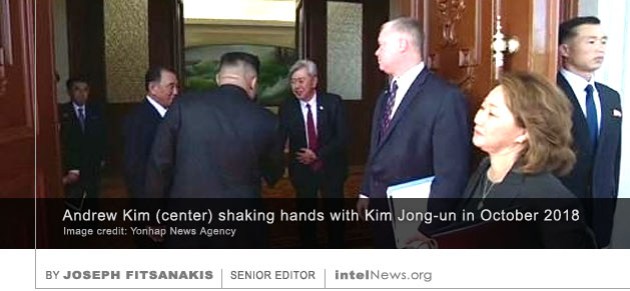
Andrew KimA senior North Korea expert in the United States Central Intelligence Agency, who has been instrumental in the ongoing negotiations between Washington and Pyongyang, has tendered his resignation, according to sources. The official was identified last may by US media as Andrew Kim, a former South Korean citizen who moved to the US with his parents when he was 13 years old. According to sources, Kim joined the CIA after graduating from college and rose through the Agency’s ranks to serve its stations in Moscow, Beijing and Bangkok. His most recent overseas post was reportedly in Seoul, where he served as the CIA’s station chief —the most senior American intelligence official in the country.

Following his return to the US from Seoul, Kim reportedly retired, but returned last year to head the CIA’s new Korea Mission Center (KMC). The purpose of the specialized unit is to analyze Pyongyang’s ballistic missile and nuclear weapons programs, which the administration of US President Donald Trump considers as matters of priority for the White House. It was as head of the KMC that Kim reportedly met Mike Pompeo once he became Director of the CIA in January 2017. The two men worked closely together and it is believed that Kim’s role was instrumental in organizing the negotiations between Washington and Pyongyang that led to last summer’s historic high-level meeting between President Trump and Supreme Leader Kim Jong-un. According to American and South Korean media, Kim accompanied the then-CIA director on his secret trip to North Korea. He also accompanied Pompeo on his trips to North Korea once the Kansas Republican became Secretary of State.

The Yonhap News Agency said on Tuesday that Kim initially intended to leave his CIA post in the summer, but was persuaded by Secretary Pompeo to continue. However, he has now tendered his resignation, which will take effect on December 20. Citing “multiple sources”, including “a senior official at South Korea’s National Intelligence Service”, the Seoul-based news agency said that Kim plans to take up an academic post at Stanford University, adding that he intends to continue serving as an adviser to the secretary of state. Prior media reports have stated that “Kim is widely viewed as a hawk on North Korea”, so there are suspicions that his departure from the CIA stems from his disagreement with the policy of negotiation signaled by President Trump. However, the CIA has not commented on the Yonhap report. The South Korean agency said that the CIA is already reviewing candidates to succeed Kim.

Author: Joseph Fitsanakis | Date: 28 November 2018 | Permalink