Key testimony from Rosenberg spy case released after 64 years
July 17, 2015 1 Comment
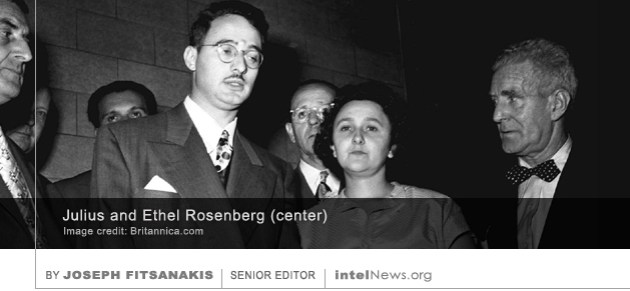 The final piece of sealed testimony in one of the most important espionage cases of the Cold War has been released, 64 years after it was given. The case led to the execution in 1953 of Julius and Ethel Rosenberg, an American couple who were convicted of spying for the Soviet Union. The Rosenbergs were arrested in 1950 for being members of a larger Soviet-handled spy ring, which included Ethel’s brother, David Greenglass. Greenglass agreed to testify for the US government in order to save his life, as well as the life of his wife, Ruth, who was also involved in the spy ring. He subsequently fingered Julius Rosenberg as a courier and recruiter for the Soviets, and Ethel as the person who retyped the content of classified documents before they were surrendered to their handlers. That piece of testimony from Greenglass the primary evidence used to convict and execute the Rosenbergs.
However, although historians are confident that Julius Rosenberg was indeed an active member of the Soviet spy ring, there are doubts about Ethel. Many suggest that her involvement with her husband’s espionage activities was fragmentary at best, and that she refused to cooperate with the Federal Bureau of Investigation in an ill-judged attempt to protect her husband. The argument goes that Ethel was put to death as a warning to Moscow, as well as to intimidate other American spies, rather than on the basis of actual evidence of her involvement in espionage. Many years after the Rosenbergs’ execution, Greenglass claimed he had lied about Ethel’s role in the spy affair in order to protect his wife, who was the actual typist of the espionage ring.
The debate over Ethel Rosenberg’s fate was rekindled by US District Judge Alvin Hellerstein’s decision in May of this year to unseal Greenglass’ testimony. The documents could not be made public while Greenglass was alive, because he objected to their release. But he died last year in a nursing home in New York, so Judge Hellerstein said his testimony could now legally be made available to the public as a “critical piece of an important moment in our nation’s history”.
Greenglass’ grand jury testimony, made under oath in 1950, six months before he implicated his sister in nuclear espionage for the Soviets, was posted online on Wednesday by George Washington University’s National Security Archive. Speaking at a press conference about the release, several experts said the new information directly contradicts Greenglass’ later testimony in which he accused his sister of being a spy. In the press conference of his grand jury testimony, Greenglass emphatically denies that Ethel had a role in the atom spy ring. When asked whether she was involved in espionage, Greenglass responds: “my sister has never spoken to me about this subject”. Later on he recounts how Julius tried to convince him to prolong his US Army service in order to continue to have access to classified information. When asked whether Ethel also tried to convince him to continue to spy for the Soviets, he responds: “I said before, and say it again, honestly, this is a fact: I never spoke to my sister about this at all”.
National Security Archive Director Tom Blanton said at the press conference that the evidence made it clear that Julius Rosenberg led an active spy ring; but Ethel was not an active spy, he said, even though witting.
► Author: Joseph Fitsanakis | Date: 17 July 2015 | Permalink: https://intelnews.org/2015/07/17/01-1737/
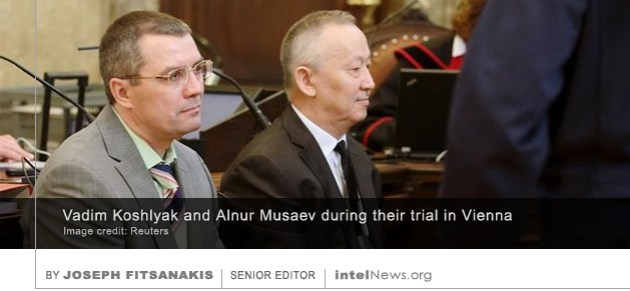 Kazakhstan’s former spy chief and a former presidential bodyguard have been acquitted by an Austrian jury, five months after a co-defendant in their double-murder trial, who was also the Kazakh president’s former son-in-law, was found dead in his Vienna cell. As intelNews has written
  The head of the main intelligence agency of the island state of Cyprus has resigned after an invoice leaked online showed that the agency made several purchases of controversial surveillance software. Andreas Pentaras, who has led the Cyprus Intelligence Service (KYP) since 2013,
 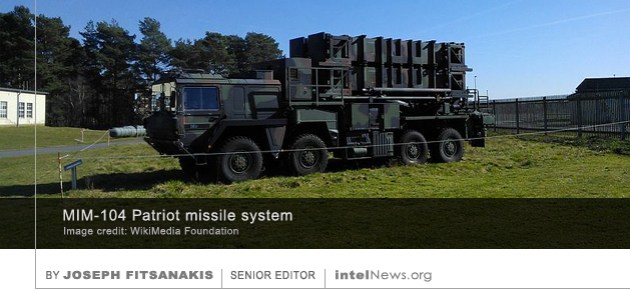 A Patriot missile system stationed in Turkey by the North Atlantic Treaty Organization (NATO) was allegedly hacked by a remote source, according to reports. German magazine Behörden Spiegel
 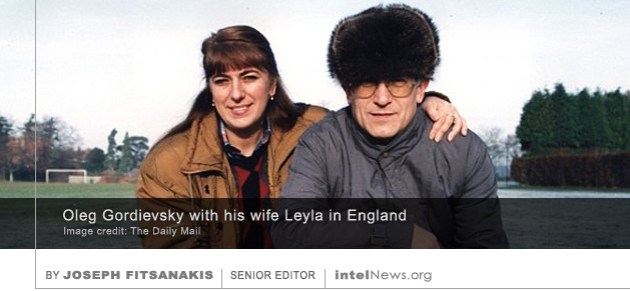 A Soviet double spy, who secretly defected to Britain 30 years ago this month, has revealed for the first time the details of his exfiltration by British intelligence in 1985. Oleg Gordievsky was one of the highest Soviet intelligence defectors to the West in the closing stages of the Cold War. He joined the Soviet KGB in 1963, eventually reaching the rank of colonel. But in the 1960s, while serving in the Soviet embassy in Copenhagen, Denmark, Gordievsky began feeling disillusioned about the Soviet system. His doubts were reinforced by the Soviet invasion of Czechoslovakia in 1968. It was soon afterwards that he made the decision to contact British intelligence.
 An American former supreme allied commander of the North Atlantic Treaty Organization has warned that a possible Greek exit from the Eurozone “could become a geopolitical nightmare” for the European Union and NATO. James Stavridis, a retired four-start US Navy admiral, who served as NATO’s 16th Supreme Allied Commander Europe from 2009 to 2013, said solving the Greek crisis should not be left to the central bankers. In an article
 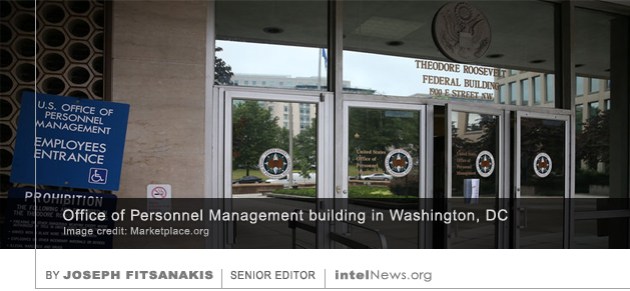 United States intelligence officials expressed concerns about a federal database containing details of security-clearance applications in the years prior to a massive cyber hacking incident that led to the theft of millions of personnel records. Up to
 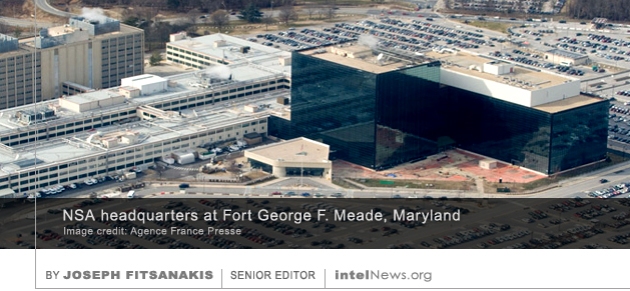 New information published by international whistleblower website WikiLeaks seems to suggest that the United States National Security Agency (NSA) collected information on export contracts by French companies and sought inside information on France’s position in international trade negotiations. According to the website, which
 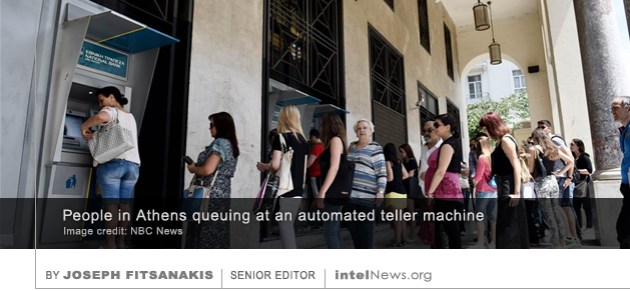 Several Western countries issued travel warnings for Greece on Sunday, as the Greek government shut down all banks and imposed capital controls following the breakdown of talks between Athens and the European Union.
 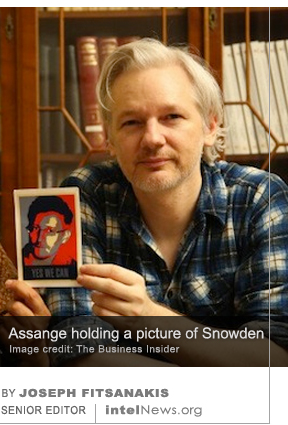 Leaders from all sides of the French political spectrum urged the French government on Thursday to offer political asylum, and even French citizenship, to the American defector Edward Snowden and to WikiLeaks founder Julian Assange. The calls were made in response to
 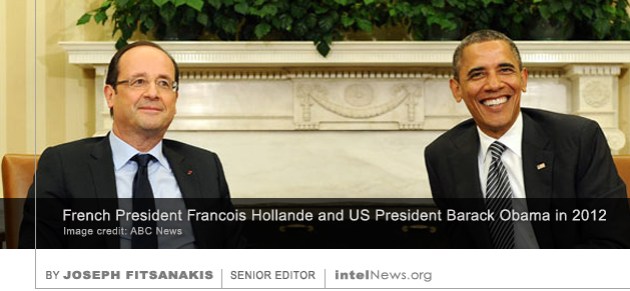 The president of France has convened an emergency meeting of the country’s highest national security forum in response to revelations that the United States spied on three French presidents. The Conseil de la Défense is to convene in Paris on Wednesday to discuss the emergence of documents that appear to implicate the US National Security Agency (NSA) in spying on Jacques Chirac and Nicolas Sarkozy, who ruled France from 1995 to 2012. The documents further indicate that the NSA may have also targeted the personal communications of Francois Hollande, France’s current head of state.
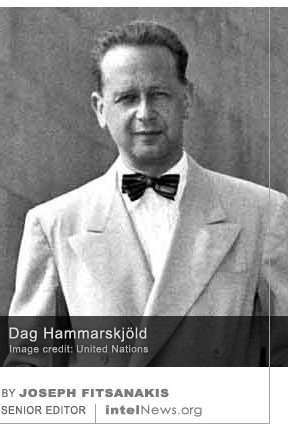 A panel of experts commissioned by the United Nations is about to unveil fresh evidence on the mysterious death in 1961 of UN secretary general Dag Hammarskjöld, who some claim was murdered for supporting African decolonization. The evidence could spark a new official probe into the incident, which has been called “one of the enduring mysteries of the 20th century”.
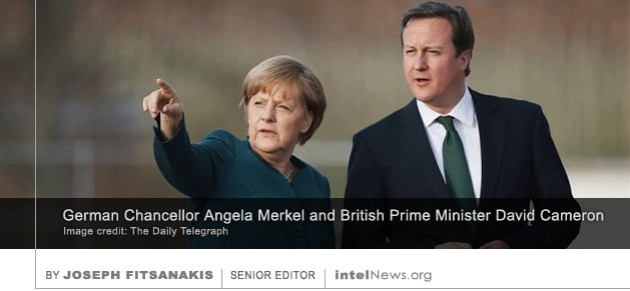 A German parliamentary committee investigating spying operations may take the German government to court in order to force it to give up secret documents on Berlin’s intelligence cooperation with Britain. The Committee of Inquiry into Intelligence Operations was set up in 2014, after files leaked by American defector Edward Snowden
  Australian law enforcement and intelligence agencies routinely use paid informants in Indonesia and Pakistan as part of a decade-old covert war against human traffickers in the Indian Ocean. This information has been revealed by The Australian newspaper in response to






 intelNews.org
Excessive secrecy hurts intel agencies, says head of NZ spy review
July 21, 2015 Leave a comment
Last Saturday, Sir Michael spoke to TVNZ, New Zealand’s national television broadcaster, about the progress of the review, and shared some of his preliminary thoughts on the subject of intelligence practice and reform. He said in the interview that much of the documentation about intelligence processes and operations was being kept secret without apparent reason. “I’ve seen documents [from] briefings, which it would be hard to justify in my view those briefings not being made public”, he said. He added that there was “a need for the agencies to be much more open about what they do”, noting that sources and methods could be adequately protected through a careful process of redacting. The former deputy prime minister said that, ironically, the intelligence agencies are “their worst enemy by being so secretive about almost everything that they do”. Their attitude, he told TVNZ, negatively affected the level trust between them and the citizens they protect; the latter, he added, “would get a better idea of the need for the [intelligence] agencies if some of these documents were made public”.
Sir Michael also commented on New Zealand’s membership in the so-called ‘Five-Eyes’ alliance, which is part of the UKUSA intelligence-sharing treaty between it and the nations of Australia, Canada, the United Kingdom and the United States. He told TVNZ that New Zealand had to share intelligence with allied nations, because it needed access to offshore information affecting its national security, which it cannot collect by itself. Some New Zealand politicians and pundits suggested that the country should exit the treaty after it was revealed last year that the US had been making use of New Zealand embassies around the world to collect electronic signals. In April of this year, The New Zealand Herald said that the country’s embassy in Bangladesh had been made available to British and American intelligence agencies to operate out of. Wellington’s relations with Dhaka have been strained as a result.
► Author: Joseph Fitsanakis | Date: 21 July 2015 | Permalink: https://intelnews.org/2015/07/21/01-1739/
Filed under Expert news and commentary on intelligence, espionage, spies and spying Tagged with AUSCANZUKUS, government secrecy, intelligence cooperation, intelligence reform, interviews, New Zealand, News, secrecy, Sir Michael Cullen, UKUSA